
You use your electric kettle every single day. But when did you last actually clean it? If you’ve spotted white, chalky buildup inside or noticed a strange taste in your morning tea, you’re definitely not alone.
There are many common problems that are faced by many people, and it’s easy to overlook. But learning how to clean a tea kettle at home doesn’t require expensive products or hours of effort.
In this blog, you’ll find everything you need to keep your kettle clean and working well.
What Happens When You Skip Kettle Cleaning?
A clean electric kettle is essential for better taste, safety, and performance. Over time, minerals from hard water form limescale inside the kettle, which can make water taste unpleasant and appear cloudy.
This buildup can also slow down the heating process, causing the kettle to use more electricity. Regular cleaning removes these deposits, helping maintain fresh and safe water by reducing the risk of bacterial growth.
It also improves efficiency, allowing the kettle to boil water faster and consume less energy. Additionally, cleaning prevents scale buildup from damaging the heating element.
By maintaining your kettle regularly, you can extend its lifespan, ensure smooth performance, and keep it working efficiently for everyday use.
Signs Your Electric Kettle Needs Cleaning
Understanding the right time to clean an electric kettle helps prevent heavy limescale buildup. Here are the key signs that indicate it’s time for a proper cleaning:
- White Residue Inside: Chalky deposits show mineral buildup from hard water
- Bad Taste in Water: Metallic or odd taste means the kettle needs cleaning
- Slow Boiling: Takes longer to heat due to limescale blocking heat transfer
- More Noise While Boiling: Extra sound can be caused by scale on the heating plate
- Stains or Discoloration: Marks on the inside show dirt and buildup over time
Suggested: You can also follow a simple kitchen deep cleaning checklist to keep all surfaces, including appliances, in good condition.
Step-By-Step Guide on How to Clean an Electric Kettle
Follow these simple, step-by-step methods to safely clean your electric kettle and remove limescale buildup. Here are the most effective ways you can try at home:
Step 1: Remove and Soak the Filter
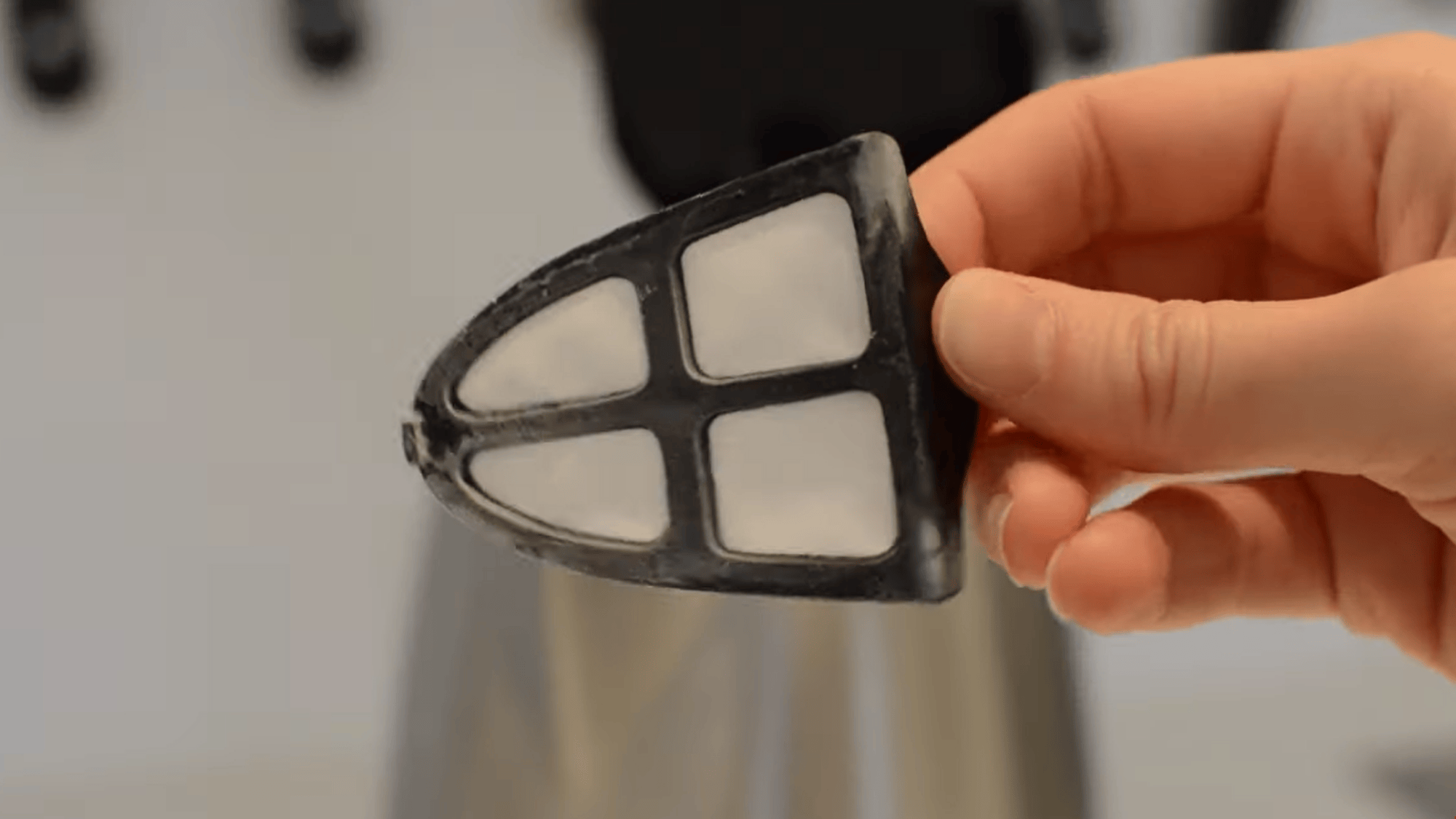
Start by taking out the kettle filter carefully. This part is delicate, so avoid scrubbing it. Instead, place the filter in a bowl with equal parts white vinegar and water.
Let it soak for about 5 to 10 minutes. This helps loosen dirt and mineral buildup without damage. After soaking, rinse it with clean water and set it aside.
Step 2: Fill the Kettle with Vinegar Solution
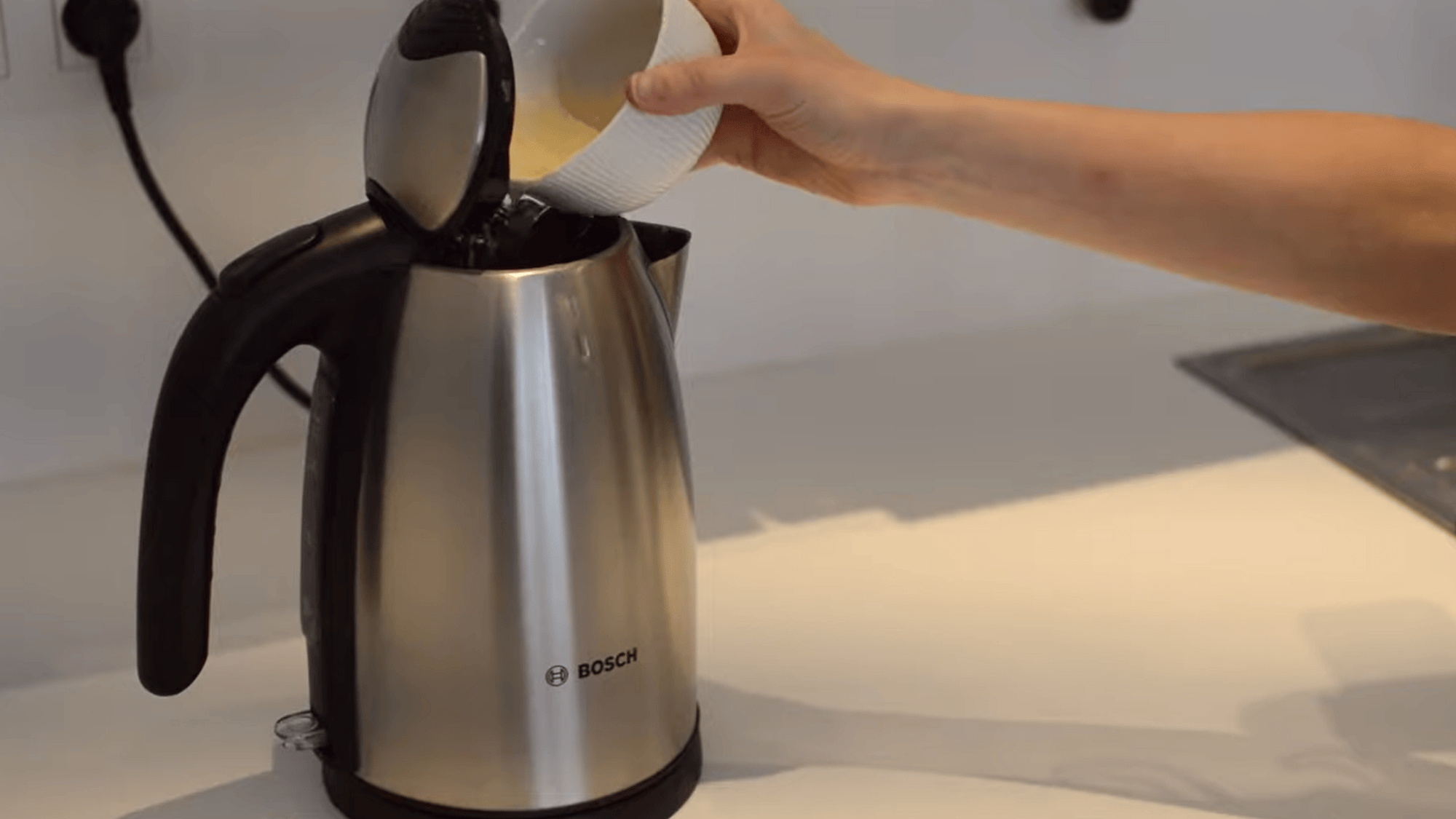
Next, fill the kettle halfway with a mixture of equal parts white vinegar and water. This simple yet powerful solution helps break down stubborn limescale and mineral deposits that build up over time inside the kettle.
The natural acidity of vinegar works to loosen the scale, making it easier to remove without harsh scrubbing.
Make sure not to overfill the kettle, as the liquid needs enough space to expand and boil safely during the cleaning process.
Step 3: Boil and Let It Sit

Next, turn on the kettle and bring the mixture to a full boil. Once it has boiled, switch off the kettle and let the solution sit inside for about 20 minutes.
If the buildup is heavy, you can leave it longer. This rest time helps break down tough limescale, making cleaning easier.
Step 4: Rinse and Repeat if Needed
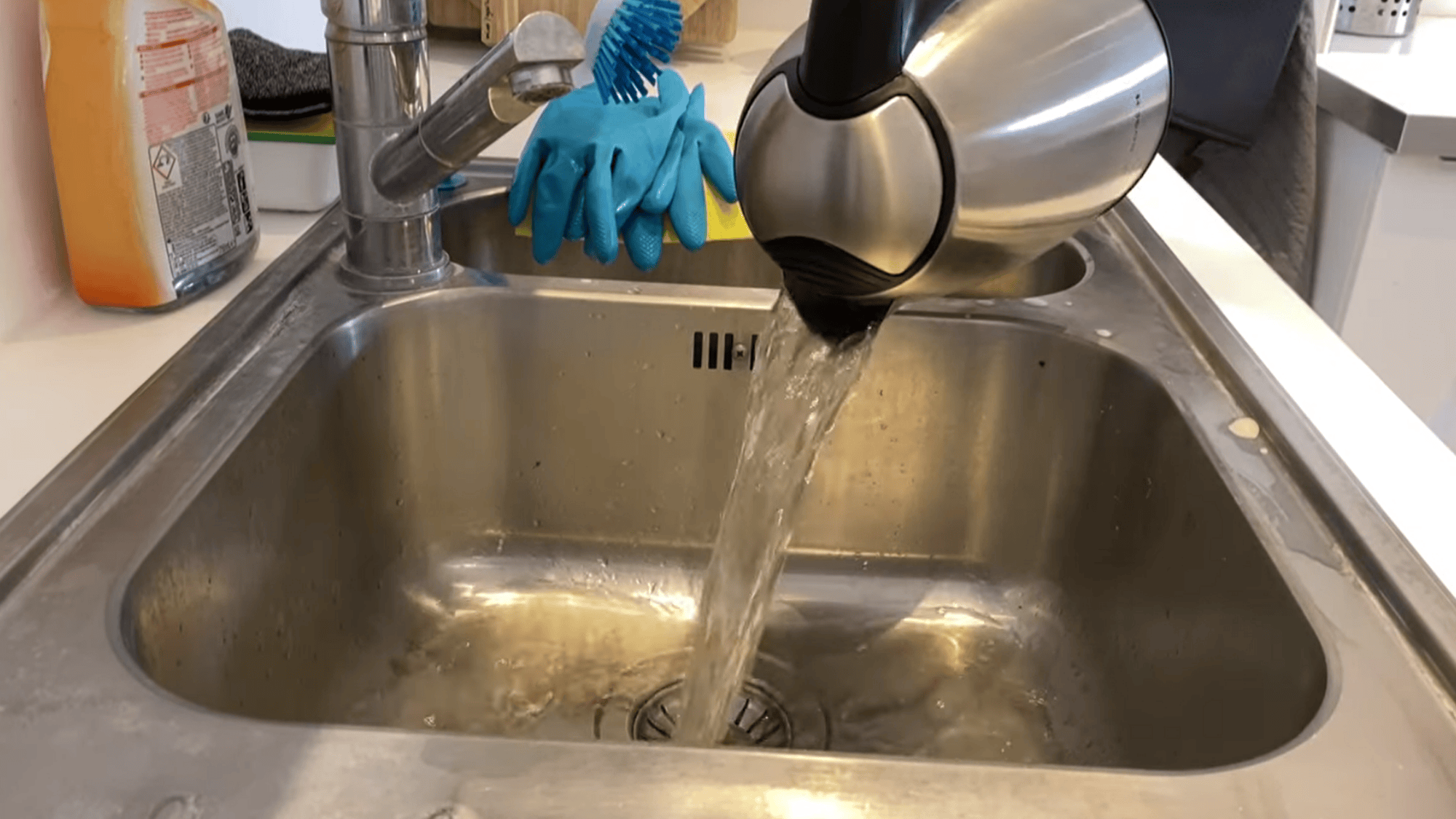
After the solution has done its job, rinse the kettle thoroughly with clean water several times. This helps remove any leftover vinegar and loose deposits.
If you still see stains inside, you can repeat the boiling process. For tough spots, gently scrub using a soft brush to avoid damage.
Step 5: Maintain and Clean It Regularly
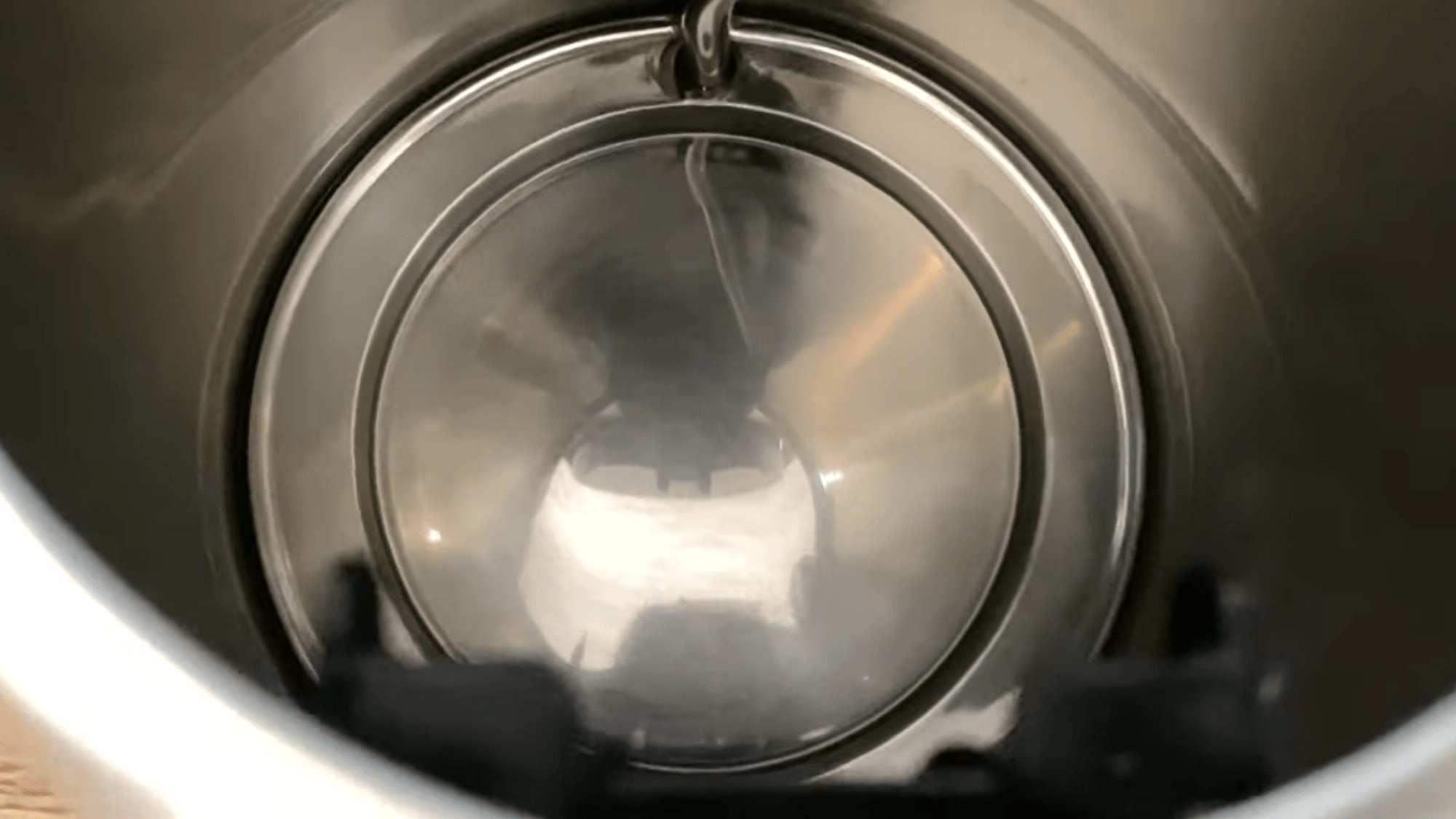
To keep your kettle clean, make it a habit to empty it after each use. Leaving water inside can cause mineral buildup over time.
It is also a good idea to clean your kettle at least once a month. Regular cleaning helps prevent limescale and keeps your kettle working well.
Check out this YouTube video to see the full kettle cleaning process:
Note: To clean the outside of your kettle by wiping it gently with a damp cloth and a little mild soap, avoid soaking it in water, use vinegar for stains if needed, and dry it with a soft cloth to keep it looking clean.
Other Methods to Clean an Electric Kettle
There are several simple and effective methods you can use to clean an electric kettle and easily remove limescale buildup. Here are the most practical ways you can try at home:
1. Lemon Juice Cleaning
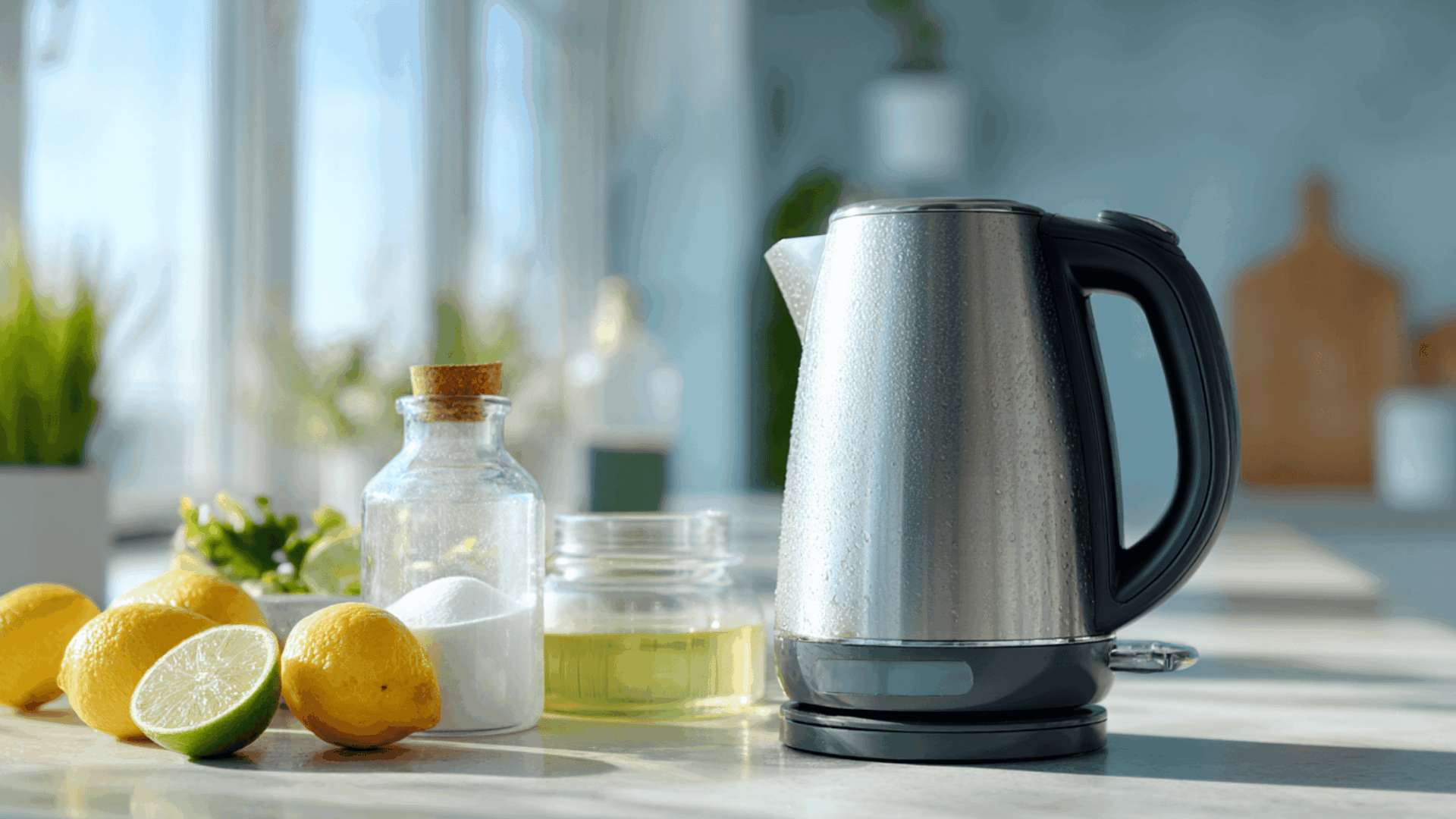
Clean your kettle using lemon juice. Start by adding water and fresh lemon juice to the kettle. Turn it on and bring the mixture to a boil, then let it sit for a while.
The natural acid in lemon helps break down limescale. If needed, gently scrub any remaining spots before rinsing.
2. Baking Soda Cleaning
To clean your kettle with baking soda, start by adding 1–2 teaspoons of baking soda to the kettle along with water. Turn it on and let the mixture boil.
This helps loosen light stains and remove odors. After boiling, pour out the solution and rinse the kettle well with clean water.
3. Citric Acid Powder’s Method
Clean your kettle using citric acid. Add 1 tablespoon of citric acid to the kettle with water. Turn it on and let the mixture boil, then allow it to sit for a while so it can break down tough limescale.
After that, pour out the solution and rinse the kettle thoroughly with clean water.
4. Potato Peel Method
To clean your kettle naturally, add water and potato peels, then bring it to a boil. The starch in the peels helps loosen stubborn limescale and residue.
If needed, repeat the process for better results. Once done, pour out the mixture and rinse the kettle well with clean water. This method works best for natural cleaning and tough buildup.
5. Vinegar Soak (No Boiling Method)
The vinegar soak method is a simple, no-boil way to remove stubborn limescale from your electric kettle. Fill it with equal parts water and white vinegar, ensuring the deposits are fully covered, and leave it overnight.
The acidity helps dissolve naturally heavy mineral buildup.
In the morning, discard the solution, rinse thoroughly, and boil fresh water once or twice to remove any remaining smell or taste, restoring clean and efficient performance
Common Mistakes to Avoid
Avoiding a few common mistakes while cleaning your electric kettle can help prevent damage. Here are the key points to keep in mind during the cleaning process:
- Using Harsh Scrubbers: Rough materials can scratch and damage the inside surface
- Not Rinsing Properly: Leftover cleaning solution can affect taste and safety
- Letting Scale Build Up: Waiting too long makes cleaning harder and less effective
- Submerging the Base in Water: Can damage electrical parts and cause safety risks
- Overfilling the Kettle: Water may spill during boiling and create a mess
- Skipping Regular Cleaning: Infrequent cleaning leads to heavy buildup
- Using Strong Chemicals: Harsh cleaners may harm the kettle and leave residue
Real User Tips That Actually Work
Here’s what real users on Reddit and forums suggest after trying and testing different methods to clean their electric kettles. Take a look at their practical tips below:
“Mix white vinegar and water… boil, and then let stand.” – r/cleaning tips,reddit
“Add a bit of citric acid (amount proportional to the thickness of the scale), swirl it around, and the scale will be gone.” – Jason Peterson tips, reddit
“Fill the kettle with equal parts water and white vinegar, or with water and citric acid, and bring it to a boil. then rinse.” – desktop commando tips, reddit
“Fill kettle 1/3. Pour in some vinegar, maybe 1/2 cup. Let sit for an hour. Boil the kettle. Rinse.” -Zelus Llama tips, reddit
“I boil vinegar to clean the inside about once a week” – Tammy tips, reddit
Final Thoughts
Keeping up with a clean electric kettle doesn’t have to feel like a chore. A quick descale every few weeks is genuinely all it takes.
No more white flakes, no more strange aftertaste, just fresh, clean water every single time.
If you searched for how to clean a tea kettle or stumbled across this post, the methods here are simple enough to stick with long-term.
So, pick the one that works for you and make it a habit. Your kettle will last longer, boil faster, and honestly, your morning cup will just taste better.

Tommy Hardy, an alumnus of the Georgia Institute of Technology with a degree in Mechanical Engineering, has been a go-to figure in residential upkeep and innovation for over 18 years. His career commenced in a leading home appliance manufacturing company, where he mastered the intricacies of household systems. Joining our platform in 2020, Tommy quickly became a reader favorite for his practical and easy-to-follow guides. He took the helm of our DIY section in 2019, consistently delivering content that empowers homeowners. Beyond his professional pursuits, Tommy is a passionate gardener and enjoys woodworking, skills enhancing his hands-on approach to home care.