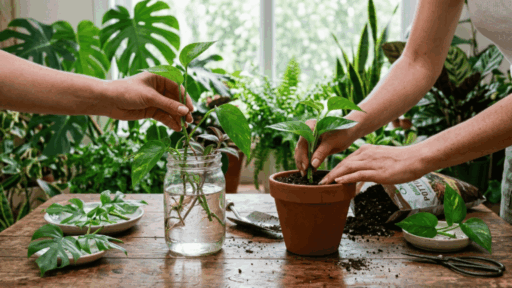
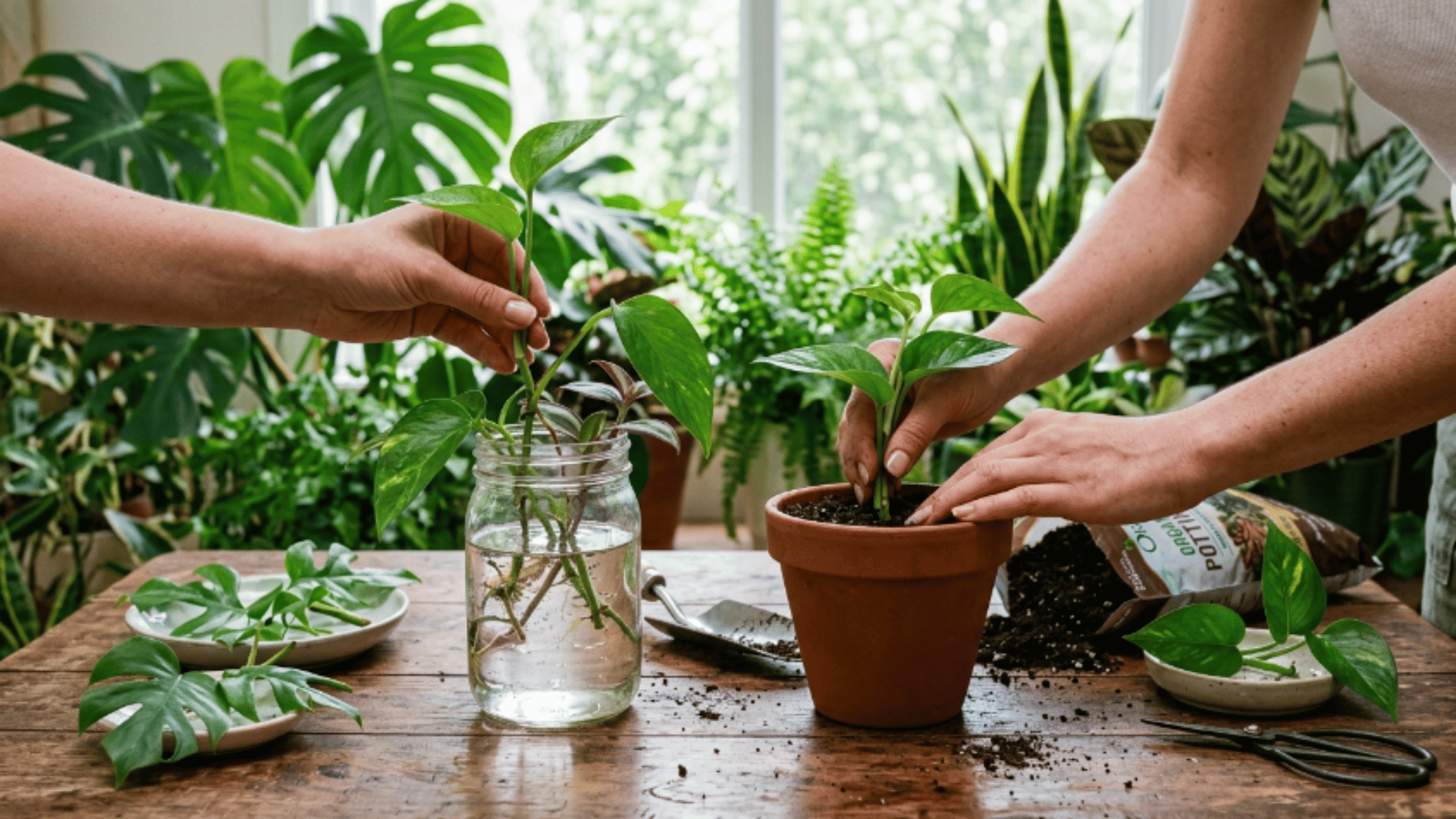

There’s something quietly satisfying about growing a new plant from an old one. It feels almost like a small, natural reset happening right in your hands.
If you’ve been curious about how to propagate plants, you’ll find it’s not complicated, just a mix of the right cuts, timing, and care.
Some stems root in water, others settle into soil, but the process stays simple. Once you try it, it starts to feel effortless, and before you know it, one plant turns into many without much effort at all.
What is Plant Propagation?
Plant propagation is the process of growing new plants from existing ones instead of starting from seeds.
If you’re learning how to propagate plants, it can be as simple as taking a small cutting, placing it in water or soil, and letting it develop roots.
People often propagate plants to save money, expand their plant collection, or share cuttings with others. It’s also a practical way to keep a favorite plant going for years.
Some plants propagate naturally, like through runners or offsets, while others need a little help through methods like cuttings or division.
Common Plant Propagation Methods
There are a few simple ways to propagate plants, and each method works better for certain types. Choosing the right one depends on the plant you have, how much time you can give, and how quickly you want results.
1. Stem Cutting
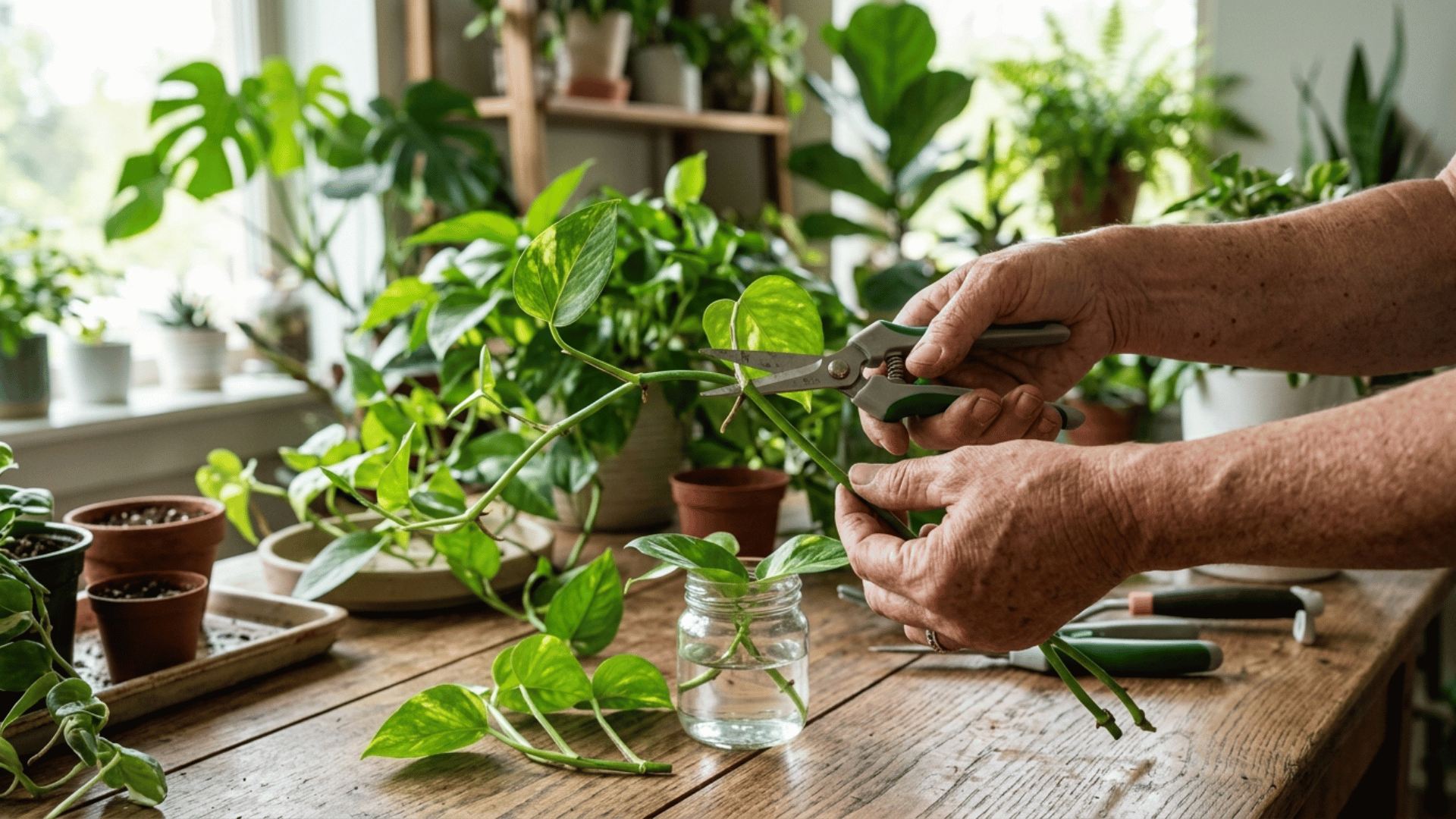
Stem cuttings are one of the most widely used methods. It works well for plants like pothos, roses, money plant, and coleus because these plants root easily from their stems.
The process is straightforward, and you can choose to grow roots in water or soil. In water, roots usually appear within 1 to 3 weeks, while in soil, they may take slightly longer but result in stronger roots.
Steps:
- Cut below a node: Choose a healthy stem with at least one node and make a clean cut
- Remove lower leaves: Prevent leaves from sitting in water or soil
- Place in water or soil: Both methods work, depending on your preference
- Wait for roots to develop: Keep in indirect light and monitor progress
Note: Keep the environment warm and bright, and avoid disturbing the cutting while roots form.
2. Water Propagation
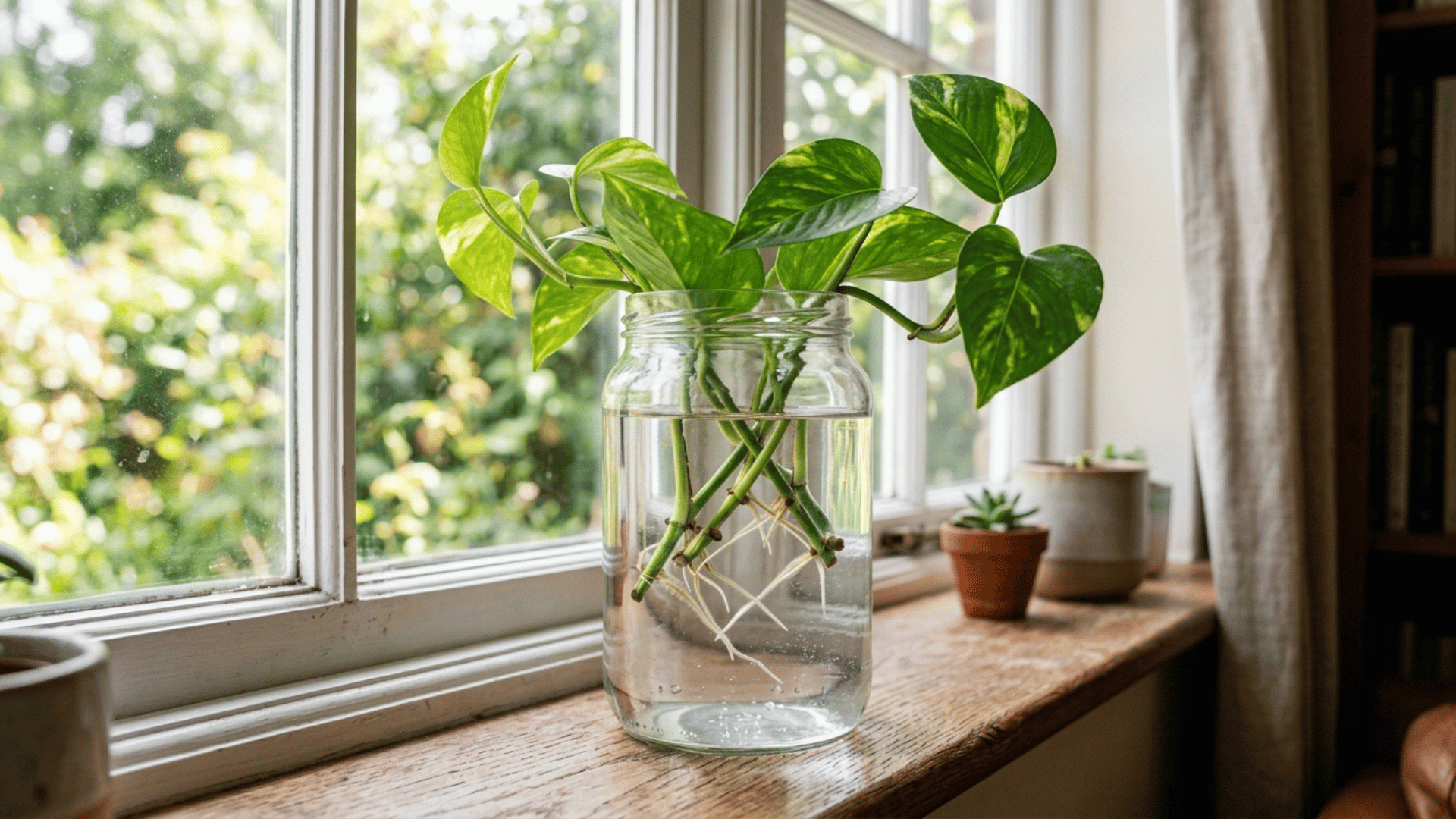
Water propagation is often the first method people try because it’s simple, and you can clearly see root development. It works best with soft-stem plants and provides visible feedback, helping beginners understand the process.
Roots usually begin forming within 1 to 4 weeks, but the timing can vary based on light, temperature, and plant type. While it’s easy to manage, plants grown in water may need careful handling when moved to soil later.
Steps:
- Take a healthy cutting: Make sure it includes at least one node
- Place in a clean jar of water: Submerge the node while keeping leaves above water
- Keep in indirect light: Avoid strong sunlight that can damage the cutting
- Change water regularly: Refresh every few days to keep it clean
Note: Once roots grow a few inches long, transfer to soil gently and keep moisture steady.
3. Soil Propagation
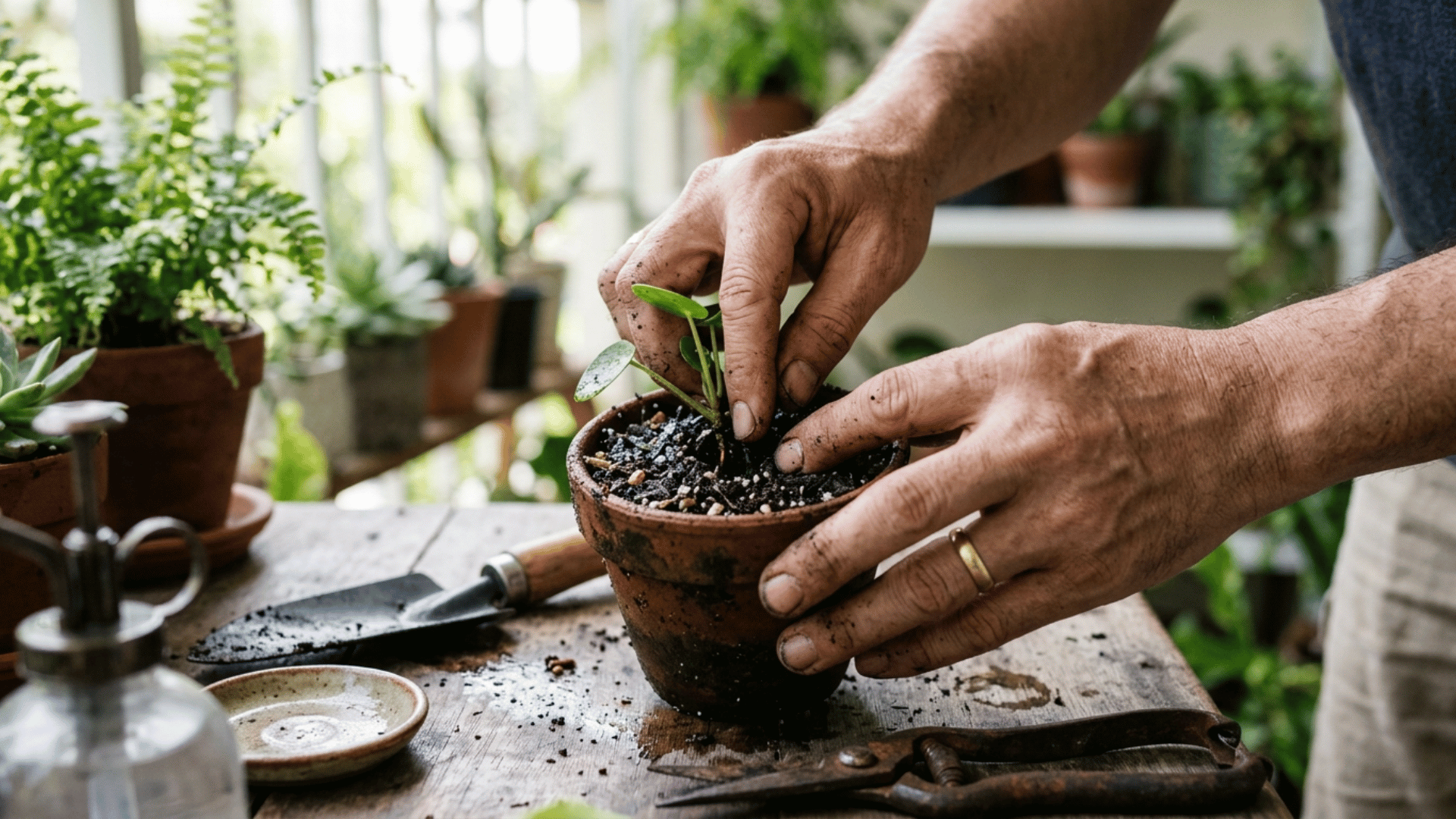
Soil propagation allows roots to form directly in the growing medium, which helps the plant adjust more easily in the long run.
This method is slightly slower at first, taking around 2 to 6 weeks, but it reduces transplant shock since the plant is already used to soil conditions.
Steps:
- Prepare well-draining soil: Use a light mix that allows airflow
- Insert cutting into soil: Ensure the node is covered properly
- Keep soil moist, not soggy: Water lightly and consistently
- Cover for humidity if needed: Helps retain moisture during early stages
Note: Place in indirect light and avoid overwatering, as too much moisture can cause rot.
4. Leaf Propagation
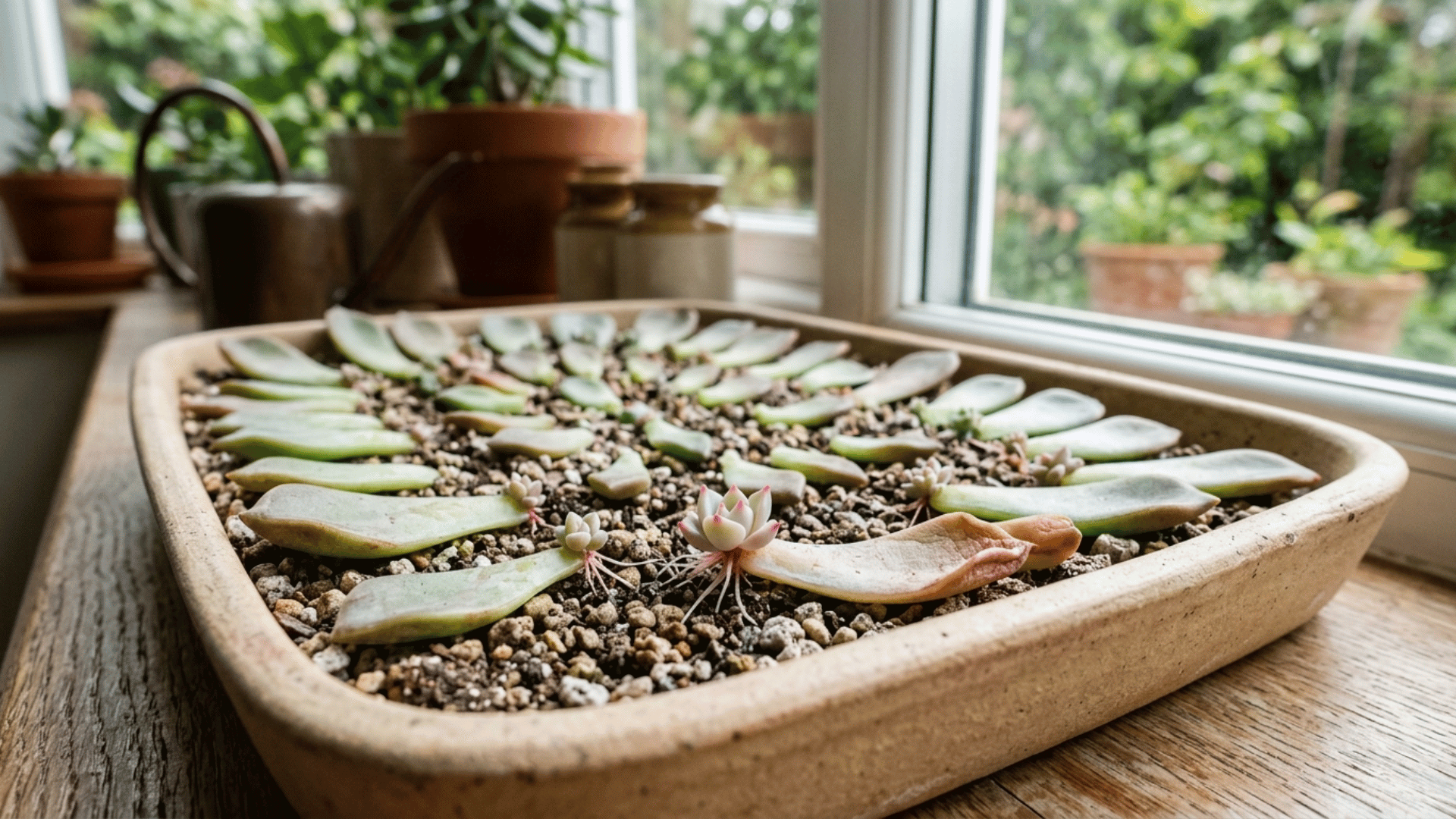
Leaf propagation is a slower but rewarding method, commonly used for succulents and snake plants. Instead of using a stem, a single healthy leaf can grow into a new plant.
This process takes patience, often 3 to 8 weeks or longer, as roots and small plantlets take time to form. It’s best suited for plants that naturally store energy in their leaves.
Steps:
- Remove a healthy leaf: Ensure it’s intact and free from damage
- Let it dry: Important for succulents to prevent rot
- Place on soil: Lay it on top rather than burying it fully
- Wait for roots and baby plants: Growth appears gradually over time
Note: Keep the soil slightly moist and place in soft light, avoiding direct sun during the early stages.
5. Division Method
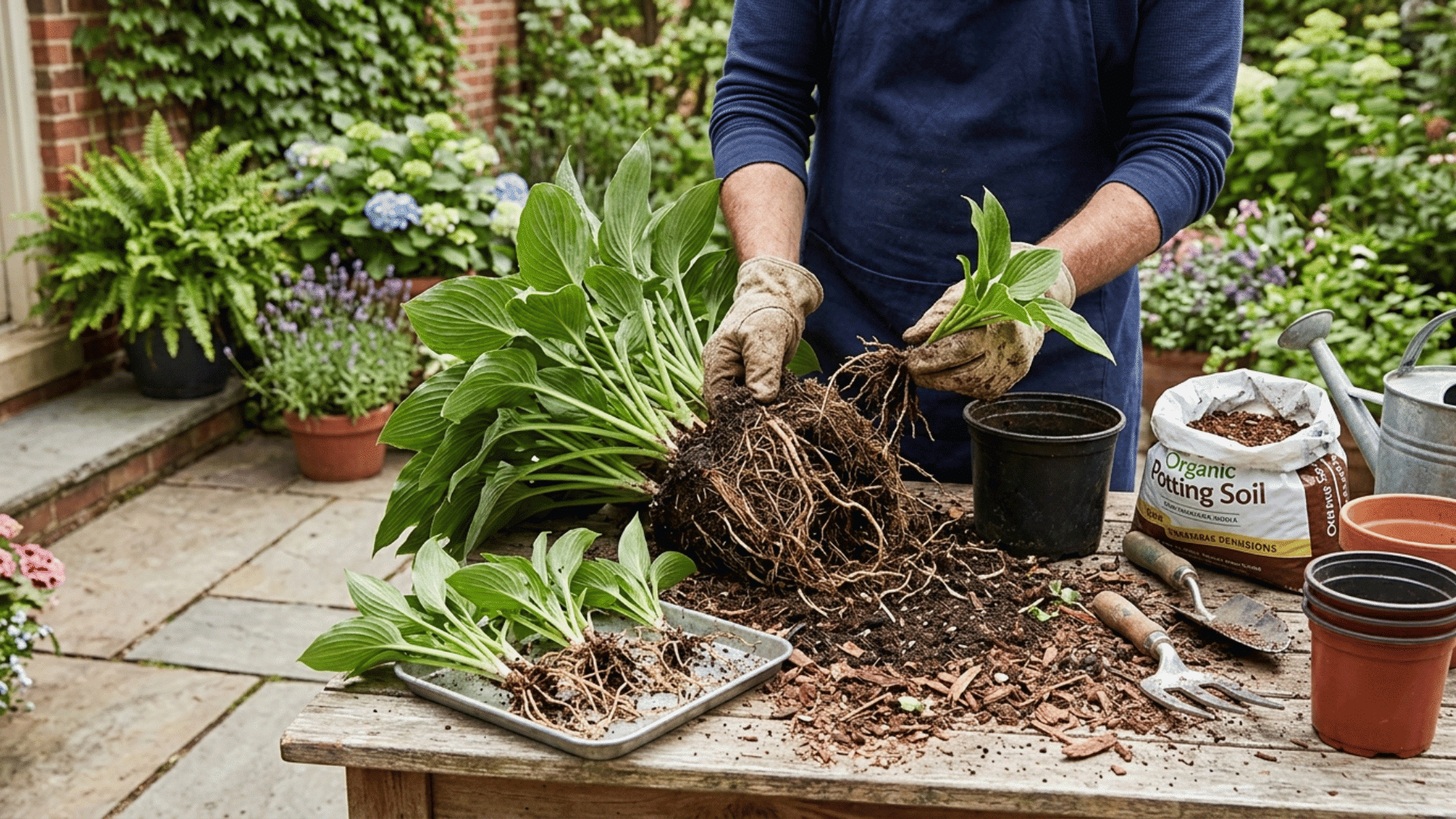
Division is one of the fastest propagation methods because you’re working with plants that already have roots. It’s ideal for mature plants, such as ferns, peace lilies, and aloe, that grow in clusters.
Since each section already has a root system, the plant settles quickly, usually within 1 to 2 weeks. This method is less about waiting and more about careful handling.
Steps:
- Remove plant from pot: Gently loosen the soil around the roots
- Separate root clumps: Divide into smaller sections without damaging roots
- Replant individually: Use fresh soil for each new plant
Note: Keep the newly divided plants in a shaded spot for a few days and water lightly.
6. Layering Method
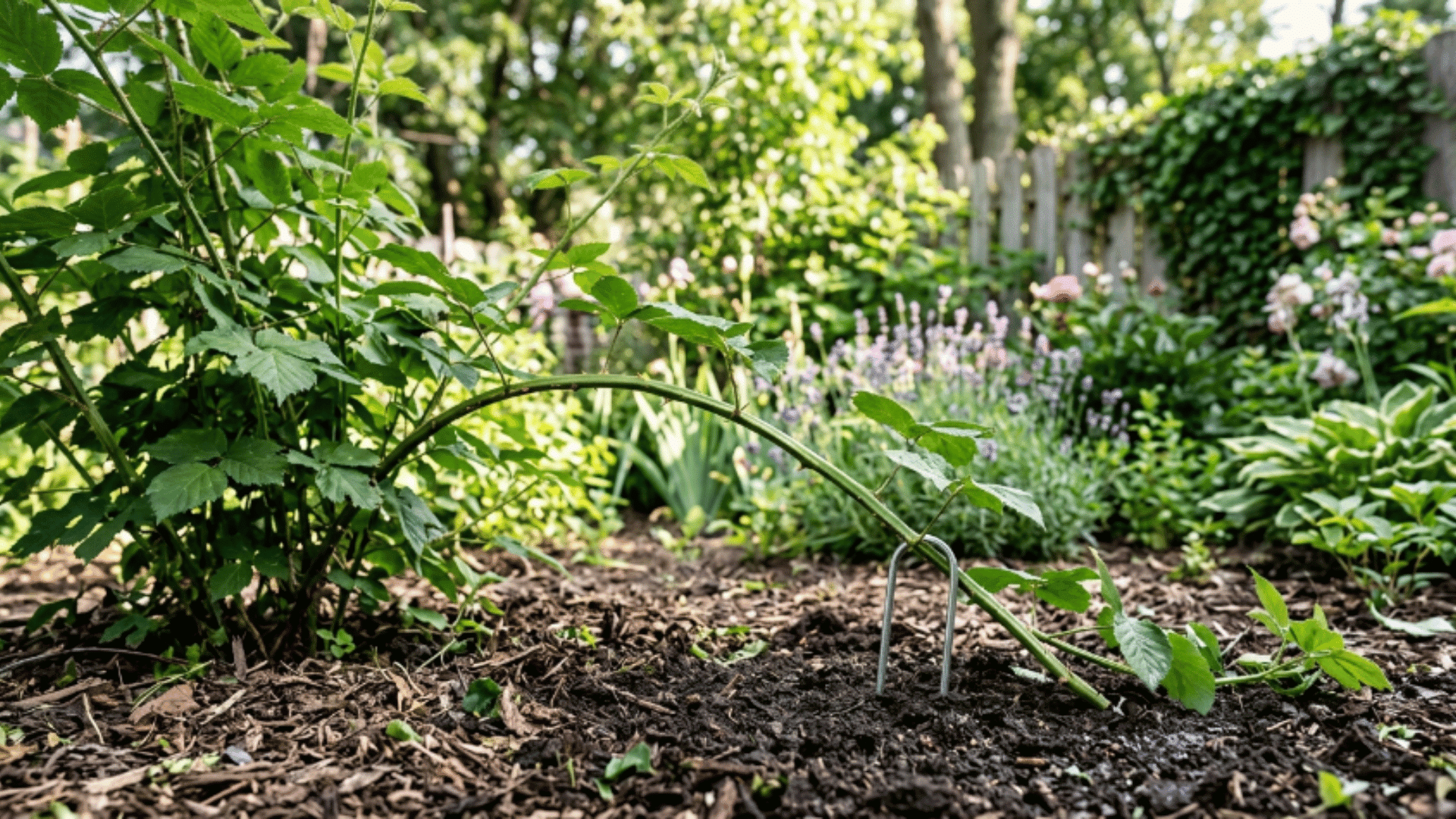
The layering method is a plant propagation technique in which a stem is encouraged to form roots while it is still attached to the parent plant.
This process can take several weeks to a couple of months, but it usually results in strong, well-established roots.
Steps:
- Bend a stem to the ground: Choose a flexible and healthy stem
- Cover part with soil: Leave the tip exposed above the soil
- Wait for roots to form: Keep the soil consistently moist
- Cut and replant: Separate once roots are established
Note: Avoid moving or disturbing the stem during rooting, and maintain steady moisture for best results.
Can All Plants Be Propagated?
Not all plants behave the same when you learn how to propagate plants. Some grow easily from cuttings, while others need specific methods or don’t propagate well at all.
| Plant Type | Can It Be Propagated? | Common Method Used | Notes |
|---|---|---|---|
| Soft-stem plants | Yes | Stem cuttings, water | Very easy and beginner-friendly |
| Succulents | Yes | Leaf or stem cuttings | Requires patience, slower growth |
| Perennials | Yes | Division, cuttings | Regrow every year, reliable results |
| Woody plants | Yes (with effort) | Layering, hardwood cuttings | Takes longer and needs proper care |
| Bulb plants | Yes | Offsets or bulb division | Seasonal growth cycle |
| Annual plants | Limited | Seeds mostly | Short life cycle, not ideal for cuttings |
| Hybrid plants | Sometimes | Cuttings or grafting | May not grow identically to the parent |
Common Mistakes to Avoid
A few small mistakes can slow or stop propagation, so it helps to know what to watch out for early on when learning how to propagate plants.
- Using unhealthy cuttings: Weak or damaged stems struggle to grow roots and often fail
- Overwatering or dirty water: Too much moisture or unclean water can lead to rot and infection
- Placing in direct sunlight too soon: Harsh light can stress or dry out the cutting before roots form
- Not being patient: Rooting takes time, and checking or moving cuttings too often can disrupt growth
- Cutting in the wrong place: Missing the node can prevent roots from forming
- Using poor quality soil: Heavy or compact soil can block airflow and slow root development
Final Thoughts
Plant propagation becomes much easier once you understand the right method and give it time to work. The key is to start simple, choose healthy cuttings, and stay consistent with care.
As you practice how to propagate plants, you’ll notice which methods work best for different types. Some attempts may fail, and that’s part of the process. What matters is learning from it and trying again.
Over time, you’ll build confidence, and turning one plant into many will feel like a natural part of caring for your garden.

With a Master’s in Landscape Architecture from the University of Virginia, Sophia Stephenson has dedicated the last 20 years to creating and maintaining vibrant outdoor spaces. Her professional journey started in landscape design, where she gained a reputation for innovative and sustainable approaches. Sophia became a part of our editorial team as a freelancer in 2019, offering a fresh perspective on outdoor living. Since 2020, she has been the chief for our outdoor design content, blending aesthetic appeal with environmental stewardship. In her leisure time, Sophia is a keen photographer, capturing the beauty of natural landscapes, a hobby that complements her professional expertise.