
Buying a new dining set felt exciting until it didn’t. The chairs looked perfect, the table was exactly what I wanted, but sitting at it felt completely off and uncomfortable.
That’s what happens when you don’t think aboutstandard kitchen table height. Dining tables, bar tops, and kitchen counters all have different heights, and each one serves a different purpose.
Getting it wrong can make even a beautiful space feel awkward and frustrating.
So this guide covers everything you need to know. If you’re setting up a new space or something just doesn’t feel right, you’re in the right place.
Why Your Table Height Feels Wrong
If your table feels uncomfortable, it’s often not the table itself but the spacing and small design details. Here’s what actually affects comfort and what to check.
- The Golden Rule: the Gap Between Your Chair Seat and The Underside of The Table Should Be 10 to 12 Inches. The Sweet Spot Sits Around 26 Cm (10.5 Inches).
- Legroom Below the Table: You Need at Least 9 Cm of Clearance Under the Table, Though 12 Cm or More Is Ideal. Pedestal and Trestle Tables Give You the Most Freedom Here, Since There Are No Side Rails Cutting Into Your Leg Space.
- Consider Room Size and Layout: As a general rule, leave at least 36 Inches Between the Table Edge and The Wall; 42 to 48 inches is even better for Comfortable Movement.
- Watch Out for Refectory Tables: Side rails or aprons reduce leg space and can make seating feel tight
- Adjust Based on Table Design: Try thinner tabletops, lower rails, or slightly shorter chairs to improve comfort
What is the Standard Kitchen Table Height?
The standard kitchen table height falls between 28 and 30 inches. It’s the height that furniture makers, interior designers, and chair manufacturers have all built around for decades.
Here’s how that looks across different units:
- feet: 2.3- 2.5 ft
- meters: 0.71- 0.76 m
- centimeters: 71- 76 cm
- millimeters: 710- 760 mm
Standard table height works for most people, but comfort depends on your body and the space you have. If you’re taller (over 6’2”), a 31–32 inch table gives you more legroom and prevents that cramped feeling under the table.
Shorter individuals (under 5’4”) may find standard height uncomfortable, so a 28–29 inch table feels more natural and easier to use.
In smaller rooms, going slightly taller, like a counter-height table, can actually help the space feel more open by drawing the eye upward instead of making everything feel tight.
Standard Table Heights for Different Scenarios
Not all tables are built the same. Here’s a quick breakdown of the three main height options and which one actually fits your space and lifestyle:
1. Dining Table Height
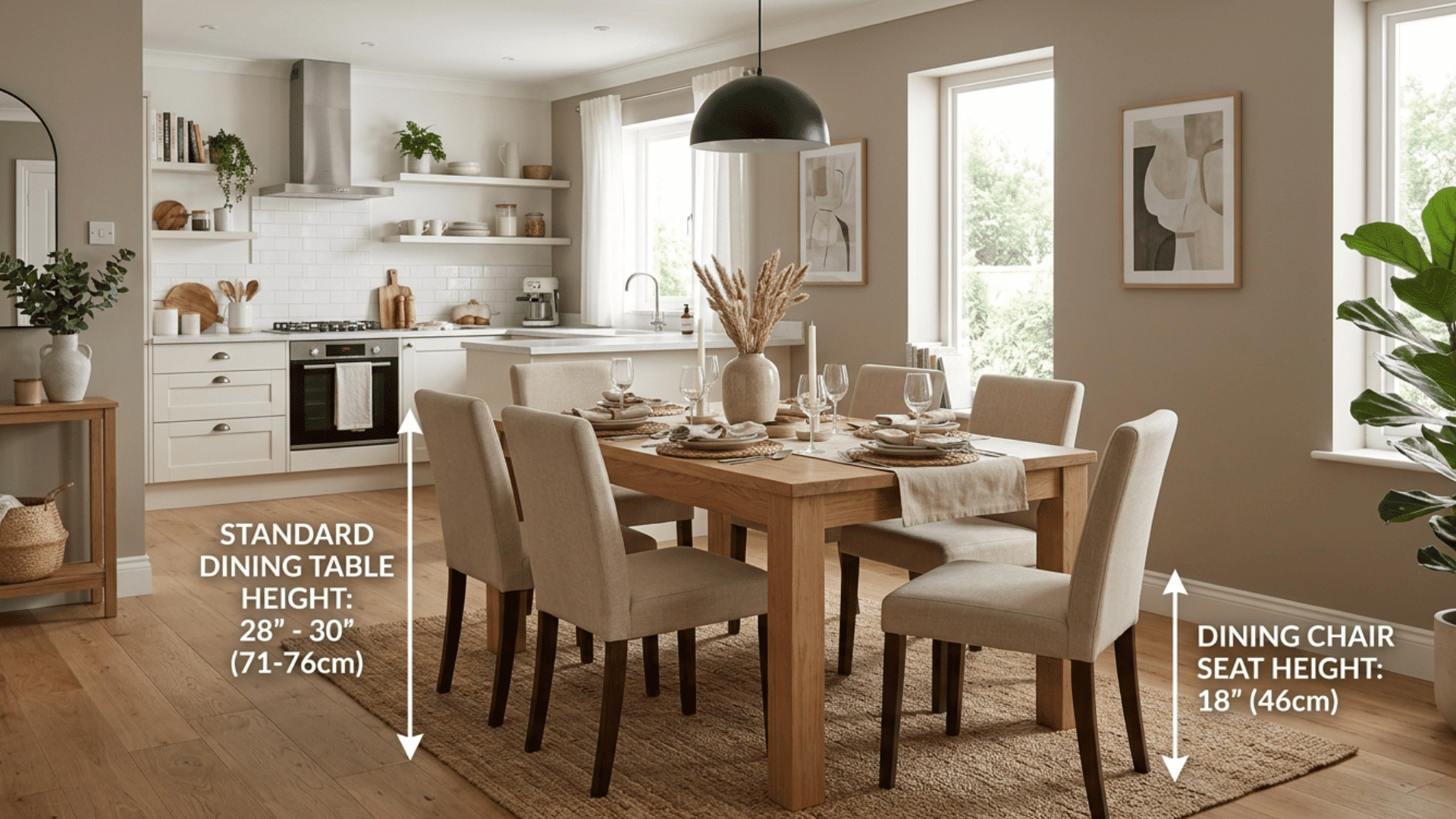
This is the most traditional and widely used dinning table height you’ll find in most homes. It typically stands 28 to 30 inches tall and pairs best with chairs around 18 inches high.
Best for:
- Formal Dining: Got a dedicated dining room for family meals or dinner parties? A standard height table gives that classic, put-together look.
- Comfort and Accessibility: It works well for everyone, including kids, the elderly, and people of all ages. Sitting down and moving around feels natural and easy.
- Versatility: You get a lot of freedom with chair choices here. Cushioned armchairs, simple wooden chairs, almost anything pairs well with it.
2. Counter Table Height
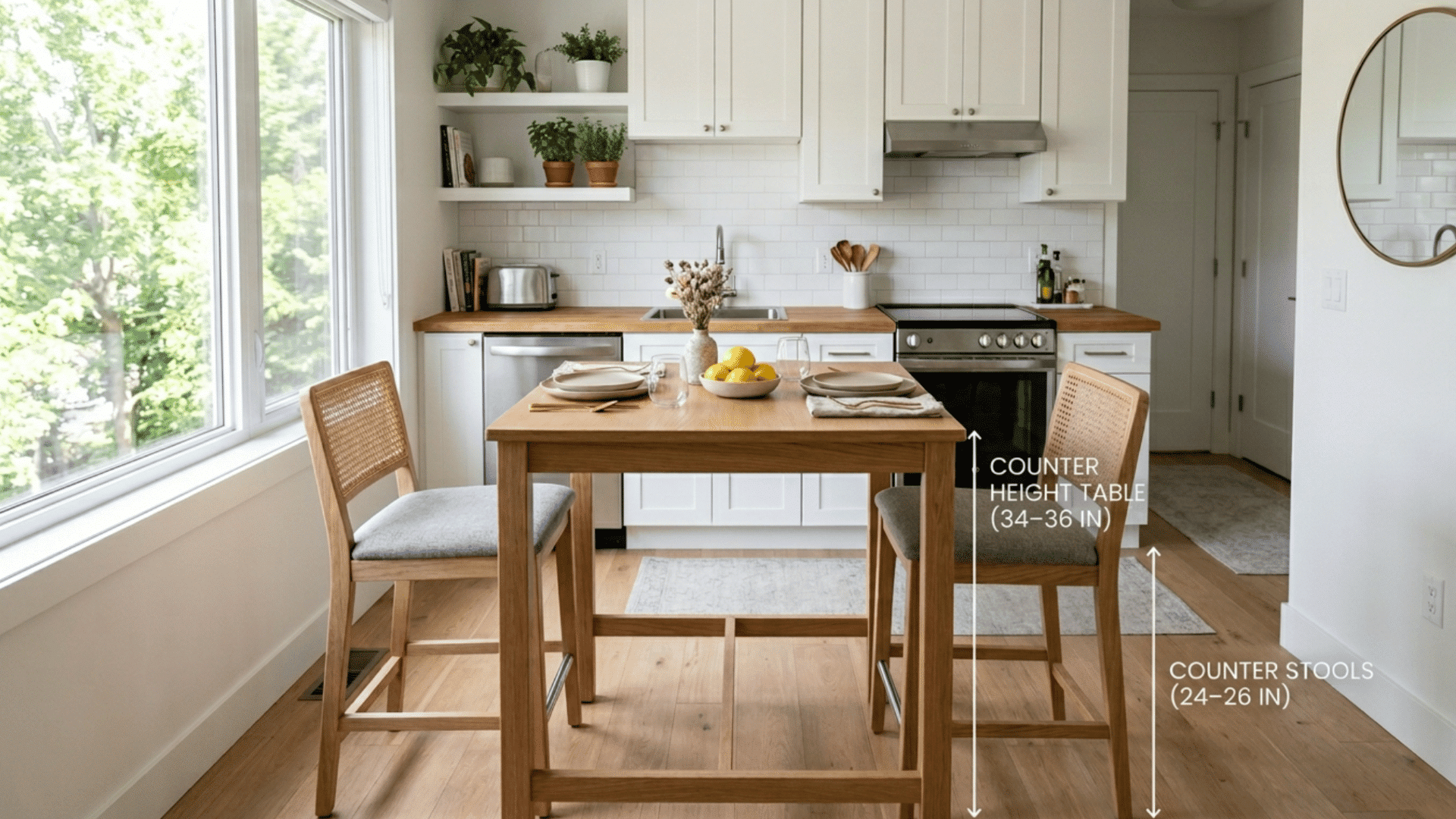
Counter-height tables are taller than standard tables. It usually measures 34 to 36 inches and works best with stools 24 to 26 inches tall. They get their name from their resemblance to kitchen counters.
Best for:
- Casual and Modern Spaces: These tables bring a relaxed, social feel to a room. They work really well in open-concept homes where the kitchen and dining area flow into each other.
- Small Spaces: The extra height can actually make a compact room feel more open and less crowded compared to a regular dining table.
- Informal Gatherings: Quick breakfasts, morning coffee, casual get-togethers. This height is made for everyday, low-key use.
3. Bar Table Height
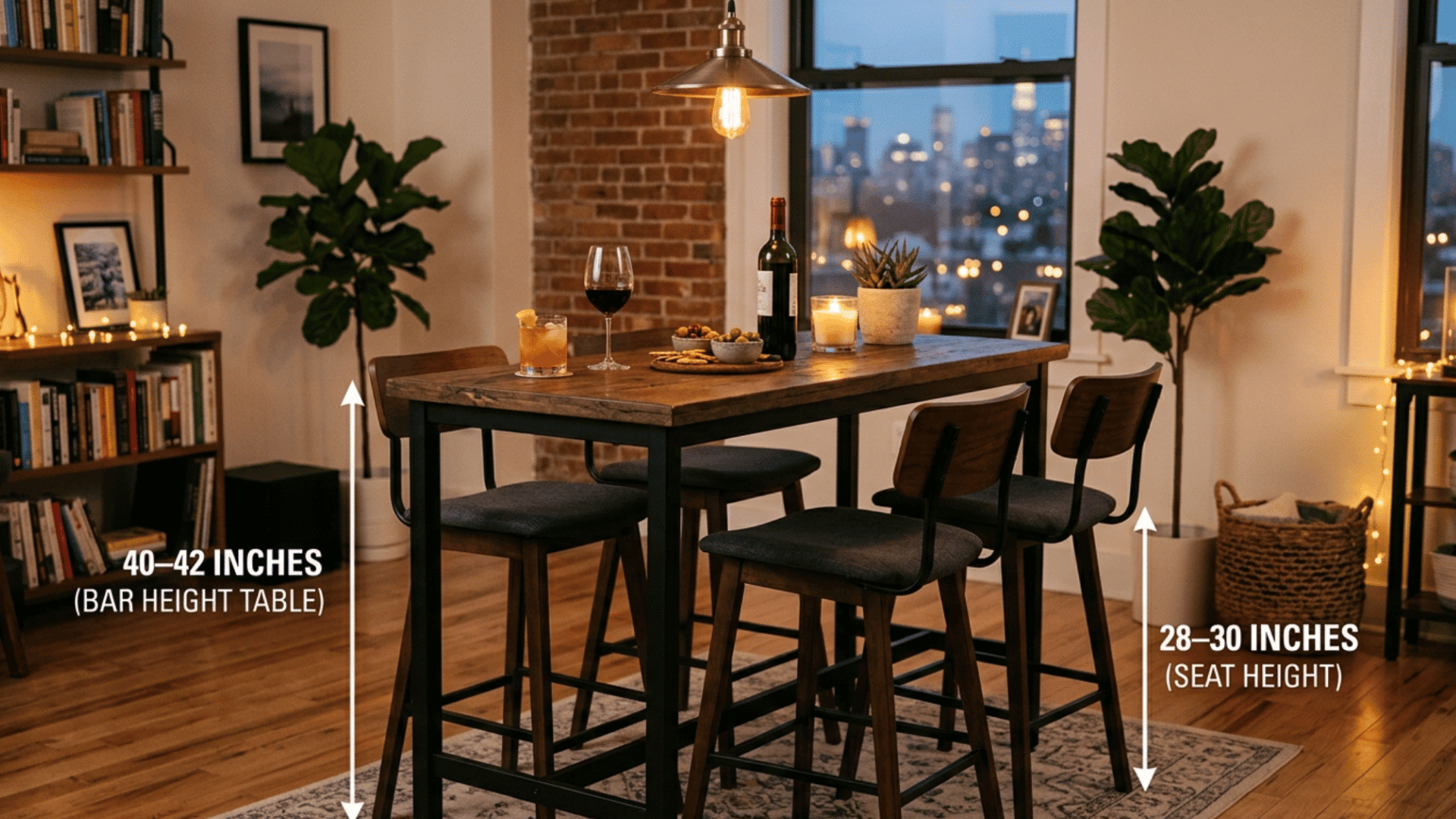
The tallest of the three was built to be paired with barstools. Bar-height tables are about 40 to 42 inches high and need stools that are roughly 28 to 30 inches tall to feel comfortable.
Best for:
- Entertaining and Socializing: People naturally stand, mingle, and chat around bar-height tables. Great for serving drinks and snacks at a party.
- Very Small Spaces: Even in a tight dining area, a bar-height table can create a functional, compact eating setup.
- Creating a Visual Division: In open floor plans, it serves as a natural separator between the kitchen and living space, without requiring walls.
4. Dining Counter Bar
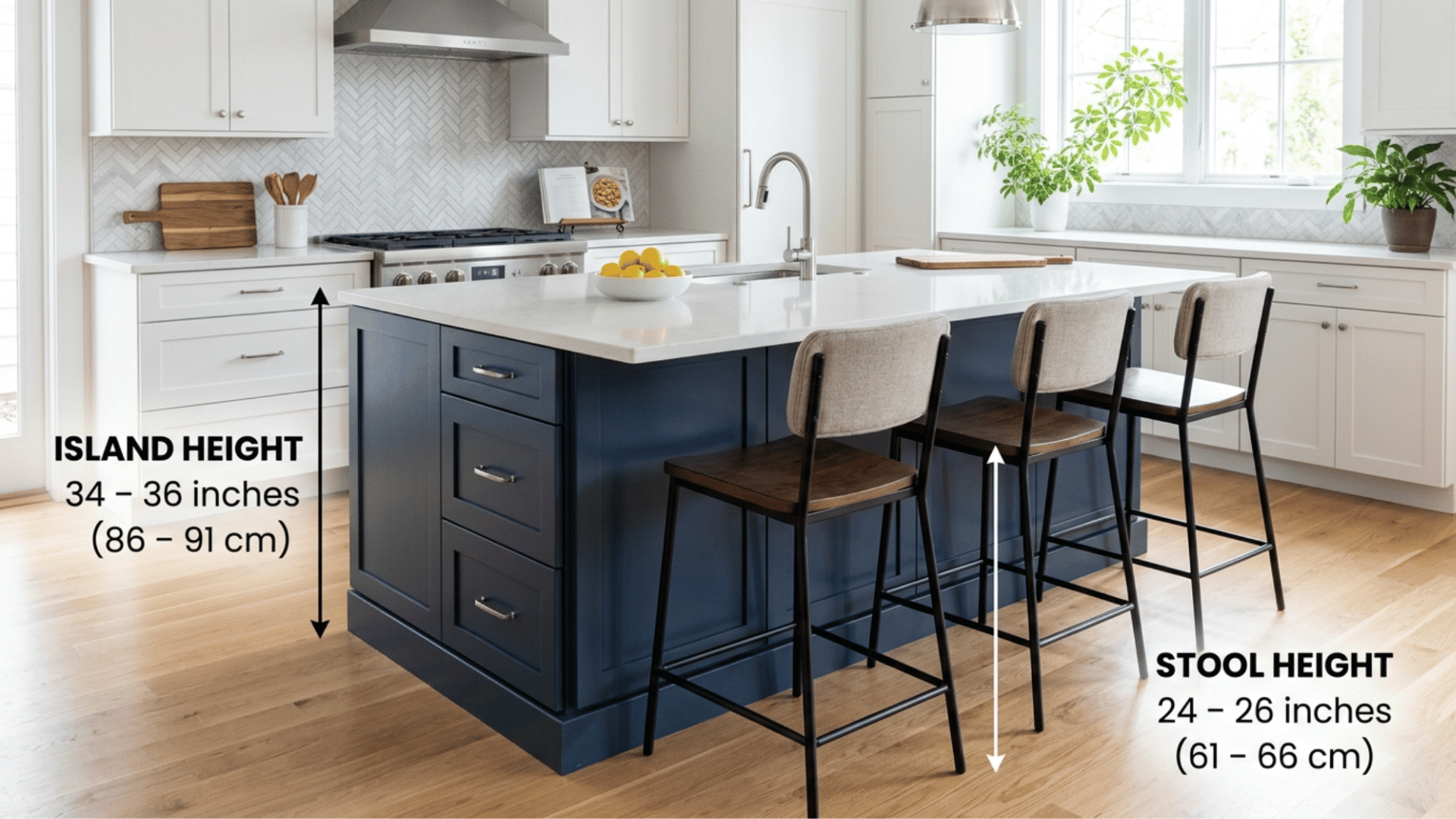
This setup usually follows counter height, making it a natural extension of the kitchen. It typically measures between 34 to 36 inches and pairs best with stools around 24 to 26 inches high.
Best for:
- Quick Meals: Perfect for breakfast, snacks, or short meals when you don’t want to set up the full dining table.
- Seamless Kitchen Look: Blends smoothly with kitchen counters and helps the space feel more connected and organized.
- Casual Seating: Creates a relaxed spot where people can sit, chat, eat, or even use a laptop for a while.
5. Coffee Tables
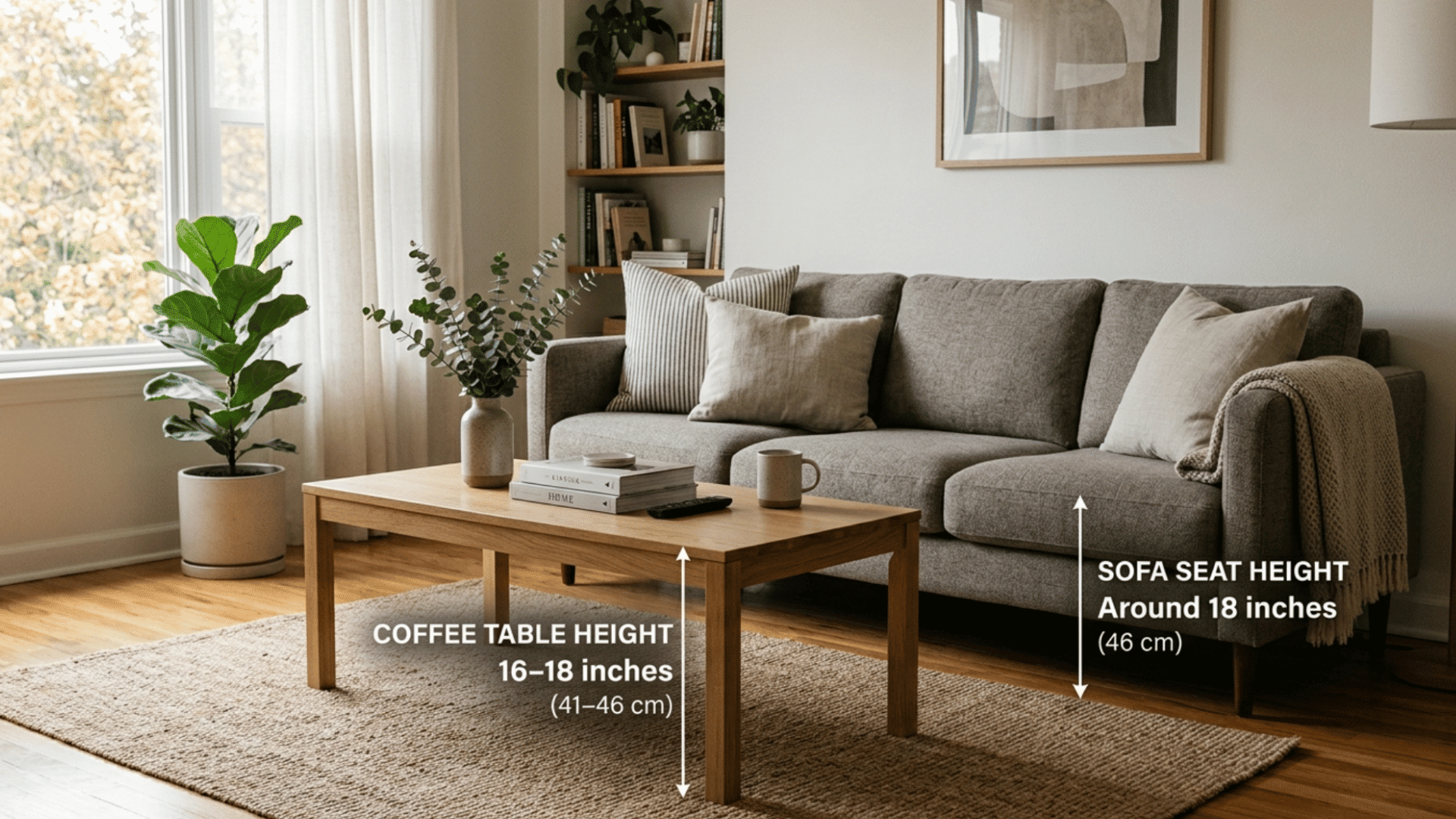
When it comes to finding the best coffee table height for your style and comfort, it’s important to know that coffee tables are much lower than dining tables to match sofa height.
Coffee tables are much lower than dining tables to match the sofa height. They typically range between 16 and 18 inches and sit comfortably in front of seating areas.
Best for:
- Living Room Use: Easy to reach while sitting, so you can grab things without getting up again and again.
- Holding Essentials: Great for keeping drinks, books, remotes, or small decor items within arm’s reach.
- Balanced Layout: Helps the seating area look complete and well-arranged without making the space feel crowded.
7. Work Desk
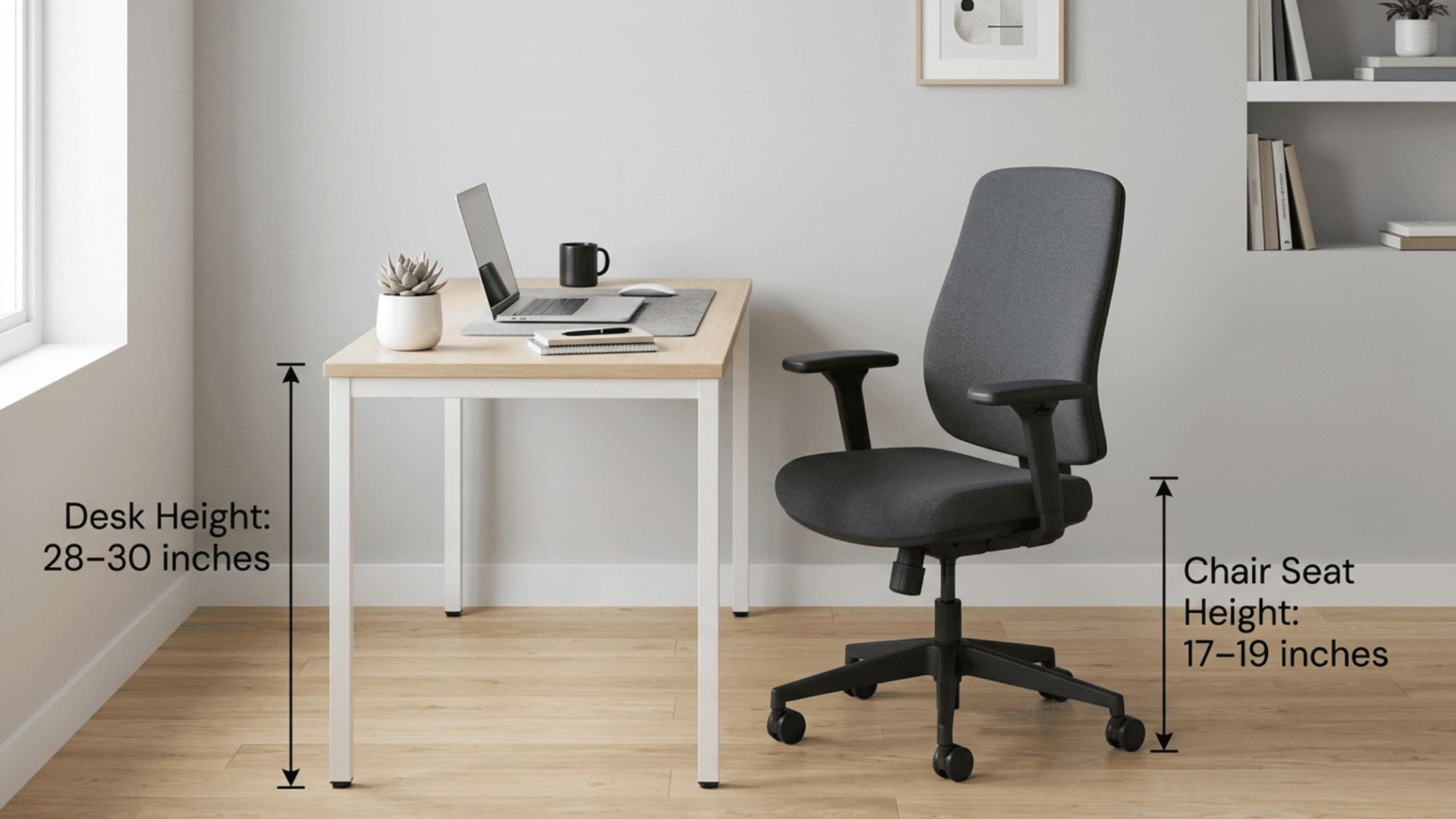
Most work desks follow standard table height for everyday comfort. It usually ranges between 28 and 30 inches and works best with adjustable office chairs.
Best for:
- Long Working Hours: Keep your sitting position comfortable so you can work without feeling strained.
- Ergonomic Setup: Allows proper alignment of arms, screen, and chair, which helps reduce posture issues
- Multi-Use Spaces: Works well for studying, writing, or even doubling as a table for light meals or hobbies.
Community Forums and Real Advice On Table Heights
Choosing the right table height can feel confusing, especially in open layouts or small spaces. Many people share real experiences online that help clear up what actually works in daily life.
One user was deciding between a standard dining table and a counter-height setup for a space connected to the kitchen. They wanted something that looked good but also felt practical for daily use.
Do not do counter height…they were very trendy and don’t match the beautiful classic style home you have…..get a normal heigh table…I would consider doing a small round with round rug you have plenty of traffic space between the counter and eating nook…- Home Interiors with Ease, Houzz
In another discussion, a homeowner asked about comfort levels for different family members, especially kids and shorter guests. The concern was about ease of sitting and long-term use.
42” high tables are really not comfortable for full on dining all the time . 30” stools are awkward for shorter people to use and for kids are really dangerous. I find a 36” high table and 24” stools a more comfortable option – Patricia Colwell Consulting, Houzz
Someone else shared their personal experience after switching to a counter-height dining table. Their focus was on everyday comfort rather than just looks.
If you like it and don’t entertain often – go for it. As someone that is shorter, I dislike sitting at high tops at restaurants as it is harder to get up/down, and my legs swing. For a snack or drink I think it’s fine, but for eating an actual meal I prefer regular height tables. – Barnes Custom Builders, Houzz
Tips to Choose the Right Table for Your Space
A few small details can make a big difference in comfort and everyday use. Consider these important points before choosing your table height:
- Test the table before buying, if possible. Photos can be misleading, and real comfort feels different when you sit
- Always sit at the table and check how your body feels, not just how it looks
- Think about multi-use needs like working, studying, or kids’ activities, since comfort matters more with longer use
- Check cushion compression; thick cushions can sink 1–2 inches, so account for that when measuring seat height
- Press down on cushions or subtract 1–2 inches from the listed height to get the real sitting level
- Avoid impulse buying just because of discounts or flash sales; it’s better to return than feel uncomfortable daily
- Check the table edge thickness since bulky tops reduce leg space and make seating feel tighter
Final Thoughts
At the end of the day, the right standard kitchen table height isn’t just a number. It’s what makes your space actually work for the people in it. Tall, short, small room, or open layout, there’s always a height that fits.
And now you know exactly how to find it. So, don’t overthink it. All you need to do is use the measurements, trust the your instinct, and properly match your chairs.
Do this, and before you know it, your table will feel exactly the way it should.
Frequently Asked Questions
Is 32 Inches Too High for a Dining Table?
Yes, 32 inches is slightly higher than standard, but it can work well for taller people or custom setups with the right chair height.
Can You Use Bar Stools with a Regular Dining Table?
No, barstools are too tall for standard tables and will feel uncomfortable without proper height matching. They can also make it hard to sit and eat properly due to the awkward height difference.
Does Table Shape Affect Seating Comfort?
Yes, round tables allow easier movement, while rectangular tables can feel tighter depending on leg placement and space.

With a Master’s in Architecture from the University of California, Berkeley, Mitchell Green has spent over two decades dedicated to the study and practical application of home fixture design. His career started in an architectural firm, providing him a strong foundation in the structural and aesthetic aspects of home interiors. Mitchell brought his comprehensive knowledge to our platform, where he has been an influential voice in our home fixtures and fittings section. Since 2018, he has been guiding our readers through the intricacies of selecting and installing fixtures, combining technical know-how with design flair. In his spare time, Mitchell is a keen photographer, capturing architectural details and design elements, an interest that complements his professional focus.