
When a heating system struggles to keep a commercial building comfortable, we tend to check the boiler first. While this is a valid course of action, radiator performance often depends on a combination of overlooked factors that affect efficiency, running costs and long-term reliability.
Taking a closer look at the radiators you have in place helps you avoid expensive oversights and achieve a heating setup that performs consistently.
The Big Picture
Where the heating system isn’t performing as it should, facilities managers and building owners will often naturally assume that it’s down to the size of the boiler or the age of the pipework. However, hidden variables can have an impact on system efficiency, driving up energy bills and leaving occupants cold.
Variables ranging from minor discrepancies in water chemistry and unexpected air pockets to the strategic placement of office furniture can drastically alter heat distribution.
Understanding Project Requirements
Before you buy replacement radiators or other hardware, you must accurately assess the building’s total volume. From there, consider daily occupancy patterns and specific heating demands.
For instance, a high-ceilinged warehouse will have a completely different heat distribution strategy than a compartmentalised medical clinic.
You must also align your project with British Standards, such as BS EN 442, which governs radiator heat output testing and verification. To avoid costly retrofitting errors down the line, work closely with suppliers during the initial architectural drafting phase. Those who collaborate early with manufacturers can cross-reference flow rates and system pressures, ensuring the hardware perfectly matches the heating requirements for the building.
Key Features to Look for in Modern Radiators
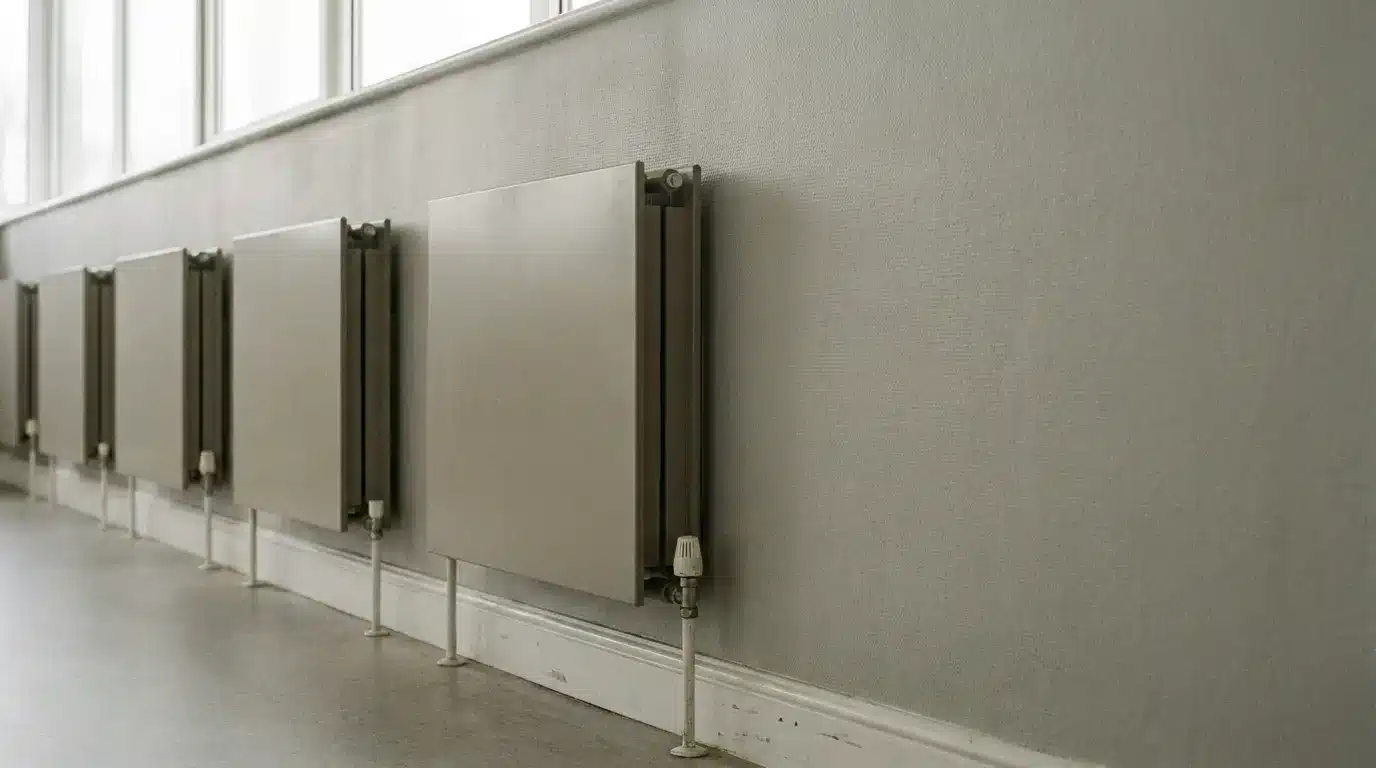
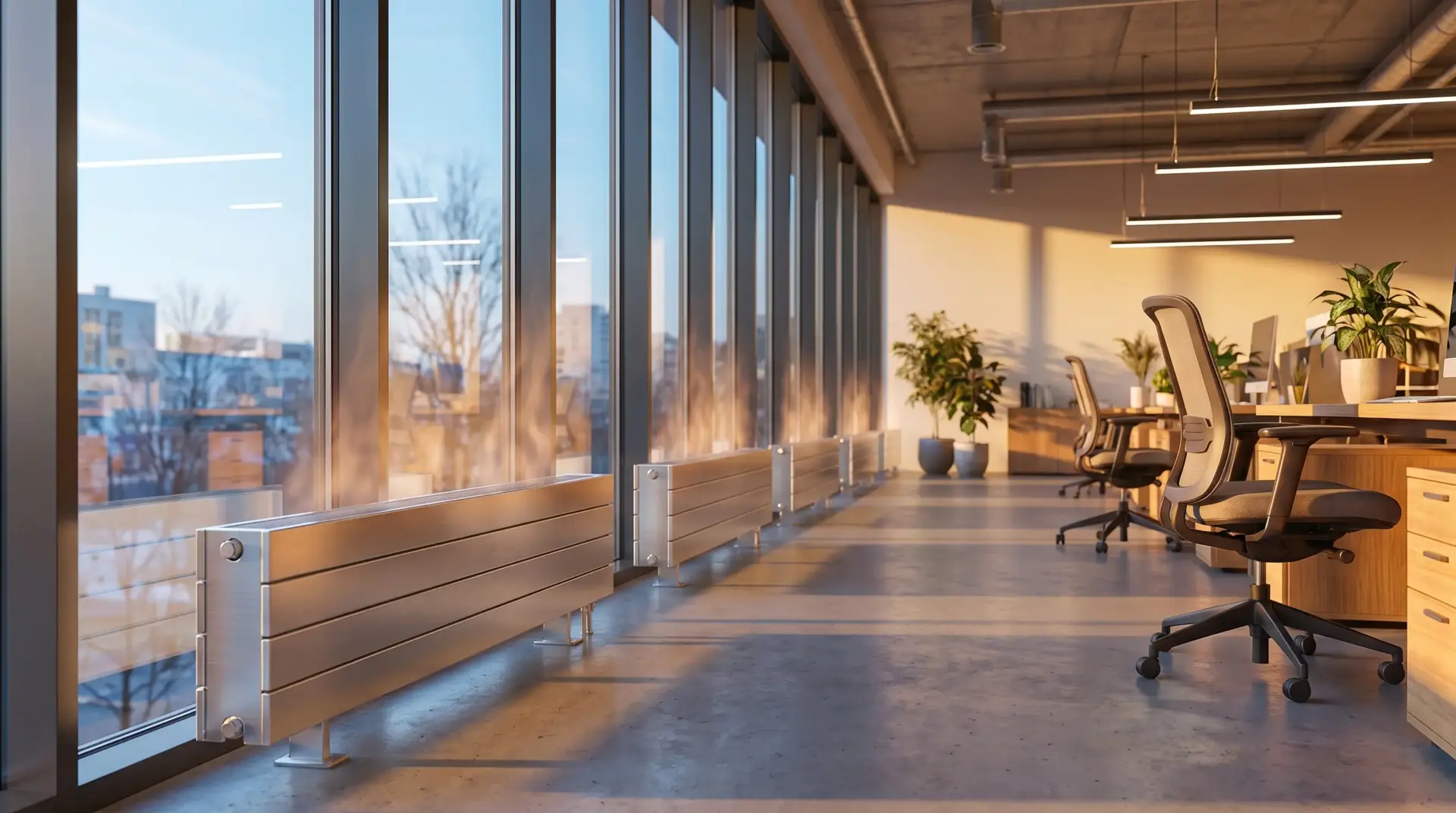
Modern commercial radiators need to perform well and deliver a suitable heat output for the space. However, energy efficiency is also a top priority because inefficient heating systems can increase operational costs over time and also have an impact on ESG targets.
Radiators with strong heat responsiveness allow spaces to warm up faster and maintain stable temperatures with less wasted energy. Ensure your chosen radiators integrate seamlessly with low-temperature heating setups, such as commercial heat pumps or condensing boilers.
Also, protect your investment by choosing products that offer comprehensive manufacturers’ warranties and robust after-sales technical support, which secures long-term maintenance backup.
Trends and Innovations in Commercial Heating
Recent trends and engineering breakthroughs have transformed radiator design, particularly using high-grade recycled aluminium. This material accelerates heat transfer far quicker than standard steel, allowing businesses to lower their carbon footprint.
Sustainability now drives the market, with manufacturers focusing heavily on fully recyclable components and low-carbon production methods to help businesses hit their net-zero targets.
While overhauling a heating system is a large-scale project, it’s possible to maximise output while saving costs and energy thanks to innovations and savvy suppliers. Take the time to plan out this update for long-lasting results.

With a Master’s in Architecture from the University of California, Berkeley, Mitchell Green has spent over two decades dedicated to the study and practical application of home fixture design. His career started in an architectural firm, providing him a strong foundation in the structural and aesthetic aspects of home interiors. Mitchell brought his comprehensive knowledge to our platform, where he has been an influential voice in our home fixtures and fittings section. Since 2018, he has been guiding our readers through the intricacies of selecting and installing fixtures, combining technical know-how with design flair. In his spare time, Mitchell is a keen photographer, capturing architectural details and design elements, an interest that complements his professional focus.