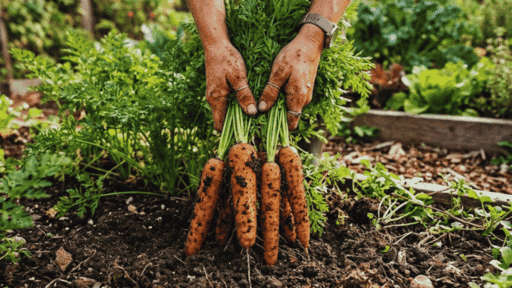
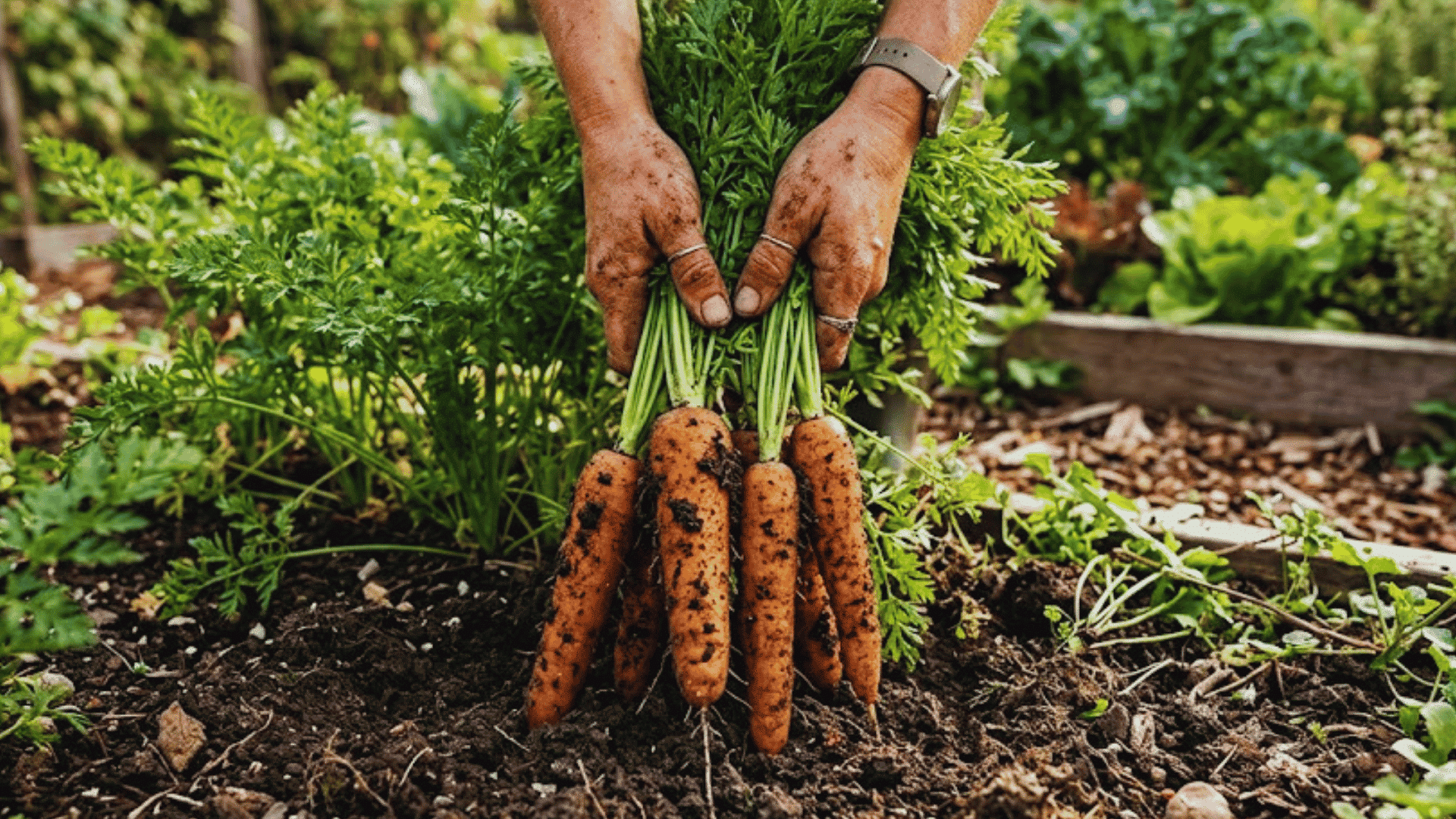

Growing carrots sounds simple, but getting them to grow straight and healthy takes a little know-how.
I’ve pulled plenty of forked, stubby, and twisted carrots from my garden over the years. Trust me, most of those problems are easy to fix once you know what causes them.
In this article, I’ll walk you through everything you need to know, from choosing the right soil to selecting the best carrot variety.
You’ll also learn how to water, thin, and care for your crop so it actually grows the way it should. No complicated methods here. Just clear, practical steps that work.
If you’ve tried growing carrots before and felt disappointed with the results, this guide is for you. With the right approach, you can grow straight and healthy carrots right in your own backyard.
How to Grow Straight and Healthy Carrots
Knowing how to grow carrots well starts with the right soil and a few basic steps. Loose, rock-free soil and steady watering make the biggest difference.
Carrots need soft, well-drained soil to grow straight down. Hard or rocky soil leads to forking and stunted roots.
Plant seeds about ¼ inch deep and space them evenly. This helps each seed sprout without crowding.
Thin seedlings early, once they reach 2 inches tall. Crowded plants grow poorly and produce small roots. Water regularly and keep the soil evenly moist. Uneven watering can cause roots to crack or split.
Carrots need full sun for at least 6 hours daily. Less light slows growth. Go easy on fertilizer, especially nitrogen. Too much leads to leafy tops and weak, forked roots.
How to Plant Carrots the Right Way
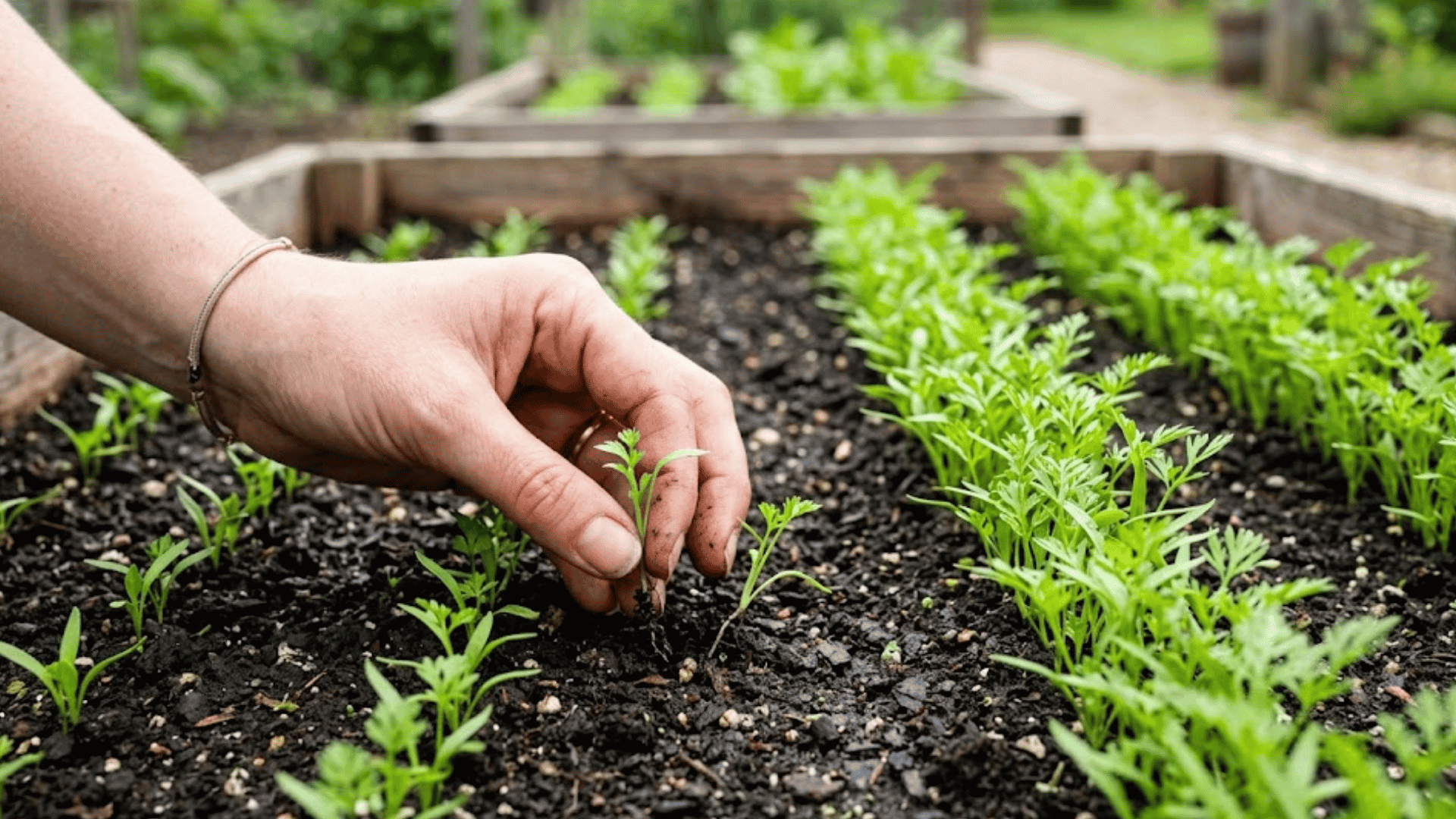
Getting the planting basics right gives carrot seeds the best start. Small mistakes early on can affect the whole crop when learning how to grow carrots successfully.
The best time to plant is 2–3 weeks before the last frost date in spring. Carrots prefer cool soil between 50°F and 75°F.
Sow seeds ¼ inch deep; planting too deep slows germination and reduces sprout rates.
Space seeds 2–3 inches apart in rows about 12 inches wide. Crowded roots compete for space and often grow crooked.
Carrots also do best when direct-sown, since their long taproot doesn’t handle transplanting well. Sowing directly into the ground avoids root damage from the start.
Planting tip: Cool soil is key. If the ground is still too warm from summer, carrot seeds will struggle to germinate. Wait for soil temperatures to drop before sowing for the best results
Best Soil for Growing Better Carrots
Soil preparation is a step most beginners skip, but it’s one of the biggest factors in growing carrots that are straight and well-shaped. The right soil sets up the entire crop for success.
- Why Loose Soil Matters: Carrots need soft, deep ground to grow straight down without splitting. Hard or compacted soil forces roots to bend and fork around obstacles.
- Raised Beds vs Garden Soil: Raised beds offer better drainage and stay loose longer than standard garden soil. They give roots a clean, unobstructed path downward.
- Compost Tips for Healthy Roots: Mix in well-aged compost before planting to improve soil texture and add natural nutrients. Fresh manure is too strong and can cause roots to fork.
- Soil Mistakes That Cause Forked Carrots: High-nitrogen fertilizers push leafy growth instead of strong roots. Rocks, clumps, and poor drainage are the most common reasons carrots grow crooked.
- Best Soil pH for Carrots: Carrots grow best in soil with a pH between 6.0 and 6.8. Soil that’s too acidic or alkaline affects nutrient absorption and slows root development.
- How Deep to Prepare the Soil: Loosening the soil to at least 12 inches deep gives carrot roots enough room to grow straight. Shallow preparation is one of the most overlooked steps in growing carrots properly.
Soil tip: Rocks and hard clumps are the main reason carrots fork. Always clear and loosen the soil before sowing seeds, this one step alone improves results significantly
Advice From Gardening Communities for Better Carrots
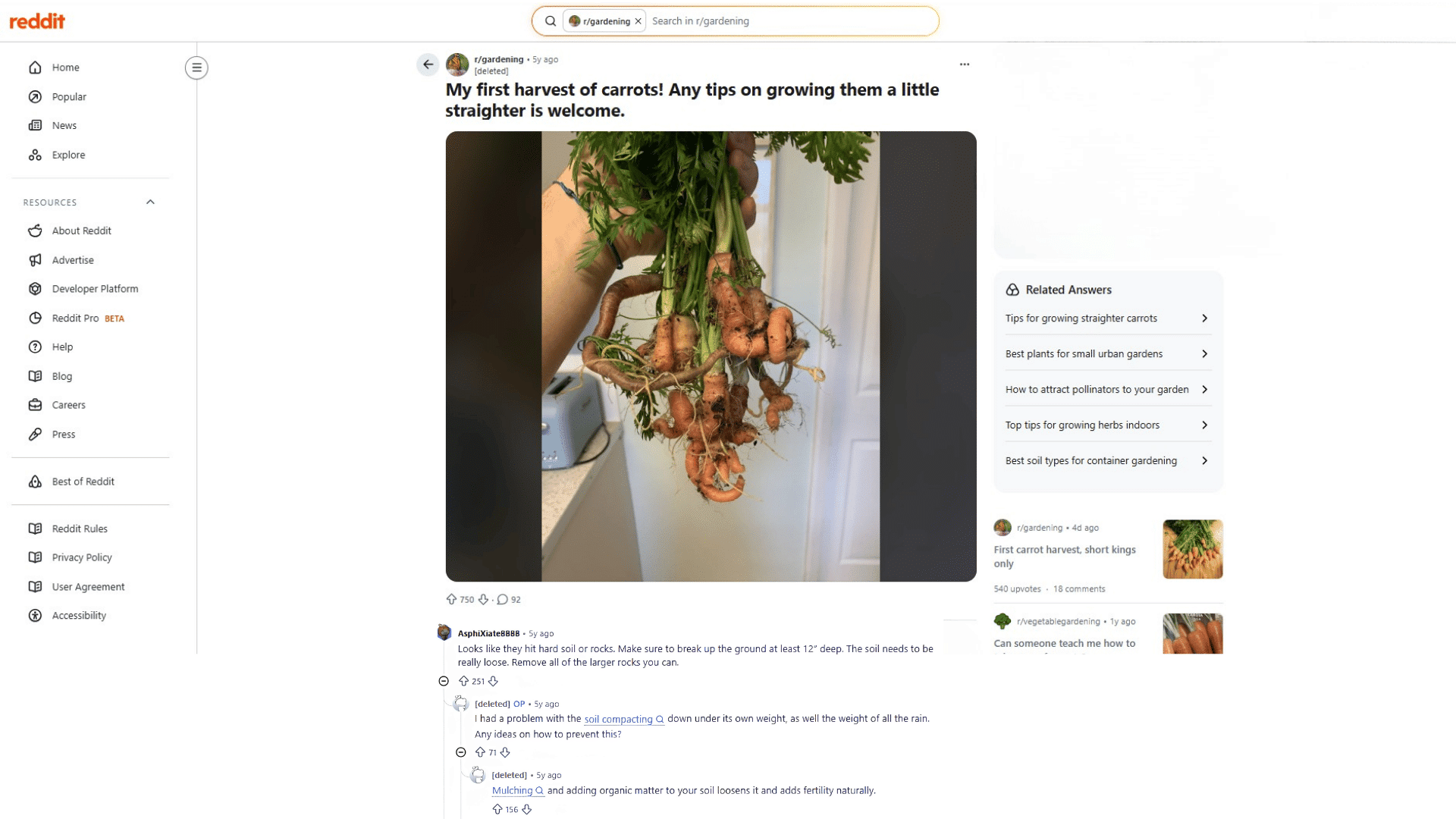
Real growers share some of the most practical advice on how to grow carrots that actually turn out straight.
These tips come straight from active gardening forums and community discussions.
Loose, rock-free soil is the most repeated tip across gardening groups. Roots fork when they hit hard ground — breaking up soil 12 inches deep fixes most of that.
Consistent watering comes up often, too. Uneven moisture causes cracking and poor root shape.
For sweeter carrots, experienced growers recommend varieties like Nantes or Chantenay. These perform well in home gardens and raised beds.
Raised beds are a popular choice for backyard growers. The loose, controlled soil gives roots a clear path downward.
Thinning seedlings to 2–3 inches apart is another common fix. Crowded plants are among the most common mistakes beginners make.
Growing and Harvesting Carrots
Raised beds and containers are some of the easiest ways to learn how to grow carrots at home. The controlled environment makes it simpler to manage soil, water, and space.
Containers need to be at least 12 inches deep to give roots enough room to develop properly. Shallow pots lead to short, stubby carrots.
Shorter varieties, such as Chantenay or Parisian, work best in small spaces. They fit well in containers and raised beds, requiring little space.
Water container-grown carrots more often since pots dry out faster than the ground soil. Keep the soil moist but never waterlogged.
For harvesting, look for shoulders about ¾ inch wide at the soil surface; that’s a reliable sign carrots are ready. Gently loosen the soil around the root before pulling to avoid snapping it.
Trim tops and store carrots in a cool place. They stay fresh for several weeks when kept in damp sand or a sealed bag in the fridge.
Best Carrot Varieties for Home Gardens
Picking the right sweet carrot variety makes a real difference in flavor, shape, and overall results. These are the most reliable options for anyone learning how to grow carrots at home.
- Nantes Carrots: Known for sweet flavor and smooth, straight roots, Nantes is one of the most popular choices for home gardens. Grows well in loose, well-prepared soil.
- Imperator Carrots: Produces long, slender roots ideal for deep, sandy soil. A good pick for gardeners who want classic, store-style carrots.
- Danvers 126: Built for heavy or clay soil, Danvers carrots are sturdy and adaptable. Can produce surprisingly large roots and works well for short-term storage.
- Chantenay Carrots: Short and tapered, Chantenay varieties perform well in heavy soils and shallow beds. A reliable option for small-space gardening.
- Mokum F1: A top pick forearly spring and summer harvests. Known for consistent germination and sweet, slender roots that mature quickly.
- Purple Haze: Best suited for fresh summer eating with short-term storage. Offers a deep purple skin with an orange core and a mildly sweet flavor.
- Bolero F1: The go-to variety for winter storage. Holds flavor and texture well over long periods, making it a practical choice for storing through colder months.
- Atlas (Parisian) Carrots: A round, compact variety that grows well in clay soils and containers. A practical choice for tight spaces, though the shape makes peeling a little tricky.
- Little Finger Carrots: A compact variety well-suited for small gardens and pots. Matures quickly and works great for container growing on patios or balconies.
- Rainbow Carrot Varieties: Includes purple, yellow, and white roots alongside orange. Orange carrots remain the most nutrient-dense, with higher Vitamin A content than any other carrot color.
Common Mistakes That Cause Crooked Carrots
Even small missteps can ruin a carrot crop before it gets started. Knowing what to avoid is just as important as knowing how to grow carrots the right way.
| Mistake | What Goes Wrong | Quick Fix |
|---|---|---|
| Planting seeds too deeply | Seeds struggle to sprout, and germination drops | Sow only ¼ inch deep |
| Hard or rocky soil | Roots split and fork around obstacles | Loosen soil 12 inches deep, remove rocks |
| Skipping thinning | Crowded roots grow weak and misshapen | Thin seedlings to 2–3 inches apart |
| Using poor-quality seeds | Low germination rate and patchy growth | Always use fresh, high-quality carrot seeds |
| Ignoring soil pH | Poor nutrient absorption weakens roots | Keep pH between 6.0 and 6.8 |
| Uneven watering | Roots crack or grow unevenly | Water consistently, keep the soil moist |
| Too much nitrogen or fresh manure | Leafy tops grow, roots stay weak | Use well-aged compost only |
| Shallow containers or beds | Roots run out of space and curl | Use containers at least 12 inches deep |
Final Thoughts
Growing straight and healthy carrots is not complicated once the basics are in place. Good soil, proper spacing, consistent watering, and a little patience go a long way.
The most common problems, forked roots, stunted growth, and poor germination, all trace back to a few simple mistakes. Fix those, and the results improve fast.
Learning how to grow carrots takes a season or two to get right.
Every garden is different, and small adjustments each year make a real difference over time.
The process is worth it. There’s nothing quite like pulling a clean, straight carrot straight from the ground, knowing exactly how it was grown.
Tried growing carrots before? Share what worked, what didn’t, or any tips picked up along the way.
Drop it all in the comments below.
Frequently Asked Questions
How to Make Carrots Sweeter When Growing?
Cooler soil temperatures and leaving carrots in the ground after the first frost naturally increase their sugar content.
How Often Should Carrots Be Watered?
Carrots need about 1 inch of water per week, with consistent moisture kept throughout, never letting the soil dry out completely between watering.
Do Coffee Grounds Help Carrots Grow?
Coffee grounds can improve soil drainage and add mild nutrients, but heavy use can raise soil acidity and harm root development.
What Is the Best Natural Fertilizer for Carrots?
Well-aged compost is the best natural option; it improves soil texture without pushing excessive leafy growth.
What Is the Secret to Growing Good Carrots?
The real secret is simple: proper soil preparation, consistent watering, and early thinning produce the best results every time.
How Long Do Carrots Take to Grow?
Most carrot varieties are ready to harvest between 70 and 80 days after sowing, depending on the variety and growing conditions.

With a Master’s in Landscape Architecture from the University of Virginia, Sophia Stephenson has dedicated the last 20 years to creating and maintaining vibrant outdoor spaces. Her professional journey started in landscape design, where she gained a reputation for innovative and sustainable approaches. Sophia became a part of our editorial team as a freelancer in 2019, offering a fresh perspective on outdoor living. Since 2020, she has been the chief for our outdoor design content, blending aesthetic appeal with environmental stewardship. In her leisure time, Sophia is a keen photographer, capturing the beauty of natural landscapes, a hobby that complements her professional expertise.