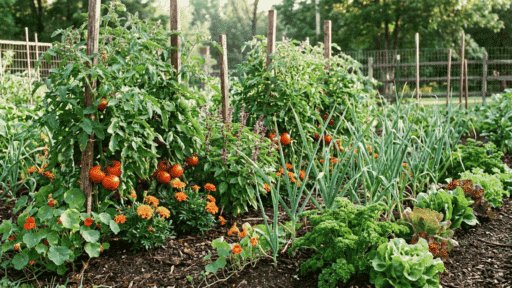
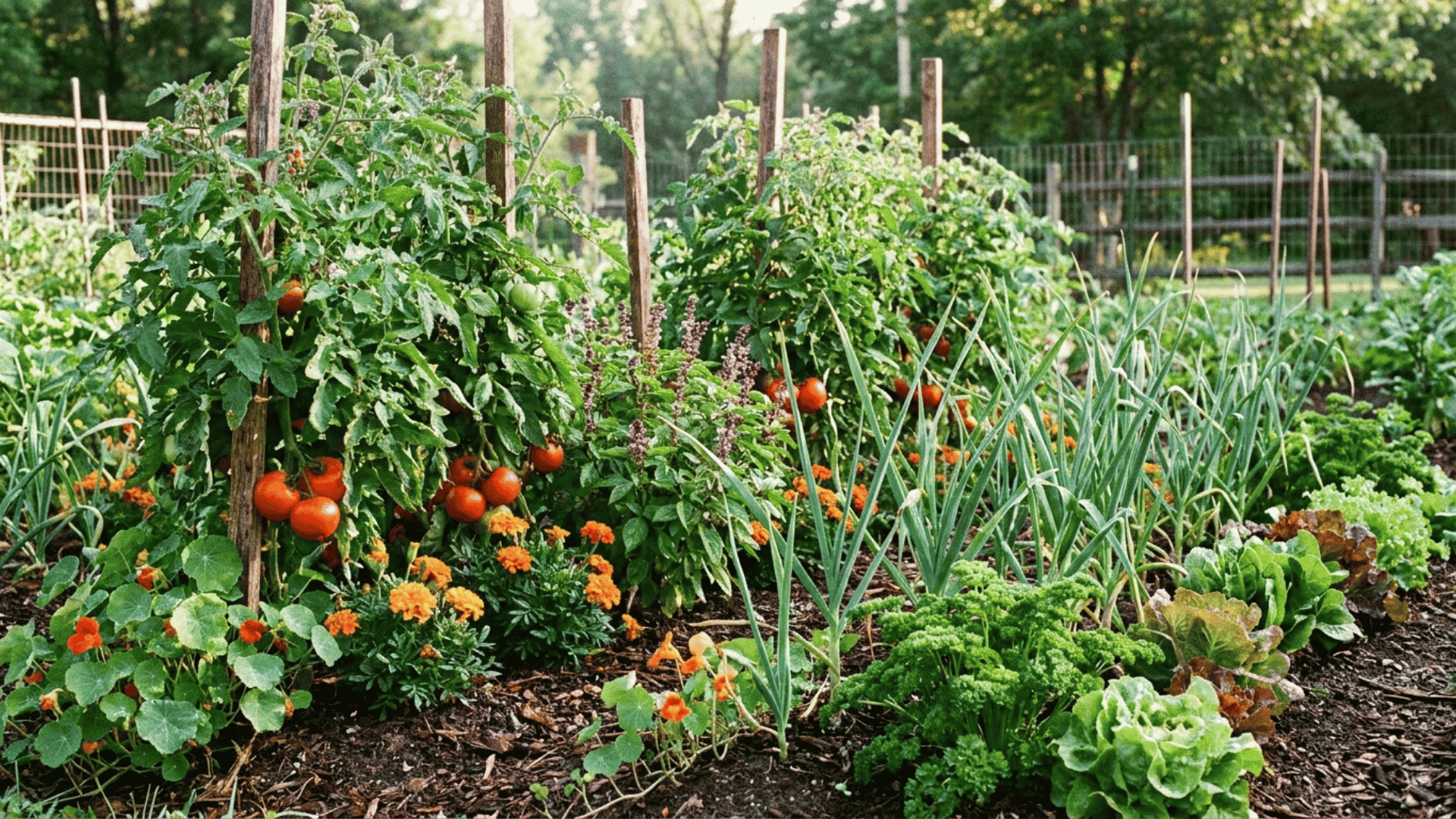

Most gardeners have a few tomato plants in their yard or on their patio. What many don’t realize is that what grows next to those tomatoes matters almost as much as how you water or fertilize them.
Tomatoes are heavy feeders. They’re also magnets for certain insects, aphids, hornworms, whiteflies, and spider mites, which show up season after season.
Planting the right neighbors can break those pest cycles without reaching for a spray bottle.
Companion planting is the practice of pairing plants that help each other out. Some plants repel pests. Some attract pollinators. Others loosen the soil, fix nitrogen, or block out weeds.
When you choose your tomato’s neighbors carefully, the whole garden tends to do better. This guide covers the best companion plants for tomatoes based on what actually works in a real garden.
What is a Companion Plant?
A companion plant is any plant grown alongside another to provide it with an advantage. That advantage might be pest deterrence, improved soil, better pollination, or simply making better use of available space.
The idea comes from observing how plants interact in nature. Plants don’t grow in isolation: they share soil, attract insects, and influence each other through root chemicals and scent.
Companion planting takes those natural relationships and applies them deliberately in a garden. It’s not a new concept. Farmers have used companion planting for centuries.
One well-known example is the “Three Sisters” method used by Indigenous peoples across North America, in which corn, beans, and squash are grown together because each supports the others.
In a modern vegetable garden, companion planting usually means choosing specific neighbors for a particular crop, in this case, tomatoes, and placing them close enough to have an effect.
Benefits of Companion Planting for Tomatoes
The right companion plants do more than fill space around tomatoes. Here are some benefits of companion plants
- Pest Control: Certain companion plants release scents or natural compounds that help confuse or repel common tomato pests, reducing the chance of insect damage without the need for constant spraying.
- Better Pollination: Flowering companions attract bees, hoverflies, and other beneficial insects that help improve pollination, which can lead to more consistent fruit set and better-shaped tomatoes.
- Improved Soil Health: Some companions, especially legumes, help add nitrogen to the soil, while others loosen compacted ground and help improve moisture retention around tomato roots.
- Space-Saving in Garden Beds: Low-growing plants fill the space beneath tomatoes, helping suppress weeds, conserve soil moisture, and make the most of limited garden space.
Best Companion Plants for Tomatoes
Here are some of the best companion plants for tomatoes:
1. Basil
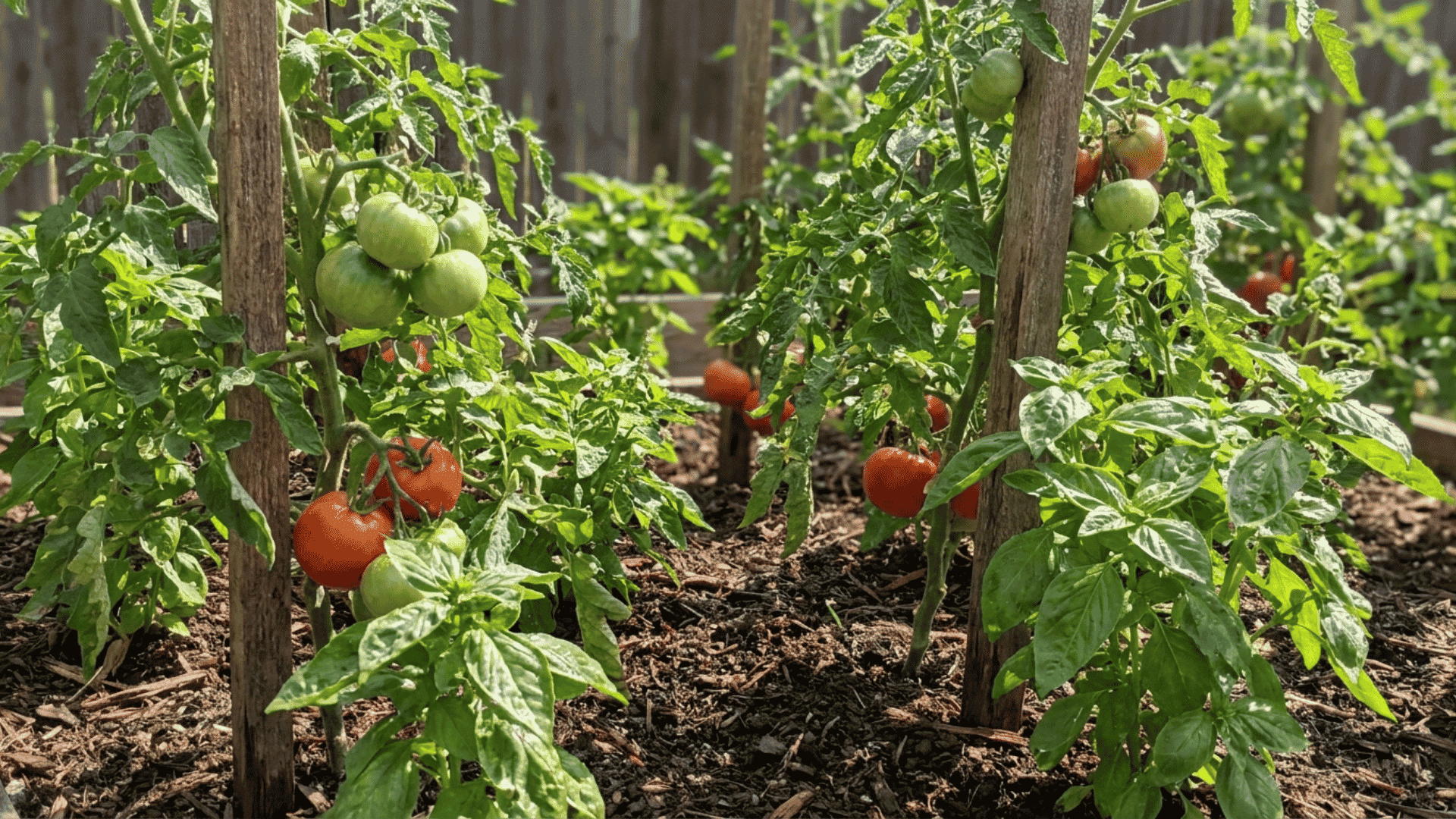
Basil is the most commonly recommended, as its strong scent is thought to confuse aphids and thrips.
Plant basil 10–12 inches from tomato stems so both plants have enough root space. Pinch basil flowers regularly to keep the plant producing leaves all season.
It works well in containers: one tomato in a large pot with a basil plant alongside is one of the most practical patio combinations you can grow.
2. Garlic
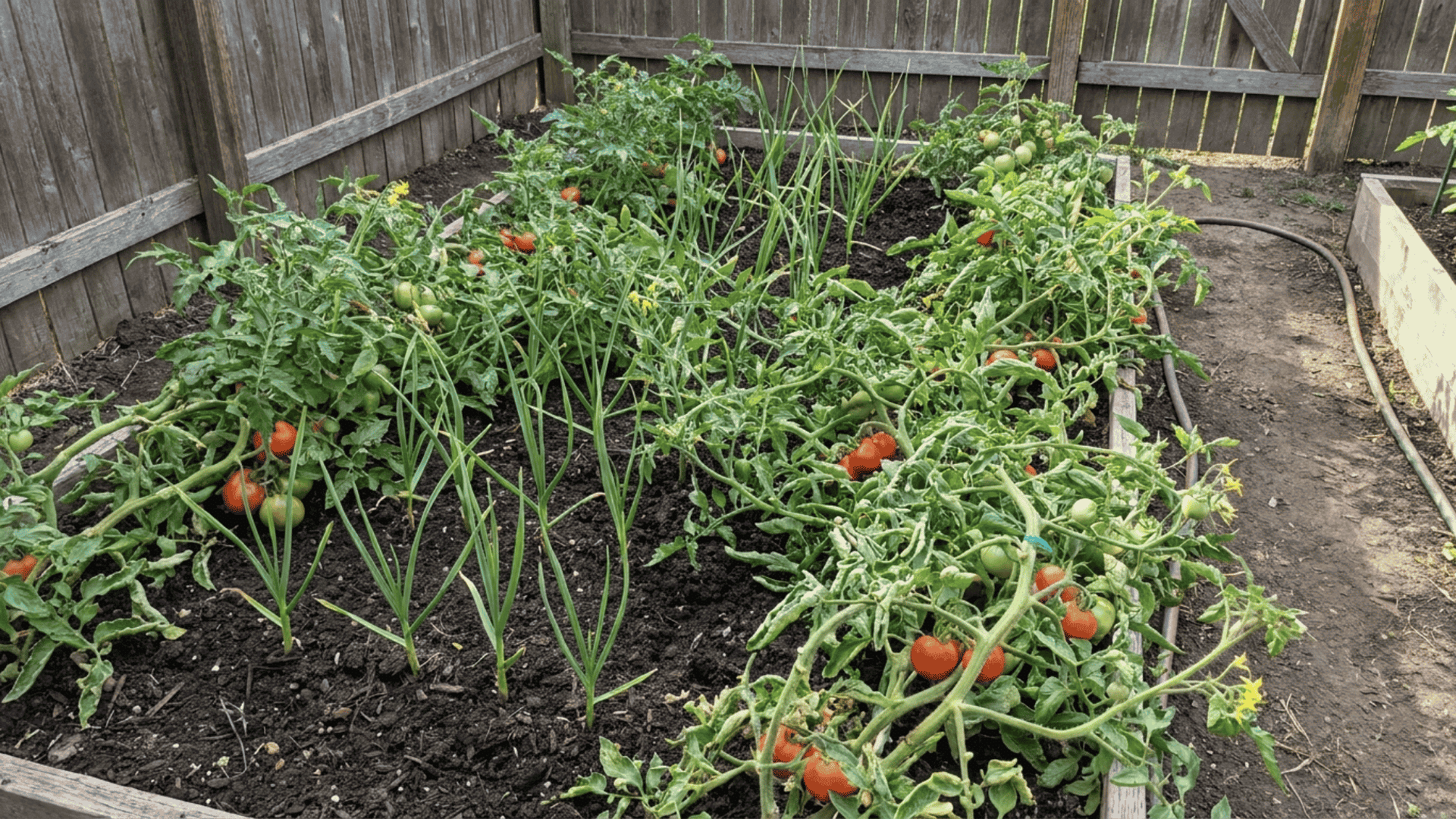
Garlic is one of the better low-maintenance companions for tomatoes. Its sulfur compounds act as natural deterrents against spider mites, aphids, and some beetles.
It takes up very little space and can be tucked into any gap. Plant garlic cloves in the fall for a late-spring or early-summer harvest, timed well ahead of tomato season in most regions.
If you’re planting in spring, garlic cloves go in 4–6 weeks before tomato transplants. Space cloves about 6 inches apart around your tomato plants.
3. Onions
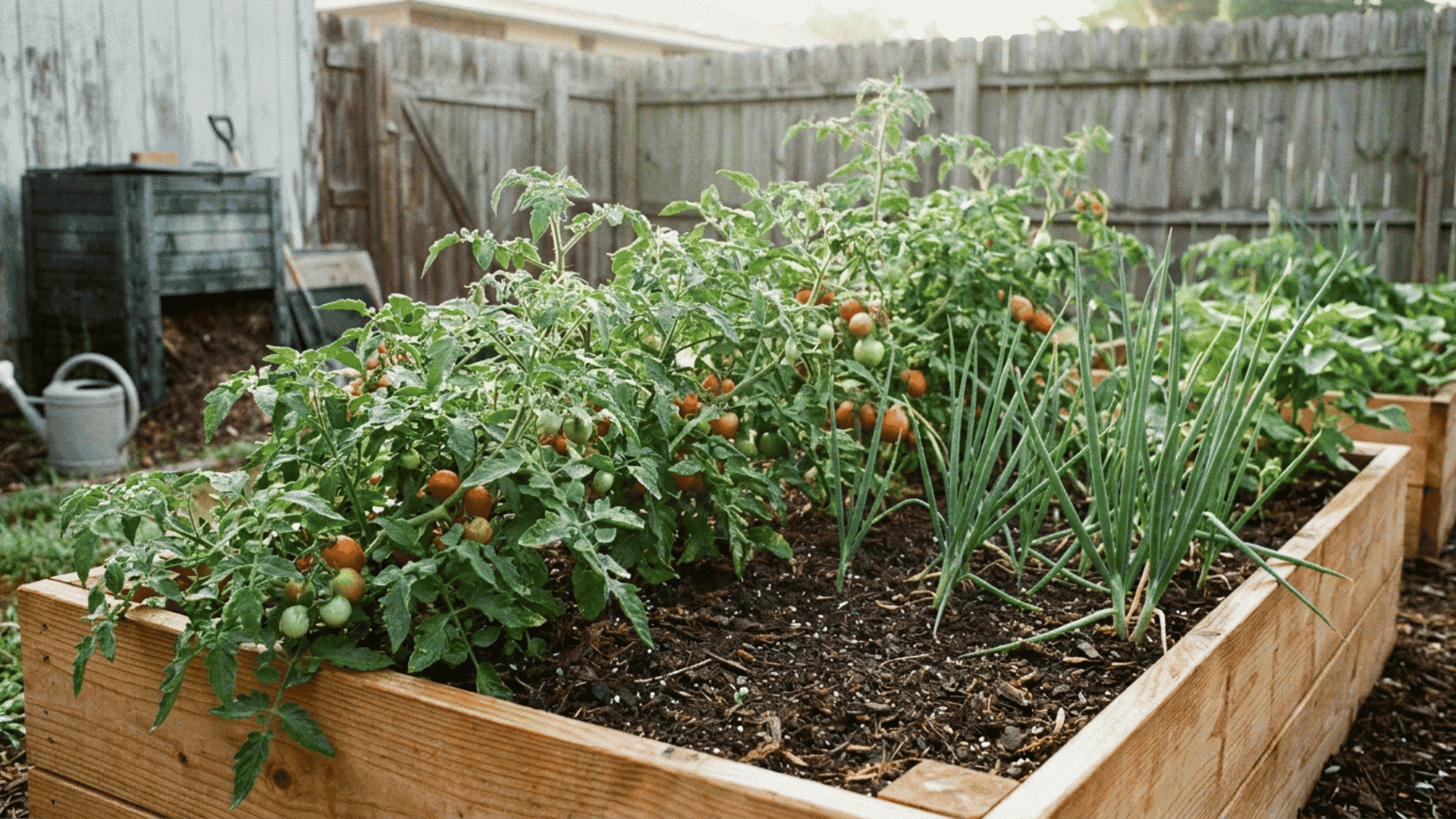
Onions work similarly to garlic: their scent disrupts pest location and deters a range of insects, including aphids and thrips. They also take up very little horizontal space, which makes them easy to fit into an existing bed layout.
Plant onion sets or transplants around the edges of your tomato bed in early spring, before tomatoes go in. Bunching onions (scallions) are a good choice for smaller beds since they don’t need as much space as bulb onions.
4. Marigolds
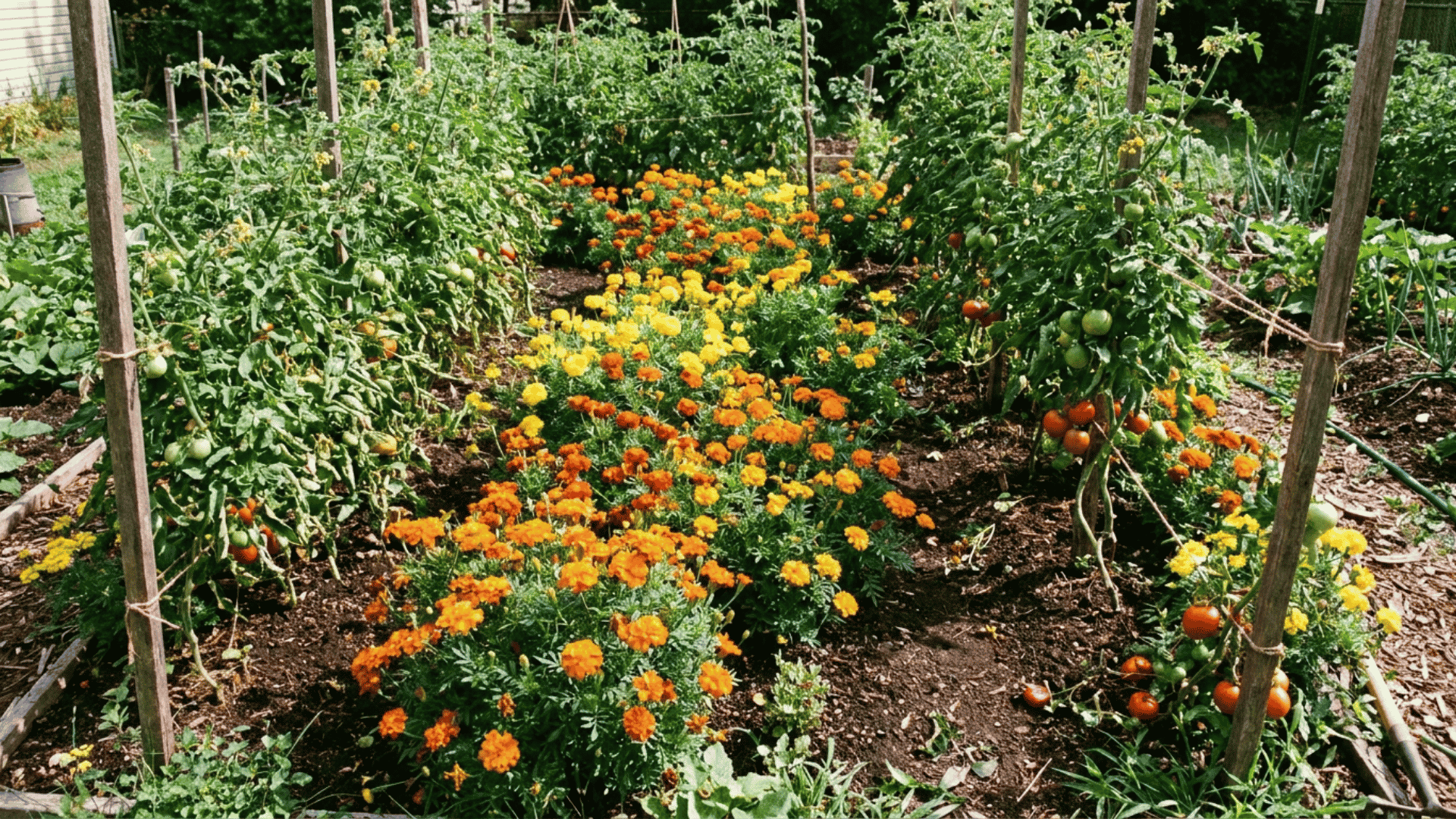
French marigolds (Tagetes patula) are particularly useful against root-knot nematodes, microscopic soil pests that damage tomato roots and reduce yields.
Their roots release a compound called alpha-terthienyl, which has been shown in research trials to suppress nematode populations over a full growing season.
Above ground, their scent deters aphids and whiteflies.
- Plant French marigolds throughout the bed, not just along the edges. Spacing them between tomato plants gives better soil-level protection.
- Deadhead regularly to keep them blooming from spring through frost.
- Annual French marigolds are more effective for nematode suppression than the larger African varieties.
5. Chives
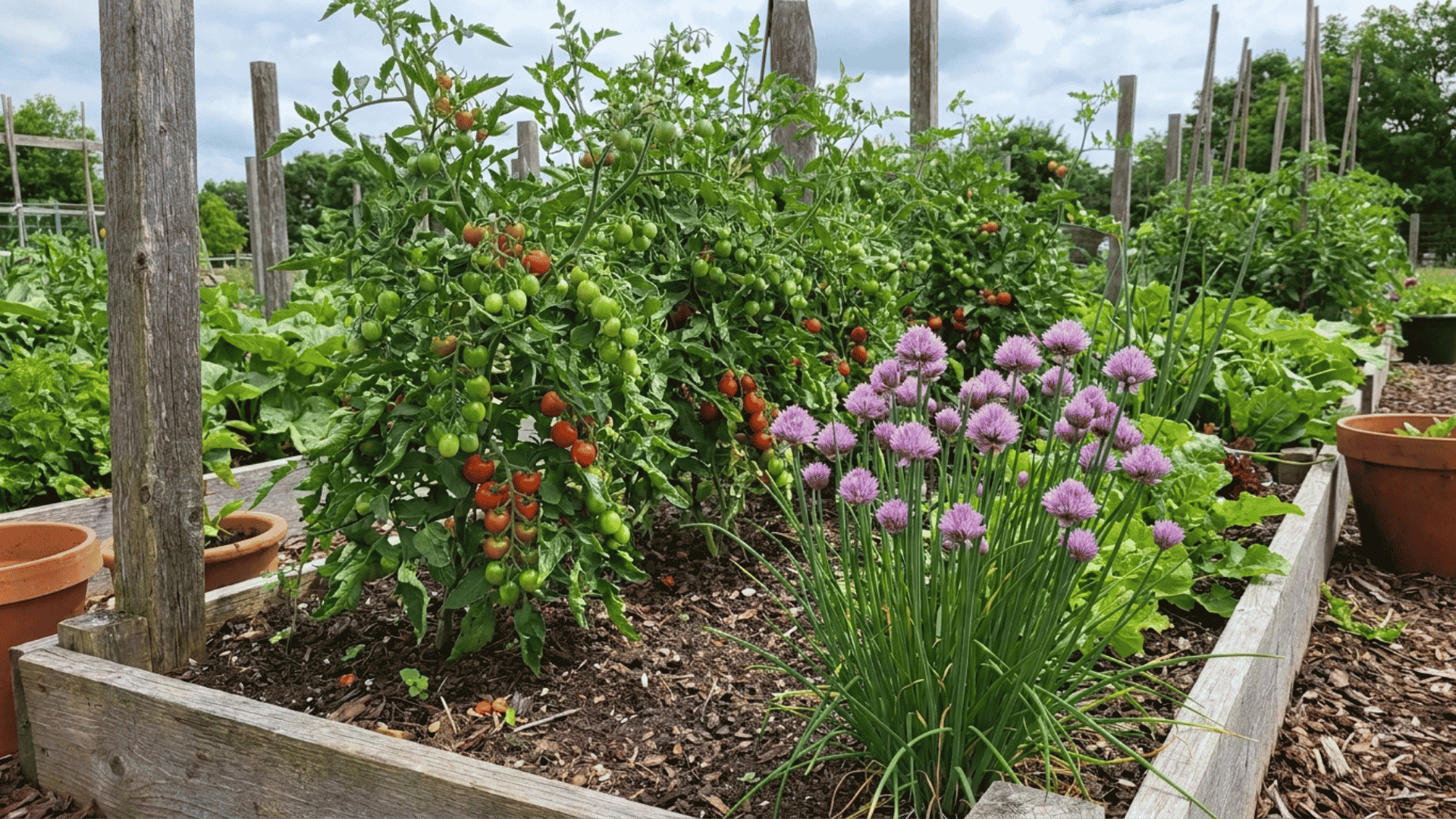
Chives are perennial, which means you plant them once and they come back every year. They flower in spring with purple blooms that attract early pollinators, and their mild allium scent deters aphids.
Let chives go to flower in spring for pollinator benefit, then cut them back to encourage new growth. Plant them along bed edges or between tomato cages where they won’t get overshadowed.
Chives do well in containers alongside tomatoes in smaller spaces.
6. Lettuce
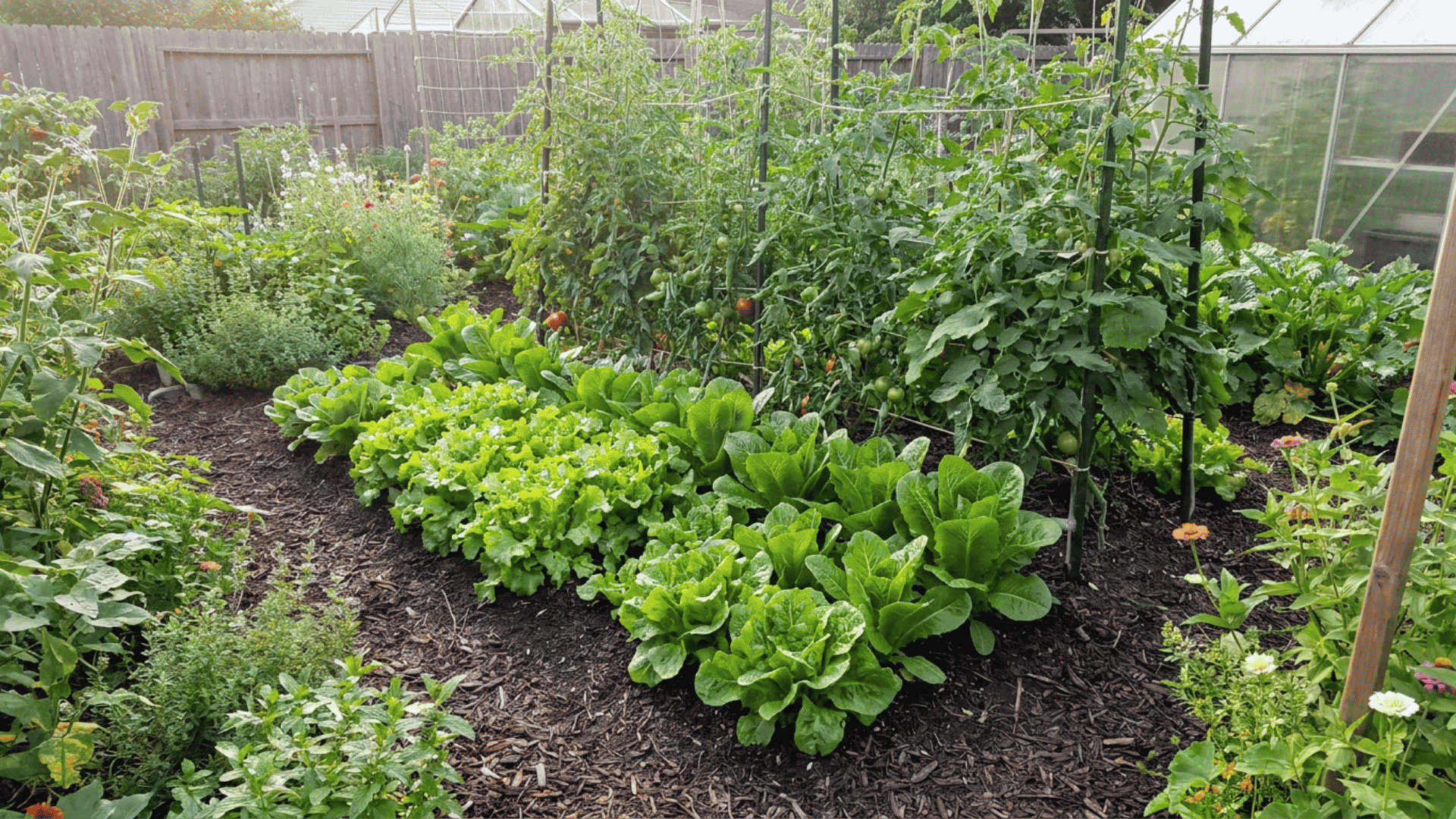
Lettuce is a useful ground-level companion for tomatoes because it fills in the space below the canopy, shading the soil and reducing weed growth.
Tomatoes provide afternoon shade, extending the lettuce season past what you’d normally expect in summer. Sow lettuce seed directly in the soil around your tomato transplants in spring.
Choose loose-leaf varieties rather than heads: they’re easier to harvest over time without disturbing tomato roots. Water both plants at the base rather than overhead to reduce disease risk.
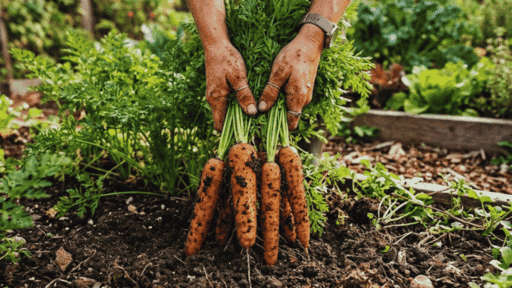
7. Carrots
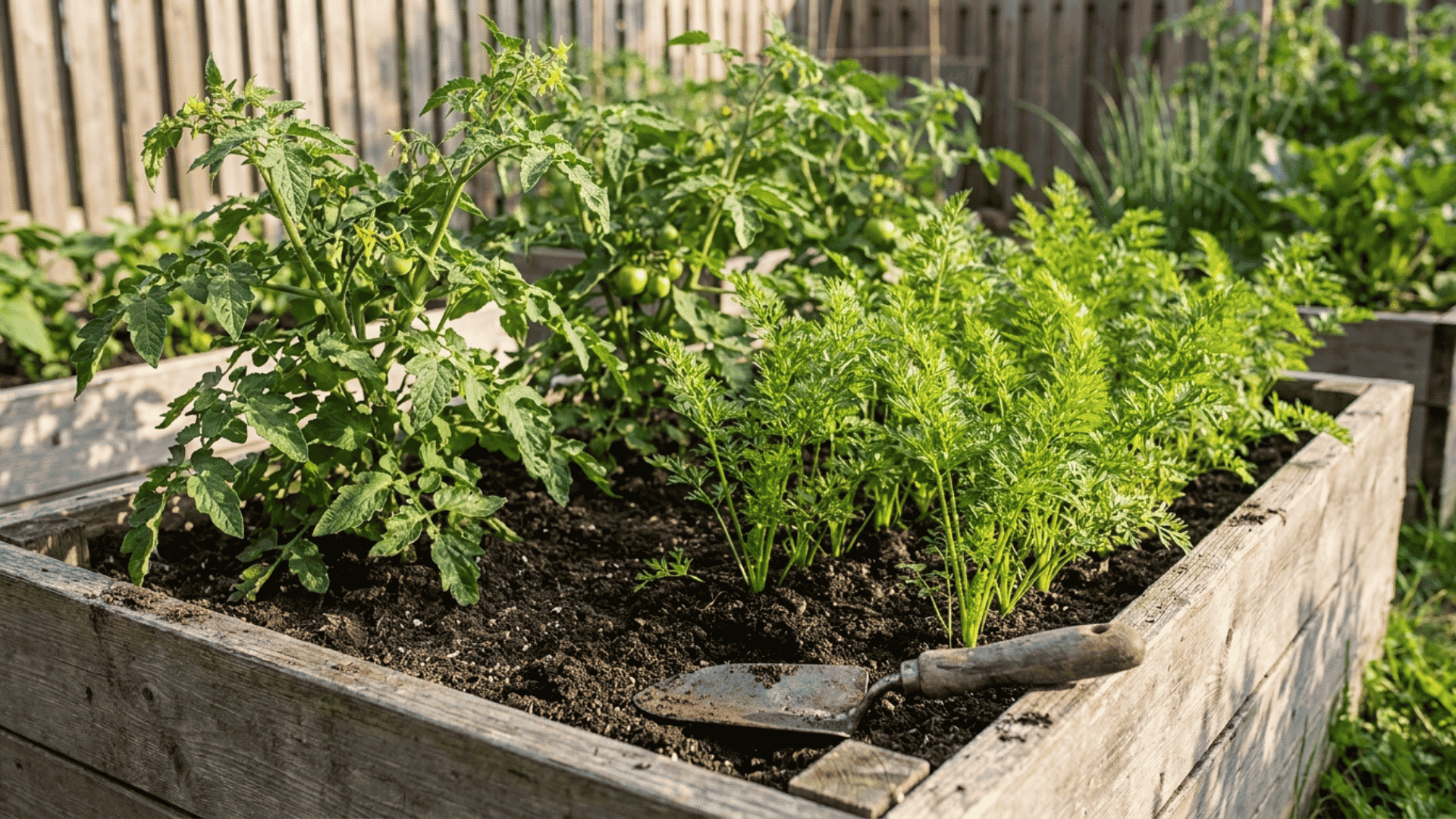
Carrots loosen the soil as they grow downward, which can benefit tomato roots in heavy or compacted beds. They don’t compete significantly for nutrients and fit neatly into the space between tomato plants.
Sow carrot seed around tomato transplants in early to mid-spring. Avoid pulling carrots while tomatoes are actively growing.
Wait until the end of the season, when tomato roots are less active, or harvest by carefully loosening the soil with a fork. Carrots work best in beds, not containers, where they have enough depth.
8. Borage
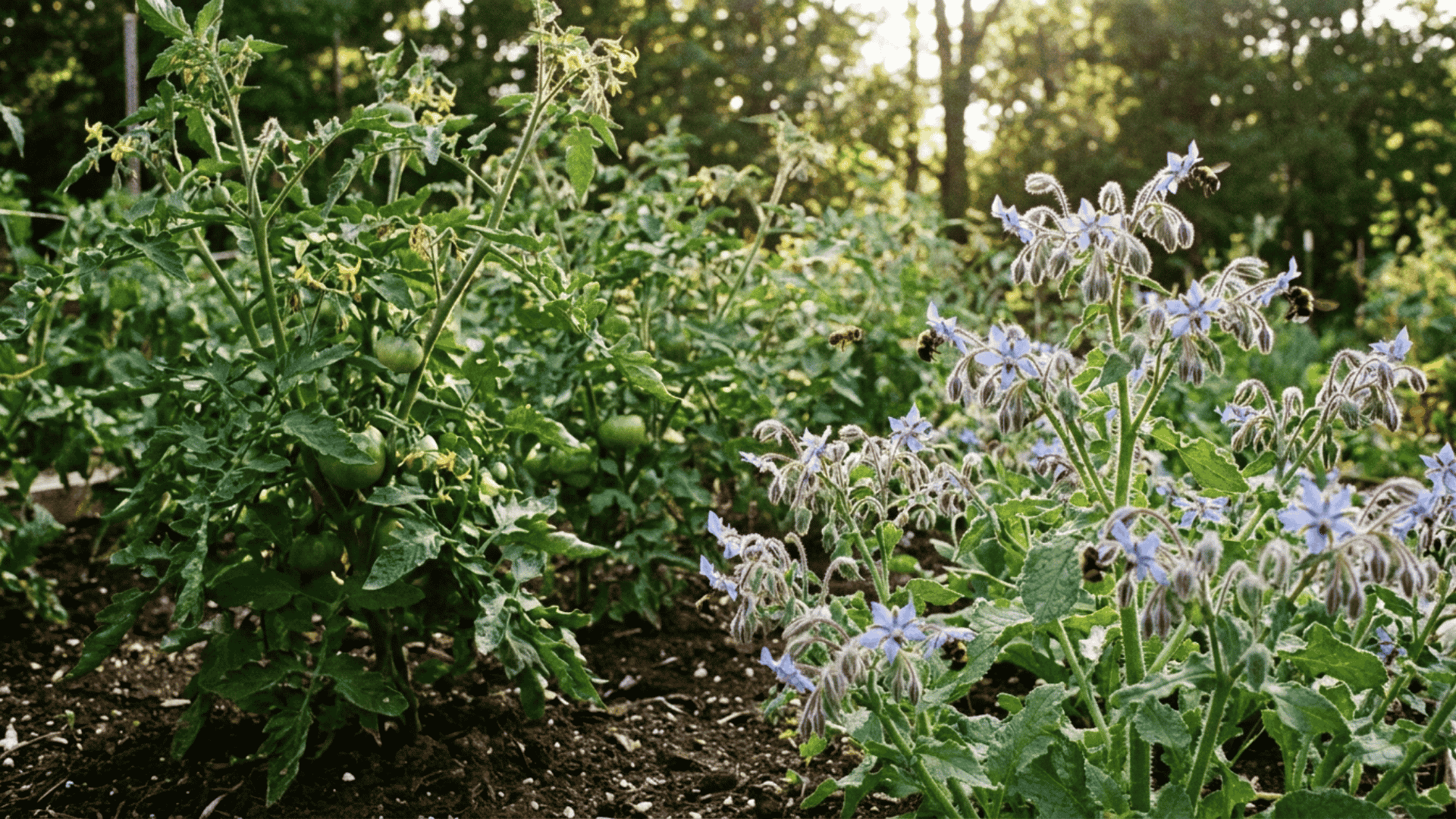
Borage is underused in most vegetable gardens. It attracts bees reliably more so than most other flowering herbs and repels tomato hornworms.
Its blue flowers appear from early summer through fall if you deadhead it, providing pollinator support throughout the tomato season.
Plant borage from seed directly in the bed. It doesn’t transplant well once established. Give it room, borage spreads to about 18–24 inches wide. It self-seeds freely, so expect it to return in nearby spots next year.
9. Parsley
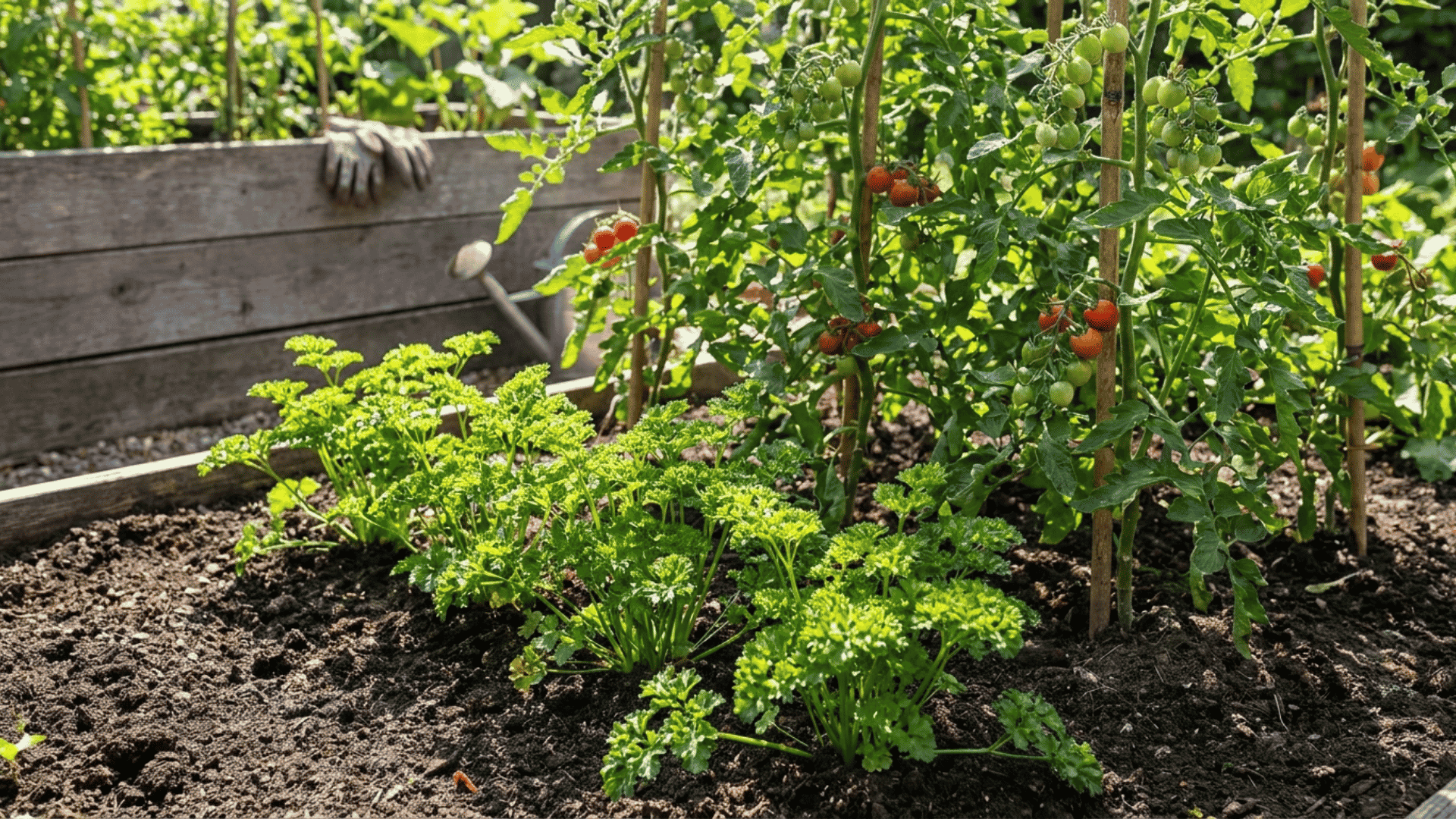
Parsley acts as a habitat plant for beneficial insects, particularly parasitic wasps that prey on tomato hornworm larvae. It also attracts hoverflies, whose larvae eat aphids.
Let some parsley go to flower. The small white umbel flowers are what attract beneficial insects: a tidy, clipped parsley plant won’t provide the same benefit.
Plant it near the base of tomato cages, where it will get partial shade as the season progresses. Works well in containers.
10. Spinach
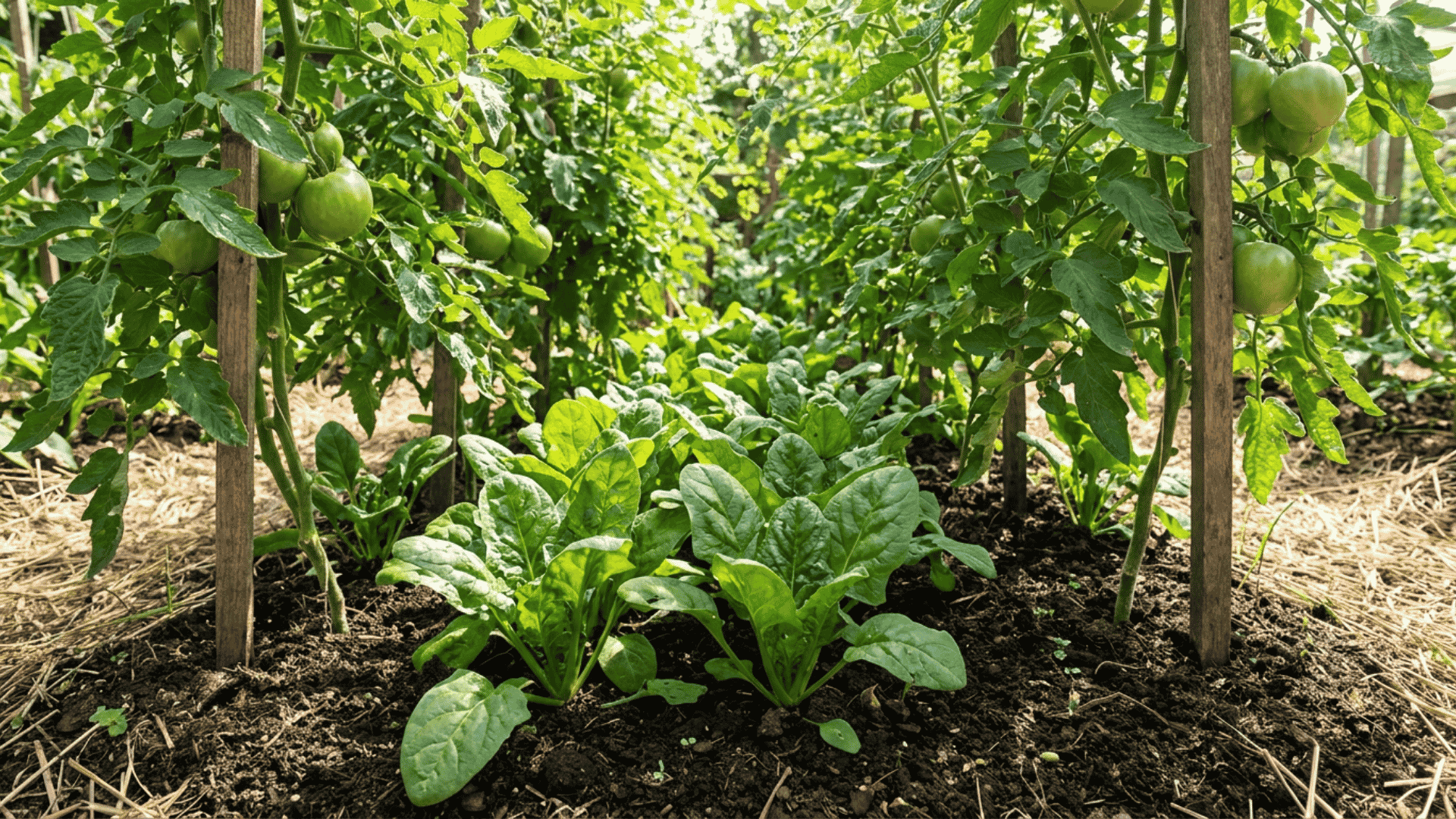
Like lettuce, spinach works well as a living ground cover between tomato plants. It tolerates partial shade, conserves soil moisture, and suppresses weeds without competing much for nutrients.
Sow spinach directly in gaps between tomato transplants in early spring. Harvest leaves regularly rather than pulling whole plants: this keeps the ground covered longer.
Spinach tends to bolt in midsummer heat. Once it does, pull it and replace it with another low-growing companion.
11. Beans
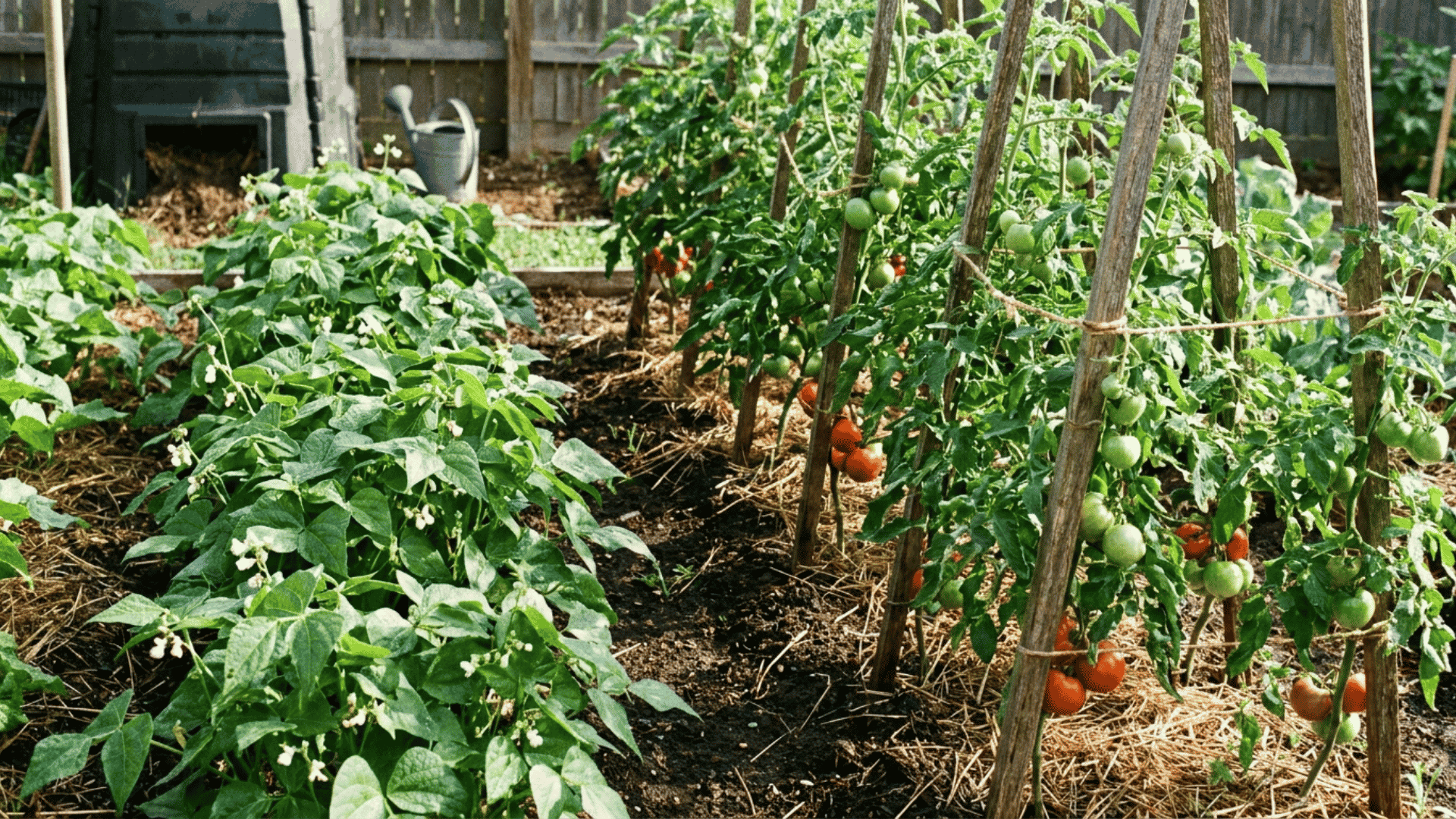
Bush beans are one of the better long-term companions for tomatoes because they add nitrogen to the soil throughout the growing season.
Tomatoes are hungry plants that benefit from the extra nitrogen, particularly mid-season when they’re setting fruit. Use bush beans rather than pole beans to avoid competition for vertical space on tomato cages or stakes.
Plant bean seeds 8–12 inches from tomato stems. Beans work best in garden beds. In containers, they compete too aggressively for root space.
Plants to Keep Away from Tomatoes
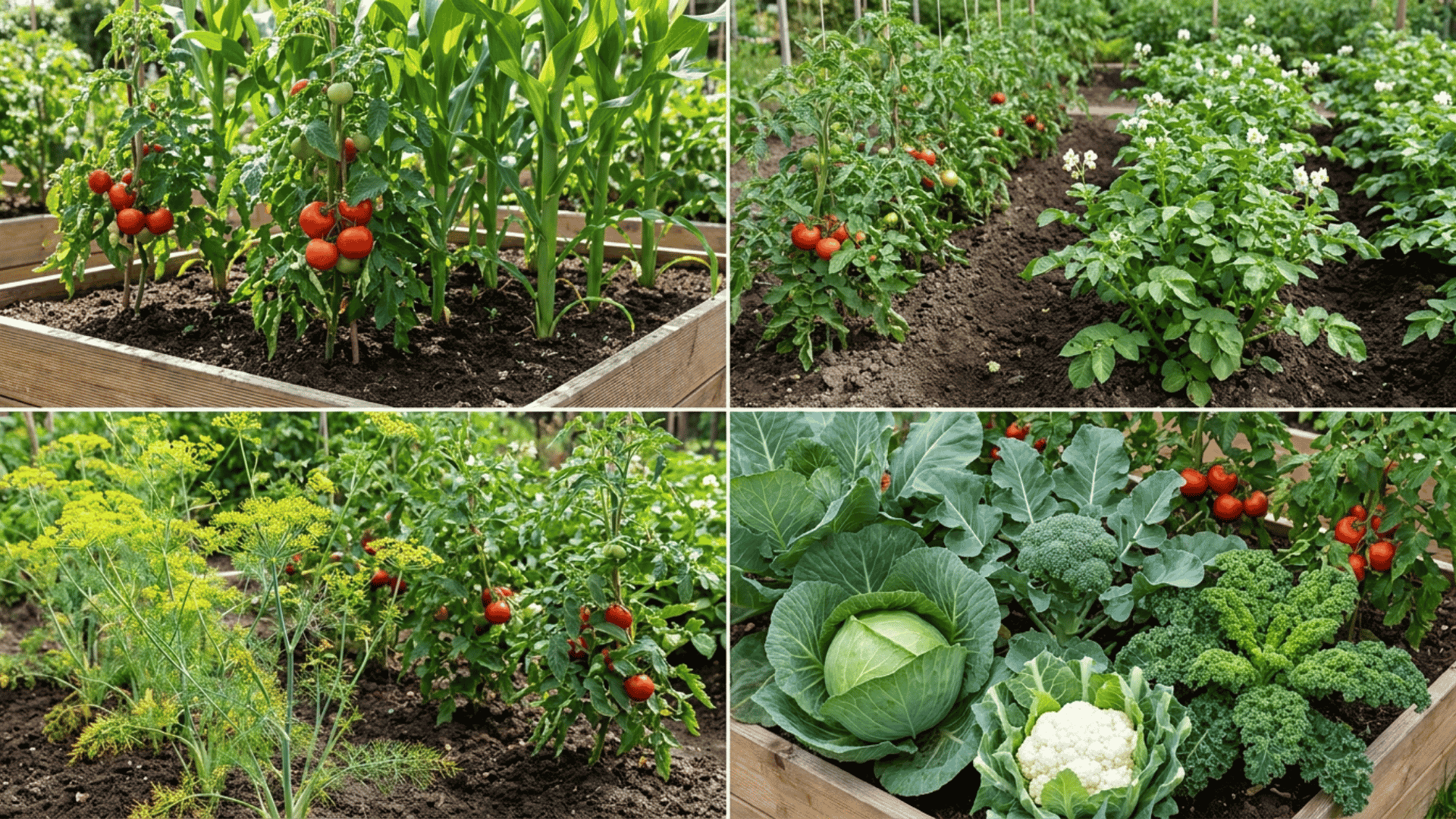
Just as some plants help tomatoes grow healthy, others can do real harm. Here are some you should avoid:
- Corn: Corn and tomatoes share a common pest, the corn earworm, so planting them too close together can increase pest pressure and make infestations worse for both crops.
- Potatoes: Tomatoes and potatoes are both in the nightshade family and share serious diseases, such as late blight, so they should be grown in separate areas and rotated each season.
- Fennel: Fennel releases natural compounds through its roots that can slow the growth of nearby plants, and tomatoes are especially sensitive to its effects.
- Cabbage Family (Brassicas): Broccoli, cabbage, cauliflower, and kale are heavy feeders that compete with tomatoes for nutrients, and they can also attract pests that may spread into the tomato bed.
Companion Planting Layout Ideas
To make the most of companion planting, try one of these layout ideas:
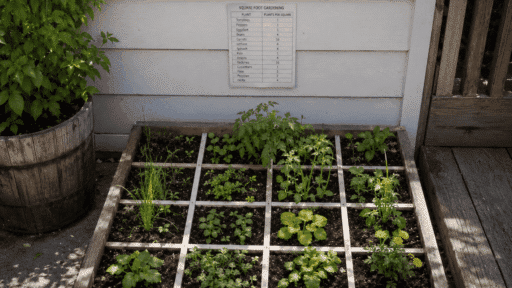
1. Raised Beds
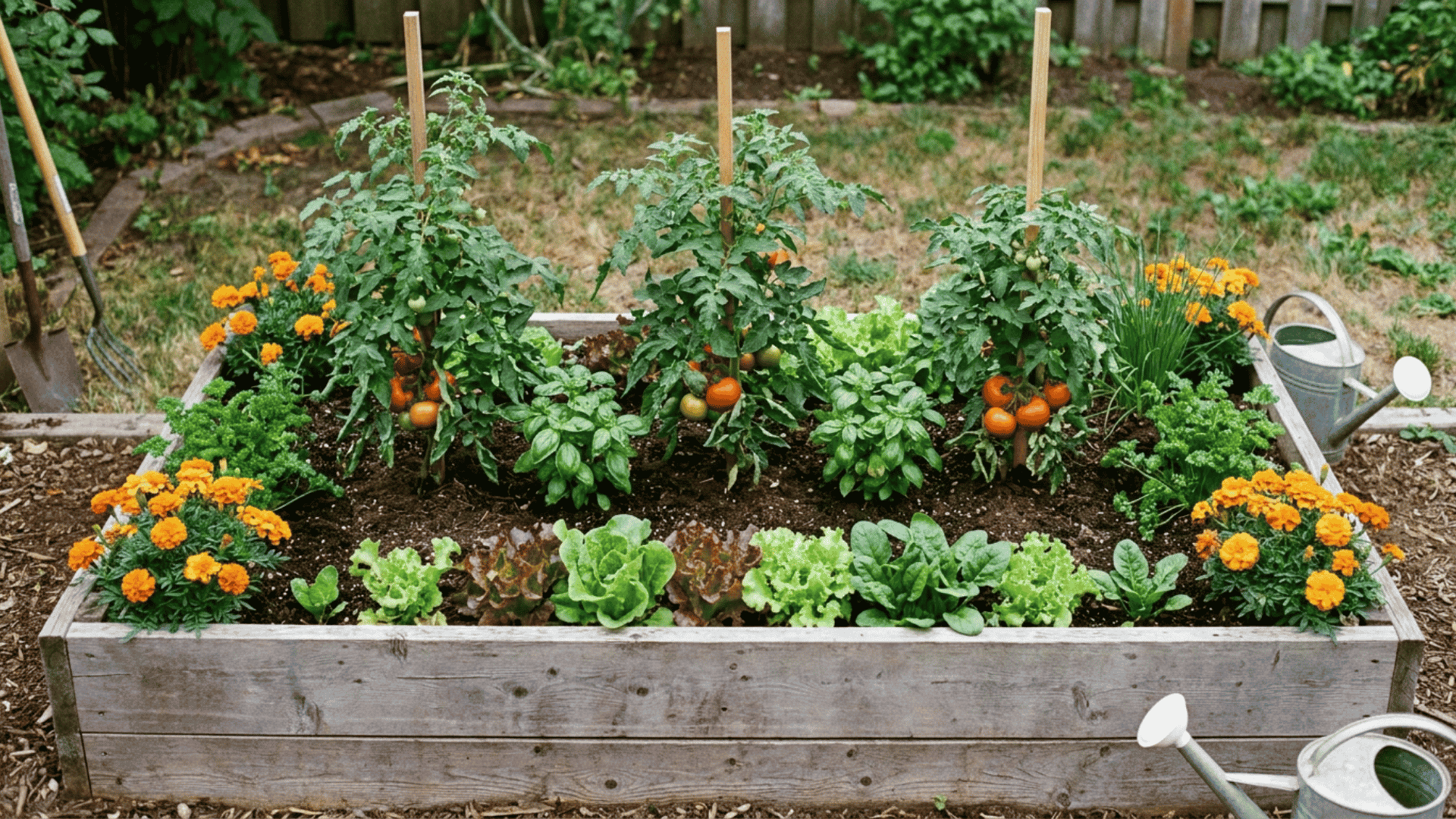
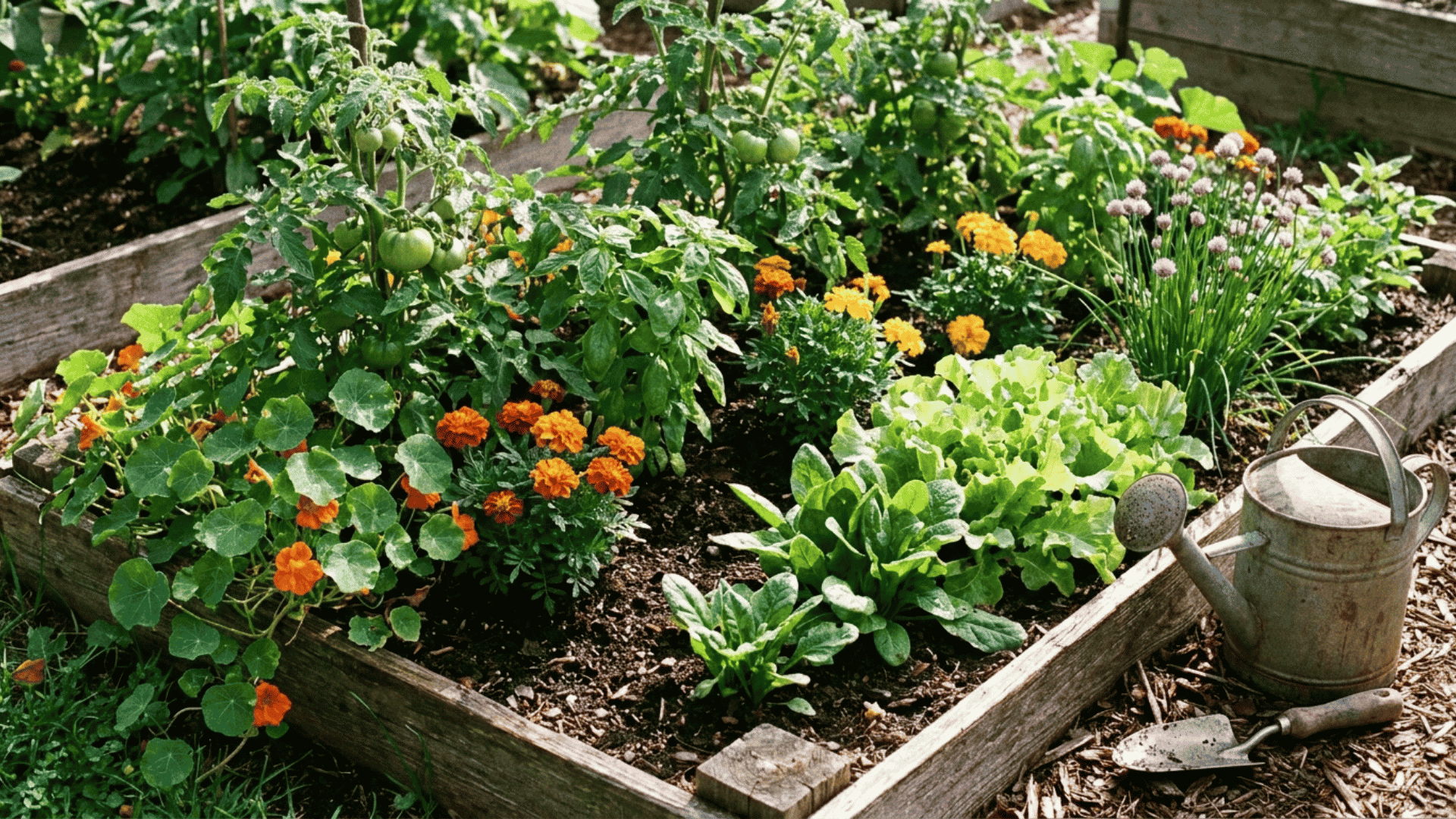
A 4×8 raised bed gives you enough space to plant 2–3 tomatoes with room for companions. A practical layout:
- Two or three tomato plants down the center of the bed, staked or caged.
- Basil planted 12 inches to one side of each tomato.
- Marigolds at each corner and along the short ends.
- Lettuce or spinach filling in the front edge, where the tomato canopy provides afternoon shade.
- Parsley or chives tucked at the back edge.
This uses the full bed, controls pests passively, and gives you harvestable herbs and greens alongside your tomatoes.
2. Containers
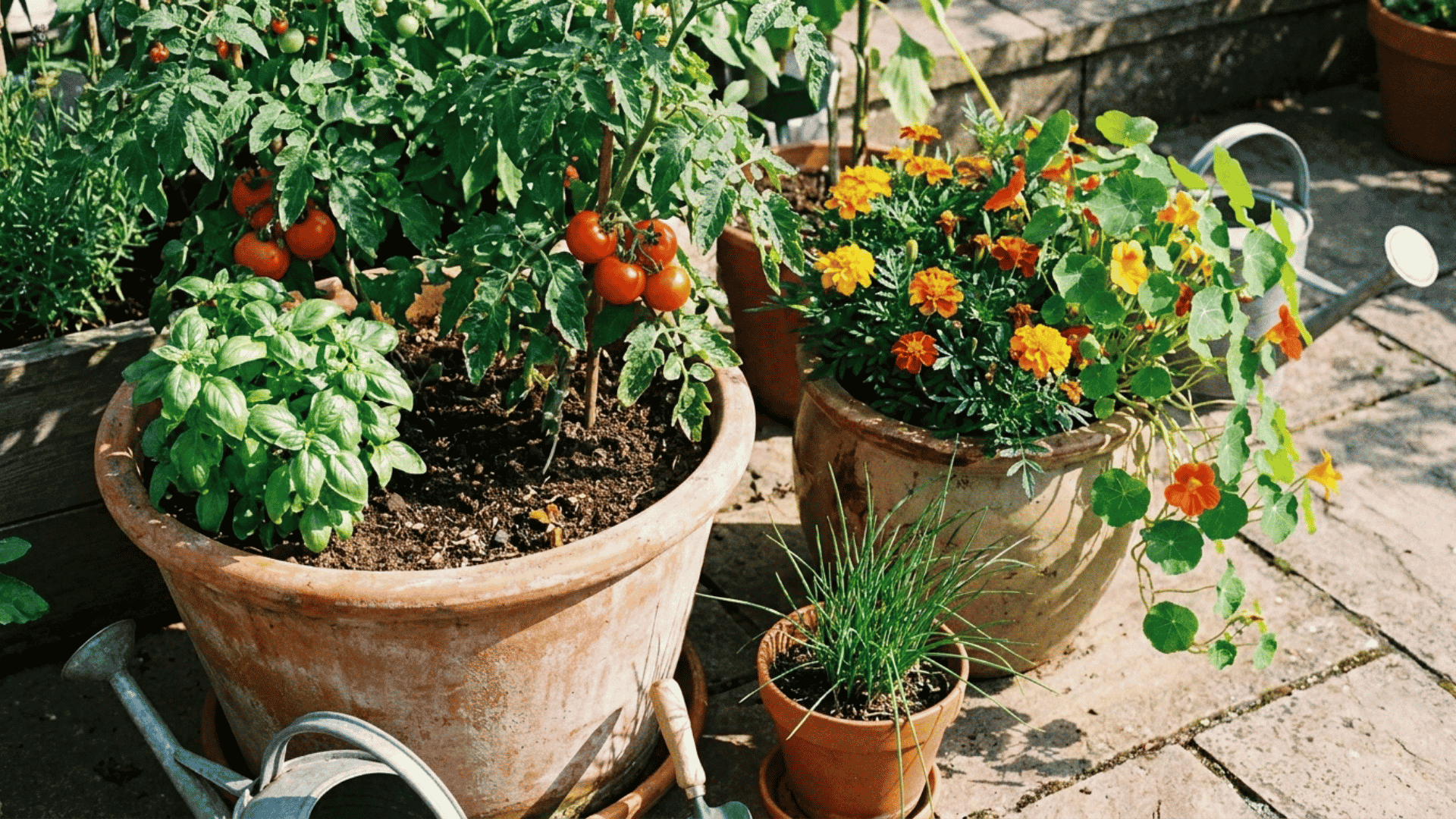
Container growing works well for tomatoes when paired with the right conditions. Use a 15–20-gallon pot for a single indeterminate tomato, or a 10–12-gallon pot for a compact or determinate variety.
- Add one basil plant to the same container, keeping it to the edge so it doesn’t shade the tomato base.
- Place a separate pot of marigolds or nasturtiums directly beside the tomato container.
- Chives in a smaller pot nearby add an allium deterrent effect without taking up pot space.
Don’t try to crowd multiple large plants into one container: root competition will hurt both.
3. Small Backyard Gardens
In a small in-ground garden, the key is to plan for the full season rather than just spring planting. A practical approach:
- Start cool-season crops (spinach, lettuce, chives) in the tomato area early in spring.
- Transplant tomatoes into the same bed in late spring. The cool-season crops are already filling gaps.
- Add marigolds, nasturtiums, and basil at the same time as tomatoes.
- As summer progresses, cool-season plants bolt and get removed. Replace them with beans or more herbs to keep the ground covered.
This keeps the bed productive from early spring through late fall without leaving bare soil at any point.
Common Mistakes Gardeners Make
Some common mistakes gardeners make, which can limit growth and increase disease risk, are:
| Common Mistake | What Happens | Better Approach |
|---|---|---|
| Overcrowding | Plants compete for water, nutrients, and airflow, increasing disease risk. | Leave 24–36 inches between tomato plants and use companions only to fill open gaps. |
| Poor Airflow | Damp, crowded foliage encourages fungal diseases like blight and leaf spot. | Keep space around stems open and prune lower tomato leaves regularly. |
| Wrong Watering Habits | Wet foliage spreads disease and may harm plants with different water needs. | Water the base in the morning using drip irrigation or a watering can. |
| Mixing Incompatible Plants | Certain plants compete with or weaken tomatoes, reducing harvest size. | Avoid planting tomatoes near fennel, potatoes, or brassicas. |
Final Thoughts
Companion planting doesn’t require a complicated system or a large garden.
Start with what’s practical: a few basil plants near your tomatoes, some French marigolds scattered through the bed, and maybe some lettuce filling in the gaps below.
Pay attention to what works in your specific garden over a season or two. Soil type, climate, and local pest pressure vary enough that experienced gardeners often develop their own reliable combinations.
What works consistently for a grower in Georgia may need adjustment for someone gardening in Minnesota.
The basics hold up anywhere: reduce pest habitat, attract beneficial insects, use the ground space efficiently, and keep incompatible plants out of the bed.
That approach will improve your tomato harvest more than almost anything else you can do.
Frequently Asked Questions
Why Sprinkle Baking Soda Around Tomato Plants?
It’s sometimes used to help reduce fungal issues and slightly alter surface conditions around the plant.
Do Slugs Damage Tomato Plants?
Yes, slugs can chew leaves, stems, and sometimes fruit, especially on young plants.
How Often Should I Spray Tomatoes for Disease?
Usually, every 7–10 days in humid or high-risk weather, depending on the product and conditions.

With a Master’s in Landscape Architecture from the University of Virginia, Sophia Stephenson has dedicated the last 20 years to creating and maintaining vibrant outdoor spaces. Her professional journey started in landscape design, where she gained a reputation for innovative and sustainable approaches. Sophia became a part of our editorial team as a freelancer in 2019, offering a fresh perspective on outdoor living. Since 2020, she has been the chief for our outdoor design content, blending aesthetic appeal with environmental stewardship. In her leisure time, Sophia is a keen photographer, capturing the beauty of natural landscapes, a hobby that complements her professional expertise.