
Running a commercial operation in San Mateo County is expensive by almost any measure. Real estate, labor, permits, insurance, the costs stack up fast. Fuel is rarely the first line item businesses think to optimize, but for companies running vehicles, equipment, or backup generators, it is often one of the easiest places to find real savings without major investment or operational disruption.
The shift happening quietly across construction, facilities management, and commercial fleet operations is straightforward: instead of sending drivers to the pump, businesses are bringing the fuel to their equipment.
The Real Cost of Pump Runs
Most business owners track fuel spend in dollars per gallon. Few track the full cost of how that fuel actually gets into their equipment.
Consider a mid-sized construction company running a crew across a job site in Redwood City or Foster City. A driver pulling a truck to the nearest diesel station, waiting in line, filling up, and returning might spend 45 minutes to an hour on that single run. Multiply that by multiple vehicles, multiple days, and multiple crew members across a project timeline, and the labor cost embedded in fueling becomes significant, often running into hundreds of dollars per week that never shows up in a fuel budget.
There are other costs that compound the problem. Vehicles traveling to and from fuel stations put additional miles on equipment not designed for that duty. Fuel transported in portable containers introduces handling risks, spillage, and in some cases regulatory exposure under California’s strict hazardous materials handling rules. And any time a vehicle or piece of equipment sits idle waiting on fuel is time not billable to a project.
What On-Site Fuel Delivery Actually Looks Like
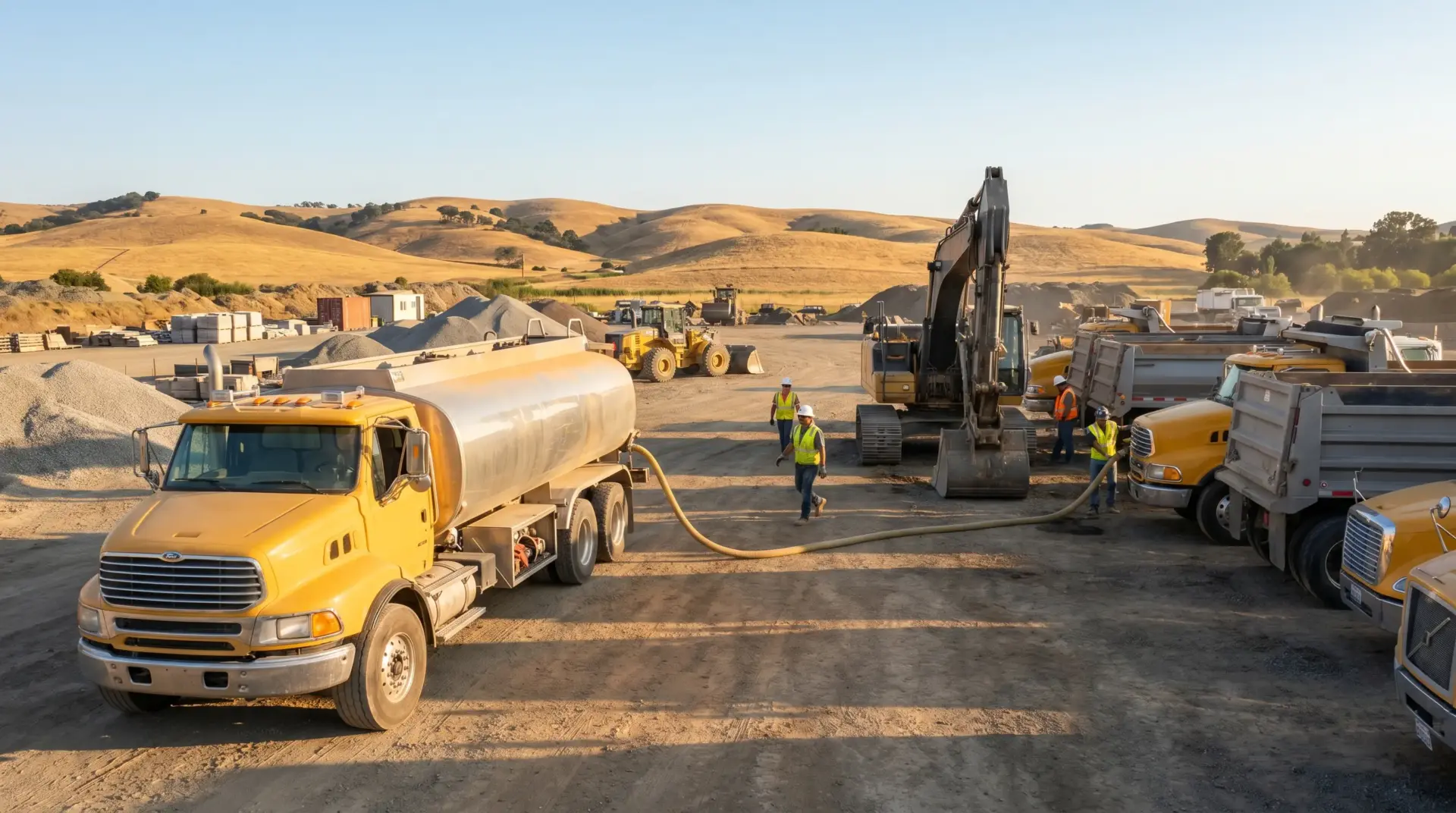
Mobile fuel delivery for commercial operations works simply. A licensed fuel delivery provider dispatches a truck to your job site, yard, or facility. Fuel goes directly into your equipment tanks, bulk storage, or both. The crew keeps working.
For businesses that have not used this type of service before, a few things tend to surprise them. First, there are no contracts required with reputable providers. You order when your operation needs fuel, not on a schedule set by the supplier. Second, pricing is typically based on wholesale rates rather than retail pump prices, which in a high-cost market like the Bay Area can represent a meaningful per-gallon difference. Third, 24/7 availability means emergency refueling for generators or critical equipment is handled without scrambling.
Fuel Logic operates this way nationally, including throughout California. They deliver on-road diesel, off-road dyed diesel, gasoline, and Diesel Exhaust Fluid directly to commercial job sites, vehicle yards, and facilities. No minimum order, no long-term commitments.
DEF: The Cost That Catches Businesses Off Guard
For any company running newer diesel equipment, Diesel Exhaust Fluid is not optional. Modern emissions-compliant engines require DEF to operate within regulatory standards, and running low triggers performance warnings that can derate or shut down equipment at exactly the wrong moment.
Despite this, DEF is often still purchased reactively, in small quantities, from a parts store or supplier. Bundling DEF delivery with a regular diesel order eliminates a separate procurement process, keeps equipment compliant, and removes one more thing from an operations manager’s list.
Practical Steps for San Mateo County Businesses
If your operation involves commercial vehicles, heavy equipment, generators, or refrigerated units, here is a straightforward way to evaluate whether on-site delivery makes sense:
Track your current fueling labor. For one week, log how much time employees spend on fuel-related trips. Include drive time, wait time, and return. Convert that to a dollar figure using your average labor rate. That is the cost you are currently paying that does not appear on any fuel receipt.
Calculate your average weekly consumption. Knowing your volume helps you order accurately and avoid both shortages and over-ordering, which can lead to fuel degradation in storage.
Talk to a delivery provider about scheduling. Most businesses find that a combination of scheduled fills and on-call availability gives them the most flexibility. Pre-filling before a large project begins and scheduling mid-project top-offs keeps operations running without last-minute scrambles.
The Bottom Line
Bay Area businesses operate in one of the most cost-intensive environments in the country. Finding operational savings that do not require cutting headcount or sacrificing service quality is genuinely difficult. Fuel logistics is one area where a straightforward change in how you procure and receive fuel can return real time and money to your operation.
For commercial fuel delivery across California and nationwide, visit fuellogic.net.

Holding a Master’s in Construction Management from Purdue University, William Ray has dedicated more than two decades to studying and applying construction principles. His professional journey includes a tenure with a prominent construction firm, where he specialized in project management and building technologies. William brought his knowledge to our team, providing in-depth insights into practical construction techniques. As the leader of our beginner’s guide to building since 2019, he has a knack for breaking down intricate processes into easily digestible content. When not involved in writing or onsite consultations, William enjoys woodworking and volunteering in community building projects, which aligns with his passion for hands-on construction and community service.