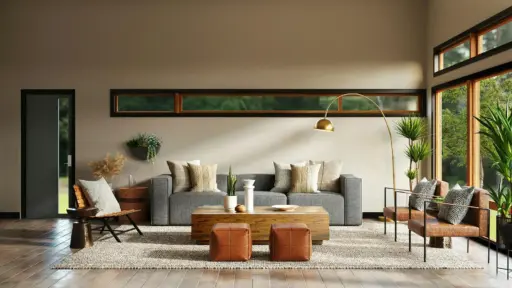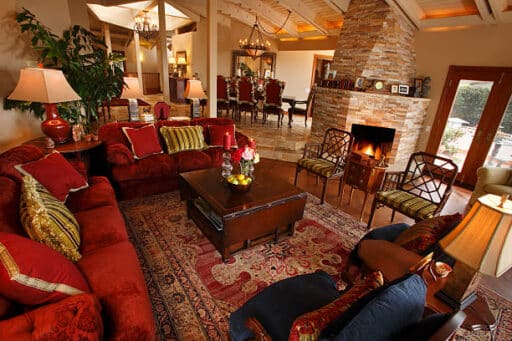
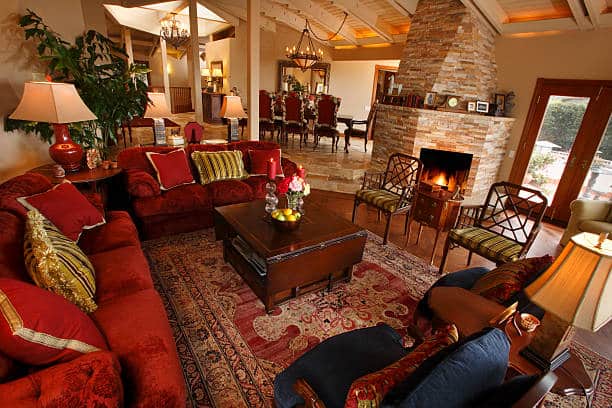

An interior designer walked into Surena Rugs in Atlanta three months ago with photos of her client’s new minimalist penthouse. Floor to ceiling windows. White walls. Sleek Italian furniture. Polished concrete floors. Everything new, clean, contemporary.
“It’s beautiful,” she said. “But it feels like a hotel lobby, not a home. My client keeps saying something’s missing, but she can’t articulate what.”
I knew exactly what was missing: soul.
We spent an hour discussing how one authentic antique element could transform the entire space. Two weeks later, we placed a 1930s Persian Tabriz in muted terracotta and soft blues in her living room. The designer sent me a photo with one word: “Perfect.”
The rug didn’t match the furniture. It predated the building by 60 years. It was made using techniques and materials that no longer exist. And precisely because of these contradictions, it made the space feel complete.
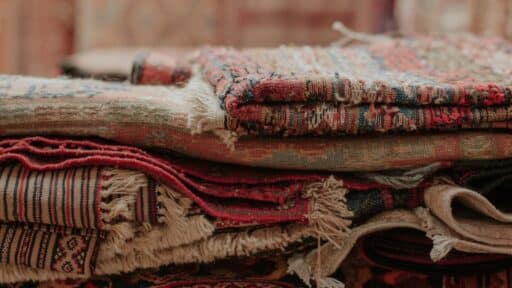
As the current owner of Surena Rugs, carrying forward nearly two decades of expertise established by the late Mohsen Rabbanifard, I watch this transformation constantly. Antique Persian rugs aren’t just compatible with modern design; they’re often the missing element that elevates contemporary spaces from cold to compelling.
Growing up in Iranian culture, I learned that beautiful rugs are meant to be used, cherished, and displayed regardless of surrounding aesthetics. After immigrating to America and spending ten years in the rug industry, I’ve seen how this traditional perspective creates unexpected magic in the most contemporary homes.
Here’s why the dialogue between heritage and modern design creates spaces more powerful than either aesthetic alone.
The Visual Tension That Makes Modern Spaces Work
Great interior design thrives on contrast, not conformity. All new everything feels sterile. But introduce one genuine antique element, and suddenly the space has depth, narrative, visual interest.
Why the Contradiction Creates Harmony
Texture against sleekness: Modern furniture favors smooth surfaces. Glass, leather, metal, lacquered wood. Antique Persian rugs provide textural richness that grounds these materials rather than competing with them.
Organic against geometric: Contemporary architecture loves clean lines and sharp angles. The organic irregularities in handmade antique rugs (slight asymmetries, natural color variations, hand knotted imperfections) soften this precision in ways that feel intentional rather than accidental.
Age against youth: A 100 year old rug in a brand new space creates temporal depth. The room suddenly feels layered, collected over time, rather than furnished in a single weekend.
Warmth against cool: Modern palettes often lean toward grays, whites, blacks, and cool neutrals. Antique Persian rugs in naturally aged terracotta, faded blues, soft golds, and ivory add warmth without abandoning the contemporary aesthetic.
The key insight: contrast creates interest. Matchy-matchy creates boredom.
Understanding Color in the Heritage/Modern Dialogue
The biggest misconception about using antique Persian rugs in modern spaces is thinking they need to “match” existing furniture.
How Designers Actually Use Color
The best approach flips conventional thinking. Don’t choose a rug to coordinate with your sofa. Choose the rug first and pull your entire palette from its naturally aged colors.
Why this works: Antique Persian rugs created with natural dyes possess color complexity that synthetic pigments can’t replicate. What looks like “red” actually contains rust, coral, burgundy, terracotta, and pink notes. This complexity coordinates with dozens of modern paint colors and fabrics in ways solid colors never could.
Aged patina advantage: Decades or centuries of use and light exposure create muted tones perfect for contemporary spaces. Bright, saturated colors can overwhelm minimalist rooms. Naturally aged hues integrate seamlessly.
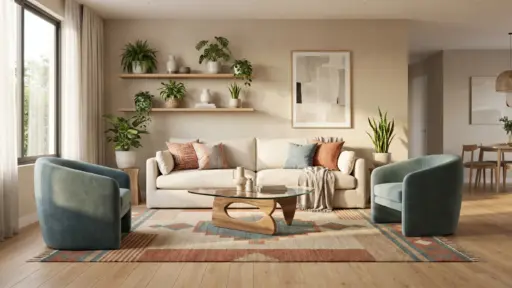
Practical application: An antique Tabriz with faded reds and soft blues doesn’t need to match your gray sofa. Pull the blue into throw pillows, the terracotta into a single accent chair, the ivory into window treatments. The rug becomes the unifying element rather than a matched component.
At Surena Rugs, our nearly two decades serving Atlanta’s design community (including features in Atlanta Style & Design highlighting our commitment to authenticity and artistry) has taught us that the most successful modern interiors use antique rugs as the color anchor, not the color follower.
Regional Persian Rug Characteristics for Modern Applications
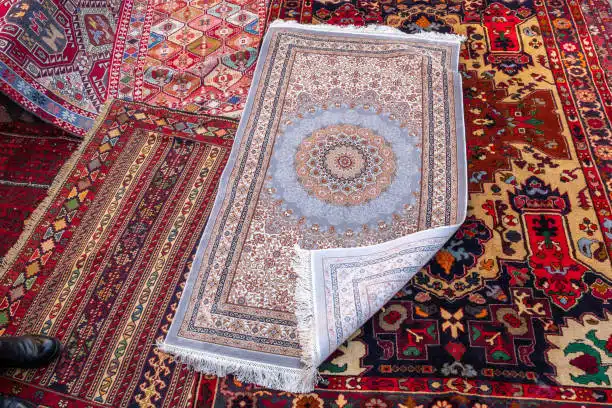
Not all antique Persian rugs work equally well in contemporary spaces. Understanding regional characteristics helps make smart choices.
Tabriz: The Versatile Classic
Characteristics: Intricate floral medallions, sophisticated color palettes, fine knotting, balanced compositions.
Modern applications: Tabriz rugs work beautifully in transitional and contemporary traditional spaces. The refined patterns provide visual interest without overwhelming clean lined furniture.
Best for: Living rooms, dining rooms, primary bedrooms in homes blending modern and classic elements.
Heriz and Serapi: Bold Geometric Impact
Characteristics: Large scale geometric medallions, bold patterns, terracotta and rust reds, sturdy village construction.
Modern applications: Heriz rugs are design favorites for contemporary spaces. The geometric patterns complement modern architecture. The bold scale holds its own against substantial furniture. The warm terracotta grounds cool modern palettes.
Best for: Open concept living areas, industrial lofts, mid century modern homes, contemporary spaces needing grounding warmth.
Oushak: Soft and Sophisticated
Characteristics: Muted color palettes (soft golds, faded corals, pale blues, ivory), large scale patterns with open fields, Turkish origin.
Modern applications: Oushak rugs are beloved by designers working in Scandinavian, minimalist, and contemporary farmhouse aesthetics. The soft colors don’t compete; they enhance.
Best for: Bedrooms, light filled spaces, Scandinavian inspired interiors, any room where subtlety matters more than impact.
Tribal and Village Rugs: Character and Authenticity
Characteristics: Geometric patterns, vibrant colors (though often beautifully aged), smaller formats, folk art appeal, exceptional wool.
Modern applications: Tribal rugs bring authenticity and personality to spaces that might otherwise feel too designed. The imperfect, handmade quality is the point.
Best for: Eclectic interiors, bohemian modern spaces, creative studios, homes where personality trumps perfection.
Pattern Scale: The Overlooked Design Decision
Pattern scale dramatically affects how antique Persian rugs function in modern spaces.
Large Scale Patterns for Contemporary Rooms
Modern rooms with minimal furniture and clean lines benefit from rugs with large scale patterns. Oversized medallions, bold geometric designs, and open fields with substantial motifs create visual interest without busyness.
Why this works: In minimalist spaces, a large scale pattern becomes intentional focal point rather than background noise. It anchors the room without cluttering the aesthetic.
Dense Patterns in Unexpected Applications
Conversely, very dense, intricate patterns can work in modern spaces when used strategically. A heavily patterned Persian rug in a room with simple, solid color furniture creates sophisticated contrast.
Why this works: The pattern complexity lives in the rug alone, while everything else remains visually quiet. The balance feels curated rather than chaotic.
The Open Floor Plan Challenge and Solution
Modern homes favor open concept layouts combining living, dining, and kitchen areas. These spaces present both challenges and opportunities for antique Persian rugs.
The Problem
Open floor plans need visual definition. Without walls separating functions, spaces can feel undefined and chaotic.
The Solution
Antique Persian rugs, particularly in larger formats (9×12, 10×14, 12×15), define zones within open spaces while maintaining visual flow.
Strategic placement:
- Living area rug grounds seating arrangement
- Dining area rug defines eating space
- Kitchen runner (if using rugs in kitchen) establishes transition
Size matters enormously: Undersized rugs make open spaces feel choppy. Properly sized rugs unify areas while defining function.
Color coordination across zones: Using antique rugs from similar color families (even if different patterns and origins) creates cohesion across the open plan without matchy-matchy uniformity.
Furniture Styles That Dialogue Beautifully With Antique Persian Rugs
Mid Century Modern
The marriage of mid century furniture and antique Persian rugs is design gold. Eames chairs, Saarinen tables, Nelson benches, and Noguchi lamps all gain warmth and soul when paired with aged textiles.
Why it works: Both mid century design and traditional Persian rugs value craftsmanship, organic materials, and form following function. The aesthetics complement despite their different origins.
Scandinavian and Nordic Design
The hygge movement embraces natural materials, handmade objects, and lived in warmth. Antique Oushak and soft palette Persian rugs fit seamlessly into light filled, minimalist Nordic inspired spaces.
Why it works: Scandinavian design values authenticity and longevity over trends. Antique rugs embody these principles perfectly.
Industrial and Urban Loft Aesthetics
Exposed brick, concrete floors, metal fixtures, and raw materials create dramatic backgrounds for antique Persian rugs. The contrast between rough industrial elements and refined antique textiles is visually compelling.
Why it works: Industrial spaces risk feeling cold and hard. Antique rugs introduce necessary softness, acoustic absorption, and human scale.
Contemporary Minimalism
This seems counterintuitive, but antique Persian rugs work beautifully in true minimalist spaces. One exceptional antique rug in a room with minimal furniture becomes an intentional artistic statement.
Why it works: Minimalism isn’t about emptiness; it’s about intentionality. An antique rug chosen for beauty and meaning aligns perfectly with minimalist philosophy.
The Practical Benefits Beyond Aesthetics
Acoustic Performance in Modern Homes
Open floor plans, hard surface flooring (wood, tile, concrete), minimal window treatments, and sparse furniture create terrible acoustics. Voices echo. Music sounds harsh. Conversations become difficult.
Dense hand knotted wool absorbs sound waves dramatically. An antique Persian rug transforms acoustics in ways area rugs from big box stores simply cannot match.
Warmth and Insulation
Modern homes often feature beautiful but cold materials. Polished concrete, large windows, minimal textiles. Antique wool rugs provide genuine thermal insulation, making rooms feel physically warmer in winter.
Hiding Imperfection
New construction and renovation rarely go perfectly. Flooring transitions look awkward. Concrete develops cracks. Wood shows scratches. Antique rugs strategically placed hide these imperfections while adding beauty.
Common Mistakes and How to Avoid Them
Going Too Small
The single biggest error is choosing rugs too small for the space. In modern open plans, err dramatically toward larger. Your rug should fit under all front furniture legs at minimum, preferably all furniture legs.
Fix: Measure generously. When in doubt, go up a size.
Overthinking “Matching”
Stop trying to match your rug to one piece of furniture. Let the rug inspire your palette rather than trying to squeeze it into an existing scheme.
Fix: Choose the rug you love, then adjust accessories (pillows, throws, art) to coordinate.
Choosing Based on Photos Alone
Antique rugs must be seen in person or with professional detailed photography. Colors, scale, and texture don’t translate accurately in amateur photos.
Fix: Work with established dealers offering high quality photography and detailed descriptions, or visit in person.
Ignoring Lifestyle Realities
Modern doesn’t mean formal. If you have children, pets, or active lifestyles, choose durable antique rugs (like Heriz) with patterns that hide wear rather than delicate pieces better suited to low traffic areas.
Fix: Be honest about your life and choose accordingly.
The Surena Rugs Approach to Modern Applications
At Surena Rugs, we understand both sides of the heritage and modern dialogue. The values Mohsen Rabbanifard established (deep knowledge, refined taste, genuine care for clients) combined with my own cultural background and ten years of industry experience create unique perspective on how antique Persian rugs function in contemporary homes.
What this means practically:
We help clients understand which antique rugs will actually work in modern spaces rather than forcing traditional pieces into incompatible settings. Our carefully curated collection of Persian, Caucasian, Turkish, and antique hand knotted rugs includes pieces specifically suited to contemporary applications.
Whether you visit our Atlanta showroom or explore our expanded online collection (now offering nationwide shipping with high quality photography and detailed descriptions), we guide you toward pieces that bridge centuries of craftsmanship with contemporary living.
Because we’re not just preserving tradition. We’re helping it evolve and remain relevant in modern homes.
The Dialogue Continues
The conversation between heritage and contemporary design isn’t about choosing one over the other. It’s about creating spaces that feel layered, authentic, and genuinely lived in.
Antique Persian rugs in modern homes represent more than interior design decisions. They’re connections to cultural heritage, investments in sustainable craftsmanship, and rejections of disposable consumer culture.
They prove that the oldest and newest elements can coexist beautifully when chosen with intention and understanding.
Ready to explore how antique Persian rugs can transform your modern home? At Surena Rugs, we welcome the opportunity to show you pieces that bridge heritage and contemporary design.
Schedule an in person consultation at our Atlanta showroom or connect with us virtually. We’ll help you discover which antique Persian, Caucasian, or Turkish rugs will create the dialogue your modern space needs.
Because the most compelling interiors aren’t purely traditional or entirely contemporary. They’re thoughtful conversations between past and present, heritage and innovation, artisan craft and modern living.
Your modern home deserves the soul that only authentic antique rugs can provide. Let’s start that dialogue together.

Ava Taylor, holding a Bachelor’s degree in Interior Design from the Pratt Institute, has made her mark in creating engaging and functional living spaces for over 14 years. She began her career with a New York-based design studio, where she gained a reputation for her innovative and user-centric designs. Ava joined our team in 2019, bringing a blend of artistic flair and practicality to our home improvement section. Since the she has been the lead contributor to our room transformation series, inspiring readers with her unique approach to maximizing space utility and aesthetic appeal. Beyond her professional work, Ava is a passionate collector of vintage furniture, a hobby that enriches her design perspective.