
Indiana summers swelter, winters bite, and spring storms crash weekend plans. To stay comfortable, a house here must breathe in July, seal up in January, and shrug off sideways rain. Many Hoosiers solve that puzzle with heavy-timber frames: the massive posts create open interiors while leaving space for thick, continuous SIP insulation—exactly what this seesaw climate demands.
We evaluated dozens of Hamill Creek floor plans against five factors—climate resilience, Midwest-friendly layout, energy-efficiency potential, build practicality on Indiana soil, and enduring curb appeal. The three top-scoring designs are up next.
How we ranked the top three
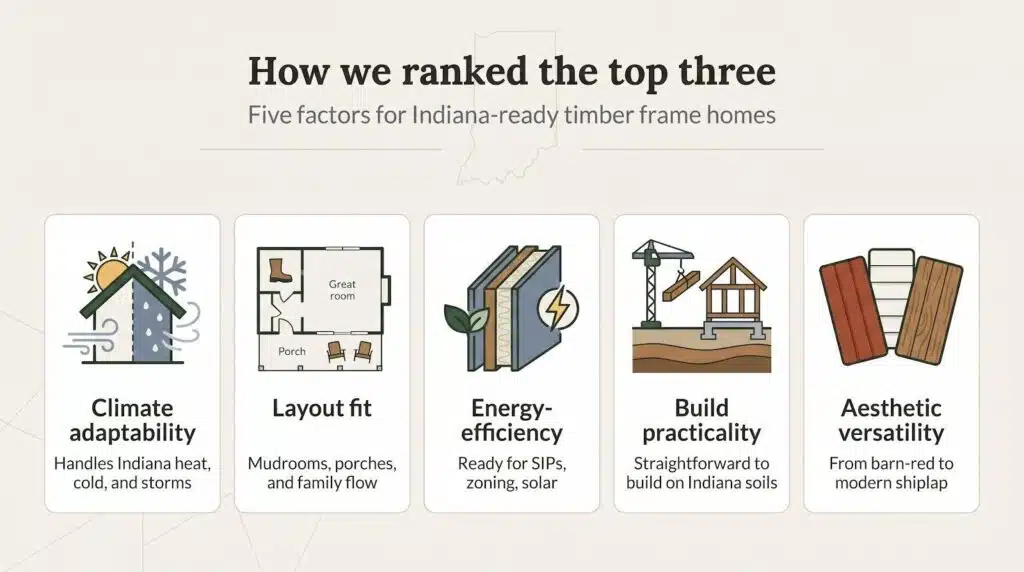
We didn’t pull these names from thin air. We measured every Hamill Creek floor plan against five criteria that Indiana homeowners care about most.
First, climate adaptability. A design must shrug off 90 °F heat with 80 percent humidity in July and keep gas bills sensible when February lows dip below 10 °F. Wide timber bays leave room for continuous insulation, so comfort stays steady as the mercury swings.
Second, layout fit. Everyday life calls for mudrooms that swallow snowy boots, porches wide enough for iced tea, and great rooms that host a family reunion without flooding the kitchen.
Third, energy-efficiency potential. Each plan needs to welcome high-R SIP walls, zoned HVAC, and solar-friendly orientation without an expensive redraw.
Fourth, build practicality. Indiana offers loam, clay, and limestone, so we favored frames that local crews can stand quickly and enclose using materials stocked at regional yards.
Finally, aesthetic versatility. Midwestern charm never ages, but many owners still want a modern edge. The finalists let you combine barn-red board-and-batten, crisp white shiplap, or anything in between without looking out of place.
Founded in British Columbia and now working on projects from Michigan to Kentucky, Hamill Creek Timber Homes brings three decades of design-build experience to the catalog we evaluated. Their team CNC-cuts every post and beam, test-fits the frame, and ships it with labeled SIP wall and roof panels. Once those bundles arrive, a crew of Indiana timber frame builders can raise the shell in 5–10 days and click it weather-tight in roughly two weeks.
That proven workflow—not just attractive floor plans—powered the high build-time and energy-efficiency scores in our rankings.
Add the scores, and three clear leaders rose to the top. You will meet them next.
1. Wichita Ridge: the modern farmhouse built for Hoosier acres
Picture a classic white farmhouse, its porch running the full width of the façade while fresh coffee steams in the morning light. Wichita Ridge hides CNC-cut Douglas-fir posts, SIP insulation, and an attached garage you can reach without scraping frost at 6 am.
At just over 2,000 square feet, the plan hits the sweet spot: large enough for family life yet small enough to heat without pain in January. The main floor follows Indiana logic, with the primary suite on the quiet side, laundry by the garage door, and a mudroom that swallows muddy boots. Step into the great room and the ceiling soars to cathedral height, rafters framing sky. Kids can sprawl with a puzzle while you plate dinner, and conversation still flows.
The full-length covered porch does more than look good. It shades south walls in July, blocks winter gusts in February, and offers a dry spot for deliveries on rainy days.
Cost matters, so here are the numbers. TimberFrameHQ places turnkey timber frames between $155 and $345 per square foot. Using a mid-range $300 estimate, Wichita Ridge lands around $620,000 with solid finishes. Keep interior selections modest and you can trim that figure; upgrade cabinets or fixtures and it rises. Either way, you are buying a structure engineered to outlast fads—and most of us.
Build time stays predictable because the frame arrives pre-cut. Crews often stand the skeleton in a long weekend, then drop in SIP panels like puzzle pieces. That head start pulls electricians and plumbers on-site sooner and limits exposure to surprise rain.
Why does it rank first? It tops every climate and lifestyle metric. The porch and gabled roof tame weather swings, the open-yet-zoned layout matches how Hoosier families move, and the cost-to-utility ratio beats every larger plan we tested. Wichita Ridge delivers heritage charm without antique headaches and modern efficiency without sterile lines.
If your land is flat, your horizon wide, and your dream painted barn-red board-and-batten, this frame can make it real. Grab a rocker, pour iced tea, and watch the sun drop over the soybeans—you will feel right at home.
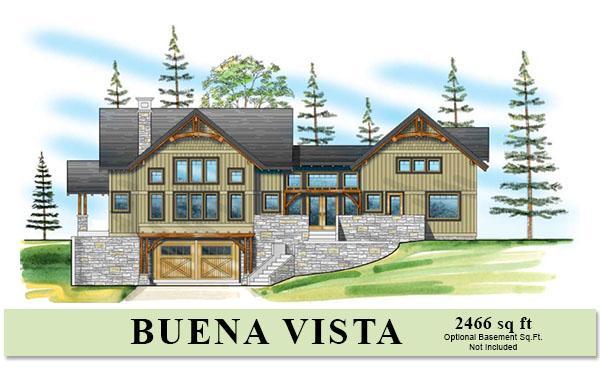
2. Buena Vista: the hillside lodge with room to breathe
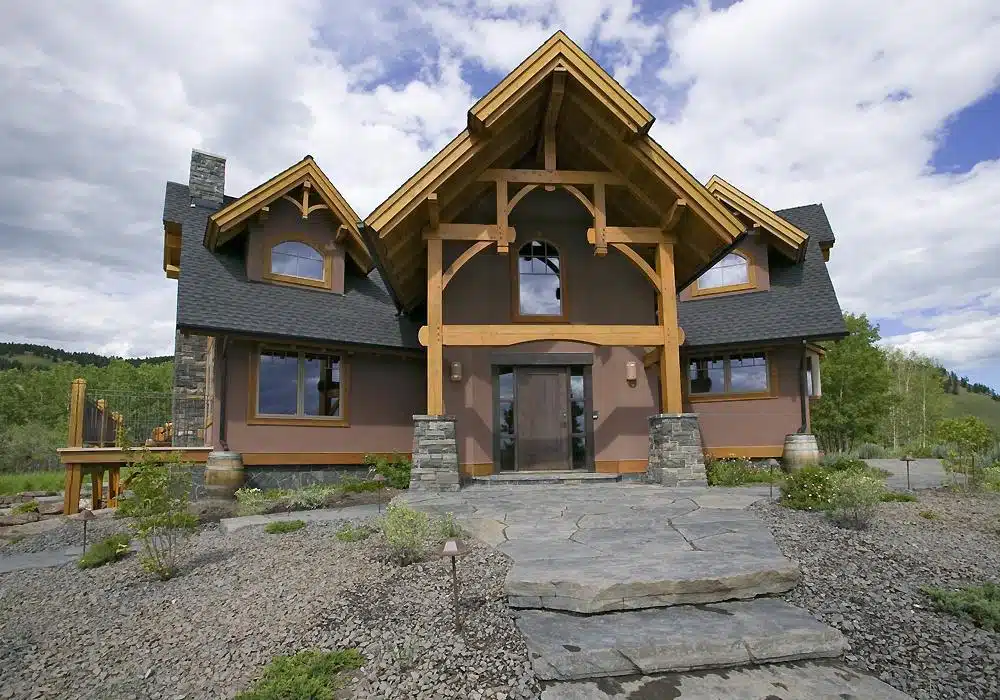
Some Indiana lots roll and dip like the Smokies. Build a flat-slab ranch there and you fight the land at every turn. Buena Vista works with the slope instead. Its daylight basement tucks into the uphill grade, garage below, great room above, and a glass wall aimed at the view. The layout feels effortless because gravity is working for you, not against you.
Step through the front door and the ceiling soars. Timbers arc overhead, drawing the eye to a two-story window wall that frames lake shimmer or autumn color, depending on your zip code. Off to one side, the main-floor suite keeps single-level living in play long after stairs lose their charm.
Slide downstairs and the mood shifts. The bright lower level opens to grade, perfect for a rec room, guest suite, or storm-season safe zone. Indiana records about 25 tornadoes a year, and a below-grade room with concrete walls turns that worry into a footnote when sirens sound.
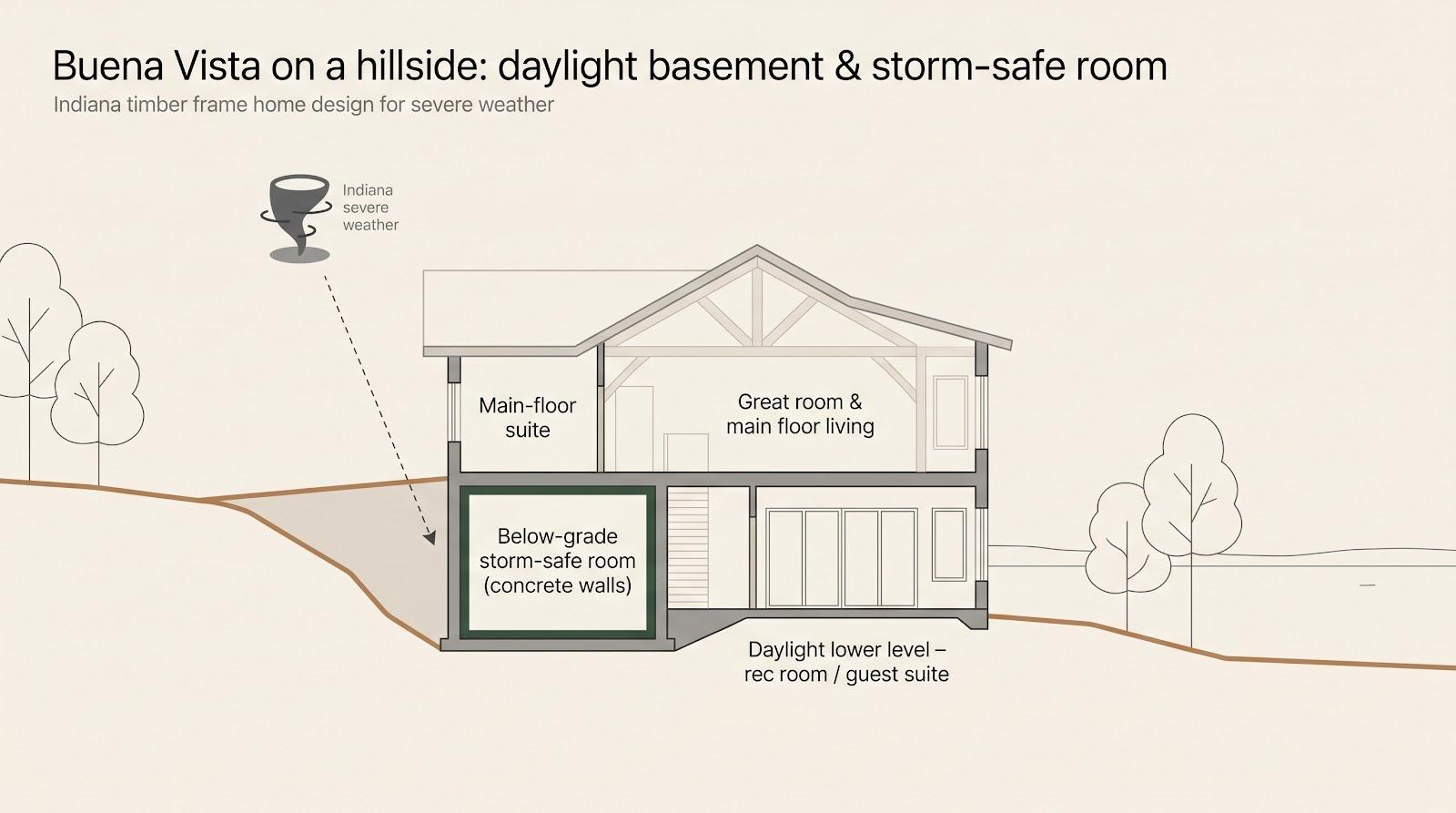
Performance matches the spectacle. The stacked design trims roof and foundation area per square foot, so you spend less on envelope and lose less heat. Pair that with SIP panels and zoned mechanicals and you can meet Energy Star targets without heroic measures.
Luxury carries a price tag, so let’s run the math. Using the high end of industry data at about $345 per square foot turnkey, Buena Vista comes in around $860,000 for 2,500 finished square feet. That figure includes the walk-out level, garage, and those signature windows.
Is it worth it? If your land offers a view worth framing and you crave a lodge feel without a flight to Colorado, nothing else here blends drama, practicality, and future-proof comfort quite like Buena Vista. Host 30 on Thanksgiving, then close the door to a quiet main-floor suite when the dishes are done. It is showpiece and sanctuary under one timbered roof.
3. Kaslo Cottage: Big-timber warmth in a pint-size package
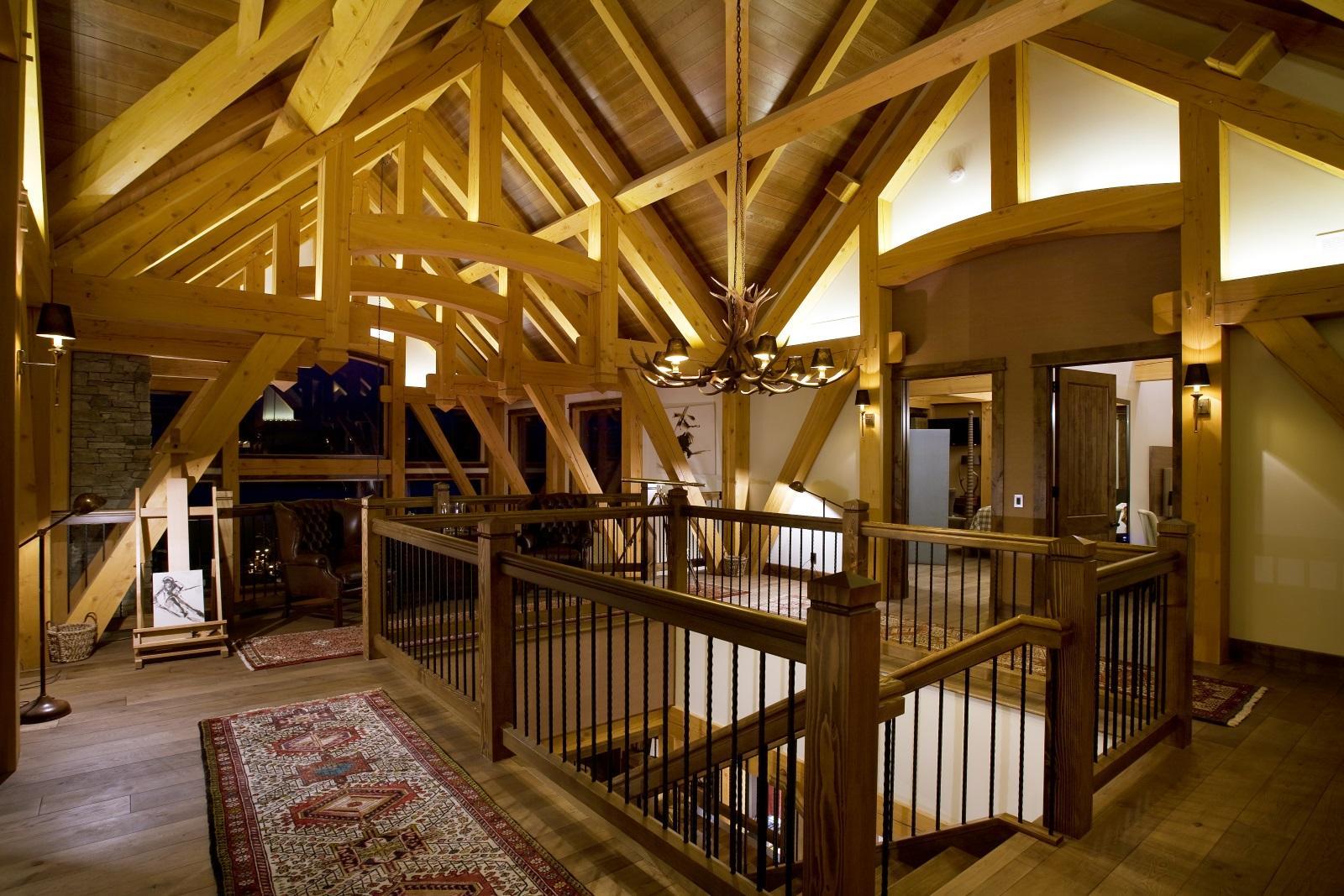
Not everyone needs a lodge. Maybe you want a snug retreat by Lake Wawasee or a primary home you can clean during one podcast. Kaslo Cottage answers that call with 1,272 square feet of well-shaped breathing room.
Step inside and the living-dining-kitchen trio opens under a vaulted ceiling that puts most ranch homes to shame. Exposed beams march overhead, pulling sunlight from tall windows on three sides. The light keeps the compact footprint airy, never tight.
The main floor tucks a full primary suite in one corner, only steps from coffee, deck, and fresh air. A straight-run stair climbs to a lofted second bedroom and bath, perfect for grandkids, weekend guests, or a quiet office with treetop views. Because the loft overlooks the great room, you stay connected without yelling down hallways.
Form meets Indiana function. Simple gable lines shed snow before drifts build. Tight spans mean fewer structural surprises when lake-effect squalls blow in. Fewer corners translate to quicker framing and less exterior upkeep over time.
Cost efficiency shines here. Using TimberFrameHQ’s lower turnkey figure of about $180 per square foot for small frames, Kaslo finishes near $230,000 before land and high-end upgrades. That price rivals many vinyl-clad starter homes yet buys hand-cut timbers built to last.
Utility bills also stay polite. Less volume means less air to condition, and SIP walls keep heat where you want it. Add a high-efficiency mini-split and a small wood stove, and year-round comfort becomes a low-overhead, high-coziness equation.
Where does Kaslo fit? Picture a wooded infill lot in Bloomington or a backyard ADU on family acreage. Picture a lake cabin you can lock for winter without worry. Above all, picture a lifestyle focused on experiences over square footage. Kaslo proves you do not need a mansion to live richly—only good bones, thoughtful design, and generous natural light.
Quick-glance comparison
A table cannot capture the porch breeze or the scent of fresh-cut Douglas fir, but it does spotlight the numbers and perks that separate these three standouts.
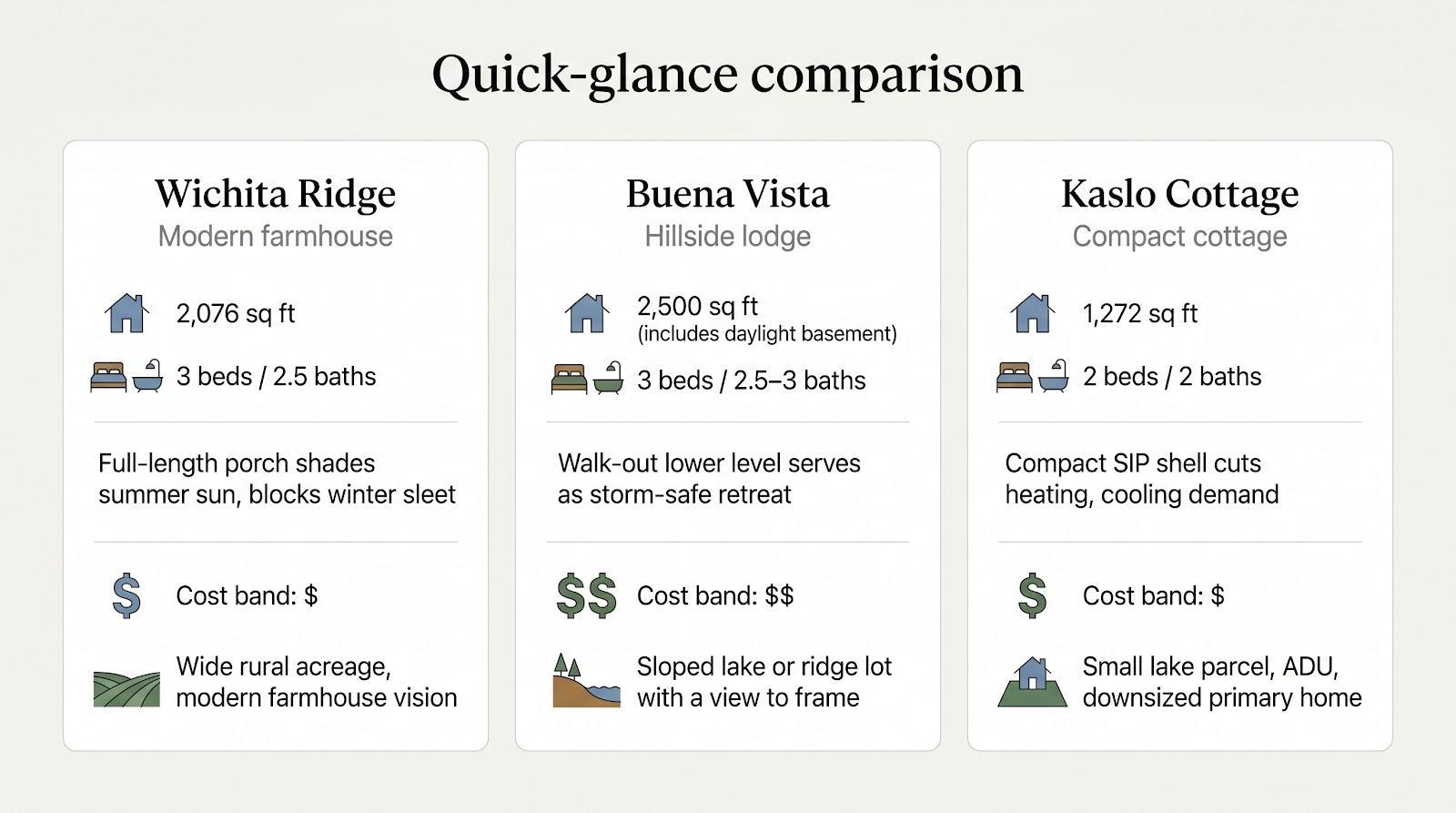
Plan | Living area | Beds / baths | Climate-smart highlight | Turnkey cost band* | Ideal Indiana setting |
|---|---|---|---|---|---|
Wichita Ridge | 2,076 sq ft | 3 / 2.5 | Full-length porch shades summer sun, blocks winter sleet | $ | Wide rural acreage, modern farmhouse vision |
Buena Vista | 2,500 sq ft (includes daylight basement) | 3 / 2.5–3 | Walk-out lower level serves as storm-safe retreat | $$ | Sloped lake or ridge lot with a view to frame |
Kaslo Cottage | 1,272 sq ft | 2 / 2 | Compact SIP shell cuts heating, cooling demand | $ | Small lake parcel, ADU, downsized primary home |
*Turnkey cost band uses TimberFrameHQ’s range of roughly $155–$345 per square foot as a reference point.
In short, Wichita Ridge wins on all-around value, Buena Vista rules any hillside, and Kaslo leads in efficiency per square foot.

Tommy Hardy, an alumnus of the Georgia Institute of Technology with a degree in Mechanical Engineering, has been a go-to figure in residential upkeep and innovation for over 18 years. His career commenced in a leading home appliance manufacturing company, where he mastered the intricacies of household systems. Joining our platform in 2020, Tommy quickly became a reader favorite for his practical and easy-to-follow guides. He took the helm of our DIY section in 2019, consistently delivering content that empowers homeowners. Beyond his professional pursuits, Tommy is a passionate gardener and enjoys woodworking, skills enhancing his hands-on approach to home care.