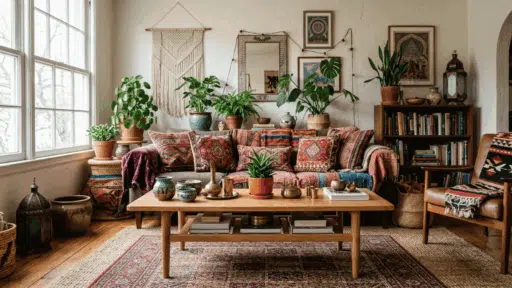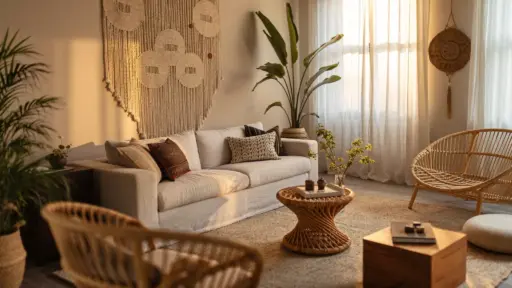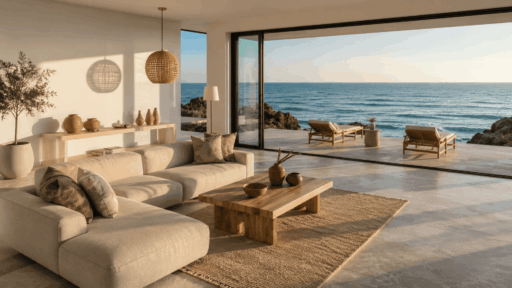
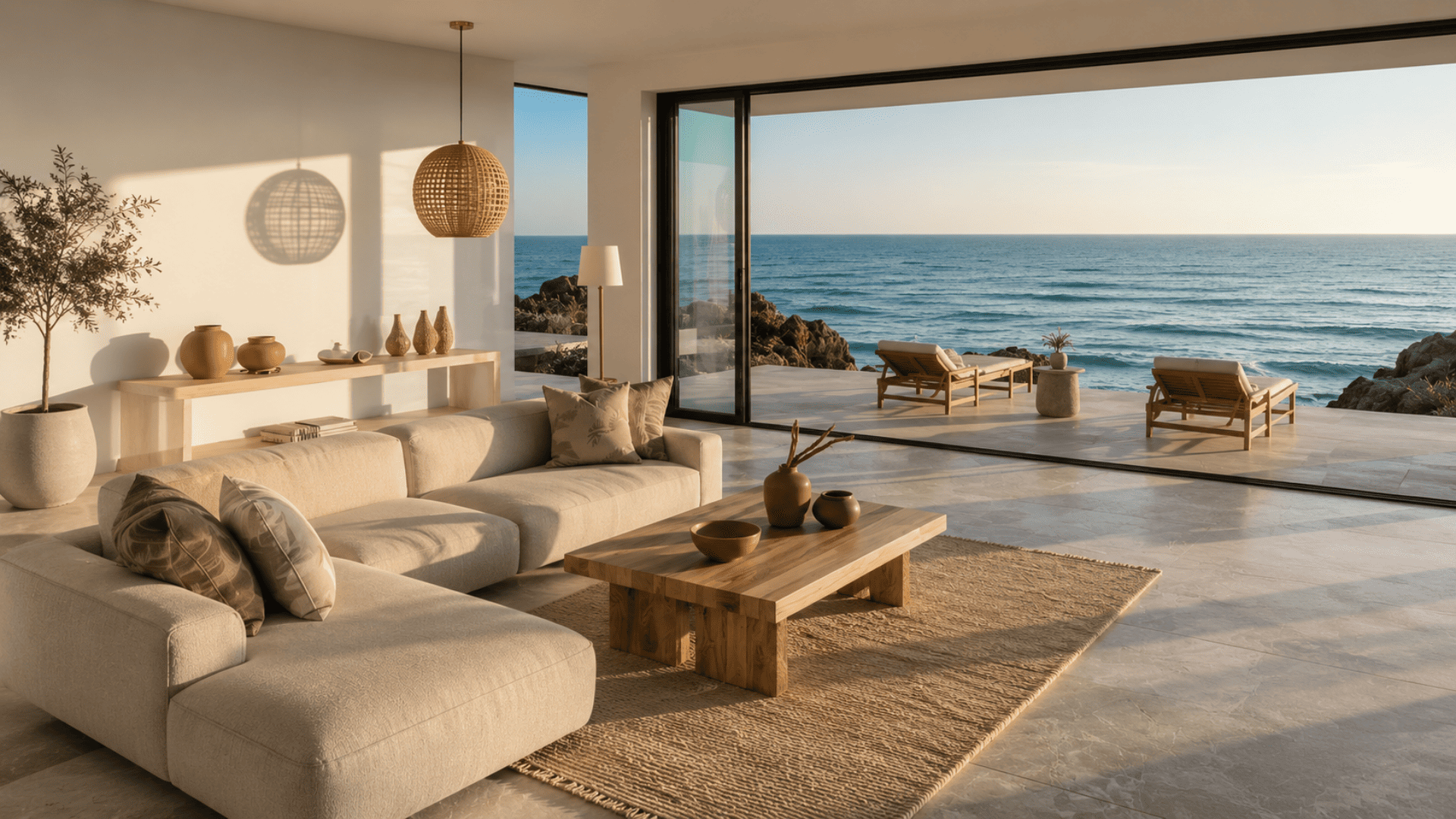
The coastal aesthetic has become one of the most popular design trends for people seeking a style that feels relaxed, long-lasting, and naturally inviting.
Inspired by the easygoing atmosphere of coastal living, it blends comfort with understated grace through thoughtful design choices rather than temporary trends.
I have always appreciated how this aesthetic creates a welcoming environment that feels bright and refreshing without appearing overly styled. Its versatility allows it to be incorporated into homes, fashion, creative projects, and lifestyle inspiration.
By focusing on simplicity, balance, and a connection to nature, coastal aesthetics offers an approachable way to create spaces and styles that feel calm, cohesive, and effortlessly appealing.
What is Coastal Aesthetics?
Coastal aesthetics is a design style inspired by the natural landscapes found along coastlines, including sandy beaches, ocean waters, driftwood, sea glass, and coastal vegetation.
The style is characterized by soft color palettes, airy layouts, natural materials, and layered textures that reflect the beauty of the shoreline.
Unlike themed beach décor, coastal aesthetics emphasizes subtle influences and long-lasting design principles rather than decorative motifs.
Common elements include linen fabrics, woven accents, light wood finishes, and nature-inspired colors that work together to create a relaxed yet refined appearance.
The result is a versatile aesthetic that feels fresh, comfortable, and closely connected to the natural world.
How Coastal Aesthetics Differs from Beach-Themed Design
While the two styles share coastal inspiration, their overall appearance and design approach are quite different. Understanding these distinctions can help you choose a style that aligns with your preferences and desired aesthetic.
Coastal Aesthetics | Beach-Themed Design |
Focuses on natural colors, organic textures, and a relaxed atmosphere inspired by the coast. | Relies on decorative beach-related items and obvious seaside themes. |
Uses materials such as linen, wood, rattan, jute, and stone for a classic look. | Often incorporates seashells, anchors, ship wheels, signs, and nautical accessories. |
Creates a refined, understated, and versatile style that works in a variety of settings. | Creates a more themed, decorative appearance centered on beach imagery. |
By focusing on natural elements rather than themed décor, coastal aesthetics offers a more refined and consistently popular interpretation of seaside-inspired design.
Coastal Aesthetics Ideas to Inspire Your Style
Creating a coastal aesthetic is about more than adding beach-inspired accessories.
The style focuses on natural materials, soft color palettes, comfortable furnishings, and thoughtful design choices that reflect the relaxed atmosphere of coastal environments.
These ideas can help you acknowledge the long-lasting appeal of coastal aesthetics while creating a look that feels relaxed, natural, and effortlessly stylish.
1. Build around a Soft Coastal Color Palette
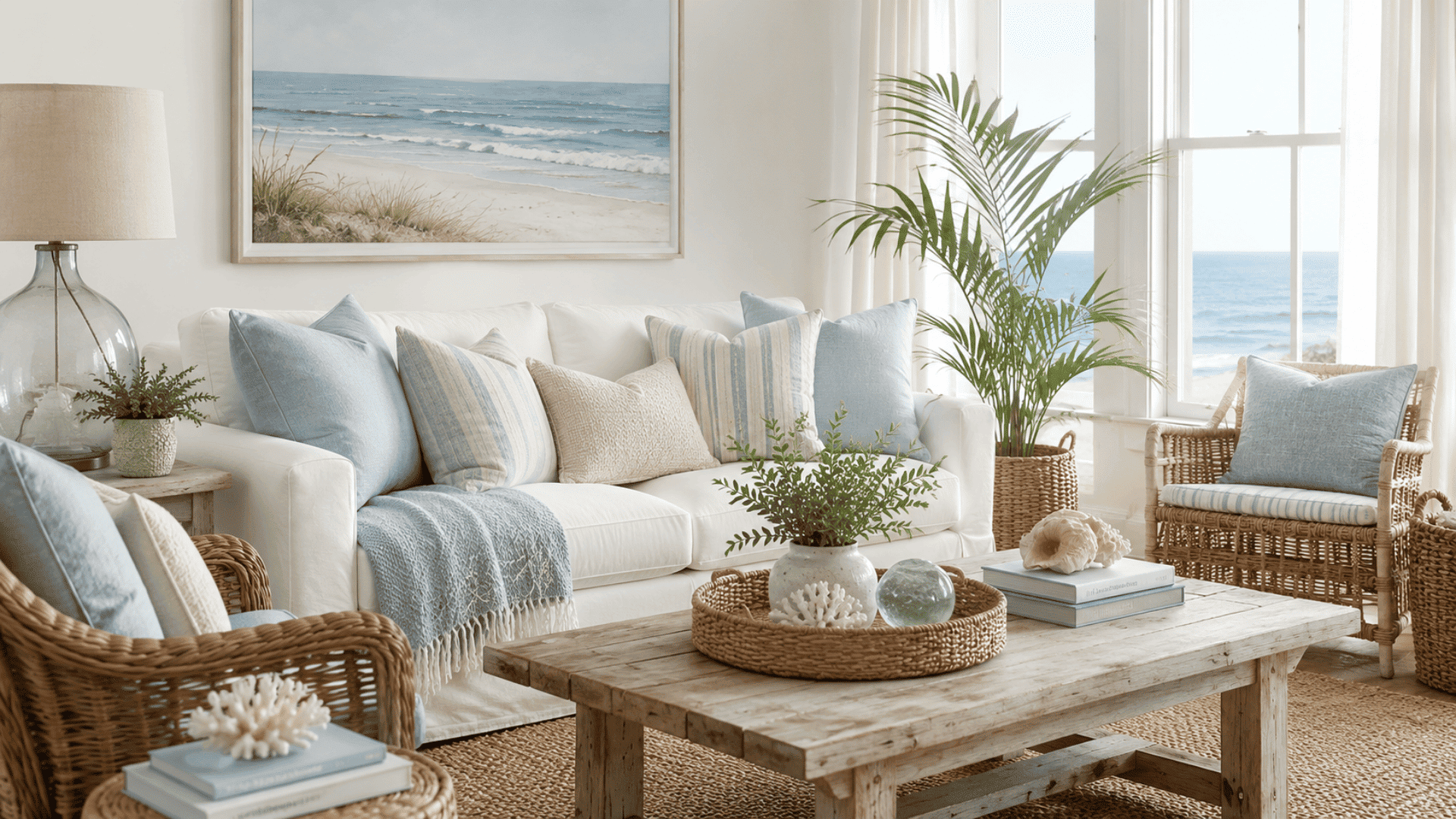
A successful coastal aesthetic begins with colors inspired by nature. White, cream, sand beige, pale blue, soft gray, and muted green create a calm foundation that instantly brightens a space.
These shades reflect the colors commonly found along coastlines and help establish an open, airy appearance.
Keeping the palette consistent makes it much easier to layer textures and decorative elements without overwhelming the overall design.
2. Incorporate Natural Wood Finishes
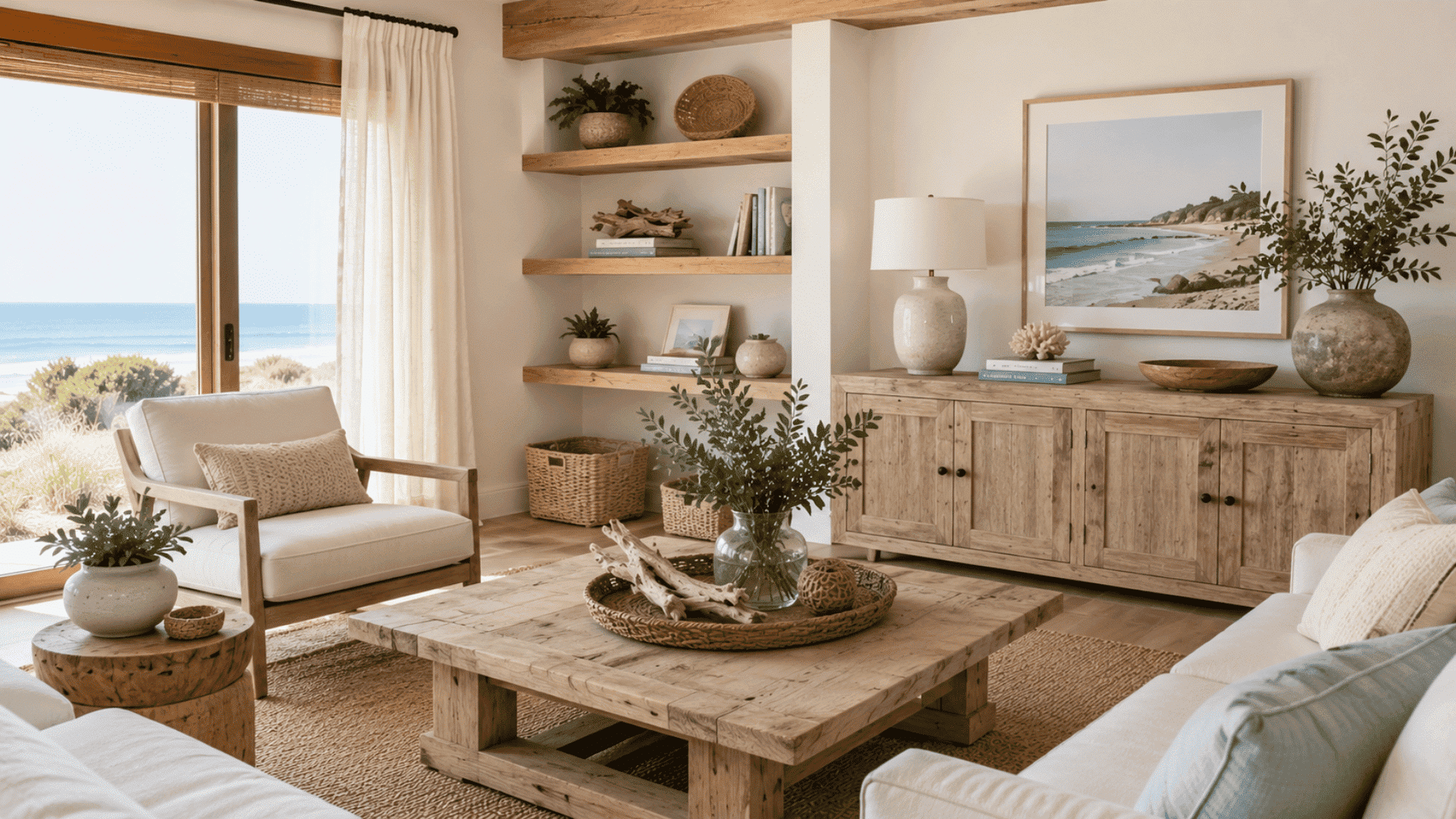
Natural wood finishes add warmth to coastal-inspired spaces.
Light-toned timber, weathered wood, and driftwood-inspired accents work particularly well because they reinforce the connection to nature.
These materials can be incorporated through furniture, shelving, paintings, flooring, or decorative accessories.
3. Layer Linen and Cotton Textiles
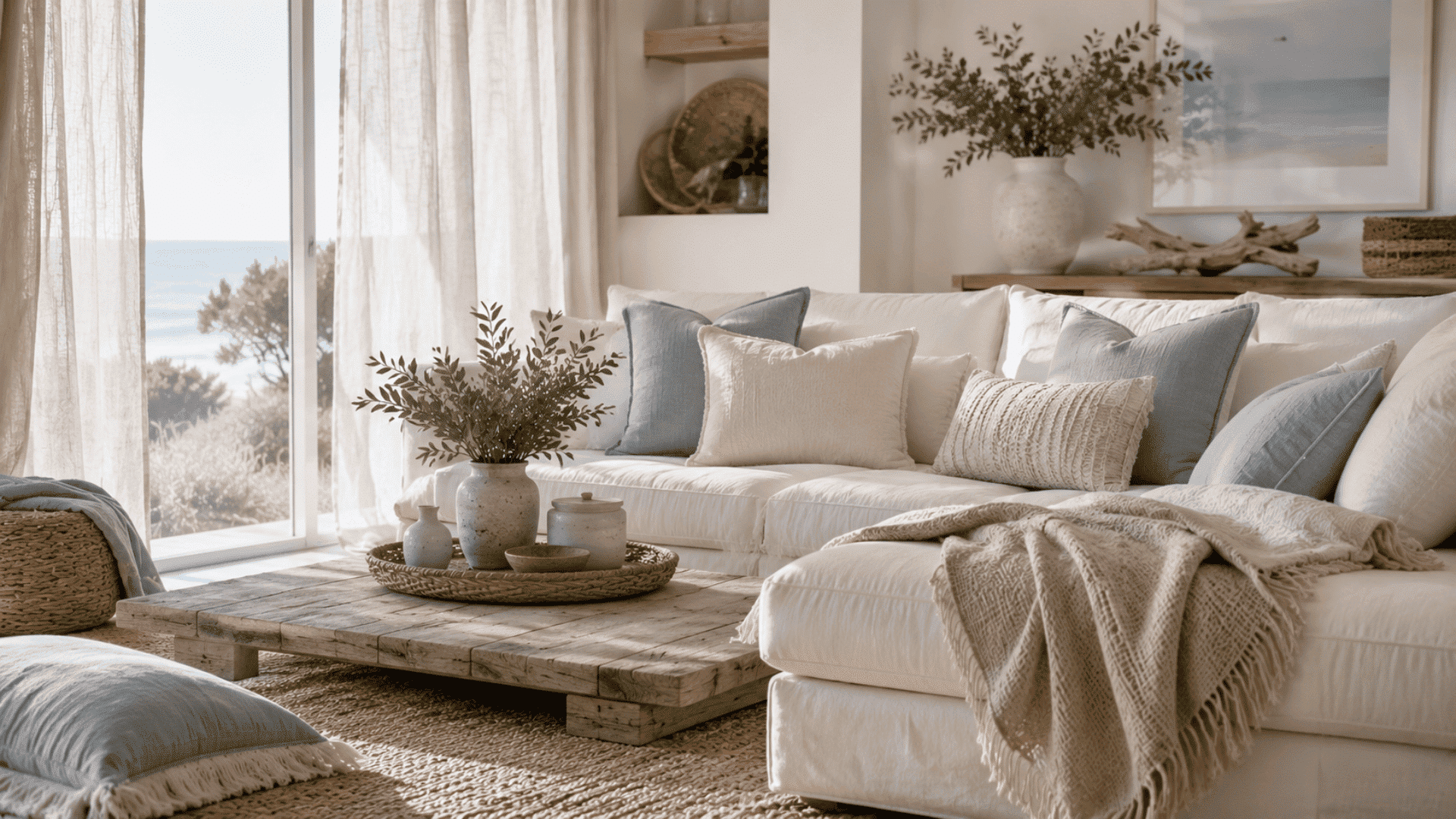
Linen and cotton are essential materials in coastal aesthetics because they introduce softness, texture, and comfort.
Lightweight curtains, textured cushions, breathable bedding, and casual throws create a relaxed atmosphere while maintaining visual interest.
These fabrics also complement natural color palettes beautifully.
4. Use Woven and Rattan Elements
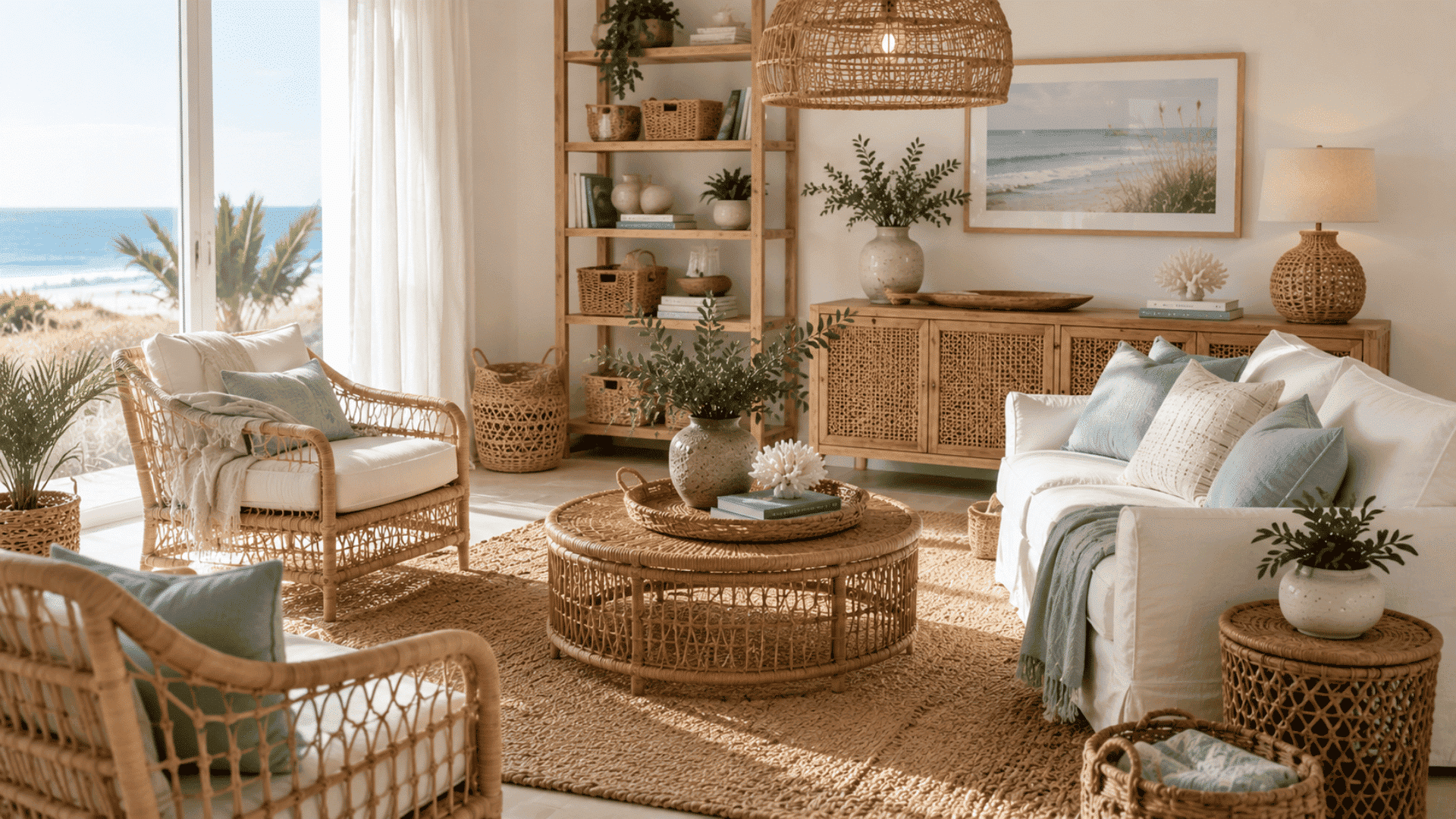
Woven materials such as rattan, wicker, jute, and seagrass add natural texture without dominating the design.
These elements can appear in baskets, lighting fixtures, furniture, rugs, and decorative accents.
Their handcrafted appearance introduces warmth and character while supporting the organic feel that defines coastal aesthetics.
5. Maximize Natural Light
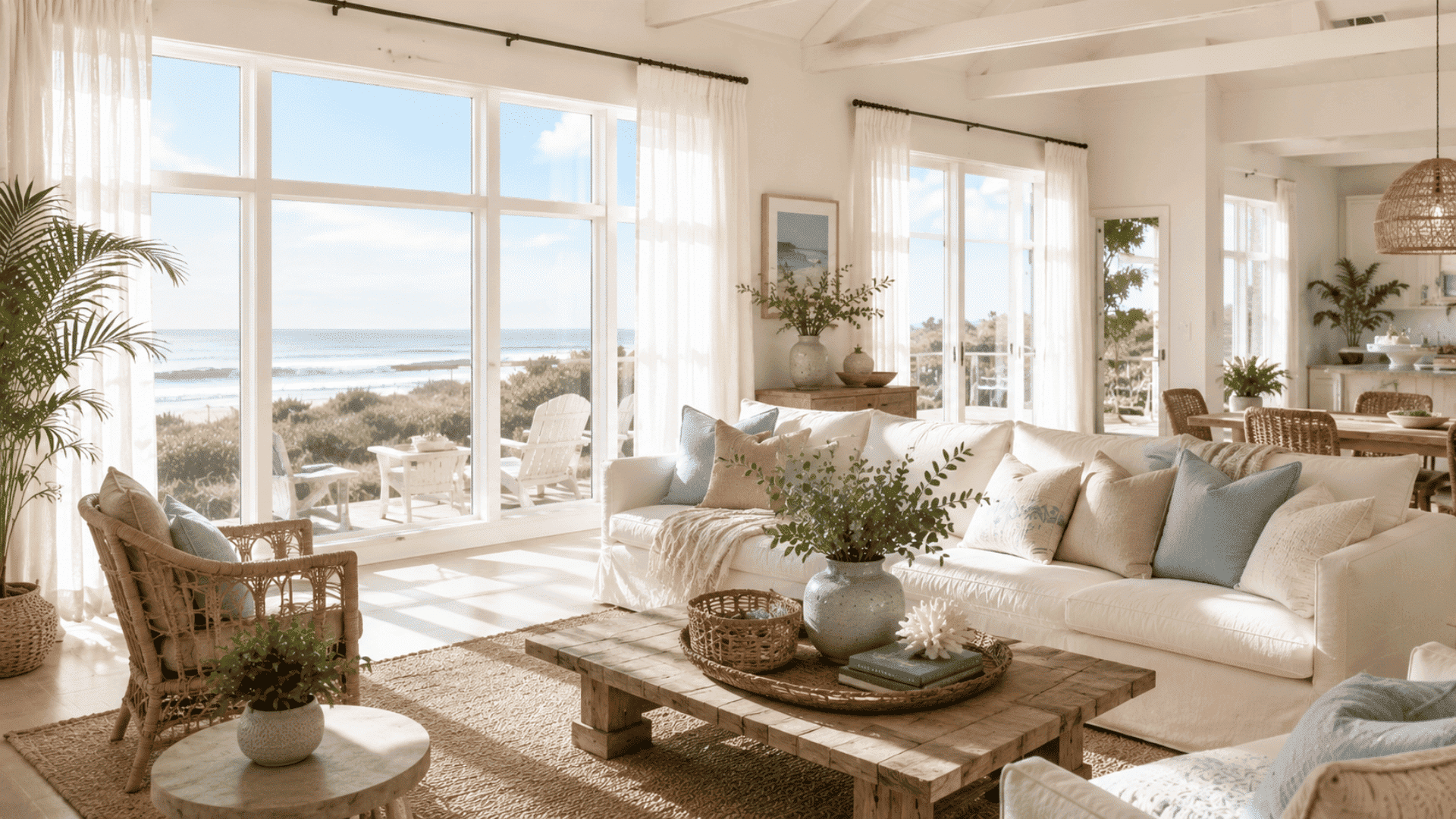
Natural light plays a significant role in creating a coastal aesthetic. Large windows, sheer curtains, and open layouts help sunlight flow freely throughout a space.
Bright interiors enhance the appearance of colors and textures while making rooms feel larger and more welcoming.
Prioritizing natural light also reinforces the fresh and airy atmosphere commonly associated with coastal living.
6. Create a Sea Glass-Inspired Color Story
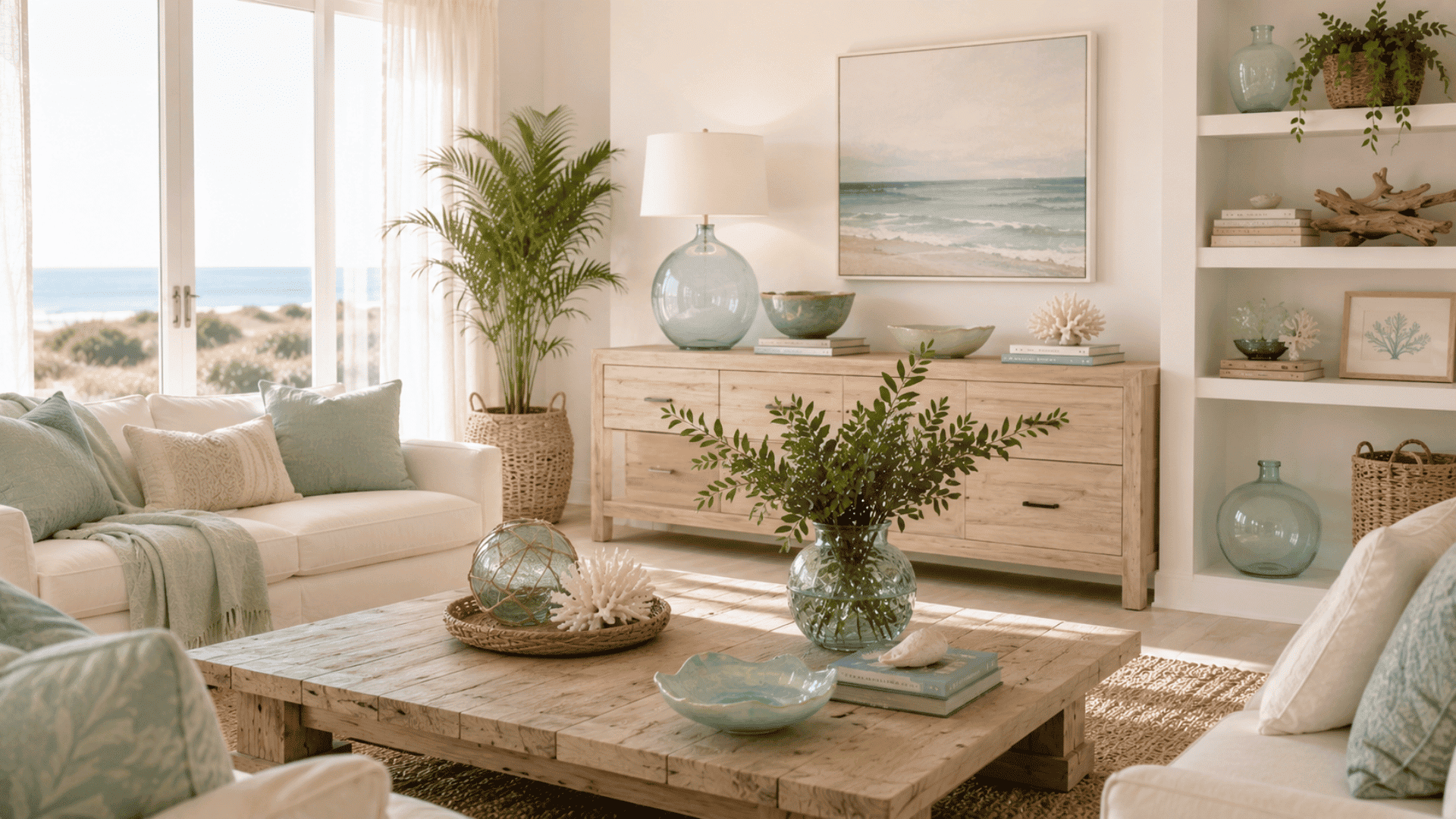
Sea glass-inspired colors offer a subtle way to introduce coastal character. Soft aqua, pale turquoise, and muted green tones bring freshness without overpowering the design.
These shades pair effortlessly with neutral foundations and can be incorporated through artwork, decorative accessories, textiles, or ceramics.
Their understated appearance contributes to a soothing environment that feels both polished and relaxed.
7. Choose Comfortable and Relaxed Furniture
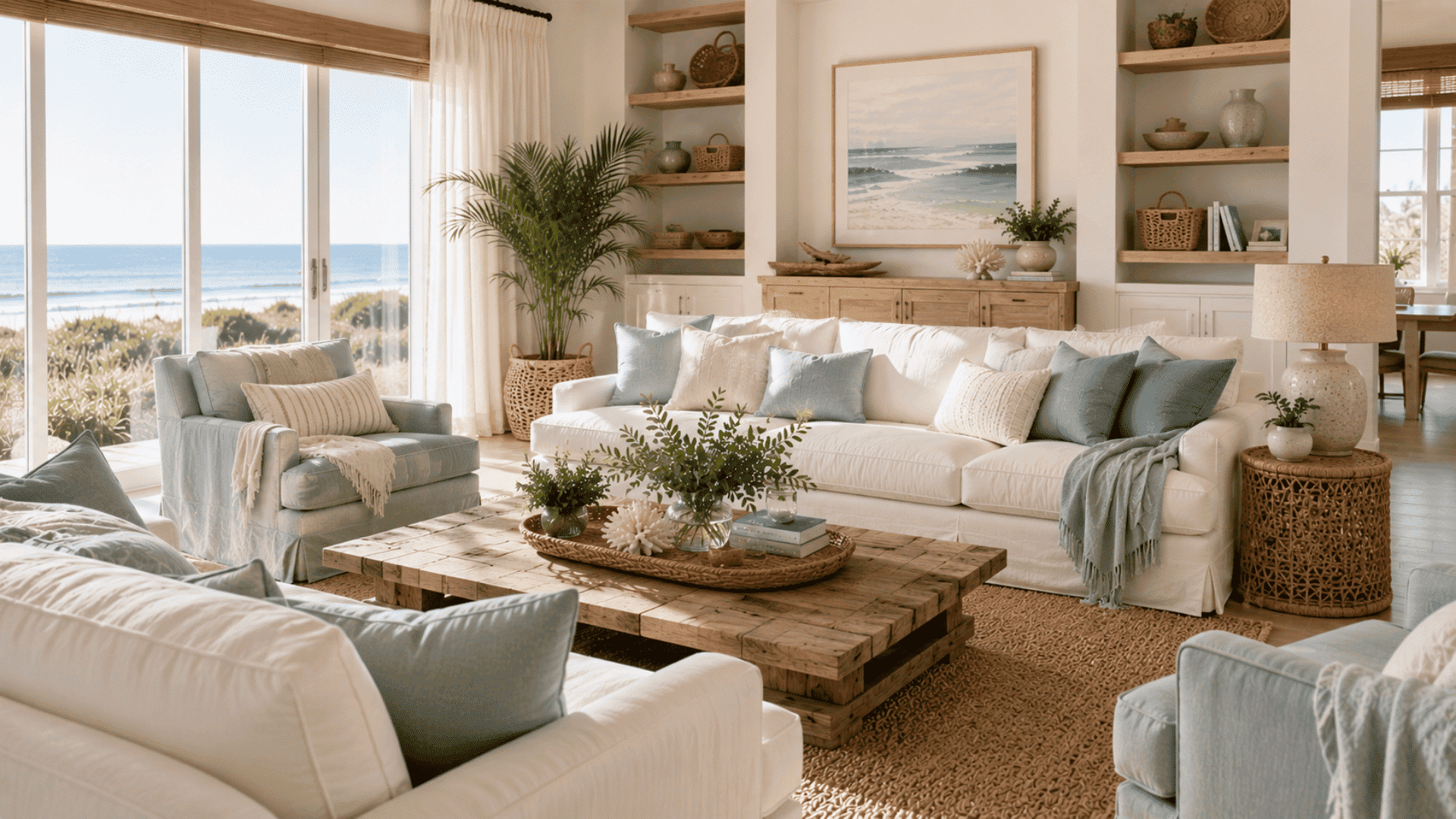
Comfort should always take priority when embracing coastal aesthetics. Deep sofas, cushioned chairs, oversized seating, and functional furniture arrangements encourage relaxation and everyday use.
Rather than focusing on formal or highly decorative pieces, coastal-inspired spaces emphasize practicality and ease.
The goal is to create an environment where people naturally want to spend time and unwind.
8. Add Organic Decorative Textures
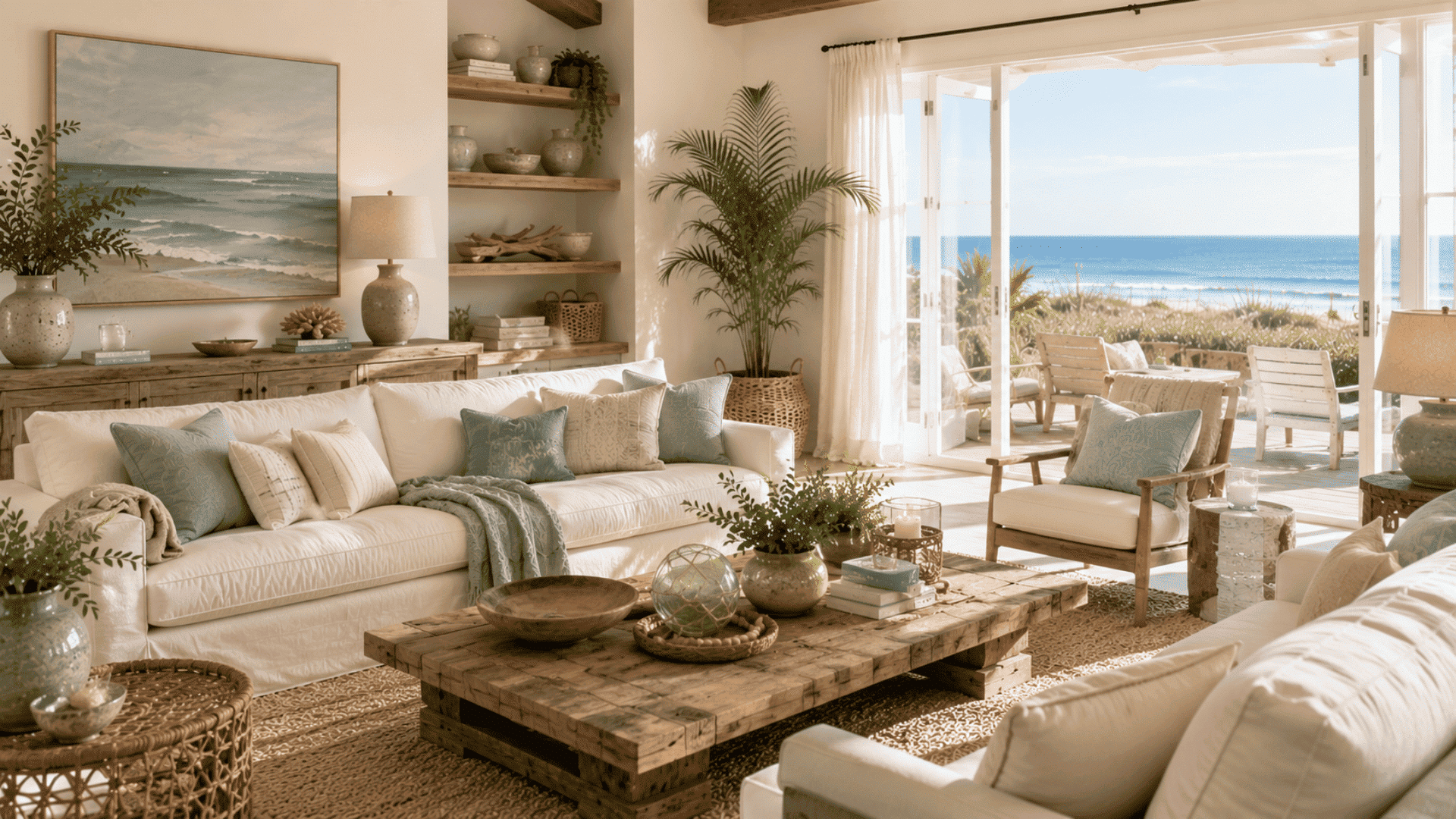
Organic textures help create visual depth. Materials such as stone, ceramic, reclaimed wood, woven fibers, and textured fabrics work together to produce a layered appearance.
These natural elements add depth to coastal-inspired spaces without relying on bold colors or excessive decoration.
In many coastal designs, texture becomes a key design feature, creating visual interest through subtle layers of materials such as wood, linen, rattan, and stone.
9. Try Minimal Styling
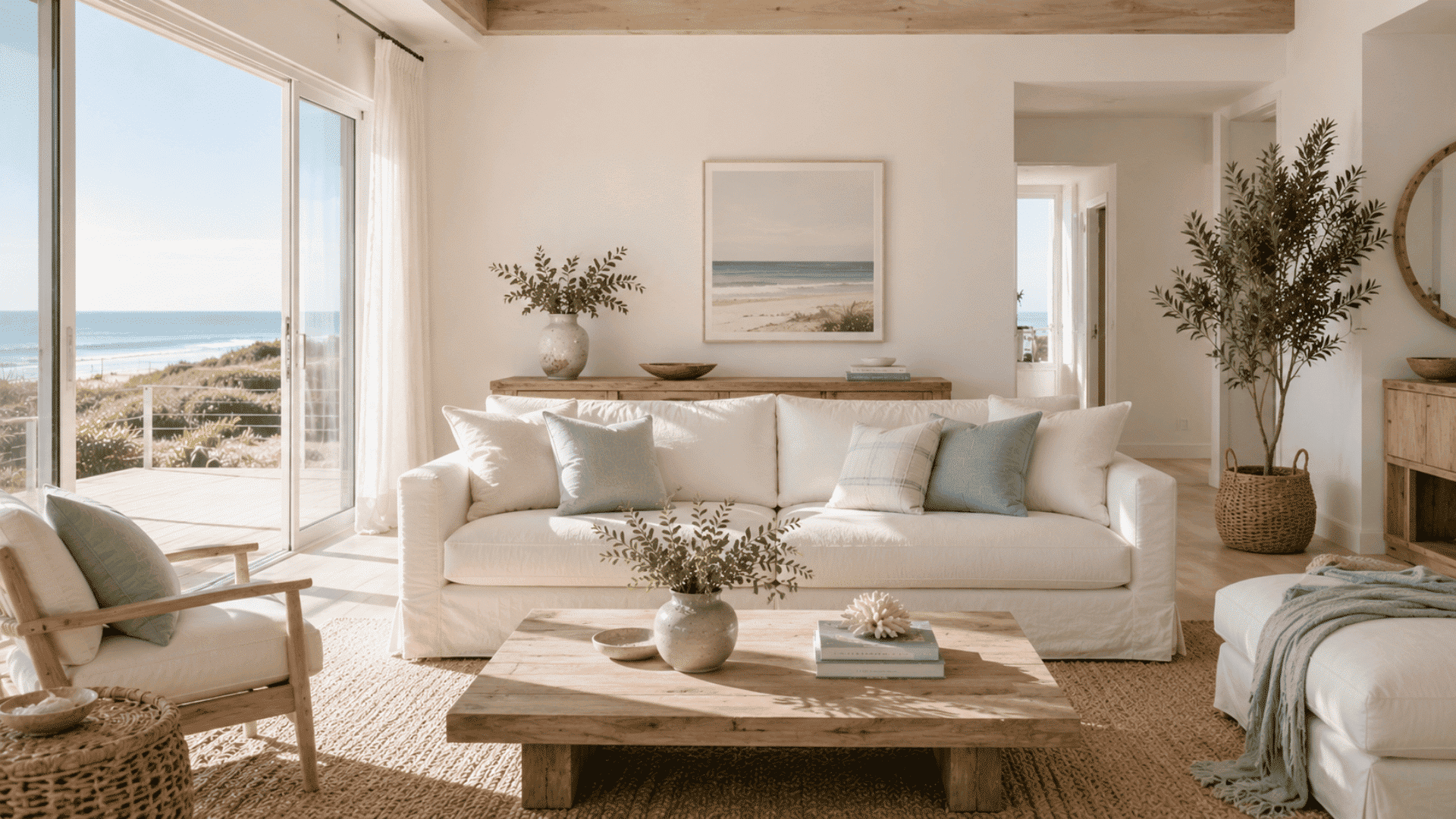
One of the most effective coastal aesthetic ideas is keeping décor simple and intentional.
Too many decorative items can make a space feel cluttered and distract from the natural beauty of the design.
Instead, choose a few meaningful accents and allow materials, textures, and colors to become the focal points. This approach creates a cleaner and more classic appearance.
10. Incorporate Coastal Aesthetics into Fashion
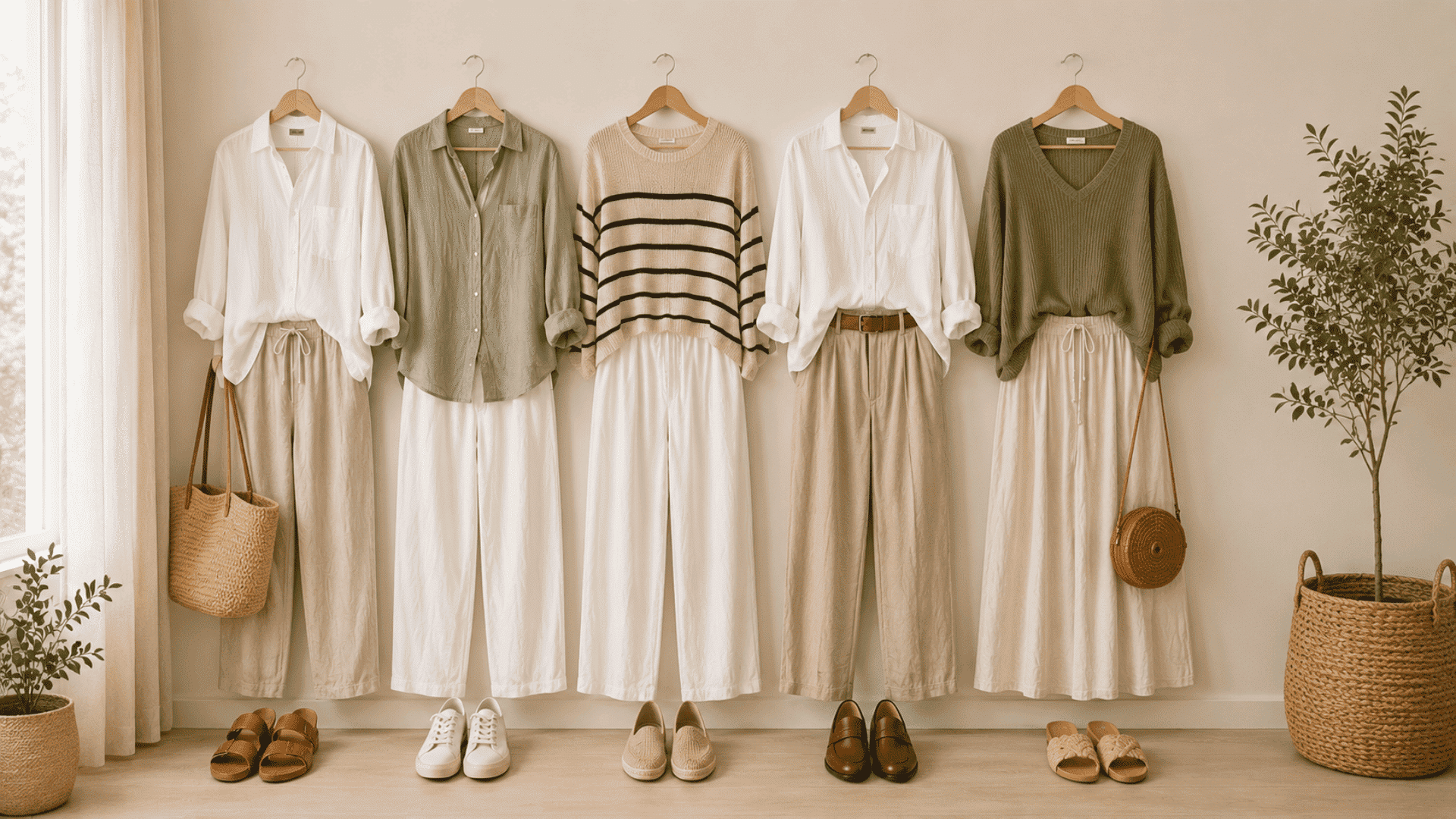
Coastal aesthetics extend far beyond interior design. Linen shirts, relaxed trousers, lightweight knitwear, straw accessories, and neutral color palettes capture the same effortless appeal in fashion.
Coastal-inspired clothing focuses on comfort, breathable fabrics, and long-lasting silhouettes. This makes the aesthetic practical for everyday wear while maintaining a polished and well-balanced look.
11. Use Nature-Inspired Artwork
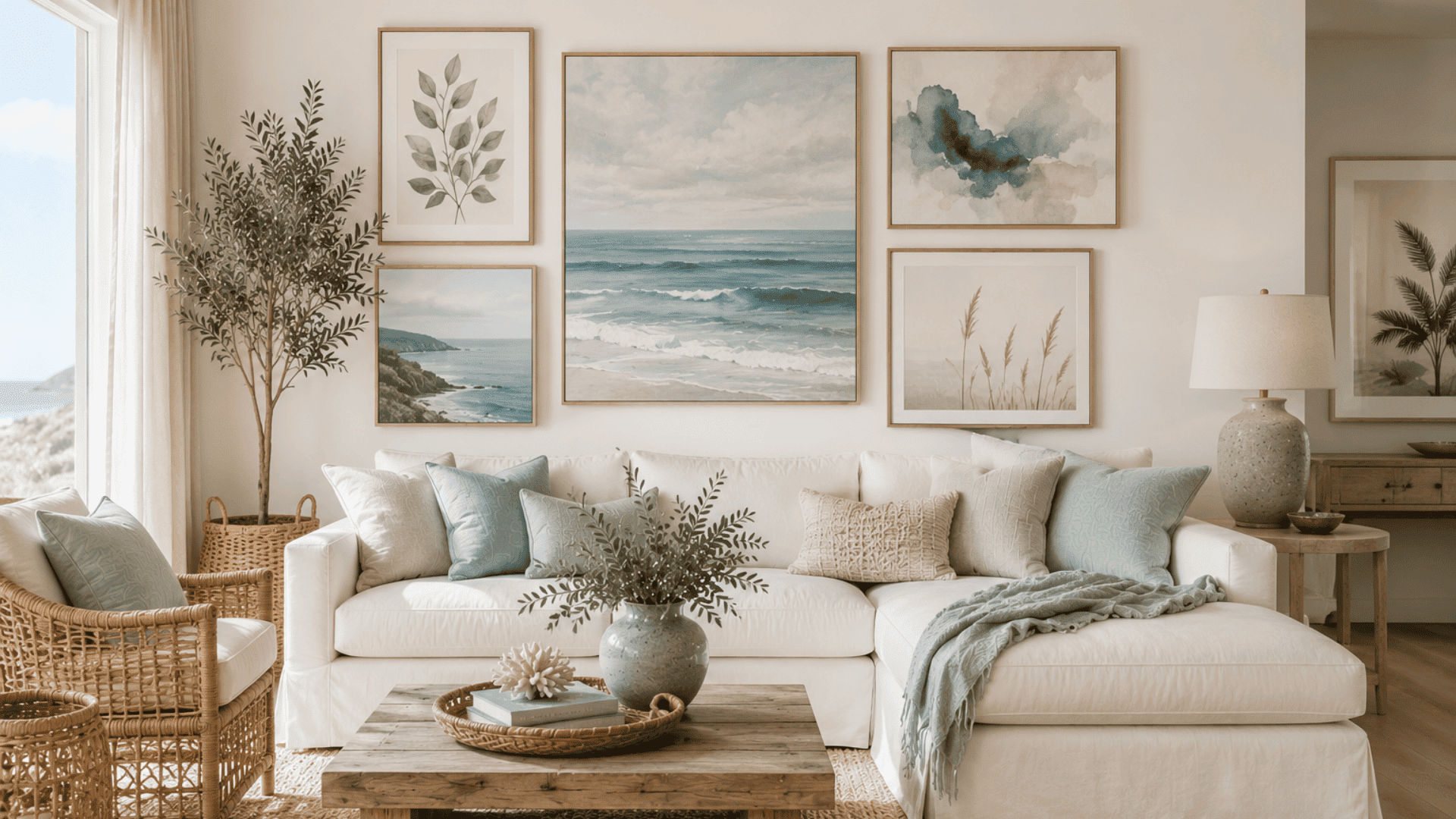
Artwork can reinforce coastal aesthetics without relying on obvious beach imagery. Ocean landscapes, abstract water-inspired designs, coastal photography, and botanical illustrations all contribute to the overall atmosphere.
Choosing artwork with soft color palettes and simple compositions helps maintain visual harmony while introducing personality and creative expression into a space.
12. Introduce Soft Green Accents
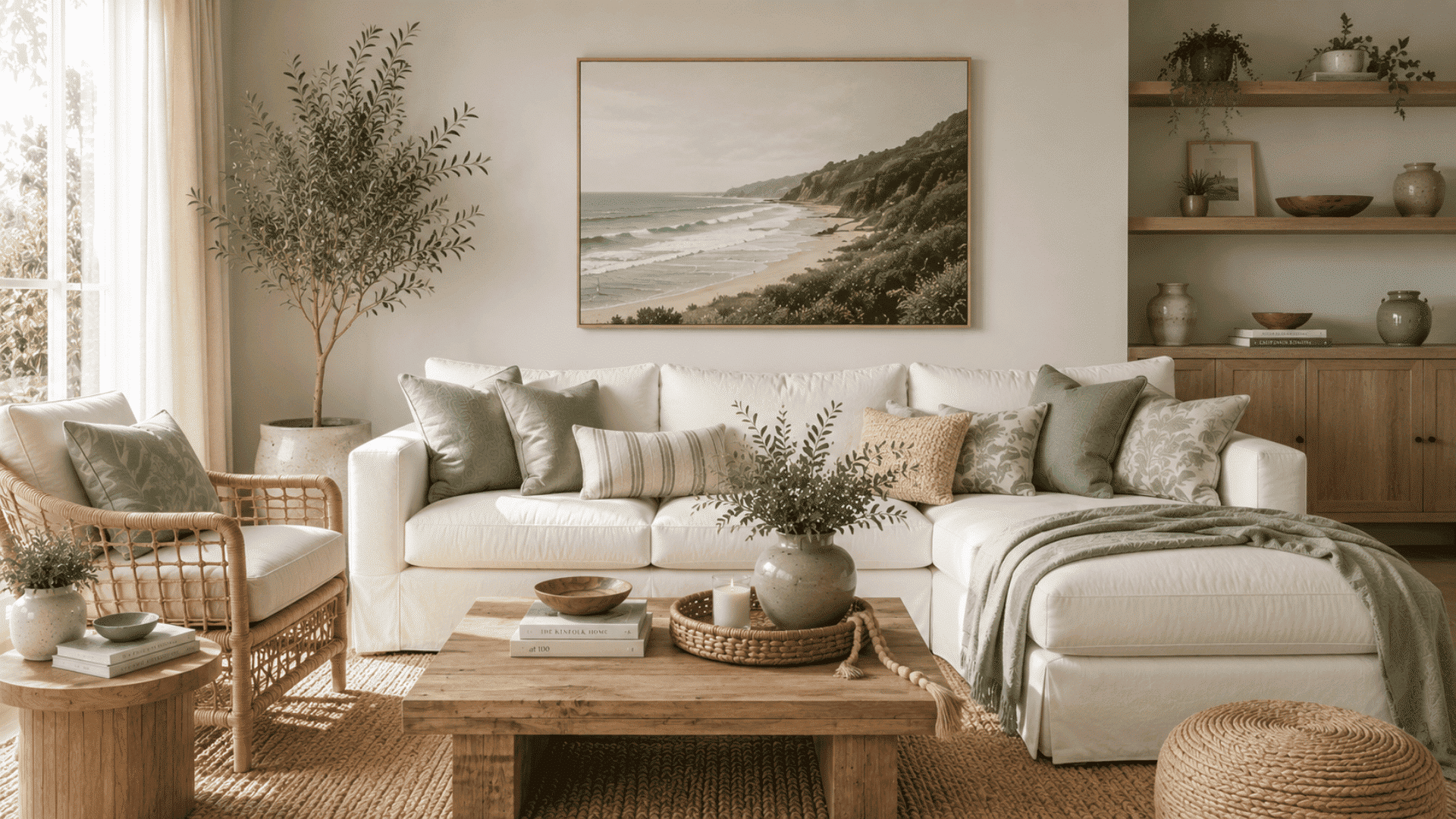
Muted green tones inspired by coastal vegetation provide a refreshing alternative to traditional blue accents.
Shades such as sage, eucalyptus, and olive pair beautifully with whites, creams, and natural wood finishes.
These colors bring an organic quality to the design while creating a more contemporary interpretation of coastal aesthetics that feels both well-balanced and approachable.
13. Create an Outdoor Coastal Retreat
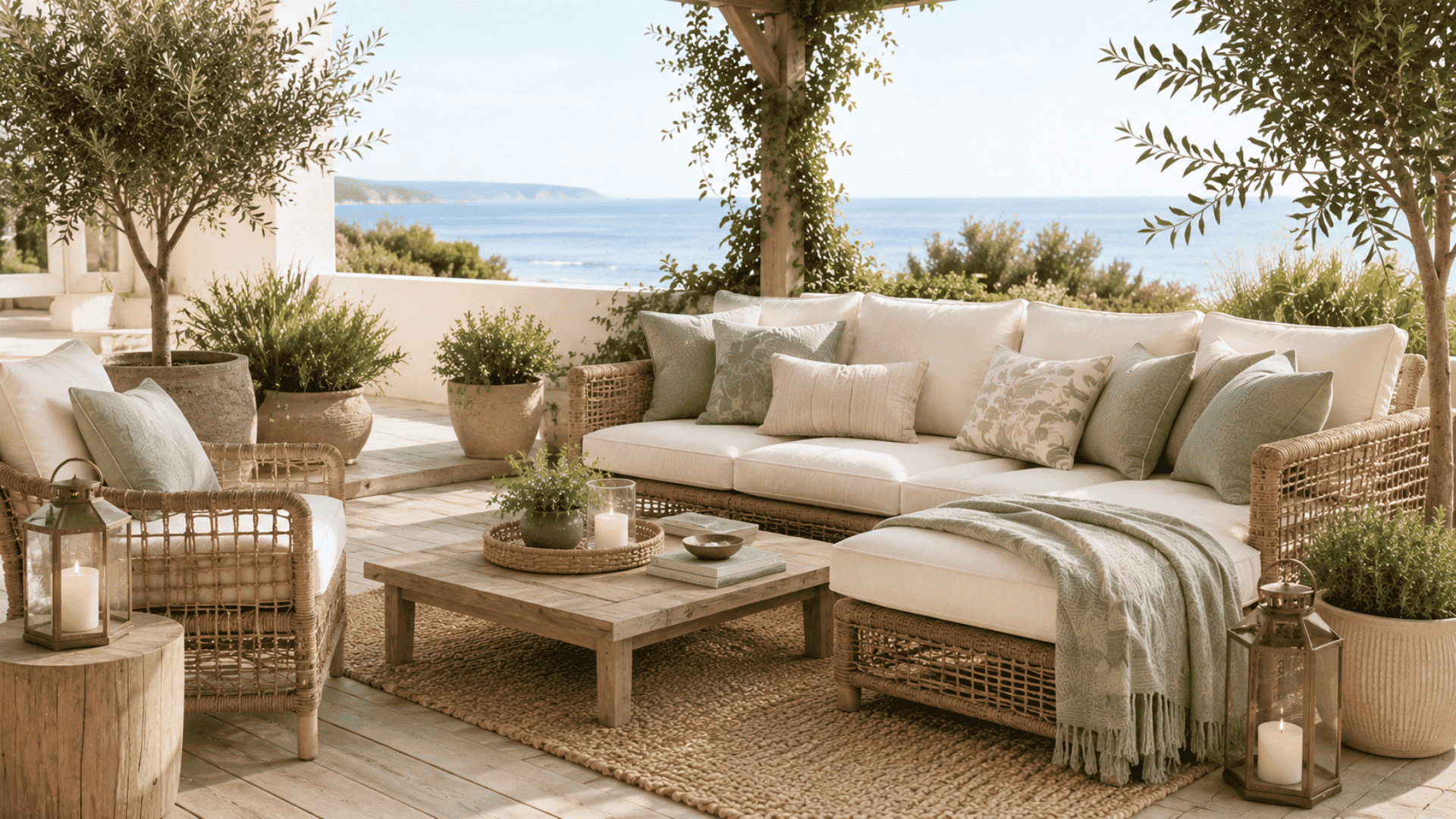
Outdoor spaces can benefit from coastal aesthetics just as much as interiors.
Woven furniture, outdoor linen cushions, lanterns, natural wood accents, and potted greenery help create a relaxed environment.
Whether it is a patio, balcony, or garden, the objective is to design an outdoor retreat that feels comfortable, inviting, and connected to the natural surroundings.
14. Design a Coastal-Inspired Creative Workspace
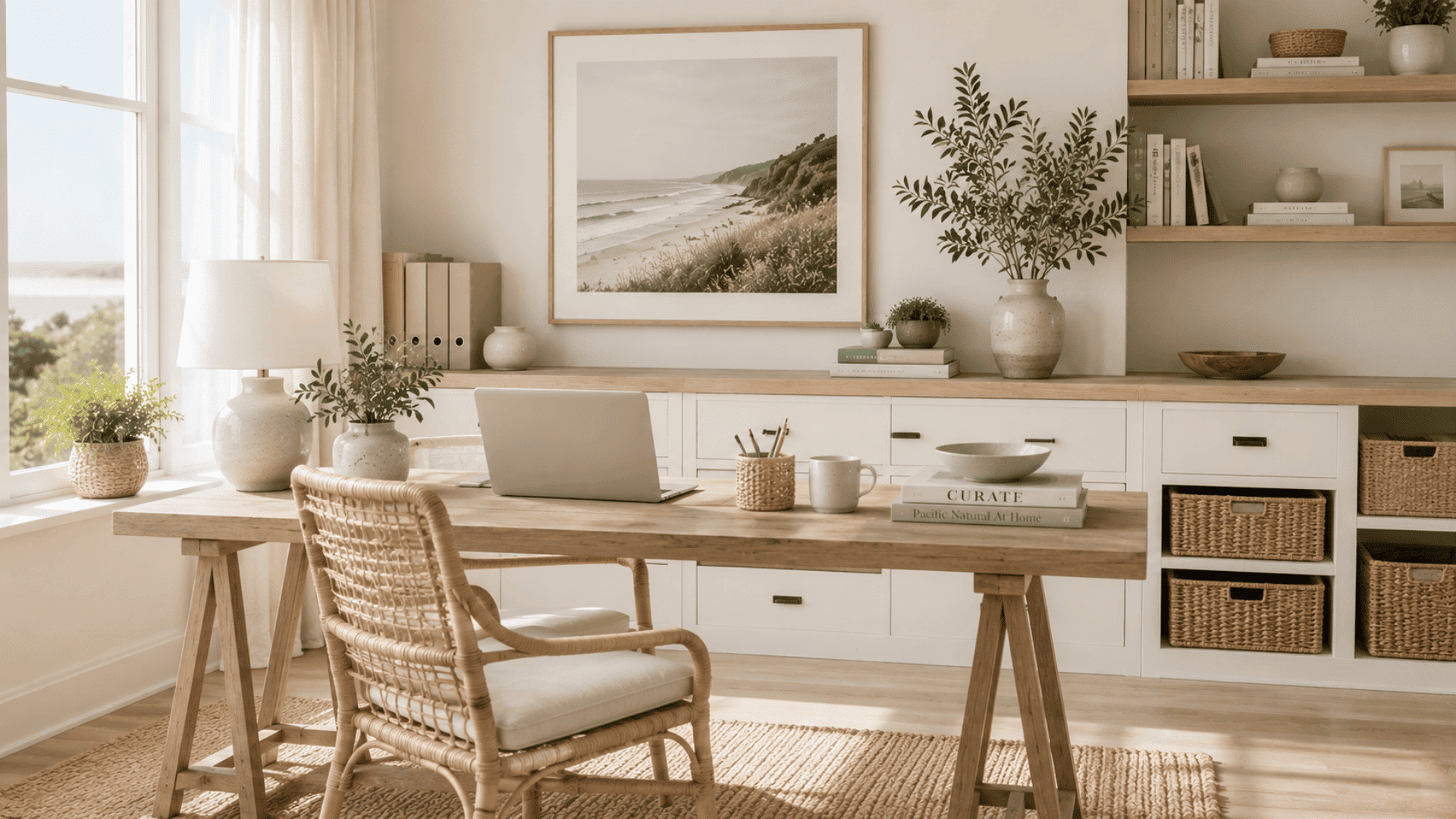
A coastal-inspired workspace can promote focus and creativity while maintaining a calm atmosphere.
Neutral colors, organized storage, natural materials, and abundant natural light contribute to a productive environment.
Small details such as woven organizers, ceramic accessories, and textured desk décor can reinforce the aesthetic without creating unnecessary distractions during work or creative activities.
15. Develop a Coastal Aesthetic Mood Board
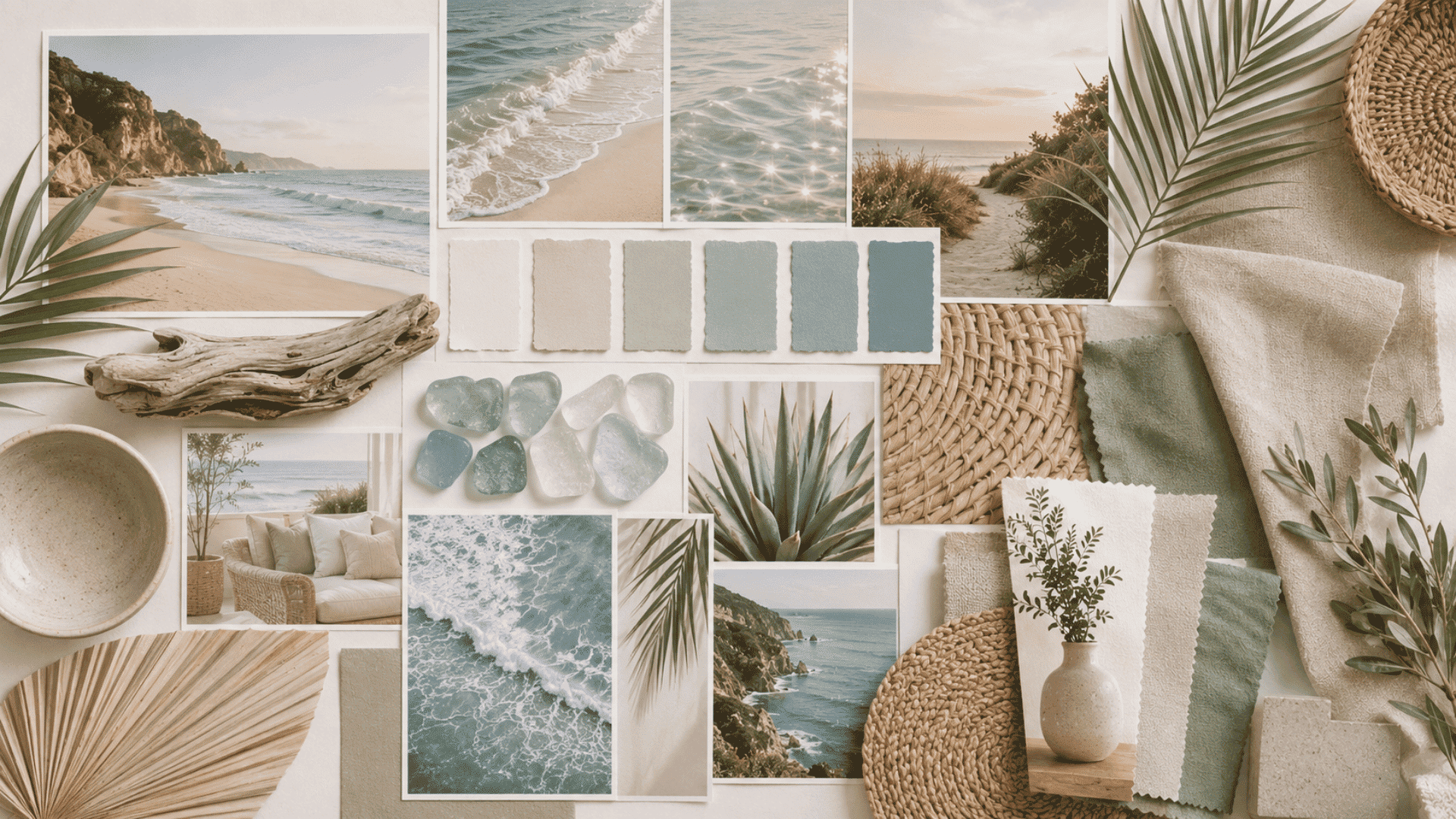
A mood board is a valuable tool for anyone exploring coastal aesthetics in personal or professional projects. Include images of beaches, driftwood, sea glass, linen fabrics, woven textures, coastal landscapes, and natural color palettes.
A thoughtfully curated mood board helps establish visual consistency and provides inspiration as you’ll find different interpretations of the coastal aesthetic.
Why Coastal Aesthetics Continues to Grow in Popularity
Coastal aesthetics has become increasingly popular because it offers a balance between beauty, comfort, and practicality.
People are drawn to its ability to create bright, welcoming spaces without extensive renovations or expensive design updates.
The style’s versatility allows it to work in modern apartments, family homes, creative studios, and personal projects. Its emphasis on natural materials and eternal design principles also helps it remain relevant despite changing trends.
As more individuals seek environments that promote relaxation and simplicity, coastal aesthetics continues to appeal to those looking for a style that feels both contemporary and enduring.
- The Appeal of Comfort and Simplicity: Soft fabrics, natural materials, and uncluttered layouts create spaces that feel easy to live in. Rather than prioritizing decoration for its own sake, the style encourages functional choices that contribute to a relaxed and enjoyable environment.
- Versatility Across Different Applications: Coastal aesthetics extends far beyond interior design. The flexibility allows individuals to express the aesthetic in multiple ways while maintaining a cohesive visual identity that feels natural and long-lasting.
Common Coastal Aesthetic Mistakes to Avoid
Even well-designed coastal aesthetic spaces can lose their appeal when key design principles are overlooked.
The table below highlights common mistakes and practical ways to avoid them while maintaining a balanced, eternal, coastal-inspired look.
Common Mistake | Why It Hampers the Design | How to Fix It |
Overusing Beach-Themed Accessories | Too many seashells, anchors, signs, and themed decorations can make the space feel overly styled rather than naturally relaxed. | Use a few coastal-inspired accents and focus on natural materials, soft color palettes, and organic textures to create a more refined aesthetic. |
Ignoring Texture and Layering | Relying only on color can make the space feel flat and lacking visual depth. | Layer linen, cotton, jute, wicker, wood, and other natural textures through furniture, rugs, cushions, and accessories. |
Choosing the Wrong Color Balance | Excessive blue tones can overwhelm a space, while an all-neutral palette may feel unfinished. | Combine light neutrals, soft blues, muted greens, and natural wood finishes to create a cohesive and inviting coastal aesthetic. |
By avoiding these common mistakes, you can create a coastal aesthetic that feels fresh, balanced, and effortlessly connected to nature while maintaining its classic appeal.
Bottom Line
Coastal aesthetics provides a simple way to create bright, comfortable spaces inspired by the colors, textures, and atmosphere of the shoreline.
I appreciate how this style combines natural materials, soft color palettes, and practical design choices to create environments that feel welcoming without appearing overly styled.
By focusing on balance, natural light, organic textures, and thoughtful details, it is possible to achieve a cohesive look that works across different home styles and personal preferences.
Even small updates, such as incorporating woven textures, linen fabrics, and neutral tones, can make a noticeable difference.
With a clear understanding of its core elements and common mistakes to avoid, embracing coastal aesthetics can be a rewarding way to create a long-lasting and inviting space.
Frequently Asked Questions
What Colors are Used in Coastal Aesthetics?
Coastal aesthetics commonly features white, cream, beige, soft gray, pale blue, muted aqua, and gentle green tones inspired by the shoreline, ocean, and sky.
How do You Make a Room Look Coastal without Remodeling?
Use light-colored fabrics, woven textures, natural wood finishes, linen cushions, and a few coastal-inspired accents while maximizing natural light throughout the space.
Is Coastal Aesthetics Still Popular?
Yes, coastal aesthetics remains popular because of its classic appeal, natural influences, and versatility across different home styles and design preferences.

Iris Delgado, BA in Interior Styling from SCAD, has spent a decade staging holiday and special-event interiors for hotels and film sets. She joined us in 2025 to offer theme-ready palettes, prop lists, and timeline checklists that simplify celebratory makeovers at any budget. She also co-hosts community parade-float workshops and collects vintage ornaments.