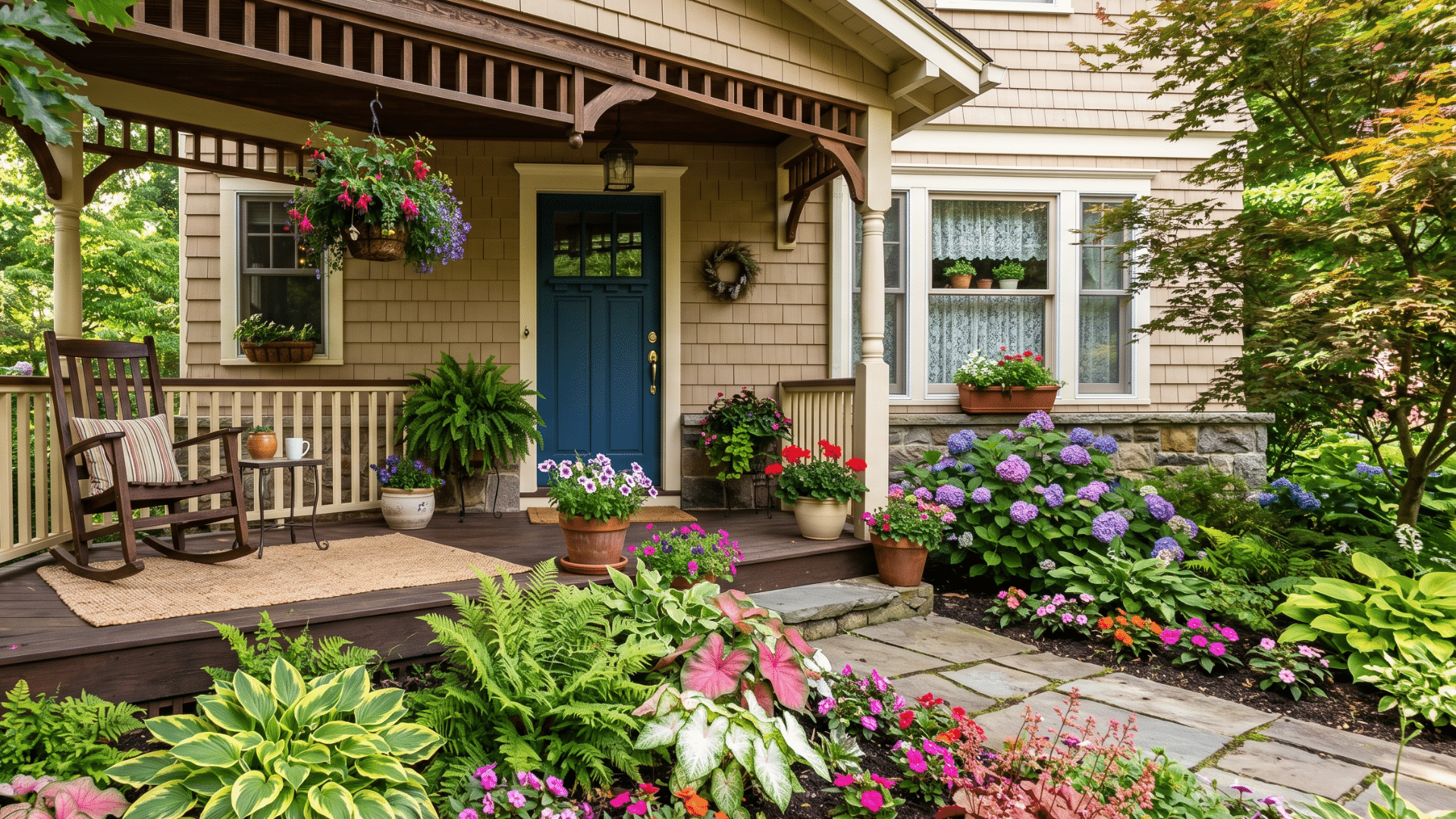

Ever look at that gloomy, bare strip of dirt along your north facing wall and wonder why nothing seems to survive there?
Most US homeowners think a gorgeous yard requires baking in full, intense sunlight, which leads to total frustration when trying to landscape under dense trees.
The truth is, some of the most vibrant textures and brilliant colors actually peak in the cool shadows. You just need to know which varieties to choose.
I will guide you the absolute best shade plant ideas to help you understand how to design and cultivate a thriving low light space.
We will cover top performing native perennials, lush groundcovers, and colorful shrubs chosen specifically for American backyards.
The Hidden Perks of Shady Garden Plants
Hellebores are the ultimate cure for the winter blues. These incredibly tough, long lived perennials bloom in late winter or very early spring. These flowers last for months. They feature thick, leathery, evergreen leaves that look great year round.
Many people view a shady yard as a landscaping curse, but it is actually a massive blessing for your home. First, shade garden plants create a built in cooling effect around your house.
Additionally, low light plants are incredibly resource efficient. Because the sun isn’t constantly beating down on the soil, water evaporates at a much slower rate.
This means you will spend significantly less time dragging the garden hose around. Shade environments also suffer from fewer aggressive weeds compared to sun drenched garden beds, saving you hours of exhausting maintenance.
While bright sun can wash out colors, the gentle, filtered light of a shadow garden makes deep purples, lime greens, and striped silver leaves look incredibly rich, artistic, and peaceful.
Best Shade Garden Plants Ranked by Care Level
To help you plan your landscape efficiently, we have arranged these 25 premier low light options by their care requirements. We start with the absolute lowest maintenance varieties and move up to the more demanding specialists.
First, you will find tough groundcovers that thrive on neglect and handle dry soil with ease. These hardy options are perfect for covering bare dirt beneath large trees where little else grows.
Next, the list moves into reliable perennials that need just a little spring cleanup to stay healthy all summer. Finally, we wrap up with the extra thirsty plants and sensitive annuals that require regular watering or winter protection.
Best Shade Plants that You Can in Your Yard.
These shade plants are very easy to maintain and can grow in very low sunlight.
1. Spotted Deadnettle (Lamium Maculatum)
- USDA Zones: 3–9
- Light & Soil Needs: Full shade to partial shade; adaptable to dry shade, well draining soil.
- Native Origin: Europe and Western Asia
- Approximate Cost: $10.00 – $18.00
- Care Percentage Meter: 10% (Virtually bulletproof; thrives effortlessly on complete neglect)
- Where to Buy: Great Garden Plants
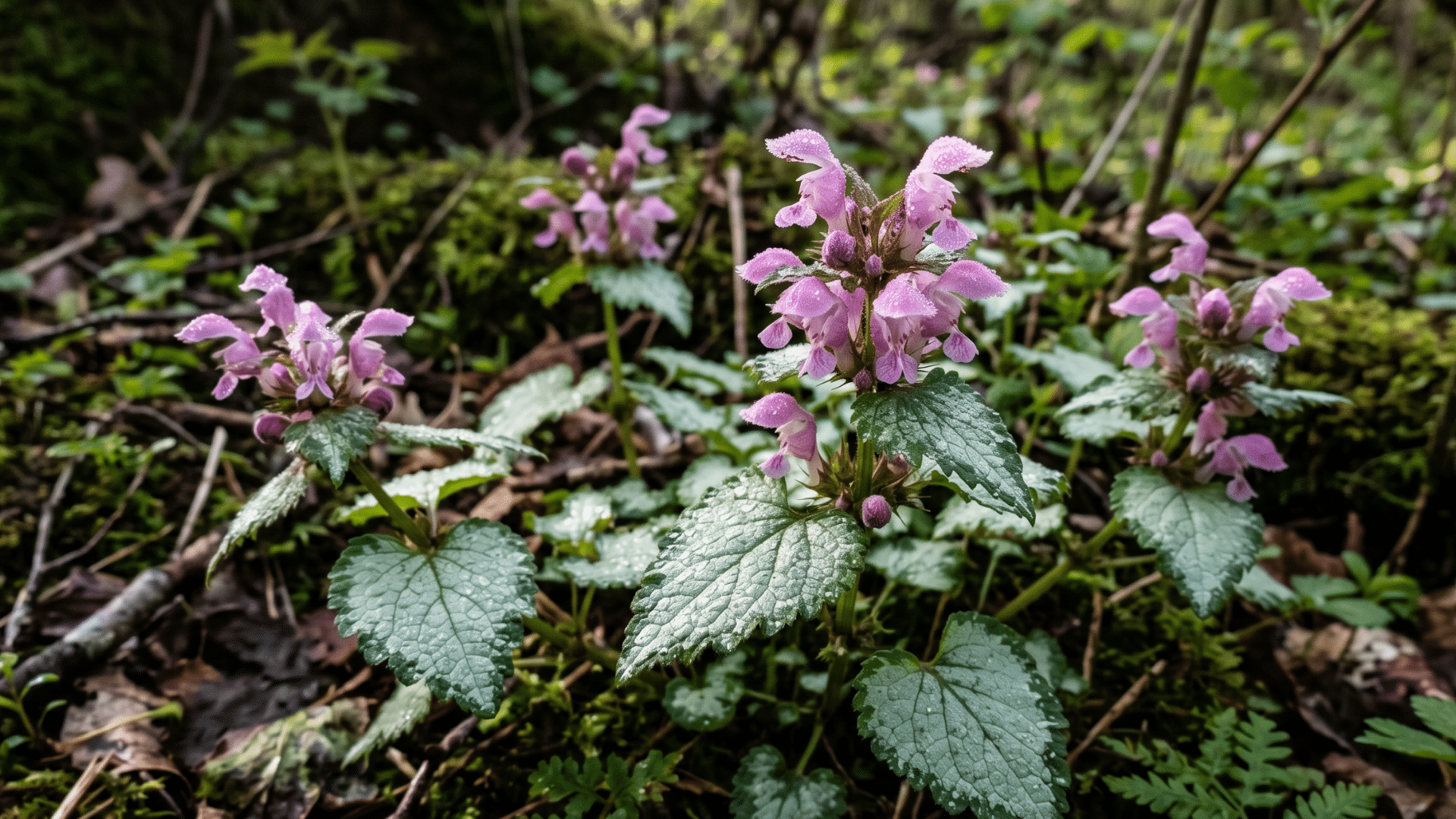
Spotted Deadnettle is an incredibly tough, fast growing groundcover. It works miracles in difficult “dry shade” areas. Its silver, frost colored foliage features a slim green border.
This creates a bright, glowing carpet across dark soil. Throughout the summer, this silver mat features clusters of snapdragon like flowers. It is excellent for choking out weeds and thrives on neglect.
Deer and rabbits completely ignore it. Use it to fill empty spaces between taller shrubs. It also cascades beautifully over the edges of shady container gardens.
Tip: Plant Spotted Deadnettle along dark pathways to create a natural, glowing border that brightens evening walks.
2. Wild Ginger (Asarum Canadense)
- USDA Zones: 3–7
- Light & Soil Needs: Full shade; moist, rich, acidic, organic rich soil.
- Native Origin: Eastern North America
- Approximate Cost: $12.00 – $22.00
- Care Percentage Meter: 15% (Extremely low maintenance; very tolerant of heavy shade and tree roots)
- Where to Buy: Nature Hills Nursery
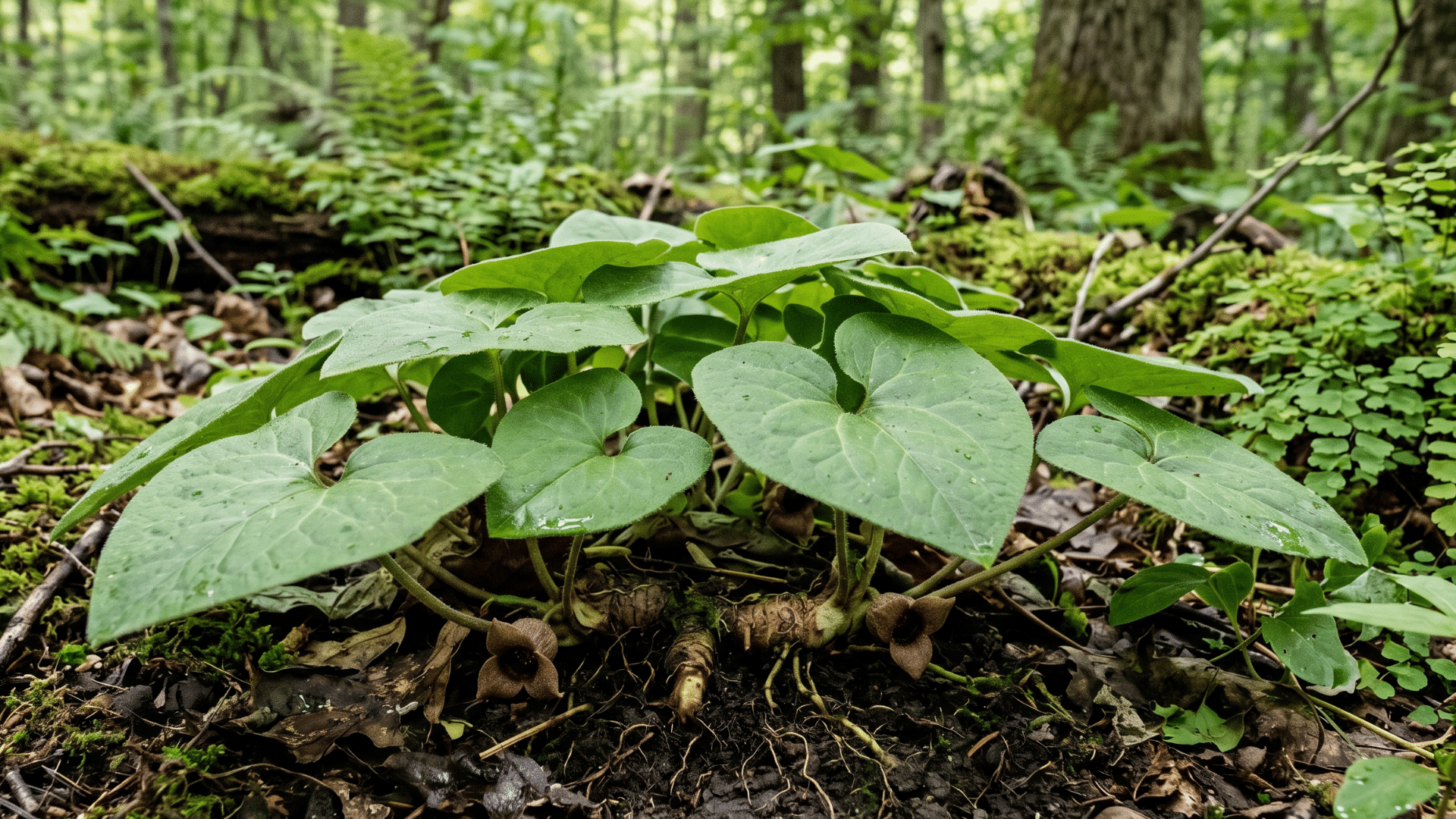
Wild Ginger is a top tier native groundcover. It is specifically suited for deep, dark shade. It forms a dense, weed suppressing carpet of large, velvety, heart shaped green leaves.
These leaves look beautiful throughout the growing season. In spring, it hides unique, purplish brown cup flowers right at the soil level. Early crawling insects pollinate these hidden blooms.
While it is not culinary ginger, its roots emit a wonderful, spicy ginger fragrance when crushed. It is the perfect choice for planting beneath mature trees where other plants fail to survive.
Tip: Use Wild Ginger in problematic areas with heavy tree root competition where grass refuses to grow
3. Hosta (Hosta Spp)
- USDA Zones: 3–9
- Light & Soil Needs: Full shade to partial shade; rich, moist, well draining soil.
- Native Origin: Northeast Asia (Japan, China, Korea)
- Approximate Cost: $12.00 – $22.00
- Care Percentage Meter: 15% (Extremely low maintenance; just guard against slugs)
- Where to Buy: The Home Depot
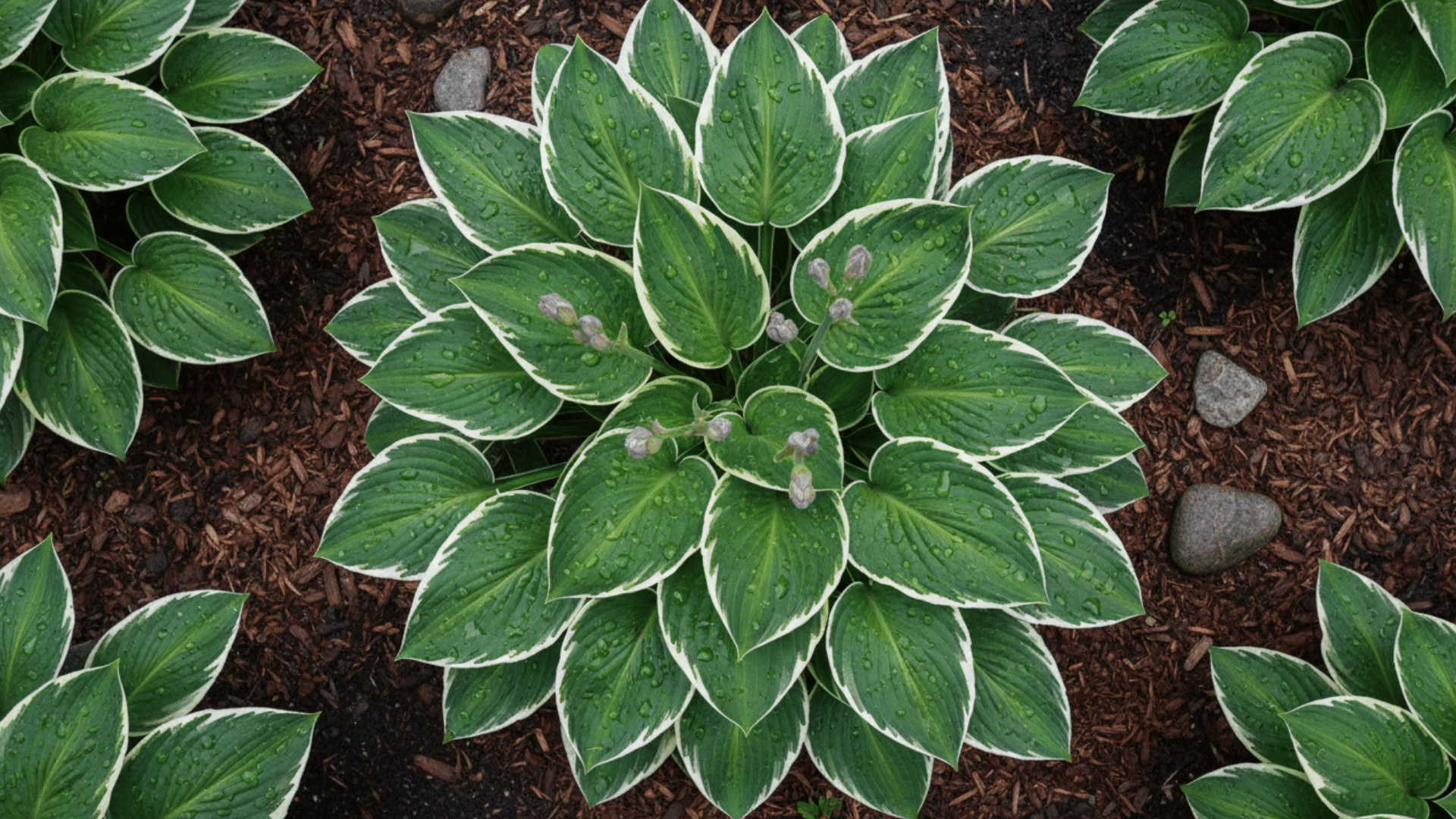
Hostas are the royalty of the American shade garden. They are beloved for their easy care and magnificent structural presence. They produce fine, lily like flowers in mid summer, but they are primarily grown for their stunning foliage.
Varieties range from tiny miniatures to massive, shape defining shrubs. To truly light up a dark corner of your yard, opt for striped types like ‘Patriot’ or ‘Frances Williams.’
Their crisp white or bright chartreuse leaf borders catch ambient light. They completely transform a dim landscape with minimal gardening effort.
Tip: Sprinkle crushed eggshells or organic slug bait around the base of your Hostas in early spring to protect the emerging leaves.
4. Hellebore / Lenten Rose (Helleborus)
- USDA Zones: 3–9
- Light & Soil Needs: Full shade to partial shade; rich, well draining, neutral to alkaline soil.
- Native Origin: Europe and Asia
- Approximate Cost: $18.00 – $35.00
- Care Percentage Meter: 15% (Extremely low maintenance; long lived and drought resistant)
- Where to Buy: Great Garden Plants
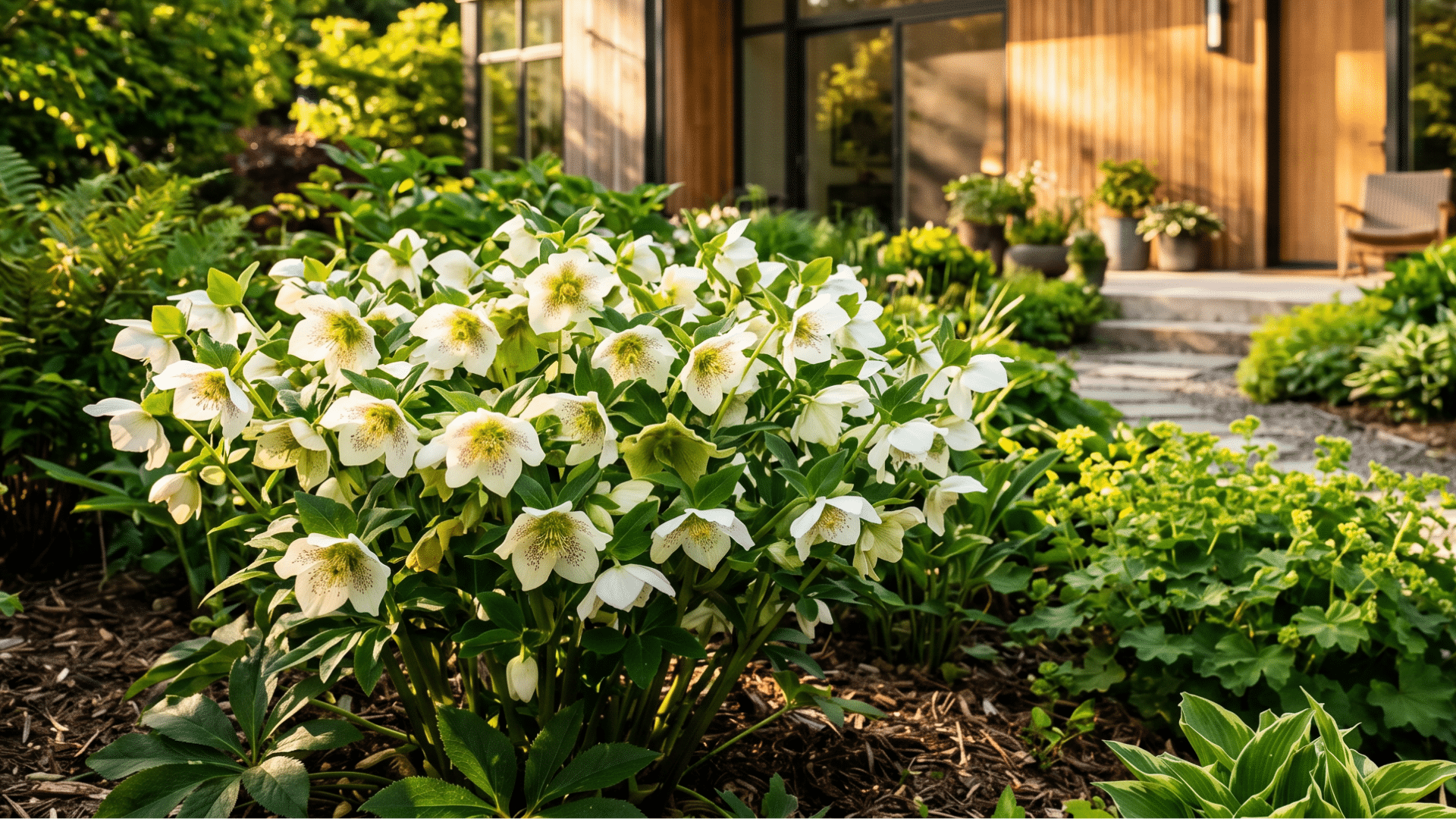
Hellebores are the ultimate cure for the winter blues. These incredibly tough, long lived perennials bloom in late winter or very early spring. They frequently poke their heads right through the melting snow.
Their nodding, cup shaped flowers come in nice shades of dusty rose, deep plum, creamy white, and slate gray. These flowers last for months. They feature thick, leathery, evergreen leaves that look great year round.
Best of all, hellebores contain natural compounds that make them completely toxic to deer, rabbits, and rodents. This makes them a bulletproof choice for woodland borders.
Tip: Plant Hellebores under deciduous trees to enjoy late winter blooms before the trees fully leaf out.
5. Solomon’s Seal (Polygonatum Odoratum ‘Variegatum’)
- USDA Zones: 3–8
- Light & Soil Needs: Full shade to partial shade; moist, fertile, woodland-type soil.
- Native Origin: Europe and Asia
- Approximate Cost: $14.00 – $25.00
- Care Percentage Meter: 15% (Extremely low maintenance; tolerates dry root zones well)
- Where to Buy: Nature Hills Nursery
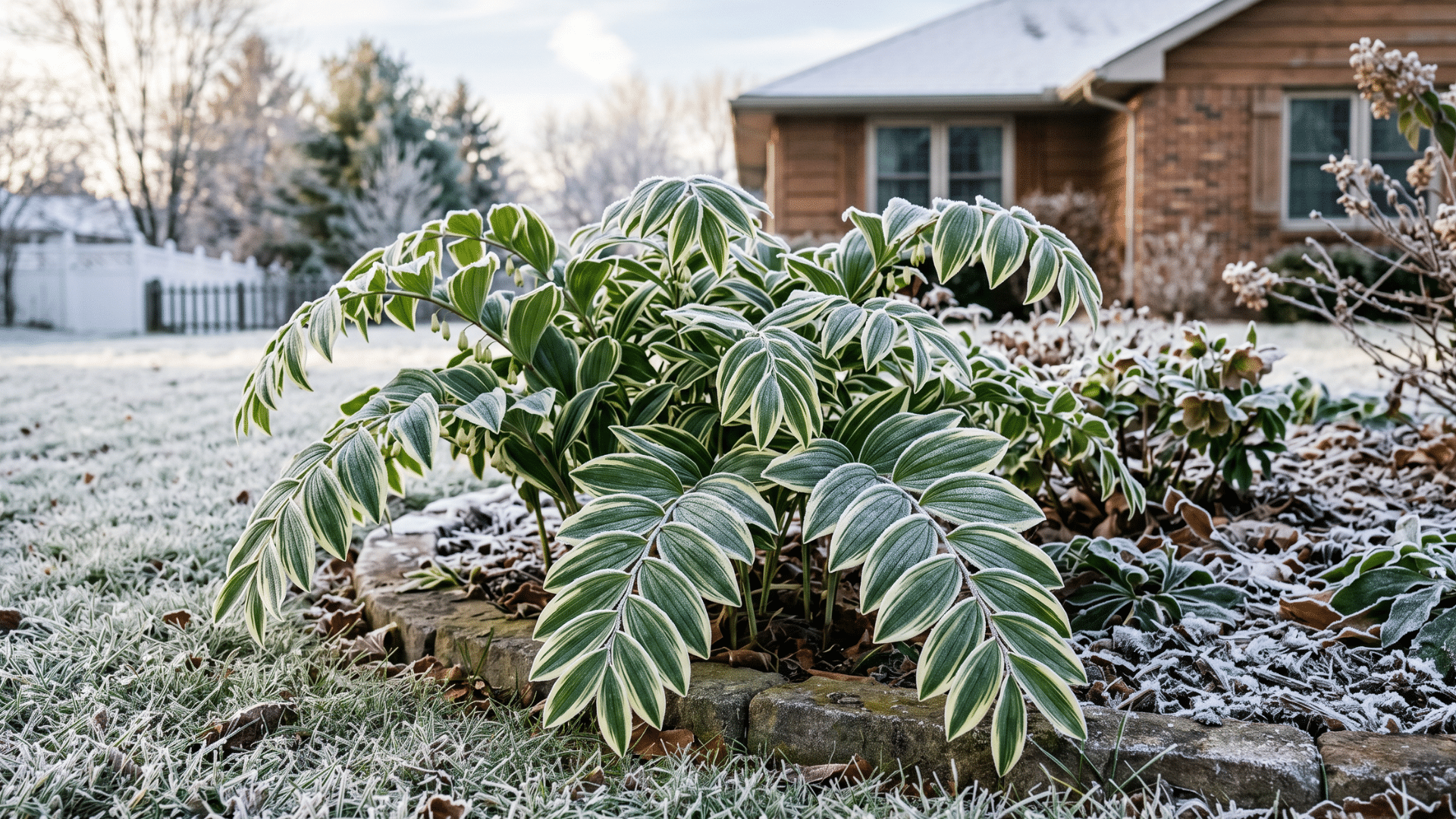
Solomon’s Seal brings a neat, structural look to dark garden beds. It grows on long, beautifully arching stems that can reach up to three feet in height. The stems are lined with crisp green leaves edged in clean white.
In late spring, clusters of soft, sweet-scented white flowers dangle beneath the arching stems. These are followed by shiny, black berries in autumn. This plant is exceptionally tough.
It handles dry shade beneath mature trees remarkably well once established. It slowly spreads to form beautiful colonies that give your garden a mature, professionally designed feel.
Tip: Pair Solomon’s Seal with broad-leafed hostas to create a gorgeous contrast in texture and leaf shape.
6. Siberian Bugloss (Brunnera Macrophylla)
- USDA Zones: 3–8
- Light & Soil Needs: Full shade to partial shade; moist, organically rich, well-draining soil.
- Native Origin: Eastern Europe and the Caucasus
- Approximate Cost: $15.00 – $26.00
- Care Percentage Meter: 20% (Low maintenance; tough leaves naturally resist pests)
- Where to Buy: Great Garden Plants
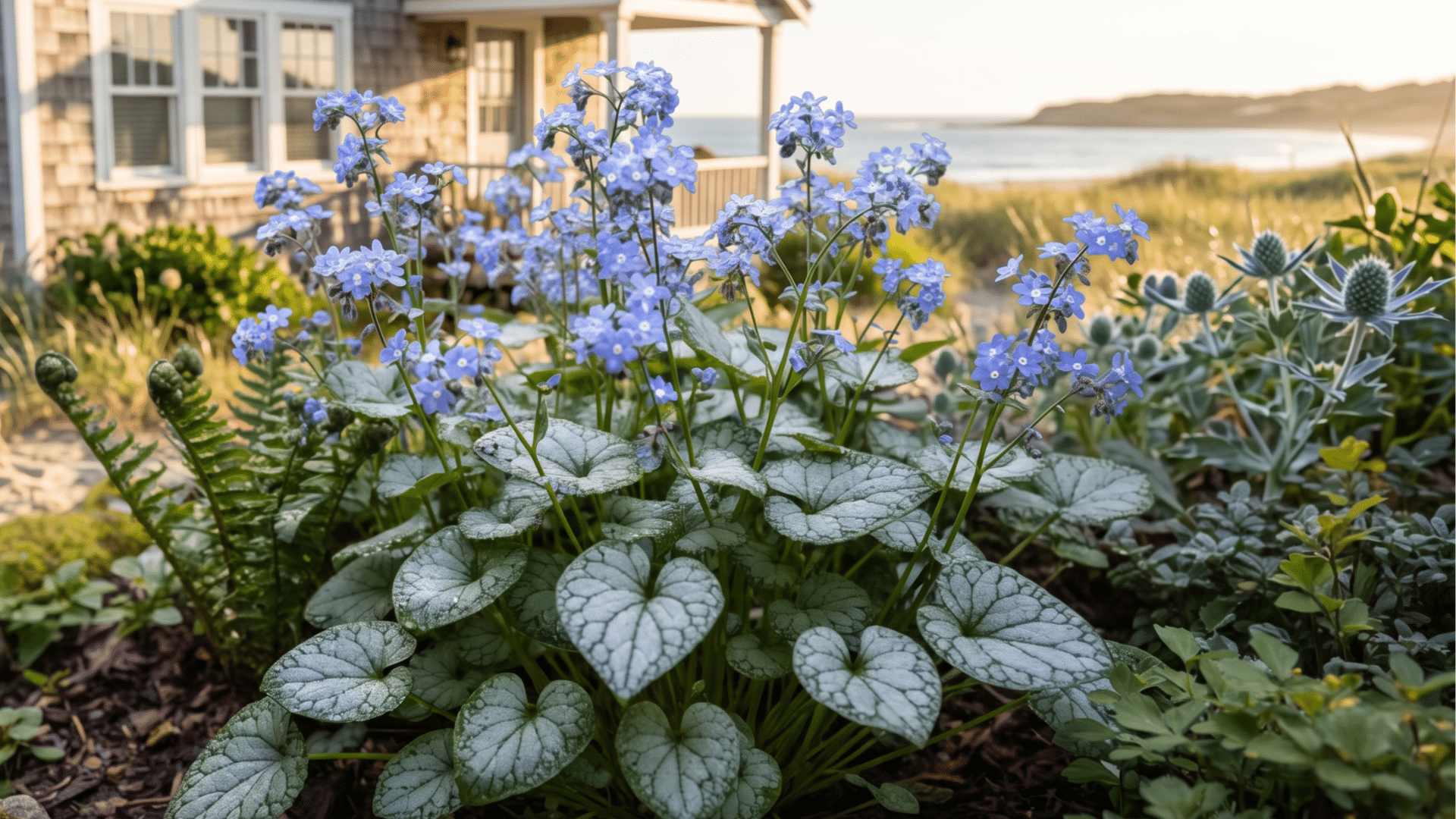
Siberian Bugloss is a top foliage plant that thrives in cold northern climates. The famous ‘Jack Frost’ type is a muddy boots popular choice. It features large, heart-shaped leaves that appear heavily frosted in solid silver.
The leaves are accented by a fine web of green veins. Their rough, sandpapery texture naturally deters deer and rabbits. As a wonderful bonus in mid-spring, the plant sends up airy clouds of tiny sky-blue flowers.
These look identical to Forget-Me-Nots. It makes an unforgettable groundcover that lights up dark woodland paths.
Tip: Keep the soil consistently moist during the hot summer months to prevent the silver leaves from developing crisp edges.
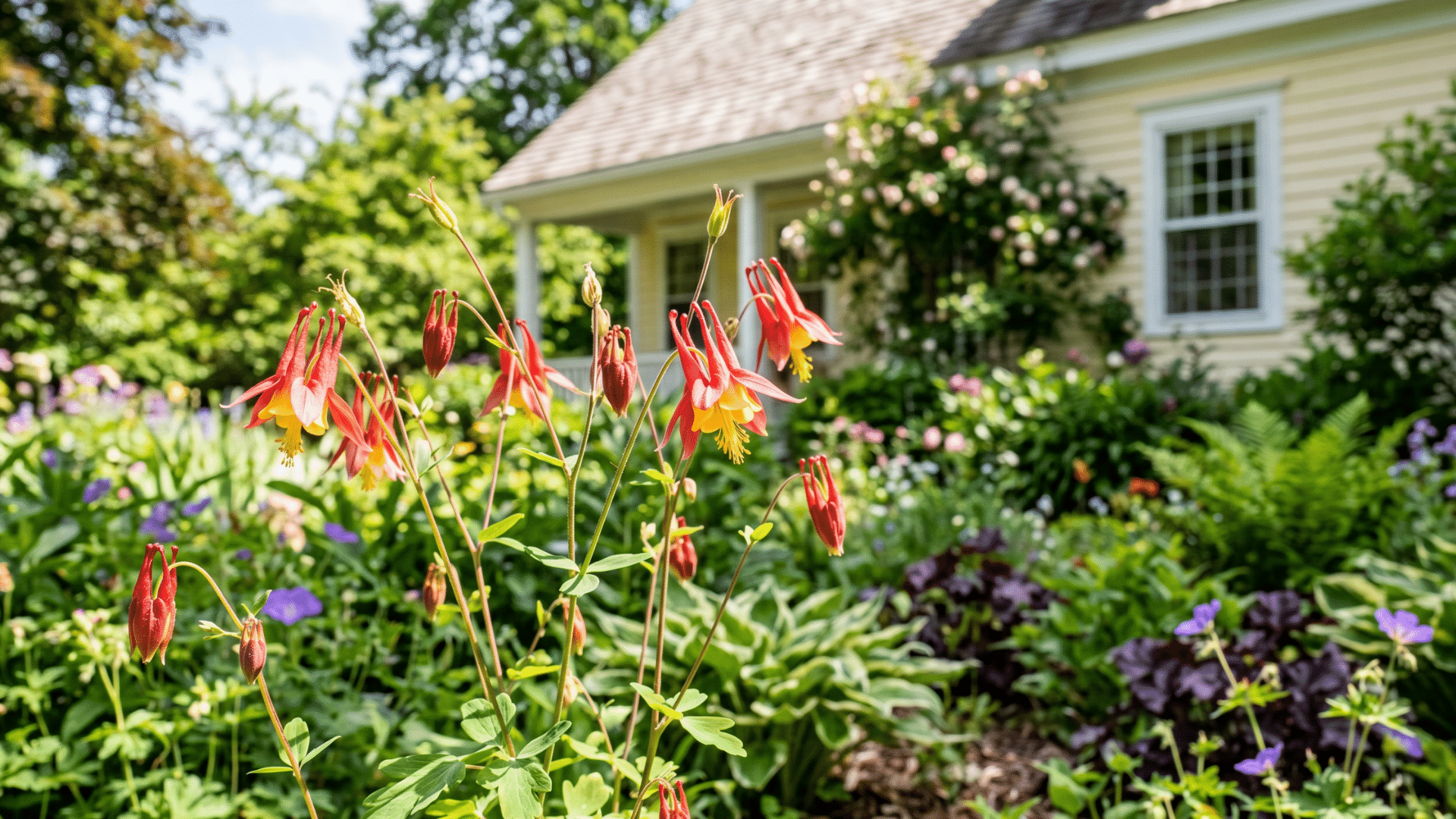
7. Eastern Columbine (Aquilegia Canadensis)
- USDA Zones: 3–8
- Light & Soil Needs: Partial shade to dappled sun; well-drained, sandy, or rocky soil.
- Native Origin: Eastern North America
- Approximate Cost: $10.00 – $20.00
- Care Percentage Meter: 20% (Low maintenance; prolific natural self-seeder)
- Where to Buy: Nature Hills Nursery
Eastern Columbine is a beautiful, hardy North American native perennial. It thrives in rock gardens, slopes, and woodland borders. In late spring, it produces fine, nodding red and yellow flowers.
These blooms feature long, backward-facing spurs. These specialized flowers act as an essential food source for early-season hummingbirds and native bees.
The soft, clover-like, blue-green foliage remains attractive long after the blooms fade. It is highly adaptable, handles dry shade well, and will gently self-seed around your garden.
This creates beautiful, natural drifts of color year after year.
Tip: Cut back the foliage after flowering if leaf miner insects damage the leaves. Fresh, healthy new growth will quickly return.
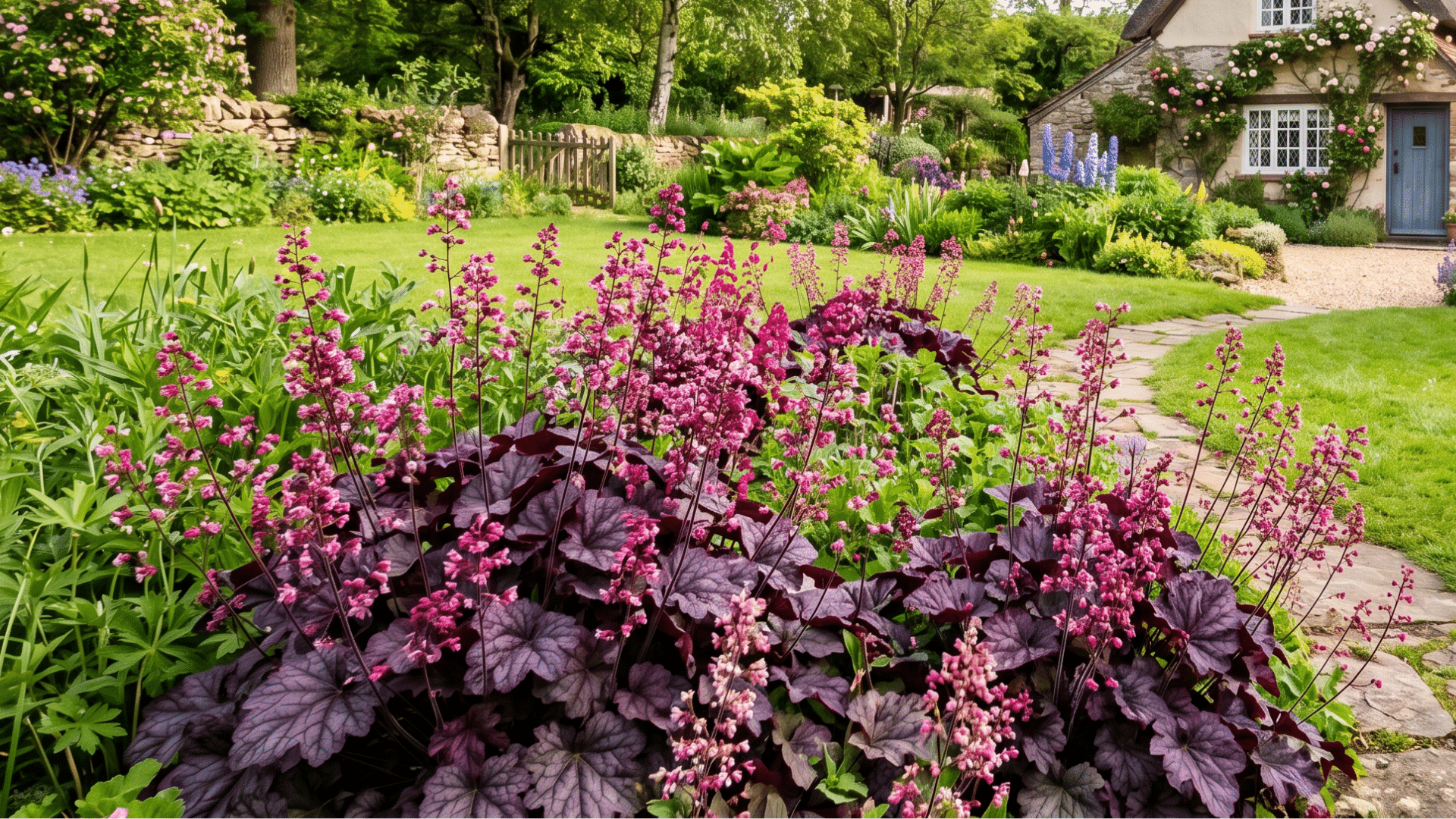
8. Coral Bells (Heuchera)
- USDA Zones: 4–9
- Light & Soil Needs: Partial shade to dappled sun; rich, organic, well-drained soil.
- Native Origin: North America
- Approximate Cost: $14.00 – $26.00
- Care Percentage Meter: 25% (Low maintenance; needs good winter drainage to prevent root rot)
- Where to Buy: The Home Depot
Coral Bells are an absolute powerhouse for year-round color. Extensive breeding across the United States has turned this tough native perennial into a foliage showstopper.
Instead of relying on fleeting blooms, Heuchera blankets your garden beds in striking, ruffled leaves. You can find varieties in brilliant lime green, warm caramel, rich plum, and deep, dramatic mahogany.
They form neat, mounding shapes that look spectacular along borders or tucked into patio containers. They are remarkably drought-tolerant once established and are rarely bothered by deer or common backyard pests.
Tip: Plant Coral Bells in raised beds or containers if you have heavy clay soil. They strictly require excellent drainage during the winter.
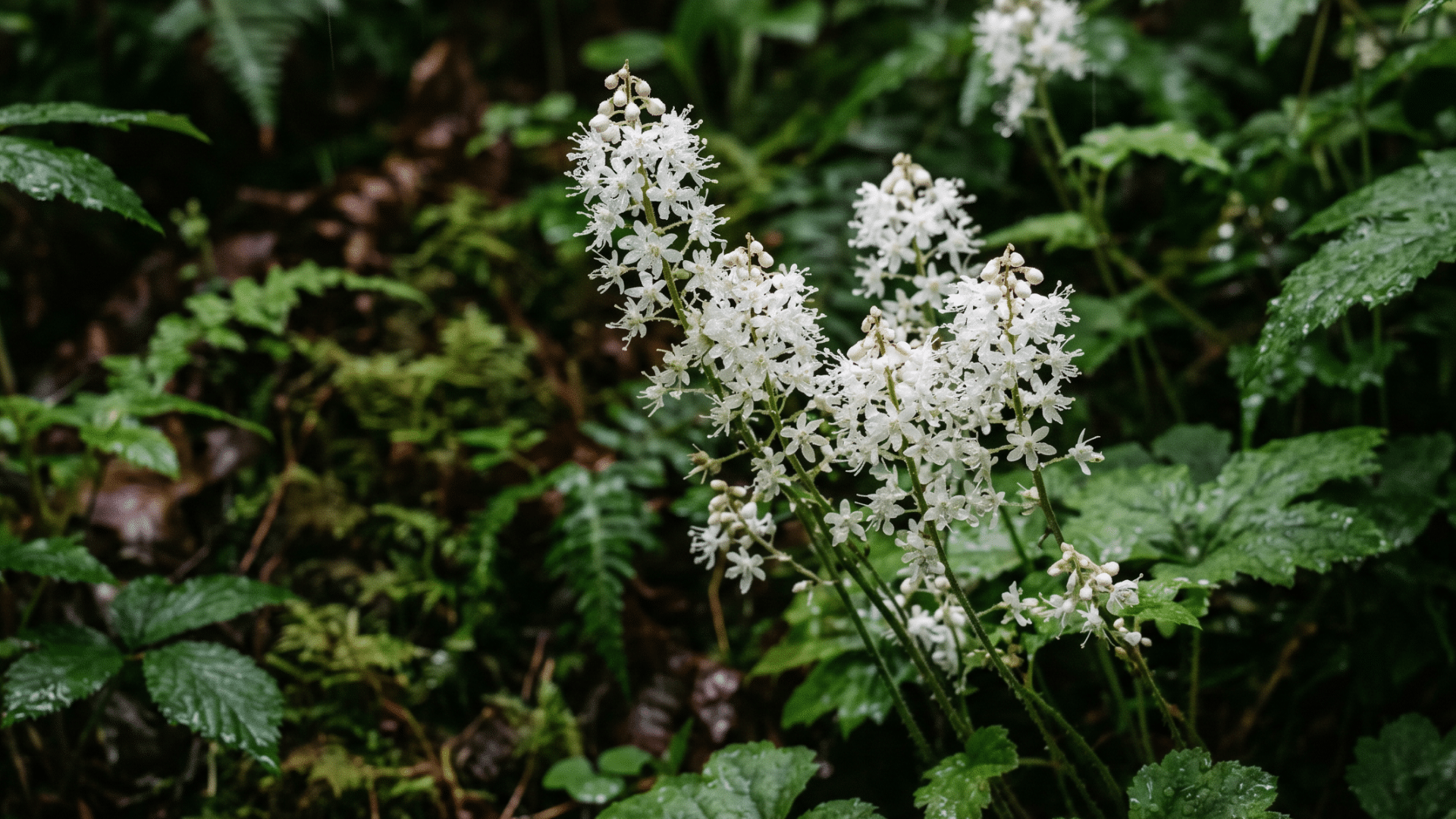
9. Foamflower (Tiarella Cordifolia)
- USDA Zones: 3–8
- Light & Soil Needs: Full shade to partial shade; moist, acidic, organic-rich soil.
- Native Origin: Eastern North America
- Approximate Cost: $12.00 – $22.00
- Care Percentage Meter: 25% (Low maintenance; non-aggressive native groundcover)
- Where to Buy: Great Garden Plants
Foamflower is a stellar North American native perennial. It makes an excellent, eco-friendly option for shady yards. In mid-spring, it sends up hundreds of airy, upright spikes.
These spikes are covered in tiny, star-shaped white or light pink flowers. When planted in mass, the blooms create a stunning, misty effect. It looks exactly like a blanket of sea foam resting over the forest floor.
The attractive, heart-shaped leaves often feature dramatic, dark burgundy veins. It expands safely via runners, creating a lush, weed-suppressing carpet that protects the soil.
Tip: Use Foamflower to stabilize soil on shady slopes or rain gardens, as its root system binds soil effectively.
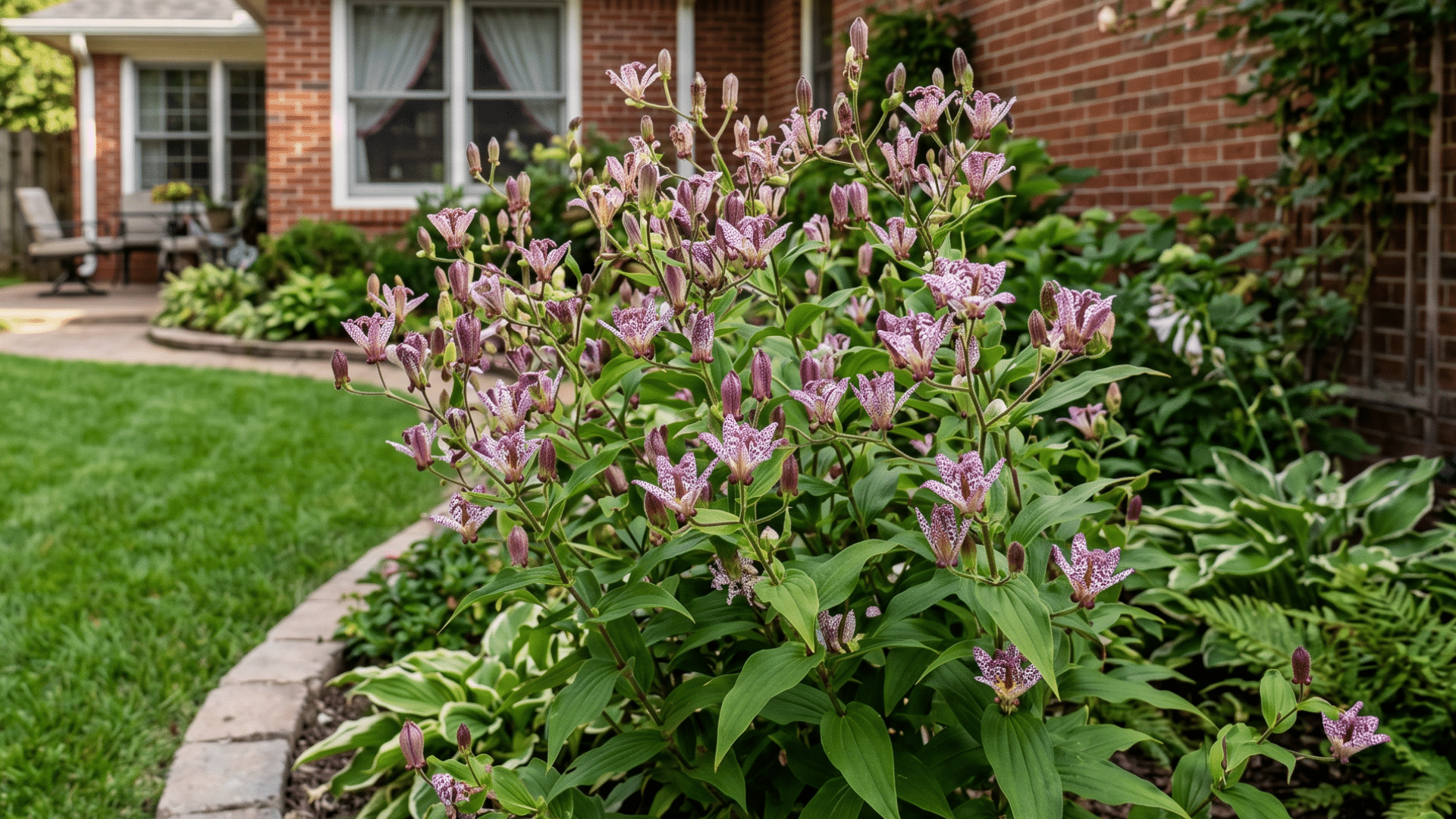
10. Toad Lily (Tricyrtis Formosana)
- USDA Zones: 5–9
- Light & Soil Needs: Full shade to partial shade; moist, humus-rich, organic soil.
- Native Origin: East Asia
- Approximate Cost: $14.00 – $26.00
- Care Percentage Meter: 25% (Low maintenance; trouble-free late seasonal performer)
- Where to Buy: Great Garden Plants
Just when the rest of the shade garden begins to look tired in late summer, the unique Toad Lily wakes up. This upright perennial produces unique, orchid-like flowers.
They feature white or pale lavender petals heavily flocked with deep purple dots. Because the flowers are relatively small but incredibly detailed, plant them along the edges of walkways or patios.
This allows their unique beauty to be appreciated up close. They are highly reliable, return faithfully every year, and face virtually no pressure from deer or common garden diseases.
Tip: Plant Toad Lilies near your favorite outdoor seating area so you can appreciate the detailed orchid-like patterns up close.
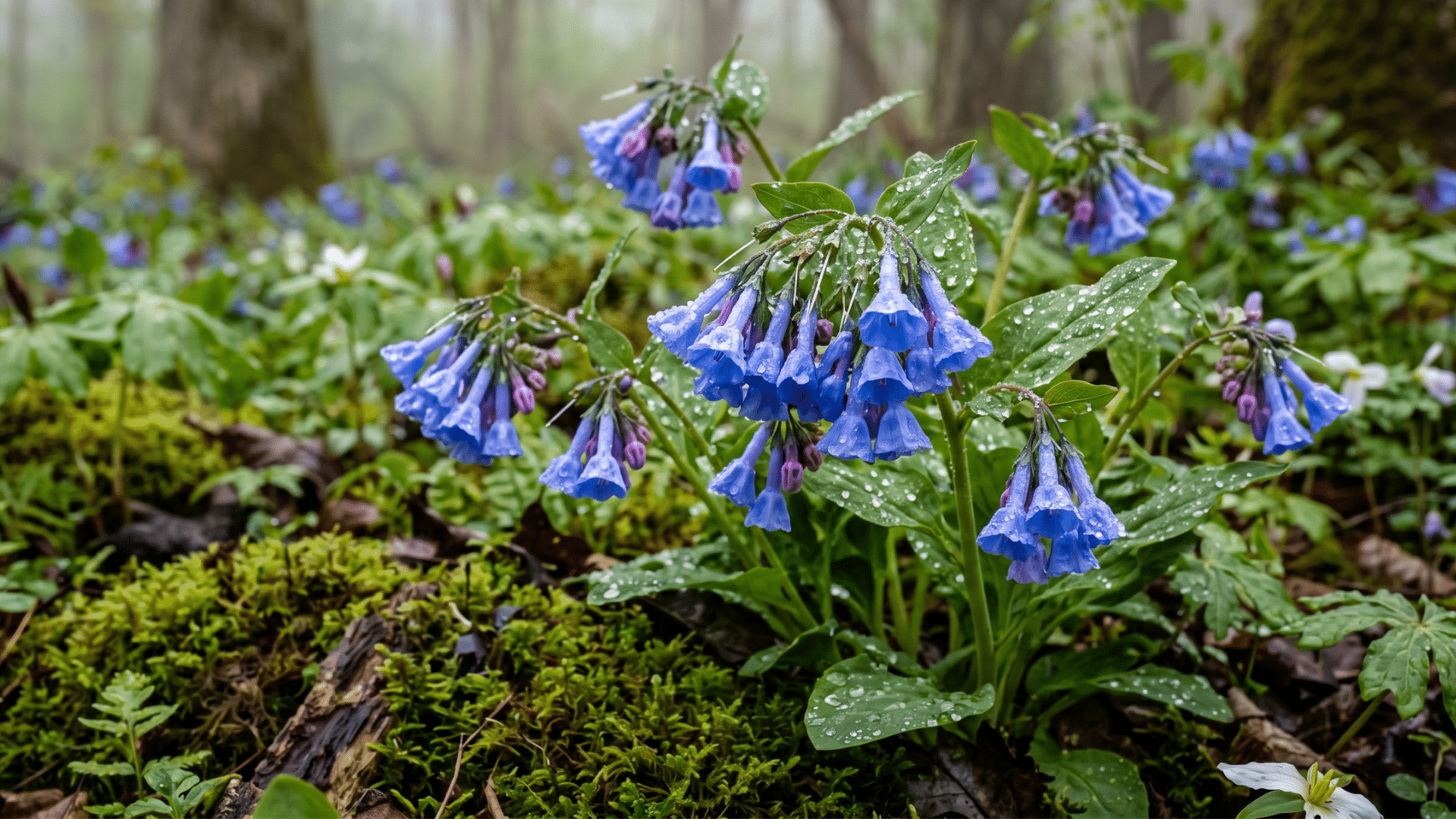
11. Virginia Bluebells (Mertensia Virginica)
- USDA Zones: 3–8
- Light & Soil Needs: Full shade to partial shade; rich, moist, river bottom type soil.
- Native Origin: Eastern North America
- Approximate Cost: $12.00 – $24.00
- Care Percentage Meter: 30% (Low care, but strict seasonal growth means timing is key)
- Where to Buy: Nature Hills Nursery
Virginia Bluebells provide one of the most breathtaking spring spectacles in North America. In early spring, pink flower buds emerge from lush, oversized gray-green leaves.
As the buds open, they transform into clusters of nodding, trumpet-shaped flowers of a clear, sky blue color. This plant drops its leaves early in summer.
This means it rapidly grows, blooms, sets seed, and vanishes back underground by mid-summer. Plant them generously among late-emerging ferns or hostas.
These companion plants happily fill out the empty space once the bluebells go to sleep.
Tip: Mark the planting spot of your Bluebells so you do not accidentally dig them up during summer garden projects.
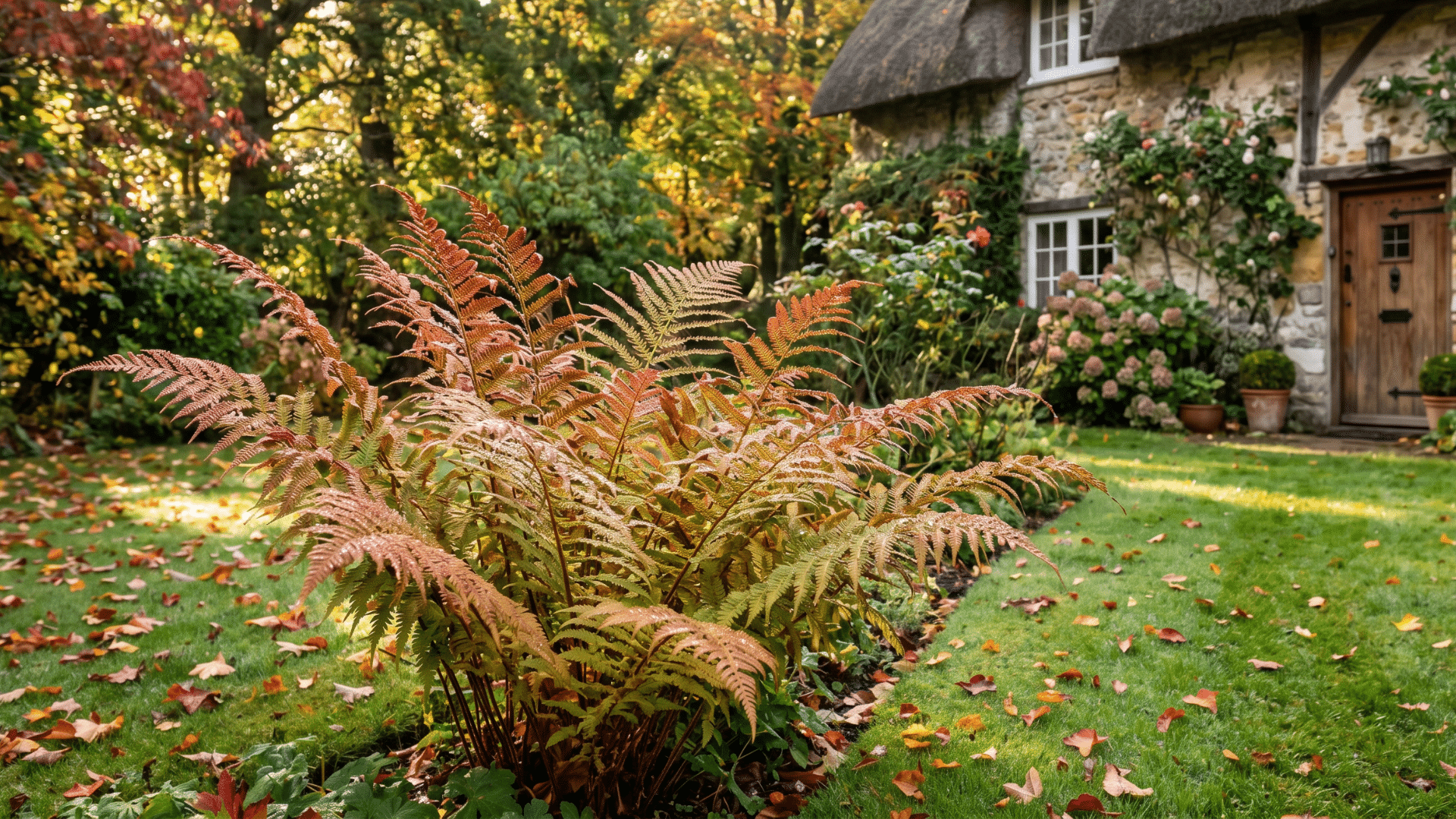
12. Autumn Fern (Dryopteris Erythrosora)
- USDA Zones: 5–9
- Light & Soil Needs: Full shade to partial shade; moist, acidic, organic-rich soil.
- Native Origin: East Asia
- Approximate Cost: $15.00 – $25.00
- Care Percentage Meter: 35% (Moderate; requires consistent moisture to prevent frond scorch)
- Where to Buy: The Home Depot
While most ferns offer standard green tones, the Autumn Fern breaks the mold with an evolving color display. In early spring, the new leaves open in a striking coppery-orange and bronze hue.
This beautifully contrasts with older leaves. As summer matures, these fronds settle into a shiny, deep forest green. This plant is exceptionally adaptable.
It handles the heat and heavy humidity of the American South better than most other fern varieties. It adds a soft, feathery texture to the garden and pairs wonderfully with broad-leaved perennials.
Tip: Leave dead leaves intact over winter to provide natural insulation for the plant crown. Prune them away in early spring.
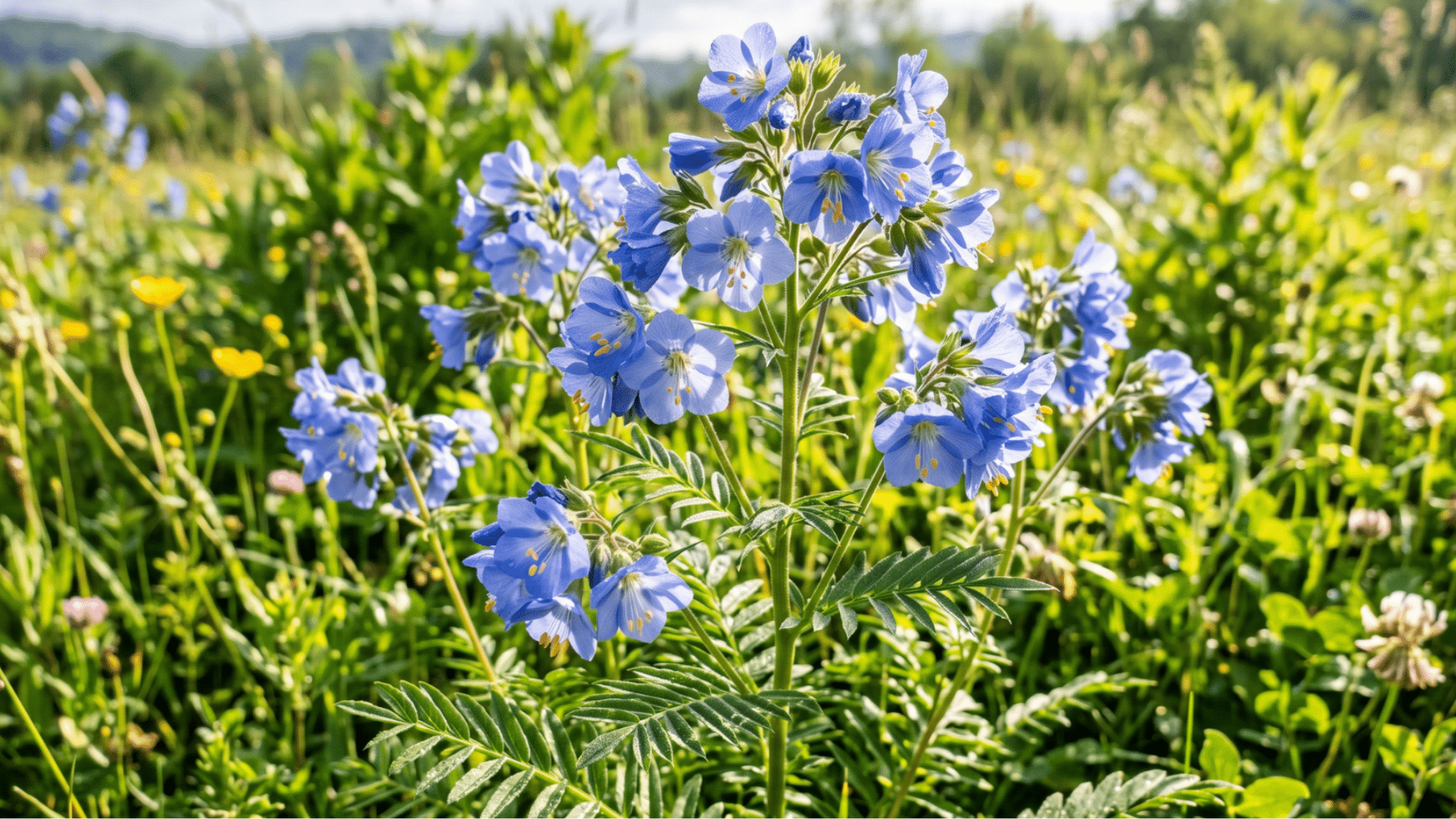
13. Jacob’s Ladder (Polemonium Reptans)
- USDA Zones: 3–8
- Light & Soil Needs: Partial shade to dappled sun; moist, rich, well-draining soil.
- Native Origin: Eastern North America
- Approximate Cost: $11.00 – $22.00
- Care Percentage Meter: 35% (Moderate; needs clipping to look tidy after summer heat sets in)
- Where to Buy: Nature Hills Nursery
Jacob’s Ladder is named for its highly unique foliage. Small, lance-shaped leaves are arranged horizontally along the stems like the rungs of a ladder. This native woodland perennial bursts into life in mid-spring.
It produces loose, cascading clusters of soft, sky blue, bell-shaped flowers with bright yellow stamens. It is an exceptional choice for bridging the color gap between early spring bulbs and summer hostas.
It prefers cool summer temperatures and moist soil, making it a stellar addition to shady borders or cottage-style shade gardens.
Tip: Shear the plant back by half after the spring blooming period ends to encourage a fresh flush of clean foliage.
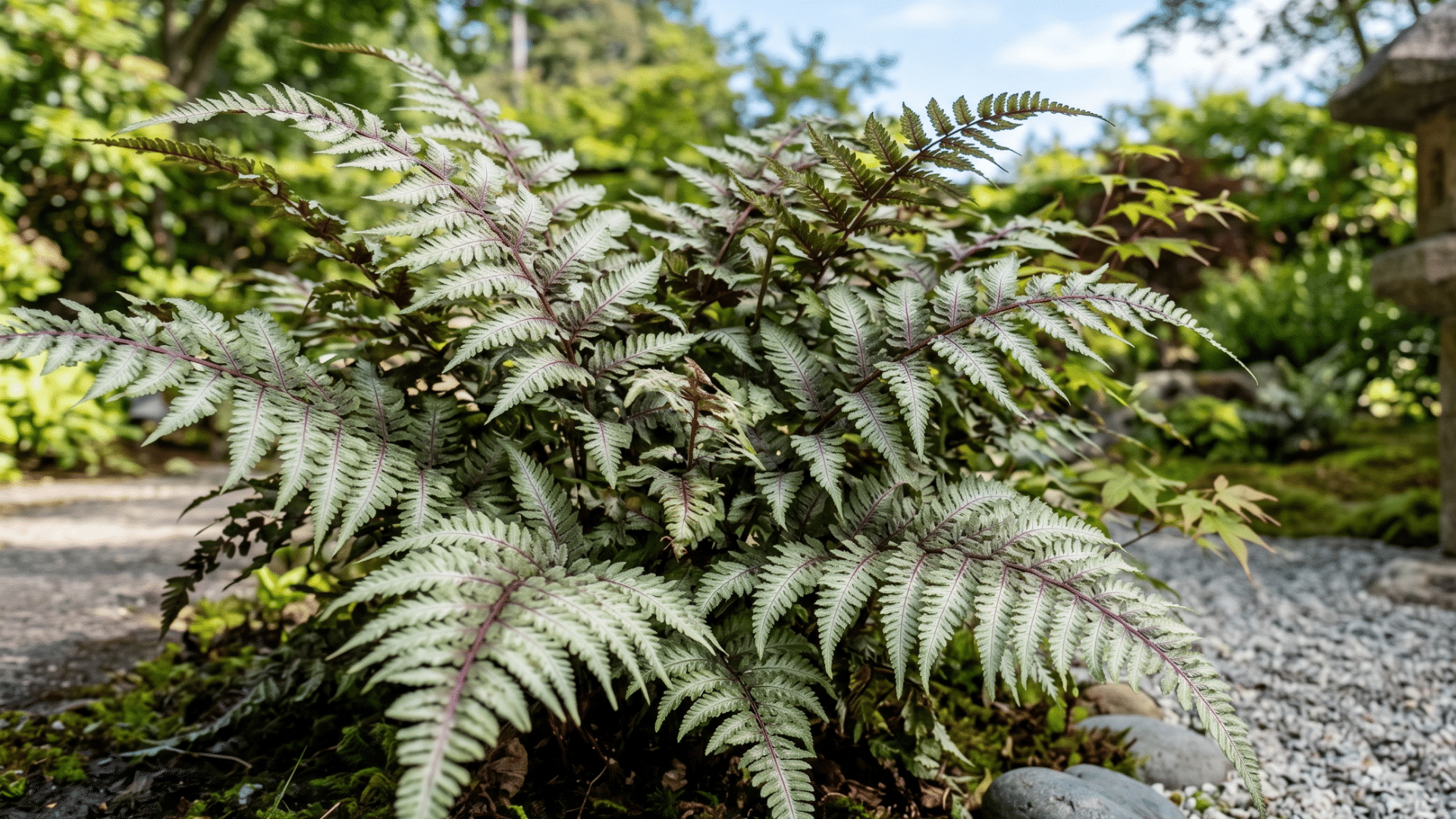
14. Japanese Painted Fern (Athyrium Niponicum)
- USDA Zones: 4–9
- Light & Soil Needs: Full shade to partial shade; moist, rich, humus-dense soil.
- Native Origin: East Asia
- Approximate Cost: $16.00 – $28.00
- Care Percentage Meter: 40% (Moderate; highly sensitive to dry soil spells)
- Where to Buy: The Home Depot
Often described by gardeners as a living watercolor, the Japanese Painted Fern is highly valued for its unique metallic coloring. Growing in low, beautiful clumps, its detailed, lacy leaves feature an unusual blend of silver blue and dusty green.
They are all anchored by deep, wine-red or burgundy central stems. This striking coloration makes it the perfect plant to brighten dark pathways. It is a slow grower that won’t become invasive.
It offers a gorgeous, high contrast focal point that pairs perfectly with dark-leaved perennials.
Tip: Plant these ferns where they receive a touch of morning sun. This small amount of light intensifies their unique metallic coloring.
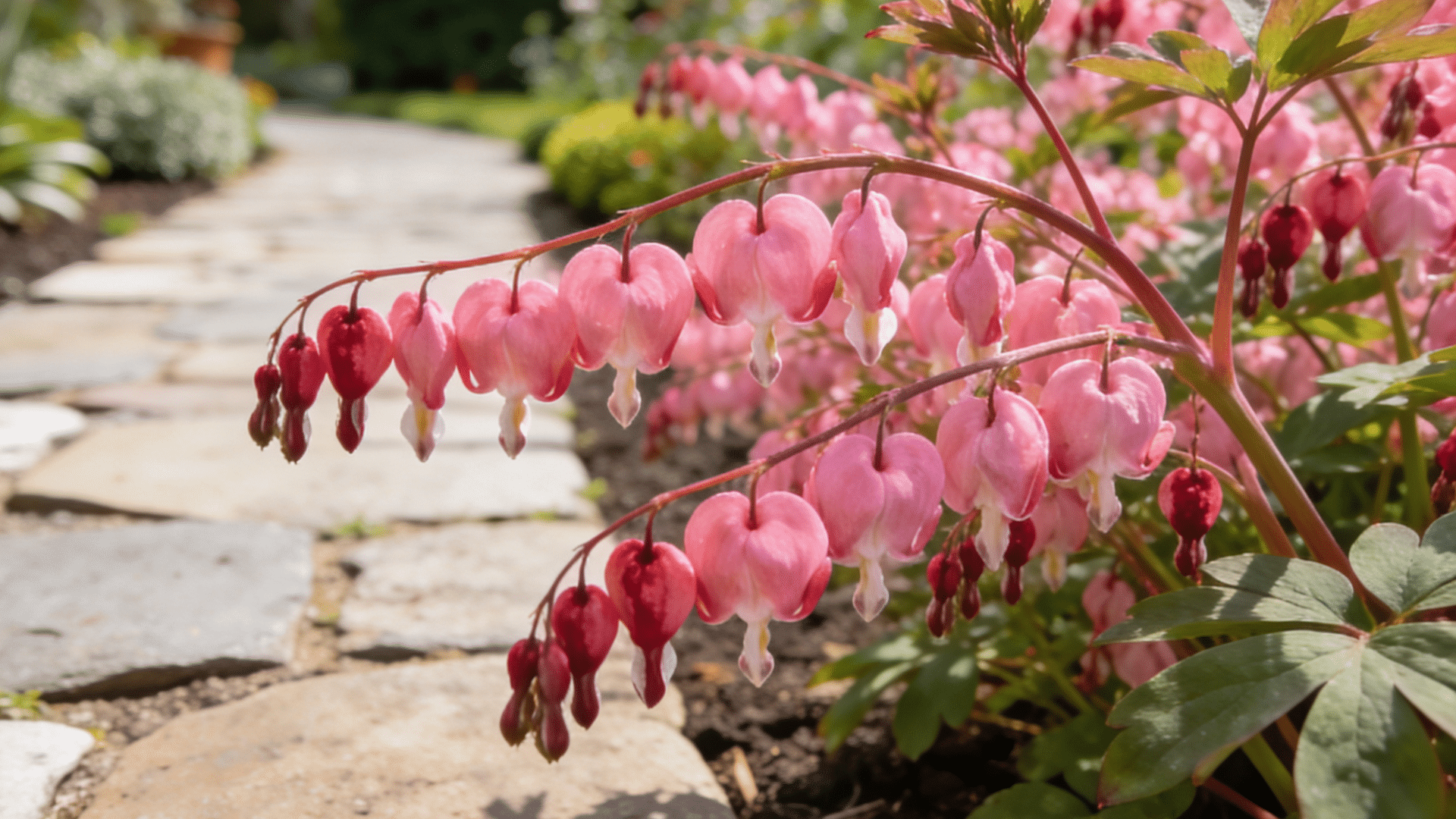
15. Bleeding Heart (Lamprocapnos Spectabilis)
- USDA Zones: 3–9
- Light & Soil Needs: Full shade to partial shade; moist, organic, well-drained soil.
- Native Origin: East Asia
- Approximate Cost: $14.00 – $24.00
- Care Percentage Meter: 40% (Moderate; summer dormancy leaves holes that require companion planting)
- Where to Buy: Nature Hills Nursery
Bleeding Heart is a nostalgic, beloved spring classic in American gardens. In the cool days of early spring, it produces long, beautifully arching stems.
These stems are lined with lovely, dangling pink-and-white flowers shaped exactly like little broken hearts.
The soft, fern-like green foliage adds a fine texture to the garden. It is important to note that this plant goes dormant early.
This means it naturally stops growing and dies back to the ground during the heat of midsummer. Plant it alongside hostas or ferns to cover the empty space later in the season.
Tip: Do not cut down the yellowing summer foliage too early. Let it die back naturally so the roots store energy for next spring.
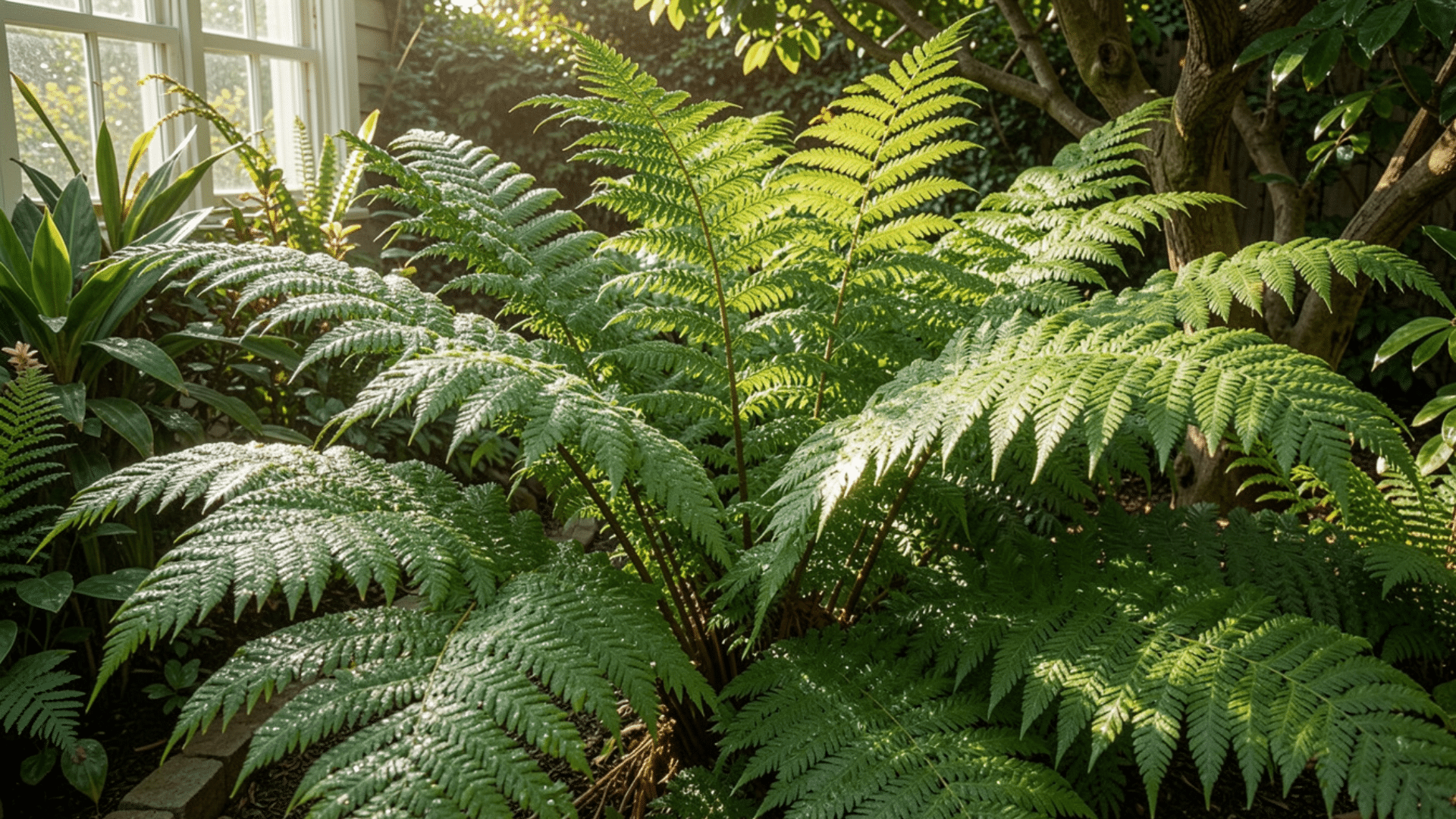
16. Ostrich Fern (Matteuccia Struthiopteris)
- USDA Zones: 3–7
- Light & Soil Needs: Full shade to partial shade; wet, boggy, or consistently moist soil.
- Native Origin: North America, Europe, and Asia
- Approximate Cost: $18.00 – $30.00
- Care Percentage Meter: 45% (Moderate; needs immense moisture and room to expand safely)
- Where to Buy: Nature Hills Nursery
If you need to fill a large, empty area with dramatic texture, the Ostrich Fern is the ultimate choice. This stately North American native produces massive, bright green, feathery leaves.
They gracefully arch outward, looking exactly like big bird feathers. Capable of growing up to five feet tall under ideal conditions, it provides incredible vertical scale and a lush, ancient-forest look.
Because it loves damp environments, it is ideal for soggy problem areas or low spots. Give it plenty of room to spread out, as it will naturally form a colony over time.
Tip: Plant Ostrich Ferns at the back of garden beds to serve as a lush green backdrop for shorter-flowering perennials.
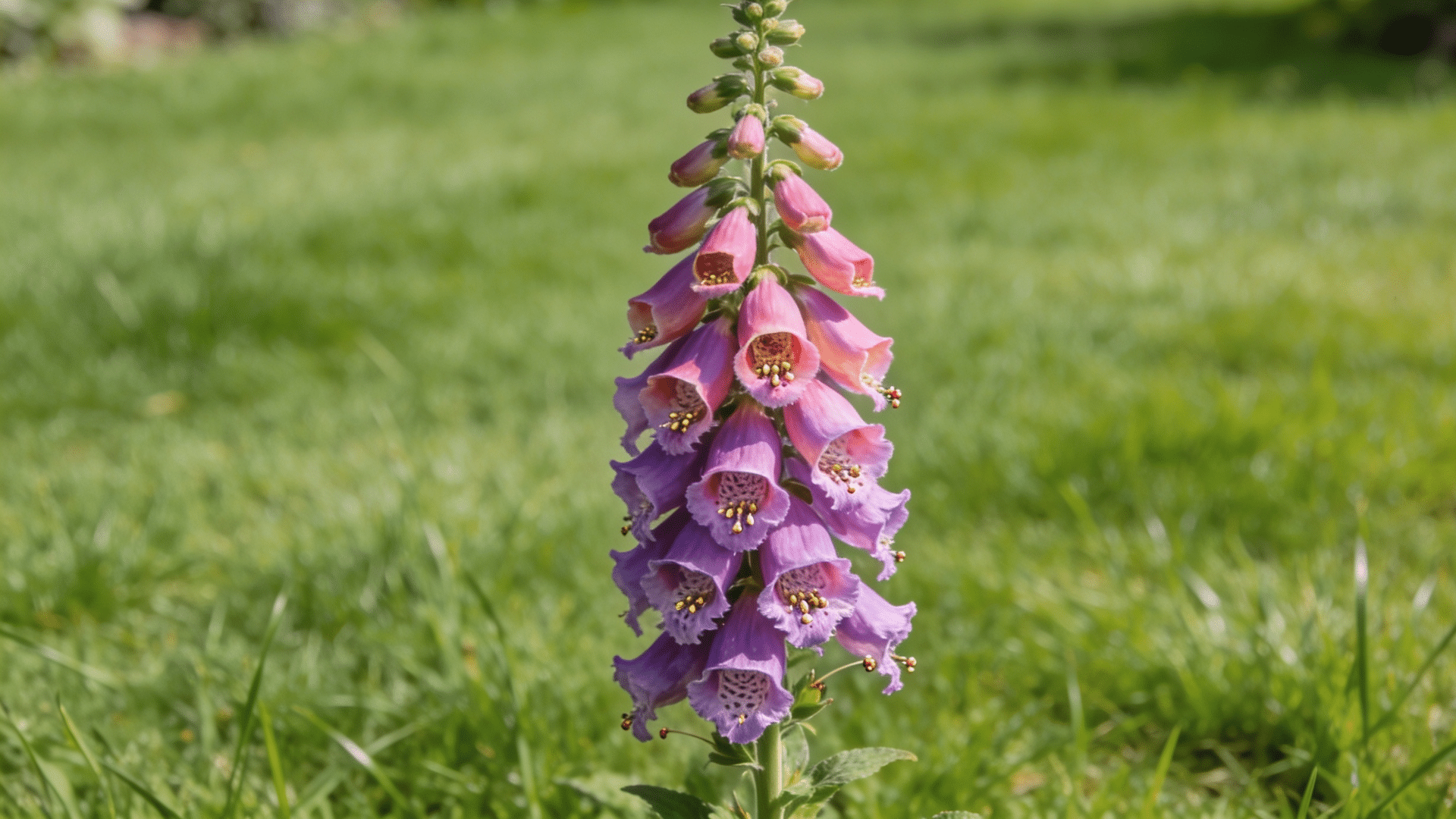
17. Foxglove (Digitalis Purpurea)
- USDA Zones: 4–10
- Light & Soil Needs: Partial shade to dappled sun; moist, loose, well-drained soil.
- Native Origin: Europe and North Africa
- Approximate Cost: $10.00 – $20.00
- Care Percentage Meter: 45% (Moderate; two-year life cycle requires resetting beds regularly)
- Where to Buy: Nature Hills Nursery
Foxgloves are the ultimate choice for adding instant drama, height, and old-world cottage style to your garden. They produce massive, tall vertical flower spikes that can reach up to 5 feet.
These are packed with speckled, tube-shaped, bell-like blooms that bumblebees absolutely love. They work perfectly at the back of a shady border to create a layered look.
Safety Note: All parts of the Foxglove plant are highly toxic if eaten. It is best to skip this plant if you have curious pets or young children playing in the yard.
Tip: Allow the final flowers of the season to go to seed naturally. They will plant themselves and guarantee blooms for future years.
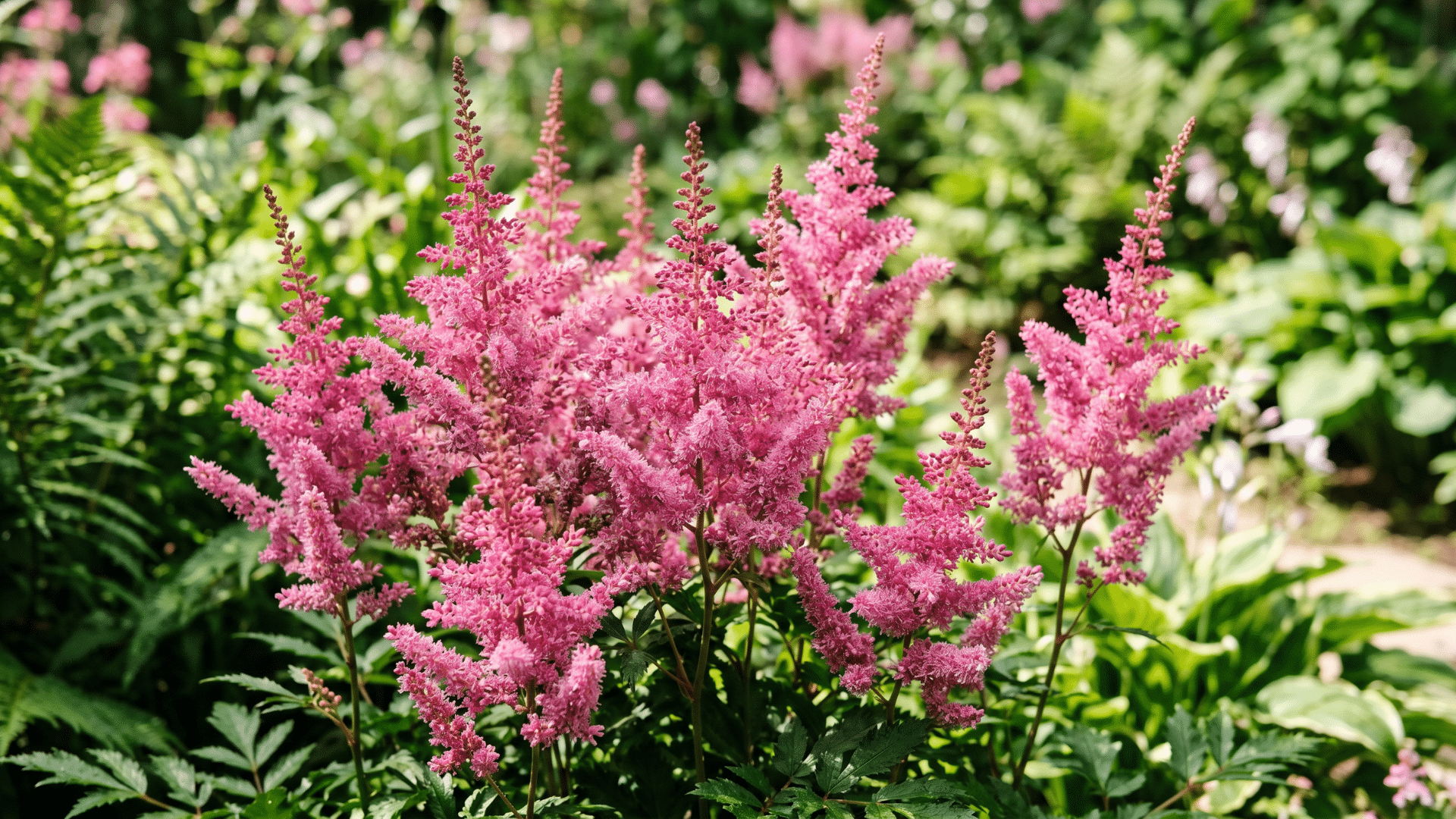
18. Astilbe/False Spirea (Astilbe Spp)
- USDA Zones: 4–8
- Light & Soil Needs: Full shade to partial shade; consistently wet or moisture-rich soil.
- Native Origin: Asia and North America
- Approximate Cost: $12.00 – $24.00
- Care Percentage Meter: 50% (High; leaf margins will crisp immediately if soil dries out)
- Where to Buy: Great Garden Plants
If your garden features damp soil where other plants rot, Astilbe is your perfect match. In contrast to the rounded leaves of typical shade plants, Astilbe features deeply cut, fern-like bronze foliage.
This foliage is topped with feathery, flame-like flower plumes. These striking blooms come in brilliant shades of neon pink, deep red, violet, and crisp white.
They inject a dramatic pop of color into the midsummer landscape. They are fantastic for planting along shady pond edges, attracting helpful pollinators while shrugging off deer.
Tip: Mulch heavily with organic compost around the root zone to lock in moisture and protect against dry spells.
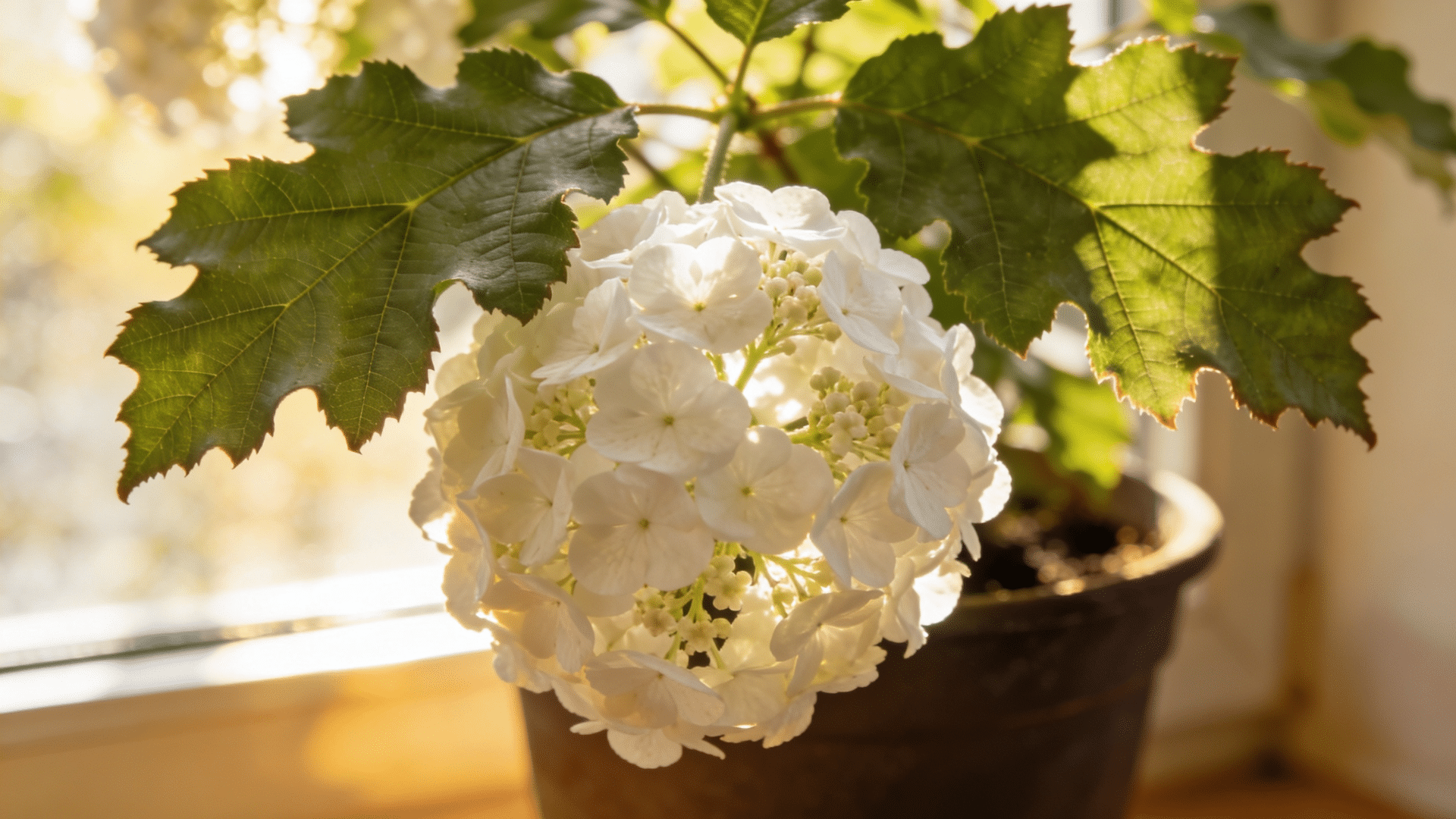
19. Oakleaf Hydrangea (Hydrangea Quercifolia)
- USDA Zones: 5–9
- Light & Soil Needs: Partial shade to dappled sun; moist, rich, well-drained soil.
- Native Origin: Southeastern United States
- Approximate Cost: $25.00 – $55.00
- Care Percentage Meter: 20% (Low maintenance; handles heat and dry conditions significantly better than Asian varieties)
- Where to Buy: Nature Hills Nursery
The Oakleaf Hydrangea is a spectacular, four-season native bush. It serves as a perfect anchor piece for shady yard borders. In summer, it produces massive, cone-shaped clusters of creamy white flowers.
These slowly age to a beautiful vintage pink. Its large, deeply lobed leaves look exactly like oak leaves. These leaves take center stage in autumn, turning a brilliant crimson-burgundy.
In the winter, the bush drops its leaves to reveal unique, peeling cinnamon colored bark. It is far tougher than standard hydrangeas, making it an exceptional choice for American homeowners.
Tip: Avoid heavy trimming. This bush blooms on old wood from the previous season, so only trim dead branches in late winter.
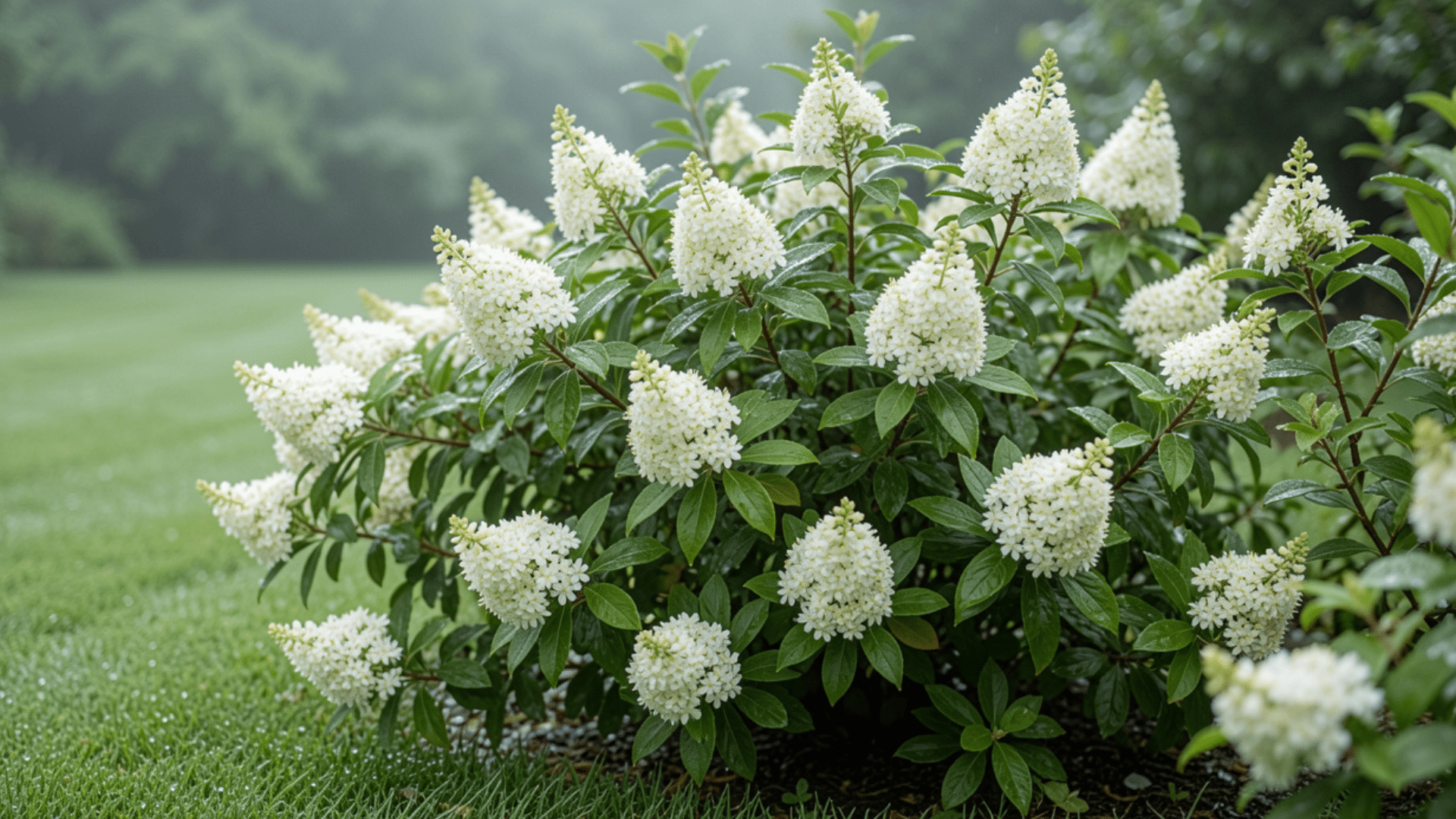
20. Summersweet (Clethra Alnifolia)
- USDA Zones: 3–9
- Light & Soil Needs: Full shade to partial shade; moist, acidic, wet, or clay soil.
- Native Origin: Eastern North America
- Approximate Cost: $22.00 – $48.00
- Care Percentage Meter: 25% (Low maintenance; highly versatile bush that thrives in poor drainage)
- Where to Buy: Nature Hills Nursery
Summersweet is a highly adaptable deciduous native bush. It breaks all the traditional rules by blooming heavily even in deep shade. In the middle of summer, it produces upright spikes of white or soft pink flowers.
These blooms emit an intense, wonderful clove-like scent that drifts across the yard. This scent is a strong magnet for local butterflies and native bees.
It thrives in wet soil, making it a problem solver for areas with poor drainage or heavy clay. In autumn, the leaves turn into a clean golden yellow, providing beautiful end-of-season interest.
Tip: Plant Summersweet near open patio windows to enjoy its sweet scent indoors throughout the summer.
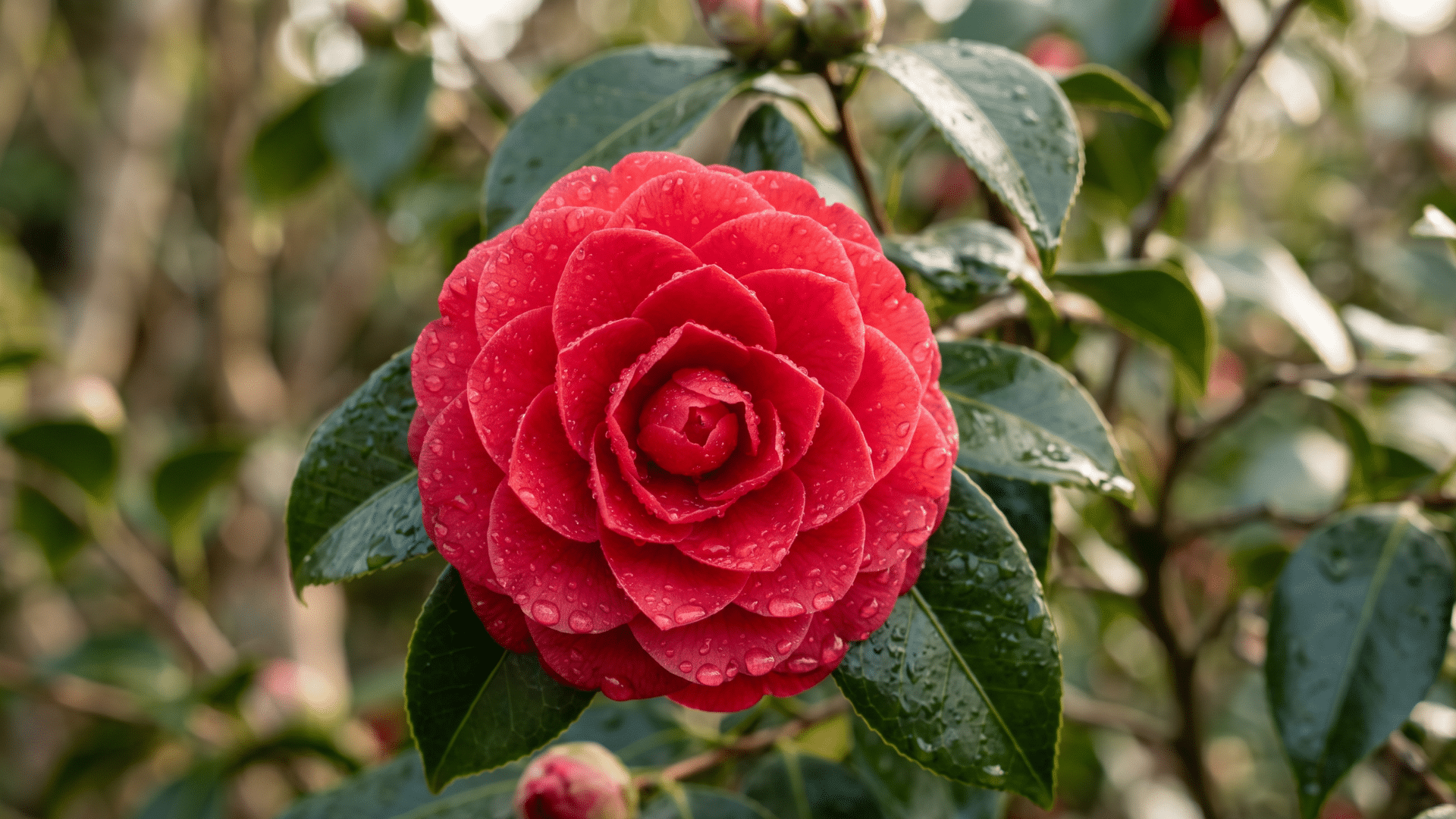
21. Camellias (Camellia Japonica / Sasanqua)
- USDA Zones: 6–10
- Light & Soil Needs: Full shade to partial shade; acidic, organic, well-drained soil.
- Native Origin: Eastern and Southern Asia
- Approximate Cost: $30.00 – $75.00 (varies greatly by structural size and age)
- Care Percentage Meter: 45% (Moderate; slow growing, strictly requires acidic, loose soils)
- Where to Buy: Nature Hills Nursery
Camellias are the undisputed royalty of the Southern American shade garden. These magnificent evergreen bushes feature thick, glossy, dark green leaves. This foliage provides excellent structure and privacy all year long.
Their true magic happens in late fall, winter, or early spring. They erupt into large, formal, rose-like flowers when the rest of the garden is completely bare.
The blooms come in beautiful shades of scarlet red, soft pink, pure white, and striking mixed colors. They prefer sheltered locations with protection from harsh winter winds.
Tip: Use pine needles as a heavy mulch layer around Camellias to help maintain the acidic soil conditions they love
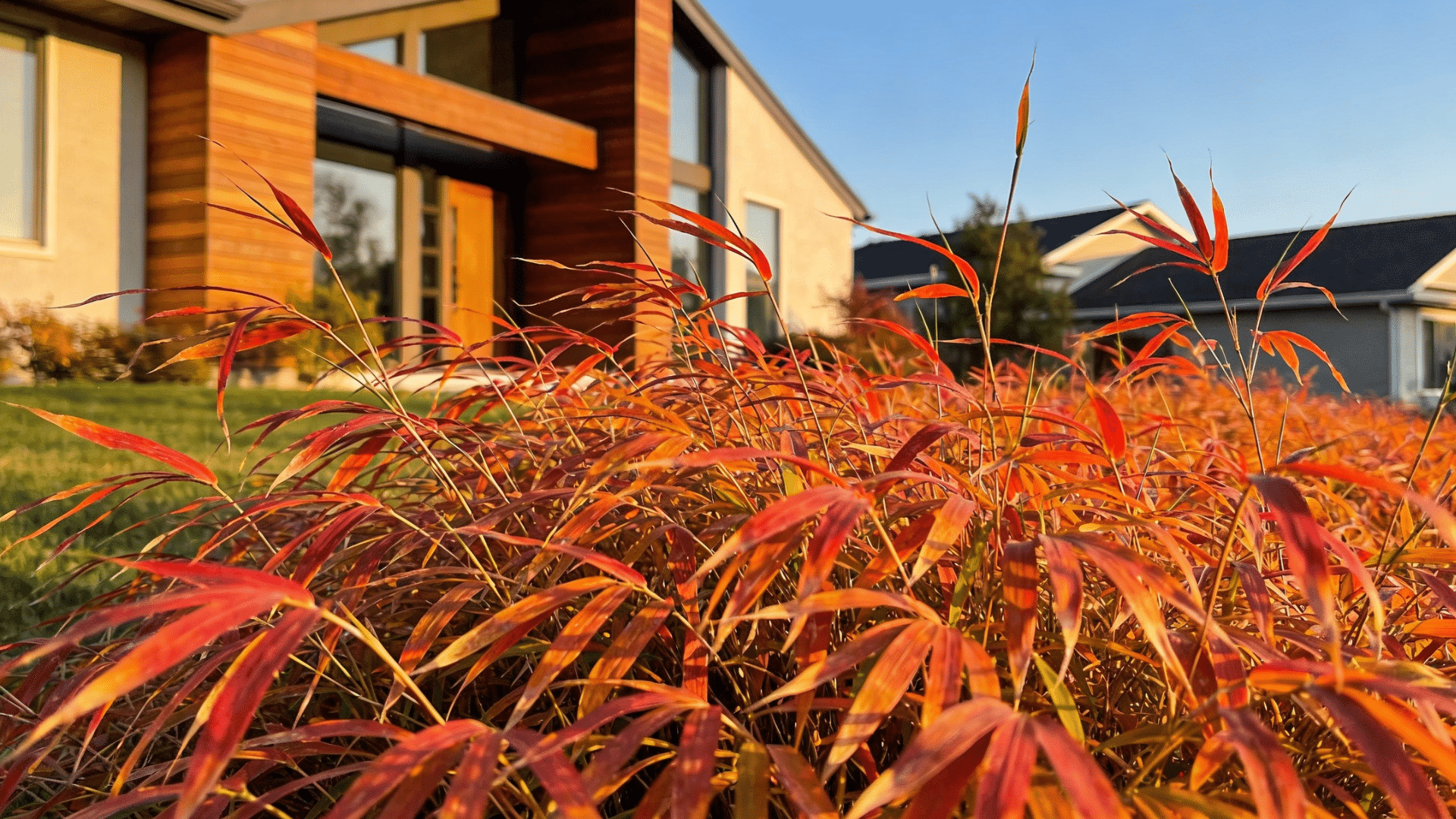
22. Japanese Forest Grass (Hakonechloa Macra)
- USDA Zones: 5–9
- Light & Soil Needs: Partial shade; moist, humus-rich, well-draining soil.
- Native Origin: Japan
- Approximate Cost: $46.00 – $88.00
- Care Percentage Meter: 35% (Moderate; slow starter that hates both heavy clay and dry dirt)
- Where to Buy: Great Garden Plants
While nearly all ornamental grasses demand baking, full sunlight, Japanese Forest Grass breaks all the rules. This beautiful plant functions like cascading liquid gold in shady landscapes.
It forms low, weeping mounds of slender, bright yellow-and-green-striped ribbons. These catch the slightest summer breeze, bringing gentle movement and a soft rustling sound to quiet areas.
It looks particularly stunning when planted along stone walls or garden edges where its soft blades can spill over. In late autumn, the golden blades take on a warm coppery pink color.
Tip: Plant this grass along paths to create a soft, flowing border plant that naturally softens hard landscape features.
23. Coleus (Plectranthus Scutellarioides)
- USDA Zones: 10–11 (Grown as a summer annual across most of the US)
- Light & Soil Needs: Full shade to partial shade; moist, fertile, loose soil.
- Native Origin: Southeast Asia and Australia
- Approximate Cost: $4.00 – $10.00 (per pack or individual pot)
- Care Percentage Meter: 30% (Low moderate; needs regular watering and pinching to stay bushy)
- Where to Buy: Burpee
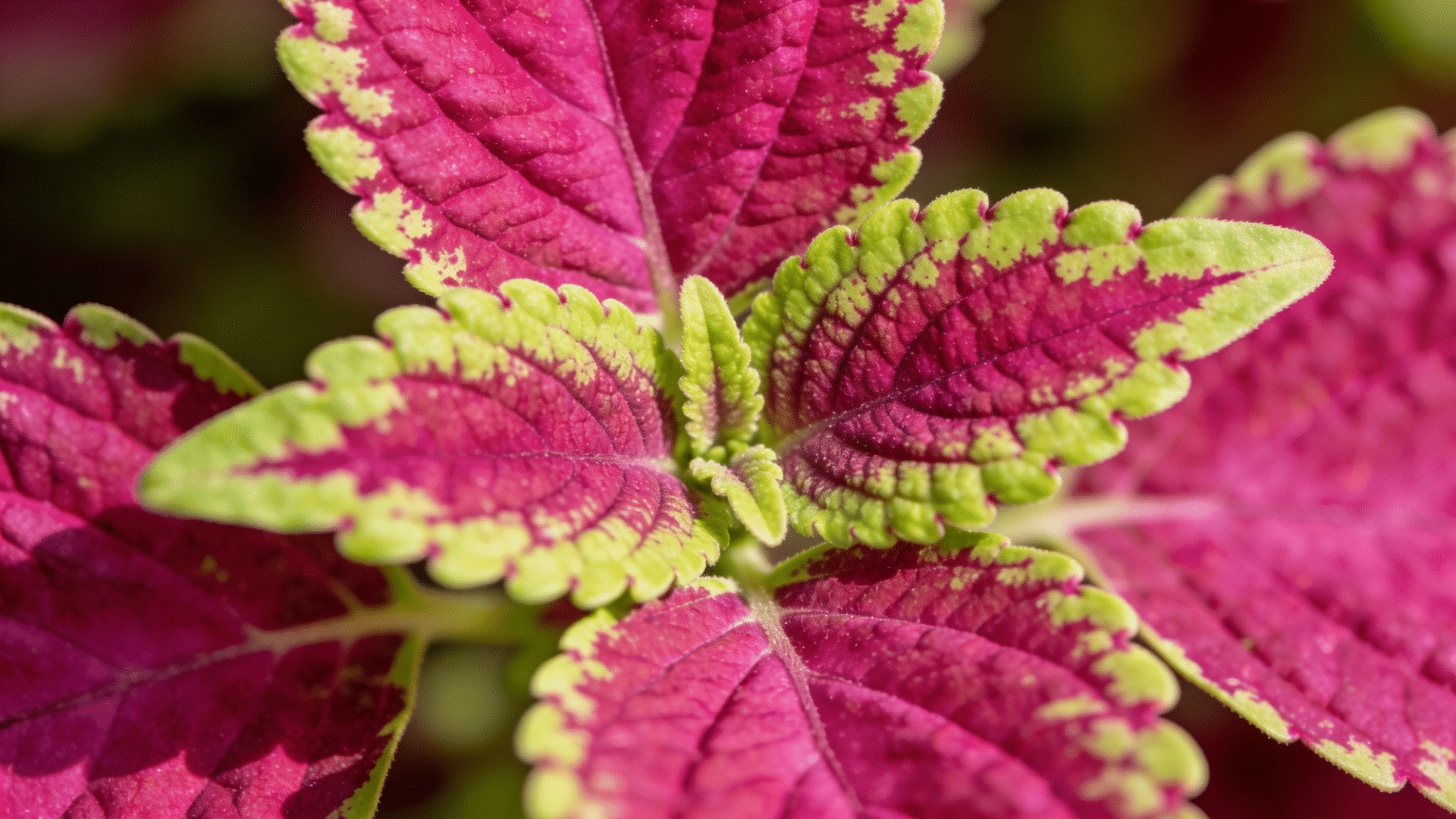
Coleus is one of the most popular and versatile annuals in the United States. It is celebrated for its stunning leaf color combinations. Since it is grown purely for its foliage, you never have to wait for blossoms to enjoy a vibrant display.
Varieties feature neon chartreuse, bright magenta, fiery orange, and rich velvet purples. These colors are often all woven into a single leaf. It is an incredibly fast growing plant.
It works beautifully to fill empty spaces in garden beds or add volume to container arrangements.
Tip: Pinch off the small blue flower spikes as soon as they appear. This directs all the plant’s energy into growing thicker foliage.
24. Caladiums (Caladium Spp)
- USDA Zones: 9–11 (Grown as a summer annual in cooler northern zones)
- Light & Soil Needs: Full shade to morning sun; rich, moist, exceptionally well draining soil.
- Native Origin: Central and South America
- Approximate Cost: $5.00 – $12.00 (per tuber or starter pot)
- Care Percentage Meter: 60% (High; zero tolerance for frost, requires bulb harvesting in winter)
- Where to Buy: Burpee
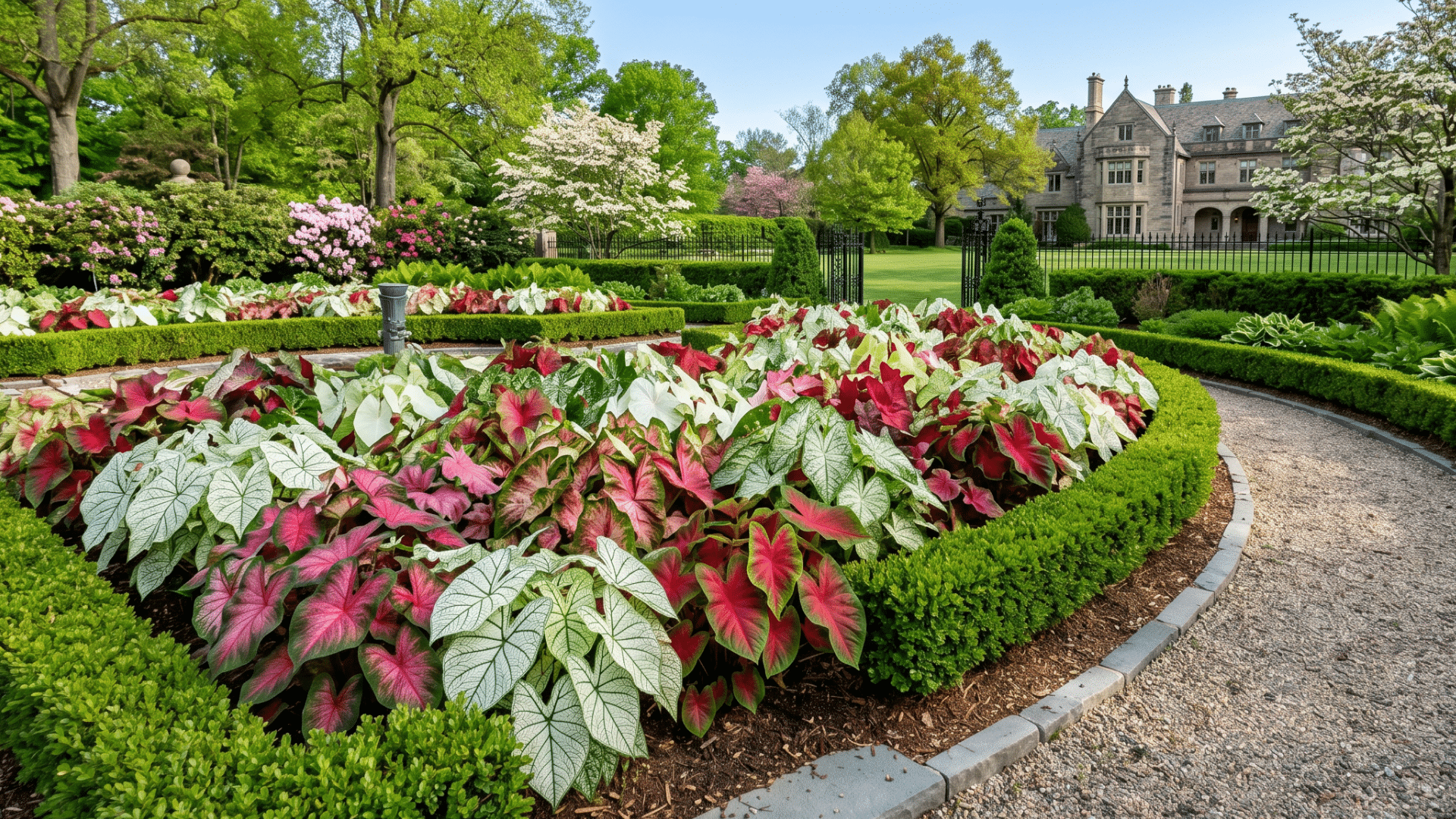
- Caladiums are the go to choice for homeowners looking to inject instant, high energy tropical color into a shady yard. Grown from bulbs, these striking plants feature large, paper thin, heart shaped leaves.
Depending on the variety, they are splashed with vibrant hot pink, crimson red, creamy green, and stark white. While they thrive as perennials in the warm US South, northern gardeners can easily enjoy them as stunning summer annuals.
They perform exceptionally well in patio containers, hanging baskets, or heavily shaded garden borders.
Tip: Wait until spring soil temperatures warm up before planting bulbs outdoors. Planting them too early in cold, wet mud can cause rotting.
25. Fuchsia (Fuchsia Spp)
- USDA Zones: Grown as a summer annual across the majority of the US
- Light & Soil Needs: Full shade to morning sun; rich, consistently moist, well-draining soil.
- Native Origin: Central and South America
- Approximate Cost: $15.00 – $35.00 (typically purchased as fully mature hanging baskets)
- Care Percentage Meter: 70% (High; relies on heavy watering and scheduled liquid fertilization)
- Where to Buy: Burpee
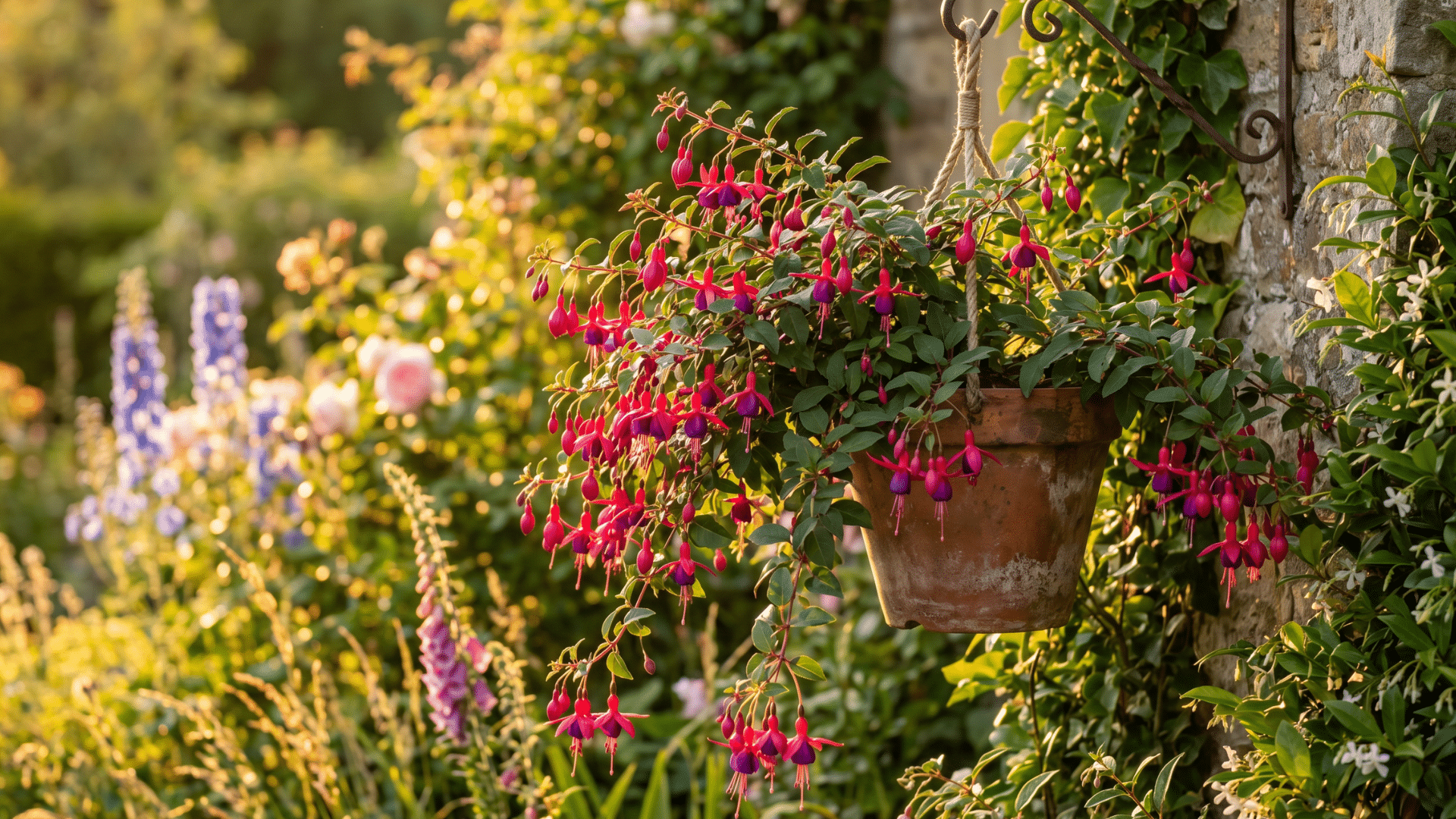
Fuchsia is the champion for shady front porch hanging baskets and patio containers. The exotic, hanging flowers drop beautifully from trailing stems. They look exactly like tiny, double-petaled dancing ballerinas.
They feature bright, high-contrast color combinations like hot pink, deep purple, crimson, and stark white. These nectar-rich blooms are an absolute magnet for hummingbirds, who will visit daily.
Fuchsia prefers cool summer temperatures and plenty of moisture. Regular watering and weekly plant food will keep them blooming nonstop until frost.
Tip: Protect Fuchsia baskets from hot afternoon wind gusts, which can quickly dry out the sensitive flower buds.
Easy Tips to Take Care of Shade Garden Plants
Caring for shade plants is highly rewarding, but it requires a slightly different approach than a traditional sun-drenched garden. Follow these four simple rules to keep your low-light space looking its absolute best:
- Watch the Water Levels: Because shady areas don’t dry quickly in the sun, the soil stays damp much longer. Always check the dirt by sticking your finger an inch deep before watering. If it feels wet, skip watering for the day to protect your plants from root rot.
- Feed the Soil with Compost: Shade-loving plants naturally grow on forest floors, which are packed with rotting leaves and rich organic material. Adding a fresh layer of organic compost to your garden beds each spring copies this environment and delivers natural nutrients.
- Lighten Up Tightly Packed Soil: Many low-light varieties hate dense, heavy clay soil. When planting, mix in plenty of peat moss or sandy compost. This creates a loose, open texture that allows fine roots to spread out and breathe easily.
- Defend Against Slugs and Snails: Cool, damp shadows are a total paradise for slugs. Protect your plants, especially your hostas, by spreading crushed eggshells, coarse sand, or organic garden bait around the base of your plants.
Final Thoughts
Creating a gorgeous shade garden is all about changing your point of view. Instead of viewing dark corners as a problem, look at them as a wonderful space for unique textures, lush greenery, and peaceful woodland color.
By matching the right low-maintenance groundcovers, native perennials, and structural bushes to your yard’s specific lighting, you can effortlessly turn a bare patch of dirt into a vibrant oasis.
Sunlight isn’t the only way to achieve a spectacular landscape. Rich layers of soft ferns, bold hostas, and shimmering mosses thrive where other varieties struggle, offering a lovely sanctuary right outside your door.
Take a close look at your yard’s dim spots this weekend, pick a couple of your favorite varieties from this list, and enjoy the process of bringing your quiet backyard shadows to life.
Frequently Asked Questions
Can a Plant Survive In 100% Complete Darkness?
No. All green plants require at least some light to make food and survive.
What Exactly Is the Difference Between Partial Shade and Full Shade?
Partial shade means an area receives roughly 3 to 6 hours of direct sunlight daily. Full shade means the spot gets less than 3 hours of direct sun.
Do Deer and Rabbits Eat Hostas?
Yes, hostas are essentially a delicious garden salad for deer and rabbits. If you wild animals in your neighborhood, use organic animal spray.
How Often Should I Water Plants That Grow In the Shade?
As a golden rule, water deeply only when the top inch of soil feels dry to the touch, rather than watering on a strict daily schedule.

Veronica Lee holds a Master’s degree in Landscape Architecture from Cornell University and has dedicated more than 15 years to transforming outdoor areas into artistic and sustainable spaces. Her career took off in a renowned landscape design firm, where she excelled in creating visually stunning and environmentally responsible designs. In 2019, Veronica brought her expertise to our platform, quickly becoming a key contributor to our outdoor design and sustainability sections. As the lead of our landscape innovation series ever since joining, she has inspired readers with her forward-thinking and practical approach. When not drafting designs, Veronica enjoys pottery and participates in local conservation efforts, activities that complement her professional ethos of blending art with nature.