What flowers bloom in the fall when most gardens already seem past their best? You may expect autumn to mean fewer flowers, dull beds, and little fresh color.
That can make it harder to plan a garden that still feels lively after summer ends. The problem is that many people choose plants based only on spring and summer bloom times.
By fall, gaps start to show, and the yard can look tired too soon. A better approach to planning a garden starts with knowing which flowers naturally keep blooming as temperatures cool and daylight gets shorter.
What is a Fall Flower?
A fall flower is a plant that blooms during the cooler months of late summer and autumn, often from September through the first frost.
Some begin flowering in fall, while others start earlier and keep going as temperatures drop. Bloom time can change based on climate, growing zone, weather, and the type of plant.
In warmer areas, flowering may last much longer than it does in colder regions. Fall flowers can be annuals, perennials, bulbs, or shrubs.
What matters most is that they still produce flowers when many summer plants are slowing down or finishing for the season.
Best Fall Flowers to Add to Your Autumn Garden
Fall gardens don’t have to fade when summer ends. These 17 flowers keep color, texture, and pollinator activity going right through the first frost.
1. Blue Mist Shrub (Caryopteris)
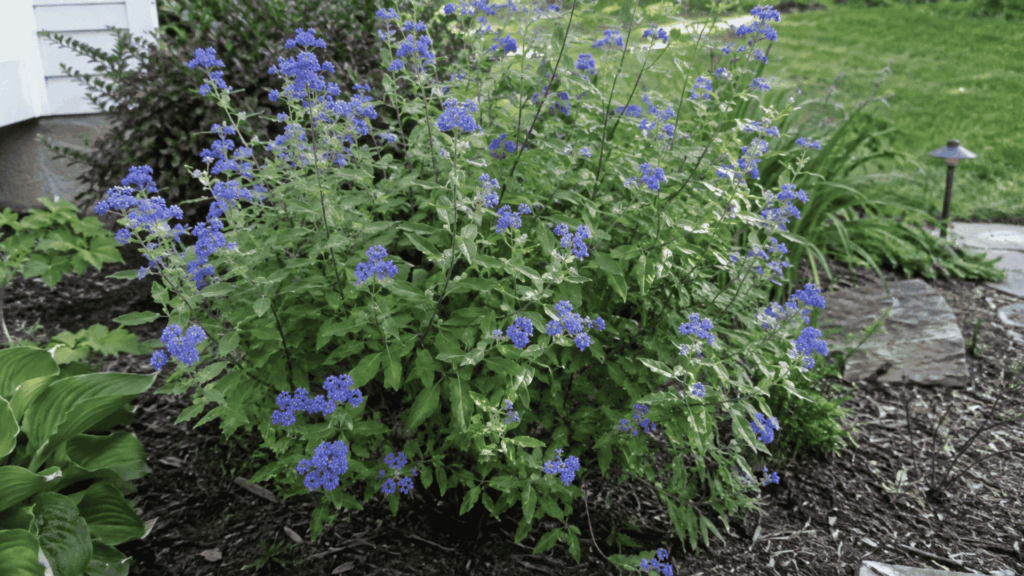
Blue mist shrub covers itself in soft lavender-blue blooms just as most summer flowers start to quit. Monarchs and other pollinators treat it like a fall gas station on their migration route.
- Mature size: 1.5-2.5 feet tall and wide
- Bloom color: Lavender-blue
- Bloom season: Late summer to fall
- Wildlife benefits: Monarch butterfly nectar plant, as well as dozens of other pollinators
- USDA zone: 5-9
- Type: Deciduous
2. New England Aster
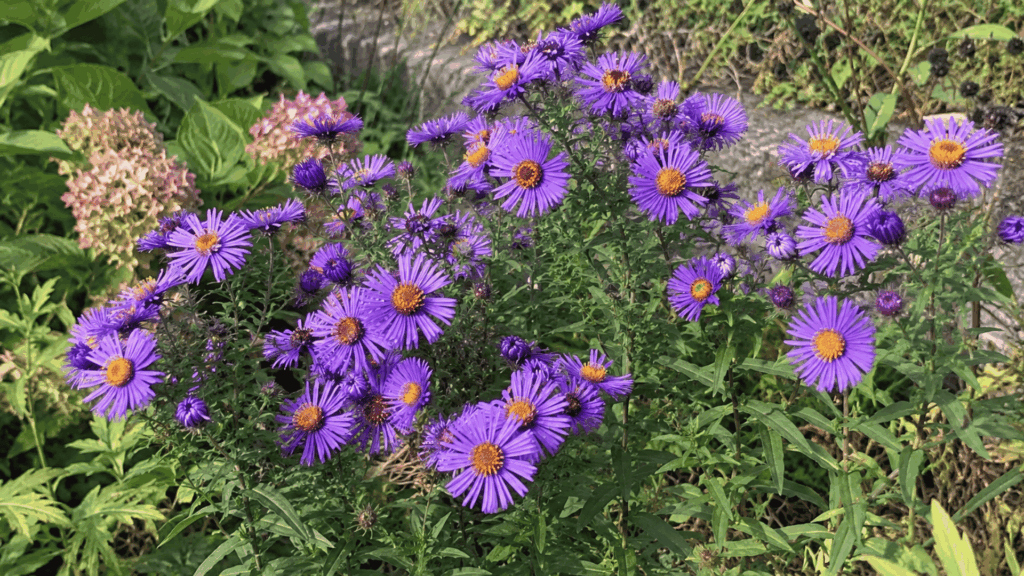
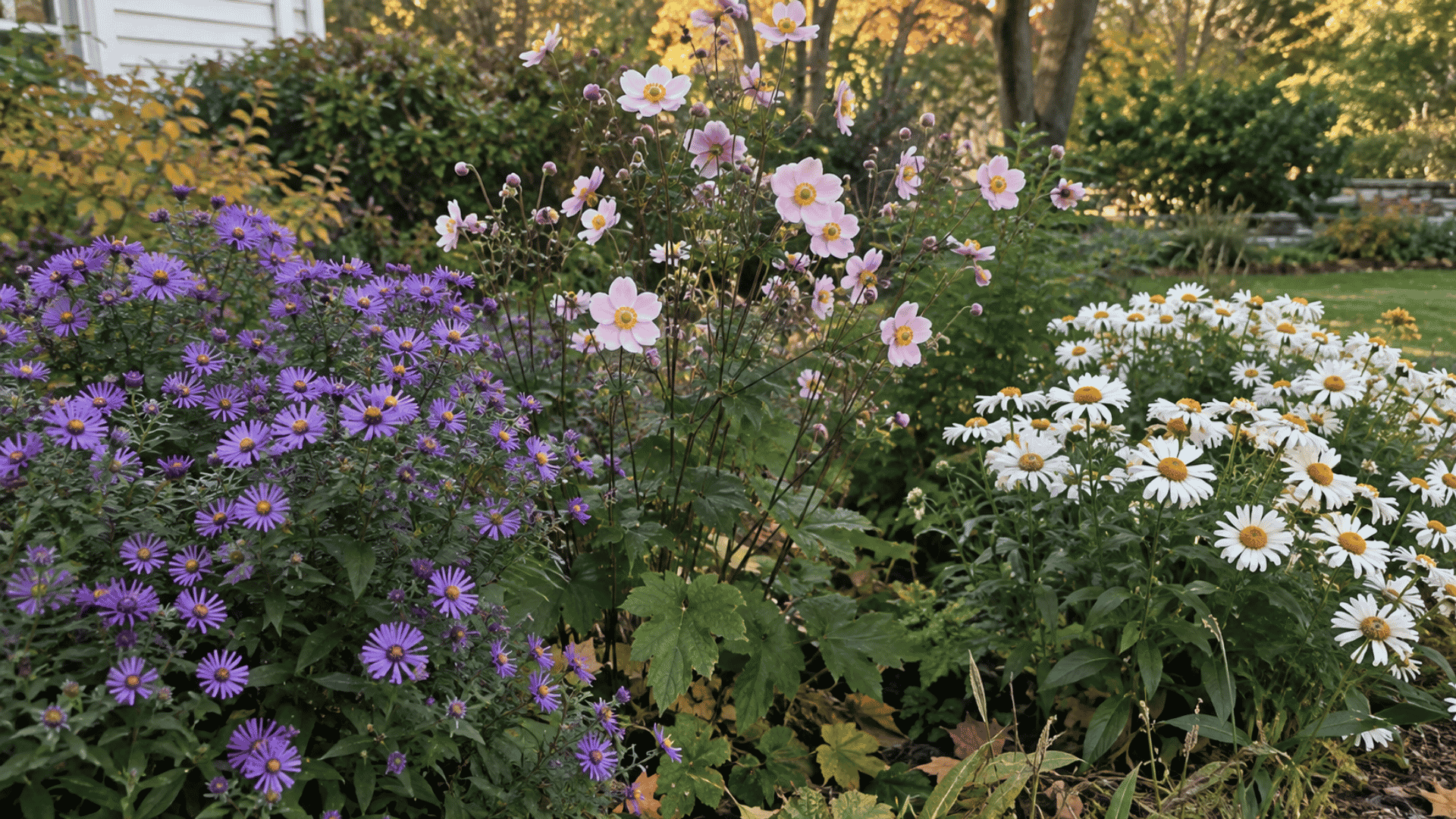
New England aster erupts into masses of purple-lavender, daisy-like blooms right as summer fades. Its habit is loose and airy, so it works well tucked behind shorter plants that hide its bare lower stems.
It’s also known as the birth flower for September, making it a meaningful gift plant and a fun bit of garden trivia.
- Mature size: 3-6 feet tall and 2-3 feet wide
- Bloom color: Purple to lavender-pink
- Bloom season: Late summer to fall
- Wildlife benefits: Key monarch migration nectar source, also draws bees and other butterflies
- USDA zone: 4-8
- Type: Herbaceous perennial
3. Sedum ‘Autumn Joy’ (Stonecrop)
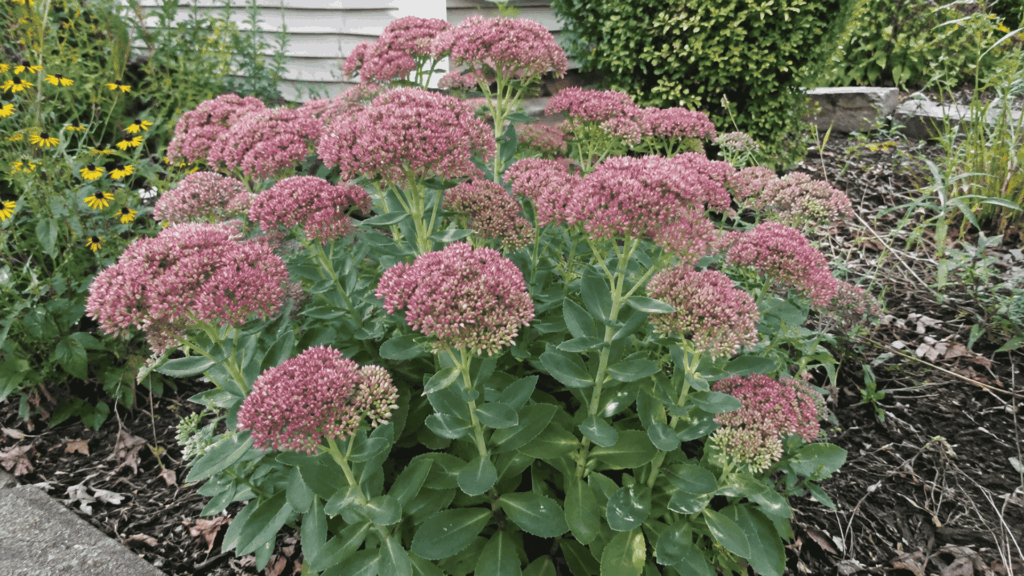
Sedum ‘Autumn Joy’ builds broccoli-shaped flower heads that shift from soft pink to rusty bronze as the season goes on. The thick, succulent leaves hold up through drought and heat without extra watering.
- Mature size: 18-24 inches tall and wide
- Bloom color: Pink aging to rust-red
- Bloom season: Late summer to fall
- Wildlife benefits: Attracts bees and butterflies; seed heads feed birds through winter
- USDA zone: 3-9
- Type: Herbaceous perennial (succulent)
4. Black-Eyed Susan
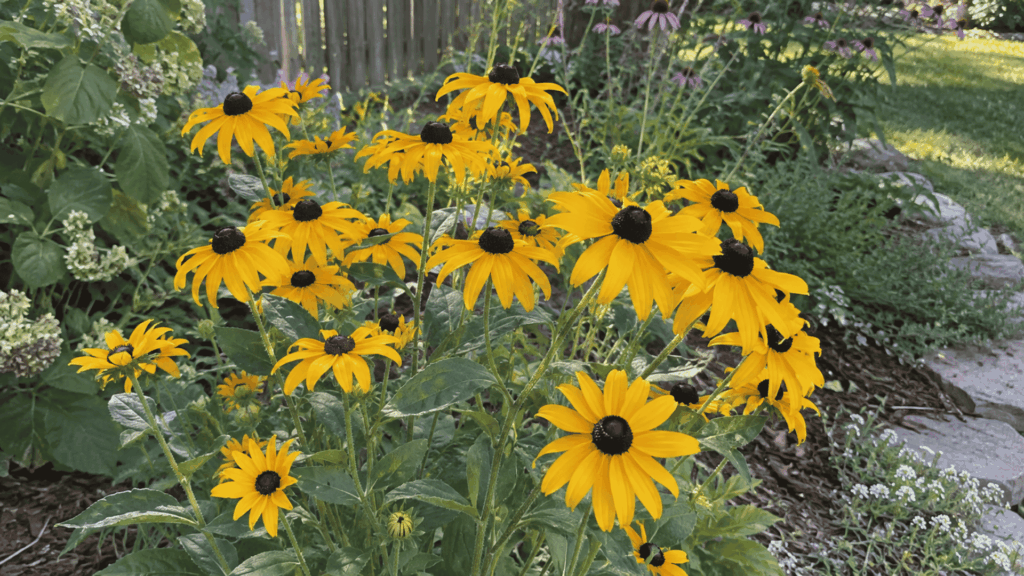
Black-eyed Susan opens golden-yellow petals around a dark chocolate-brown center from midsummer straight into fall. It self-seeds easily, so one packet often turns into a full patch by year two.
- Mature size: 1-3 feet tall and 1-1.5 feet wide
- Bloom color: Golden yellow with a dark brown center
- Bloom season: Summer to fall
- Wildlife benefits: Nectar for bees and butterflies; finches eat the seed heads in winter
- USDA zone: 3-9
- Type: Rudbeckia hirta is commonly biennial/short-lived, while other Rudbeckia used under this common name are perennial.
5. Goldenrod
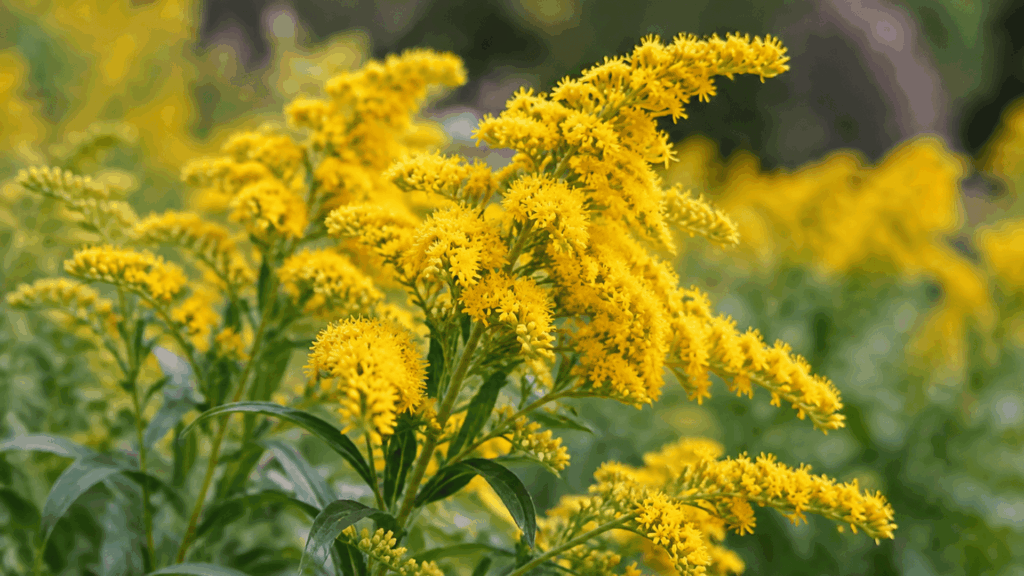
Goldenrod sends up plumes of bright yellow flowers exactly when monarchs need fuel for their trip south. It gets blamed for fall allergies, but ragweed, not goldenrod, is the actual culprit.
- Mature size: 2-4 feet tall and 1-3 feet wide
- Bloom color: Bright yellow
- Bloom season: Late summer to fall
- Wildlife benefits: One of the most valuable native nectar sources for monarchs and other late-season pollinators
- USDA zone: 3-9
- Type: Herbaceous perennial
6. Garden Mum
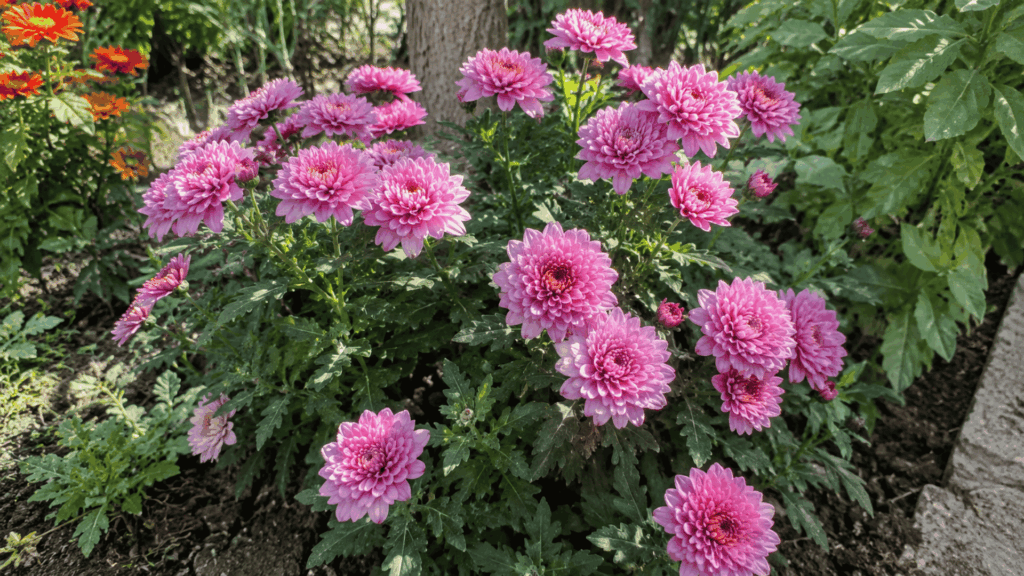
Garden mums pack dense, rounded flowers in shades from deep red to bright gold, giving instant fall color to porches and beds. Pinching the stems back in early summer produces a fuller, more compact plant come fall.
- Mature size: 1-3 feet tall and wide
- Bloom color: Red, orange, yellow, purple, or white
- Bloom season: Fall
- Wildlife benefits: Attracts bees and butterflies
- USDA zone: 5-9
- Type: Herbaceous perennial
7. Japanese Anemone
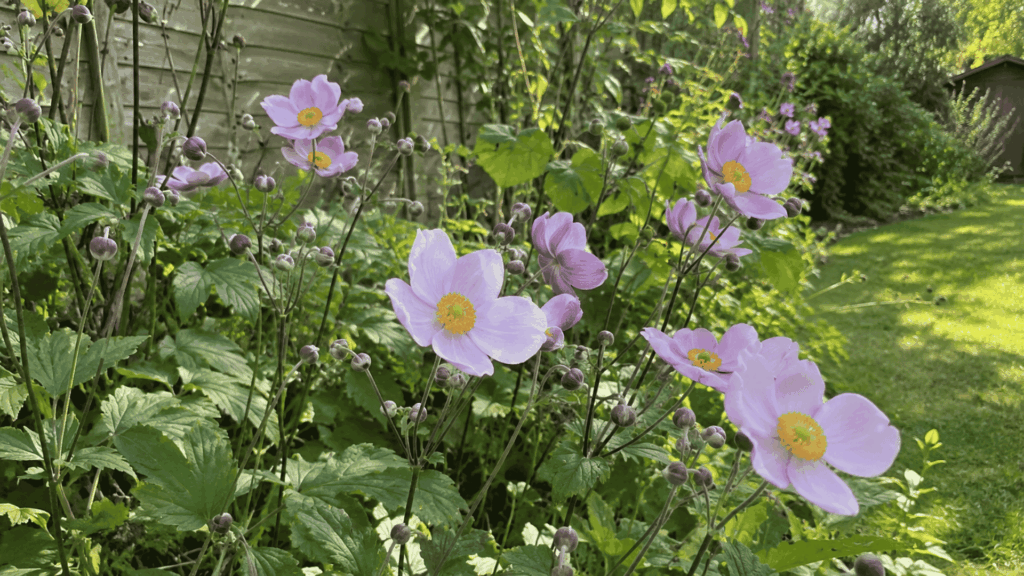
Japanese anemone holds poppy-like white or pink flowers above dark green foliage on tall, wiry stems. It spreads slowly at first, then fills in a shaded bed once it settles in.
- Mature size: 2-4 feet tall and 1.5-2 feet wide
- Bloom color: White or pink
- Bloom season: Late summer to fall
- Wildlife benefits: Attracts bees and butterflies
- USDA zone: 4-8
- Type: Herbaceous perennial
8. Toad Lily
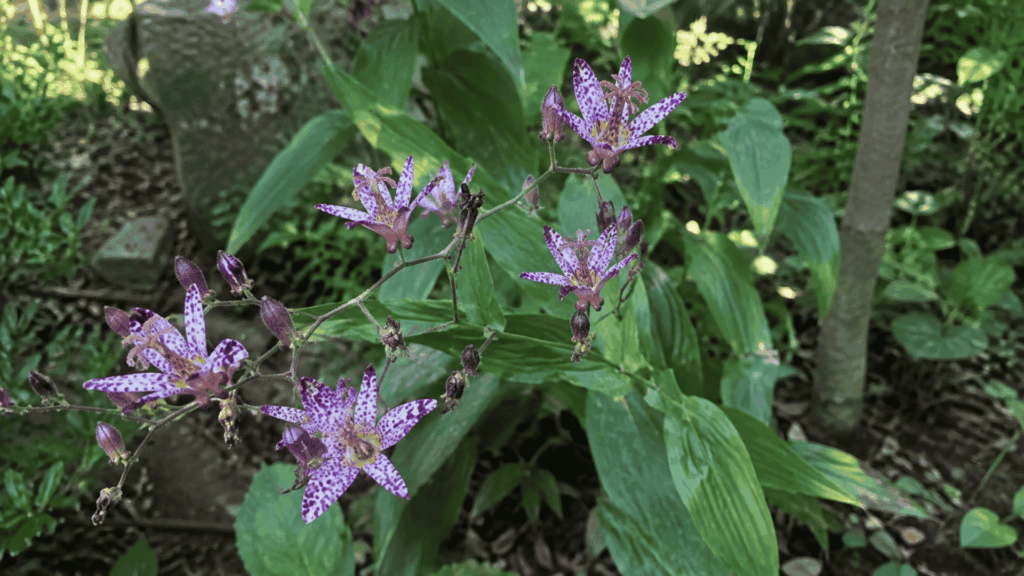
Toad lily produces small, orchid-like flowers speckled with purple spots along arching stems. It thrives in the shade other fall flowers skip, which makes it one of the more useful shade garden plants for a woodland-style bed.
- Mature size: 2-3 feet tall and 1-2 feet wide
- Bloom color: White with purple spots
- Bloom season: Late summer to fall
- Wildlife benefits: Attracts bees
- USDA zone: 4-9
- Type: Deciduous perennial
9. Autumn Crocus
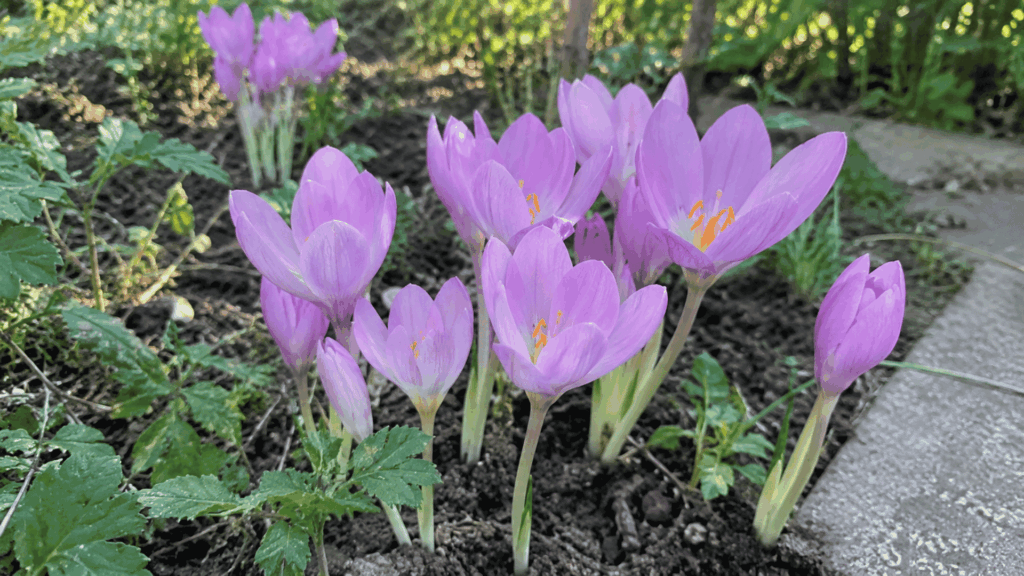
Autumn crocus pushes up naked pink to purple blooms straight from bare soil, with no leaves in sight until spring. Every part of this plant is toxic if eaten, so keep it away from pets that graze.
- Mature size: 6-10 inches tall and 6-9 inches wide
- Bloom color: Pink to purple
- Bloom season: Fall
- Wildlife benefits: Attracts bees
- USDA zone: 4-8
- Type: Perennial corm (dies back after bloom)
10. Sneezeweed
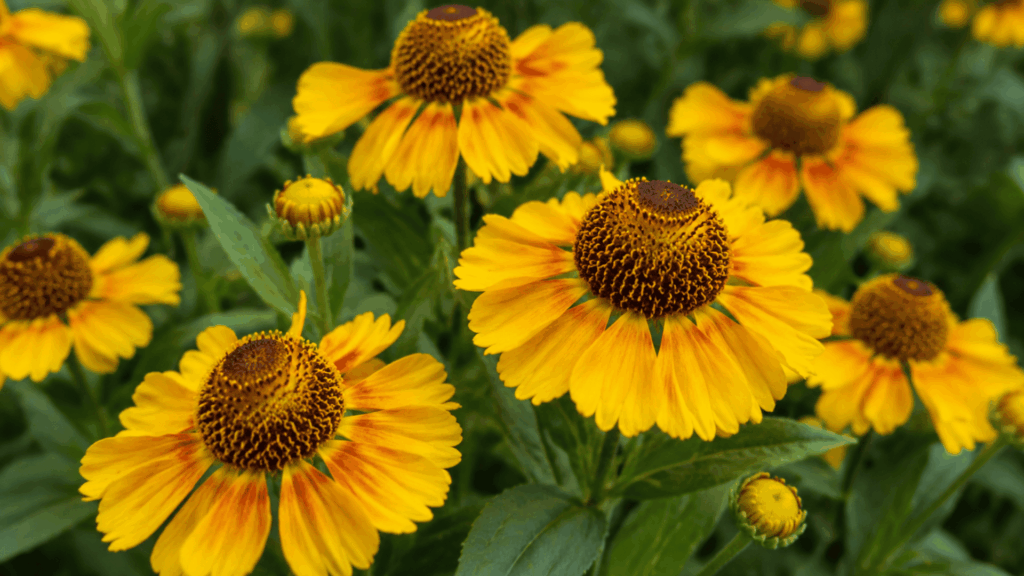
Sneezeweed carries daisy-like flowers in fiery orange, yellow, and red that stack up along tall, branching stems. Cutting the plant back by half in June keeps it from flopping over once it blooms.
- Mature size: 3-5 feet tall and 1.5-2 feet wide
- Bloom color: Orange, yellow, or red
- Bloom season: Late summer to fall
- Wildlife benefits: Attracts butterflies and bees
- USDA zone: 3-8
- Type: Herbaceous perennial
11. Joe Pye Weed
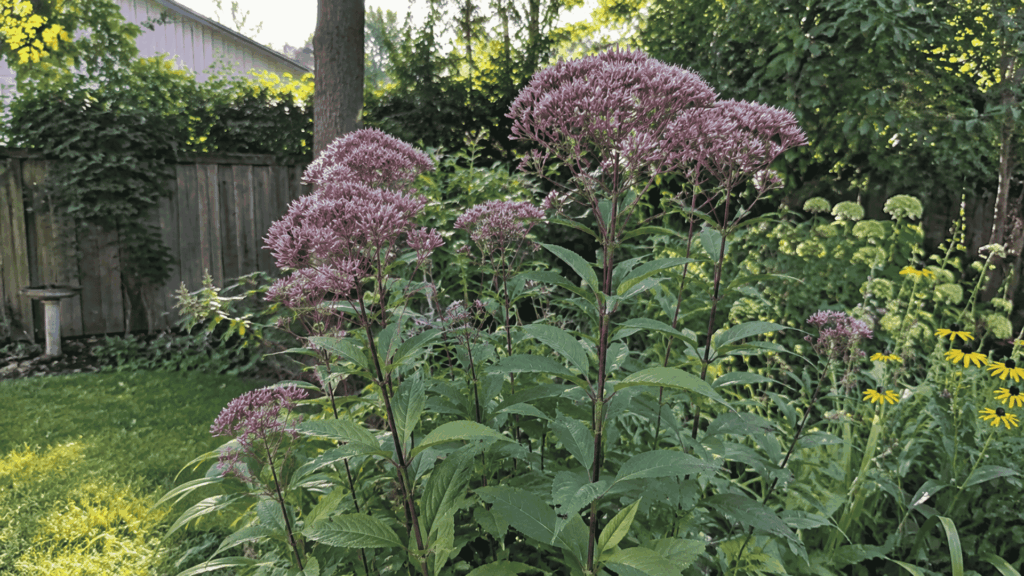
Joe Pye weed towers over most border plants with dusty mauve-pink flower clusters that draw a constant stream of pollinators. Give it room, as this plant needs space to reach full size.
- Mature size: 4-7 feet tall and 2-4 feet wide
- Bloom color: Mauve-pink to purple
- Bloom season: Summer to fall
- Wildlife benefits: Major monarch and pollinator magnet
- USDA zone: 4-9
- Type: Herbaceous perennial
12. Turtlehead
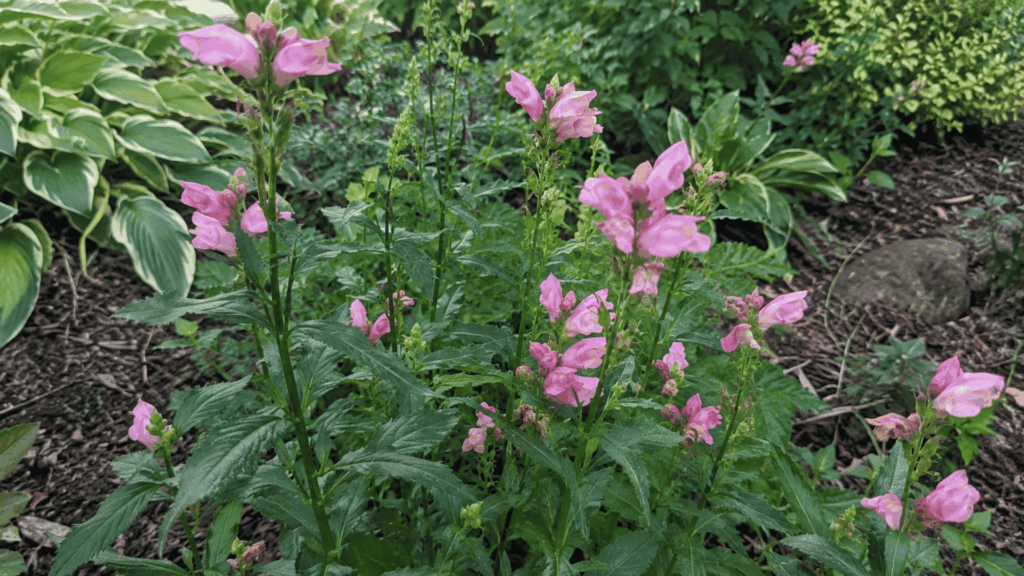
Turtlehead earns its name from snapdragon-shaped flowers that resemble a turtle’s open mouth. It tolerates wet soil better than most fall bloomers, making it a fit for low spots that stay damp.
- Mature size: 2-3 feet tall and 1-2 feet wide
- Bloom color: Pink or white
- Bloom season: Late summer to fall
- Wildlife benefits: Attracts bumblebees and hummingbirds
- USDA zone: 3-8
- Type: Herbaceous perennial
13. Montauk Daisy
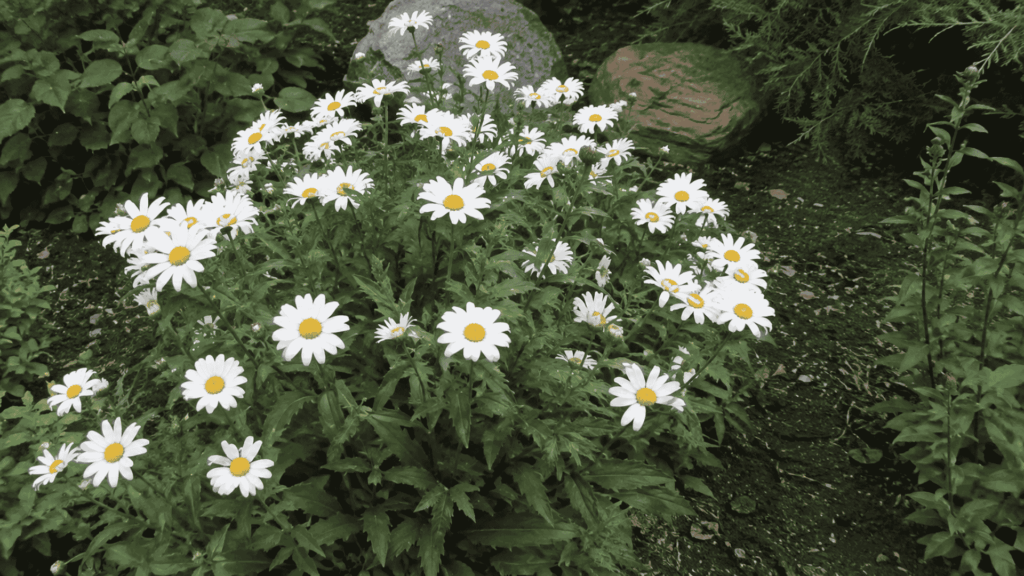
Montauk daisy stacks white, yellow-centered blooms on sturdy, semi-woody stems that resist wind and rain better than typical daisies. It flowers later than any daisy relative, often holding on past the first light frost.
- Mature size: 2-3 feet tall and wide
- Bloom color: White with a yellow center
- Bloom season: Fall
- Wildlife benefits: Attracts bees and butterflies
- USDA zone: 5-9
- Type: Herbaceous perennial (semi-woody base)
14. Russian Sage
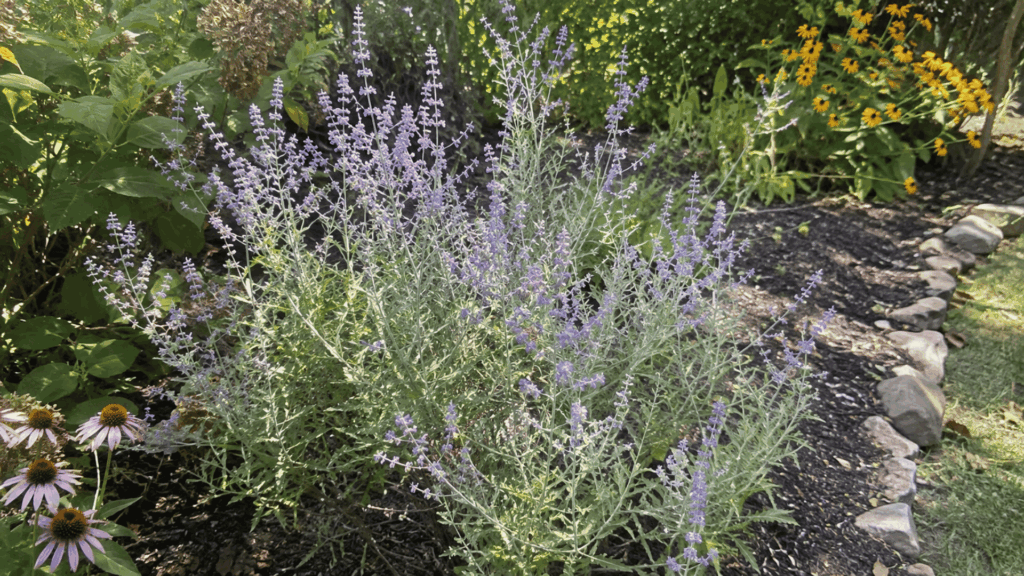
Russian sage fills the garden with airy spikes of lavender-blue flowers over silvery, aromatic foliage. Deer and rabbits leave it alone, which makes it a reliable pick near wooded lots.
- Mature size: 2-4 feet tall and 2-3 feet wide
- Bloom color: Lavender-blue
- Bloom season: Summer to fall
- Wildlife benefits: Attracts bees, butterflies, and hummingbirds
- USDA zone: 4-9
- Type: Deciduous subshrub
15. Autumn Sage
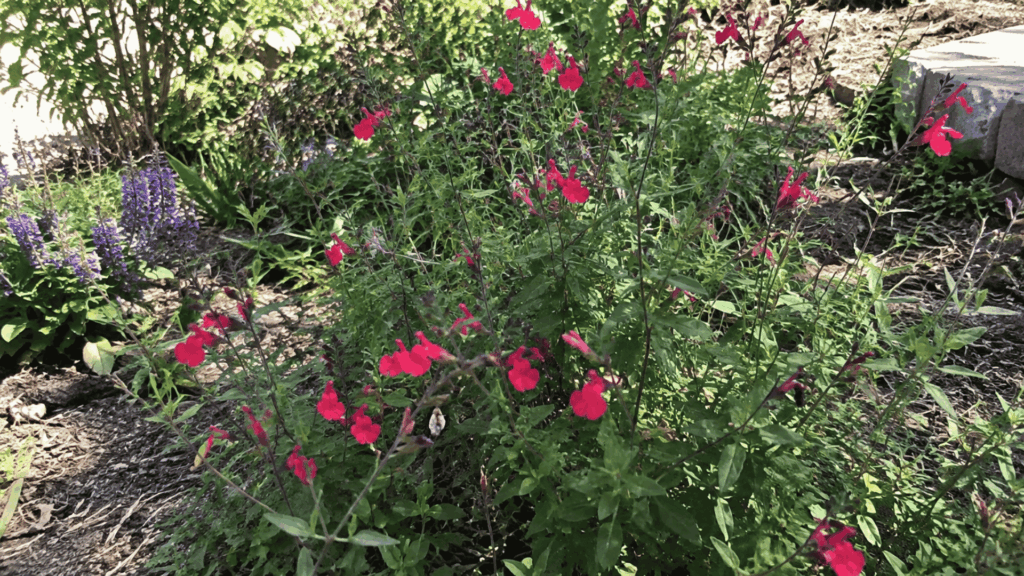
Autumn sage keeps blooming in red, pink, or white through summer heat and into fall, slowing down only after the first hard freeze. Regular light pruning through the season keeps new flowers coming.
- Mature size: 2-3 feet tall and wide
- Bloom color: Red, pink, orange, purple, or white
- Bloom season: Summer to fall
- Wildlife benefits: Attracts hummingbirds and butterflies
- USDA zone: 6-9
- Type: Semi-evergreen subshrub
16. Dahlia
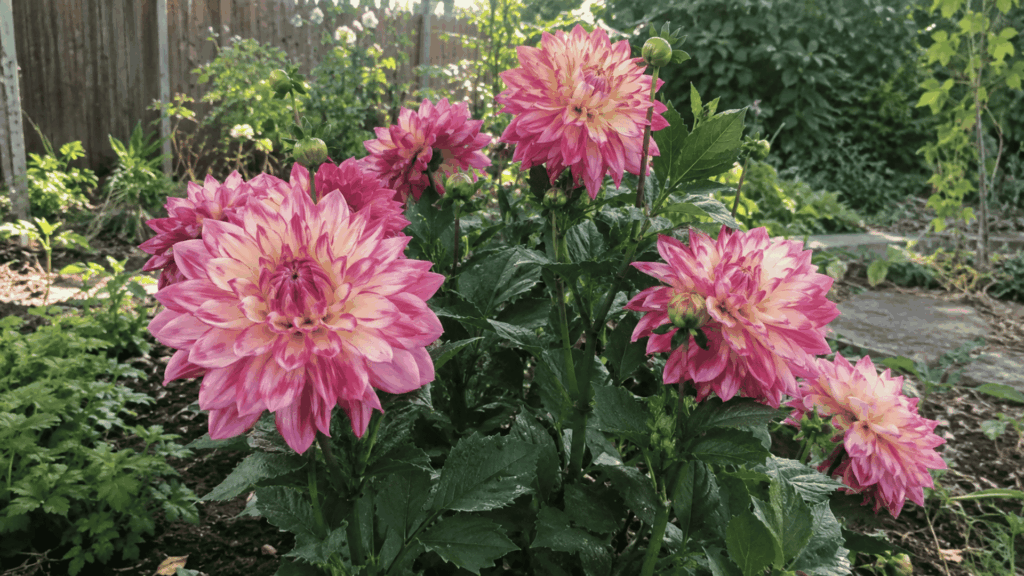
Dahlia blooms come in nearly every color and shape, from tight pompons to dinner-plate-sized flowers that dominate a bed on their own. Dig up the tubers before frost in zones colder than 8 and store them indoors for winter.
- Mature size: 1-4 feet tall and 1-2 feet wide
- Bloom color: Red, pink, orange, yellow, purple, or white
- Bloom season: Summer to fall
- Wildlife benefits: Attracts bees and butterflies
- USDA zone: 8-11 (grown as an annual elsewhere)
- Type: Tuberous perennial
17. Pansy
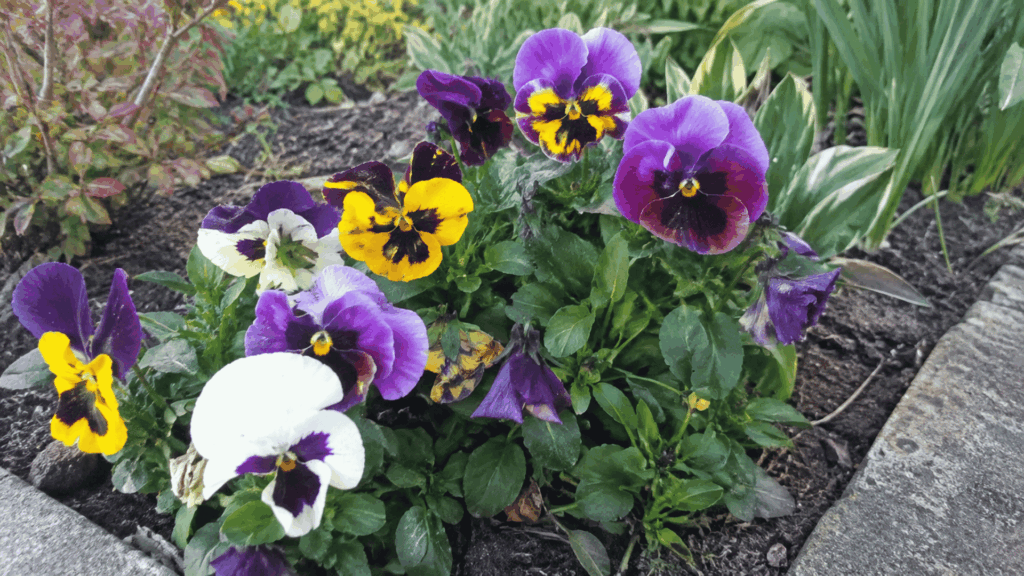
Pansy shrugs off light frost and keeps flowering when most other plants have finished for the year. Planting it in early fall gives roots time to establish before the coldest weather hits.
- Mature size: 6-8 inches tall and wide
- Bloom color: Purple, yellow, orange, white, or bicolor
- Bloom season: Fall through spring
- Wildlife benefits: Feeds early-season pollinators when little else is blooming
- USDA zone: 4-8 (grown as a cool-season annual)
- Type: Annual or short-lived perennial
Fall Flower Colors Worth Planting for Your Autumn Garden
Fall flower beds work best around warm, deep colors that match the season, mixed with a few cool tones for contrast. Orange, red, gold, and purple carry the most fall feeling, while white and lavender keep a bed from looking too heavy.
Building a color palette around these tones early on makes the rest of the layout easier to plan.
Gold and Yellow
Goldenrod and black-eyed Susan bring the classic fall color and feed pollinators at the same time. Both spread easily, so one or two plants can fill a bed within a couple of seasons.
Orange and Red
Sneezeweed and mums add heat to a bed and pair well with pumpkins or dried grasses. They also hold their color well into late fall, longer than most other warm-toned blooms.
Purple and Lavender
Aster, Russian sage, and toad lily cool down a hot color mix and draw in bees. Planting them near gold or orange flowers keeps the bed from looking one-note.
Pink and Rose
Sedum and Japanese anemone soften the palette without looking out of place next to brighter blooms. Both hold their shape well in cut arrangements, too.
White
Montauk daisy and white anemone cultivars brighten shaded corners and make other colors stand out more. A few white blooms scattered through a bed also help it read well at night or in low light.
If you’re still mapping out where each color block should sit, a few creative garden layout ideas can help you decide what goes in the front, middle, and back of a border.
Can You Plant Fall-Blooming Flowers in Late Summer?
Yes, you can plant many fall-blooming flowers in late summer, but the right method depends on the plant.
Established nursery plants already have developed roots, so they usually settle into the garden faster than flowers started from seed.
Seeds often need more time to germinate, grow, and become strong enough to handle cooler weather. Perennials also need enough time for their roots to settle before the ground freezes.
Planting dates can vary widely across the US because fall temperatures and first frost dates differ by region. Local weather and the plant’s growing needs should guide the timing.
Wrapping It Up
A fall garden is not the end of the growing season. With the right plants, the yard can still feel full of life as the weather cools and summer color fades.
Knowing what flowers bloom in the fall also makes seasonal planning feel much easier and less uncertain. The goal is not to fill every empty space, but to create a garden that still feels balanced and cared for late in the year.
A few well-chosen blooms can make autumn feel like its own season in the garden rather than a quiet pause before winter.
Frequently Asked Questions
Do Fall Flowers Attract Bees and Butterflies?
Yes. Many fall flowers provide nectar and pollen when fewer plants are blooming. This can make them useful food sources for bees, butterflies, and other pollinators late in the season.
Can Fall Flowers Grow Well in Containers?
Many can. Compact varieties often do well in pots, window boxes, and porch planters. Container-grown flowers may need more frequent watering because the soil can dry out faster than garden beds.
Should Fall Flowers Be Deadheaded?
It depends on the plant. Removing faded blooms can help some flowers look neater and may support continued flowering. Others can be left alone so their seed heads remain available for birds or winter garden interest.
Veronica Lee holds a Master’s degree in Landscape Architecture from Cornell University and has dedicated more than 15 years to transforming outdoor areas into artistic and sustainable spaces. Her career took off in a renowned landscape design firm, where she excelled in creating visually stunning and environmentally responsible designs. In 2019, Veronica brought her expertise to our platform, quickly becoming a key contributor to our outdoor design and sustainability sections. As the lead of our landscape innovation series ever since joining, she has inspired readers with her forward-thinking and practical approach. When not drafting designs, Veronica enjoys pottery and participates in local conservation efforts, activities that complement her professional ethos of blending art with nature.
![20 front yard succulent garden ideas[P]](https://enthrallinggumption.com/wp-content/uploads/2023/12/20frontyardsucculentgardenideas-512x288.jpg)