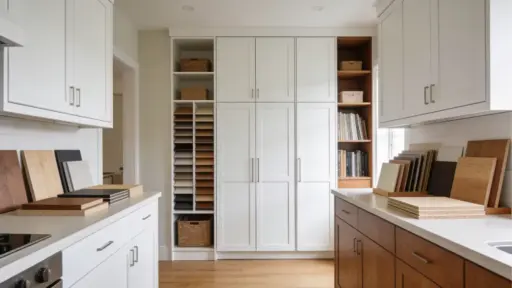
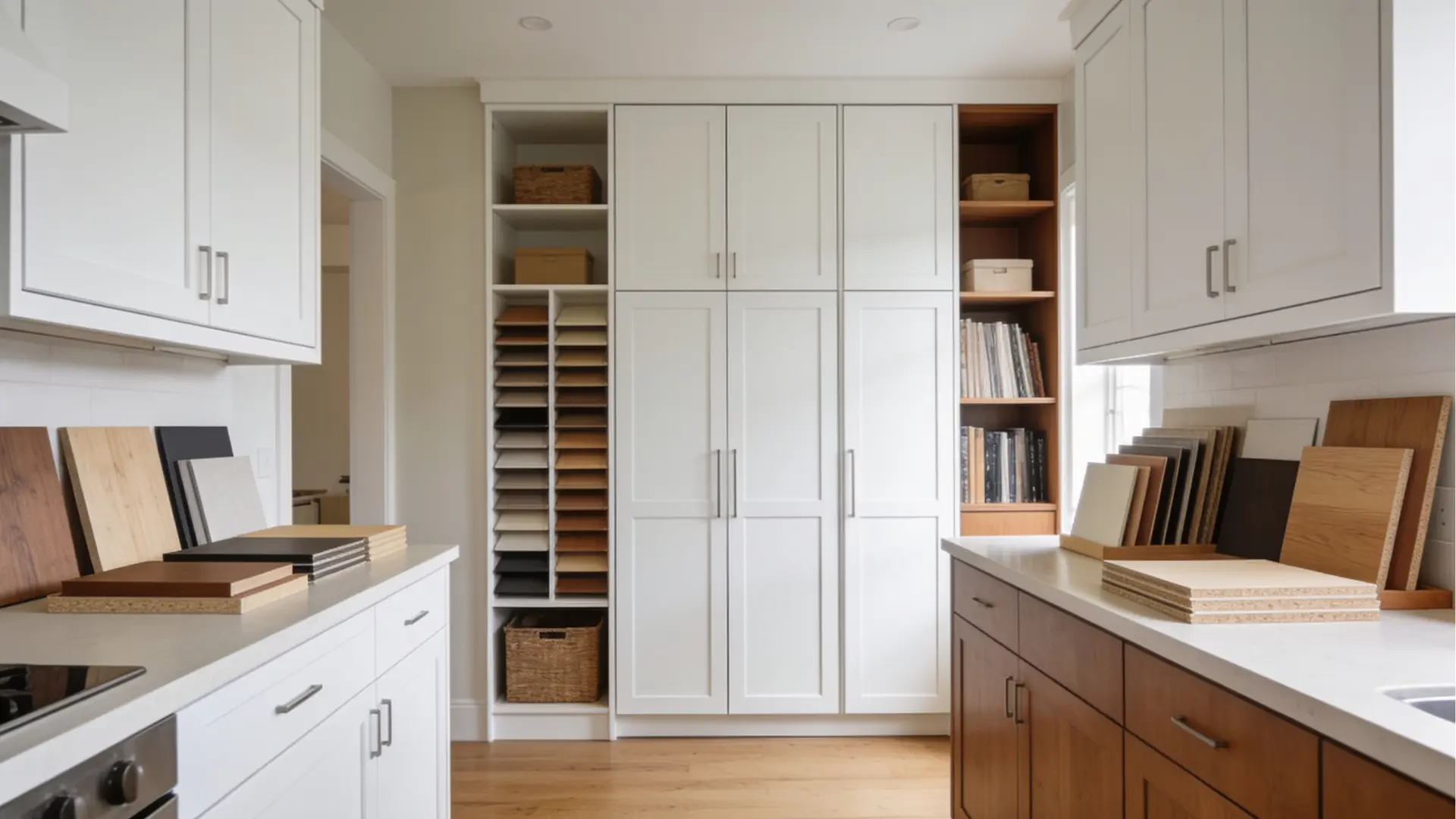

I used to think cabinets were just boxes on the wall until I helped plan storage for a small kitchen.
That is when I noticed how much the right cabinet can change a room. Cabinets help keep things organized, make daily tasks easier, and shape how a home looks and feels.
But not every cabinet works the same way. Kitchen cabinets store dishes, food, and cookware, while bathroom, garage, office, and laundry cabinets handle different needs.
The right choice depends on your budget, material, room size, door style, and how often you use them.
In this blog, I will break down the main types of cabinets in simple terms so you can compare your options and choose the one that best fits your home.
What are the Main Types of Cabinets?
Cabinets are not all built for the same purpose. Some cabinets are made for kitchens, where they store dishes, cookware, food, and small appliances.
Others are designed for bathrooms, garages, laundry rooms, home offices, or living rooms. Some provide hidden storage, while glass-front or open cabinets are better for display.
The best cabinet choice depends on the room size, available wall and floor space, budget, material, and layout. Homeowners should also think about daily use, cleaning needs, and what they plan to store.
Choosing the right cabinet type helps the space stay neat, useful, and comfortable.
Basic Types of Cabinets
Before choosing a cabinet style or material, it helps to understand the main cabinet types and where each one works best in the home.
1. Base Cabinets
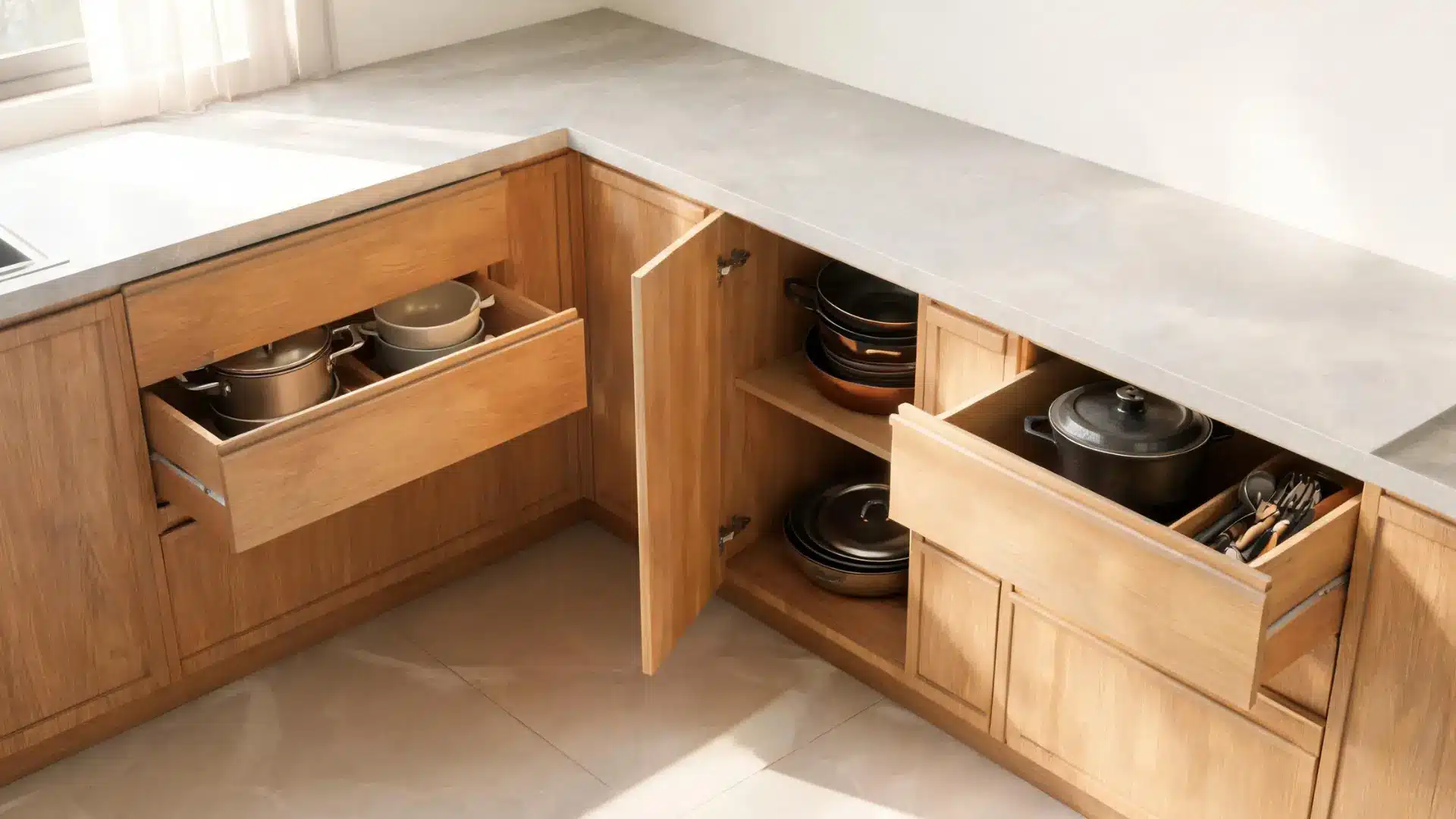
Base cabinets are floor cabinets that support countertops and hold everyday items. They differ from wall cabinets in that they support more weight and sit at working height.
I have seen them work best in kitchens, bathrooms, and laundry rooms where storage needs to be strong and easy to reach.
They can be budget-friendly if you choose stock or RTA styles. Their main value lies in the hidden storage below the counter.
2. Wall Cabinets
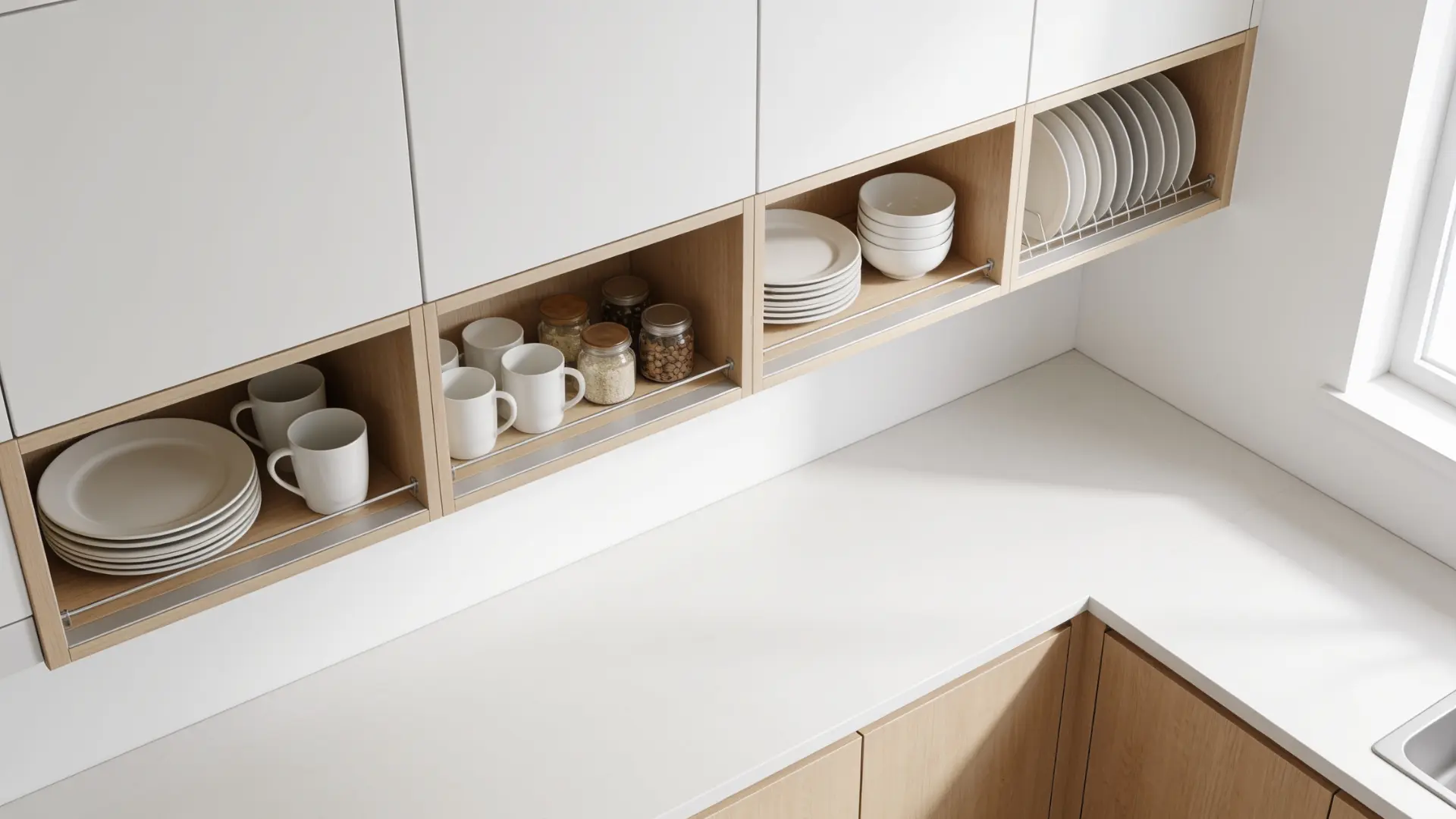
Wall cabinets are storage units fixed above counters, sinks, or appliances. They differ because they use vertical wall space rather than floor space.
This makes them useful in small kitchens, bathrooms, laundry rooms, and garages. They are often budget-friendly when bought in standard sizes.
A useful feature is that they keep lighter items like cups, spices, towels, and cleaners within reach without making the room feel crowded.
3. Tall Cabinets
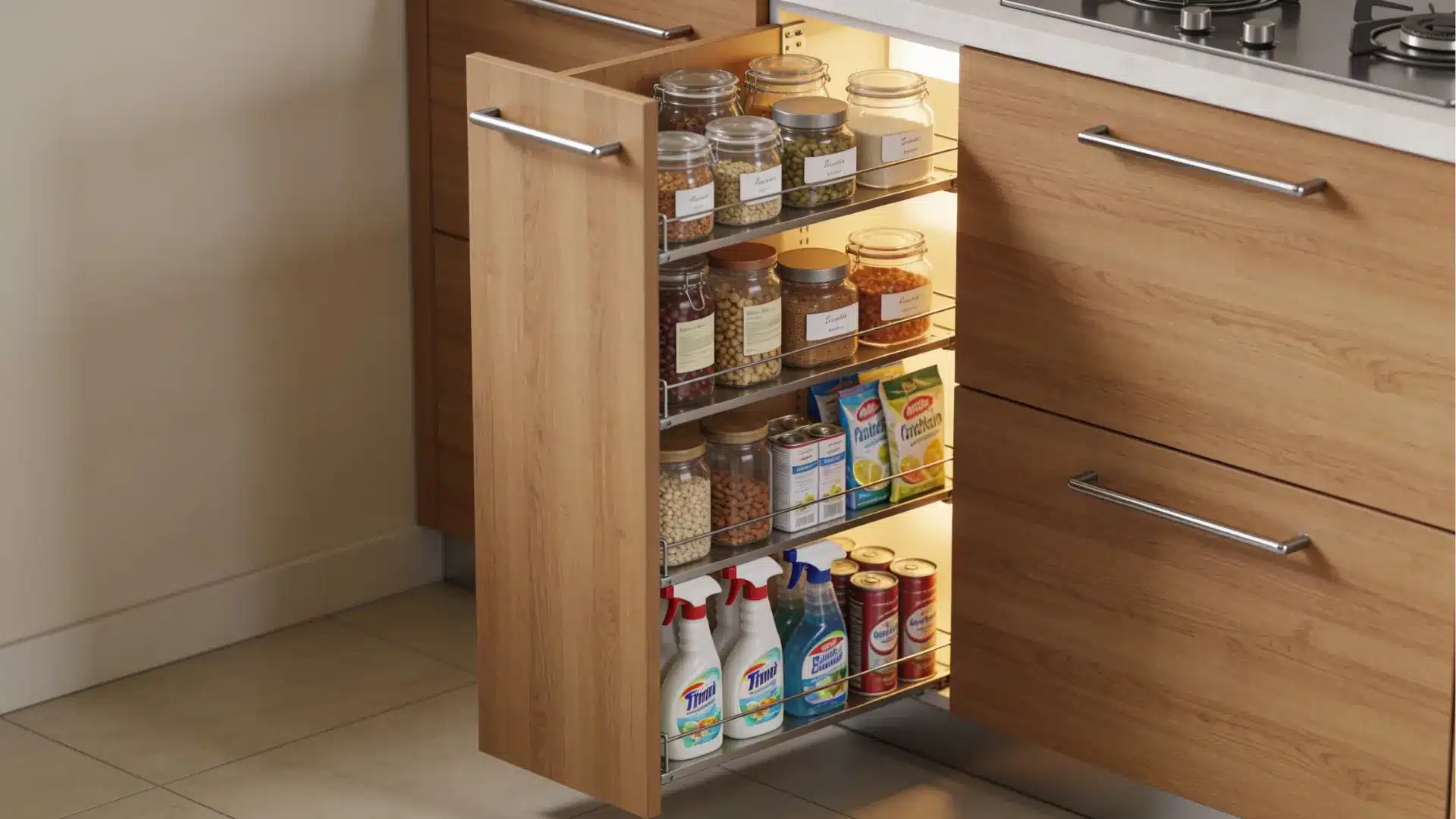
Tall cabinets rise from the floor, providing more storage in a narrow space. They differ from base cabinets in that they use height rather than width.
They are great for pantries, hallways, laundry rooms, garages, and bathrooms. They may cost more than small cabinets, but simple stock tall cabinets can still be budget-friendly.
Their best use is storing bulky items like brooms, food, linens, and appliances.
Kitchen Cabinet Types by Placement
In the kitchen, cabinet placement matters because each cabinet type supports a different part of cooking, storage, and daily use.
4. Base Kitchen Cabinets
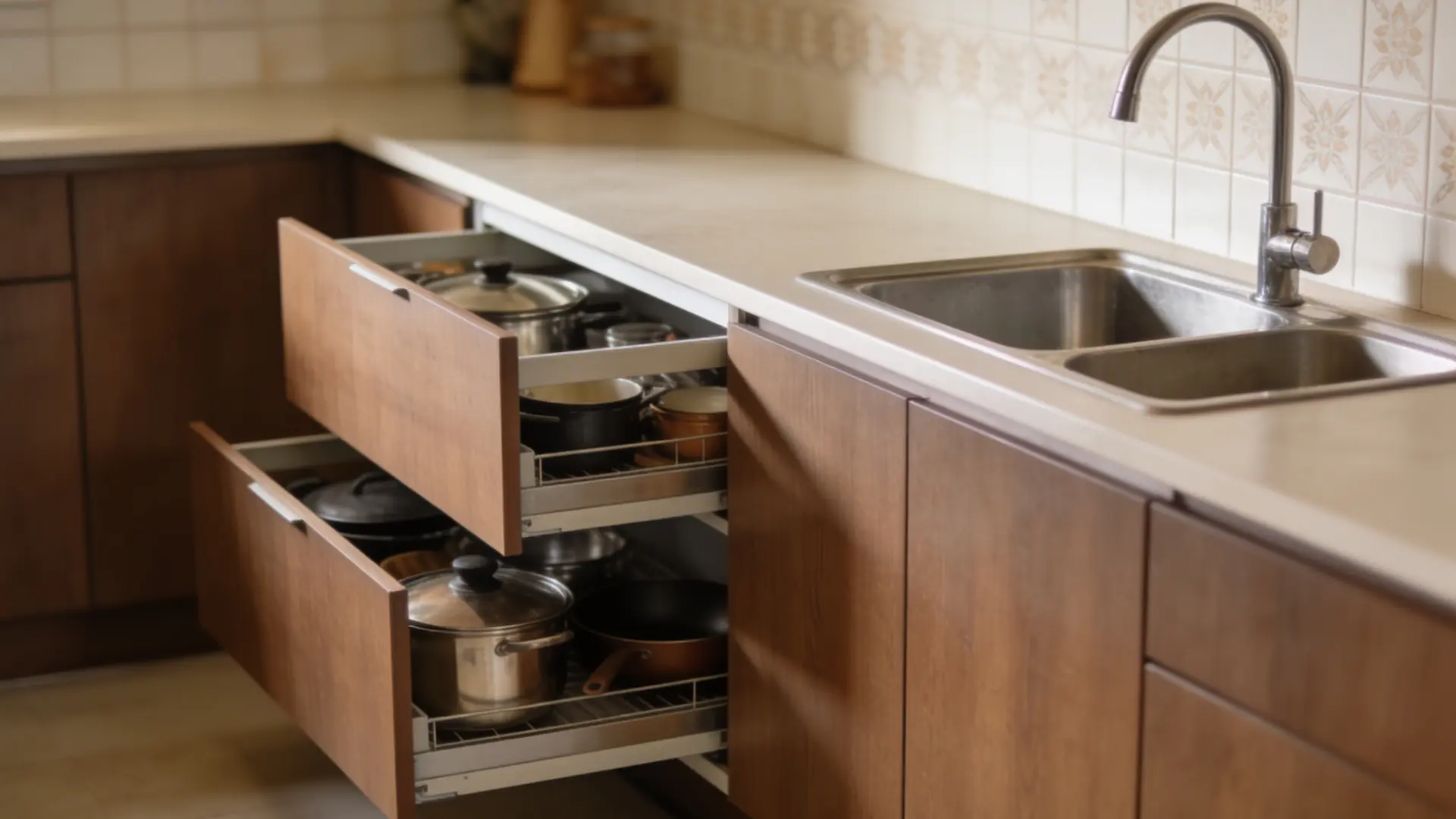
Base kitchen cabinets form the lower part of the kitchen and support counters, sinks, and cooktops.
They differ from regular base cabinets because they are designed for cooking, food prep, and heavy kitchen storage.
I like them most for pots, pans, mixing bowls, and cleaning supplies because everything stays close to the work area. Stock versions are budget-friendly. They also help shape the main kitchen layout.
5. Upper Kitchen Cabinets
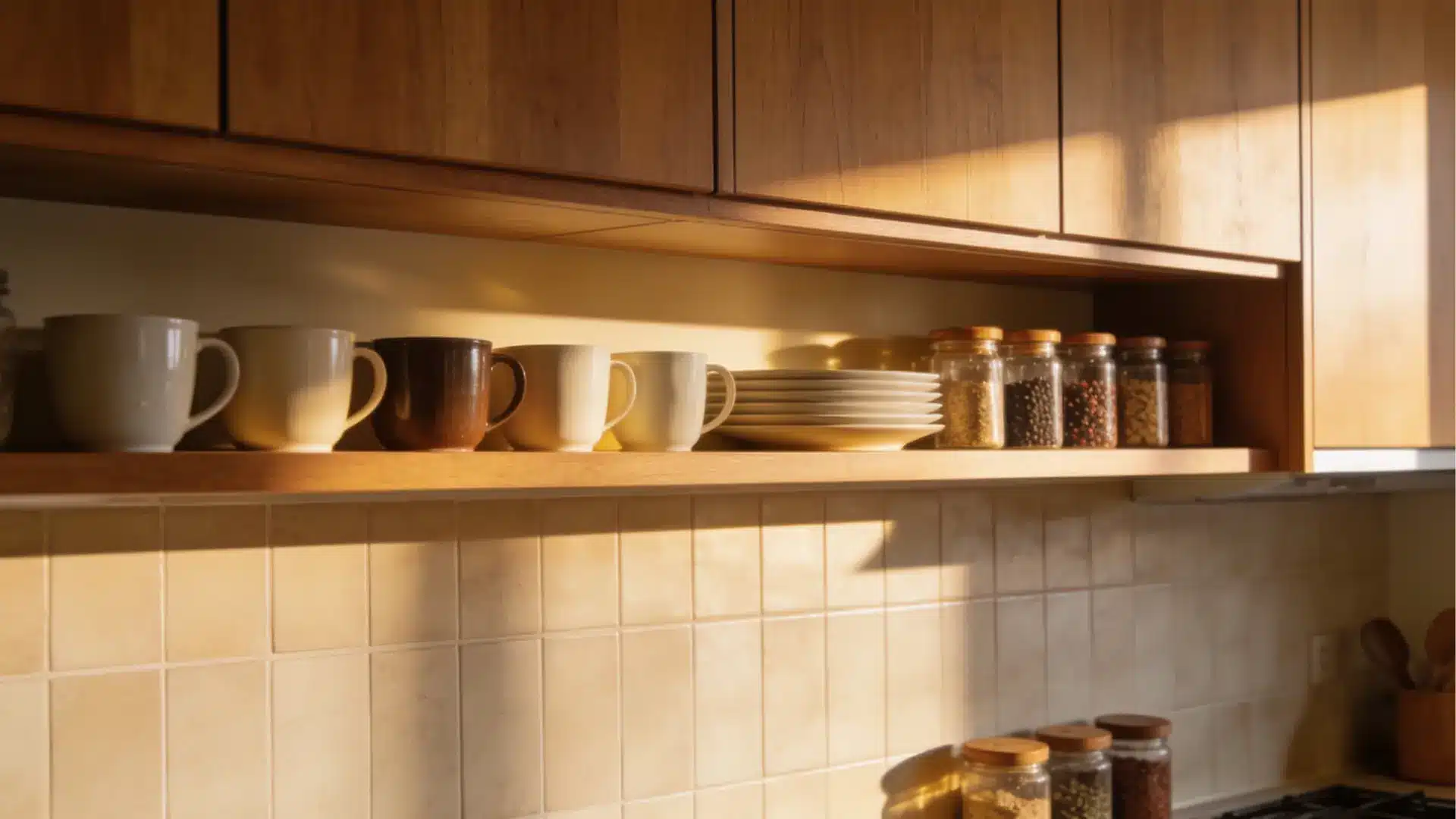
Upper kitchen cabinets are wall-mounted cabinets used above kitchen counters and appliances. They differ from pantry cabinets because they are designed for lighter daily items, not for bulk food storage.
I have found them very useful for plates, cups, spices, and glasses because they keep counters clear.
They can be budget-friendly in standard sizes. They work well in small kitchens because they add storage without using floor space.
6. Pantry Cabinets
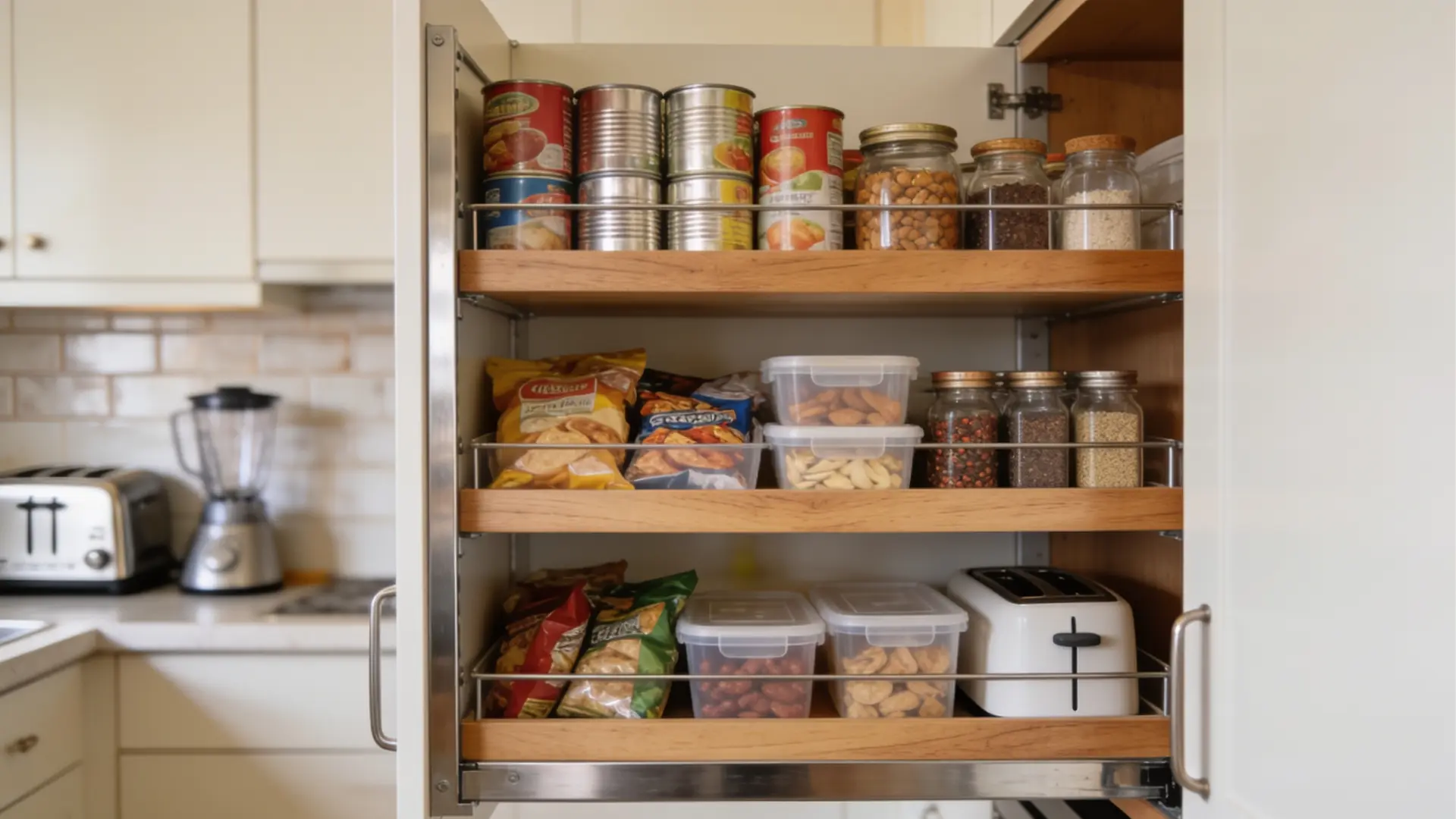
Pantry cabinets are designed to store dry food, snacks, canned goods, spices, and small kitchen appliances.
They differ from upper cabinets in that they offer deeper, taller food storage. They work best in kitchens, utility rooms, or open cabinet walls.
They can be budget-friendly if you choose a simple freestanding or stock pantry cabinet. A good pantry cabinet also helps reduce clutter by keeping food visible and organized.
Cabinet Types by Construction
Cabinet construction affects the price, fit, style choices, and the level of control you have over the final look of your space.
7. Stock Cabinets
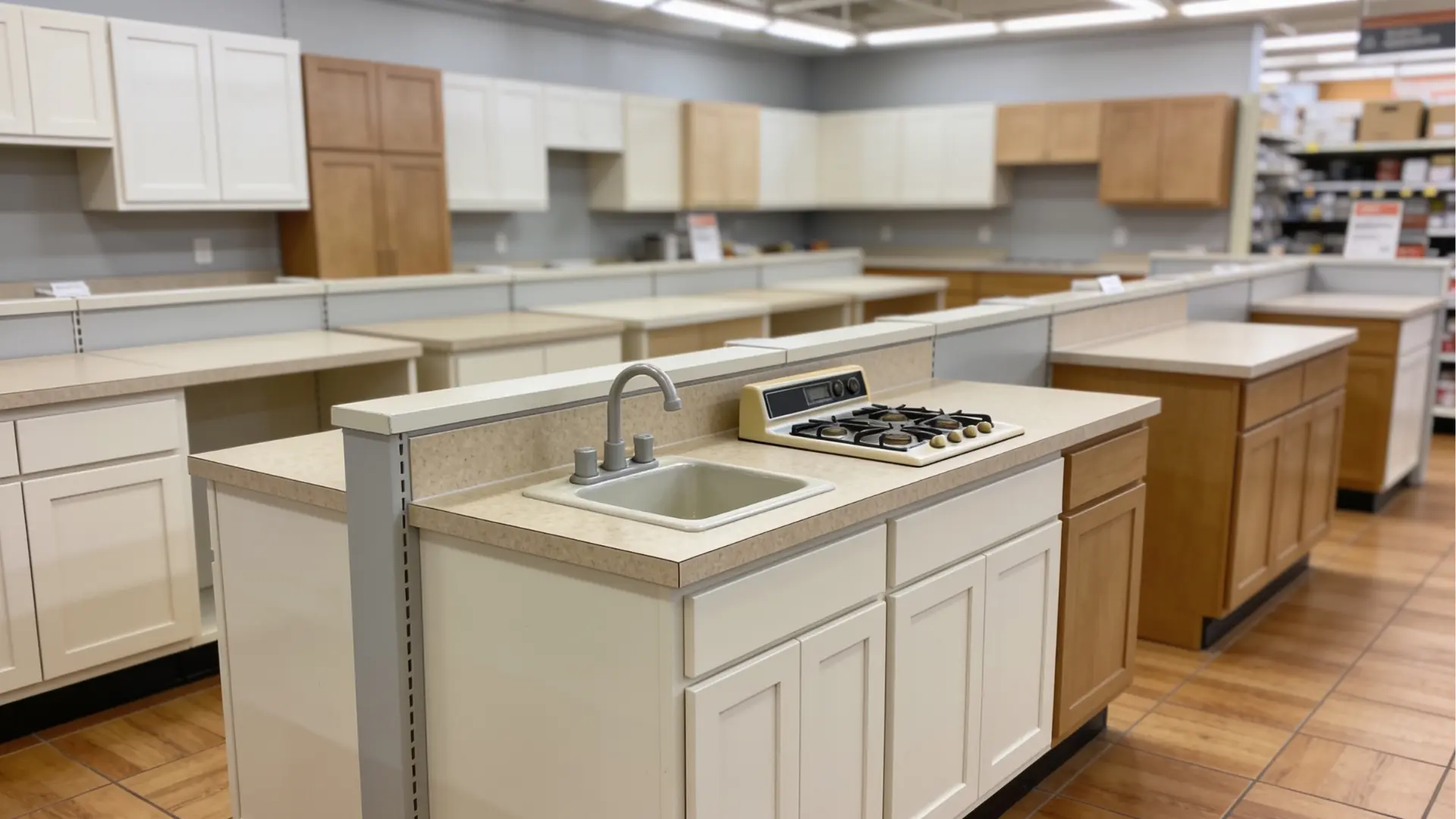
Stock cabinets are ready-made cabinets sold in fixed sizes, colors, and styles. They differ from semi-custom and custom cabinets in that they offer fewer choices but cost less.
I have used stock cabinets for quick room updates because they are easy to buy and install faster.
They are budget-friendly and good for kitchens, bathrooms, laundry rooms, and rentals. Their best feature is quick availability for simple layouts.
8. Semi-Custom Cabinets
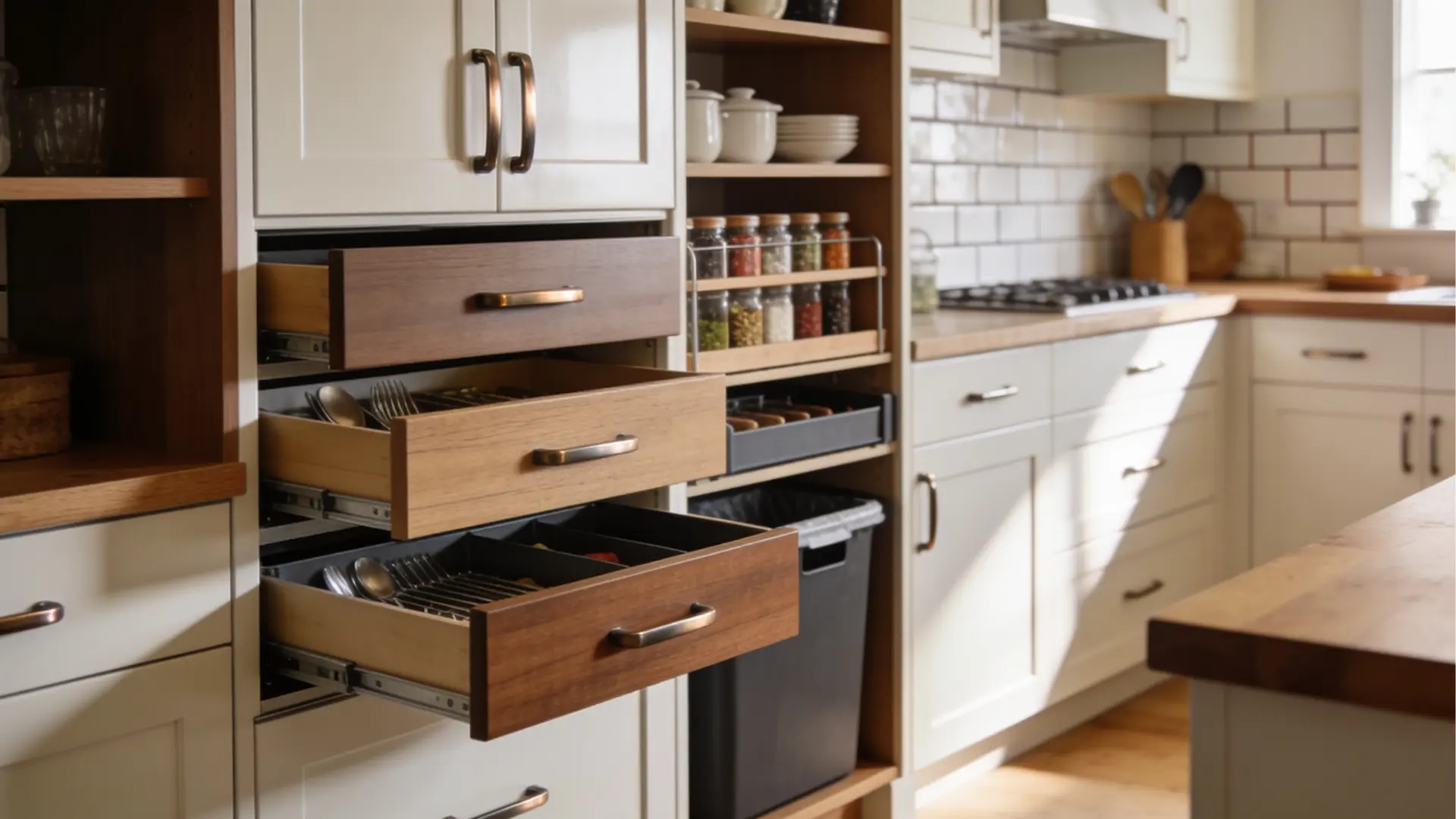
Semi-custom cabinets give more size, color, finish, and storage choices than stock cabinets. They are different because they offer some personal design control without the full price of custom work.
They are good for kitchens, bathrooms, and laundry rooms where standard sizes do not fit perfectly.
They are not the cheapest option, but they can be more budget-friendly than custom cabinets. Their biggest benefits are a better fit and flexibility.
9. Custom Cabinets
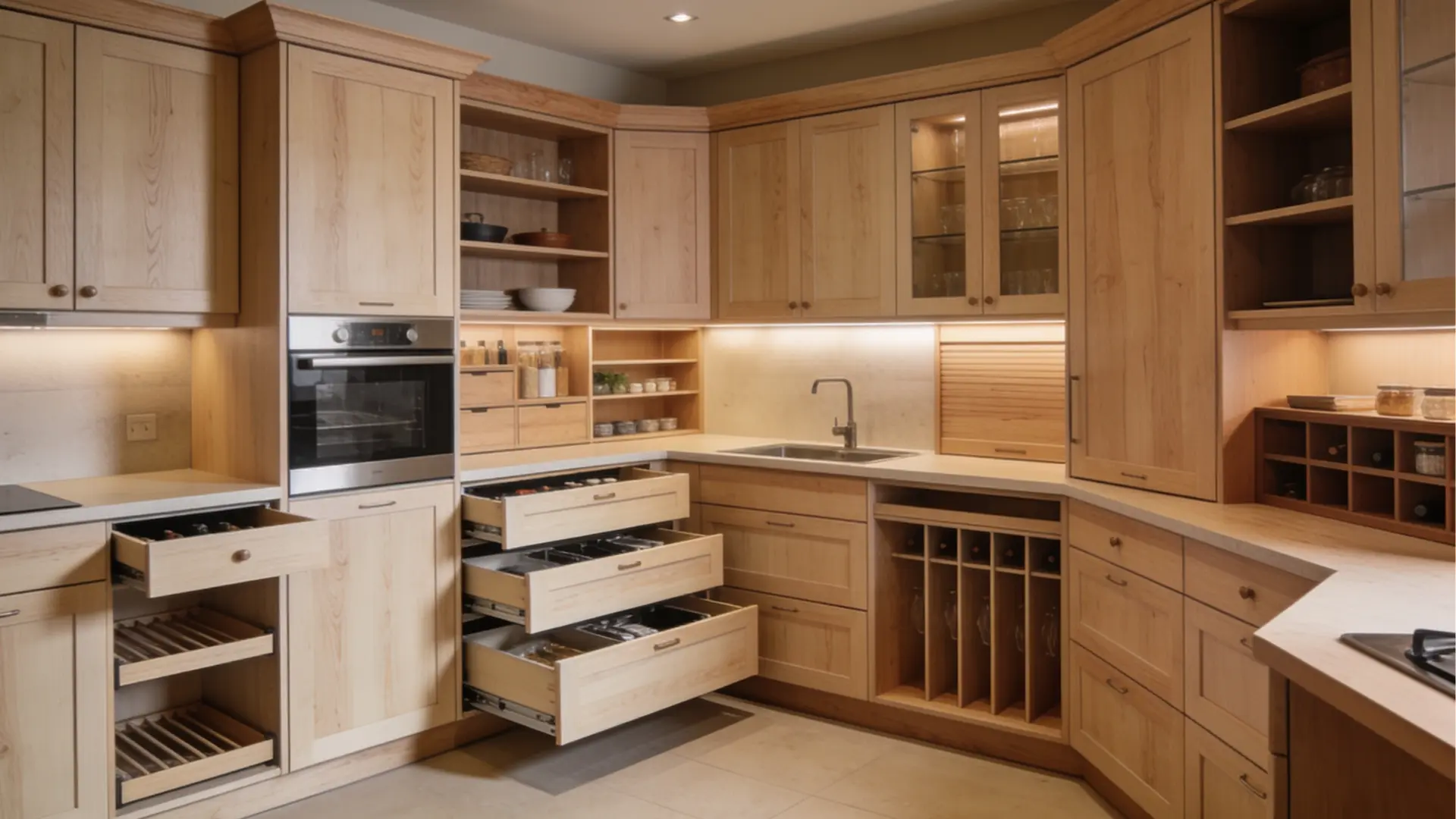
Custom cabinets are built to match exact room measurements, style needs, and storage plans. They are different because every detail can be chosen, from size and material to finish and inside features.
They are best for luxury kitchens, older homes, awkward corners, and special storage needs. They are not usually budget-friendly, but they give the best fit.
Their unique value lies in solving space problems that standard cabinets cannot address.
Cabinet Types by Door Style
Cabinet door style changes the overall look of a room, so it helps to choose a design that matches your home’s style and cleaning needs.
10. Shaker Cabinets
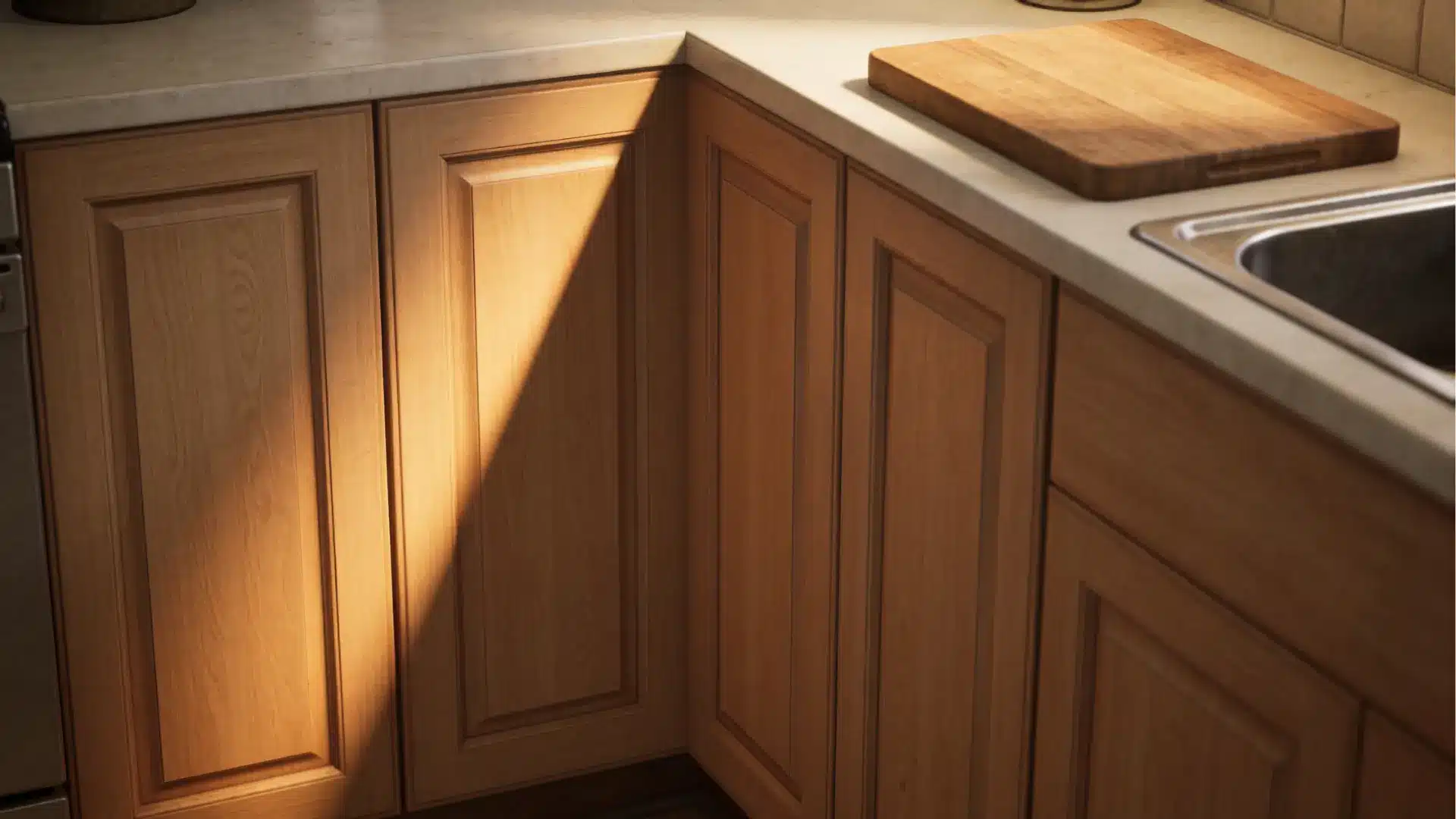
Shaker cabinets have a simple framed door with a recessed center panel. They are different because they look clean but not too plain.
I have seen shaker cabinets work well in both modern and farmhouse kitchens because they are easy to style.
They are often budget-friendly in stock or MDF options. They fit kitchens, bathrooms, and laundry rooms. Their biggest strength is a timeless look that does not feel trendy.
11. Flat-Panel Cabinets
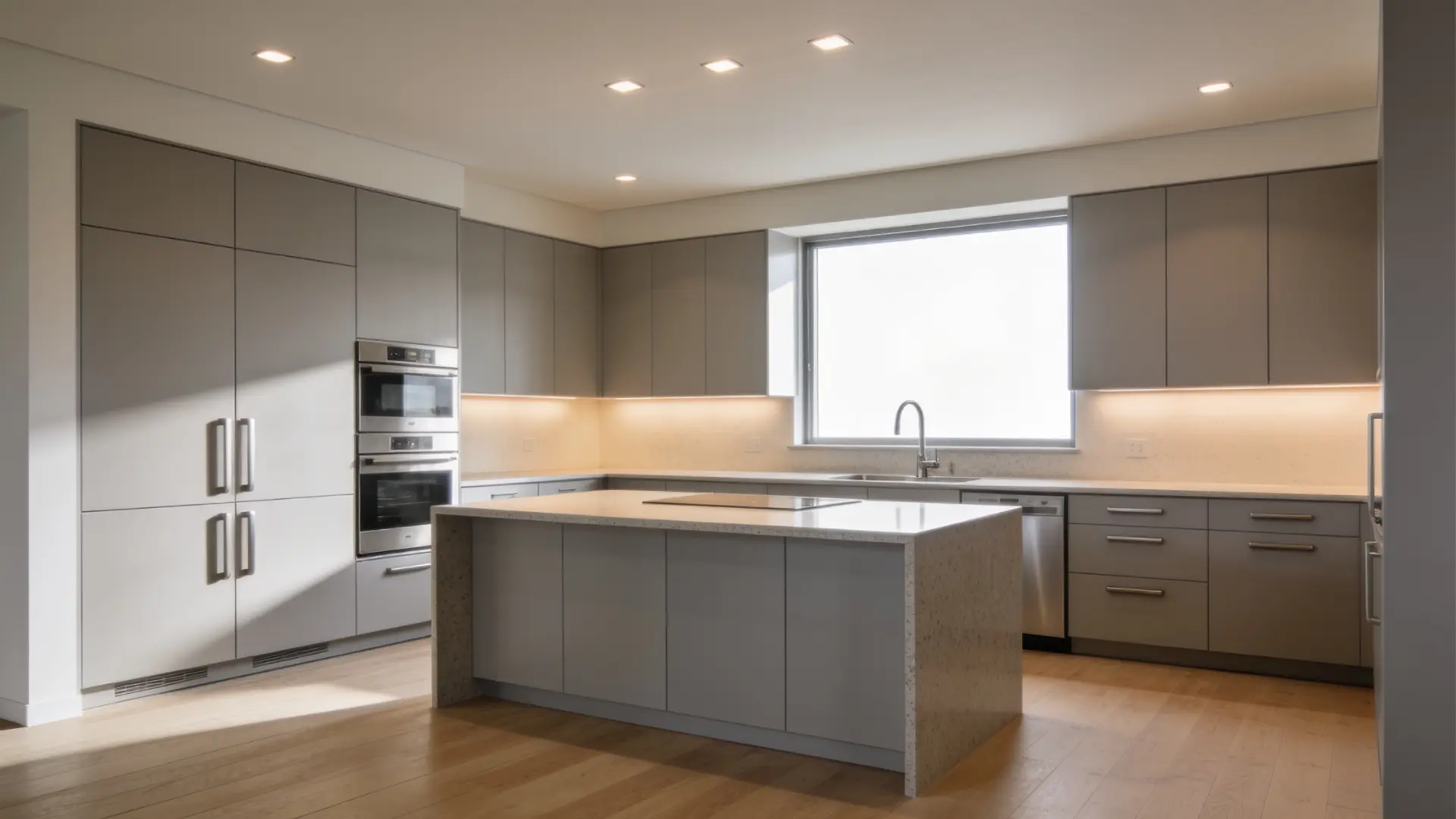
Flat-panel cabinets have smooth doors with no raised frame or extra detail. They differ in that they create a clean, modern look with very simple lines.
They are great for small kitchens, modern homes, apartments, and minimalist spaces. They can be budget-friendly when made from laminate or MDF.
A unique benefit is easy cleaning because there are fewer grooves where dust, grease, or food splashes can collect.
12. Raised-Panel Cabinets
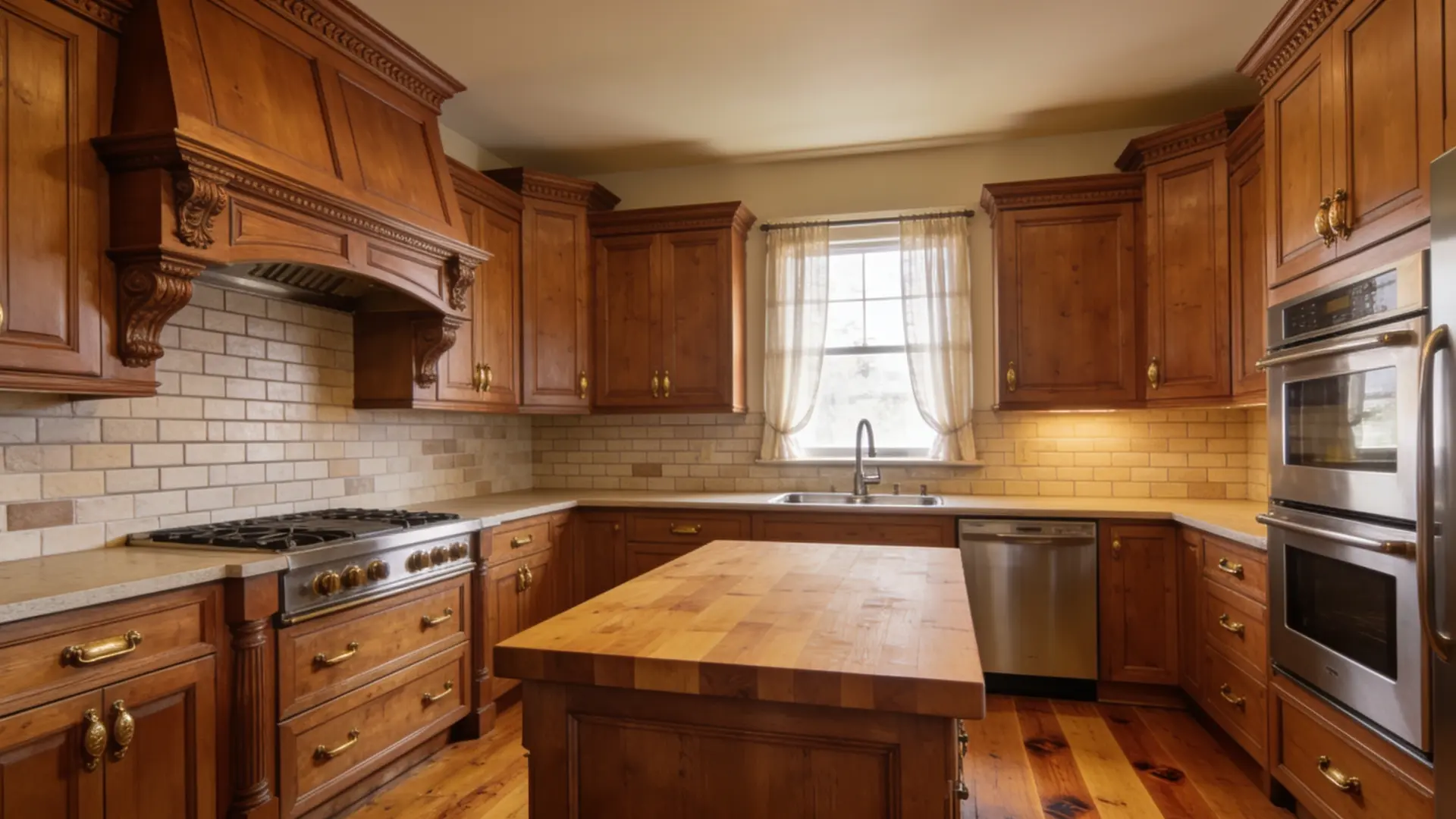
Raised-panel cabinets have a center panel that sits higher than the rest of the door. They differ from shaker and flat-panel cabinets in that they look more traditional and decorative.
They work best in classic kitchens, formal bathrooms, and homes with warm wood finishes.
They are usually mid-range or higher in cost, but basic versions can fit a careful budget. Their extra detail adds depth and a finished look.
Cabinet Types by Material
The cabinet material affects strength, cost, cleaning, moisture resistance, and how the cabinets look after years of daily use.
13. Solid Wood Cabinets
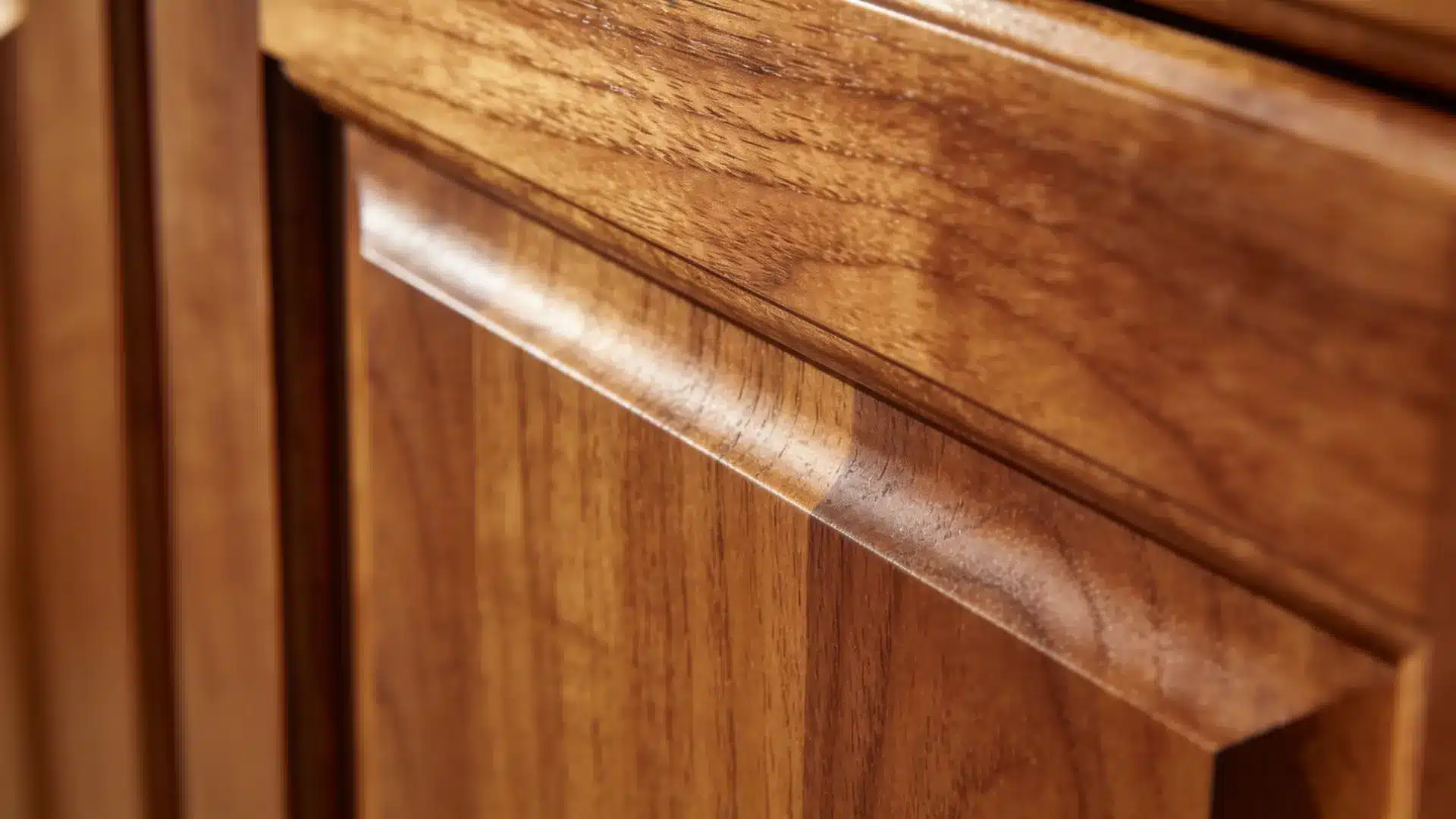
Solid wood cabinets are made from natural woods like oak, maple, cherry, or walnut. They are different because they show real wood grain and can last for many years with care.
They work best in kitchens, bathrooms, offices, and high-use rooms where durability matters.
They are not the most budget-friendly choice, but they offer long-term value. A unique benefit is that they can often be refinished later.
14. Plywood Cabinets
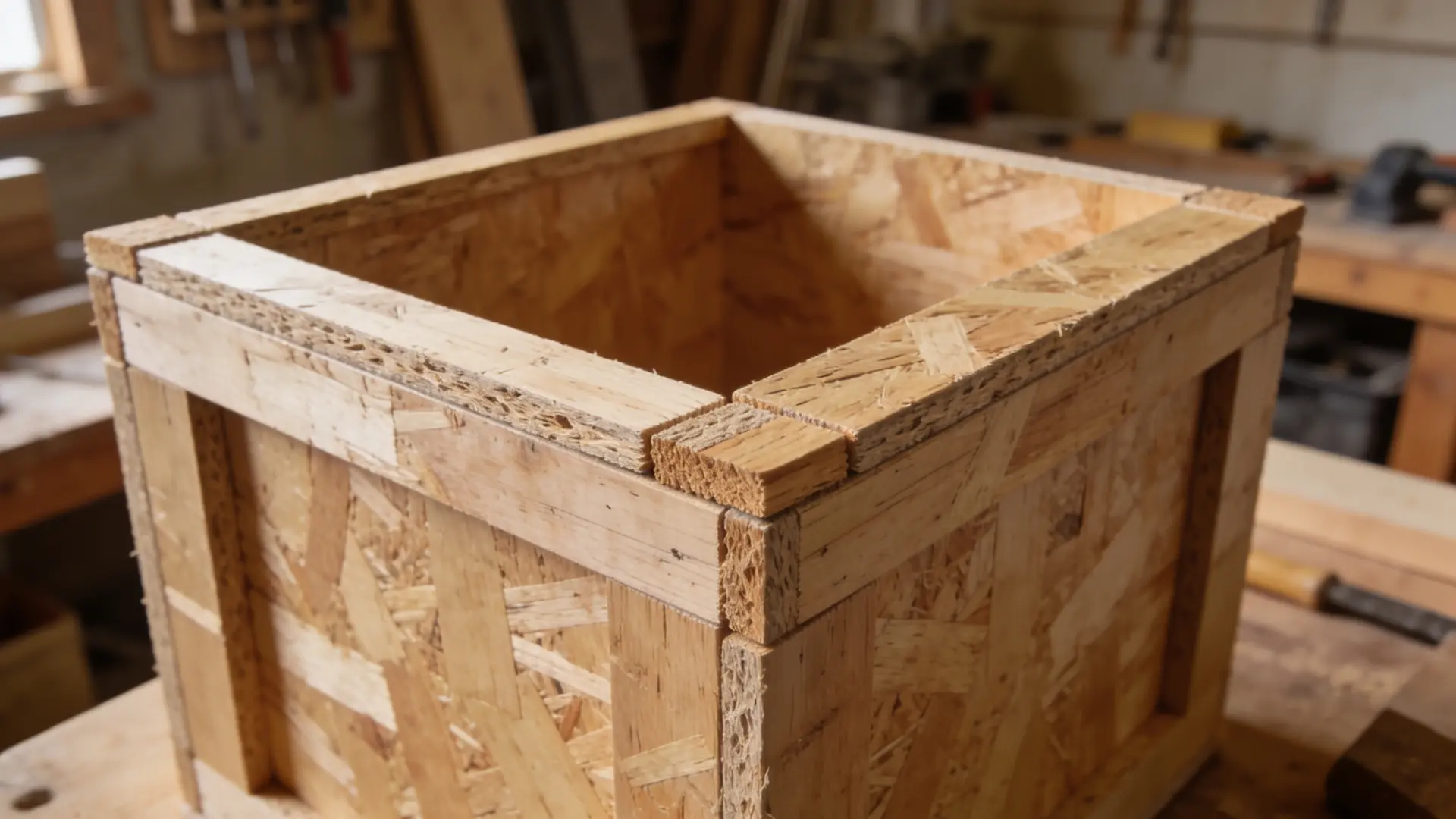
Plywood cabinets are made from thin layers of wood pressed and glued together. They differ from MDF in that they are stronger, hold screws better, and handle moisture more reliably.
They are a smart choice for kitchens, bathrooms, laundry rooms, and garages.
They cost more than MDF or particleboard, but they can still be budget-friendly compared with solid wood. Their main strength is a stable cabinet box that lasts a long time.
15. MDF Cabinets
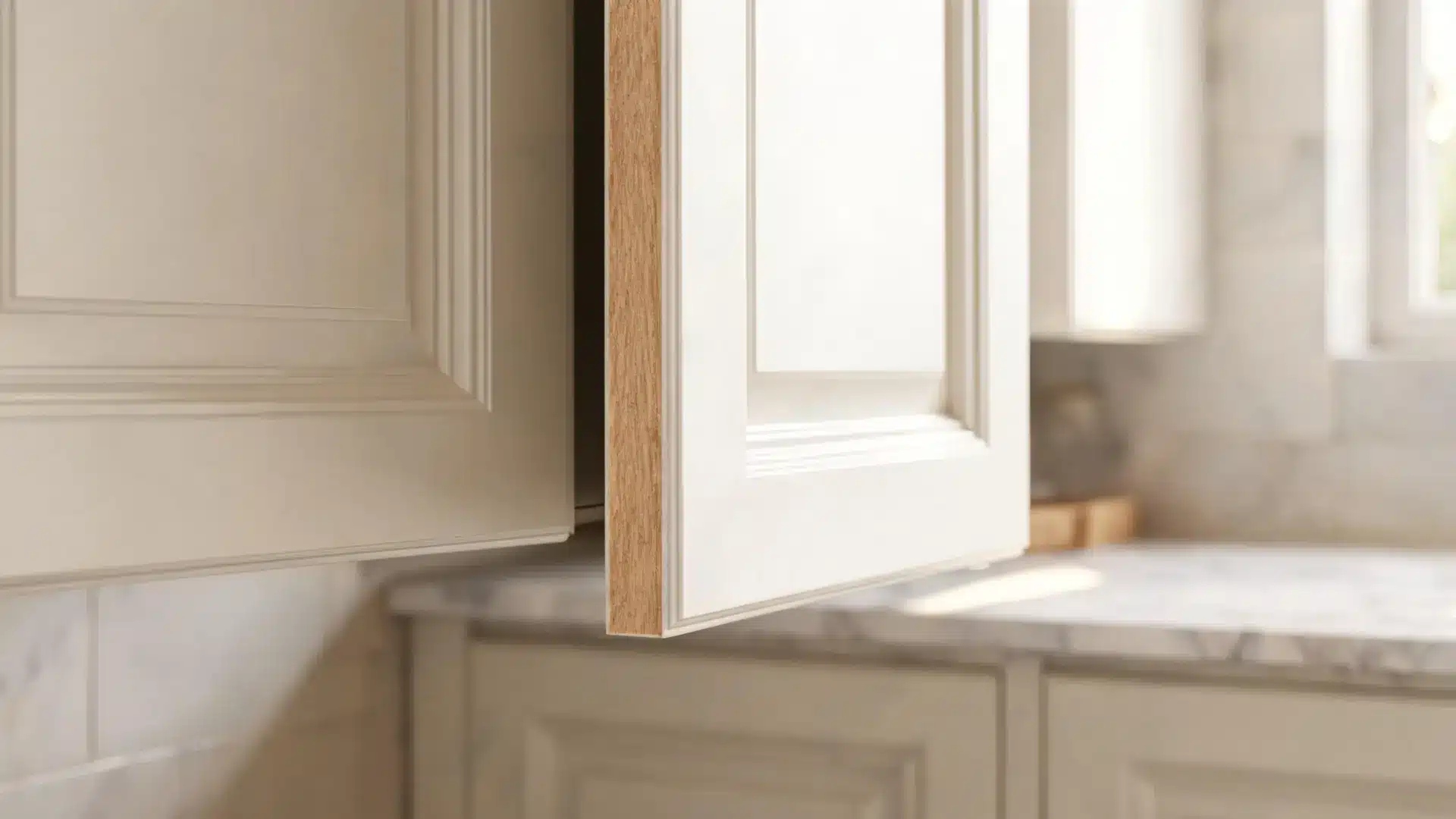
MDF cabinets are made from pressed wood fibers, creating a smooth, even surface. They differ from solid wood in that they do not show grain and are easier to paint.
I like MDF for painted shaker or modern cabinet doors because the finish looks clean.
They are budget-friendly and work well in kitchens, bedrooms, and dry bathrooms. They should be protected from heavy moisture to avoid swelling.
Framed vs Frameless Cabinets
Framed and frameless cabinets both work well, but they look and function a little differently. The right choice depends on your kitchen style, storage needs, and budget.
| Cabinet Frame Type | What It Means | Style | Storage Access | Durability | Cost |
|---|---|---|---|---|---|
| Framed Cabinets | Framed cabinets have a face frame around the front of the cabinet box. The doors attach to this frame. | More traditional and common in many American homes | Slightly less interior access because the frame takes up some opening space | Strong and sturdy because the front frame adds support | Often more affordable, but the cost depends on the material and finish |
| Frameless Cabinets | Frameless cabinets do not have a front face frame. The doors attach directly to the cabinet box. | Cleaner, smoother, and more modern | More open interior space and easier access to items inside | Durable when made with strong cabinet boxes and quality hardware | Often costs more due to thicker boxes and precise construction |
| Better Choice | Choose based on your layout, style, and storage goals. | Framed is better for classic homes. Frameless is better for modern homes. | Frameless gives better access. Framed still works well for everyday storage. | Both can last long if built well. | Framed may be better for tighter budgets. Frameless may be worth it for a sleek look. |
Both cabinet types can be a good choice. Pick framed cabinets for a classic, sturdy feel, and choose frameless cabinets if you want easier access and a cleaner, modern design.
Inset, Overlay, and Full Overlay Cabinets
Inset cabinets have doors that sit inside the cabinet frame, giving the front a smooth, flush, and high-end look.
Partial overlay cabinets have doors that cover only part of the frame, so some of the cabinet face still shows.
They are often more budget-friendly and common in traditional kitchens.
Full-overlay cabinets cover most of the frame, creating a cleaner, more modern front view.
For small kitchens, full overlay and frameless styles often work best because they reduce visual clutter, hide more of the cabinet frame, and make the space feel neater.
Open Shelving vs Closed Cabinets
Open shelving and closed cabinets both work well, but they serve different needs in a home.
| Option | Best For | Main Benefit | What to Keep in Mind |
|---|---|---|---|
| Open Shelving | Dishes, mugs, cookbooks, and decor | Keeps items visible and easy to reach | Needs more cleaning because dust and grease can build up |
| Closed Cabinets | Food, cookware, cleaning items, and daily storage | Hides clutter and protects items from dust, grease, and moisture | Items are less visible, so good organization helps |
| Mix of Both | Everyday kitchens and family homes | Gives a balance of style, storage, and easy access | Use closed cabinets for most storage and open shelves for a few neat items |
For most homes, closed cabinets with a few open shelves give the best mix of function and style.
How to Pick the Right Cabinet Type
Picking the right cabinet type starts with knowing the room and how the storage will be used.
- Start with the room: Kitchens, bathrooms, garages, and offices all need different cabinet layouts.
- Match daily use: Keep everyday items in easy-to-reach cabinets, while seasonal items can go higher or deeper.
- Set a budget: Stock and RTA cabinets are cheaper, semi-custom gives more choices, and custom cabinets cost more.
- Think about upkeep: Smooth doors clean easily, while detailed doors need more care.
- Choose the right material: Humid rooms need moisture-friendly materials.
- Measure first: Accurate measurements help avoid gaps, poor fits, and ordering mistakes.
A good cabinet should fit the space, budget, and daily needs.
Common Cabinet Buying Mistakes to Avoid
Before buying cabinets, avoid mistakes that can affect storage, comfort, and long-term value.
- Choosing Style Before Function: Plan the layout and storage first. Color and door design should come after practical needs.
- Ignoring Cabinet Measurements: Incorrect measurements can lead to fitting problems, delays, and additional installation costs.
- Picking the Cheapest Material Only: Low-cost cabinets may wear out faster in busy kitchens, bathrooms, or damp areas.
- Forgetting Hardware and Accessories: Handles, hinges, drawer slides, pull-outs, and organizers make daily use easier.
- Not Planning for Future Storage: Families often need more cabinet space over time.
Smart planning helps cabinets work better for years.
Best Cabinet Types Compared by Use and Cost
Different cabinet types work better for different needs. Some are best for saving money, while others give more design freedom or storage space.
This table compares common cabinet types by use, cost, and main benefit so buyers can quickly choose what fits their room, budget, and storage goals.
| Cabinet Type | Best For | Cost Level | Main Benefit |
|---|---|---|---|
| Stock Cabinets | Budget projects | Low | Fast and affordable |
| Semi-Custom Cabinets | Flexible layouts | Medium | More sizes and finishes |
| Custom Cabinets | Unique spaces | High | Exact fit |
| Base Cabinets | Kitchens and bathrooms | Varies | Supports countertops |
| Wall Cabinets | Extra storage | Varies | Saves floor space |
| Tall Cabinets | Pantry and utility storage | Medium to high | Uses vertical space |
| RTA Cabinets | DIY buyers | Low to medium | Lower upfront cost |
The best cabinet choice depends on how much space you have, how much storage you need, and how much you want to spend.
Final Thoughts
I learned that choosing cabinets is easier when you stop looking only at color and start thinking about how the space will be used every day.
The right cabinet type depends on the room, budget, storage needs, material, and overall home style.
A kitchen may need strong base cabinets, wall cabinets, and pantry storage, while a bathroom, garage, laundry room, or office may need a different setup.
It also helps to compare stock, semi-custom, custom, and RTA cabinets before making a final choice.
Before buying, measure your space, check the door style, consider cleaning, and choose a material that suits the room. This can help you avoid wasted space, poor fit, and extra costs later.
What type of cabinets would best fit your space? Share your thoughts in the comments if you are planning a cabinet upgrade.
Frequently Asked Questions
What Cabinet Material Lasts the Longest?
Solid wood and plywood cabinets usually last longer than particleboard, especially in busy or moisture-prone rooms.
What Is the Difference Between Framed and Frameless Cabinets?
Framed cabinets have a front frame, while frameless cabinets offer a cleaner look and more open interior access.
Which Cabinet Style is Most Popular in the USA?
Shaker cabinets are among the most popular choices because they look simple, clean, and easy to match with other styles.
What Cabinets are Best for Small Spaces?
Tall cabinets, wall cabinets, corner pull-outs, and slim pantry cabinets work well because they add storage without using much floor space.

With a Master in Architectural Studies from University of Pennysylvania, Marwa Haydar has pioneered living spaces since 2005. Her expertise, initially honed in a prestigious architectural firm, is evident in her approach to creating environments. Marwa became part of our team in 2019 and has since been a driving force in our home improvement section, known for her practical yet stylish solutions. She’s been spearheading our design workshops since then, infusing her passion for teaching into her work. In her leisure time, Marwa enjoys exploring historic architecture and is an enthusiastic pottery hobbyist, further enriching her understanding of form and texture.