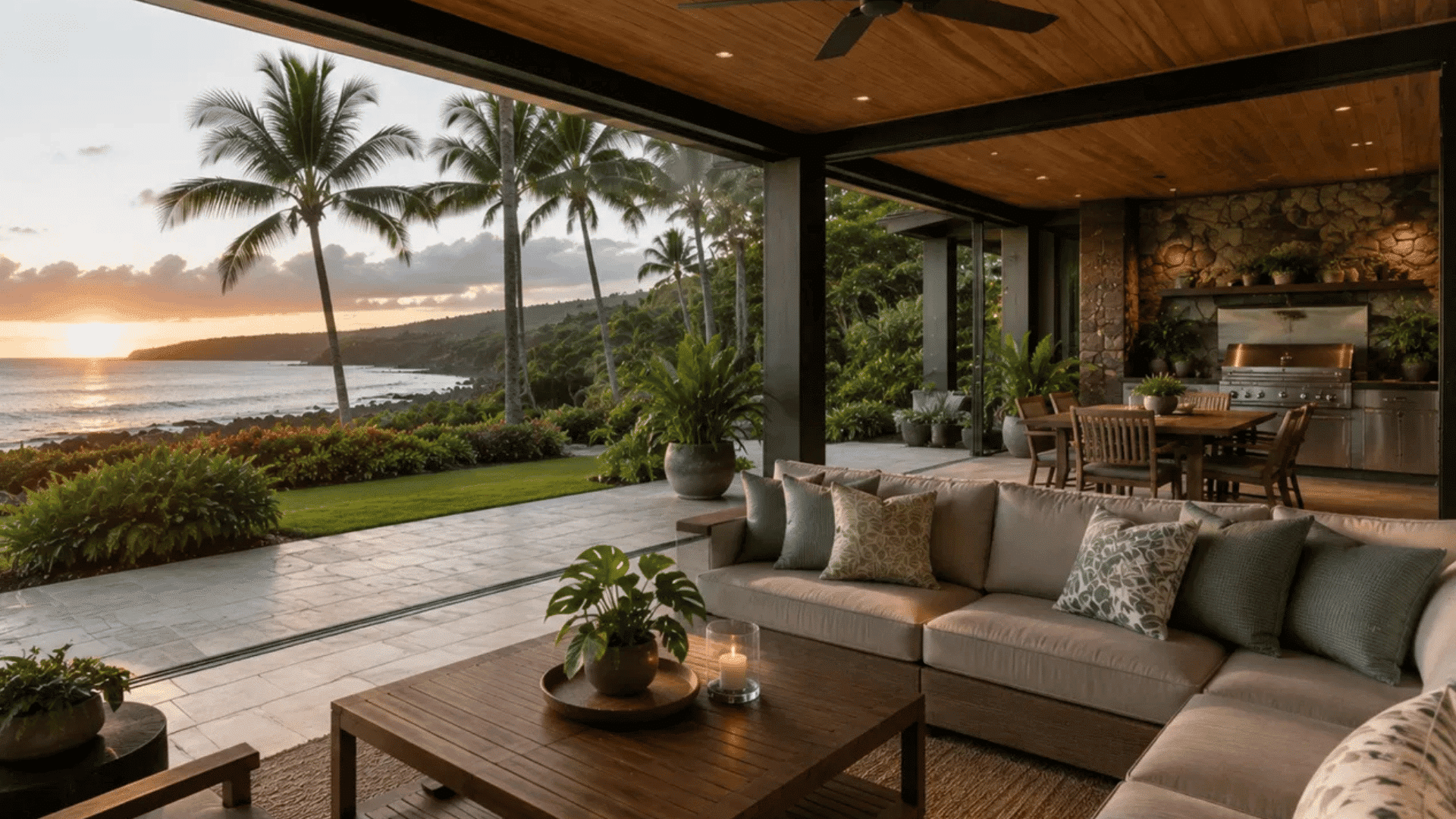

Ever walked past a home listing that mentioned a “lanai patio” and wondered if it was just a fancy name for a patio?
I used to think the same until I found that a lanai is actually a covered outdoor room, often screened or enclosed with glass, that extends a home’s living space while offering protection from insects and the elements.
Rooted in Hawaiian design, it creates a comfortable transition between indoor and outdoor living.
The biggest difference is simple: a lanai is typically enclosed, while a standard patio is usually open to the outdoors.
In this guide, I’ll explain the key differences, typical costs, property value benefits, and how to decide whether a lanai patio is the right addition for your home.
What is a Lanai Patio?
When I explain outdoor living spaces to homeowners, I often describe a lanai patio as the middle ground between a patio and an extra room.
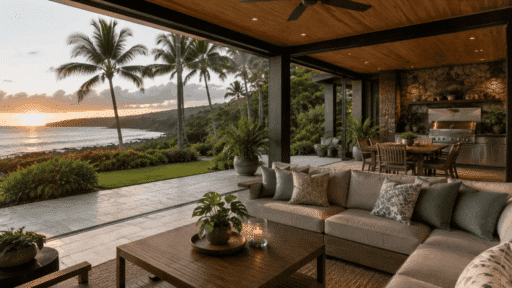
It is a covered outdoor area attached to a home that gives you the feeling of being outside while offering more comfort and protection than a traditional patio.
Depending on the design, it may include screens, glass panels, or partial enclosures that help create a more usable space.
I find that many homeowners use their lanai as an outdoor dining area, lounge, or quiet retreat because it extends everyday living beyond the home’s interior.
At its core, a lanai is defined by a handful of practical design elements. The table below breaks down those features and their advantages.
| Feature | Benefit |
|---|---|
| Covered roof | Provides shade and shelter during changing weather |
| Screened or enclosed sides | Helps keep insects and outdoor debris away |
| Attached to the home | Creates a natural extension of indoor living |
| Ground-level access | Makes movement between spaces simple and convenient |
| Hard flooring surface | Offers durability and easier long-term maintenance |
| Multipurpose layout | Supports dining, relaxing, and entertaining guests |
| Enhanced privacy | Creates a more comfortable and secluded setting |
| Weather protection | Allows the space to be used more often |
Lanai vs. Patio: The Core Difference
Many homeowners use the terms lanai and patio interchangeably, but there is one important distinction that sets them apart.
A traditional patio is usually an open outdoor area with minimal protection from weather, insects, or debris.
A lanai, by contrast, is designed to feel more like an outdoor room. It typically includes a roof and often features screens, glass panels, or partial enclosures that create a more comfortable environment.
In my experience, patios work well for occasional outdoor activities, while lanais are often used as everyday living spaces because they offer greater comfort, privacy, and protection throughout the year.
The table below highlights the key differences between a lanai and a traditional patio.
| Feature | Lanai | Patio |
|---|---|---|
| Enclosure | Usually screened, glass-enclosed, or partially enclosed | Typically open to the outdoors |
| Roof Coverage | Almost always covered | May be covered or uncovered |
| Weather Protection | Provides greater protection from sun and rain | Limited protection unless covered |
| Insect Control | Often screened to keep insects out | No built-in insect protection |
| Connection to Home | Functions as an extension of the indoor living space | Primarily an outdoor area |
| Comfort Level | Designed for regular, year-round use | Best suited for fair-weather use |
| Privacy | Offers more privacy through enclosure | Generally more exposed |
| Common Uses | Dining, lounging, entertaining, relaxing | Grilling, seating, outdoor gatherings |
Lanai vs. Porch, Veranda, and Sunroom
It’s easy to confuse a lanai with other outdoor living spaces because they often share similar features. However, each serves a different purpose and offers a distinct experience.
Understanding these differences can help you choose the right addition for your home and avoid mixing up terms that are frequently used interchangeably.
Lanai vs. Porch
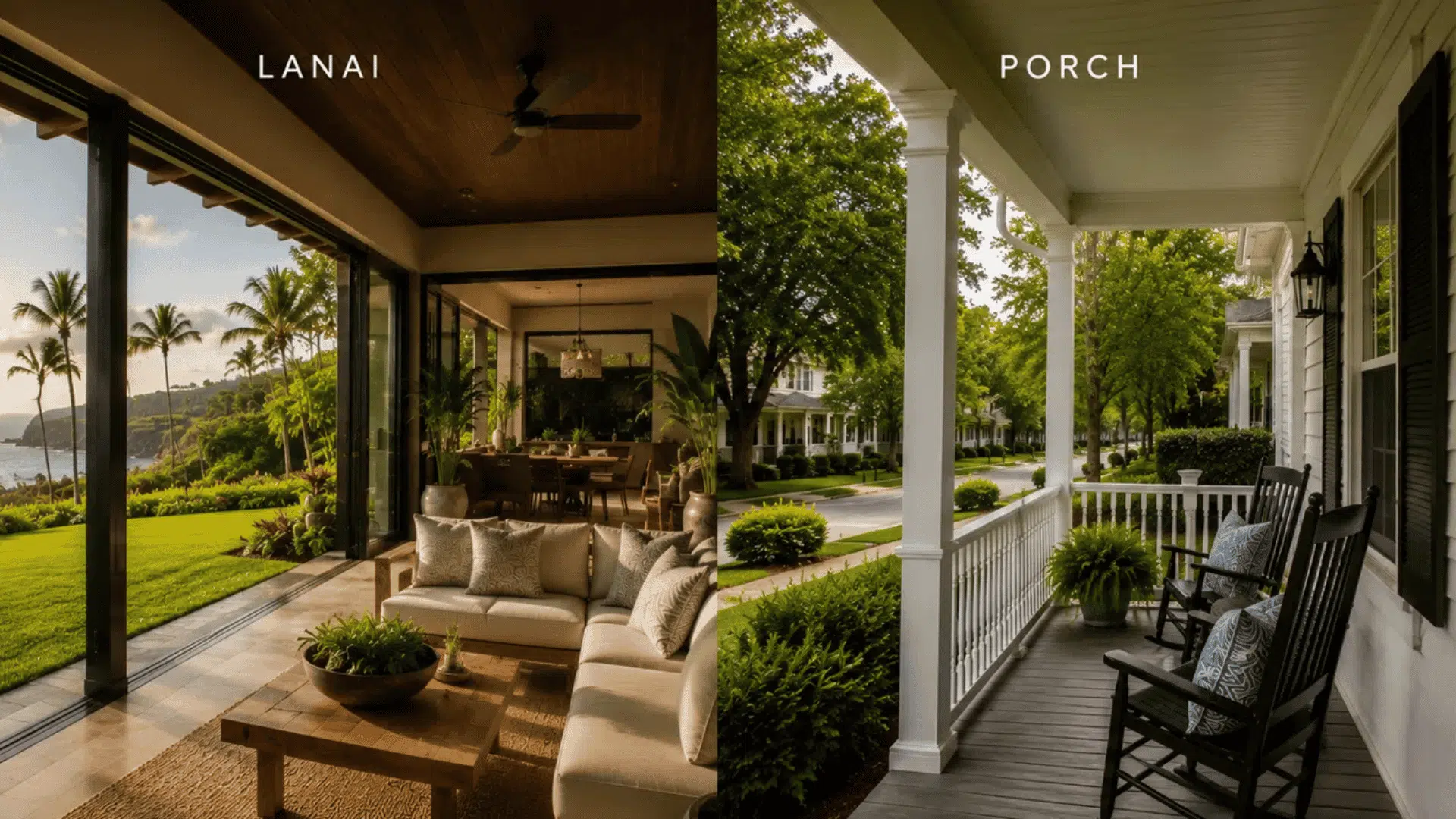
In my experience, the easiest way to distinguish a lanai from a porch is by looking at how the space is used.
A porch is typically located at the front or rear entrance of a home and serves as a transitional area between indoors and outdoors.
While it may be covered, it is usually open and designed for access rather than extended living.
A lanai, on the other hand, functions more like an outdoor room. It is often larger, may be screened or enclosed, and is intended for relaxing, dining, or entertaining.
Lanai vs. Veranda
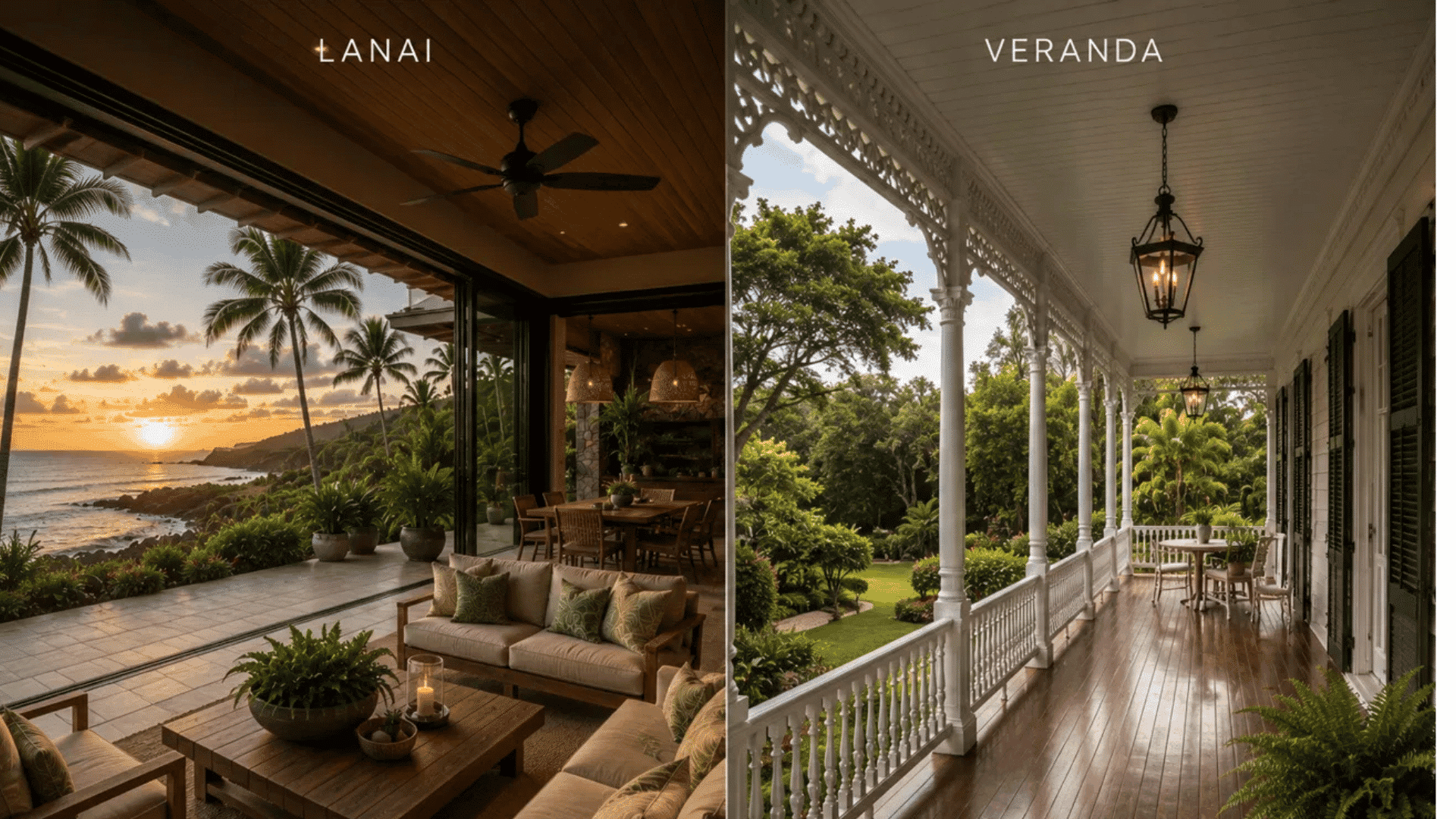
A veranda and a lanai both support outdoor living, but their layouts differ.
A veranda usually runs along the front or sides of a home and is characterized by its long, covered design.
It often wraps around part of the structure and remains open to the surrounding landscape.
A lanai is typically attached to one section of the home and may include screens or glass panels for added protection.
I often think of a veranda as a covered walkway with seating, while a lanai feels more like a dedicated outdoor living room.
Lanai vs. Sunroom
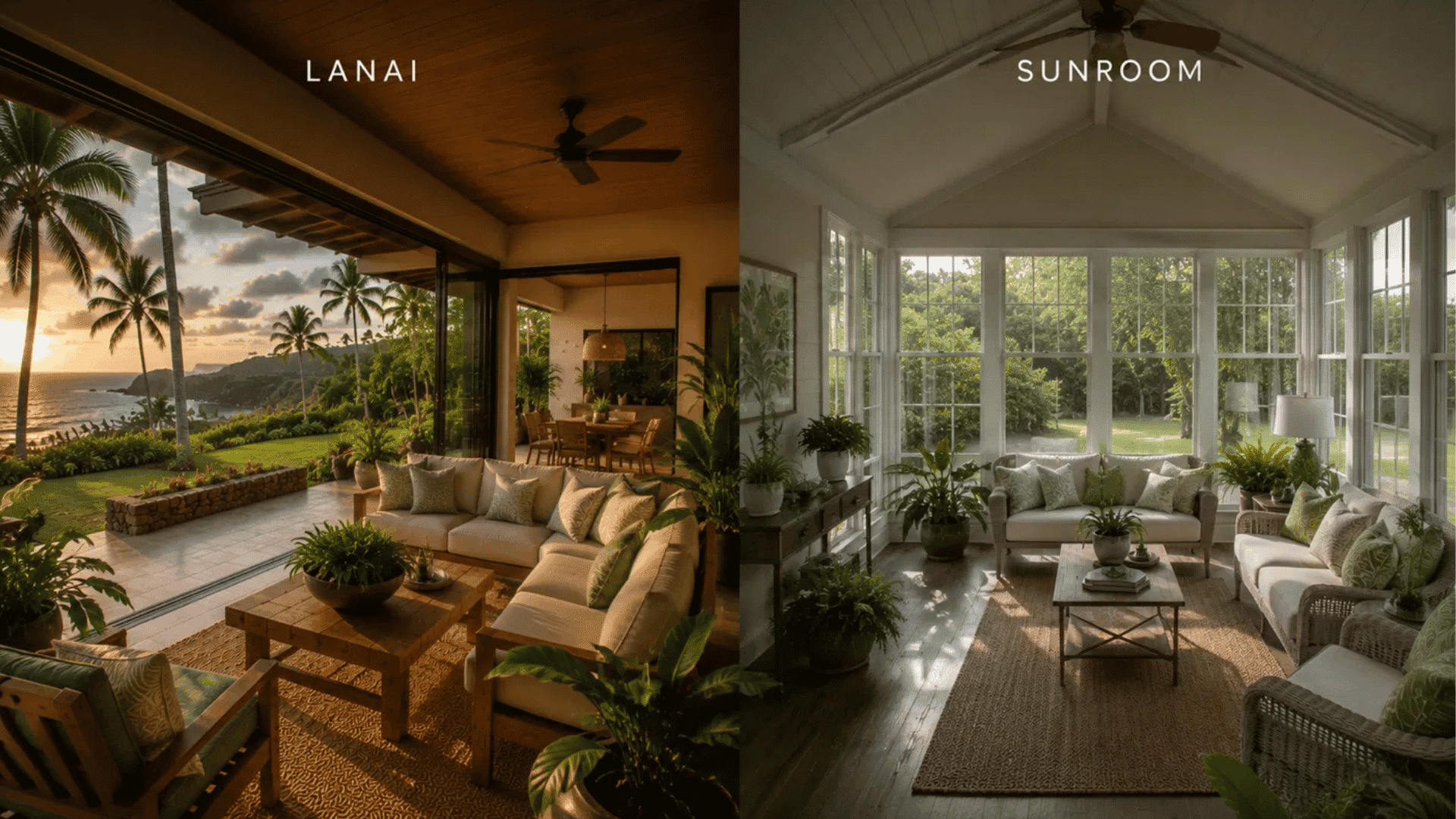
The biggest difference between a lanai and a sunroom is the level of enclosure.
A sunroom is a fully enclosed addition with walls, large windows, and insulation that make it feel like part of the home’s interior.
It is designed for year-round use and provides complete protection from the weather.
A lanai maintains a stronger connection to the outdoors. Even when screened or partially enclosed, it allows fresh air and outdoor views to remain part of the experience.
For homeowners who enjoy open-air living, a lanai often feels less formal and more connected to nature.
The comparison below highlights how these spaces differ across design, functionality, and typical use cases.
| Feature | Patio | Porch | Lanai | Veranda | Sunroom |
| Coverage | Usually uncovered or partially covered | Typically covered | Covered | Covered | Fully covered |
| Enclosure | Open | Mostly open | Often screened or partially enclosed | Open | Fully enclosed with walls and windows |
| Location | Ground-level outdoor area | Near entry points | Attached living area | Along the front, sides, or wraparound | Attached room addition |
| Connection to Outdoors | High | High | Moderate to high | High | Moderate |
| Weather Protection | Low to moderate | Moderate | Moderate to high | Moderate | High |
| Insect Protection | None | None | Often included through screens | None | Complete |
| Climate Fit | Mild to warm climates | Most climates | Warm and humid climates | Mild to warm climates | Most climates |
| Typical Use | Outdoor dining and gatherings | Entry seating and relaxation | Everyday outdoor living | Leisure and outdoor seating | Year-round living space |
| Typical Cost | Lowest | Low to moderate | Moderate to high | Moderate | Highest |
How Much Does a Lanai Patio Cost in 2026?
One of the first questions homeowners ask me is whether a lanai is a small upgrade or a major investment.
The answer depends on how enclosed and customized you want the space to be.
A simple screened lanai is significantly more affordable than a glass-enclosed outdoor room with upgraded finishes and utilities.
Based on current 2026 industry estimates, most homeowners spend anywhere from a few thousand dollars for a basic enclosure to well over $30,000 for a fully customized lanai.
The table below provides a realistic snapshot of what homeowners can expect to spend in 2026.
| Lanai Type | Average 2026 Cost Range |
|---|---|
| Screening an existing covered patio | $2,000–$5,000 |
| Basic screened lanai | $3,000–$12,000 |
| New lanai construction | $10,000–$35,000+ |
| Large custom screened lanai | $20,000–$70,000+ |
| Glass-enclosed lanai | $30,000–$120,000+ |
What Affects the Cost?
In my experience, these four factors have the biggest impact on a lanai budget:
- Size: More square footage means higher material and labor costs.
- Enclosure Type: Screens are the most affordable option, while glass panels cost considerably more.
- Roof Design: Custom roofs and insulated panels increase project costs.
- Features & Finishes: Lighting, ceiling fans, outdoor kitchens, and premium flooring can quickly push the budget higher.
For homeowners in warm climates, a lanai often delivers more usable living space without the cost of a full room addition, which is one reason it remains a popular investment today.
Best Lanai Services in 2026
If you’re planning to build a new lanai or upgrade an existing outdoor living space, choosing the right contractor can make a significant difference in the final result.
Here are the top-rated lanai service companies specializing in screen enclosures, custom builds, and hurricane-resistant installations.
| Website | Services Offered | Location |
|---|---|---|
| Westside Lanai | Lanais, Windows, Gutters, Home Improvement | Nationwide |
| Affordable Lanai | Lanai screen enclosures, pool enclosures, paver patios, and carports | Florida (Hillsborough County, Tampa) |
| Lanai Guy | Full-service screen company: lanais, re-screens, screen rooms | Brandon, Riverview, FL |
| ScreenCoosa Sarasota | Lanai enclosure services and outdoor living upgrades | Sarasota, FL |
| Your Screen Room | Custom high-quality lanai enclosures, aluminum installations | Greater Orlando |
Before selecting a contractor, compare available services, enclosure options, project timelines, and customer reviews.
Taking the time to evaluate multiple providers can help you find a lanai solution that matches your home’s layout, budget, and outdoor living goals.
Is a Lanai Patio Right for You? Signs the Answer is Yes
A lanai patio is not just about adding square footage. It is about creating a space that fits the way you relax, host, and move between indoors and outdoors.
Here are signs to check before deciding.
- Want More Living Space? If you enjoy having extra room to unwind, a lanai can feel like a natural extension of your home.
- Love Fresh Air Without the Hassle? You get the outdoor feeling without constantly dealing with bugs, leaves, or harsh sunlight.
- Spend Evenings Outside? A covered lanai makes dinners, conversations, and quiet evenings feel more comfortable and intentional.
- Indoor Rooms Feel Too Closed In? This might be your vibe if you want openness without losing comfort or protection.
- Host Family and Friends Often? A lanai gives guests a relaxed, room-like setting that feels casual but thoughtfully designed.
- Live Somewhere Warm or Humid? Shade, airflow, and screening can make your outdoor space far more usable.
- Already Have a Covered Patio? That existing structure could become a more functional, polished lanai with the right upgrades.
- Care About Long-Term Appeal? A well-designed lanai can make your home feel more livable, flexible, and buyer-friendly.
If you found yourself agreeing with most of these points, a lanai patio may offer the perfect balance between indoor comfort and outdoor living.
Worth Remembering: The best lanai designs aren’t the largest ones; they’re the ones that naturally fit your daily routine.
Wrapping Up
A lanai patio offers a practical way to blend indoor comfort with outdoor living.
Throughout this article, I covered what makes a lanai different from a traditional patio, its Hawaiian background, key design features, cost ranges, and the factors that influence long-term value.
I also compared lanais with porches, verandas, and sunrooms to help you determine which option fits your home and lifestyle.
From my perspective, the right lanai is not necessarily the largest or most expensive one. It is the one that supports how you relax, entertain, and spend time at home.
If you’re thinking about upgrading your outdoor space, now is a great time to start planning.
Check out more expert home improvement resources and take the first step toward creating an outdoor area you’ll enjoy for years to come.
Frequently Asked Questions
Can a Lanai Patio Support Outdoor Furniture Year-Round?
Most lanais can accommodate outdoor furniture year-round when weather-resistant materials are used.
Do Lanai Patios Require Special Building Permits?
Permit requirements vary by location and project scope, especially for enclosed structures.
Can a Lanai Patio Improve Energy Efficiency?
A covered lanai can reduce direct sunlight exposure and lower indoor heat gain.

Robert Thompson, a proud alum of the University of Oregon with a degree in Landscape Architecture, has been a leading figure in outdoor space enhancement for over 17 years. He started his career with a landscape design firm, gaining invaluable experience creating functional and attractive outdoor living areas. Robert joined our website in 2018, where he quickly became known for his innovative yet practical advice on outdoor renovations. He has been the chief editor of our deck and patio section ever since then, helping readers transform their outdoor spaces into personal retreats. When not drafting designs or writing, Robert is an avid kayaker, often drawing inspiration from nature for his creative projects.