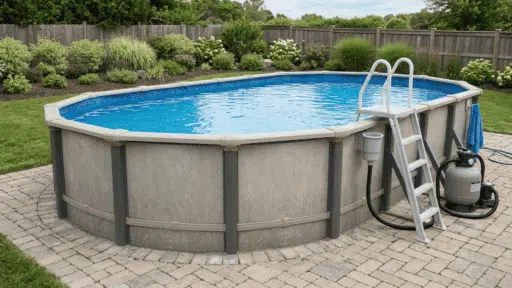
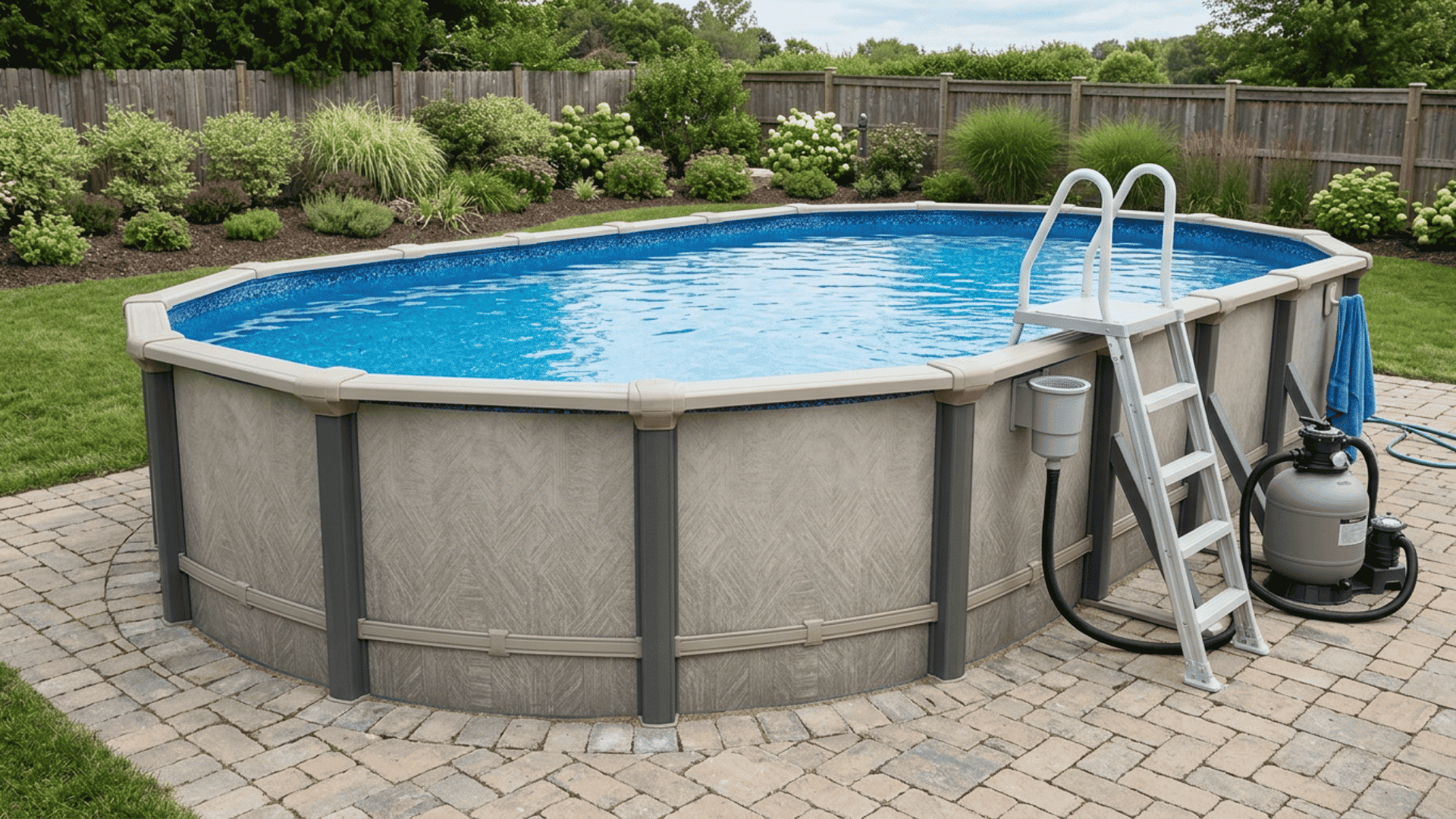

Above ground pools are popular because they cost less, set up faster, and need no digging or permits in most areas. They give families backyard swimming for a fraction of the in-ground pool prices.
Hot days feel a lot better when you have a pool waiting in your backyard.
I remember spending hours checking reviews, comparing sizes, and trying to avoid buying a pool that would leak or break after one season.
With so many choices online, finding the right one can take more time than expected.
This guide breaks down the best above-ground pools by size, price, durability, filter quality, and ease of care.
It shows which models work best for small yards, larger families, and tighter budgets. The goal is to make the choice clearer, save time, and help avoid a pool that feels like the wrong fit later.
Best Above-Ground Pools
Each model below earned its spot through real-world use and steady reviews. The picks cover every budget, yard size, and family need.
1. Intex Ultra XTR Frame Pool
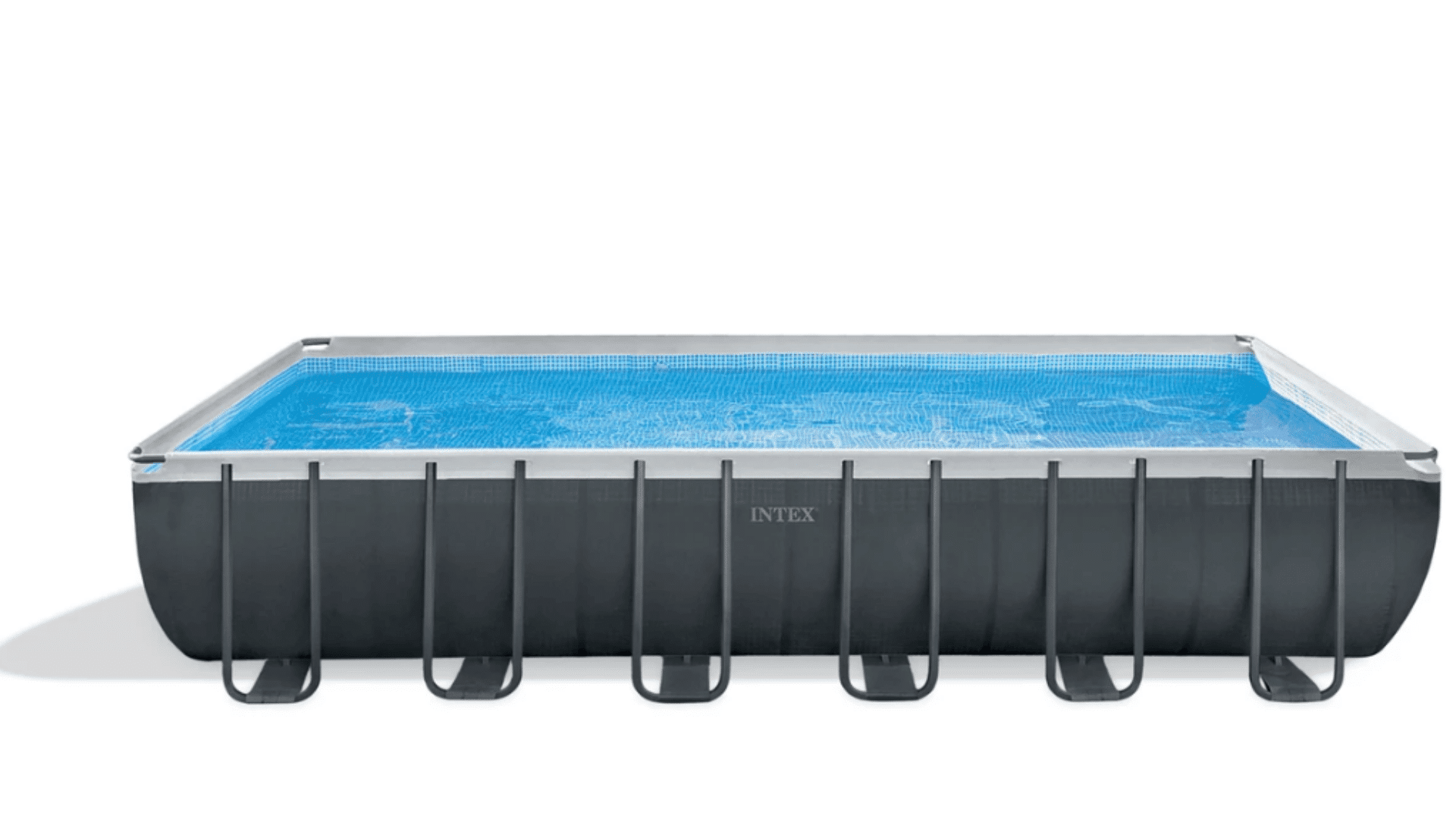
- Cost: Usually around $800 to $1,500, depending on size.
- Features: Galvanized steel frame, sand filter pump, rust-resistant build, strong value for families.
- Length: Common sizes range from 12 feet to 24 feet.
- Depth: About 52 inches
The Intex Ultra XTR Frame Pool is the model I keep recommending first. The galvanized steel frame stayed rust-free through a full rainy season.
Among the best above-ground pools, this one balances strength, price, and lifespan better than any other frame model on the market.
2. Bestway Steel Pro MAX
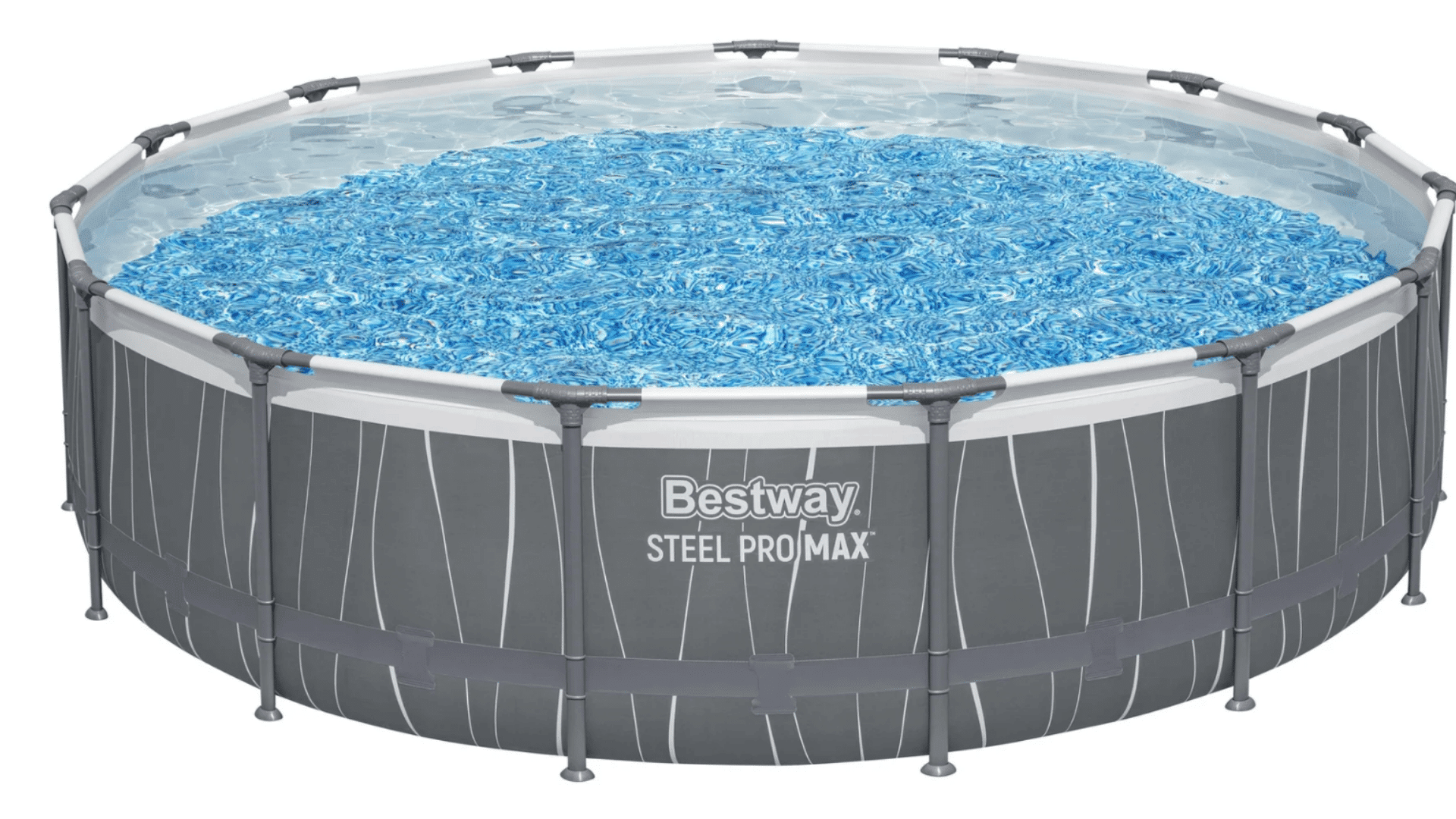
- Cost: Usually about $500 to $1,200, depending on size.
- Features: Straight-sided walls, sturdy steel frame, ladder included, good for family use.
- Length: Common sizes range from 12 feet to 22 feet.
- Depth: About 48 to 52 inches.
Straight-sided walls, a ladder, and a sturdy steel frame: the Bestway Steel Pro MAX is built for family use.
The straight walls give kids more room to stand and play, a real upgrade over basic round frame pools. The Flow Clear pump handles daily use well. For active households, this is one of the best pools for families.
3. Intex Metal Frame 10 ft
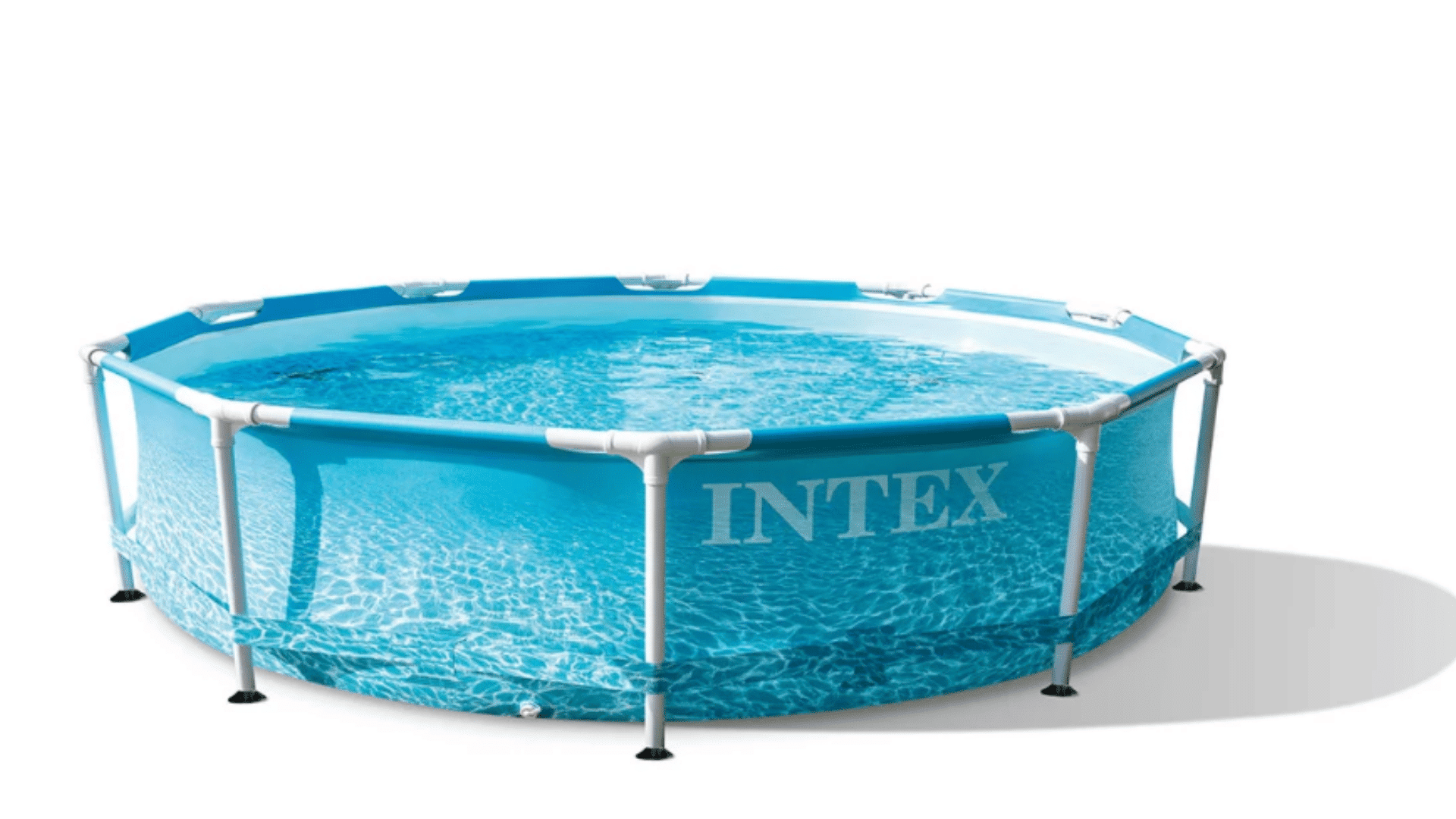
- Cost: Usually around $100 to $300.
- Features: Compact design, easy setup, best for small yards and kids.
- Length: 10 feet.
- Depth: About 30 inches.
Small yards, patios, and side lots usually can’t fit a 20-foot pool. The 10-foot Intex Metal Frame solves that. Setup takes 30 to 45 minutes with one or two people.
The included filter pump handles light daily use. For tight spaces, this remains one of the most practical, durable pools at an entry-level price.
5. Intex Ultra XTR Saltwater
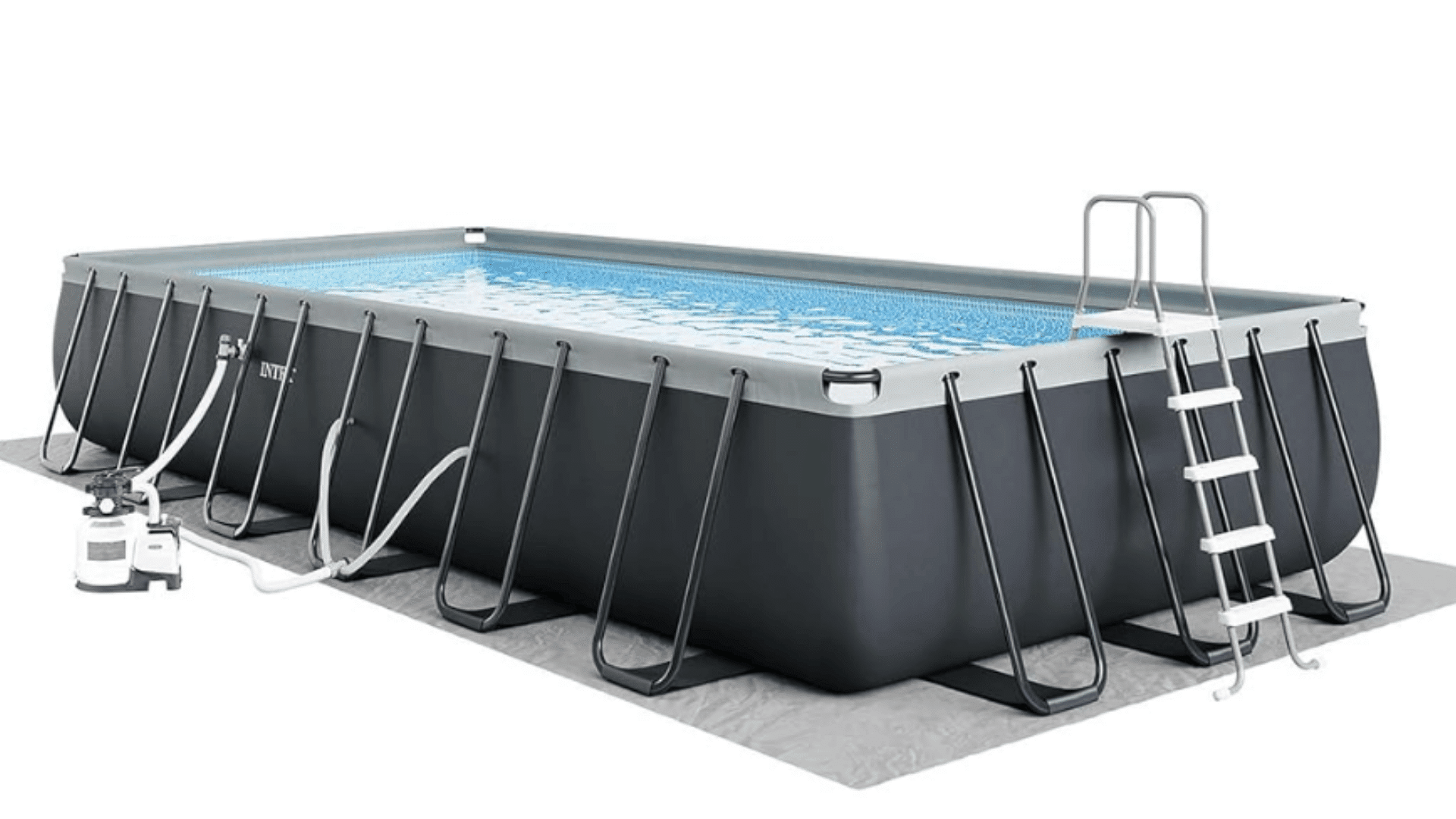
- Cost: Usually around $1,200 to $1,900.
- Features: Strong frame, saltwater system, lower daily maintenance, softer water feel.
- Length: Common sizes range from 14 feet to 24 feet.
- Depth: Usually about 52 inches.
Skin feels softer in saltwater, and the chemical smell drops to almost nothing. The Intex Ultra XTR Saltwater pairs the strongest Intex frame with the Krystal Clear Saltwater System for low-effort weekly care.
The salt cell needs to be replaced every two to three years. For anyone with sensitive skin, this is one of the better saltwater above-ground pools available.
6. Intex Easy Set Pool
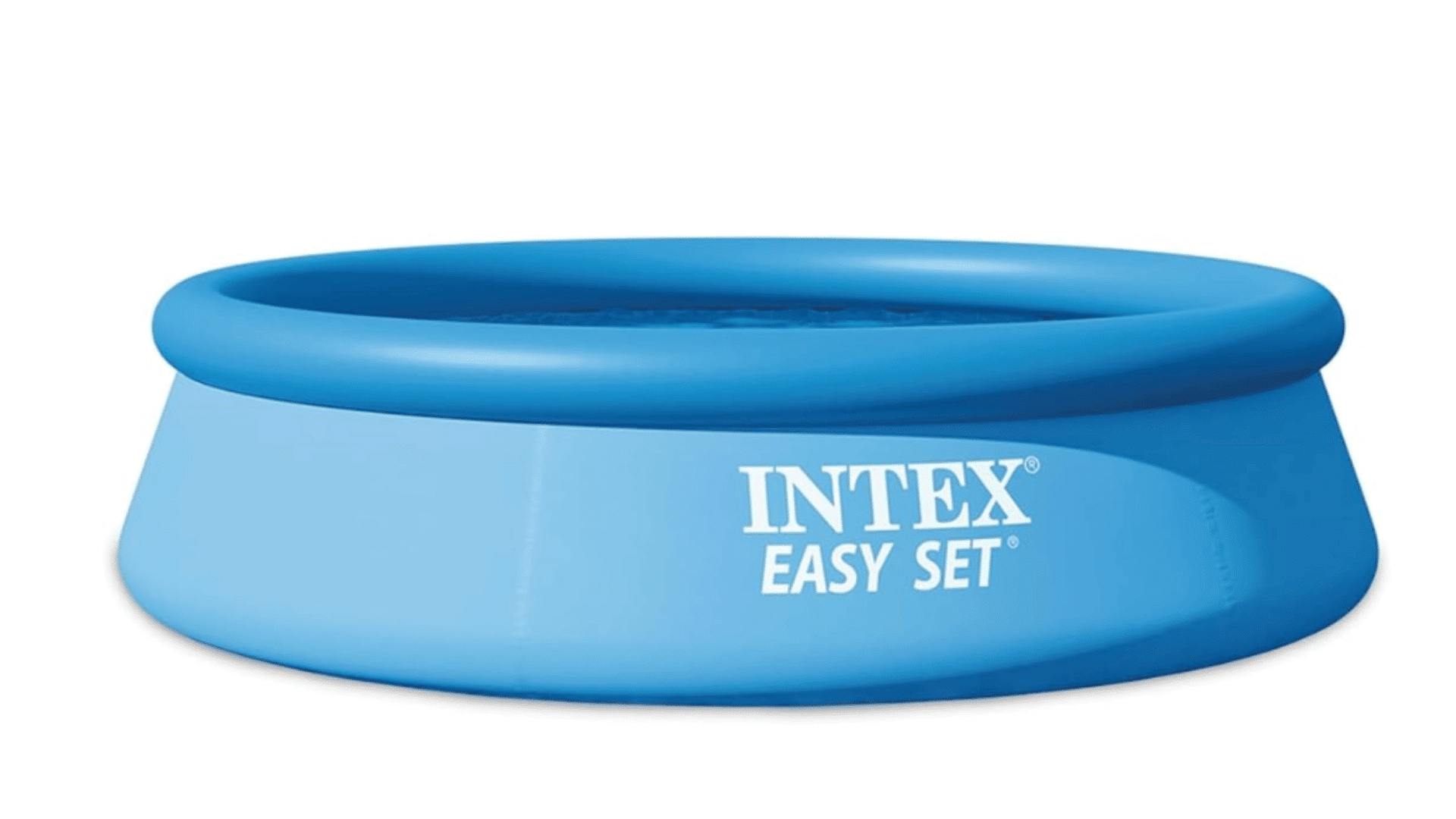
- Cost: Usually around $80 to $400.
- Features: Fastest setup, inflatable top ring, simple for first-time buyers.
- Length: Common sizes range from 8 feet to 18 feet.
- Depth: Shallow to moderate, depending on size.
Inflate the top ring, attach a hose, and walk away. The Intex Easy Set fills and rises on its own as water goes in.
It’s the fastest above-ground pool to set up, often ready in under an hour. For renters or first-time pool owners, this remains the simplest way to get into backyard swimming.
7. Doughboy Hydra Sport
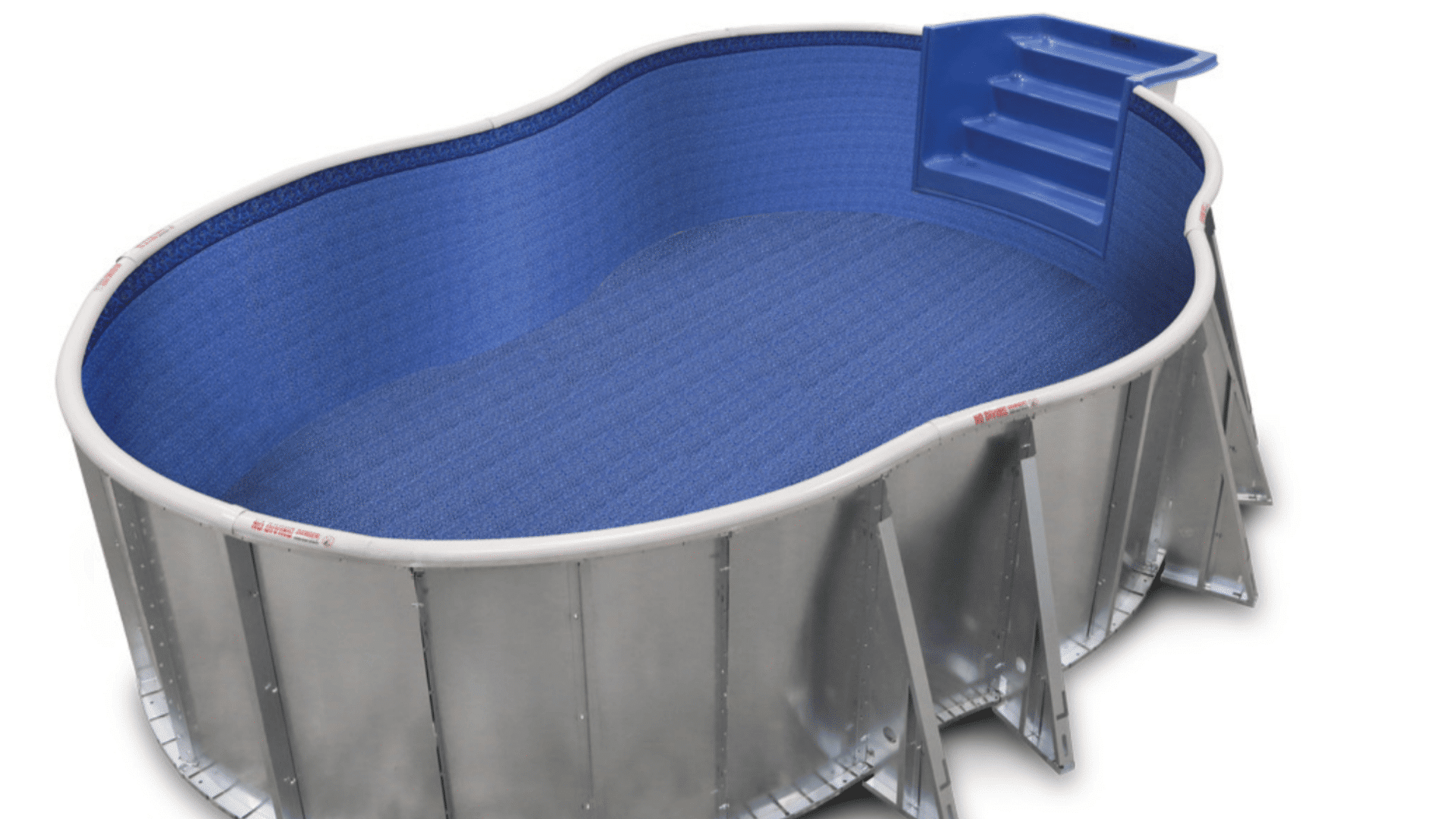
- Cost: Usually around $3,000 to $6,000 plus installation.
- Features: Hybrid resin-and-steel frame, very durable, long lifespan, premium choice.
- Length: Common sizes vary by model.
- Depth: Usually around 48 to 52 inches.
Doughboy has been building pools in the U.S. since 1948. The Hydra Sport reflects that experience with a hybrid resin-and-steel frame that resists rust and lasts 15 to 25 years.
The lifetime warranty options and salt-friendly liner are major upsides. For homeowners committed to long-term swimming, this is one of the most durable above-ground pools you can buy.
Key Features to Check Before Buying
Picking the right pool means looking past the price tag. These features determine how long an above-ground pool will last and how often it is used.
- Frame Material: Galvanized steel resists rust the longest. Powder-coated steel and resin frames work well in humid or coastal areas.
- Liner Thickness: Look for 20-gauge or higher. Thicker liners (25-gauge and up) resist punctures and last longer.
- Pump Strength: A solid pump turns over the full pool volume every 6 to 8 hours. Sand filters outperform cartridge filters for bigger pools.
- Wall Height: 48 inches works for casual swimming. 52 inches gives adults real swim depth.
- Warranty Length: Standard is 1 year. Premium brands offer 2 to 25 years. Always check what’s covered.
- Included Accessories: Some models include the ladder, ground cloth, and cover. Others charge extra. Compare full kits before buying.
Types of Above-Ground Pools
Not every pool fits every backyard. The right type depends on space, budget, and how long the setup will stay up.
1. Inflatable Pools
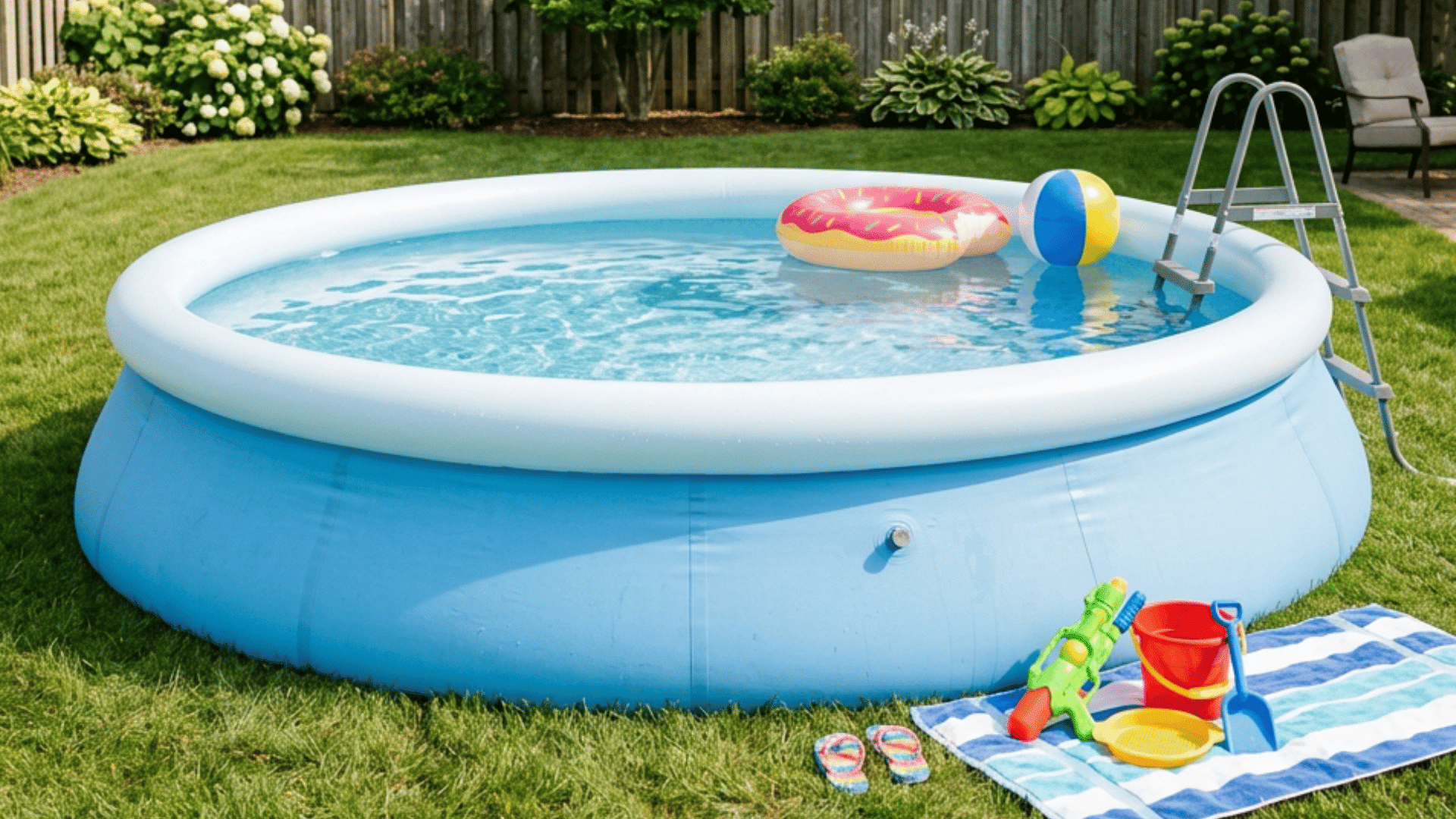
Inflatable pools use a single air ring at the top. As water fills the pool, the ring lifts and the walls rise into place. Setup takes 30 to 60 minutes with no tools.
The downsides include punctures, shallow depth, and a 1- to 3-year lifespan. Pricing usually ranges from $80 to $400.
For renters, beginners, and young families, inflatable models remain the simplest way to enter the best above-ground pool category.
2. Metal Frame Pools
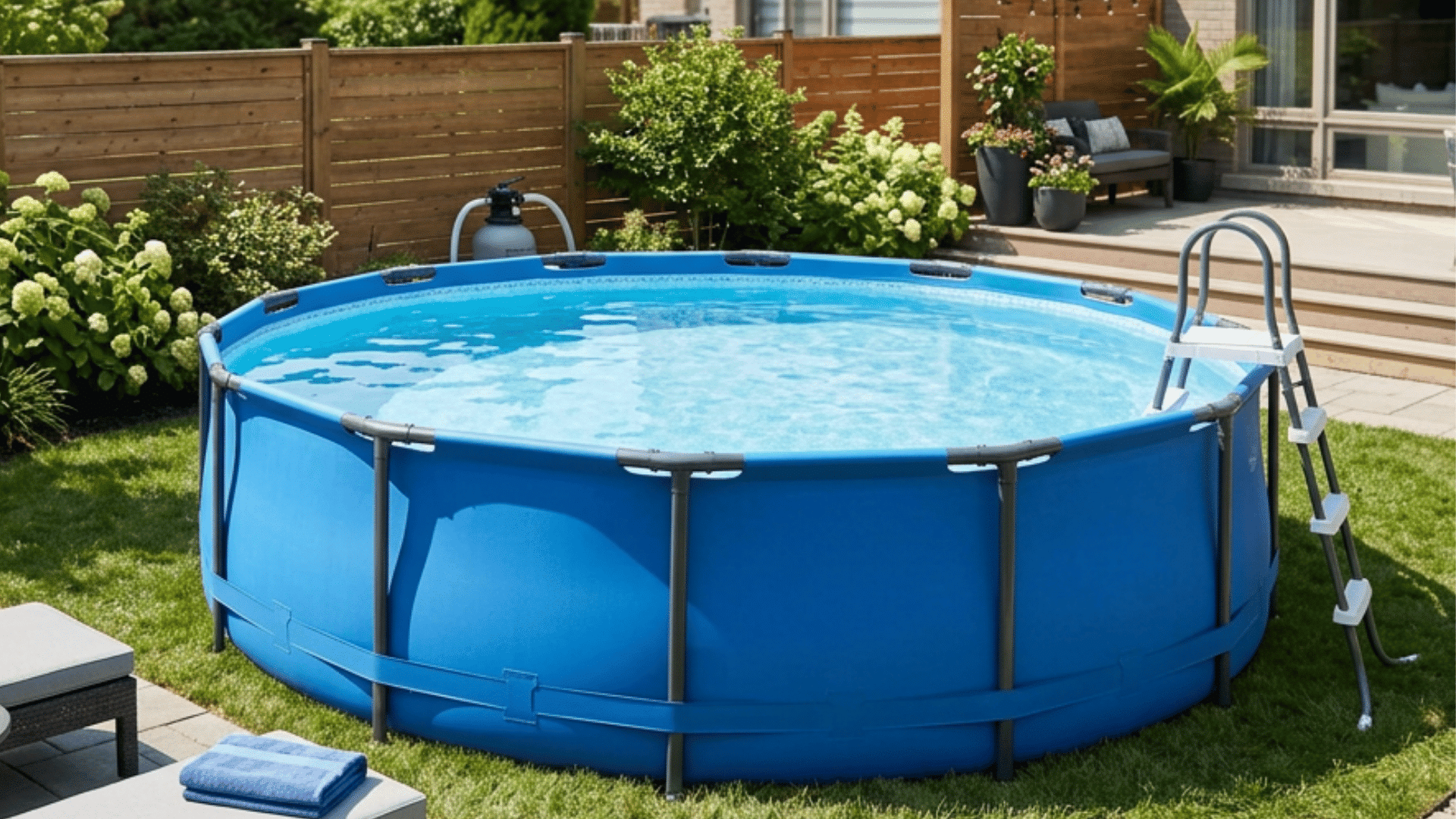
Metal frame pools use steel poles and connectors to hold up a thick PVC liner. They’re the most common above-ground pool style in suburban backyards across the U.S. Sizes typically range from 10 to 24 feet.
Lifespan averages 3 to 8 years with normal care. Prices range from $300 to $1,500, depending on size and brand. For most buyers, metal-frame pools offer the best mix of price, durability, and ease of installation.
3. Steel Wall Pools
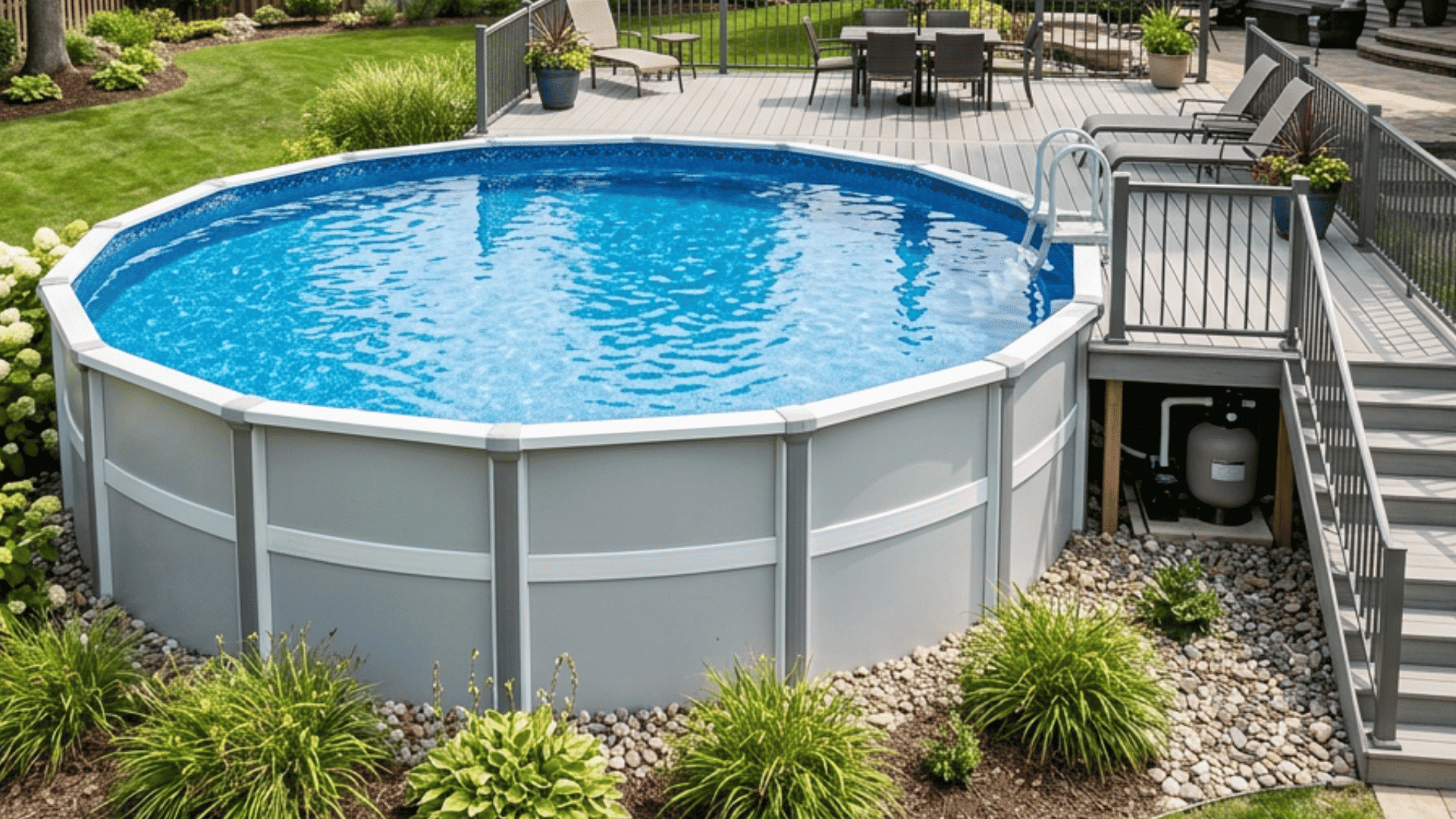
Steel wall pools use solid steel panels instead of poles and include a liner.
They’re heavier, sturdier, and built for long-term setups. Installation usually takes a full day or weekend, often with professional help. Prices range from $2,000 to $5,000 plus installation fees.
Lifespan reaches 15 to 20 years with proper care. Steel wall pools work best for homeowners ready to commit to a semi-permanent backyard pool that withstands tough weather and heavy seasonal use.
4. Resin Pools
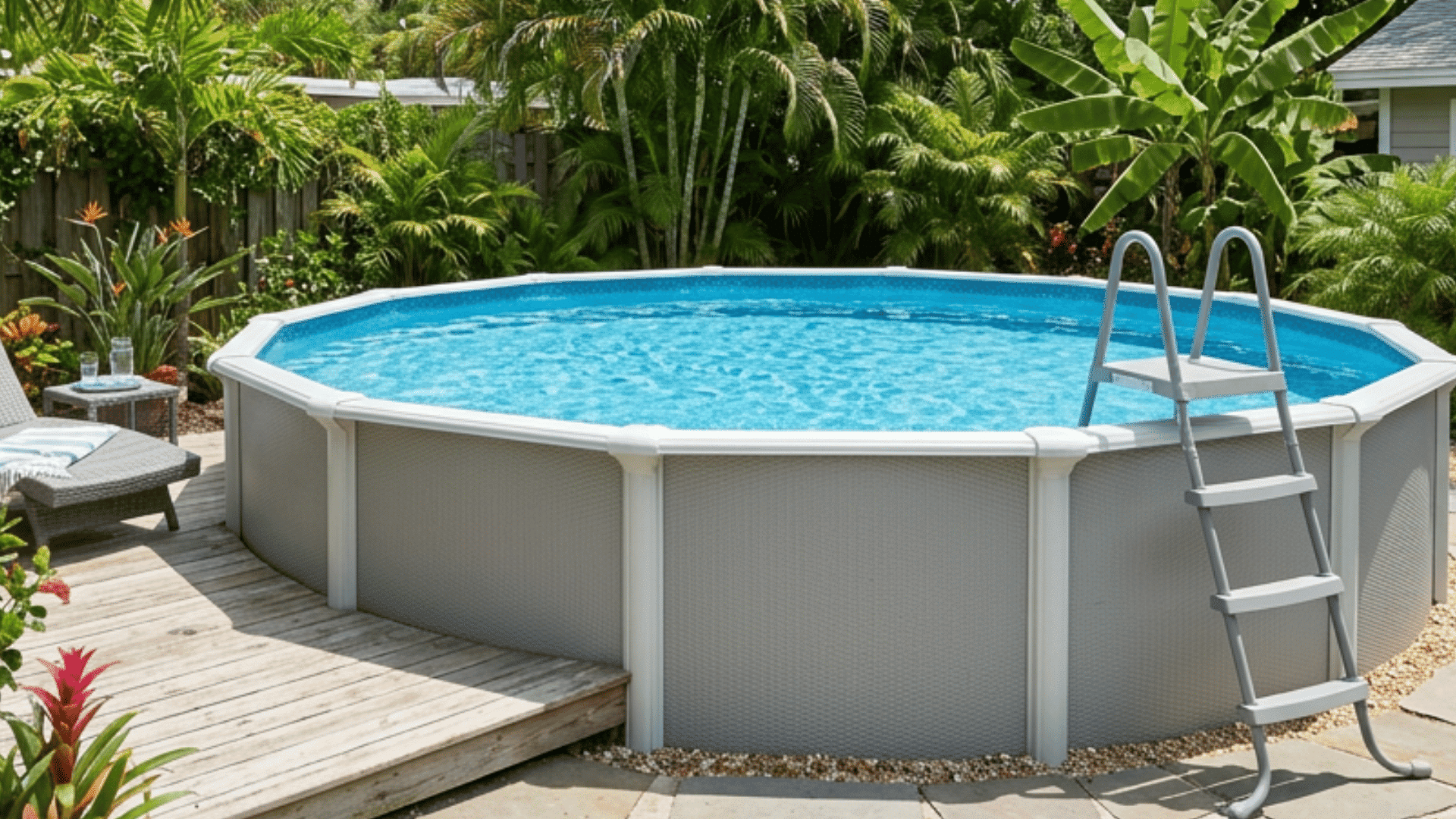
Resin pools replace metal parts with high-strength plastic.
They won’t rust, fade, or corrode from saltwater or pool chemicals. That makes them a strong choice for coastal regions, humid climates, and saltwater systems.
Resin pools cost more than metal frames, usually $2,500 to $5,000. They take longer to set up but reward the effort with low-maintenance years.
For long-term, low-rust use, resin remains one of the best above-ground pool types available.
5. Hybrid Pools
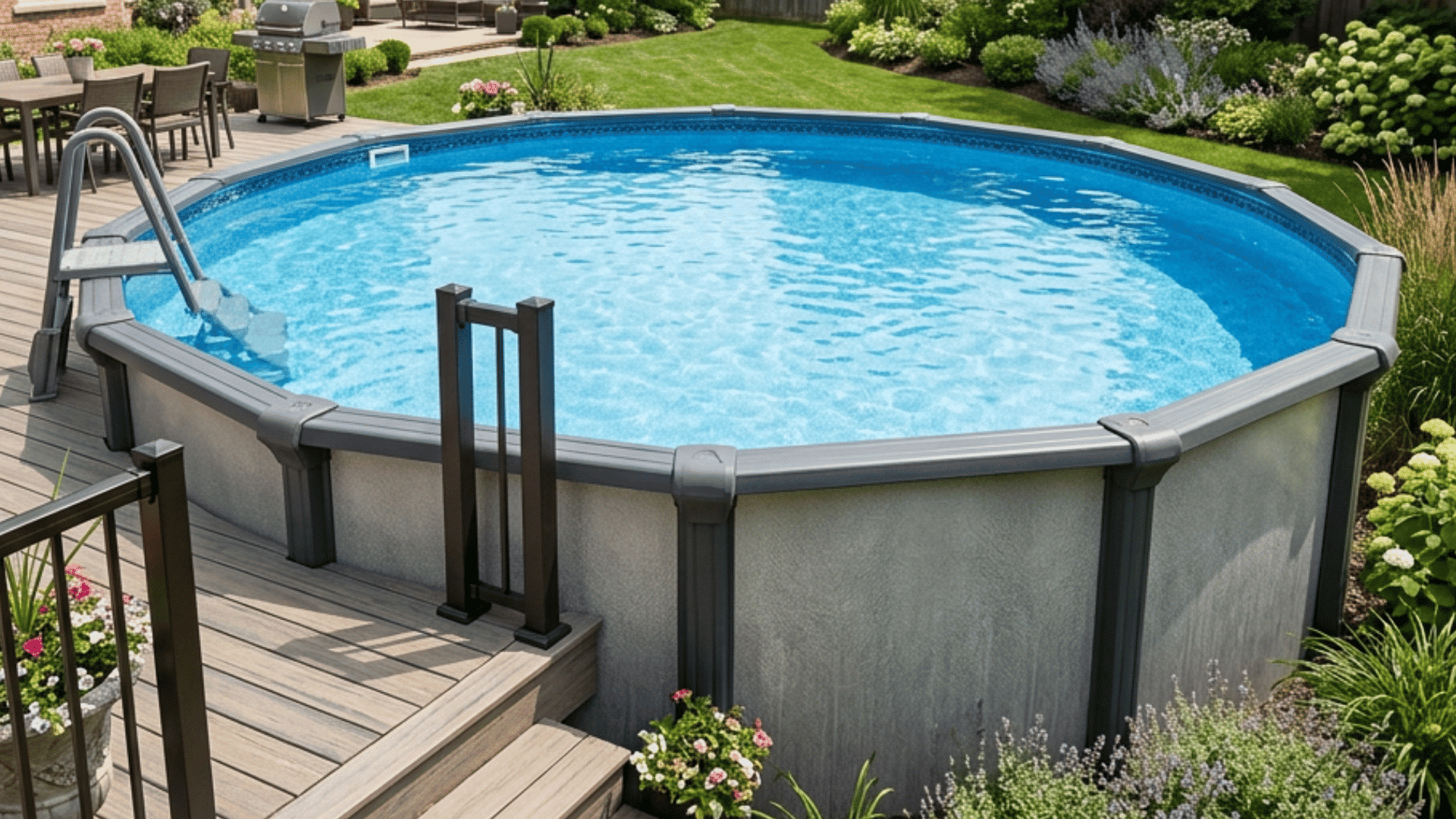
Hybrid pools combine steel for strength and resin for rust resistance. The steel parts handle weight and pressure, while the resin connectors and trim resist corrosion.
Doughboy and a few premium brands lead this segment. Pricing runs from $3,000 to $6,000. Lifespan often reaches 20 to 25 years.
For buyers who want top durability without going all-steel, hybrid models stand out as among the most durable above-ground pools on the market.
How to Choose the Best Above-Ground Pools
To choose the best above ground pools, I looked at the factors that matter most in real use: space, frame strength, filter performance, liner thickness, and how hard the pool is to set up.
| Factor | What We Looked For |
| Size | Leave at least 5 feet of clear space around the pool, with enough flat yard for safe access and full sunlight throughout the day. |
| Frame | Resin frames resist rust best; steel frames cost less; hybrid frames offer a practical middle ground for most buyers. |
| Filter | Sand filters cost more upfront but last significantly longer. Cartridge filters are cheaper but need frequent cleaning and regular replacement. |
| Liner | A 20-mil liner is the minimum for family use. 25–30 mil gives better puncture resistance and lasts more seasons. |
| Setup | A level surface and a second pair of hands are essential, especially for heavier steel-frame pools. We noted real assembly times, not manufacturer estimates. |
Best Above Ground Pools Reviewed
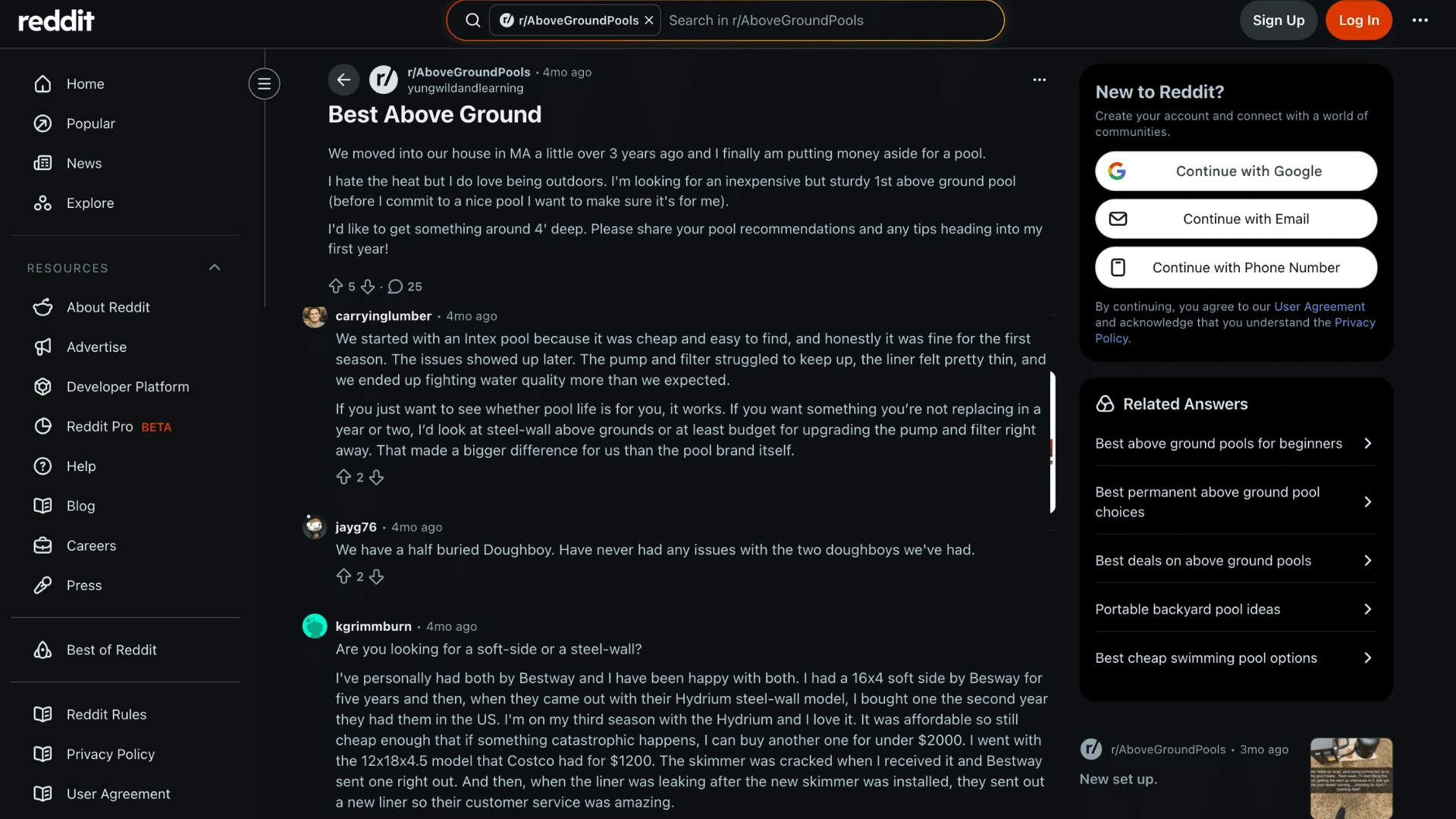
The users’ discussion on Reddit around the best above-ground pools shows a clear pattern: buyers want a pool that is affordable, sturdy, and easy to maintain.
Many comments point to Intex and Bestway as common first picks, especially for people testing pool life before spending more.
A few users also note that pool quality depends on the pump, filter, and liner, not just the brand name. Some recommend steel-wall or hybrid models for better long-term value.
Others mention that customer service and replacement parts matter just as much as the pool itself. Overall, the discussion’s advice focused on durability, setup, and avoiding weak starter kits.
Tip: Check the filter and liner quality before buying, since those parts often decide how long the pool really lasts.
Mistakes Buyers Regret After Purchasing
These are the patterns that show up in one-star reviews, pool forums, and return requests every single summer.
- Buying Too Small: A 10-foot pool looks spacious in the product photo, but feels cramped the first time three people get in. Size up. The cost difference between a 12-foot and 15-foot pool is usually under $100.
- Skipping the Level Check: Even a 2-inch slope puts constant stress on the liner seam. After a few weeks, the water visibly tilts, and the walls bow. Level your ground before you open a single box.
- Ignoring the Ground Cloth: The factory-included ground cloths are often thin. Roots, rocks, and rough grass beneath your liner will eventually poke through. Spend $20–$40 on a heavy-duty tarp or a foam pad to place underneath.
- Neglecting Water Chemistry Week One: Algae blooms happen fast in warm, unchlorinated water. Test and balance the pH before the pool even fills. Correcting a green pool costs more in chemicals than a week of proper maintenance.
- Buying a Pool That Needs Draining for Winter and Forgetting: Many budget pools should not be left up through freezing winters. Ice expansion will crack fittings and stretch liners. Check your model’s winter guidelines before the first frost.
- Underestimating Assembly Time: What the box calls a “2-hour setup” is often a 4- to 6-hour project for first-timers. Block out a full day, recruit a second person, and have a garden hose ready before you start.
Common Problems with Above-Ground Pools
Even well-maintained above-ground pools can run into problems, but most are easy to fix if caught early.
Green or cloudy water is usually a water balance issue caused by low chlorine, high pH, or phosphates, so the first step is to test the water and shock the pool.
If the water still looks cloudy after 48 hours, the filter may be clogged. Pool leaks can often be found by adding a few drops of food dye near the suspected spot, since the dye will move toward the leak, and many liner leaks can be patched with an underwater vinyl repair kit.
Bulging or leaning walls usually mean the ground is uneven, so the pool may need to be partly drained and leveled again. Rust on the frame should be sanded and coated, while deep rust in support parts may need replacement. If the pump is not moving water, check for a clogged basket or an airlock.
Foam or oily residue usually comes from sunscreen, lotion, or detergent, and regular rinsing before swimming can help reduce it.
Maintenance Tips to Make Your Pool Last Longer
Proper maintenance helps above-ground pools last longer and reduces costly repairs mid-season.
Most problems start from poor circulation habits, skipped chemical checks, or ignoring small issues before they grow. Simple weekly care prevents the vast majority of them.
| Problem | Main Cause | Weekly Prevention | Fix When It Happens |
| Cloudy Water | Poor filtration or unbalanced chemicals | Test water weekly and clean filters regularly | Adjust chlorine and pH levels |
| Algae Growth | Low chlorine and poor circulation | Run the pump daily and brush the pool walls | Use algaecide and shock treatment |
| Liner Leaks | Sharp objects or weak liner material | Inspect the liner regularly for tears or loose seams | Apply the repair patch quickly before the leak grows |
| Rust on Frame | Moisture buildup and damaged coating | Dry metal parts and inspect the frame monthly | Sand rust spots, repaint with rust-inhibiting primer |
| Weak Water Flow | Dirty pump or clogged filter | Clean skimmer baskets and filters weekly | Replace worn filter cartridges |
| Sagging Walls | Uneven ground or excess water pressure | Keep the pool on level ground from the start | Drain water and rebalance the structure |
| Dirty Pool Floor | Debris buildup settling to the bottom | Vacuum the pool every few days | Use a pool vacuum or a robotic cleaner |
| High Chemical Use | Poor water balance and exposure | Cover the pool when not in use | Test and rebalance chemicals; check for contaminant source |
Final Thoughts
Picking the right pool comes down to space, budget, and how long the setup will stay up. The Intex Ultra XTR Frame Pool fits most families and yards.
The Bestway Steel Pro saves money without cutting corners on real swim time. Small yards work best with a 10-foot frame pool, and long-term homeowners get the most from Doughboy’s hybrid models.
Whatever you choose, level the ground, prep the base, and read the assembly steps twice. The setup work you do once protects the pool for every summer after.
Have you set up an above ground pool in your backyard? Share your experience in the comments below to help other buyers make a smart pick.
Frequently Asked Questions
What is the Best Time of Year to Buy an Above-Ground Pool?
The Best Time of Year to Buy an Above-Ground Pool Is Late Summer Through Winter, when Off-Season Discounts Are Most Common, and Demand Is Lower.
How Much does it Cost to Install a 20 Foot Above-Ground Pool?
The cost to install a 20-foot above-ground pool is roughly $2,500 to $5,000+ for A Basic Setup, with Leveling, Decking, and Add-Ons Increasing the Total.
What is the Best Shape for an above-ground pool?
The best shape for an above-ground pool is round for lower cost and simpler installation; oval if you want more swim space; and rectangular if your yard is long and narrow.

With a Master’s in Architecture from the University of California, Berkeley, Alexander Martin has dedicated the last 18 years to enhancing outdoor living through thoughtful and robust structure design. His career kicked off in urban planning, giving him a unique perspective on integrating structures into diverse environments. In 2019, Alexander brought his expertise to our website, offering insights into creating versatile outdoor spaces. Since then, he has been the lead advisor for our outdoor design projects and is known for his ability to merge functionality with environmental consciousness. Alexander enjoys rock climbing outside of work and participates in community development projects, activities that reflect his passion for the outdoors and sustainable design.