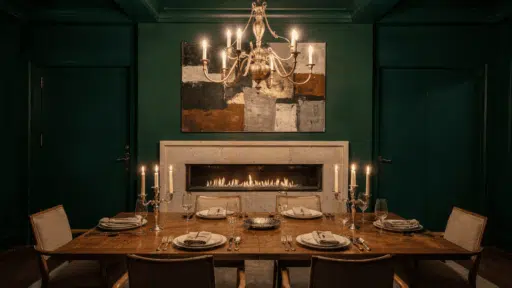
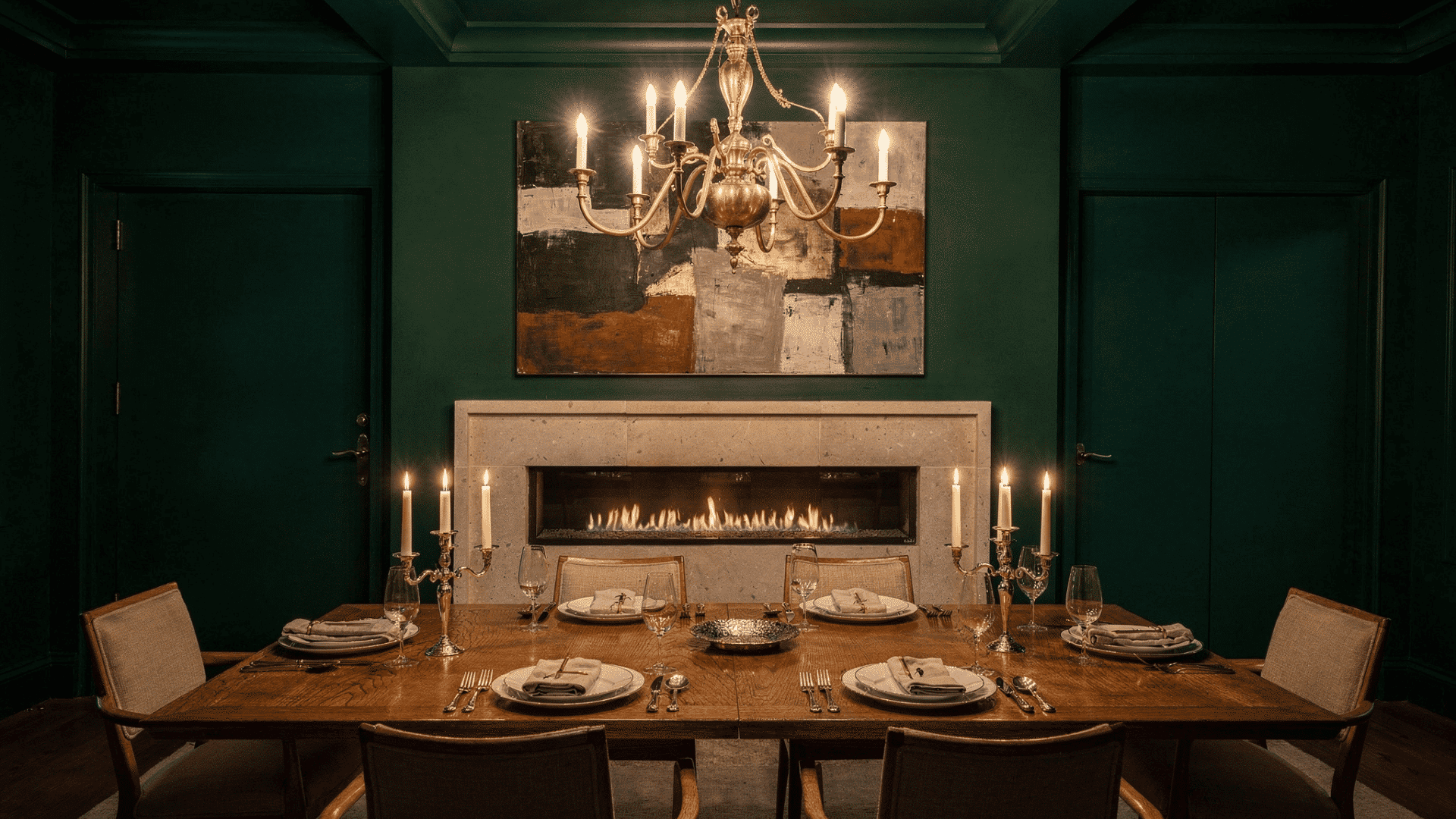

Let’s be honest, a fireplace can make or break a room. The right one feels warm, stylish, and totally you. The wrong one? It just sits there, looking dated.
The good news is, you don’t need a full remodel to get a fireplace you’ll love. You just need the right idea, one that fits your home, your style, and your budget.
That’s exactly what this guide is for. After years of designing fireplaces for clients across very different homes, I’ve pulled together ideas that actually work, sorted by style, material, and layout and room type.
Let’s find the one that fits your space.
How to Pick the Right Fireplace Design for Your Home
Before you fall in love with a look, walk through these four quick filters. They’re the same ones I use with clients before pulling up a single inspiration photo, and they save a lot of expensive mistakes down the line.
- Match the Room Structure: Vaulted ceilings call for vertical, floor-to-ceiling designs. Cozy nooks suit corners or compact fireplaces. Open-plan rooms benefit from double-sided or freestanding units.
- Decide its Role: Is the fireplace a hero focal point, a quiet background feature, or a functional piece blended into shelving? The answer changes everything: material, scale, and styling.
- Pick the Fuel Type First: Wood-burning, gas, electric, and ethanol each offer different design possibilities. Electric and ethanol fireplaces require no chimney, which dramatically expands where you can place them.
- Mind the Proportions: A mantel that’s too short reads cheap; one that’s too tall overwhelms a room. As a rule of thumb, the mantel should sit roughly 54 to 60 inches off the floor, with the surround scaling to the wall, not the fireplace box alone.
Fireplace Design Ideas by Style
The overall look of a fireplace changes dramatically depending on the design direction, and modern spaces are leading the shift toward cleaner lines and architectural detailing.
1. Modern & Contemporary Fireplaces
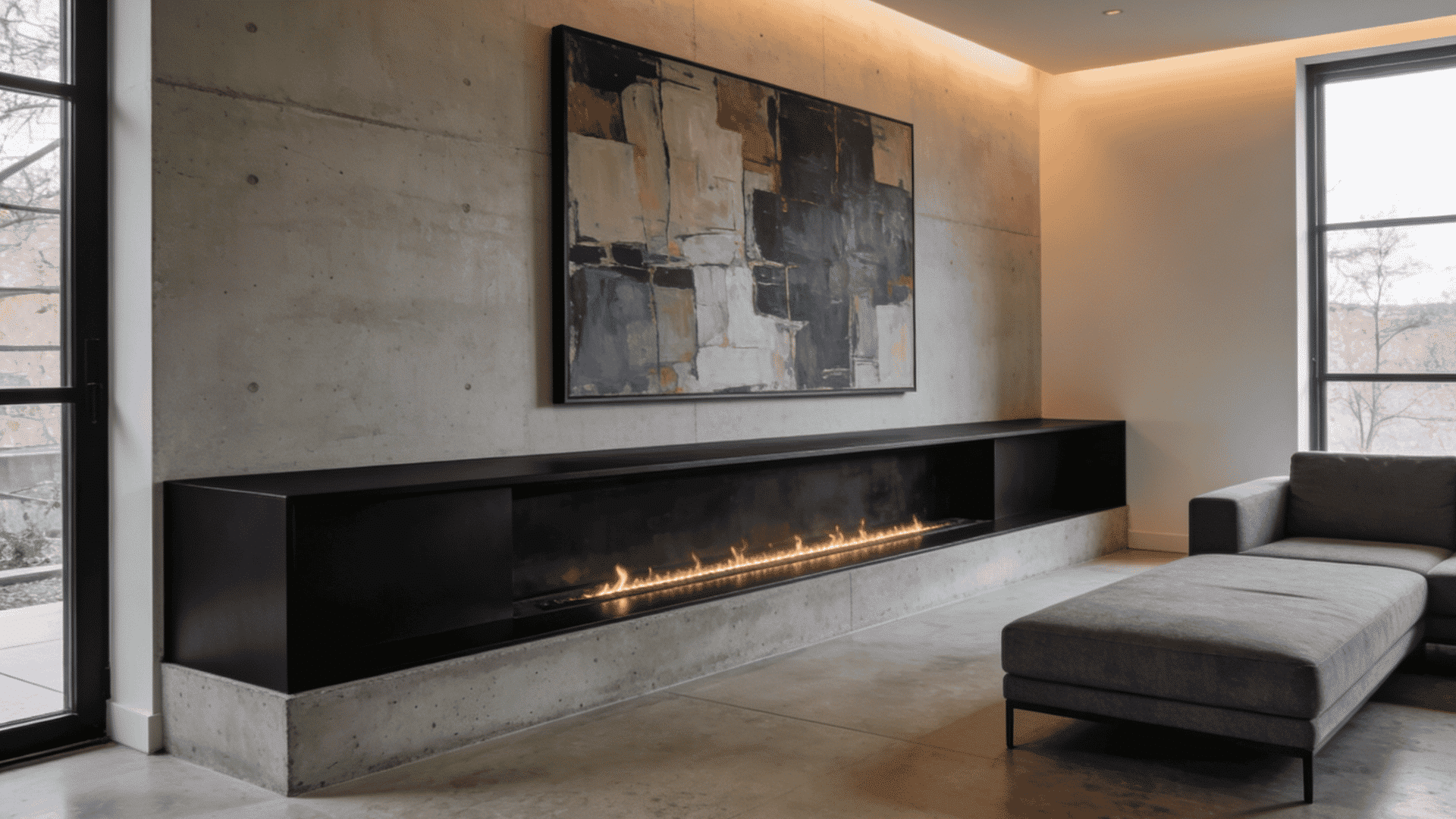
Modern fireplaces are about restraint. Think clean horizontal lines, ribbon flames, and surrounds that disappear into the wall instead of drawing attention with ornamentation.
Materials lean industrial (polished concrete, blackened steel, smooth travertine), and the mantel is often skipped entirely.
The most striking move in contemporary design is letting the surround stretch wall-to-wall, turning the fireplace into a full design feature instead of a centerpiece on a wall.
Pair with low-profile furniture, a single oversized artwork, and recessed lighting for a gallery-like effect.
2. Traditional & Classic Fireplaces
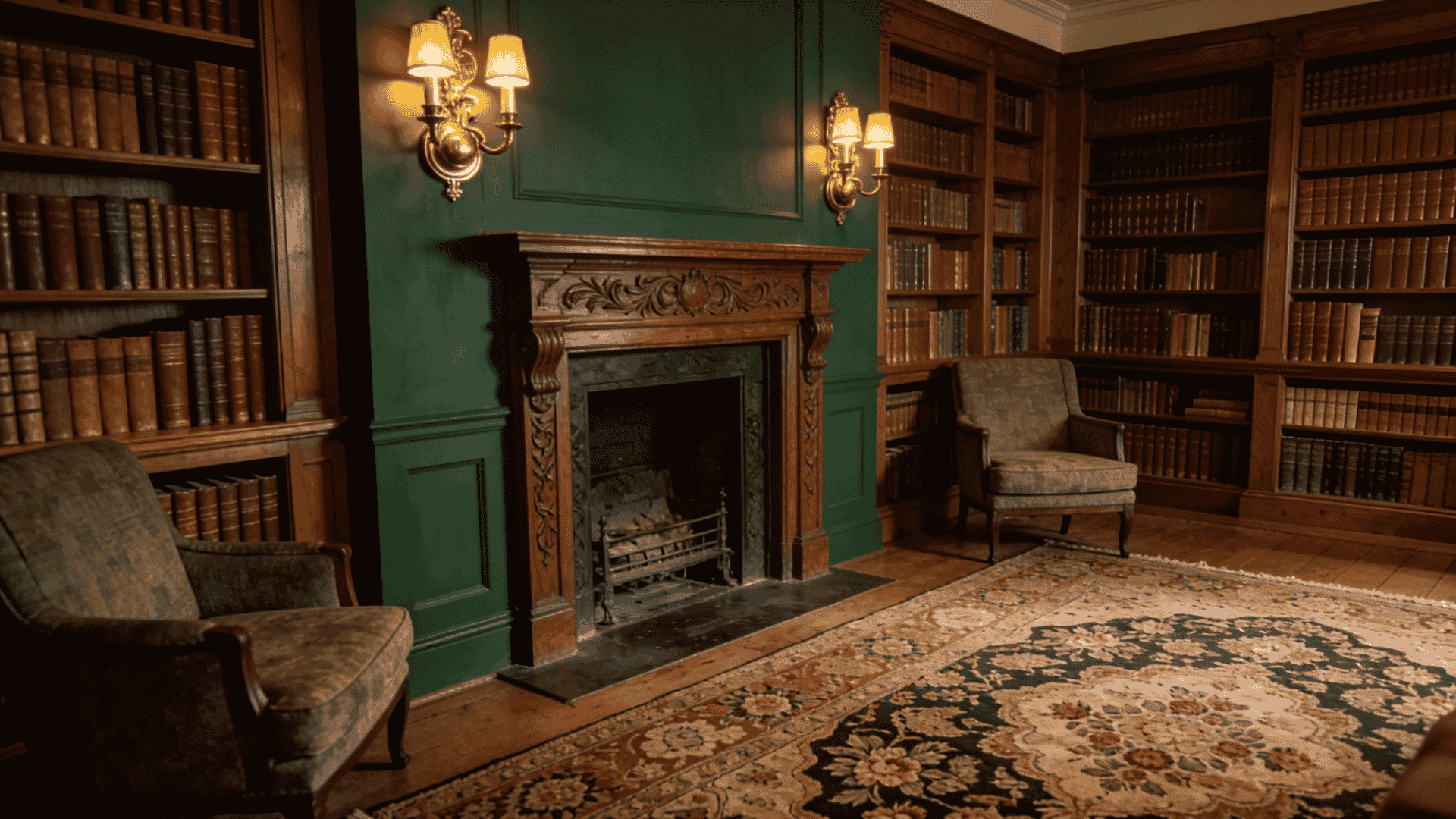
Traditional fireplaces lean into symmetry and craftsmanship. Carved wood mantels, ornate millwork, and flanking built-in bookcases give the room a more formal, library-like atmosphere.
Styling is intentional: paired sconces, a framed mirror or large artwork over the mantel, and a tidy hearth.
A modern way to do traditional is color-drenching, which means painting the mantel, walls, and ceiling in the same deep hue (emerald, oxblood, navy) for a monochromatic, bold effect.
3. Mid-Century Modern Fireplaces
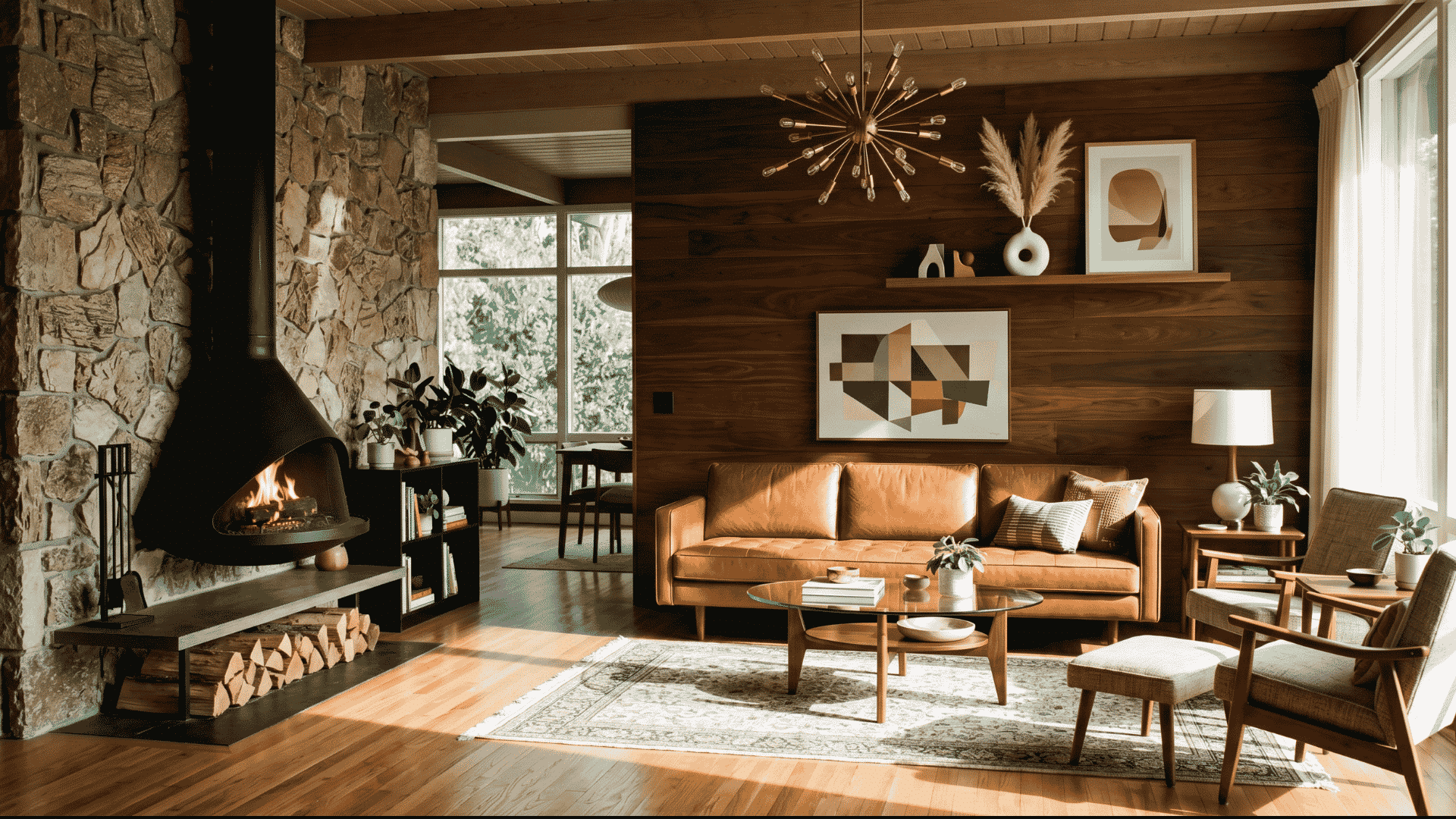
Mid-century fireplaces are sculptural in a way no other era’s are. Freestanding cone stoves, capsule-shaped fireboxes, and full-height stacked stone walls in earthy tones define the overall feel.
What makes them work is the contrast: a graphic, almost futuristic fireplace shape against warm walnut paneling, low-slung sofas, and atomic-era lighting.
4. Scandinavian & Minimalist Fireplaces
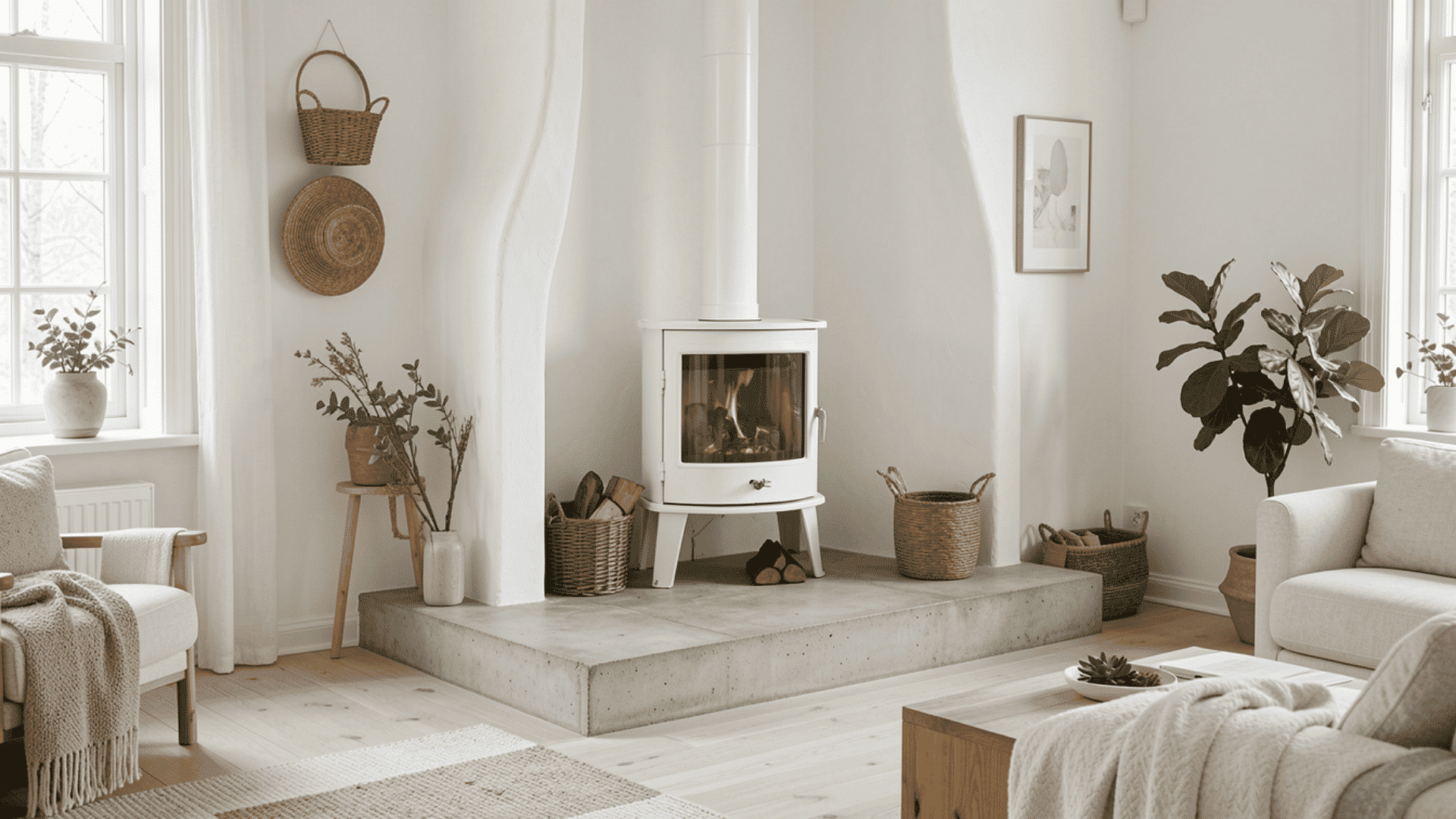
Scandinavian fireplaces are the opposite of rustic. They’re pale, quiet, and almost invisible at first glance in the room.
The typical setup is a small wood-burning stove on a raised pale plinth, all-white plaster surrounds with no mantel, and plenty of negative space around the firebox.
The design philosophy here is simple: the flame itself is the decoration. Surround the stove with pale oak floors, undyed linen upholstery, and one or two dried branches in a clear glass vessel.
The goal is calm, not clutter, and the fireplace should feel like an exhale at the end of the day rather than a dominant focal point fighting for attention.
5. Coastal & Mediterranean Fireplaces
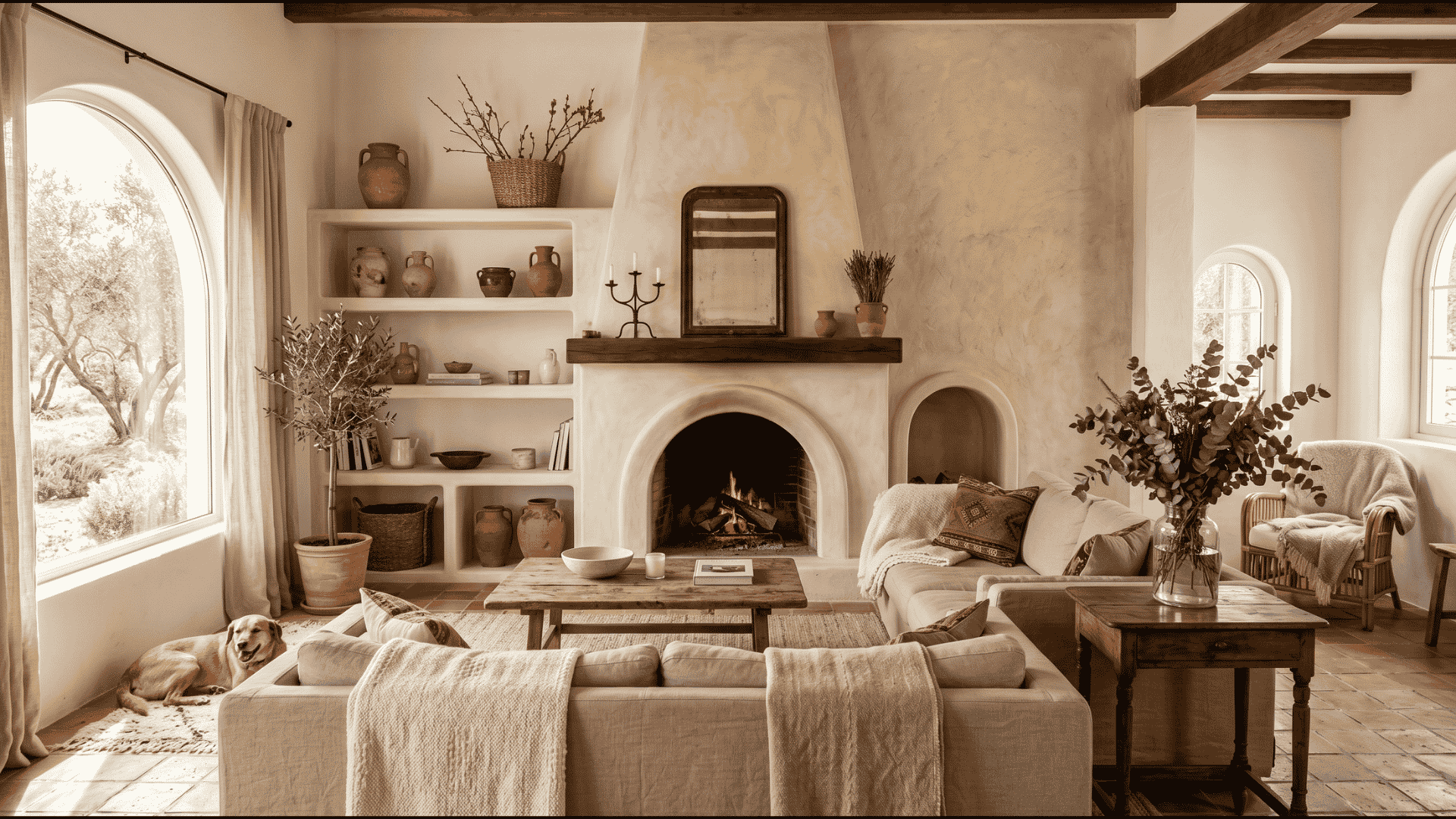
The Mediterranean fireplace is having a major moment in 2026.
Limewashed plaster in warm whites, sands, and pale terracottas; arched or curved openings instead of rectangular ones; and built-in niches for displaying ceramics, driftwood, or candles.
Greek island fireplaces are the most minimal, with pure white plaster and soft arches. Italian Tuscan fireplaces often have stone surrounds with heavier carved mantels. Spanish coastal homes lean into terracotta tile and wrought iron details.
The thread connecting all of them is hand-applied materials that read warm and lived-in rather than precise.
6. Japandi Fireplaces
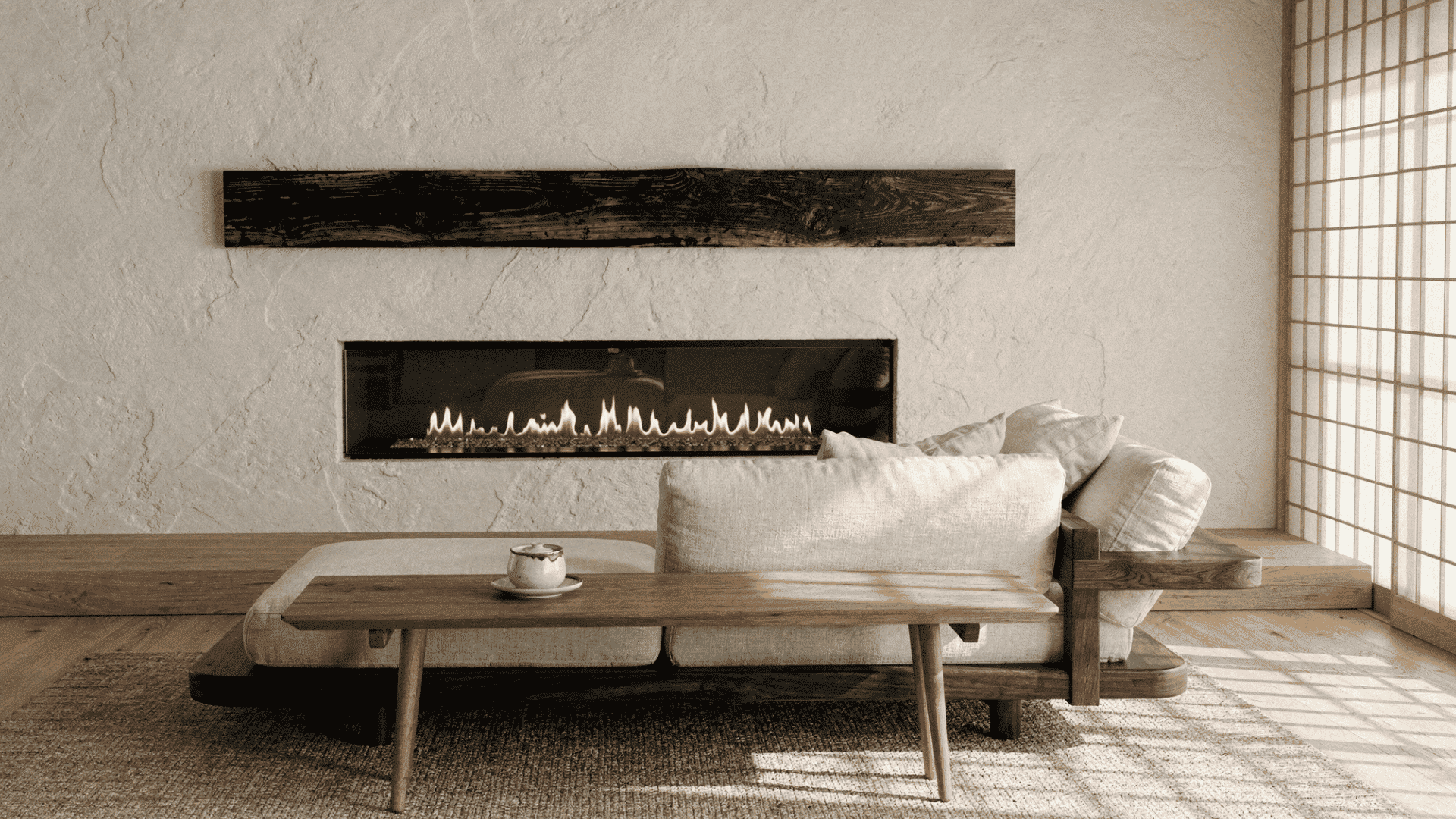
A meeting of Japanese restraint and Scandinavian warmth. The Japandi fireplace is usually a low, wide firebox set into a pale plaster or limewashed wall, with a single piece of natural wood or charred shou-sugi-ban panel above.
No mantel. Furniture stays low and close to the floor. I’ve spec’d a few of these for clients who want minimalism that still feels human, not cold.
7. Bohemian and Eclectic Fireplaces
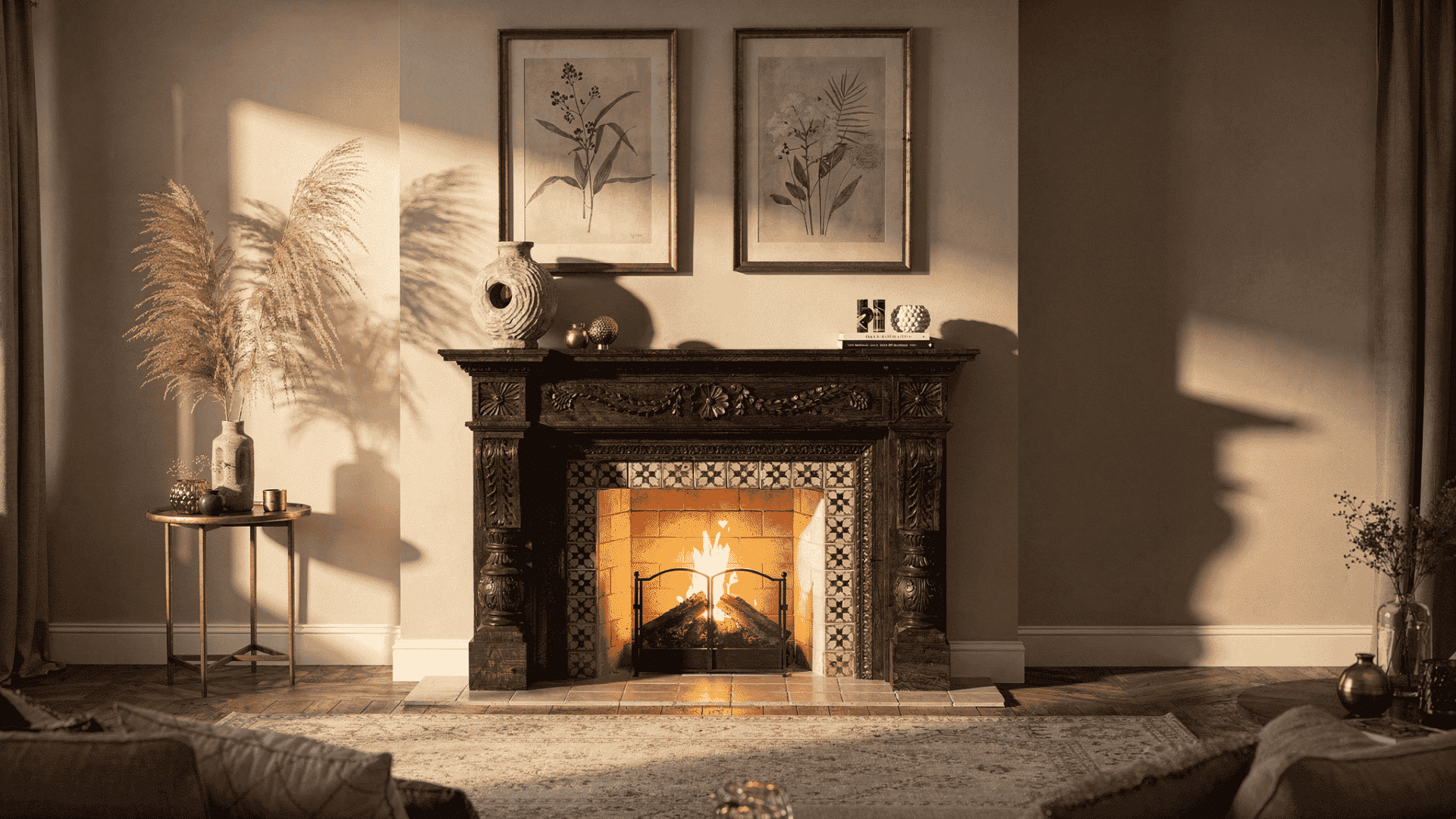
The bohemian fireplace is where rules get to relax. Mix old and new freely. Layer Moroccan zellige tile against a vintage carved wood mantel, top it with a stack of art books and a ceramic vessel, and drape a sheepskin over the hearth.
What makes this work is to keep one element grounded so the rest can be expressive. If the mantel is loud and layered, paint the surround in a quiet neutral. If the tile is bold, keep the mantel simple.
At least one piece in the room should feel restful, not busy, or the whole space starts to read as cluttered instead of curated.
8. Art Deco Fireplaces
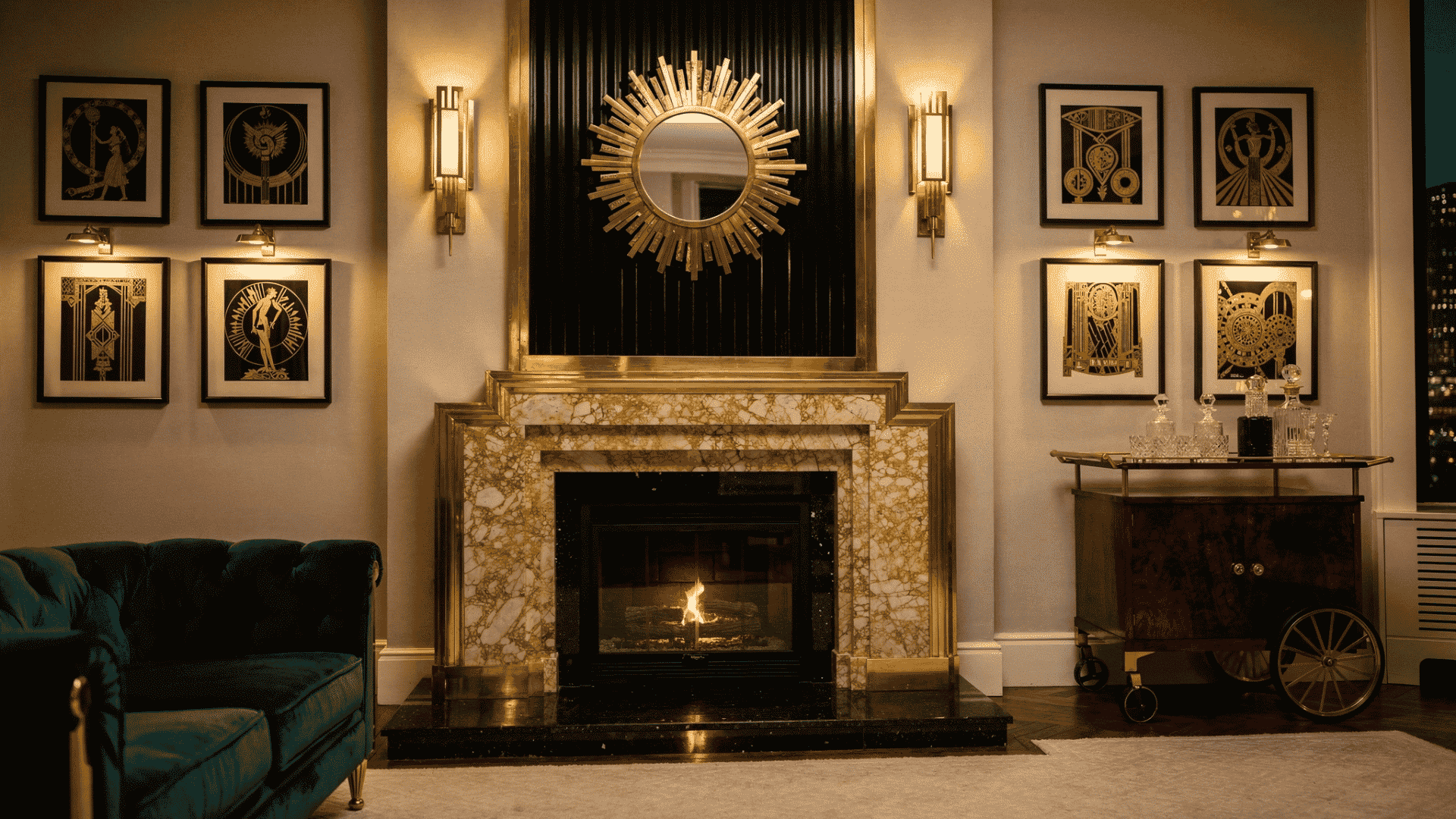
Geometric, glamorous, and unapologetically bold. Think stepped marble surrounds, brass or gold inlay, mirrored or fluted detailing, and rich materials like onyx, lacquer, or burl wood.
Pair an Art Deco fireplace with velvet upholstery in deep jewel tones, lacquered furniture, brass or gold accents, and a strong geometric rug. The lighting should be sculptural, think tiered chandeliers or fluted brass sconces.
An Art Deco fireplace works best in a room that can carry the weight, with strong symmetry and confident furniture pieces.
9. French Country Fireplaces
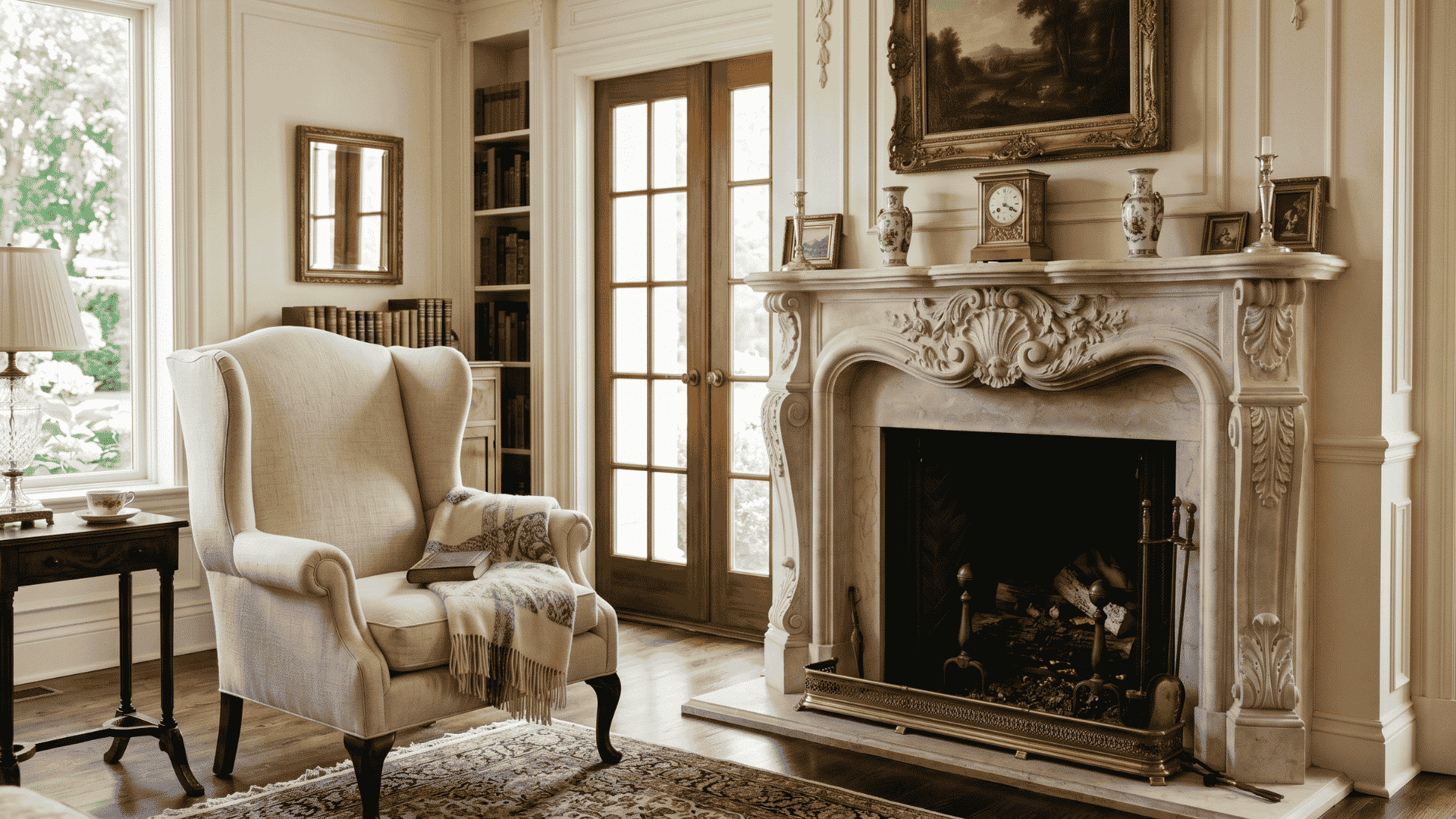
Soft and refined rather than rustic. A limestone or carved plaster surround, painted in dove gray or chalk white, topped with a curved or scrolled mantel.
The hearth tends to be subtle. I tell clients this style depends on the surrounding details more than the fireplace itself: aged metal, distressed wood, and faded textiles tie it together.
The Provençal version leans more rustic with rougher limestone and natural wood beam ceilings. The Parisian version is more polished, with carved marble surrounds and gilt mirror frames.
Both share a love of slightly imperfect, gently aged materials.
10. Maximalist Fireplaces
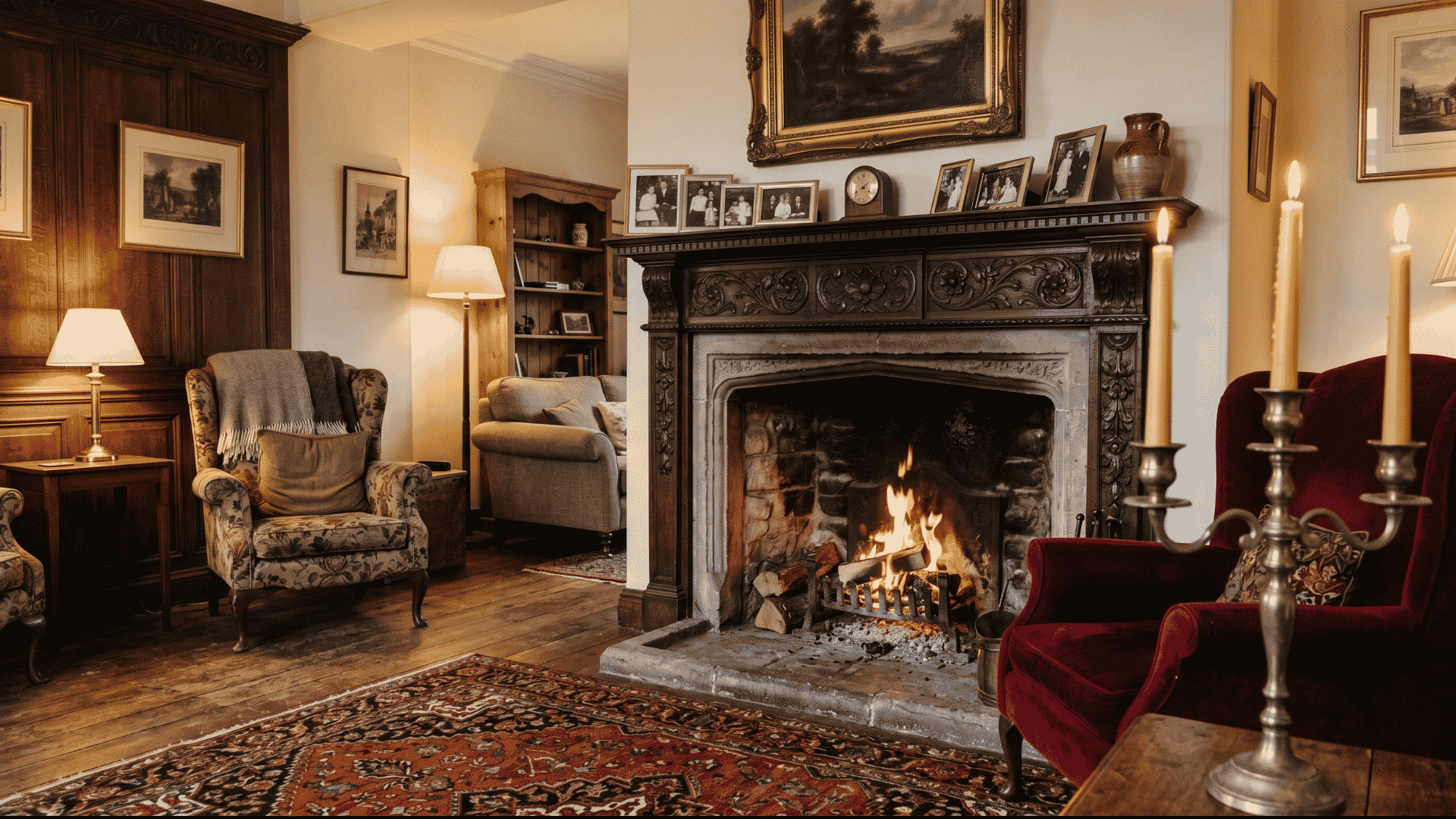
For the pattern-and-color lover. The whole fireplace becomes a statement: a deeply colored mantel paired with floral wallpaper above, bold-patterned tile inside the firebox, layered art, candles in mismatched holders, and even framed family photos.
The trick to making maximalism work rather than overwhelm is having a thread that runs through the visual noise
The rule is that there are no rules, but you do need to balance the chaos with one or two grounded pieces.
Fireplace Design Ideas by Material
From rustic brick to polished marble, each fireplace material creates a completely different atmosphere even when the layout stays the same.
11. Brick Fireplaces
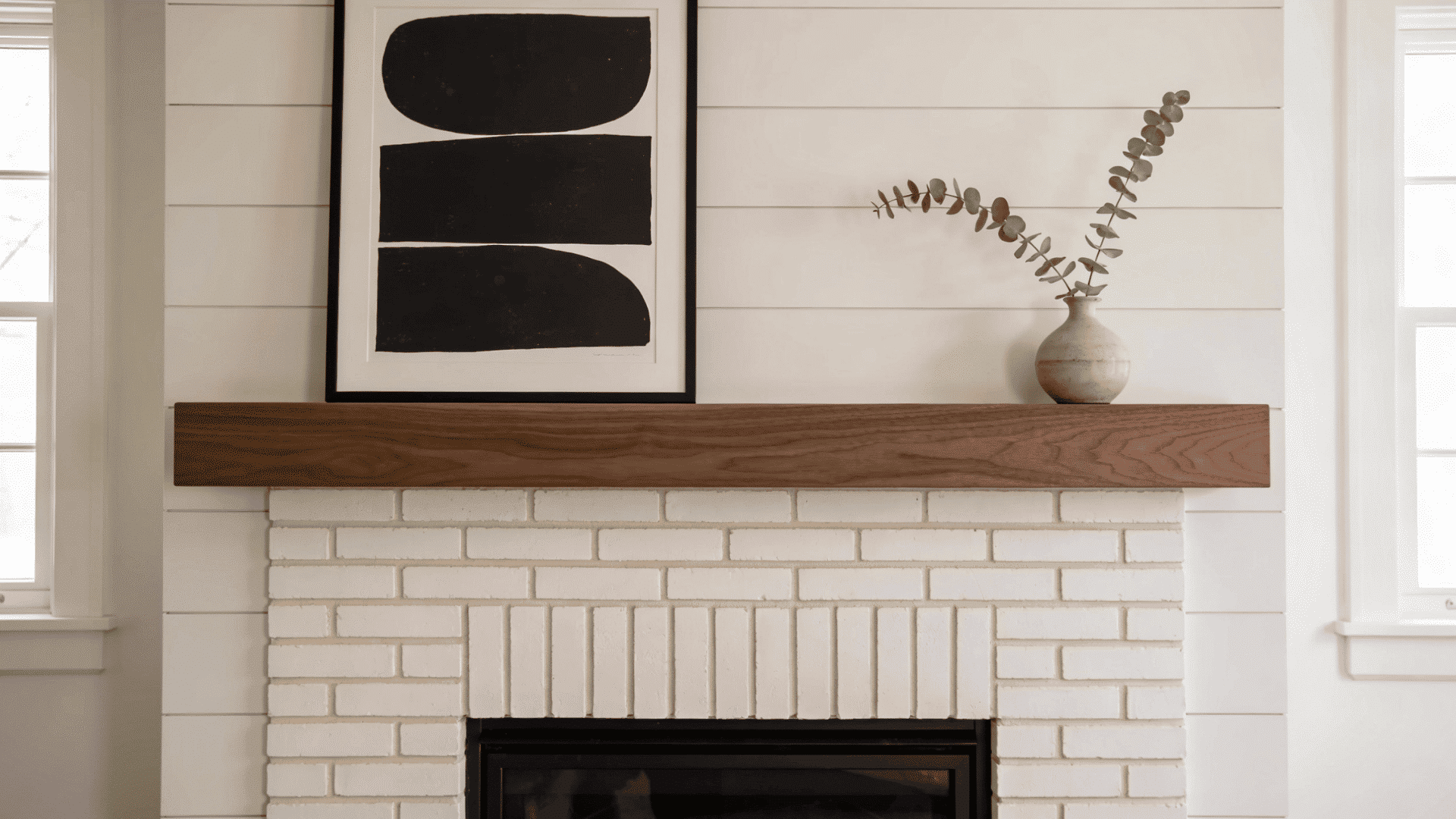
Brick is the most traditional fireplace material and still the most versatile. You can leave it raw for classic warmth, paint it white for instant modernization, whitewash it for softer texture, or apply a German smear for old-world character.
Vertically stacked brick reads contemporary; horizontal coursing reads classic.
The finish you choose changes the entire feel. Painted brick is the most popular update for outdated red brick fireplaces and instantly modernizes the look.
12. Natural Stone Fireplaces
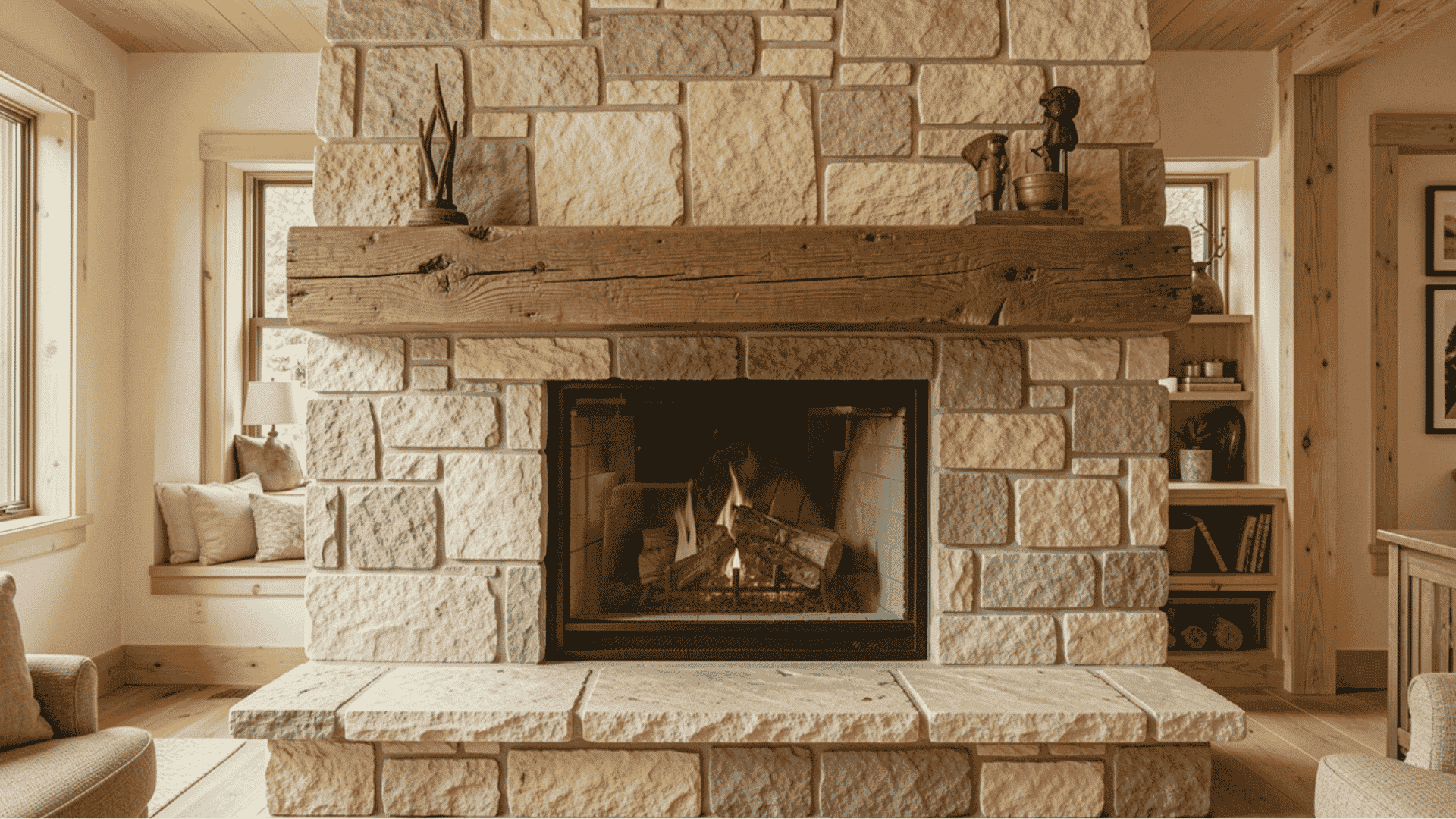
Limestone offers soft neutrals; travertine adds warmth with its natural pitting; slate brings dramatic depth through color variation; and fieldstone delivers full rustic character.
Stone ages beautifully, developing a patina that manufactured materials can’t fake. It feels most natural in floor-to-ceiling applications where the material can really speak.
For longevity, real stone outperforms cultured stone. Cultured stone (concrete made to look like stone) saves money upfront but never develops the patina or weight of the real thing.
13. Tile Fireplaces
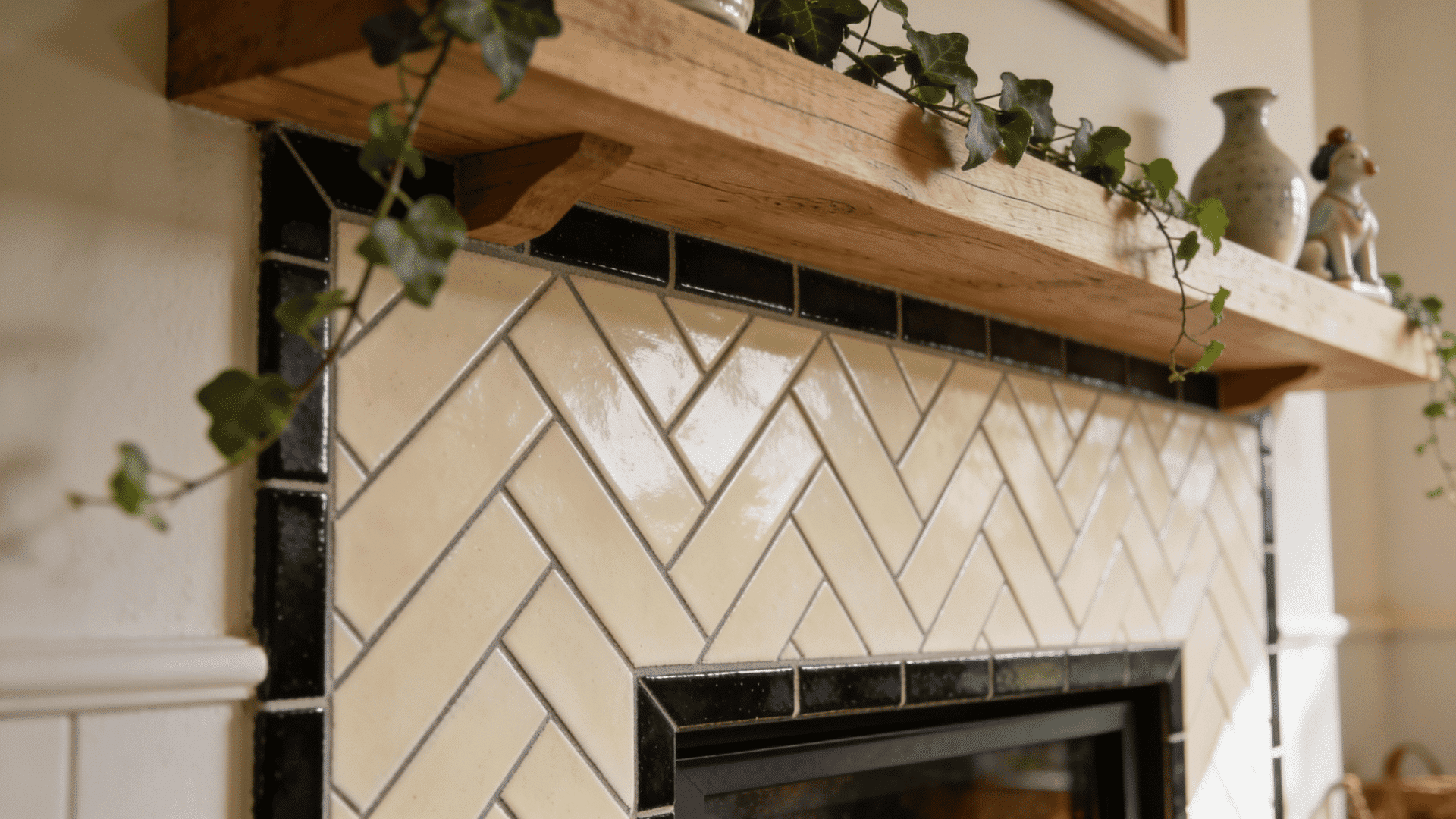
Tile is where you have the most design freedom. Subway tile reads classic; herringbone adds geometry; zellige brings handmade texture; hexagons feel playful and modern.
Mosaic tile mixed with stone or marble creates a layered, custom look. Heat-resistant porcelain handles the firebox area; decorative tile works for the surround.
Grout choice matters as much as the tile itself. Matching grout makes the tile pattern visually quiet; contrasting grout makes the pattern shout.
14. Plaster & Venetian Finish Fireplaces
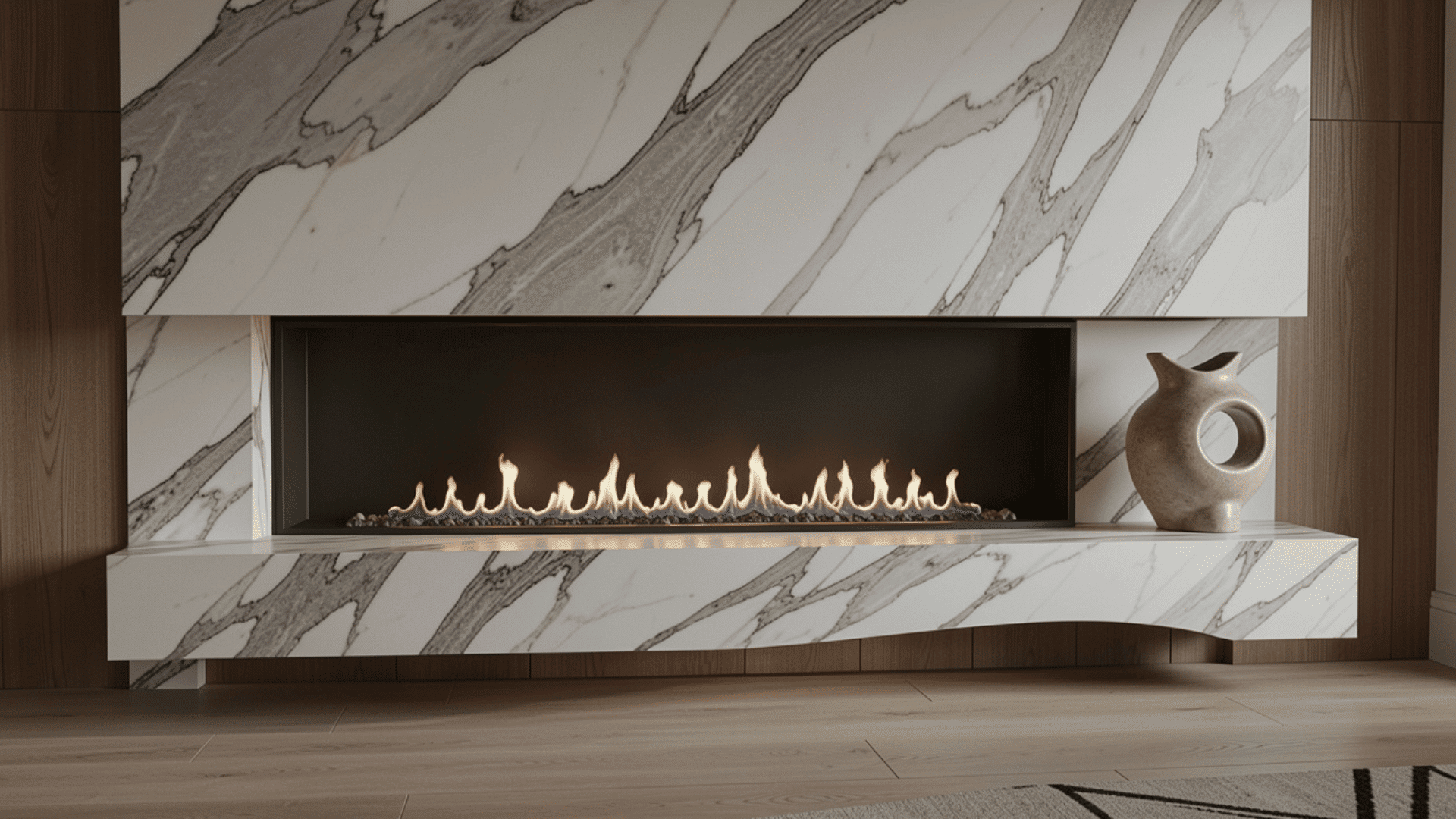
Plaster fireplaces are sculptural and smooth, and they’re one of my favorite specifications right now. There’s no grout and no obvious joints, just a single flowing surface that can curve, taper, or even feature wave-like texturing.
Venetian plaster adds subtle depth and a luminous finish that catches firelight beautifully.
American plaster is simpler and more common: a single layer of lime or gypsum plaster troweled by hand. It lacks the depth of Venetian but costs much less and still gives the smooth unbroken look that defines this style.
15. Slate Fireplaces
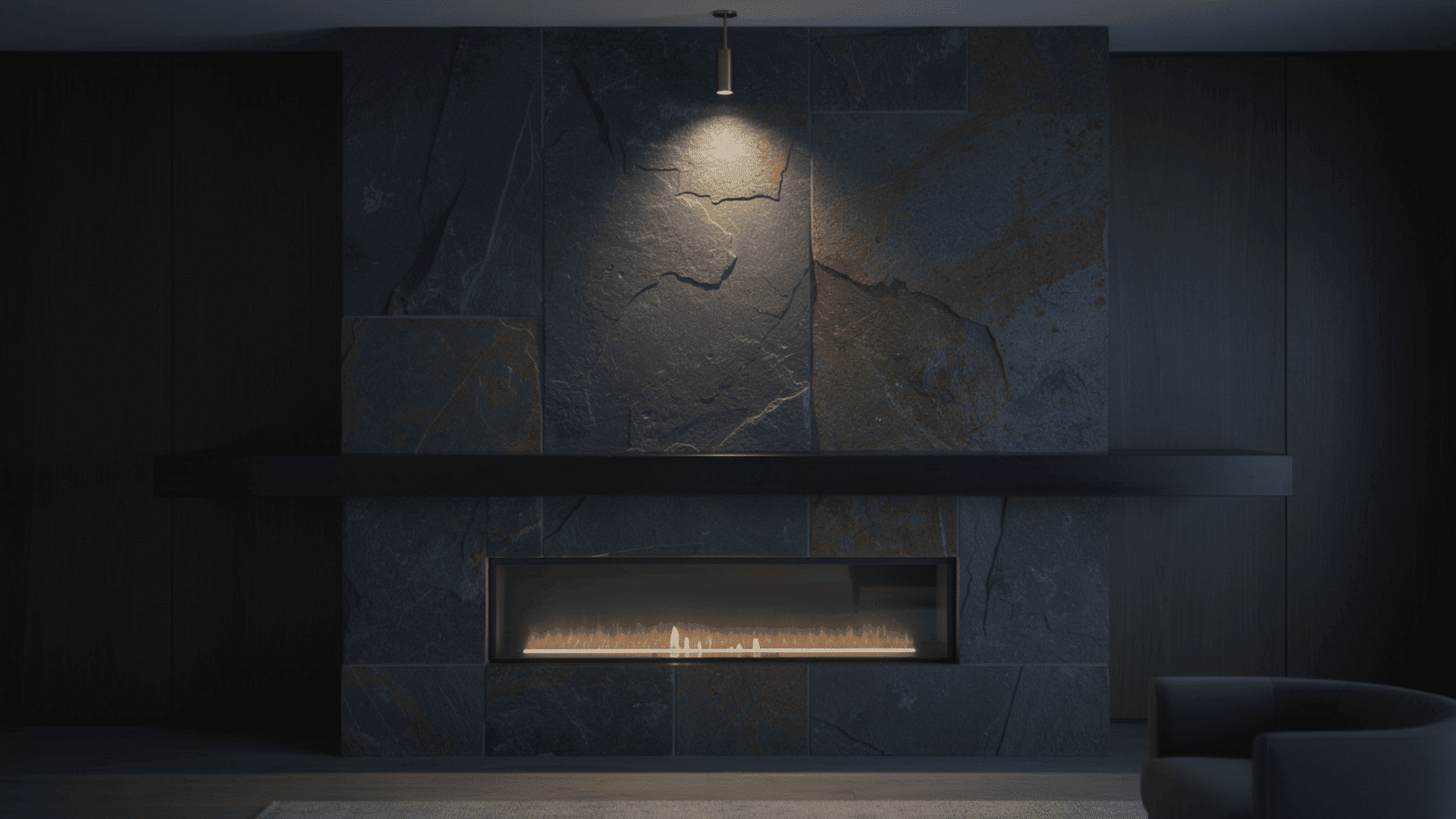
Slate brings depth no other stone can match. Layers of charcoal, blue, rust, and green run through each piece, and the surface alternates between smooth and naturally cleft.
Regional slate sources affect the color palette significantly. Vermont slate runs cool blue-gray. Pennsylvania slate leans warmer with rust tones. Welsh slate, the most prized internationally, has deep blue-black tones with mineral flecks throughout.
Ideal for moody rooms where the color variation can play against firelight.
16. Travertine Fireplaces
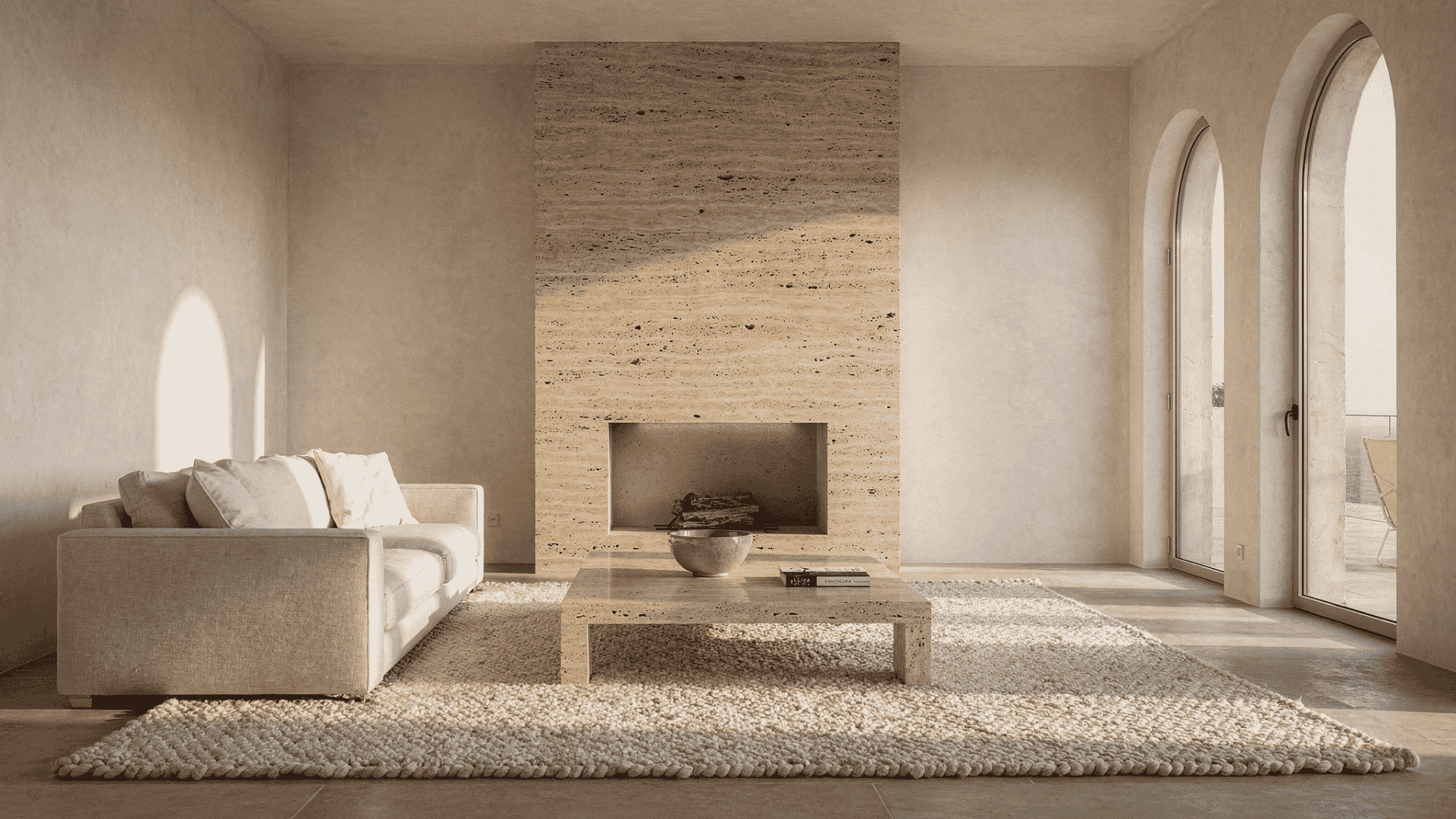
A creamy, naturally pitted stone that brings warmth to modern spaces without feeling rustic. I often recommend travertine for clients who want a soft Mediterranean undertone without committing to a fully traditional look.
Travertine comes in two finishes: filled and honed, or unfilled with the natural pits visible across the surface. The unfilled version reads more textural and character-rich but collects dust over time. The filled honed version reads cleaner and more refined.
It pairs especially well with plaster walls and warm wood.
17. Soapstone Fireplaces
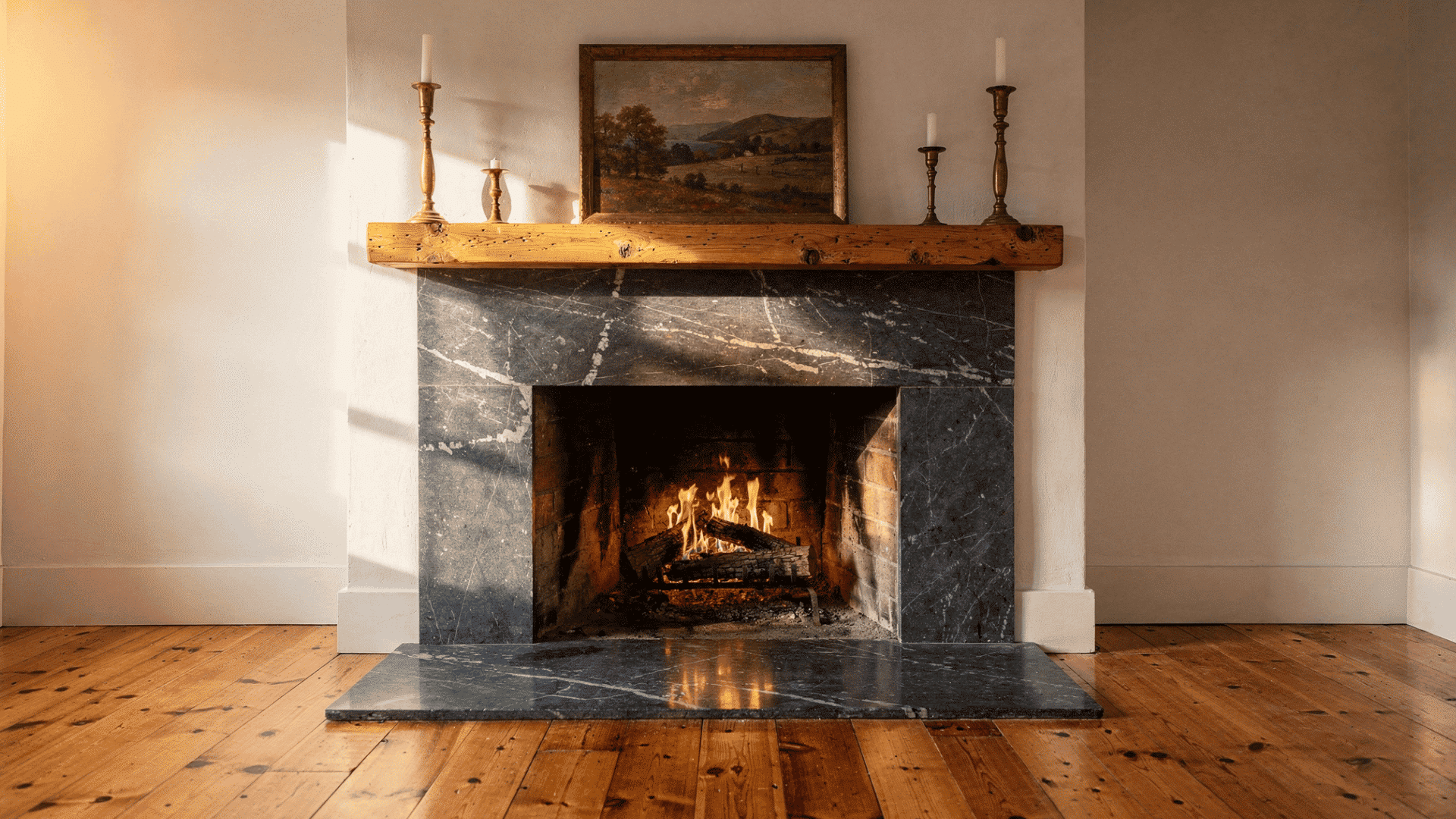
An old-world material is having a comeback. Soapstone is dense, holds heat beautifully, and has a soft matte finish that deepens with age.
Soapstone’s heat-retention property is a real functional benefit, not just a design choice. New England farmhouses and Scandinavian homes have used soapstone for this reason for centuries.
The stone darkens with regular mineral oil application, which most owners find brings out the silver veining beautifully.
I’ve used it for several wood-burning surrounds, and clients always comment on how the material seems to glow once the fire is going.
18. Encaustic and Cement Tile
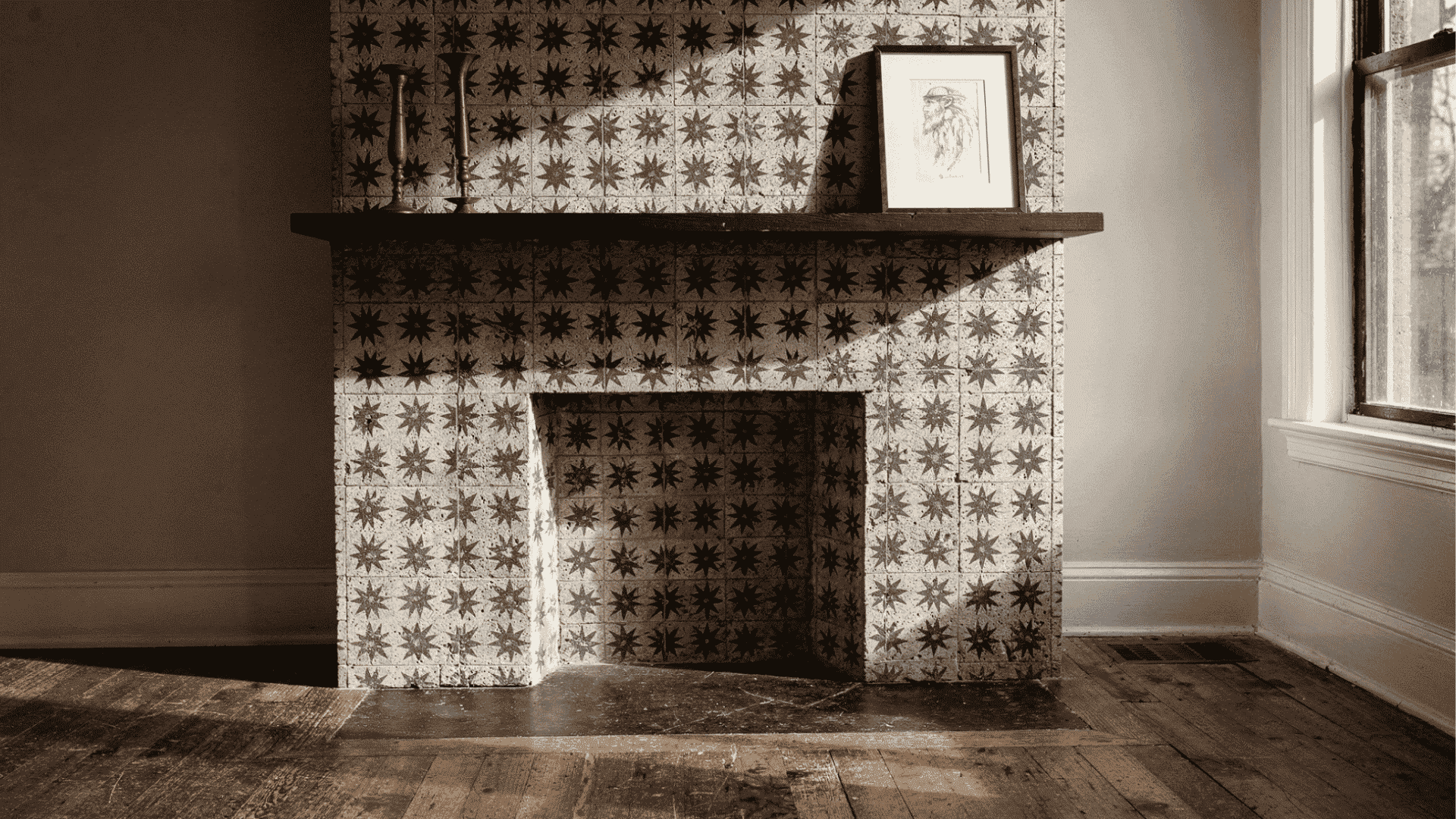
Fireplaces Patterned cement tile turns the fireplace into a graphic moment. Geometric stars,
Moroccan florals, or simple bold blocks of color, all work.
Mexican Saltillo tile is the most affordable option but tends to be uneven and rustic in appearance.
Italian or Tuscan terracotta is more refined with subtle color variation. Hand-thrown Moroccan bejmat tile is the most prized, with each tile showing the maker’s mark
A great way to add real personality to a fireplace without spending what stone or marble would cost.
19. Terracotta Tile Fireplaces
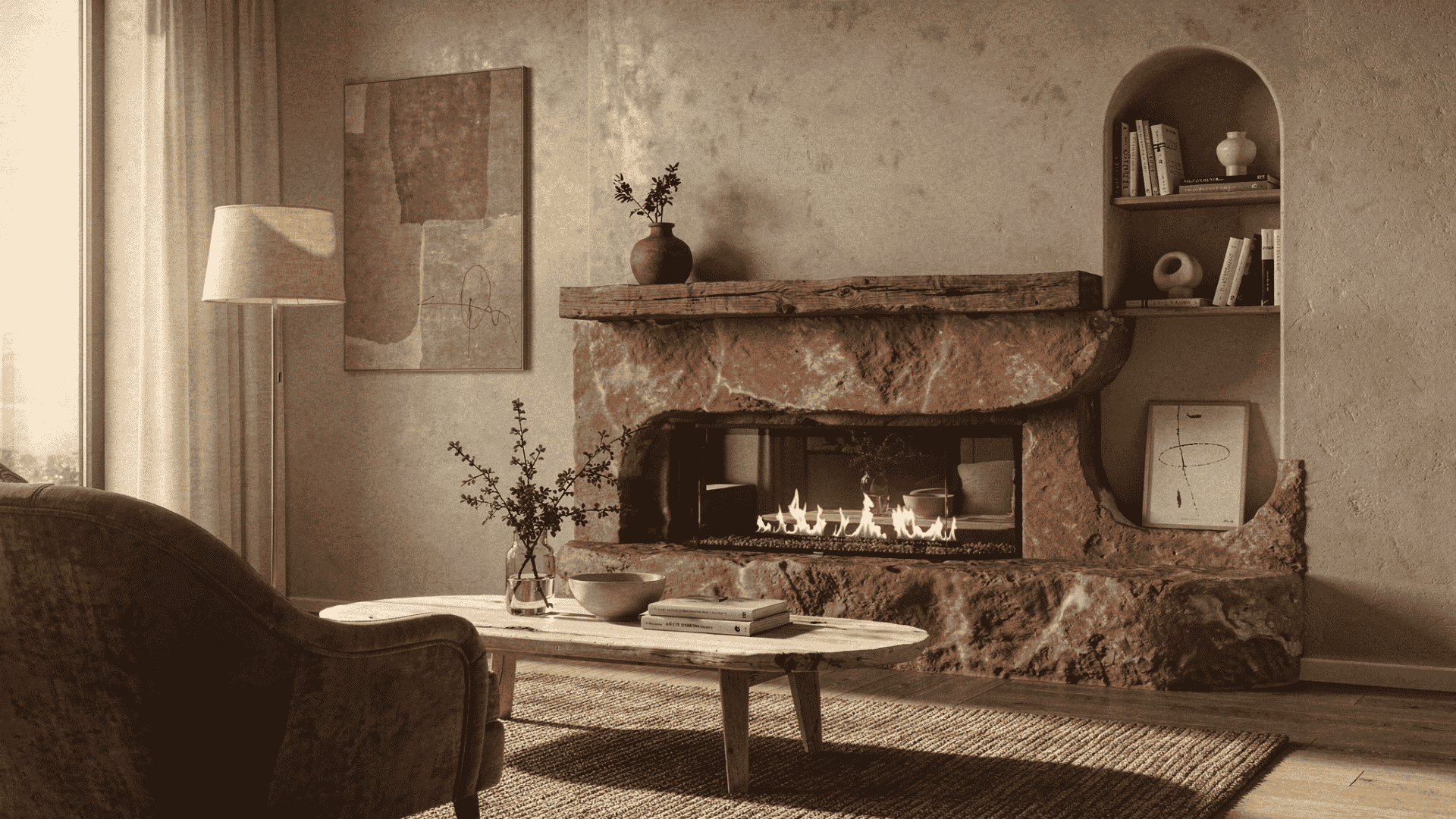
Unglazed terracotta has a warmth no other tile can match. Used as the hearth, as the full surround, or as a mural on the chimney breast, it brings instant Mediterranean or Spanish character.
It goes especially well with white plaster walls and dark wood furniture.
20. Stucco Fireplaces
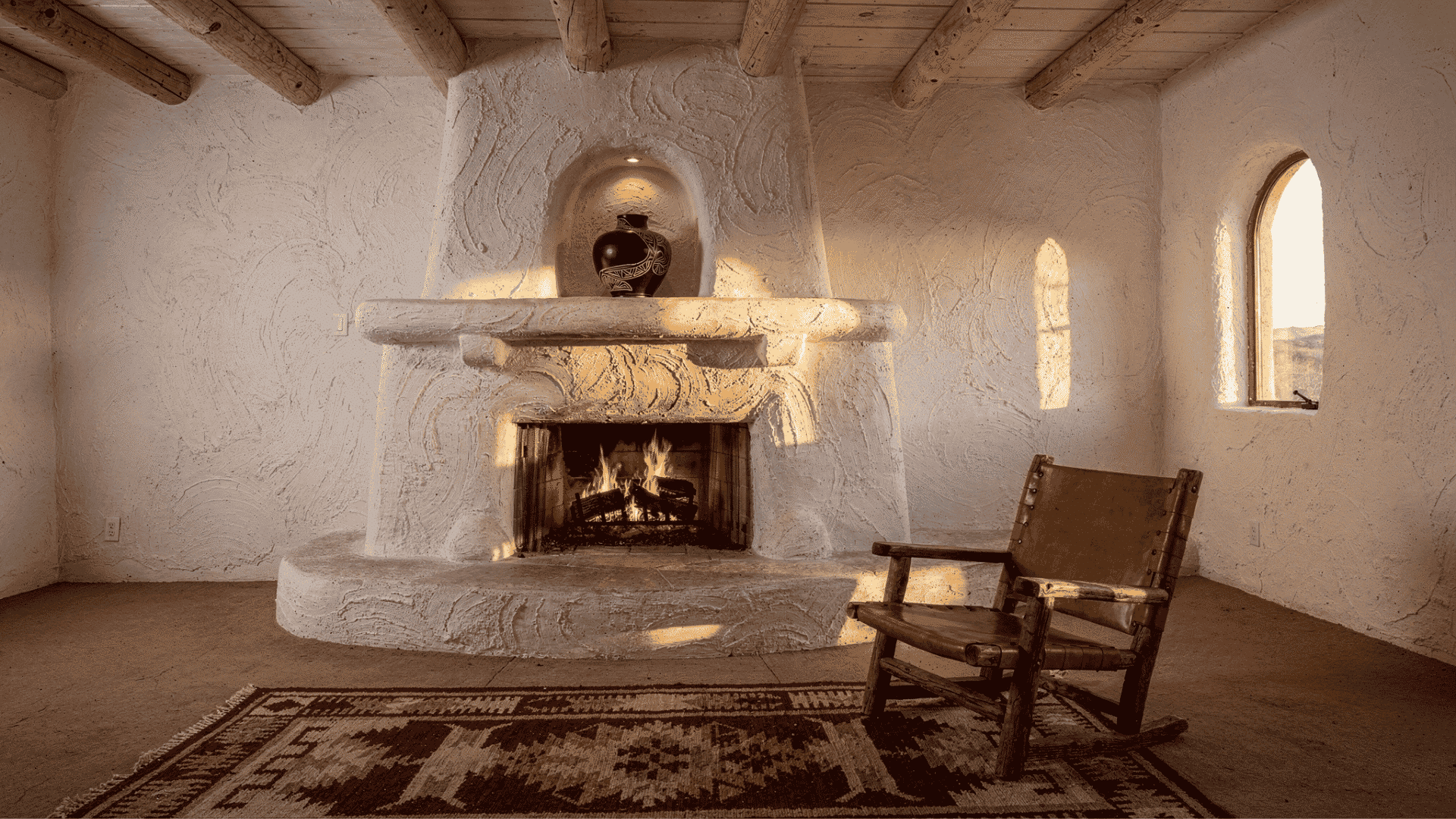
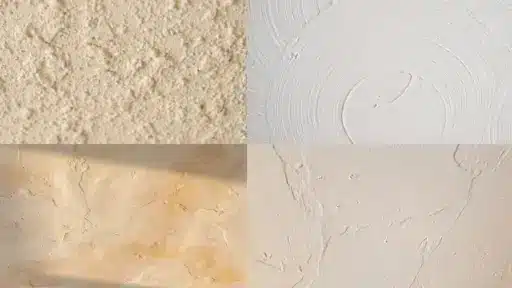
Hand-applied stucco gives you a soft, sculptural surround with subtle texture. It can be smooth,
troweled, or roughly textured depending on the look.
Less expensive than Venetian plaster but visually similar, and it’s the right call for Mediterranean, Spanish, or Pueblo-style homes.
Texture options include smooth troweled, Spanish lace, sand finish, and the heavily organic Santa Fe finish for the most rustic look.
21. Concrete Fireplaces
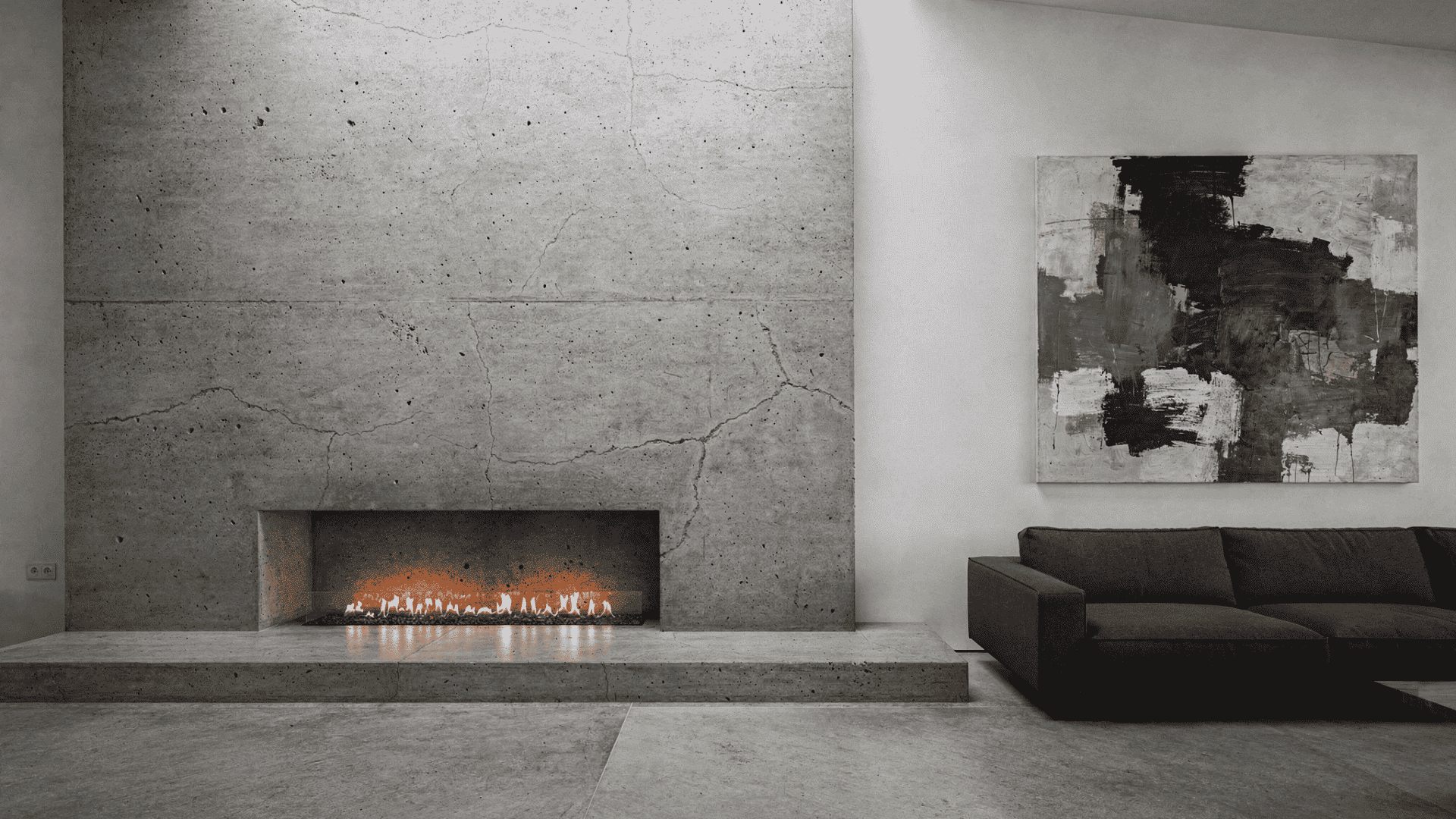
Polished concrete delivers industrial sleekness in either light gray or warm taupe pigmented finishes.
It’s one of the most durable surrounds, making it practical for high-use rooms, and its surface can be poured in custom shapes (curved, cantilevered, monolithic) that no other material can match.
Concrete fireplace surrounds come in two main types: precast (made off-site and installed in pieces) or cast-in-place (poured on-site in custom forms).
Cast-in-place is more expensive but allows for truly continuous surfaces and custom curved shapes. Pigments can be mixed into the concrete to achieve specific tones, from soft cream to deep charcoal.
22. Blackened Steel and Cor-Ten Fireplaces
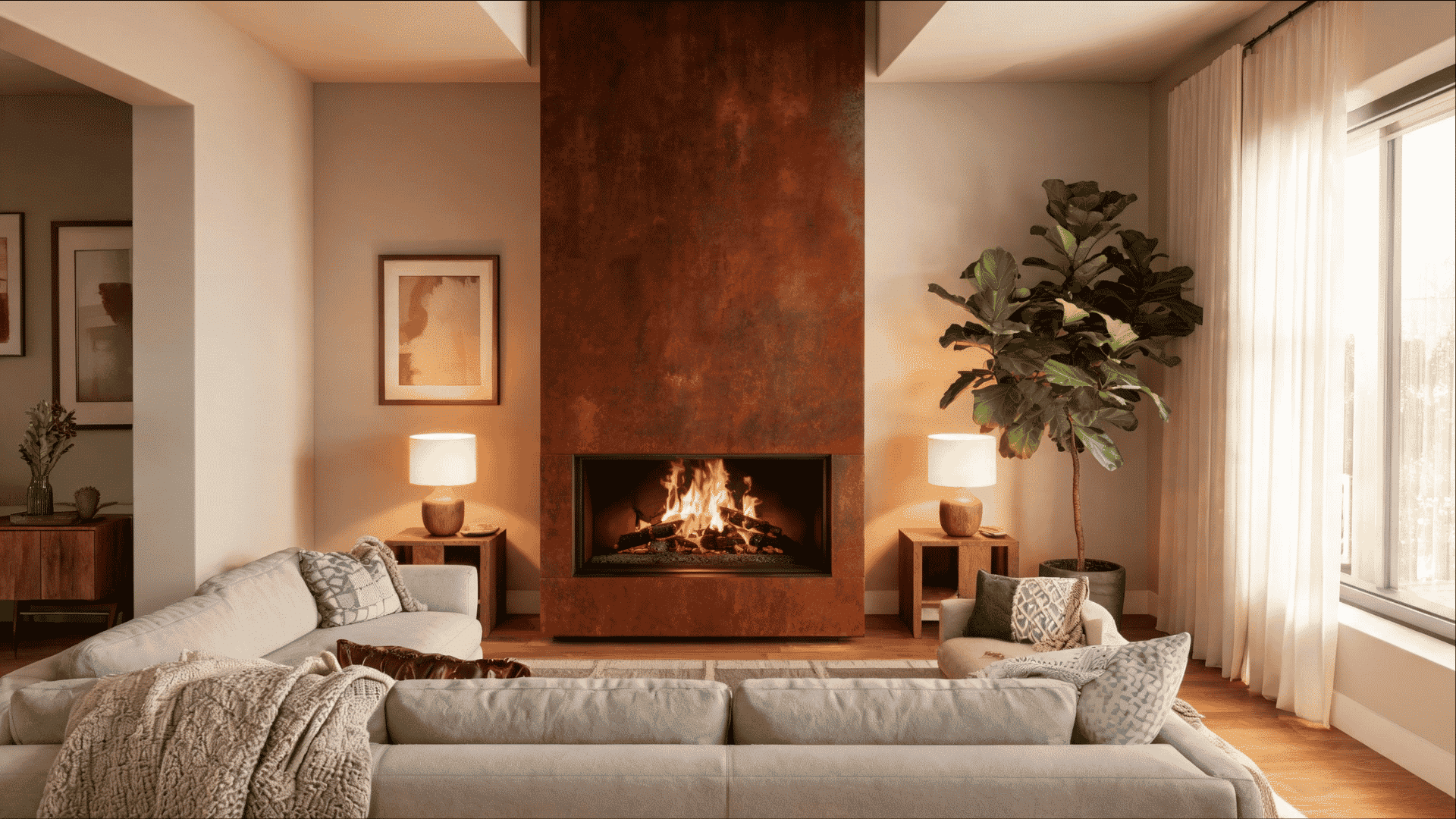
The most modern metal surrounds use blackened or weathered steel. Cor-Ten in particular develops a rust-colored patina that becomes a feature rather than a flaw.
Blackened steel is finished with a chemical patina that produces a soft matte black surface with subtle tonal variation across the surround. It pairs especially well with walnut, oak, and concrete elsewhere in the room.
Cor-Ten weathering steel was originally developed for industrial use but has become a signature material in contemporary building design. Use it for surrounds, hoods, suspended chimney covers, or accent strips.
I’ve used this on a few indoor-outdoor fireplace transitions where the material continues across the threshold for one continuous look.
Fireplace Design Ideas by Placement & Layout
Placement affects not only the spatial impact of a fireplace, but also how warmth, lighting, and furniture flow through the space around it.
The size and position of a fireplace often determine whether the room feels intimate and grounded or dramatic and expansive.
23. Corner Fireplaces
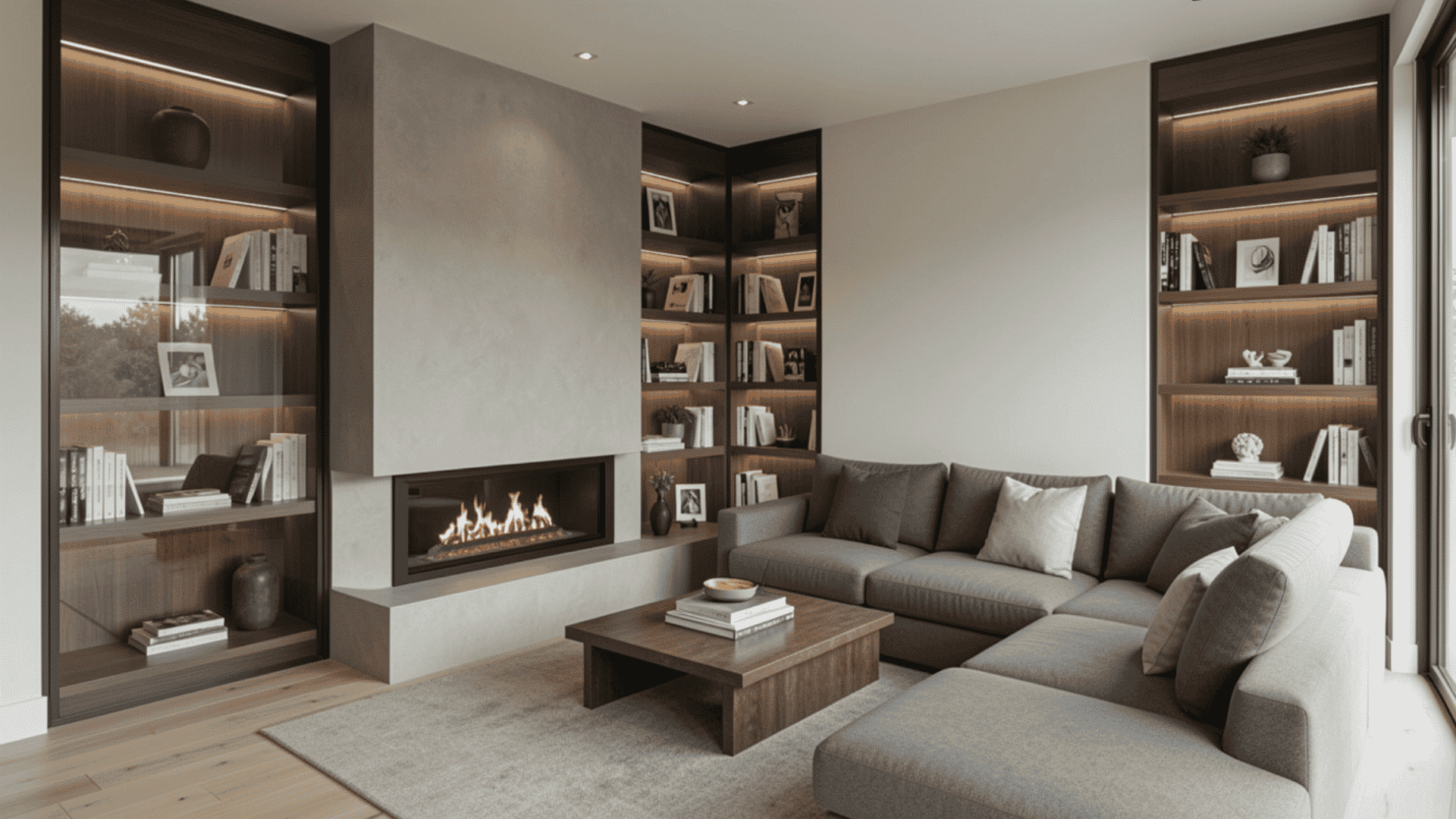
The smart choice for small rooms or layouts where wall space is limited. Corner fireplaces add an angled focal point that opens up sightlines from multiple seating positions.
Modern corner units often feature glass on two sides for a wraparound flame view.
24. Double-Sided (See-Through) Fireplaces
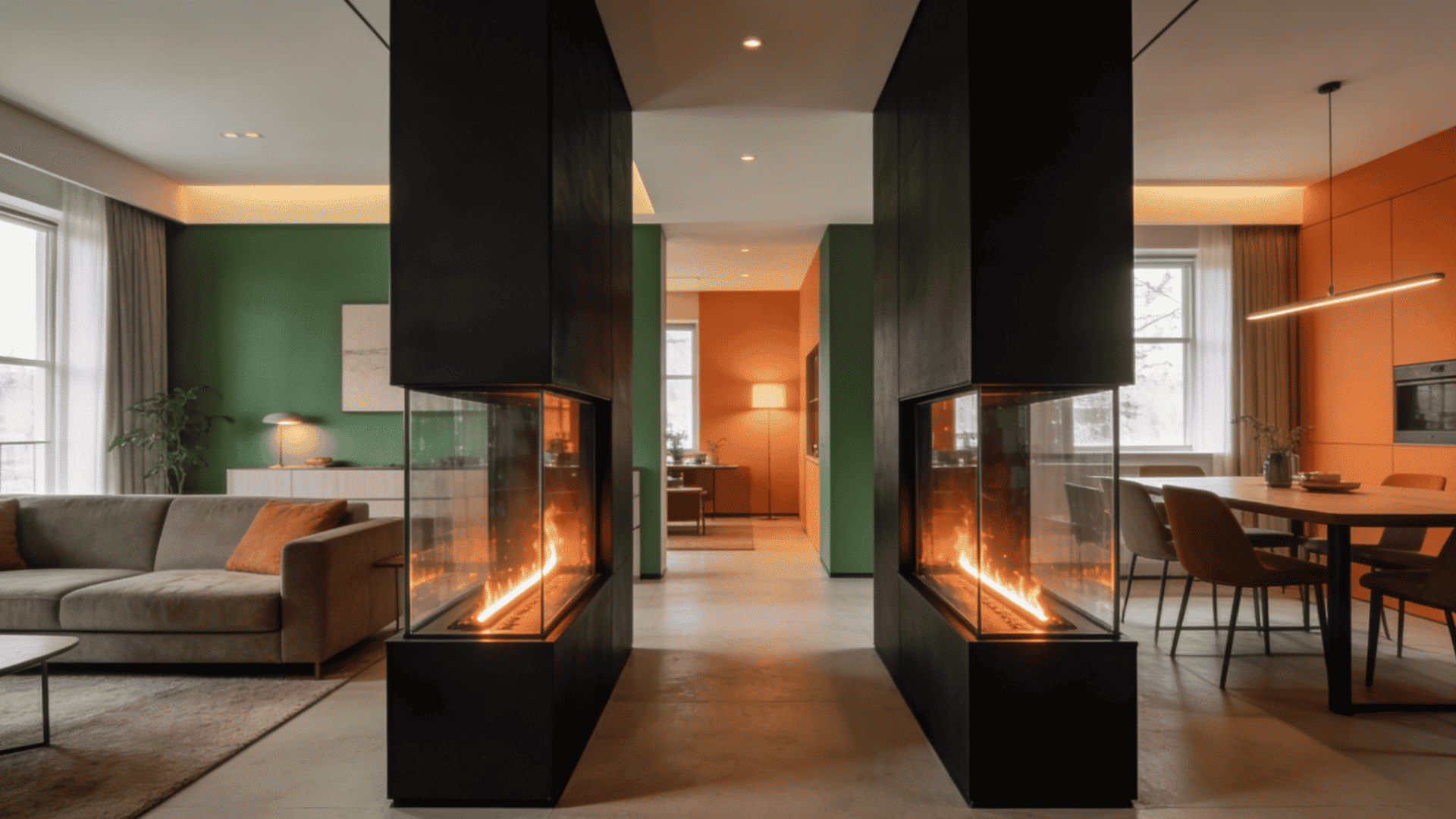
The ideal solution for open-plan homes. A see-through fireplace separates the living room from the kitchen, dining area, or even a primary bedroom and ensuite, all without blocking light or closing off the space.
Visually, it ties the two rooms together rather than dividing them.
25. Linear & Ribbon Fireplaces
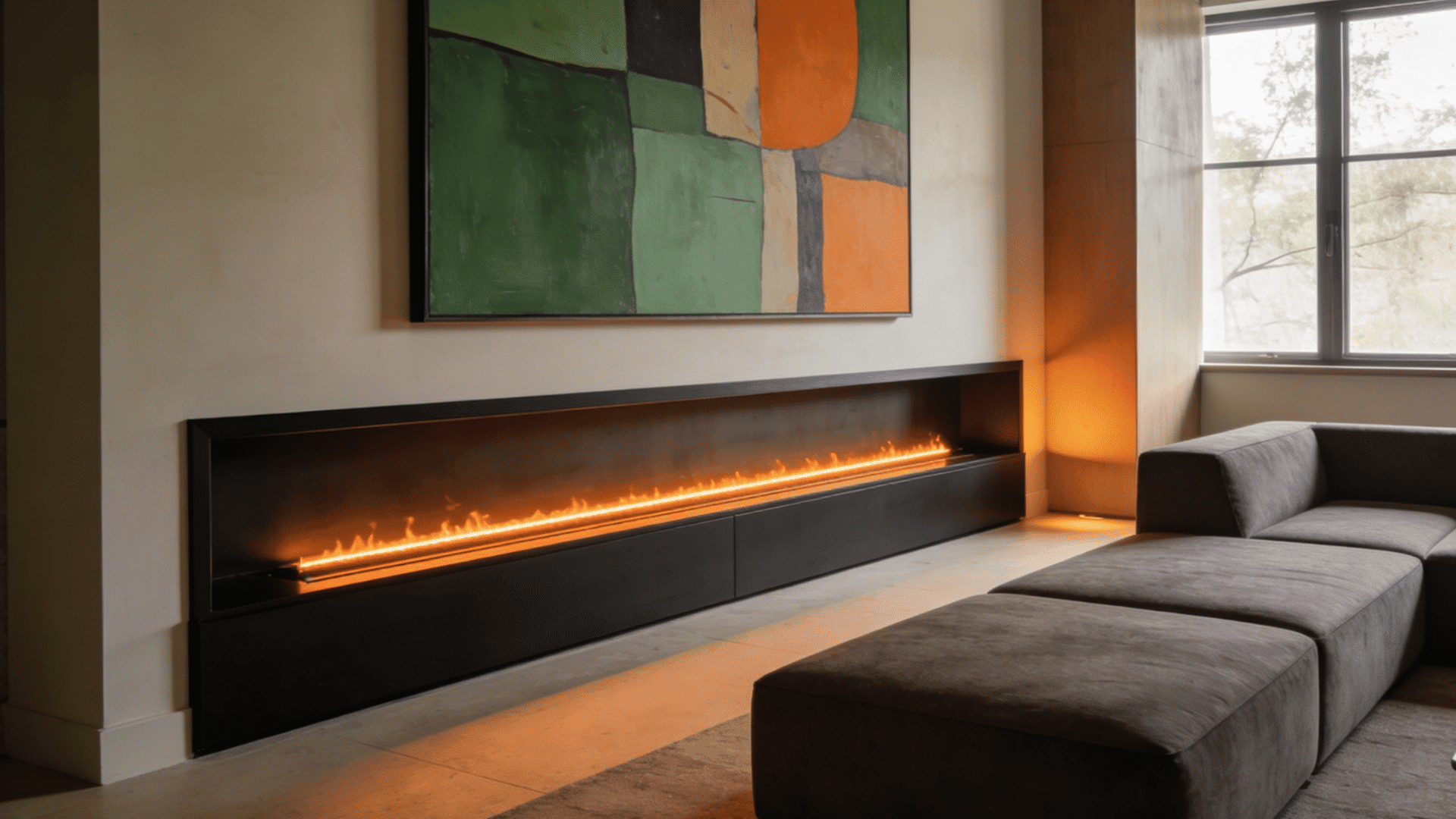
Long, low, and unapologetically horizontal. Linear gas fireplaces have replaced the boxy traditional firebox in most contemporary builds.
They can stretch six feet or more, forming a wide ribbon of flame that anchors large rooms without dominating them.
26. Fireplaces with a TV Above
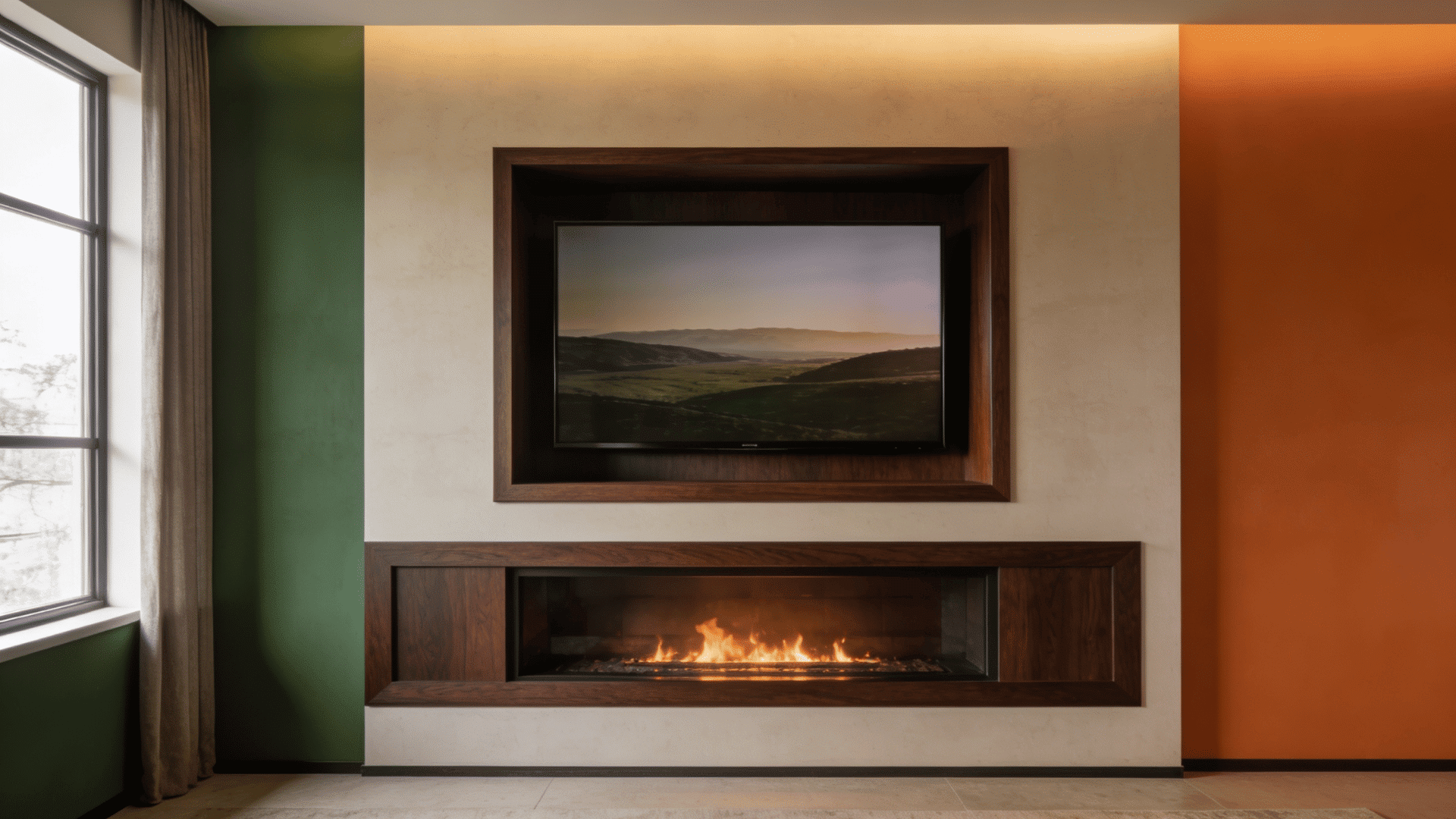
Done well, this is the most functional layout for a modern living room. The keys: recess the TV into a niche flush with the wall, separate it from the firebox with at least 12 to 18 inches of clearance, and either match or deliberately contrast the surround behind the TV.
27. Built-In Fireplaces with Storage
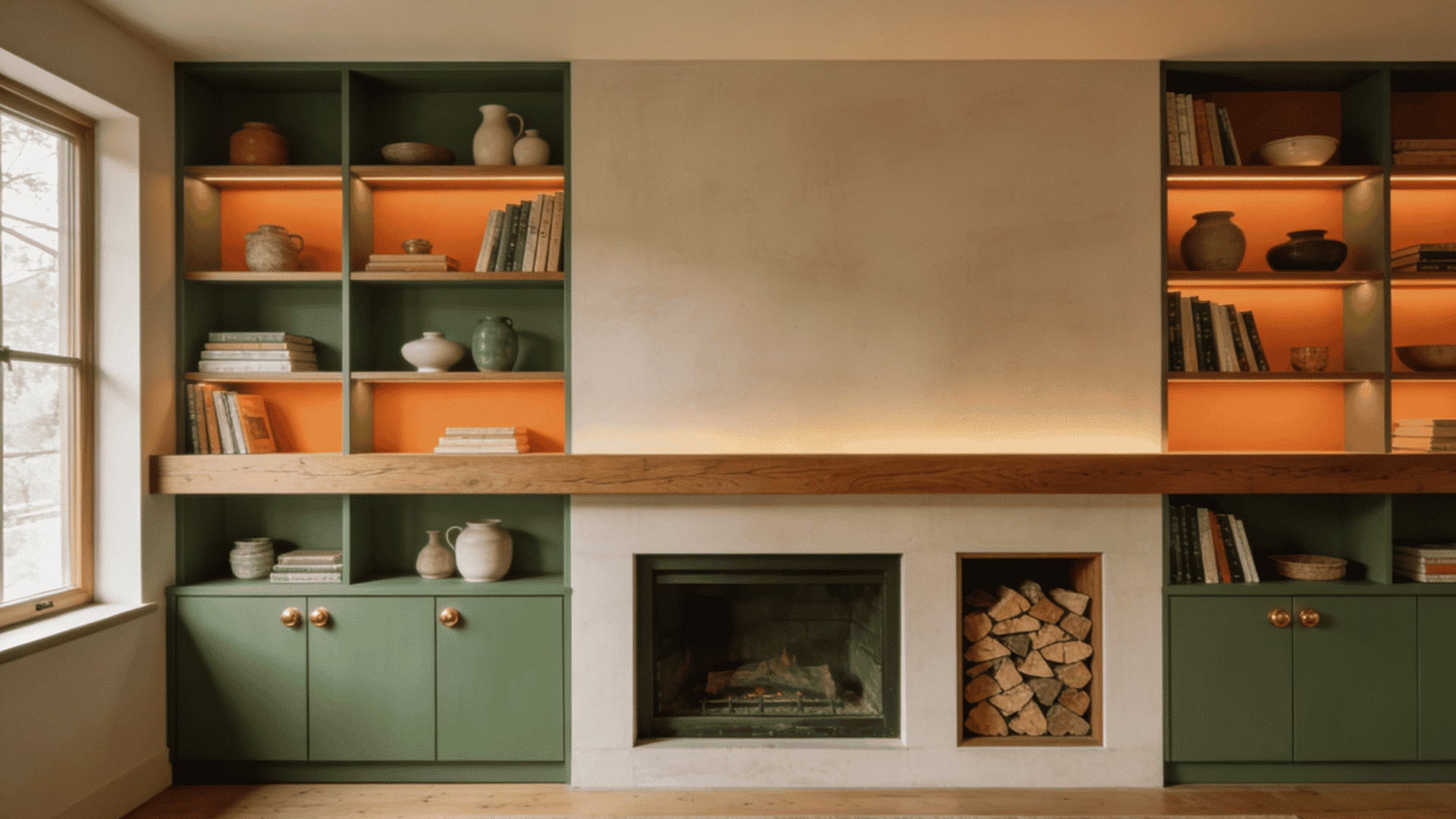
Flanking built-ins turn the fireplace into a true wall feature. Open shelves for books and objects, closed cabinets below for clutter, and a continuous mantel running across all three.
For something less expected, build firewood storage directly into the surround. It doubles as sculptural decoration.
Lighting inside the shelves changes the installation completely. Slim LED strip lights at the back of each shelf create depth and showcase the objects on display, especially in the evening.
28. Freestanding & Suspended Fireplaces
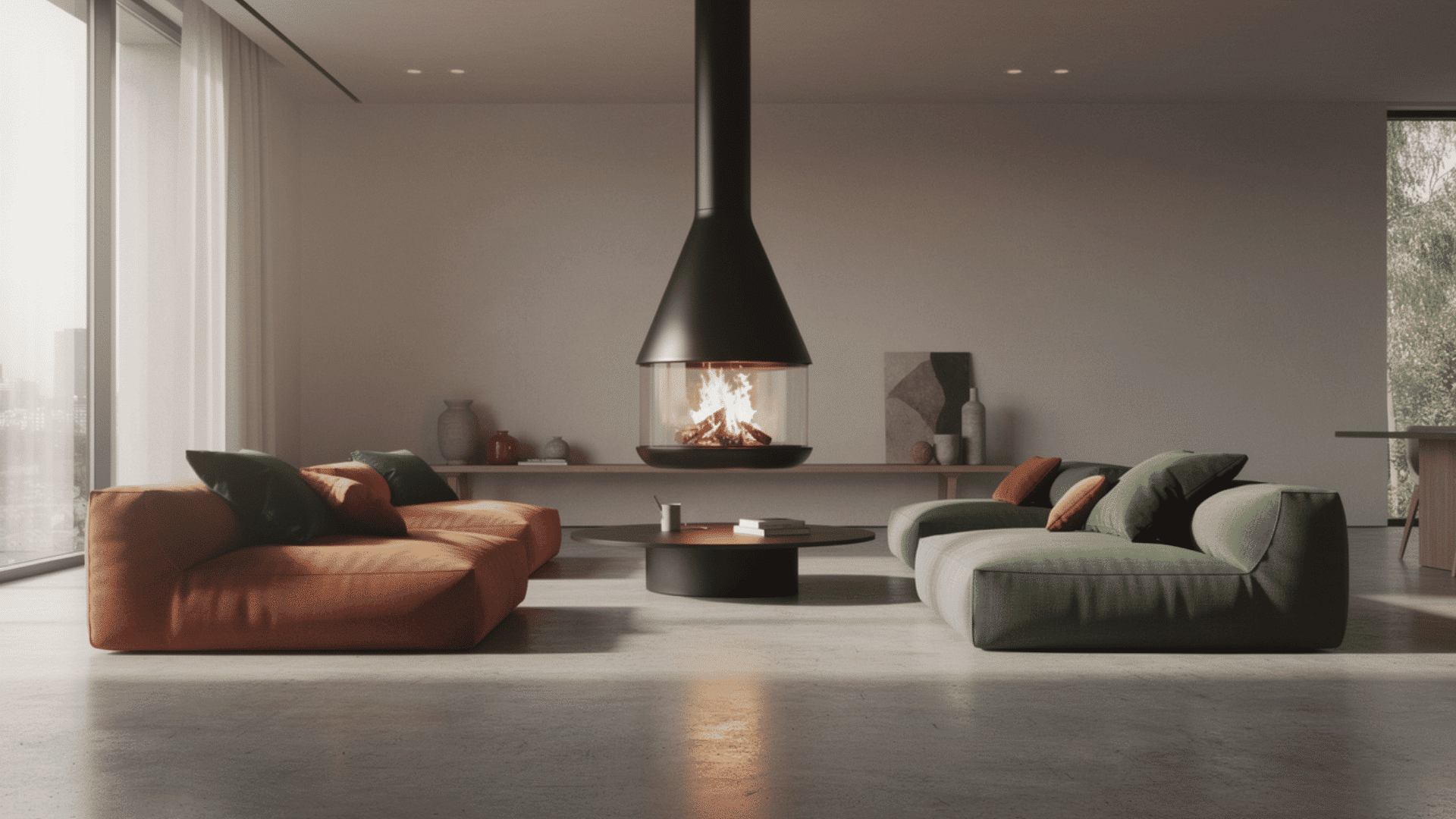
The most sculptural option. Freestanding wood stoves anchor a corner or center of a room without permanent walls.
Installation requires careful planning, especially for suspended units. They need a structural ceiling attachment capable of bearing several hundred pounds and proper venting through the roof above.
The visual reward is huge though: the fireplace floats in space, becomes the absolute center of the room, and allows 360-degree views of the flame from any angle. Furniture arranges around it in a circle rather than facing it.
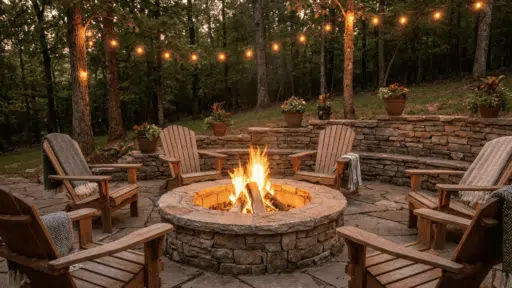
29. Outdoor Fireplaces
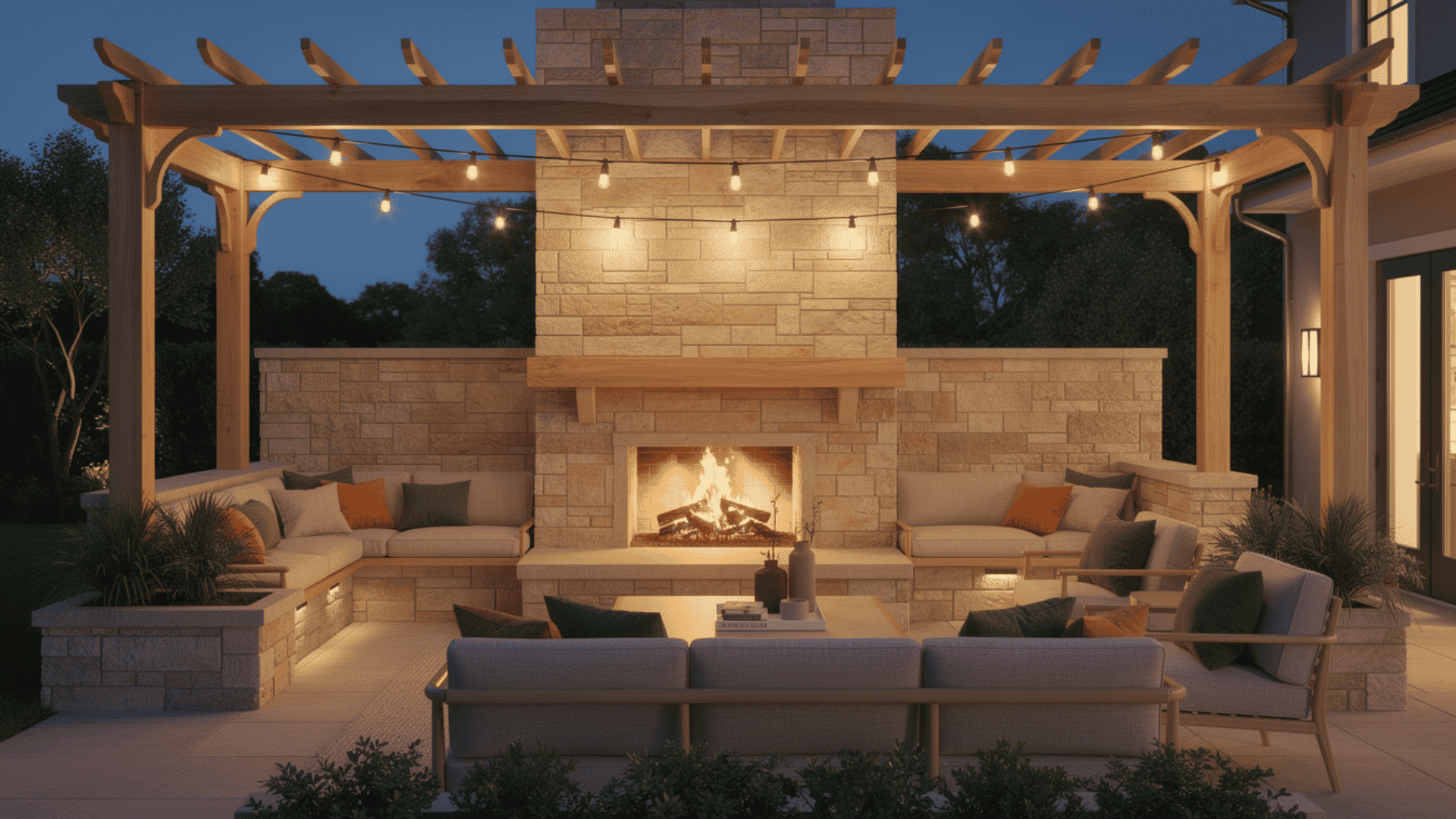
The same design rules apply, but the materials change. Stack stone, stucco, and weather-resistant concrete dominate.
Pair with built-in seating, a pergola overhead, and string lighting for an outdoor room that works three seasons of the year.
Position the fireplace where it’s protected from prevailing wind but still gets natural breeze for ventilation throughout the day.
30. Three-Sided (Peninsula) Fireplaces
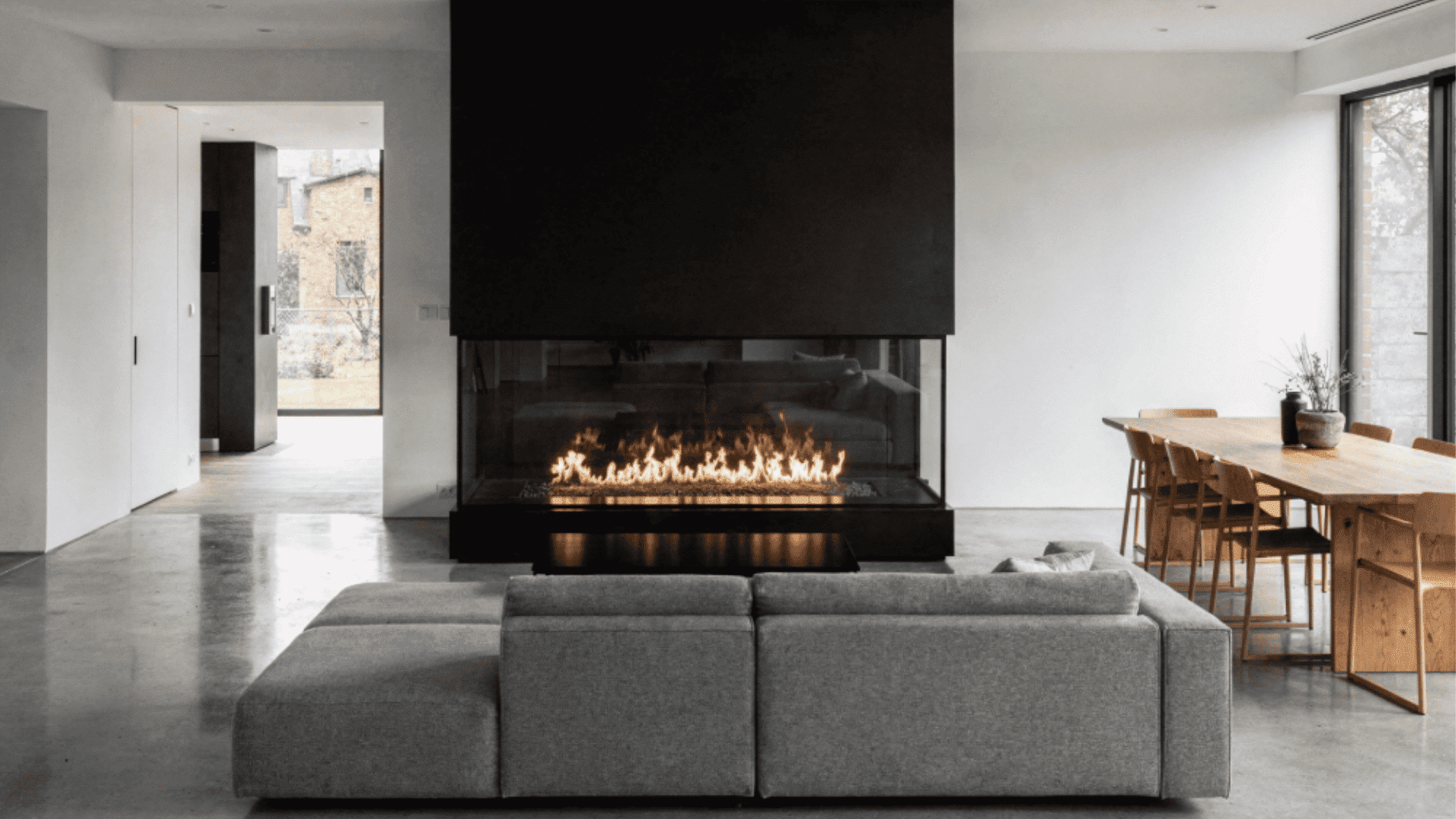
A step beyond the double-sided fireplace. With three glass sides, the firebox becomes a sculptural object that anchors the center of a room.
Visually, a peninsula fireplace looks great when the room around it is intentionally open. Surround the firebox with breathing room so the flame can be appreciated from all three sides.
Most promising when the firebox sits between three distinct zones, like a living room, dining area, and entry. Requires careful planning around clearances and venting.
31. Mantel-Less Modern Fireplaces
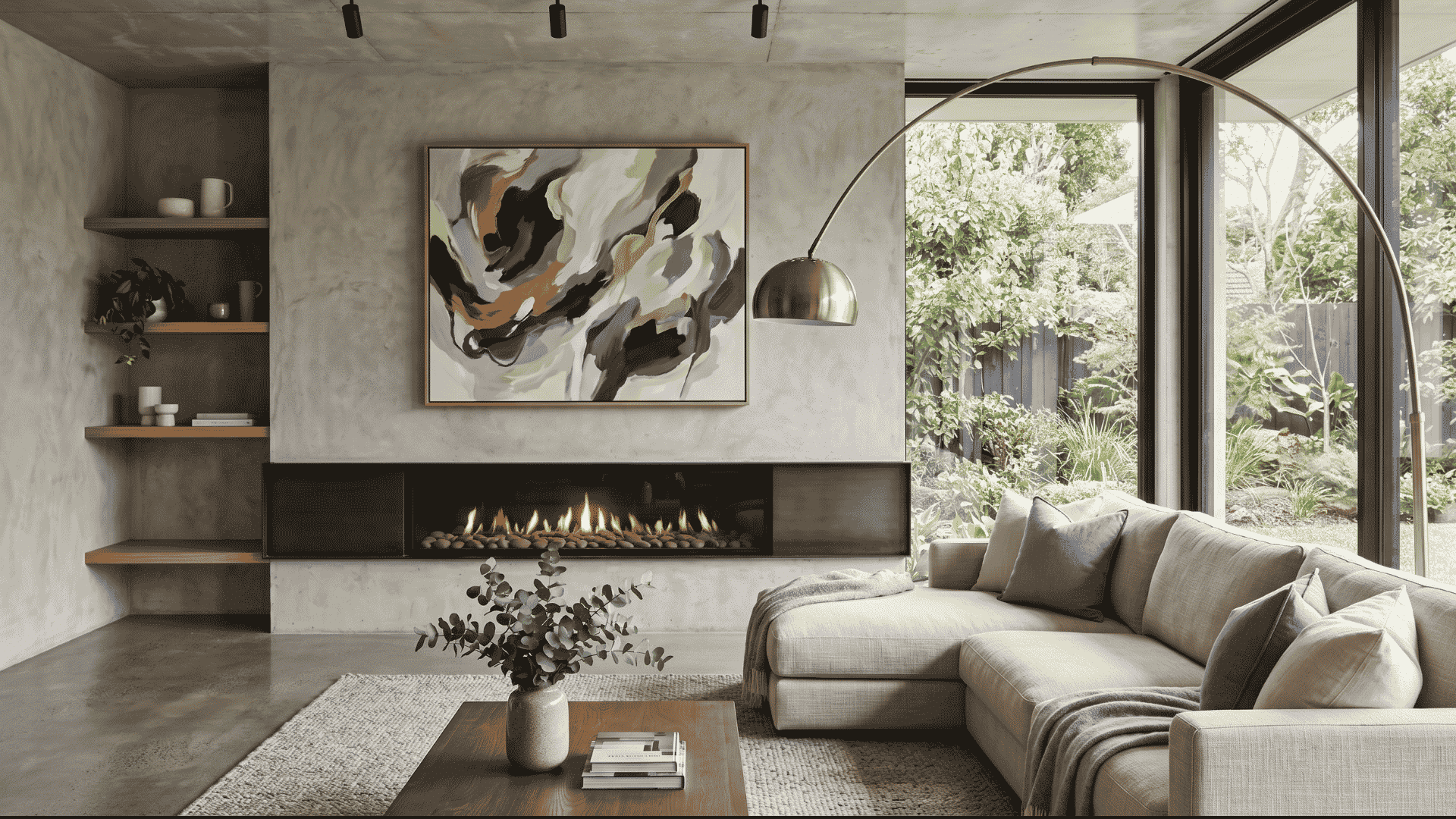
Skip the mantel entirely. The surround flows from floor to wall with no horizontal break,
no shelf, no ledge. It reads as pure structure rather than a decorative feature.
Without a mantel, the surround material itself has to carry the design weight of the entire feature. This is where bold material choices pay off: a single slab of marble, a continuous plaster surface, a bold stone, or a sculptural piece of blackened steel can all work.
I love this for clients who want their art or TV to be the focal point and the fireplace to support it.
32. Cantilevered or Floating Hearth Fireplaces
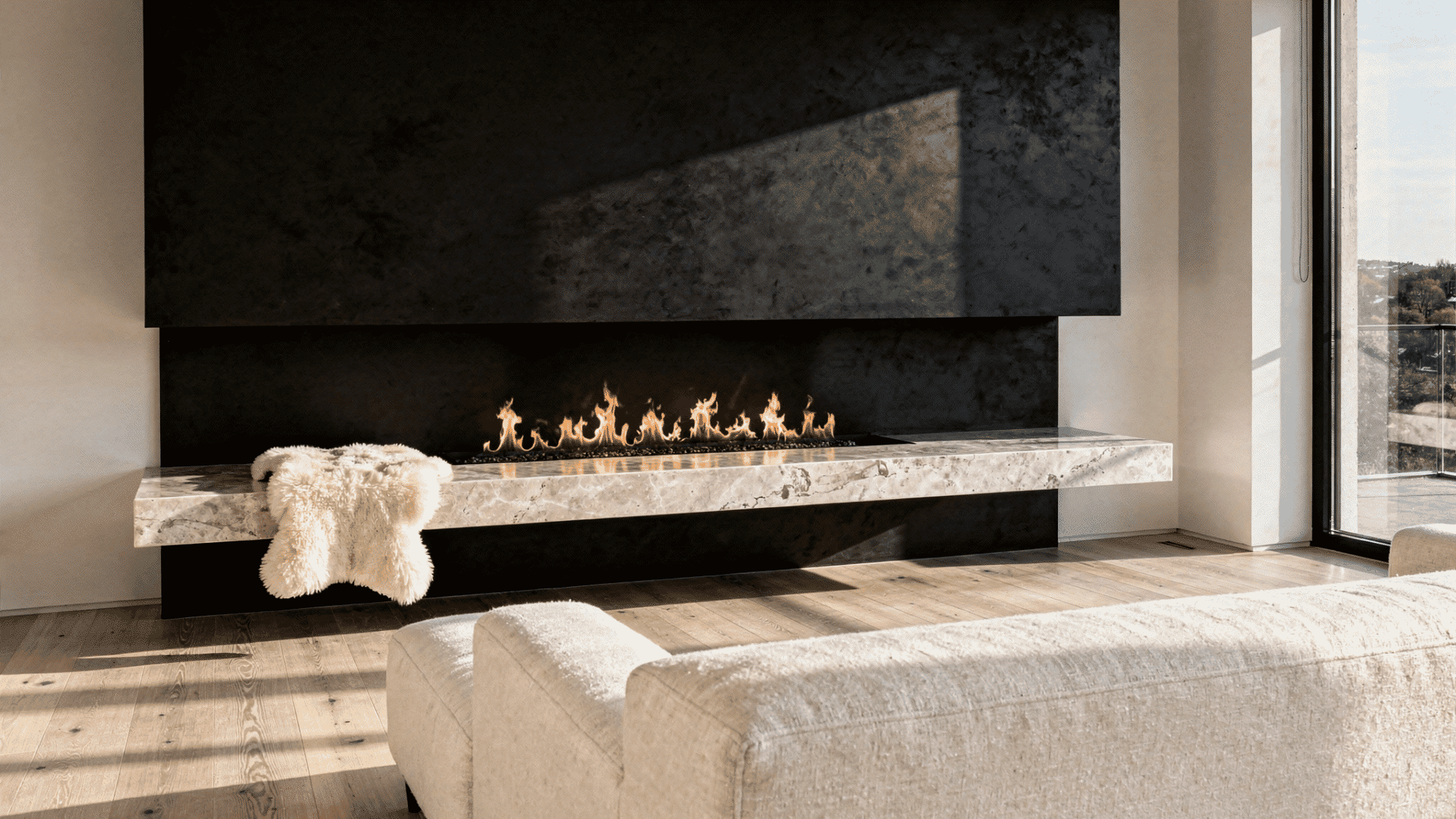
The hearth extends out from the wall with nothing supporting it underneath. It looks like a heavy stone slab is hovering in midair.
Structurally, a cantilevered hearth requires hidden steel reinforcement embedded into the wall behind the firebox. The steel projects outward to support the weight of the stone slab, often hundreds of pounds total.
This must be designed by an engineer and installed during framing, not added later as an afterthought. The visual lightness is striking, especially in rooms that already feel grounded by other heavy materials.
33. Tower or Column Fireplaces
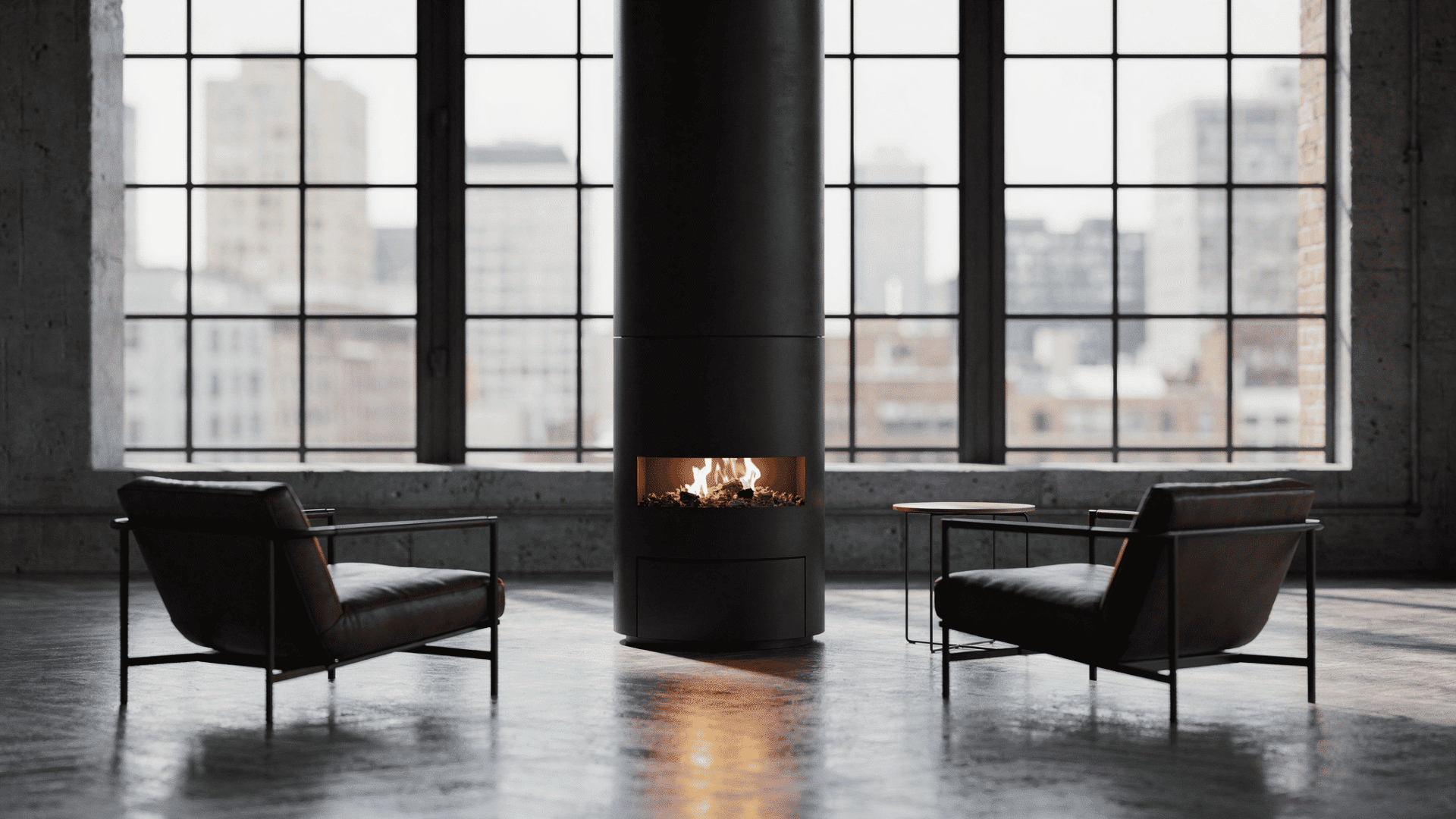
A freestanding column-shaped fireplace that rises from floor to ceiling without touching any wall. Often in a sculptural cylinder or rectangular tower form.
It functions like a piece of art that also produces heat. Looks strongest in open-plan spaces with high ceilings.
Materials range from blackened steel and powder-coated metal to plaster, stone, or even concrete. Furniture arrangement around a column fireplace gets interesting. Seating wraps around the column or faces it from multiple angles rather than one direction.
34. Pop-Out Box Fireplaces
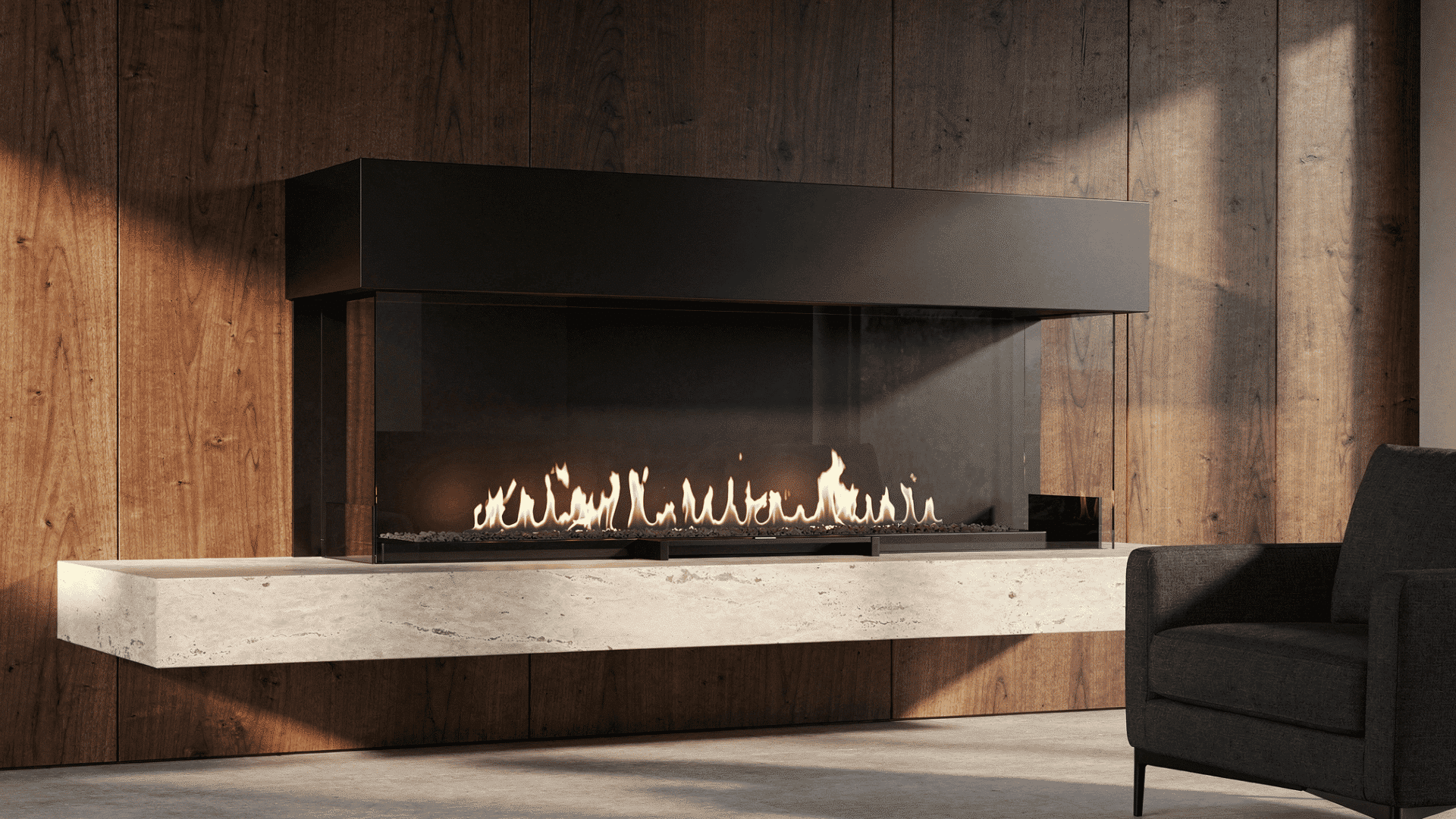
Instead of recessing the fireplace into the wall, the firebox extends out from the wall in a clean rectangular box. The hearth wraps around three sides.
It reads ultra-modern and gives the fireplace a strong dimensional presence without committing to floor-to-ceiling impact.
Material choice should make the box feel intentional in the space. Contrasting materials like a black steel box against a white wall read most intentional. Matching materials make the box feel like a sculptural extension of the wall itself.
Fireplace Design Ideas by Room
Fireplace ideas often feel more successful when they’re adapted to the mood and function of the space rather than following a single design formula throughout the home.
Some rooms benefit from dramatic statement fireplaces, while others work better with quieter designs that add warmth without overwhelming the space.
35. Bedroom Fireplaces
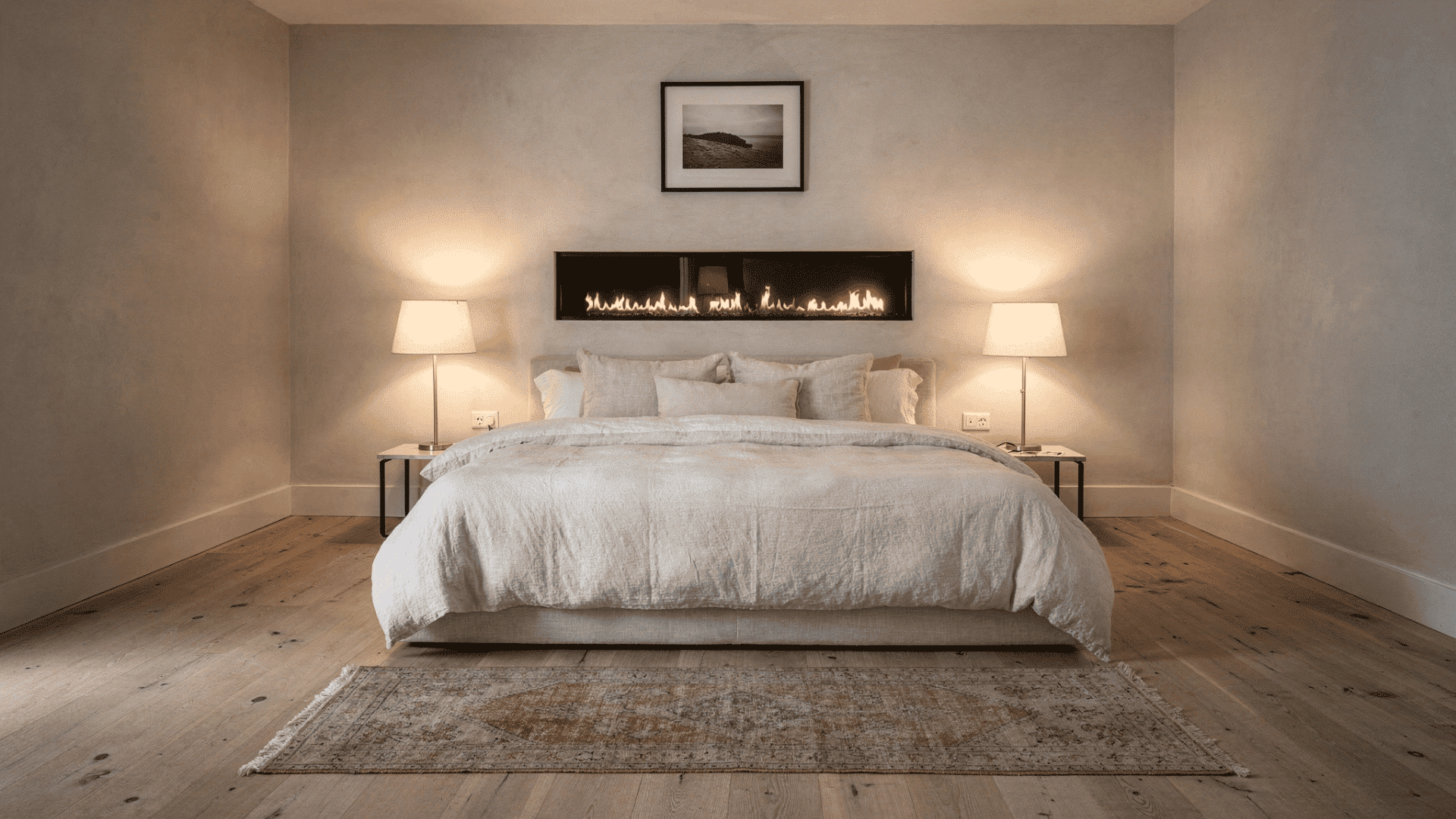
A small linear electric or gas fireplace mounted across from the bed. It’s one of the rooms I get the most requests for, especially in primary suites.
The fireplace gives a hotel-like feel without the maintenance of a wood-burning unit, and electric inserts mean no venting headaches.
Material choice should stay calm: soft plaster surrounds, honed limestone, or simple painted millwork work best in bedrooms without dominating the room.
36. Bathroom Fireplaces
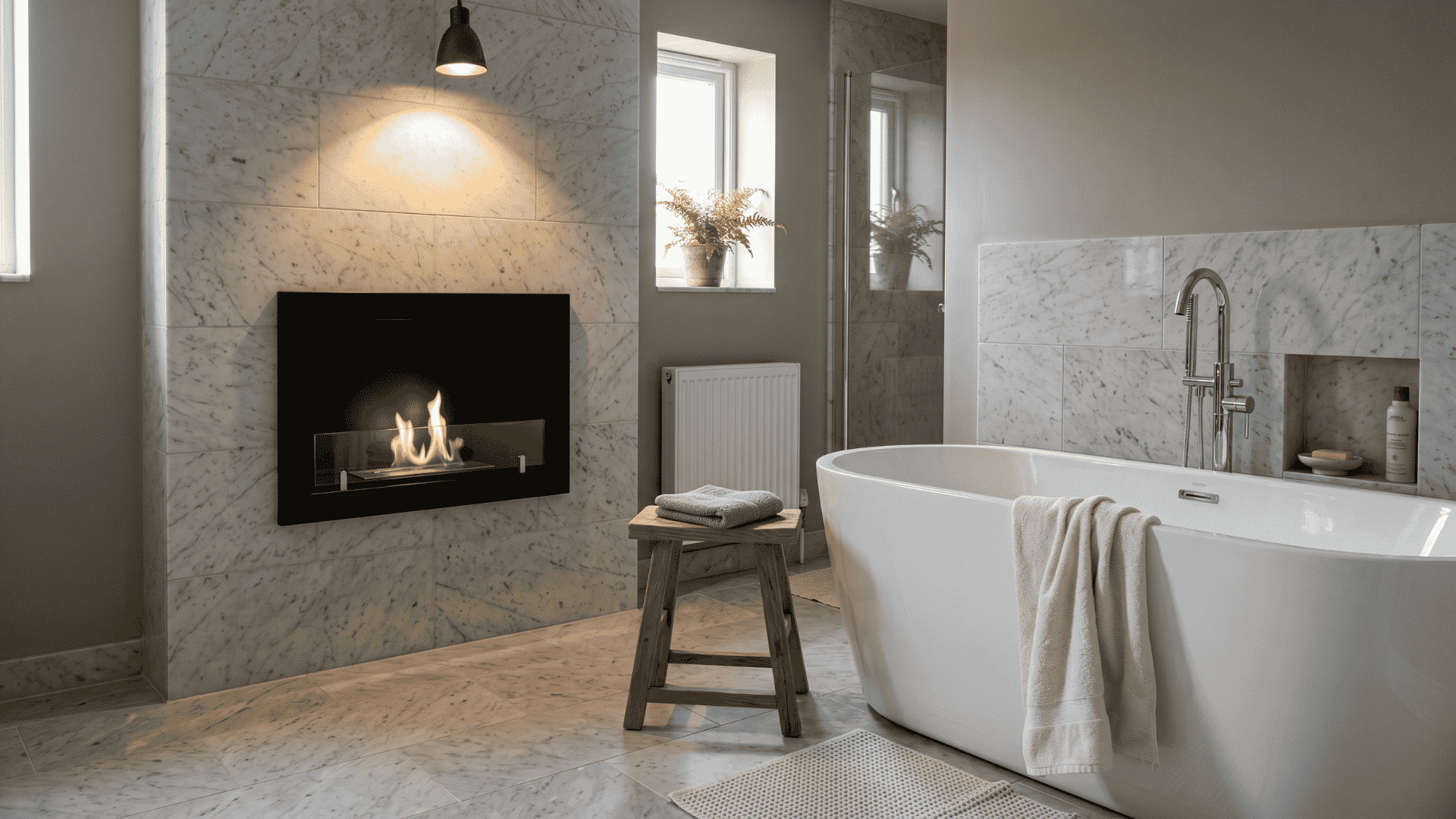
A compact see-through or wall-mounted fireplace placed across from the bathtub turns a regular bathroom into a spa retreat. Stick to electric or ethanol for safety and easier install.
Position the fireplace where it’s visible from the bathtub but doesn’t crowd the vanity or shower. A wall-mounted linear unit at chest height works in most layouts. Pair with marble or stone surfaces in the bathroom to reinforce the spa feeling.
The fireplace doesn’t need to be large, just visible from the tub.
37. Kitchen Hearth Fireplaces
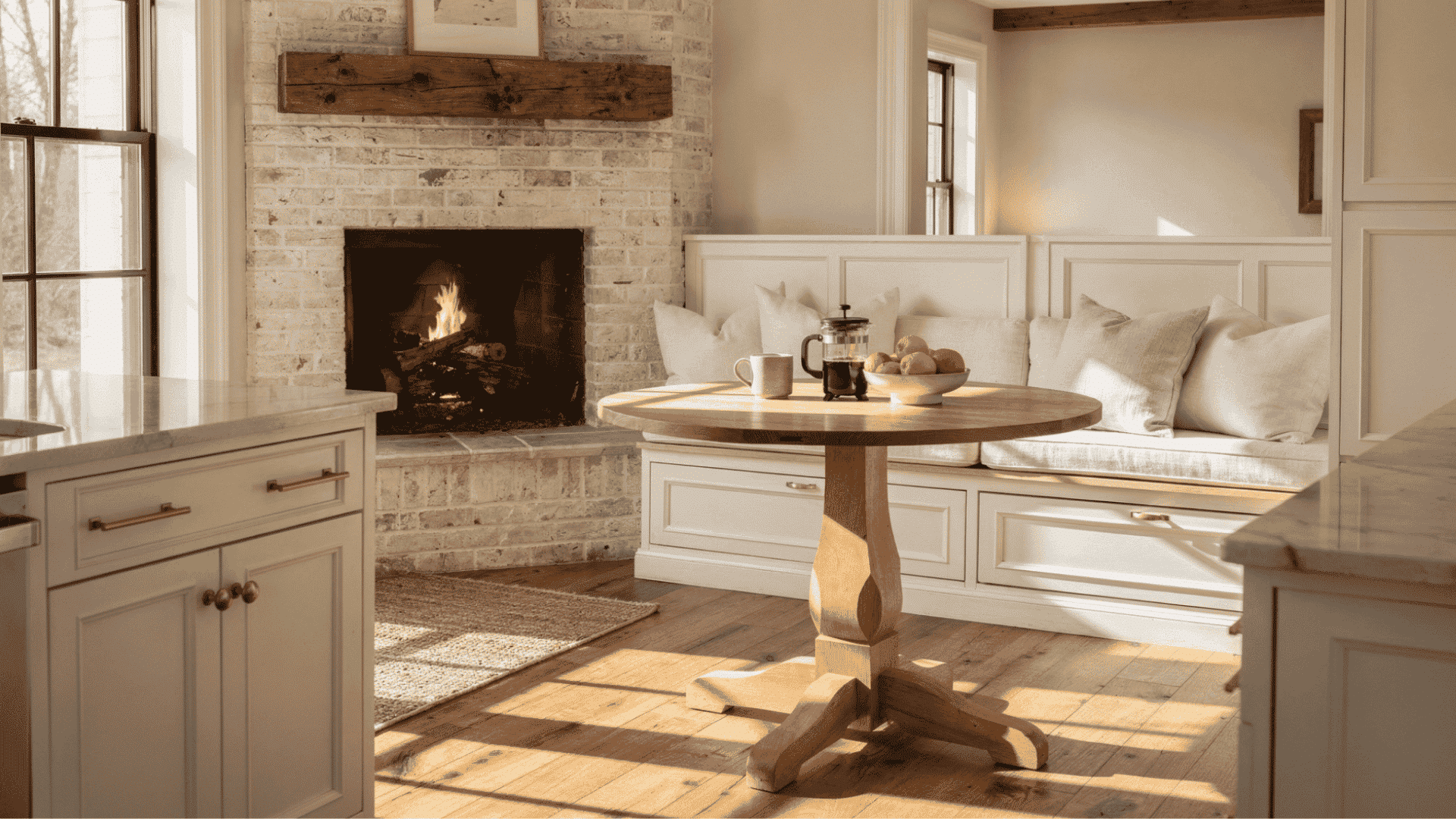
A throwback to old European kitchens. A small fireplace built into the kitchen wall, often near an eating nook or breakfast banquette.
The fireplace becomes a warm anchor between cooking and gathering, especially in homes where breakfast and dinner happen at the same banquette.
The breakfast nook side of the kitchen is the most natural location, especially when the nook is tucked into a corner. Material choice should complement the kitchen rather than compete with the active cooking elements throughout.
I’ve designed a few of these for clients with great rooms where the kitchen flows into the living space. The fireplace becomes a warm anchor between cooking and gathering.
38. Home Office Fireplaces
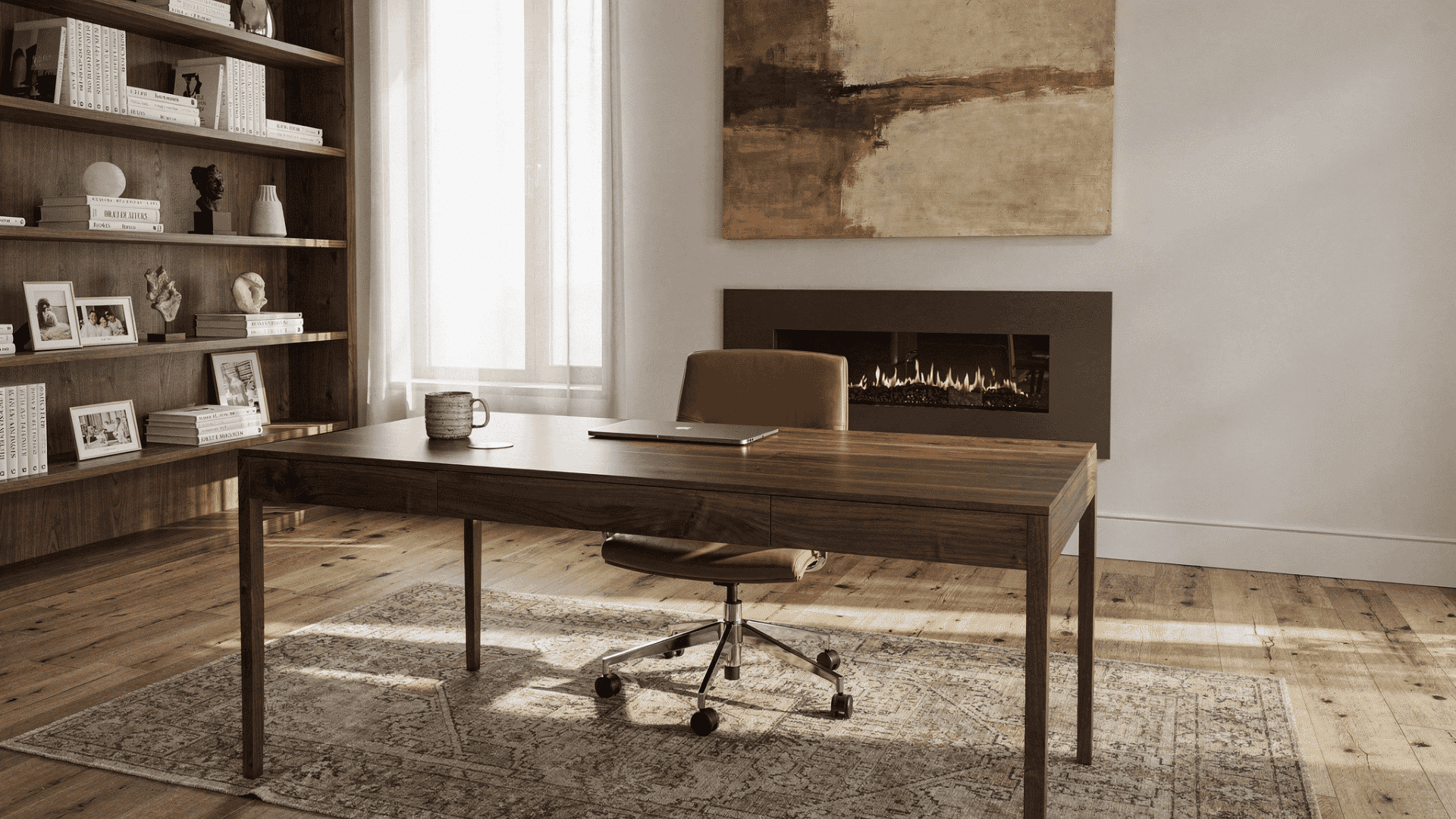
Working from home changed how we think about offices, and a fireplace makes a real difference. Best as a small linear electric unit mounted on the wall opposite the desk, so it’s visible during video calls and adds warmth without needing maintenance.
The video-call angle is worth thinking through carefully when planning the layout. A fireplace visible behind you on camera looks polished and intentional; a fireplace badly framed or with cluttered styling looks distracting on screen.
My Tip: Aim the camera so the fireplace sits to one side of the frame, not centered behind your head.
39. Foyer or Entry Fireplaces
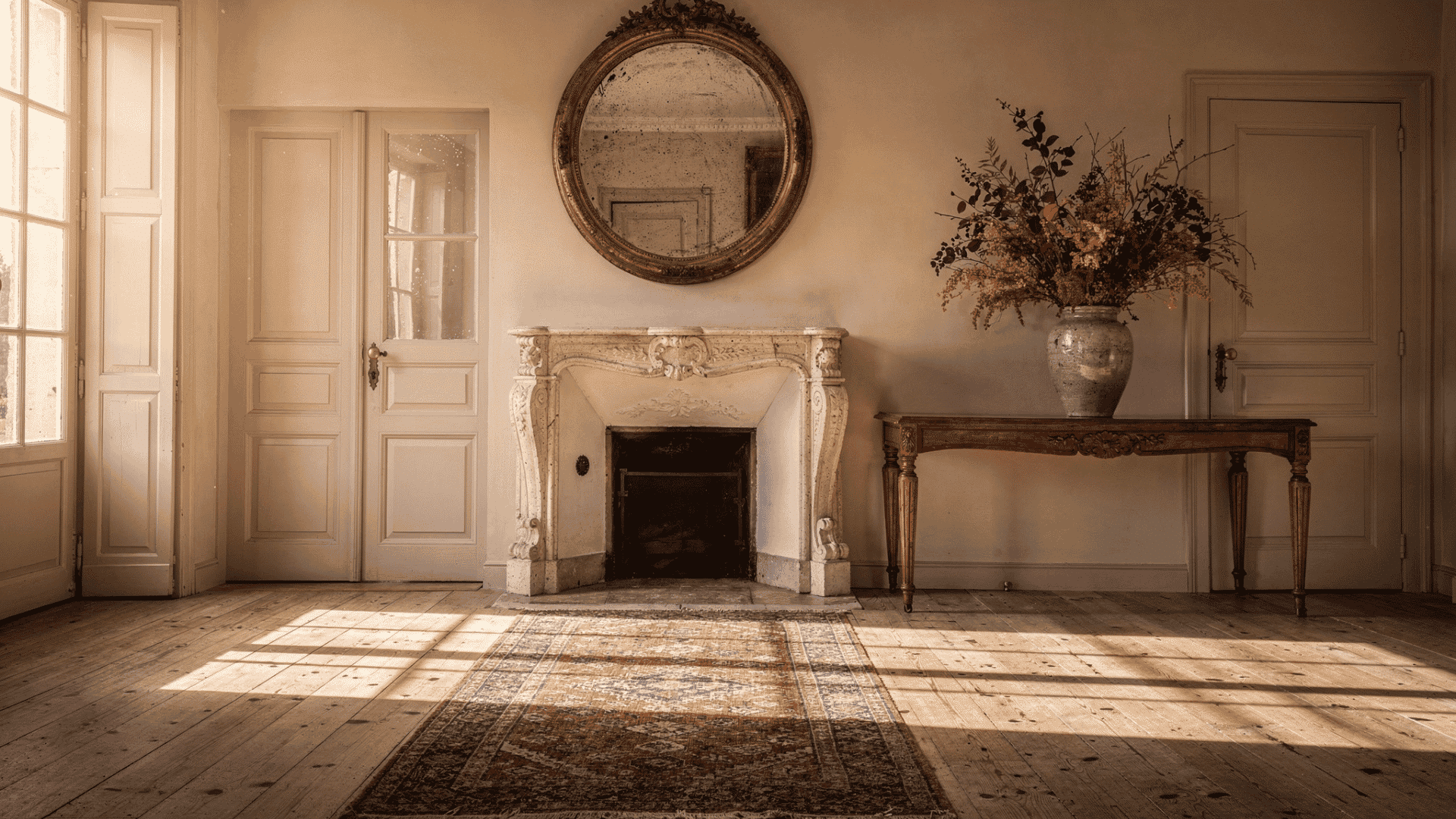
A fireplace as the first thing visitors see is rare but powerful. It works best in larger homes with a true entry room. A small classical or modern firebox sets the tone for the entire house.
A compact surround at standard height makes the entry feel like a real room rather than a passageway between zones. Pair the fireplace with a console table opposite, a single piece of art, and a runner rug to complete the space.
Lighting matters at the entry, where guests arrive in different weather conditions. Keep styling minimal so the fireplace itself carries the welcome.
More Fireplace Design Ideas Worth Bookmarking
These ideas don’t fit neatly into the categories above, but each one is worth saving for the right project.
40. Statement Hearth Bench
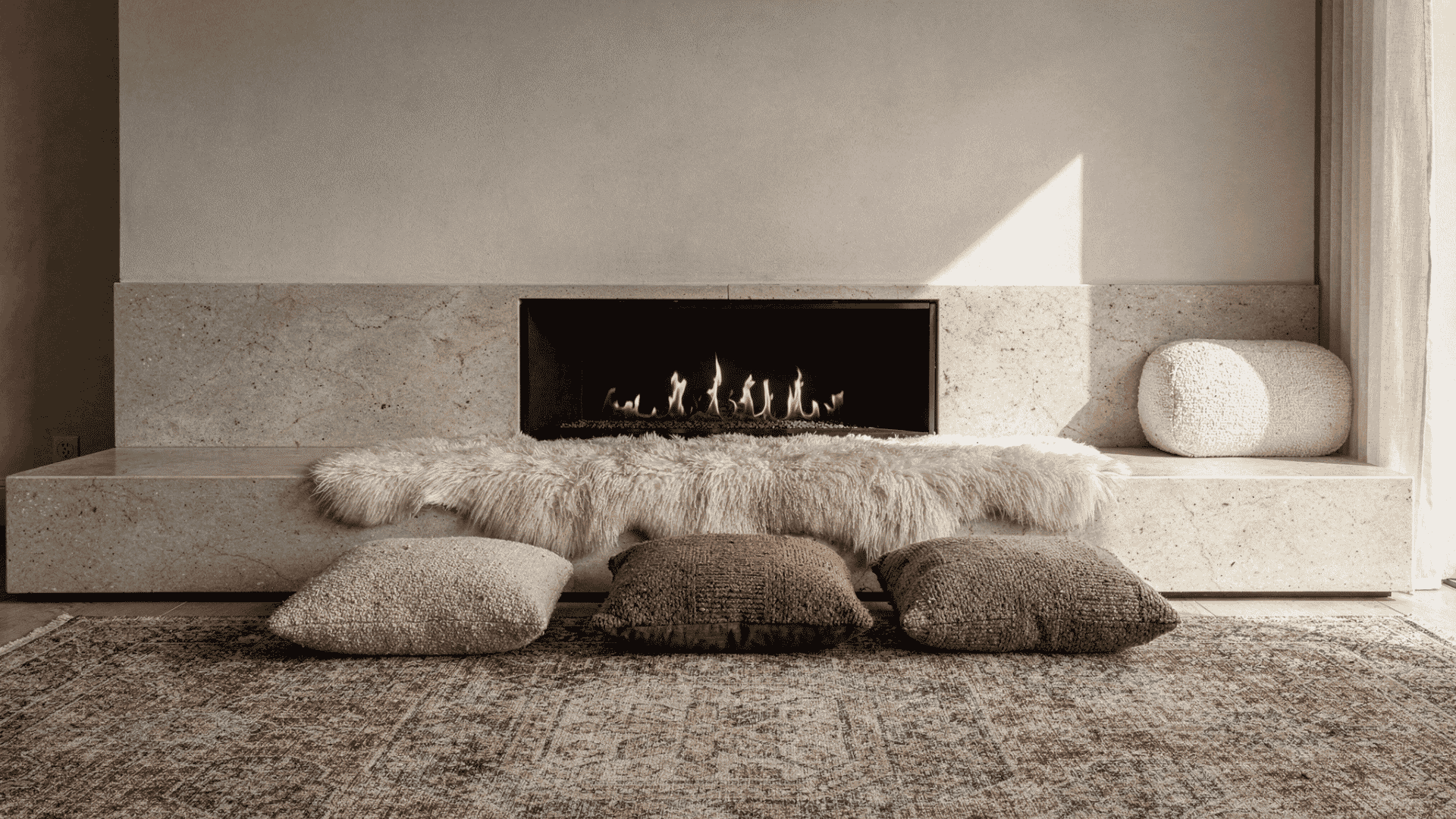
An extended raised hearth that runs much longer than the firebox itself, doubling as casual
seating along the wall.
Top it with a long cushion or sheepskin and you’ve added two functions to one feature.
The dimensions should work for actual sitting, not just visual extension across the wall.
Stone or solid wood handles the weight well over time. Pair with a long fitted linen cushion in a neutral tone for comfort.
41. Hidden or Flush-Mount Fireplaces
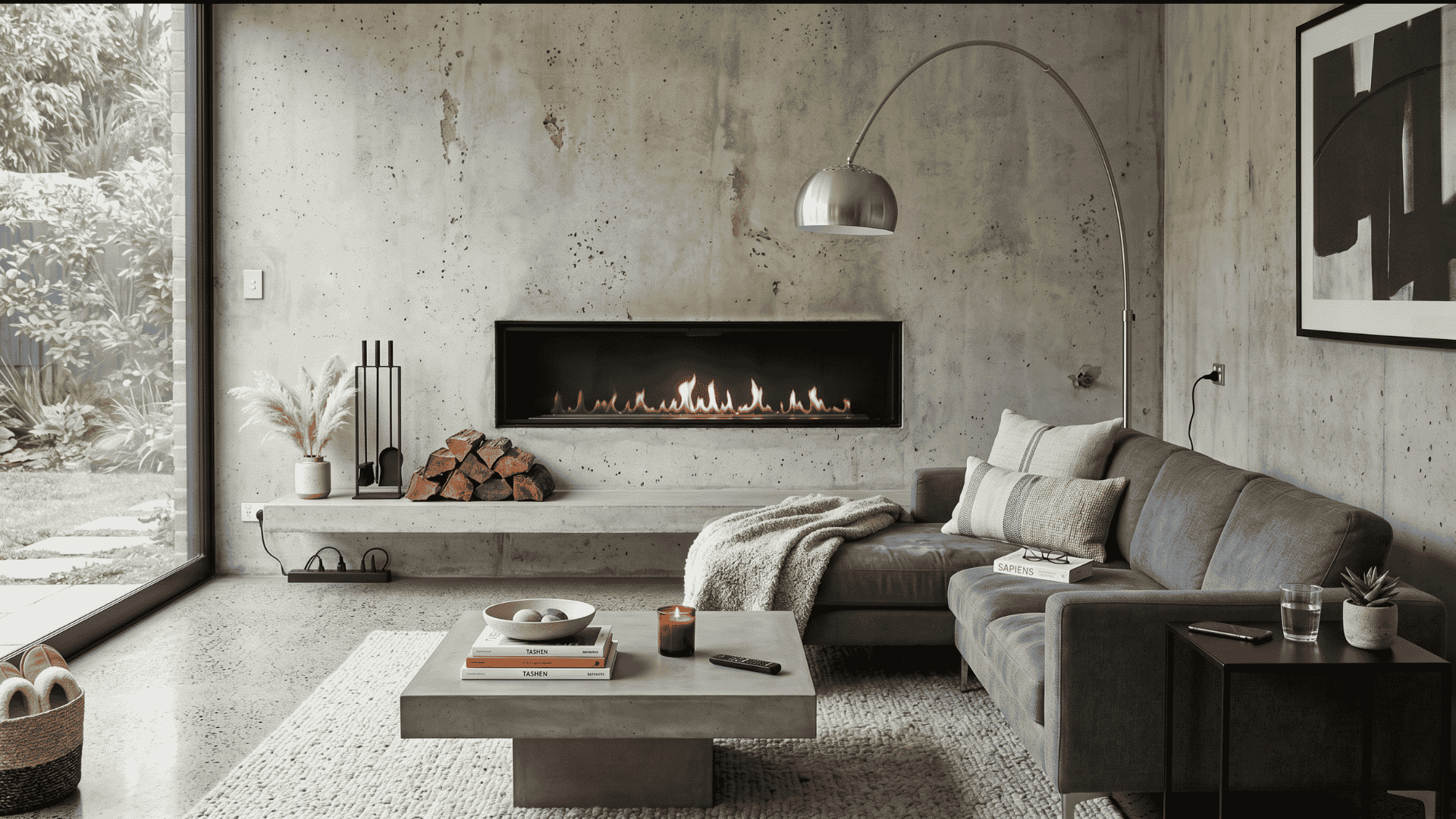
The firebox sits perfectly flush with the wall surface. No visible frame, no mantel, no hearth.
The flame looks like a window of fire floating in a clean rectangular cutout-almost always electric or linear gas.
The wall has to be built out enough to recess the entire unit, and the surrounding finish (plaster, drywall, or wood) has to meet the firebox edge cleanly with no visible gap or trim.
This works best as a stand-alone feature on a quiet wall, with no shelving or mantel decoration nearby competing for the visual attention of the room.
42. Mosaic Tile Murals
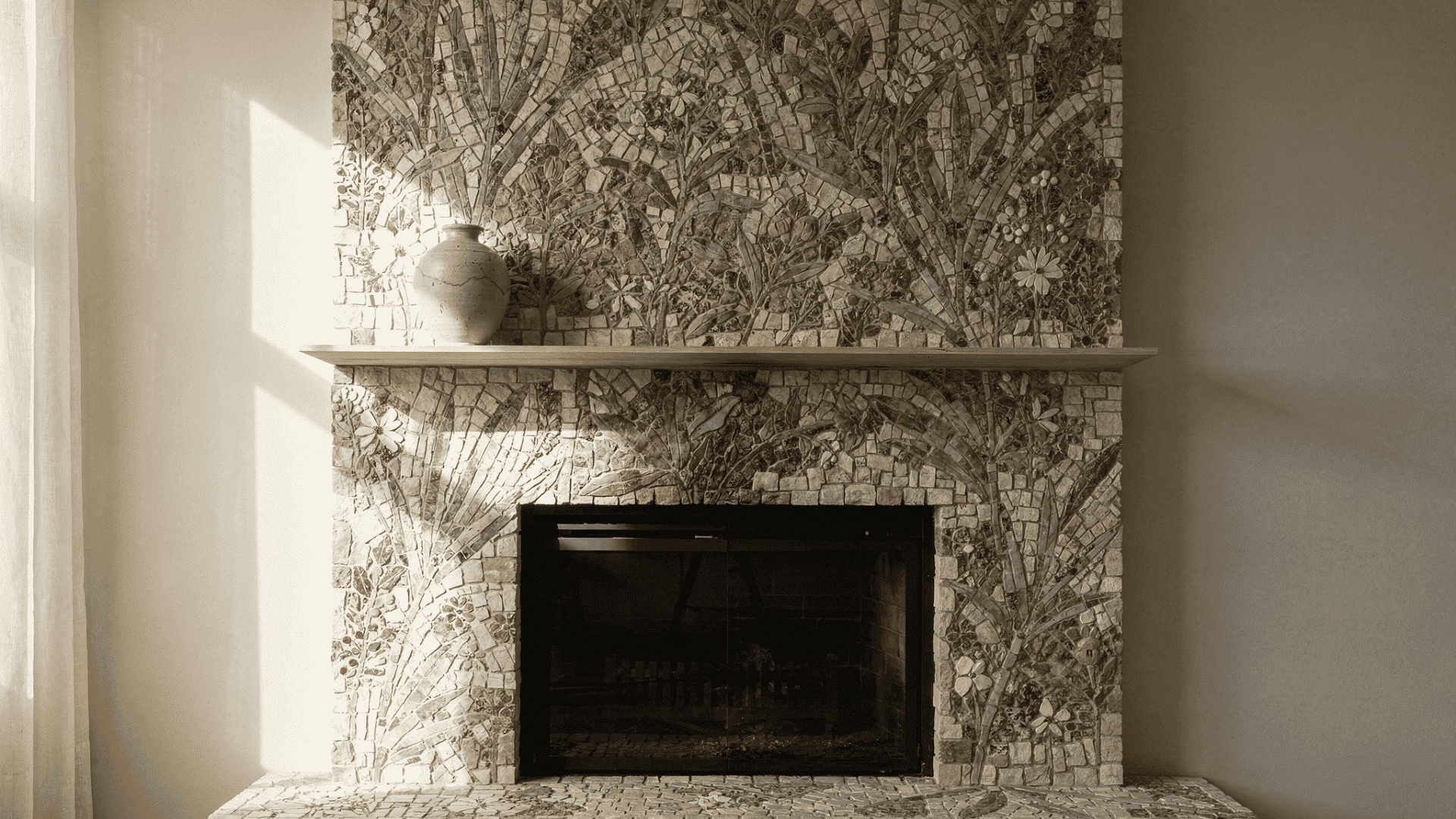
Instead of one repeating tile pattern, use a custom mosaic across the entire surround. Hand-cut stone, ceramic, or glass tile in a botanical, geometric, or abstract design.
Tiles are hand-cut and arranged on a backing mesh, then shipped to the installation sites in sections. Expect a longer lead time and higher cost than standard tile work, sometimes several months from design to install, but the result is one of a kind.
One of the most personal fireplace ideas you can commission.
Choosing the Right Fireplace Type for Your Home
The fuel type drives the design more than people realize. Here’s a quick comparison:
| Type | Installation Cost | Design Freedom | Heat Output |
|---|---|---|---|
| Wood-burning | High (chimney needed) | Limited | High |
| Gas (vented) | Medium to high | Good | High |
| Gas (ventless) | Medium | High | Medium |
| Electric insert | Low | Highest | Low to medium |
| Ethanol | Low | Highest | Low |
If you want a wall-mounted, hidden, or sculptural design with no chimney, electric and ethanol are the only real options. If you want real flame and crackle, wood-burning is unmatched, but it commits you to a chimney and ongoing maintenance.
Final Takeaway
Choosing the right fireplace style doesn’t have to feel overwhelming. Whether you’re drawn to the warmth of rustic stone, the clean lines of a modern build, or the charm of a painted brick surround, the best choice is always the one that feels right for your space.
Small changes like a new mantel, fresh paint, or simple restyling can make a bigger difference than you’d expect. And bigger projects, like a double-sided fireplace or a full surround makeover, are worth every bit of planning when done right.
Trust what caught your eye as you read through this guide. That’s your answer. Now it’s time to do something with it. Pick one idea, start small, and see how it transforms your room.
Drop your favorite fireplace style in the comments. I’d love to see what direction you’re heading!
Frequently Asked Questions
What’s the Most Popular Fireplace Style Right Now?
Modern farmhouse remains the most-searched style, but sculptural plaster and floor-to-ceiling stone designs are gaining the fastest in 2026.
Are Fireplaces Still in Style in Modern Homes?
Yes, but their role has shifted. Modern fireplaces are now more about design statement than heat source, with linear electric and gas inserts dominating new builds.
Can I Convert a Wood-Burning Fireplace to Gas or Electric?
Yes. Gas inserts can be fitted into most existing wood-burning fireboxes with proper venting. Electric inserts are even simpler and require no venting. Always consult a licensed installer.
What’s the Best Material for a Fireplace Surround?
There’s no single answer. It depends on your style. Stone and brick are the most traditional and durable; tile offers the most design flexibility; plaster is the most modern and sculptural; marble is the most luxurious.
Should the Mantel Match the Floor or the Trim?
Neither, necessarily. The mantel should relate to the room’s overall material palette. Matching the floor can feel heavy; matching the trim can feel a little off. Often, the strongest choice is a third material entirely.

With a Master in Architectural Studies from University of Pennysylvania, Marwa Haydar has pioneered living spaces since 2005. Her expertise, initially honed in a prestigious architectural firm, is evident in her approach to creating environments. Marwa became part of our team in 2019 and has since been a driving force in our home improvement section, known for her practical yet stylish solutions. She’s been spearheading our design workshops since then, infusing her passion for teaching into her work. In her leisure time, Marwa enjoys exploring historic architecture and is an enthusiastic pottery hobbyist, further enriching her understanding of form and texture.