
The Building Rarely Fails Where You Expect
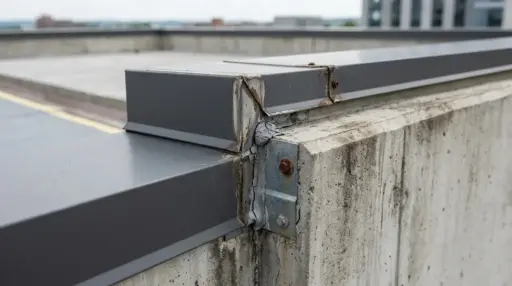
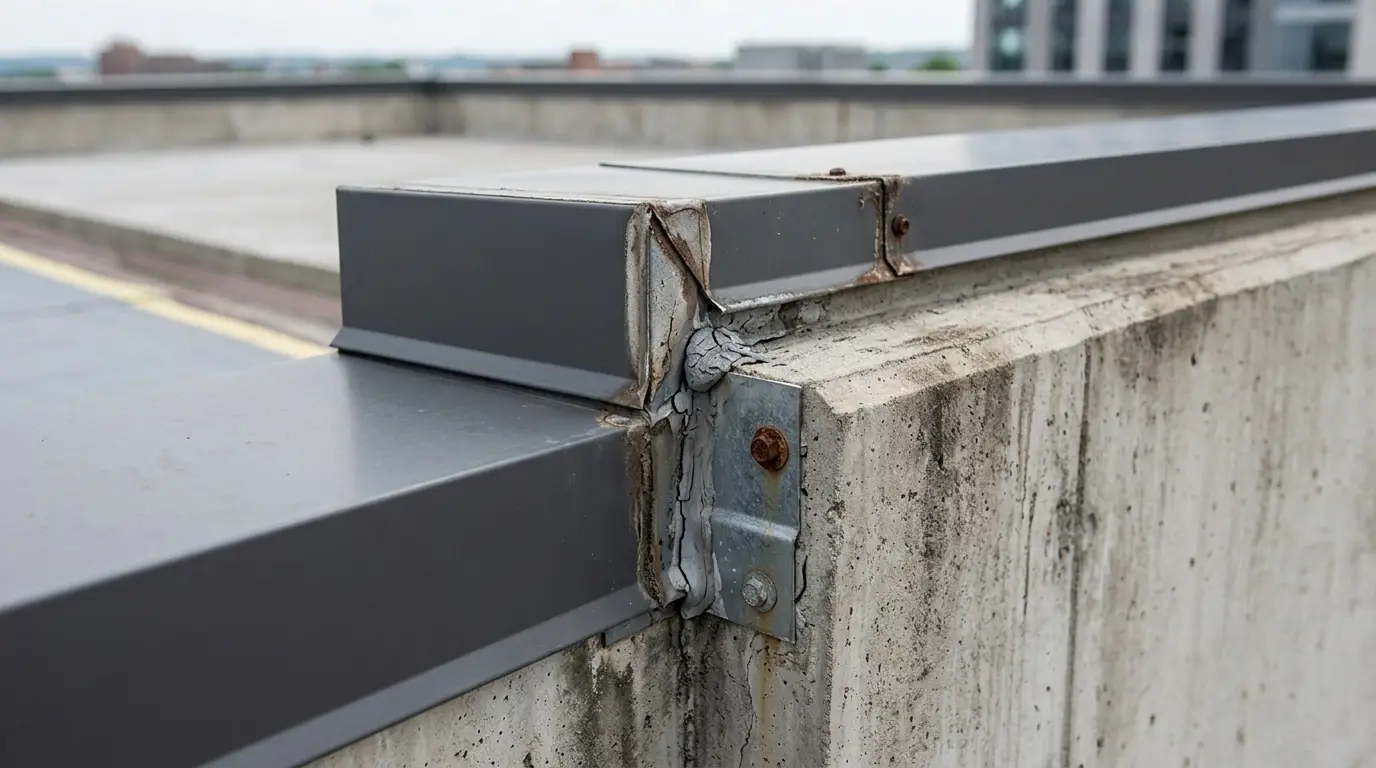
Ask any site engineer where a building actually starts leaking, and the answer is almost never the roof slab or the wall itself. It’s the seam. The flashing overlap. The pipe penetration through a parapet. The joint between two materials that were never designed to move together in the first place.
Architecture spends enormous energy on form, massing, and material palette — and comparatively little on the millimeter-scale decisions at junctions, where two systems meet and where water, temperature, and time do their quiet damage. Yet post-occupancy audits consistently point to the same culprits: parapet copings, expansion joints, window-to-wall interfaces, and roof penetrations for HVAC or plumbing.
This isn’t a design failure in the conventional sense. It’s a detailing gap — the space between what gets rendered and what gets executed on site.
Why Seams Are the Weakest Link
Every building envelope is really a collection of dissimilar materials stitched together: concrete meeting metal, glass meeting timber, membrane meeting masonry. Each material expands, contracts, and weathers at a different rate. The seam is where that mismatch gets absorbed — or where it fails.
Three conditions make seams especially vulnerable:
- Thermal cycling. Materials expand and contract at different coefficients, which stresses the bond at the joint long before it stresses the material itself.
- Standing water and capillary action. Water doesn’t need a large gap to travel — it needs a continuous one. A hairline path is enough given enough time.
- UV and monsoon exposure. In tropical and subtropical climates, the seal at a joint is subjected to far more cyclical stress than the surrounding surface.
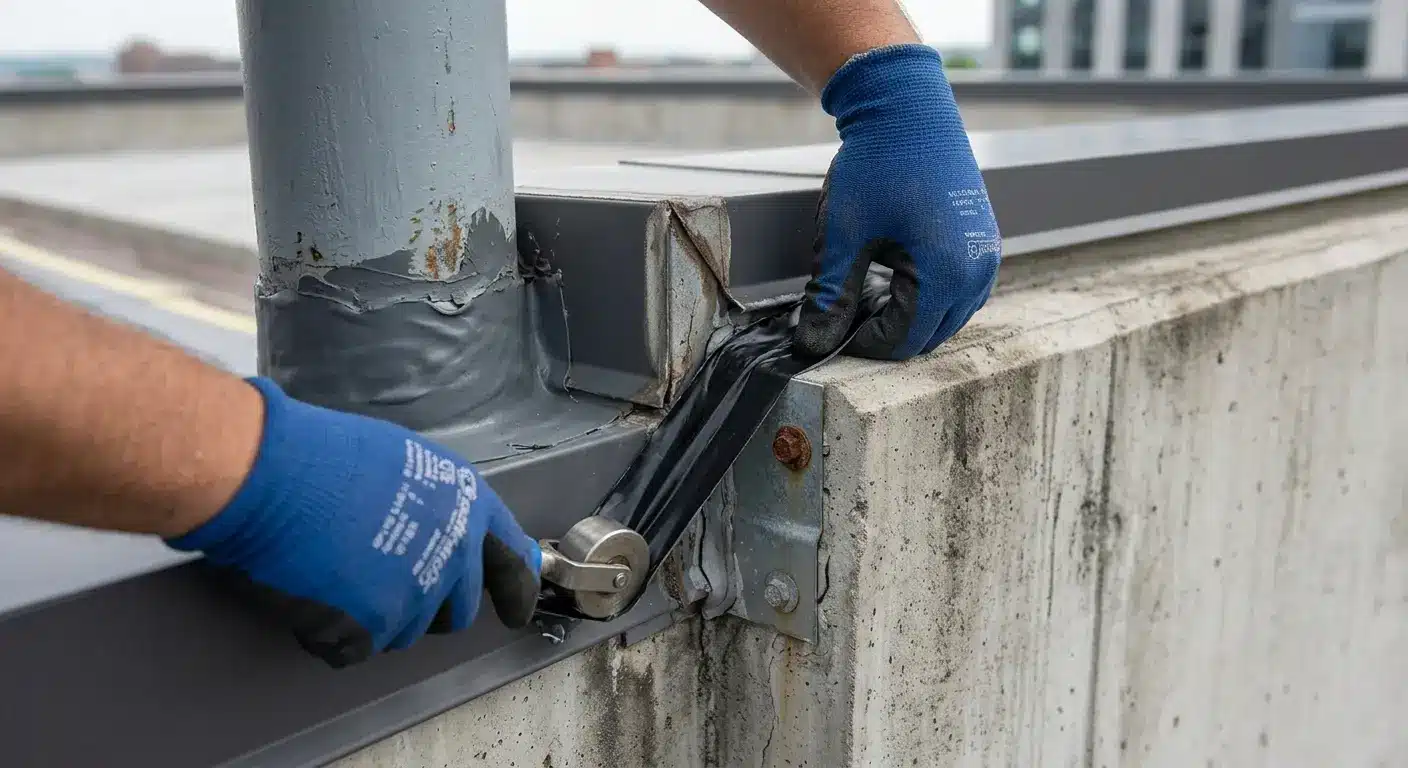
This is why Waterproof Tape for Roof applications has become a standard specification item for parapet flashing, and pipe penetrations in commercial and industrial construction. Their cold-flow property lets them conform into micro-gaps and stay flexible across temperature swings, rather than hardening and cracking the way some traditional sealants do over a monsoon cycle or two. Products in this category are increasingly specified for exactly this reason — purpose-built for roof seams and flashing details rather than a general adhesive pressed into service.
What This Means for Specification
For architects and specifiers, the practical takeaway isn’t to add more material at every joint — it’s to treat the joint as a design decision in its own right, not an afterthought resolved on-site by whichever contractor is present that week. That means:
- Specifying joint materials by performance criteria (flexibility range, UV resistance, application temperature) rather than by generic category.
- Detailing penetrations and terminations in drawings at a scale that actually shows the joint, not just the assembly.
- Choosing OEM or manufacturer-backed products for these small components — since a five-rupee failure at a seam can cost lakhs in remediation and reputation.
Buildings are judged, in the end, not by their boldest gestures but by how well their smallest connections hold up over a decade of monsoons.

Holding a Master’s in Construction Management from Purdue University, William Ray has dedicated more than two decades to studying and applying construction principles. His professional journey includes a tenure with a prominent construction firm, where he specialized in project management and building technologies. William brought his knowledge to our team, providing in-depth insights into practical construction techniques. As the leader of our beginner’s guide to building since 2019, he has a knack for breaking down intricate processes into easily digestible content. When not involved in writing or onsite consultations, William enjoys woodworking and volunteering in community building projects, which aligns with his passion for hands-on construction and community service.