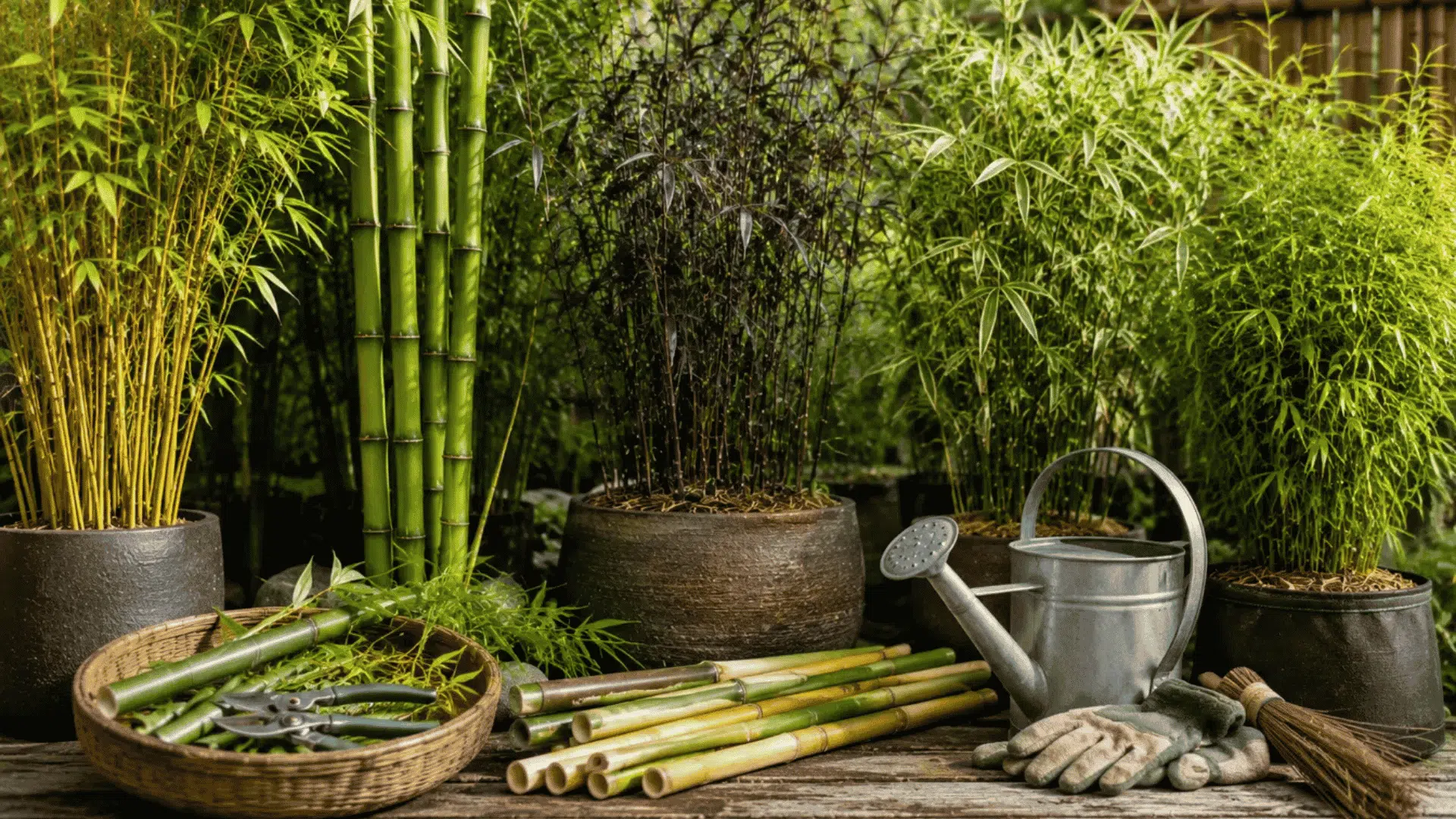

Most bamboo plants do not struggle because people ignore them.
In years of working with ornamental grasses, I have found that success starts with understanding the basics before the first shovel hits the ground
I have seen well-meaning plant owners overwater, overfertilize, or choose the wrong bamboo for their space, only to wonder why their plants look stressed.
The good news is that bamboo is surprisingly resilient when you understand what it actually needs.
If you are planting a privacy screen, growing bamboo in containers, or adding structure to your landscape, a few smart decisions can make all the difference.
I have found that success starts with understanding the basics before the first shovel hits the ground.
In this guide, you’ll learn exactly how to choose, plant, grow, and maintain healthy bamboo year-round.
True Bamboo vs. Lucky Bamboo: Identify Your Plant First
One of the biggest mistakes I see people make is assuming that every plant labeled “bamboo” is actually bamboo.
If you picked up a lucky bamboo from a gift shop or garden center, you may be surprised to learn that it is not bamboo at all.
Lucky bamboo (Dracaena sanderiana) belongs to a completely different genus and has very different care requirements.
True bamboo, on the other hand, is part of the grass subfamily Bambusoideae, which includes roughly 1,439 species across 116 genera.
I always recommend identifying your plant before following any bamboo care advice.
True bamboo typically has woody canes with hollow internodes and narrow, grass-like leaves, while lucky bamboo features solid stems and broader foliage.
This guide focuses exclusively on true bamboo, if grown outdoors in the landscape or in containers.
Bamboo holds the world record for growth rate. Some species have been documented to grow up to 47.6 inches (nearly 4 feet) in a single 24-hour period, making them the fastest-growing plants on Earth.
Running vs. Clumping Bamboo: Choice that Shapes Everything
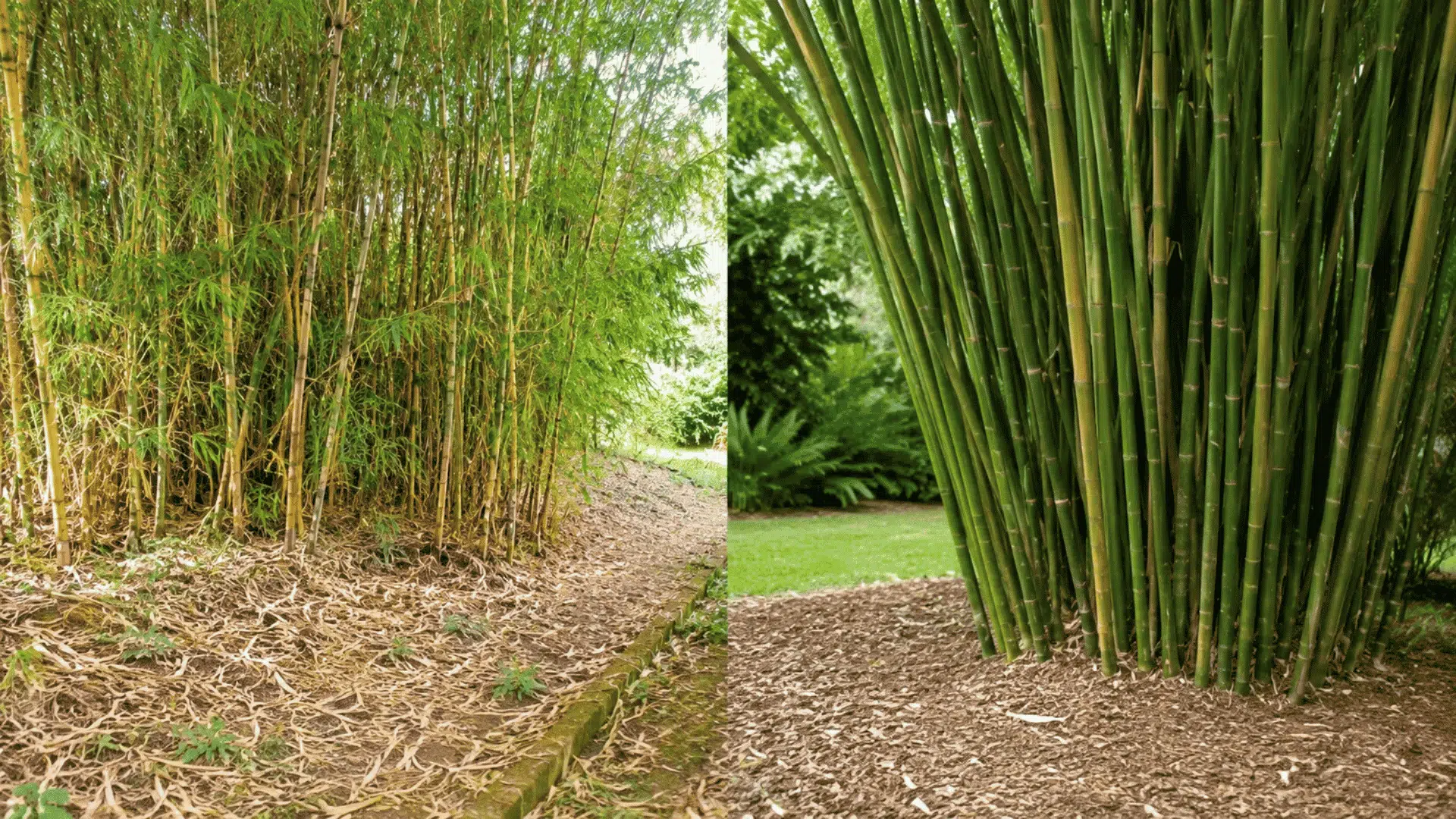
Every true bamboo is either a running or clumping type.
Trust me, this is the one detail you should not skip.
Running types spread through underground roots that send up new shoots several feet away. Clumping types stay close together and neat.
Pick the wrong one, and you will fight overcrowding for years.
Choosing the right type now can save you from dealing with overcrowding, root control, or an underperforming privacy screen years later.
| Factor | Running Bamboo (Phyllostachys) | Clumping Bamboo (Fargesia, Thamnocalamus) |
|---|---|---|
| Growth Habit | Spreads through long rhizomes | Grows in compact clumps |
| Spread Rate | Fast and aggressive | Slow and controlled |
| Sunlight Needs | Prefers 5+ hours of direct sun | Handles partial shade well |
| Maintenance | Higher requires monitoring and root control | Lower; naturally contained |
| Privacy Screen Speed | Creates screening quickly | Slower but more orderly |
| Cold Hardiness | Depends on species | Generally more cold-tolerant |
| Container Growing | Possible with barriers and root pruning | Usually, the better choice |
Running bamboo works best on large properties where rapid coverage is a priority.
For smaller yards, patios, and garden borders, I usually recommend clumping varieties such as Fargesia or Thamnocalamus.
Before planting, check local regulations as well.
Some running bamboo species are classified as invasive in certain US regions, and restrictions may apply to planting or containment requirements.
Bamboo Sunlight Requirements: More Nuanced than You Think
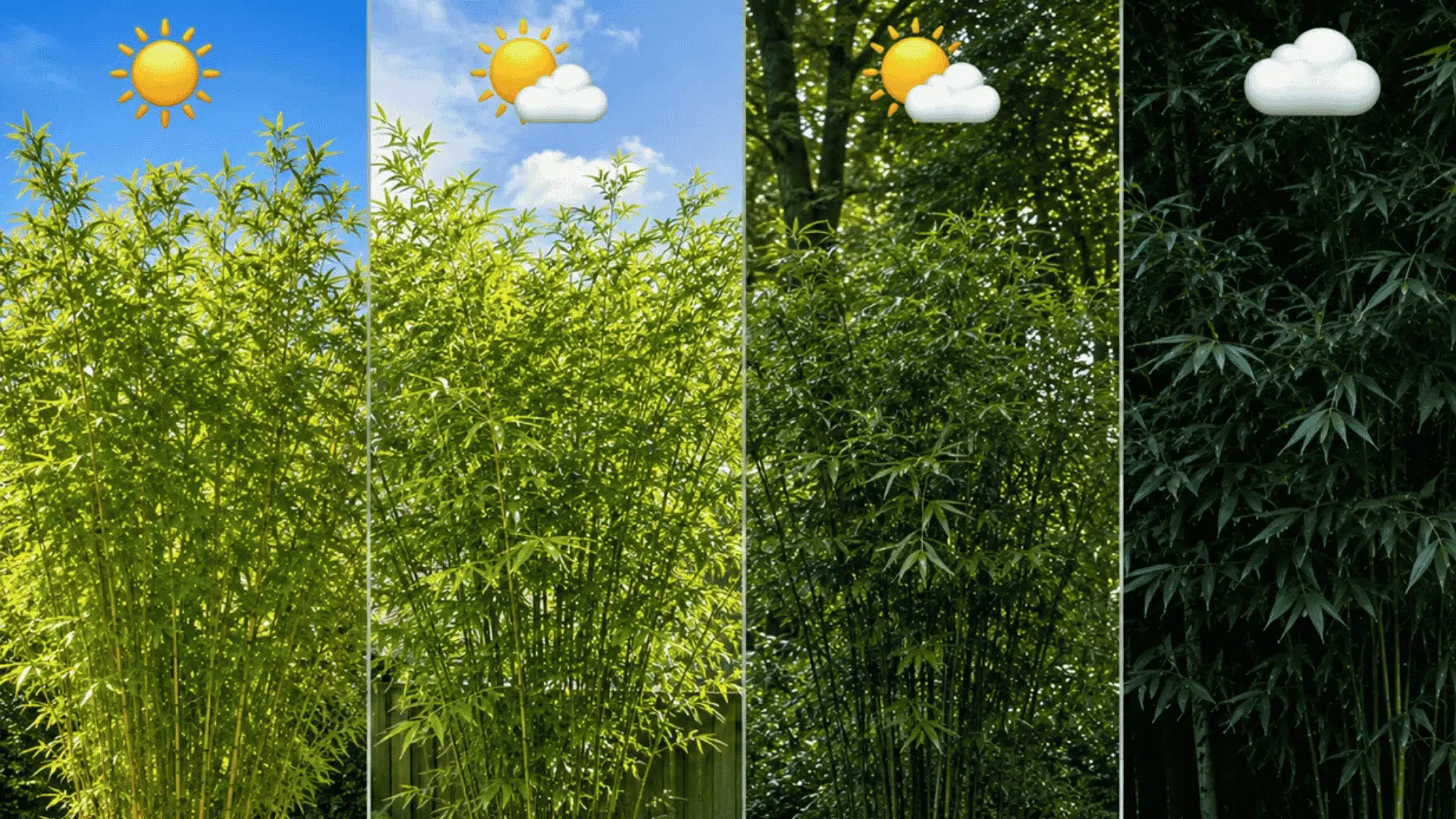
Many people assume bamboo will thrive anywhere with plenty of sunshine, but I have found that sunlight requirements depend heavily on the species.
Before planting, take a few minutes to evaluate your site’s sun exposure throughout the day.
This simple step often makes the difference between a bamboo plant that merely survives and one that truly thrives.
- Most running bamboo varieties, particularly Phyllostachys, perform best with at least 5 hours of direct sunlight each day.
- More sunlight typically produces denser foliage, stronger canes, and faster growth, making it ideal for privacy screens.
- Clumping bamboos such as Fargesia and Thamnocalamus prefer dappled light or partial shade, especially in warmer regions.
- I often see shade-loving bamboo struggle when planted in intense afternoon sun, resulting in scorched or faded leaves.
- Even sun-tolerant species benefit from temporary shade during their first growing season while roots become established.
- Be cautious around concrete walls, driveways, and light-colored patios, which reflect heat and increase stress on young plants.
- In many US climates, south- and west-facing locations receive the harshest afternoon sun and may require more frequent watering.
Tip: Watch leaf color closely after planting. Slight fading or scorching often signals excessive sun exposure before serious damage occurs.
Bamboo Planting and Soil: The Foundation Most People Skip
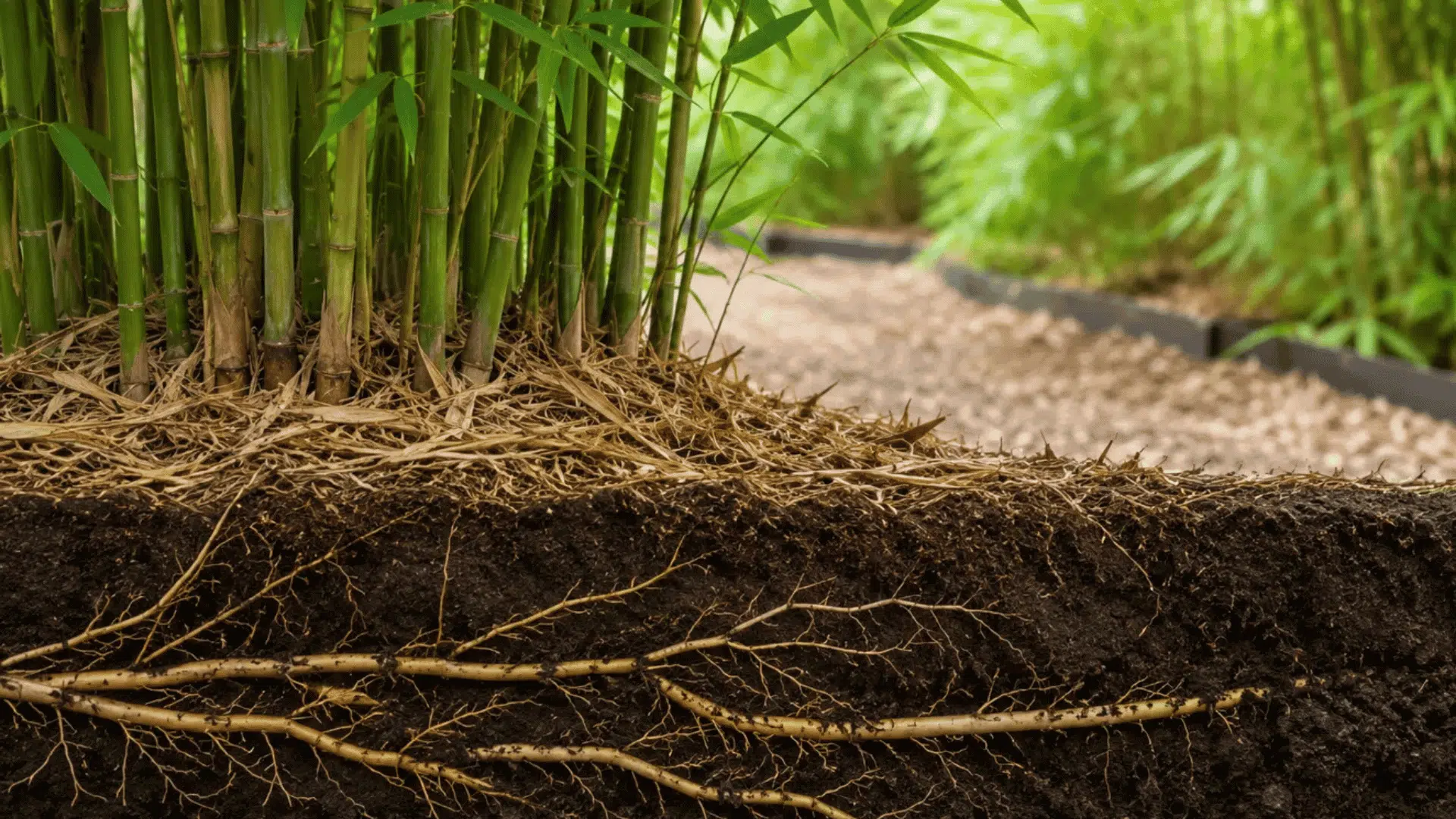
I have found that healthy bamboo starts below the surface.
While many gardeners focus on watering and sunlight, soil quality and proper planting depth often determine if bamboo thrives or struggles.
Before planting, take time to prepare the site correctly.
A few simple adjustments can improve root development, reduce stress, and set your bamboo up for stronger long-term growth.
| Planting Guideline | Why It Matters | Practical Tip |
|---|---|---|
| Use loamy, well-draining soil (pH 5.5–6.5) | Encourages healthy root and rhizome growth | Test the soil before planting if growth has been poor in the area |
| Amend heavy clay with compost | Improves drainage and aeration simultaneously | Avoid relying on gravel alone, which can worsen compaction |
| Dig a hole 1.5–2x wider than the root ball | Gives roots room to spread quickly | Focus on width rather than extra depth |
| Keep the root ball level with the soil surface | Prevents rhizome suffocation and root stress | Never bury the crown deeper than it was in the nursery pot |
| Mix compost into the planting hole and backfill | Increases moisture retention and nutrient availability | Blend compost evenly rather than creating a separate layer |
| Apply 2–3 inches of mulch | Conserves moisture and regulates soil temperature | Keep mulch a few inches away from the canes |
| Install a rhizome barrier for running bamboo | Controls the unwanted spreading | Use a 60-mil HDPE barrier about 30 inches deep before backfilling |
| Plant in spring or early fall | Gives roots time to establish before weather extremes | Avoid midsummer planting in warmer zones whenever possible |
I always tell gardeners that good soil preparation is a one-time investment.
Get it right at planting, and your bamboo will reward you with stronger growth and fewer problems for years to come.
Watering Bamboo: The Make-or-Break Step
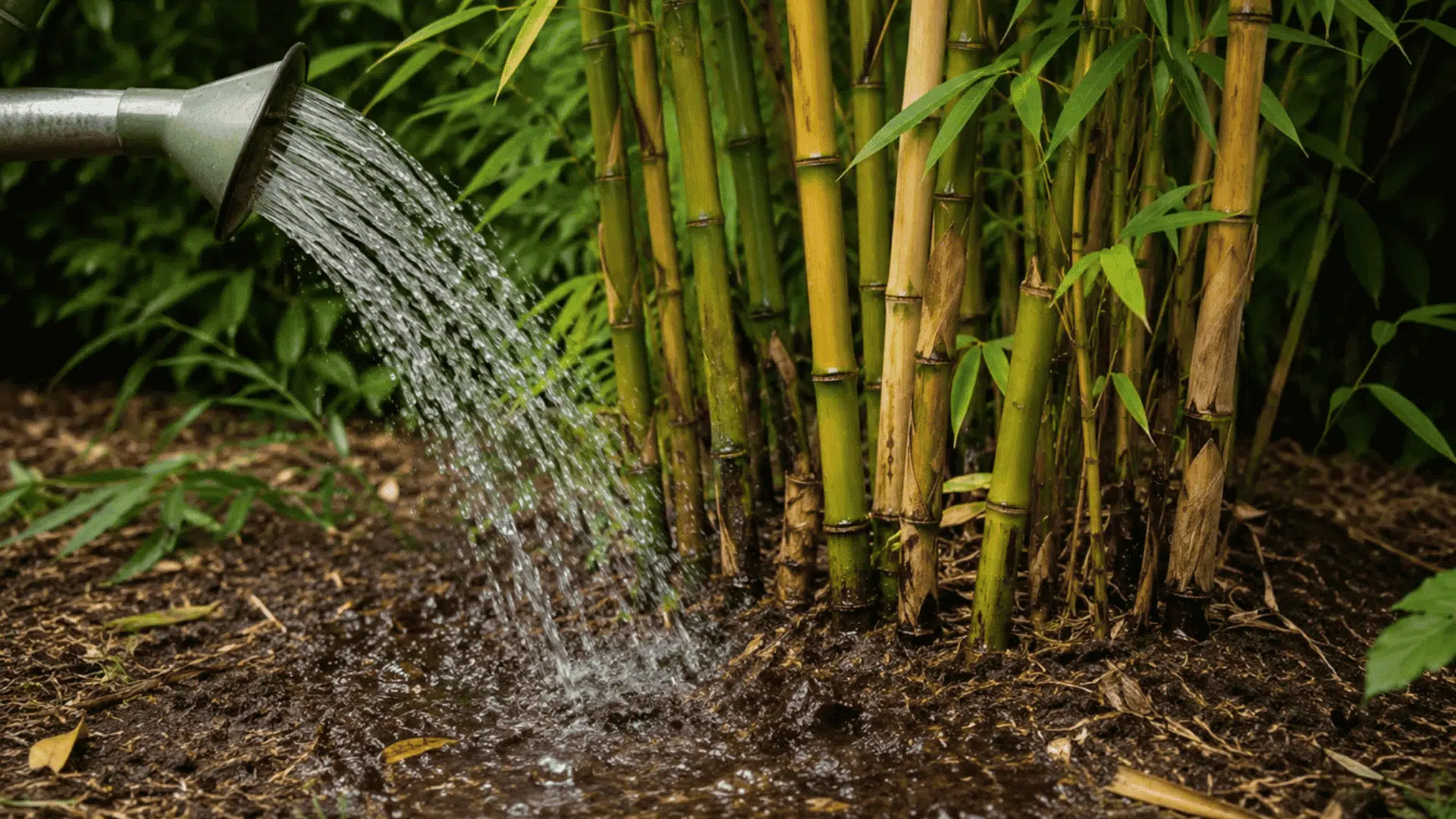
I have found that watering mistakes kill more bamboo plants than poor soil or fertilizer problems. Bamboo likes consistent moisture, but it also needs oxygen around its roots.
The goal is not to keep the soil constantly wet; it is to keep it evenly moist while allowing excess water to drain away.
Watering Schedule by Plant Stage
| Plant Stage | Frequency | Amount | Why It Matters |
|---|---|---|---|
| Newly Planted (<1 Gallon) | 2–4 times per week | At least ½ gallon per session | Young roots dry out quickly and need consistent moisture |
| Newly Planted (5+ Gallon) | 2–3 times per week | 1+ gallon per session | Larger root systems require deeper watering |
| Established (1–2 Years) | Weekly or as needed | Deep soak | Encourages deeper, stronger roots |
| Mature Plants | During extended dry spells | To soil saturation | Mature bamboo is relatively drought-tolerant |
Common Watering Mistakes to Avoid
Improper watering practices can quickly damage plant health, reduce growth, and lead to long-term root problems that many gardeners often overlook entirely, too.
- Watering every day can cause root stress, weaken plant resilience, and lead to frequent leaf drop, especially in sensitive species.
- Shallow watering encourages weak, surface-level roots that struggle to access deeper moisture, making plants vulnerable during dry conditions.
- Standing water for more than 24 hours increases the risk of root rot and encourages harmful fungal growth around plant roots.
- Overwatering container bamboo is a common beginner mistake that leads to yellowing leaves, weak stems, and reduced overall plant health.
- Following a fixed schedule without checking soil moisture often leads to overwatering, underwatering, and inconsistent plant growth and development patterns.
The Best Way to Water Bamboo
For larger plantings, I prefer drip irrigation with a timer because it delivers consistent moisture without oversaturating the soil.
Overhead sprinklers work too, but they tend to encourage wider rhizome spread in running bamboo.
According to the American Bamboo Society, established bamboo performs best when deep watering encourages roots to grow downward rather than staying near the soil surface.
Deep, infrequent watering is almost always better than frequent shallow watering.
Pro Tip: If your tap water contains high chlorine or fluoride levels, let it sit overnight or use a filter to reduce leaf tip burn.
Fertilizing Bamboo Without Overcomplicating It
I have found that fertilizing bamboo is much simpler than many gardeners think.
Instead of focusing on complicated schedules or specialty products, I follow a few basic steps that consistently produce healthy growth.
Step 1: Choose a Nitrogen-Rich Fertilizer
Because bamboo is a grass, it responds best to fertilizers high in nitrogen, the nutrient responsible for lush foliage and strong cane development.
Step 2: Understand the NPK Numbers
Nitrogen (N) supports leaf and culm growth, phosphorus (P) strengthens roots, and potassium (K) improves stress tolerance and overall vigor.
Step 3: Pick the Right Fertilizer Ratio
I typically recommend a 20-5-10 or 21-5-6 synthetic fertilizer. Organic growers can use a 4-3-2 blend at a higher application rate.
Step 4: Fertilize at the Right Time
Apply fertilizer in early spring during shoot season and again in summer. Established groves can benefit from a light third feeding in early fall.
Step 5: Choose Between Organic and Synthetic Options
Organic fertilizers improve soil health over time, while synthetic fertilizers deliver nutrients more quickly when plants need a boost.
Step 6: Adjust for Container-Grown Bamboo
Container plants need more frequent feeding. I recommend applying a liquid fertilizer every two weeks from spring through summer.
Step 7: Stop Before Winter Arrives
Avoid fertilizing in late fall. New growth produced before frost is often tender and more susceptible to cold damage.
I have found that consistent feeding matters more than frequent feeding. Follow these steps, and your bamboo will have everything it needs for steady, healthy growth.
Seasonal Bamboo Care Calendar
I like using a seasonal calendar because bamboo care changes throughout the year, and it helps you know exactly what to do next.
| Season | Main Bamboo Care Tasks | Why It Matters | Practical Reminder |
|---|---|---|---|
| Spring (Feb–May) | Watch for new shoots. Apply the first fertilizer. Remove dead or weak canes. Check rhizome barriers. | Spring is the main growth period, making it the best time to support new development. | Do not disturb emerging shoots. |
| Summer (June–Aug) | Increase watering during heat waves. Apply the second fertilizer. Thin overcrowded canes. Monitor container plants daily. | Proper watering and airflow help prevent stress and fungal problems. | Containers may need daily watering in extreme heat. |
| Fall (Sept–Nov) | Add compost around the base. Stop fertilizing after September. Leave fallen leaves as mulch. Inspect rhizome barriers. | Prepares bamboo for winter while protecting roots and rhizomes. | Some yellowing and leaf drop are completely normal. |
| Winter (Dec–Feb) | Mulch newly planted bamboo. Protect container plants. Remove heavy snow from canes. Leave established plants undisturbed. | Winter protection reduces cold damage and prevents cane breakage. | Apply 3–4 inches of mulch around new plantings. |
Fact: Bamboo spends much of its energy underground, so seasonal root care often matters more than visible top growth.
Pruning and Thinning Bamboo: What, When, and How
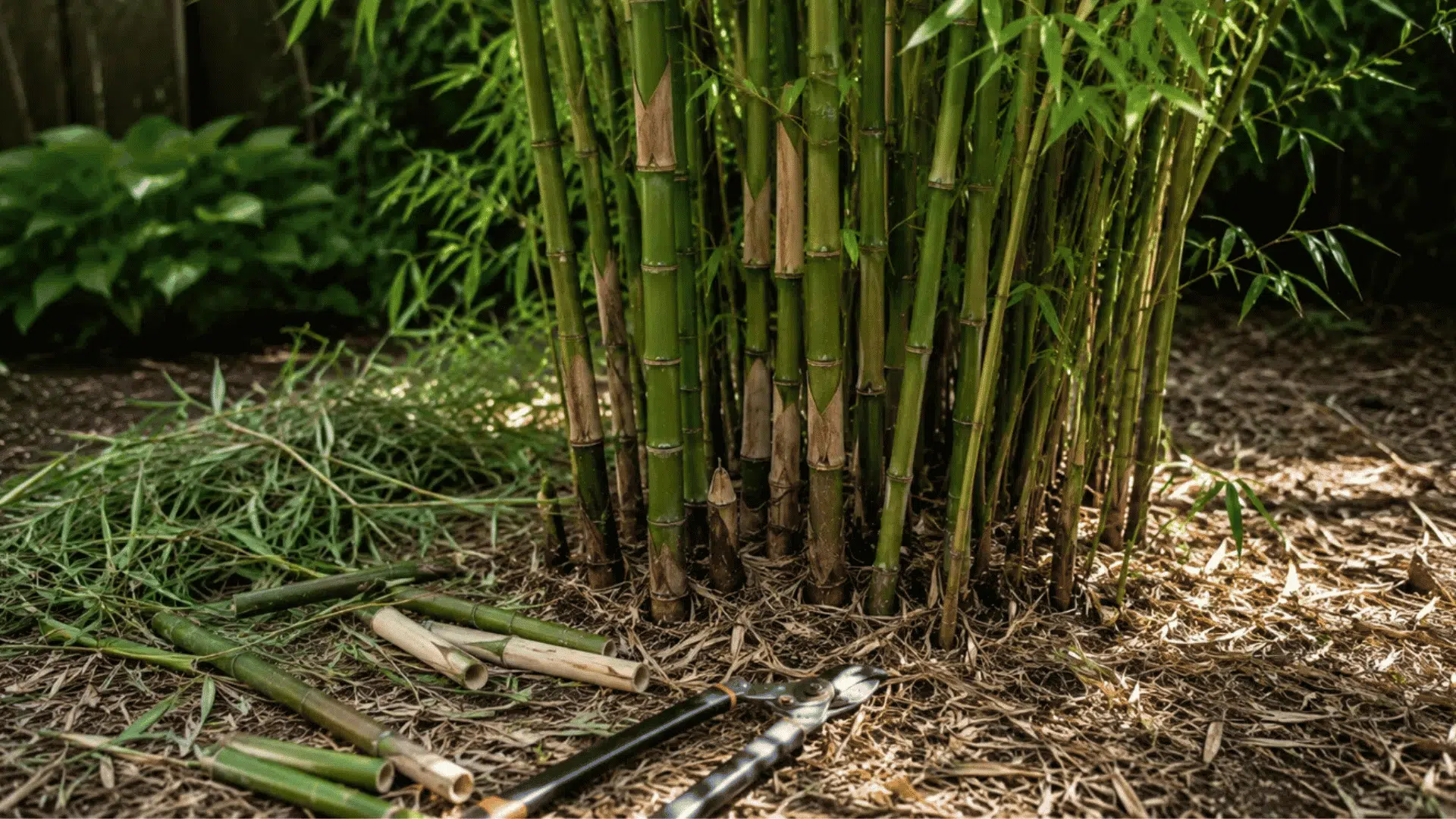
I have found that regular pruning and thinning keep bamboo healthier, more attractive, and easier to manage.
While bamboo naturally renews itself, removing older or overcrowded growth improves airflow, light penetration, and the overall appearance of the grove.
When Should You Prune Bamboo?
The best time to thin bamboo is during summer, after the year’s shoot season has ended. At this stage, new canes have matured, making it easier to identify overcrowded, weak, or damaged culms.
Dead canes can be removed at any time.
For groundcover bamboo, I recommend a complete cutback in late winter, before new growth emerges, to encourage fresh, vigorous spring growth.
How Should You Prune Bamboo?
Start by removing weak, dead, or unattractive canes at ground level, cutting just above a node to prevent die-back stubs.
If the grove feels dense, selectively remove older culms to improve airflow and sunlight penetration. To highlight ornamental varieties such as Black Bamboo, trim lower branches to expose the decorative stems.
Top-trimming is acceptable, but remember that bamboo will not regain lost height; it will simply produce side branches below the cut.
Growing Bamboo in Containers: Key Differences to Know
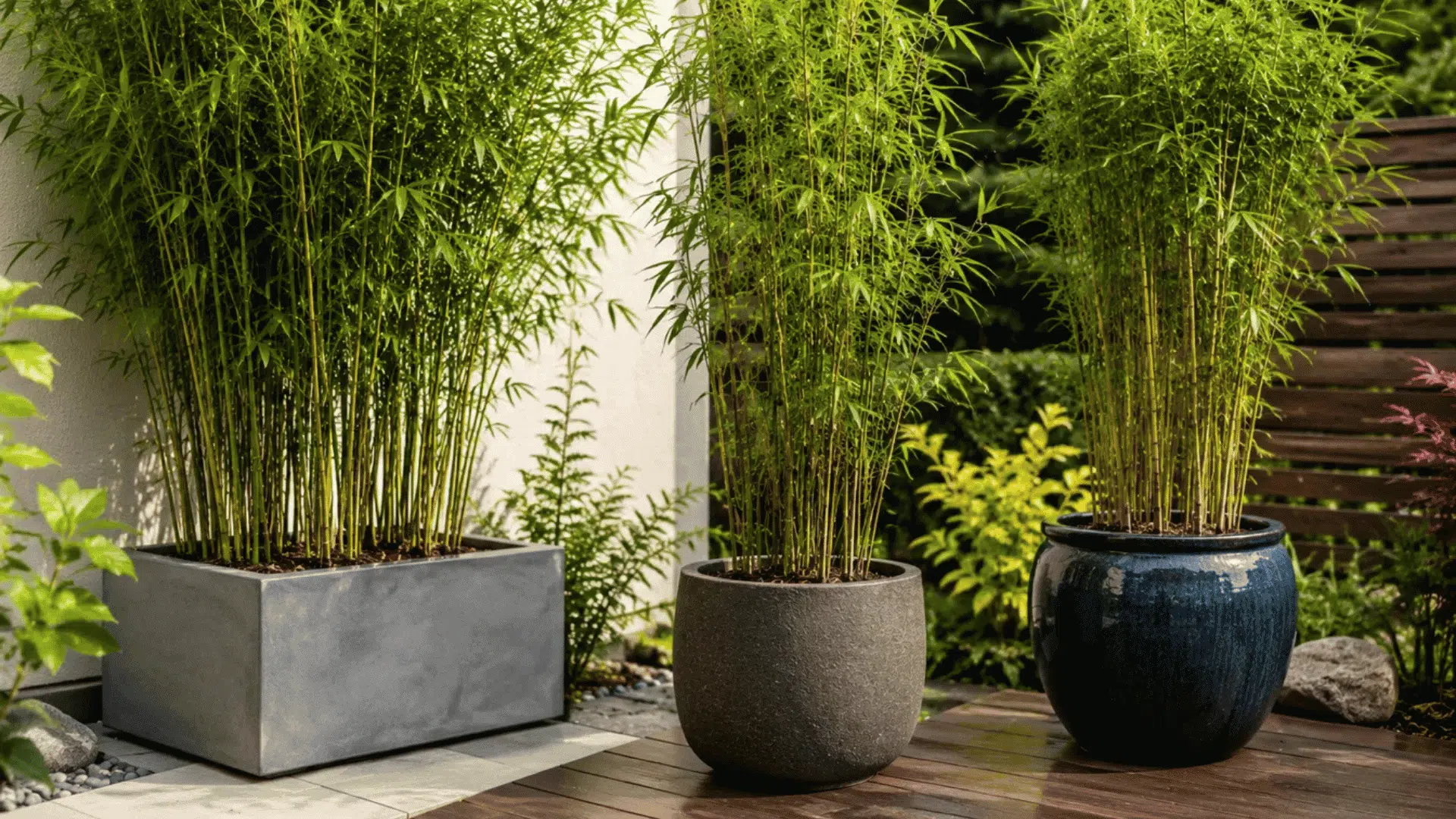
If you do not have space for a full bamboo grove, growing bamboo in containers is an excellent alternative. I often recommend it for patios, balconies, entryways, and small gardens where controlling spread is important.
However, container-grown bamboo is not simply a smaller version of in-ground bamboo.
Understanding these differences from the start will help you choose the right container and avoid common problems later.
- Container-grown bamboo typically reaches 50–75% of its in-ground height.
- Bamboo in pots is less cold-hardy, so reduce the hardiness rating by about 10°F.
- Choose a container that is at least 45 cm wide and deep with drainage holes.
- Use loamy, moisture-retentive, well-draining soil and mix in a slow-release fertilizer at planting.
- Water 2–3 times per week in summer, or daily during extreme heat.
- Repot or divide bamboo every 5–10 years to prevent root-bound growth.
- Divide plants in early spring before the shoot season for the best recovery.
- Root-bound bamboo can become vigorous enough to crack or escape containers over time.
- Lining pots with HDPE bamboo barrier material protects containers and simplifies future maintenance.
Common Bamboo Problems and How to Fix Them
I have found that most bamboo issues can be traced back to a few common causes. Use this quick-reference guide to identify symptoms, understand their causes, and take the right corrective action.
| Problem | Likely Cause | How to Fix It |
|---|---|---|
| Yellow leaves in spring | Normal seasonal foliage renewal | No action needed; bamboo naturally sheds older leaves in spring. |
| Yellow leaves outside in spring | Under-fertilization or root-bound container plants | Fertilize with a nitrogen-rich product and check root space. |
| Brown leaf tips | Chlorine, fluoride, or low humidity | Use filtered water and increase humidity if grown indoors. |
| Wilting or curling leaves in summer | Dehydration and heat stress | Water deeply and increase watering frequency during hot weather. |
| Stunted new shoots | Low nitrogen, compacted soil, or restricted roots | Improve soil conditions, fertilize, and assess root space. |
| Orange or brown spots under leaves | Bamboo rust or another fungal disease | Remove affected leaves, improve airflow, and water at soil level. |
| Roots escaping containers or barriers | Root-bound growth or barrier failure | Divide plants, prune roots, and inspect barriers annually. |
| Severely leaning canes | Weak root anchorage in tall bamboo | Support culms with guy wires attached one-third to halfway up the cane. |
Bonus Tip: I always investigate watering and drainage first because they are responsible for more bamboo problems than pests or diseases.
Underrated Bamboo Care Tips Most Guides Never Mention
Over the years, I have learned that the smallest details in bamboo care often make the biggest difference.
These overlooked tips can improve growth, reduce maintenance, and help you avoid common mistakes that many guides never discuss.
- Leave Fallen Leaves Alone: I rarely remove bamboo leaves because they break down and return valuable nutrients, including silica, to the soil.
- Guide Growth With Compost: Running bamboo naturally grows toward fertile soil. Adding compost where you want expansion can help direct rhizome growth.
- Be Careful With Tap Water: Chlorine and fluoride can gradually cause brown leaf tips, especially in containers and indoor settings.
- Avoid Daily Watering for New Plants: I focus on consistent soil moisture rather than daily watering, which can lead to waterlogged roots.
- Be Patient During Year One: Newly planted bamboo often invests energy below ground first, so limited top growth is completely normal.
- Protect Young Plants From Wind: A temporary windscreen can reduce stress and help new bamboo establish faster during its first year.
- Think Beyond Landscaping: Bamboo is one of the fastest-growing plants on Earth, making it an impressive natural carbon sink for a sustainable garden.
Final Thoughts
Bamboo plant care becomes much easier when you focus on the fundamentals rather than overcomplicating the process.
As we’ve covered, choosing the right bamboo, providing proper sunlight, preparing well-draining soil, watering correctly, fertilizing strategically, and following seasonal practices all ensure long-term success.
If you’re growing bamboo as a privacy screen, a landscape feature, or a container plant, understanding its unique growth habits helps prevent common problems and promotes healthier growth.
I’ve found that bamboo rewards patience and consistency more than constant attention. With the right approach, you can enjoy a thriving, low-maintenance bamboo display for years to come. The best results come from consistency.
Save these tips, revisit them throughout the seasons, and give your bamboo the conditions it needs to reach its full potential.
Frequently Asked Questions
Can Bamboo Improve Air Quality Outdoors?
Yes, bamboo absorbs carbon dioxide and releases oxygen efficiently, helping improve outdoor air quality while enhancing the landscape.
How Long does Bamboo Typically Live?
Individual bamboo canes may live 5–15 years, while healthy bamboo groves can survive and regenerate for decades.
Does Bamboo Attract Beneficial Wildlife?
Yes, bamboo provides shelter for birds, pollinators, and beneficial insects, helping create a more diverse garden ecosystem.

Jordan Mathews, who has a degree in horticulture from Texas A&M University, has been a guiding force in plant health and sustainable gardening for over 16 years. His career began with a role at a renowned botanical garden, where he deepened his understanding of plant physiology and eco-friendly cultivation methods. Jordan joined our website as a freelancer in 2020, becoming a go-to expert for readers seeking advice on nurturing diverse plant species apart from offering insights grounded in scientific knowledge and practical experience. Beyond his professional achievements, Jordan is a keen nature photographer, capturing the beauty of flora in its immensely diversified forms.