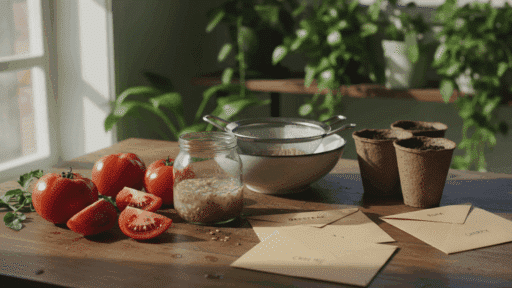
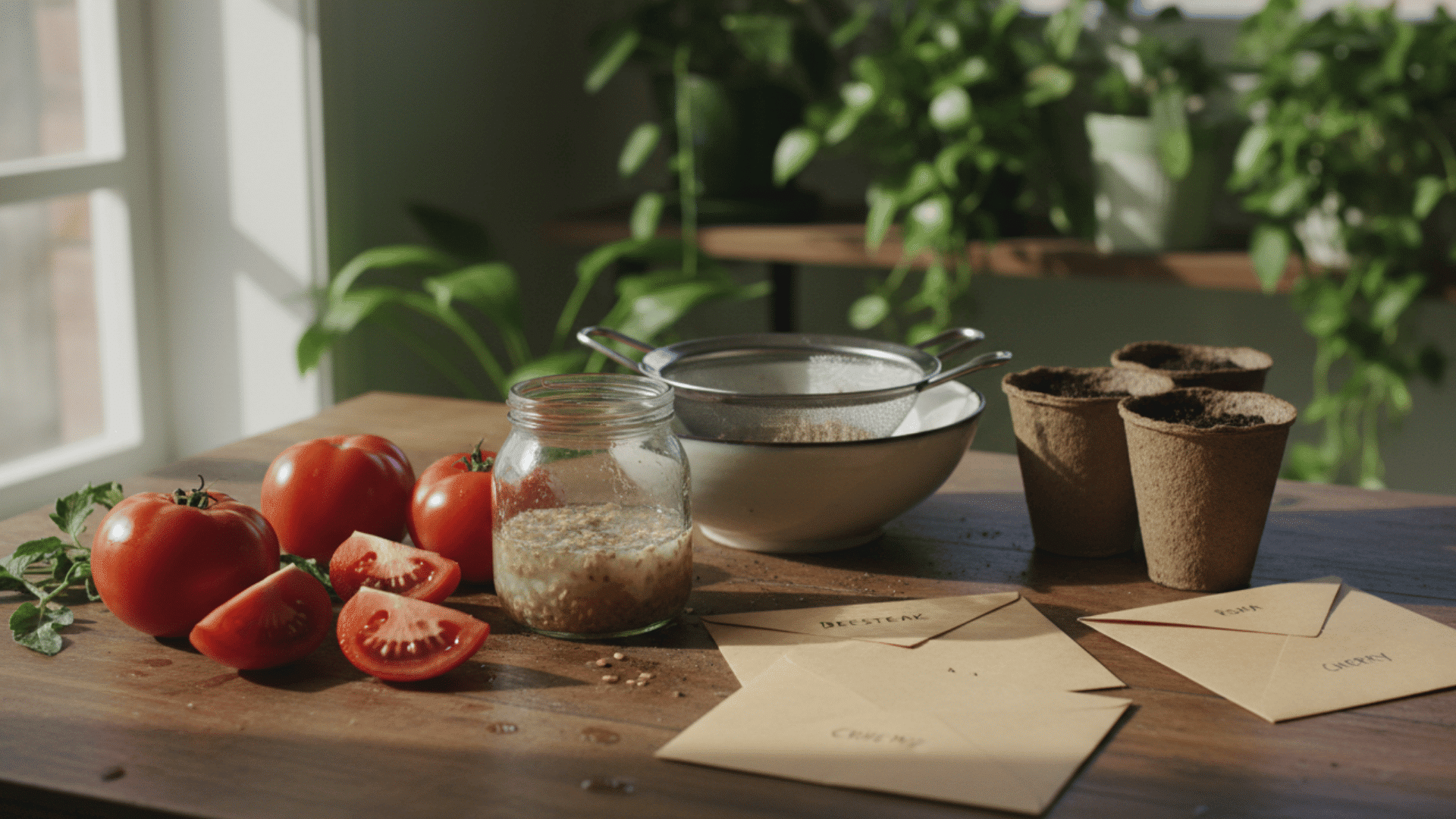

Many gardeners save tomato seeds because it is a simple way to grow their favorite tomatoes again next year without spending extra money on new seed packets.
When seeds are saved the right way, they often grow into healthy plants with better germination and stronger roots.
In this guide, you will learn how to save tomato seeds step by step, why fermentation is important, and how to clean and dry seeds properly before storage.
You will also learn how to store tomato seeds long-term and how to use them later when starting tomato seeds indoors for the next gardening season.
Can You Save Seeds From Any Tomato?
Yes, you can save seeds from most tomatoes, but some types give better results than others. The type of tomato you grow makes a big difference in how the next plants will turn out.
If you want tomatoes that grow the same as the parent plant, heirloom and open-pollinated tomatoes are usually the best choice.
| Tomato Type | What It Means | Good for Seed Saving? | What Happens Next Year |
| Heirloom Tomatoes | Older tomato varieties passed down over many years | Yes | New plants usually grow the same tomatoes |
| Open-Pollinated Tomatoes | Naturally pollinated by wind or insects | Yes | Plants stay very close to the parent plant |
| Hybrid Tomatoes | Two tomato types are mixed together by growers | Not always | New plants may grow different types of tomatoes |
Why Heirloom Tomatoes are Best
Many home gardeners prefer heirloom tomatoes for seed saving because the seeds usually grow true to type. That means you can plant them next year and expect a similar size, color, and flavor.
What Happens With Hybrid Tomato Seeds?
Seeds from hybrid tomatoes can be unpredictable. The next season may produce tomatoes that look or taste different from the original fruit. Sometimes the plants may also grow weaker or produce fewer tomatoes.
This does not mean hybrid seeds will not grow. It just means the results may vary.
Easy Ways to Find Good Seed-Saving Tomatoes
If you want strong seeds for next season, try:
- Buying heirloom tomatoes from local farmers’ markets
- Choosing seed packets labeled “heirloom” or “open-pollinated.”
- Using organic tomato seeds from trusted garden stores
These options usually give better results for long-term seed saving.
Best Time to Save Tomato Seeds
The best time to save tomato seeds is from midsummer through fall when tomatoes are fully ripe on the vine. Look for tomatoes that feel soft, rich in color, and slightly overripe because these usually have mature seeds inside.
Many gardeners find that overripe tomatoes work better for seed saving than firm ones picked too early.
Avoid tomatoes with spots, mold, cracks, or signs of rot. Picking good-quality tomatoes now can help you grow healthier plants next season with better seed germination.
Supplies You Need to Save Tomato Seeds
You do not need many tools to save tomato seeds at home. Most items are already in your kitchen, which makes the process simple and budget-friendly.
Here are the basic supplies you will need:
- Ripe tomato
- Small bowl or jar
- Water
- Spoon
- Sieve or strainer
- Plate or glass dish for drying
- Paper envelope or labeled container for storage
Optional items that can also help:
- Cheesecloth to loosely cover the jar during fermentation
- Marker for labeling tomato varieties and dates
Keeping everything ready before you start makes the seed-saving process much easier and cleaner.
How to Save Tomato Seeds Step by Step
Saving tomato seeds properly ensures healthy plants next season, and following each step carefully helps preserve seed viability and prevent disease or mold.
Step 1: Cut the Tomato and Remove the Seeds
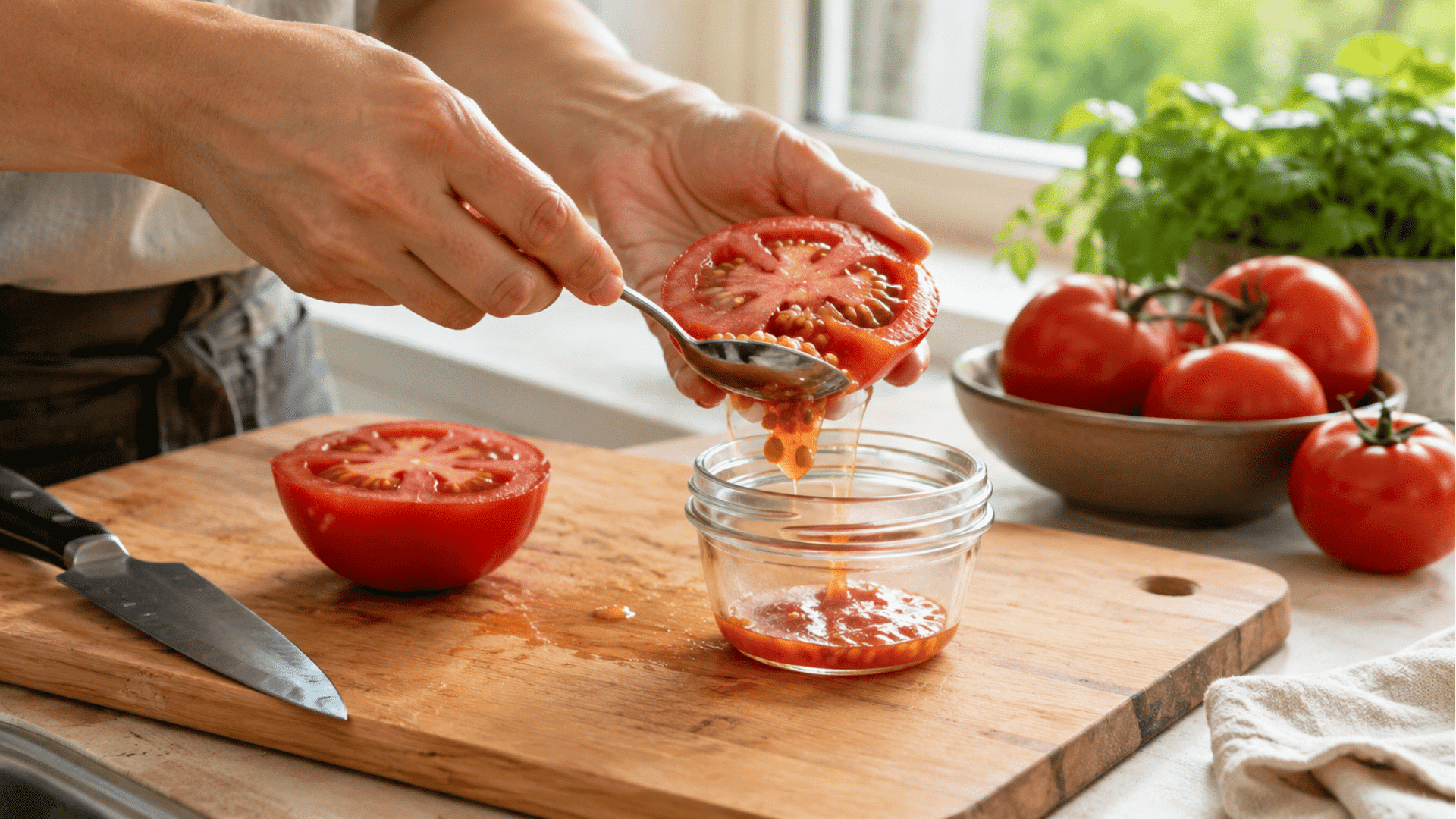
Start by picking a very ripe tomato because ripe tomatoes usually have mature seeds that grow better later. Cut the tomato across the middle instead of top to bottom so the seed pockets are easier to reach.
Use a spoon or gently squeeze the tomato to remove the seeds and jelly-like pulp into a bowl or jar. Do not worry if extra juice gets in, too, because it helps during fermentation.
Step 2: Add Water and Start Fermentation
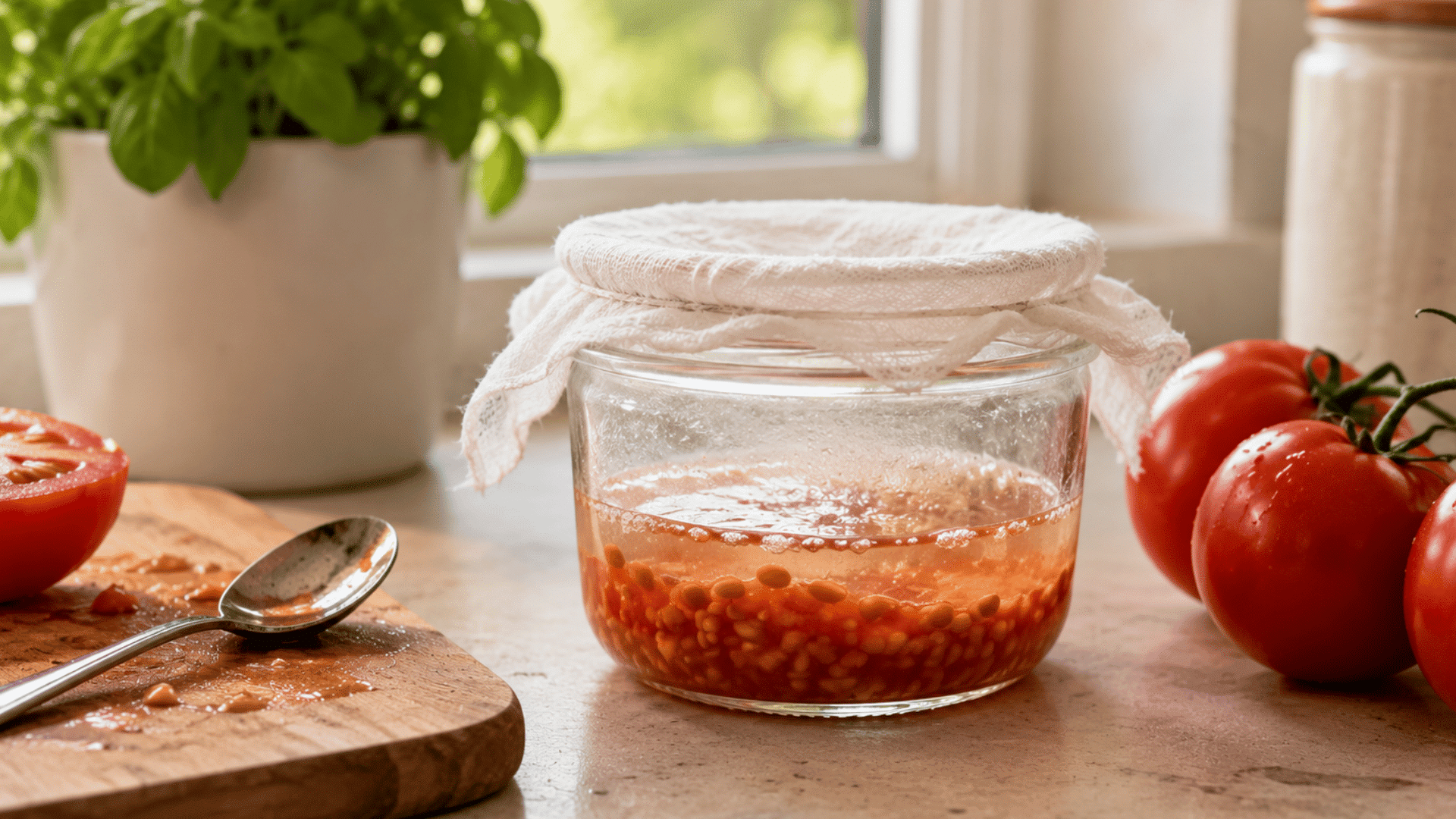
Tomato seeds have a slippery, jelly-like coating that can prevent good sprouting if it stays on the seeds.
Add a little water to the bowl or jar after collecting the seeds. This helps initiate fermentation, which naturally breaks down the coating.
Fermentation can also help lower the chance of some seed diseases. Keep the container loosely covered and place it somewhere at room temperature.
Step 3: Let the Seeds Ferment
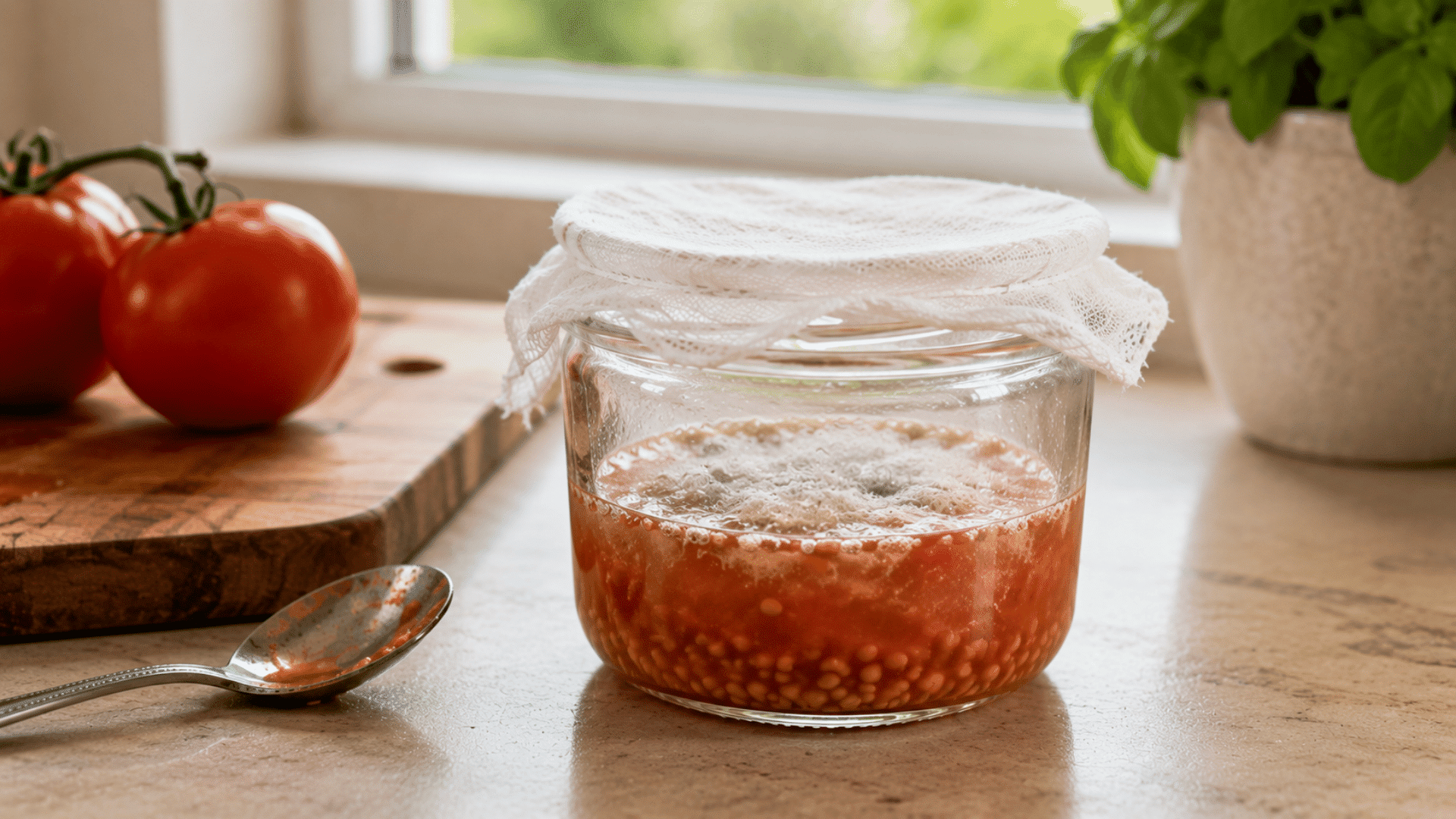
Leave the seeds to ferment for about 2 to 4 days. During this time, you may notice bubbles, mold on top, or a sour smell.
These are normal signs that fermentation is working properly. Stir the mixture once daily if you want.
Try not to leave the seeds too long because they may start sprouting or become damaged. Once the jelly coating breaks down, the seeds are ready to clean.
Step 4: Separate Good Seeds
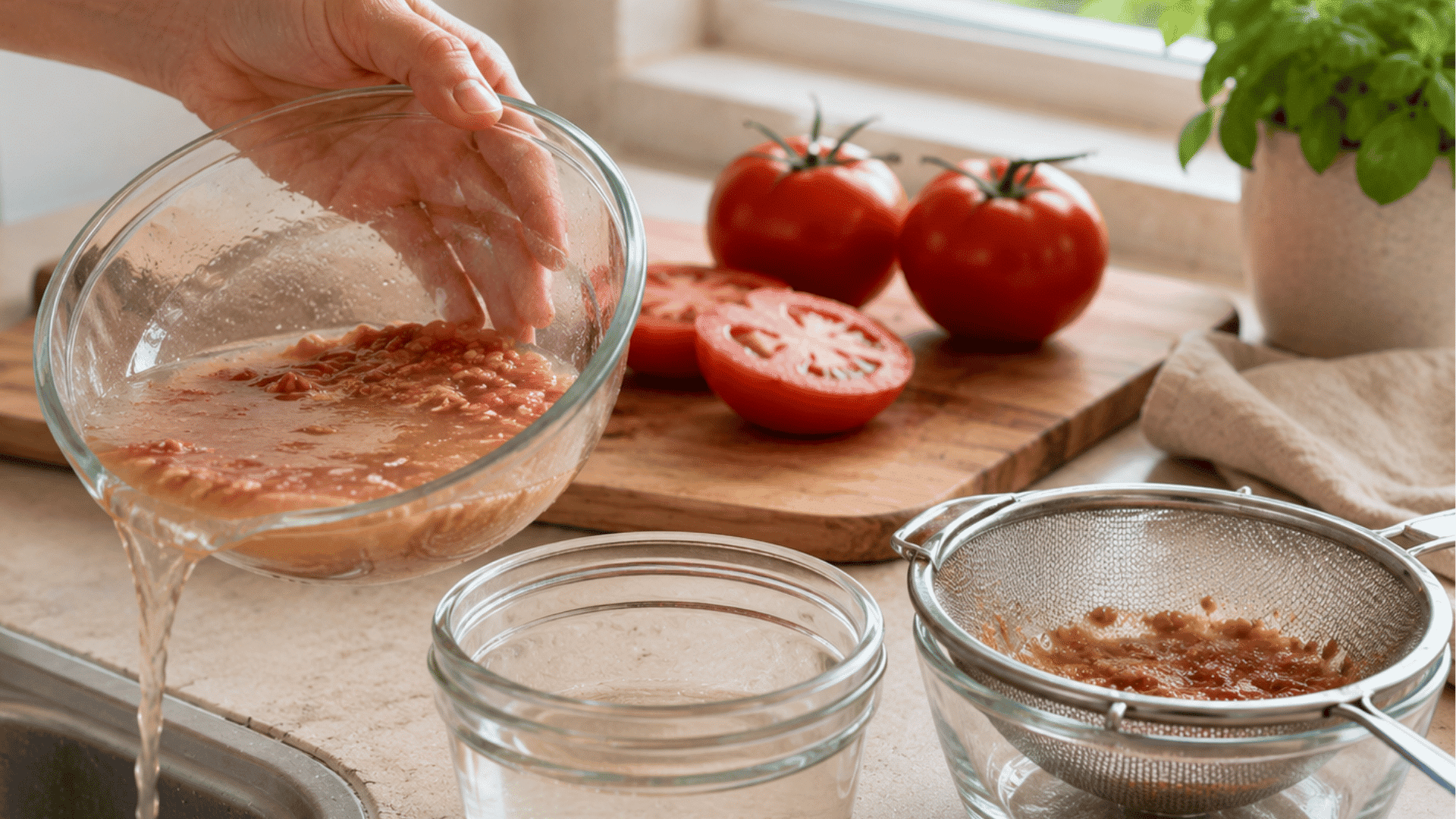
After fermentation, add more water to the container and stir gently. Healthy seeds usually sink to the bottom, while bad seeds, mold, and tomato pulp float on top.
Carefully pour off the floating material, avoiding the good seeds at the bottom.
You may need to repeat this process a few times until the water looks cleaner. This step helps you keep stronger seeds for next season.
Step 5: Rinse the Seeds Well
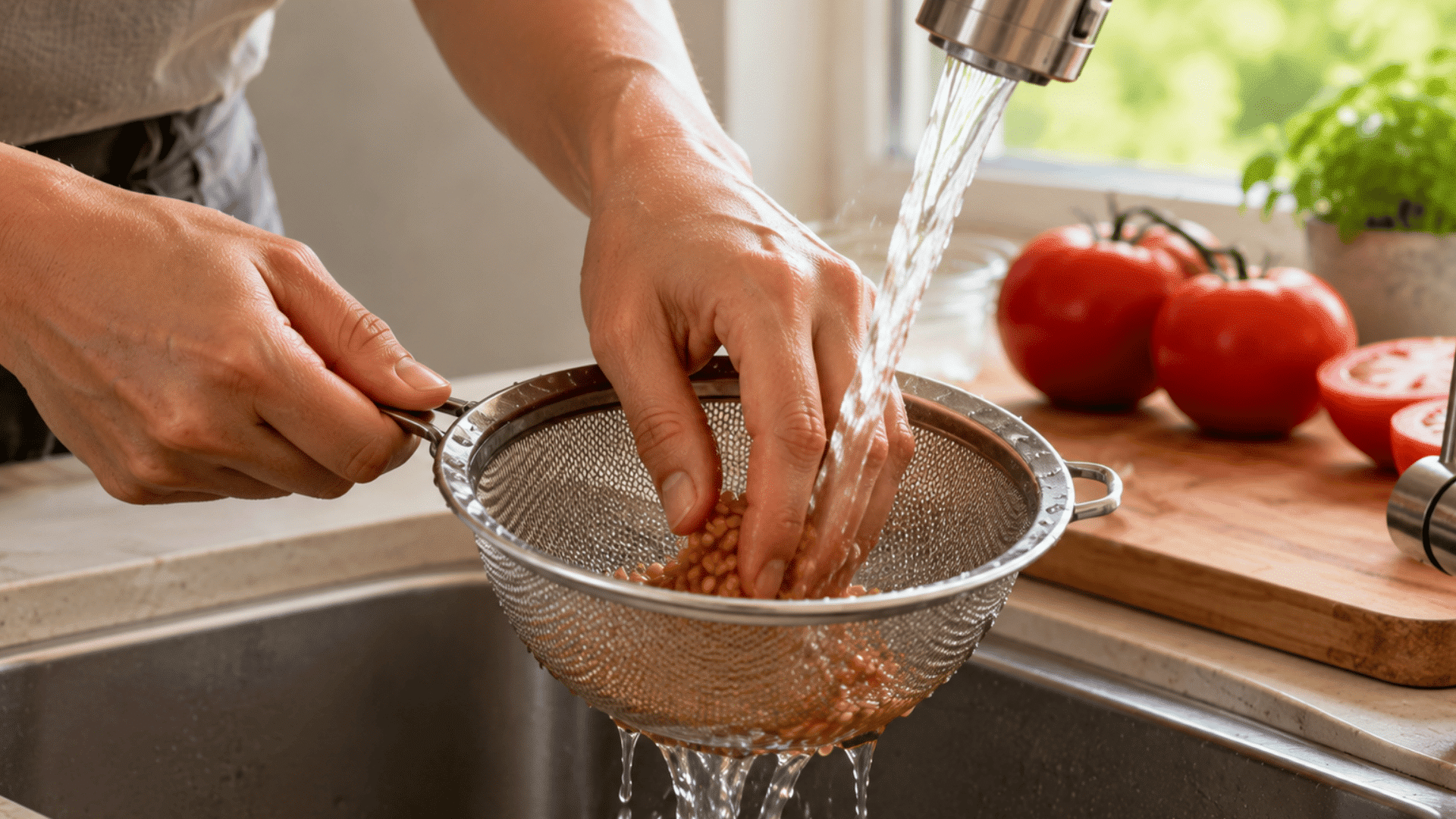
Pour the good seeds into a sieve or small colander and rinse them under cool running water.
Gently move the seeds around with your fingers to remove any leftover pulp or slimy coating. Clean seeds dry better and store more safely later.
Take your time during this step because leftover tomato bits can sometimes cause mold while the seeds are drying or during storage.
Step 6: Dry the Seeds Properly
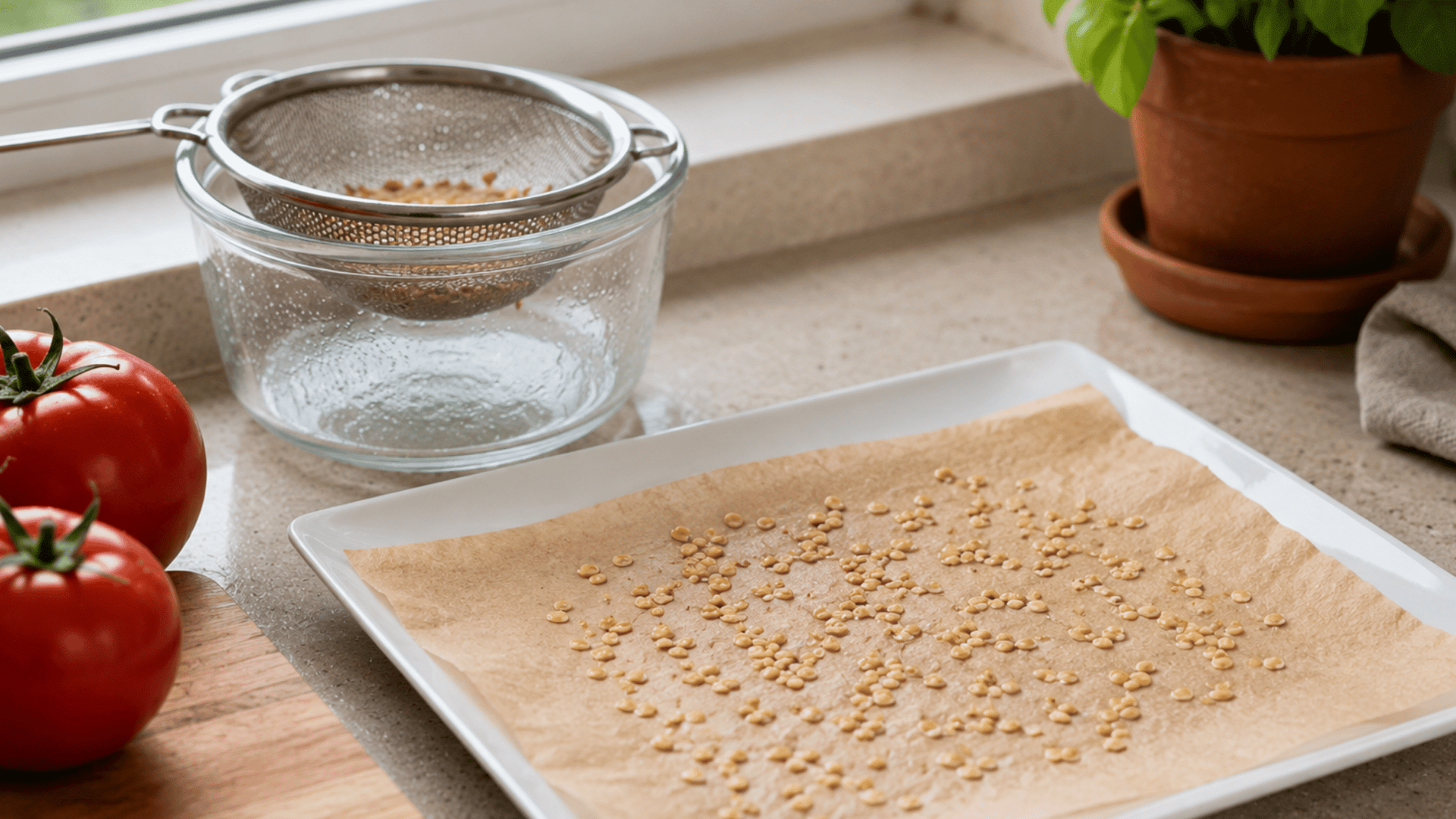
Spread the clean seeds on a plate, glass dish, coffee filter, or wax paper in a thin layer. Keep them in a dry place with good airflow away from direct sunlight.
Avoid paper towels because tomato seeds often stick to them and become hard to remove later. Stir or move the seeds once daily to ensure even drying. Most tomato seeds need about 5 to 7 days to dry fully.
Step 7: Store Tomato Seeds for Long-Term Use
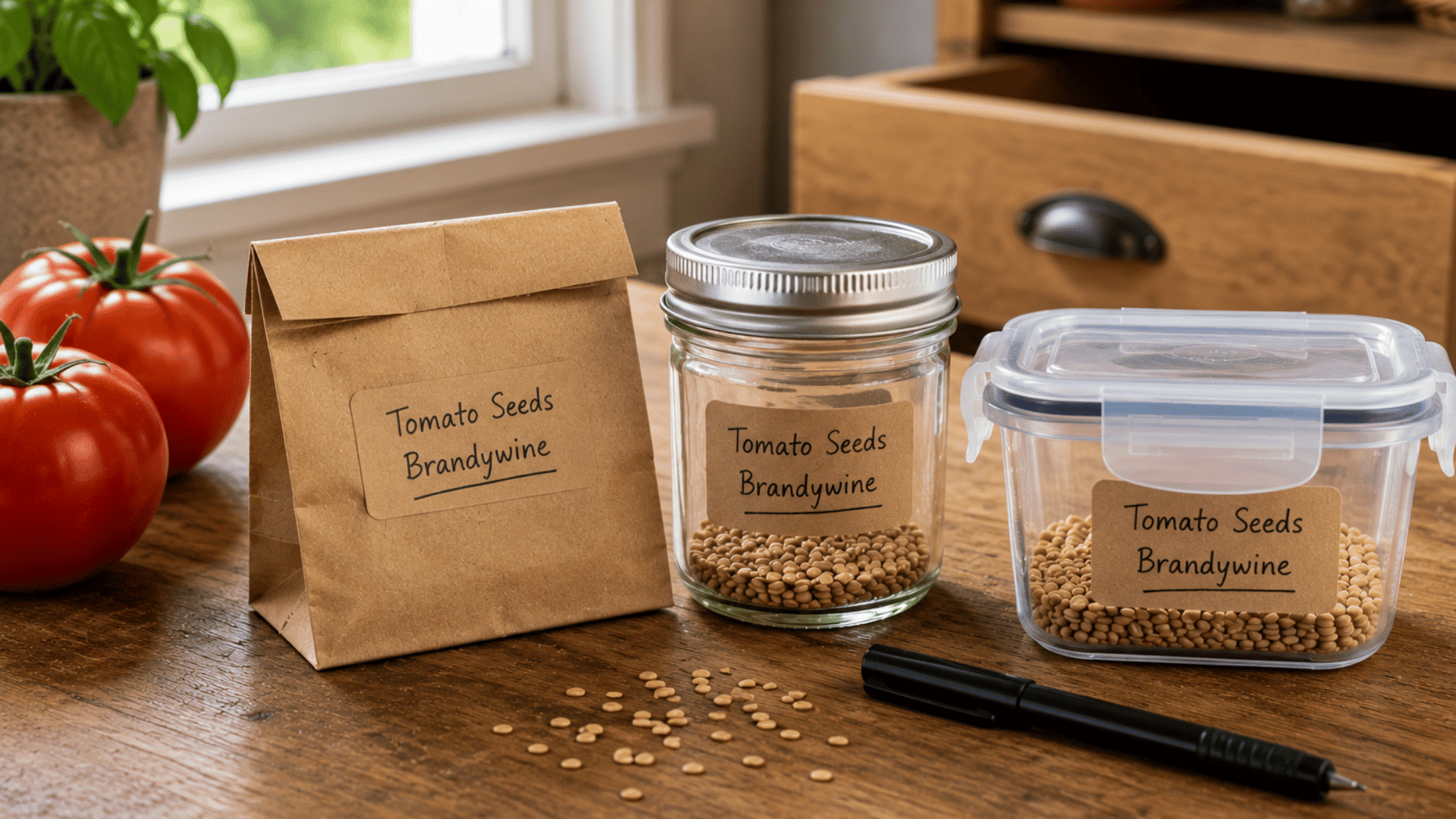
Once the seeds feel completely dry, place them in a paper envelope, small jar, or labeled container. Write the tomato variety and date on the label so you remember what you saved later.
Store the seeds in a cool, dry, and dark place like a drawer, cupboard, or airtight container. When stored properly, tomato seeds can last 4 to 6 years and still produce healthy plants later.
Why Fermenting Tomato Seeds is Important
Tomato seeds have a natural jelly-like coating that helps prevent the from sprouting too early inside the tomato.
Fermentation removes this coating so the seeds can sprout more easily later. It also helps clean the seeds and may reduce the risk of certain seed diseases.
Many gardeners notice better results when starting tomato seeds indoors and allowing them to germinate properly. Clean, well-fermented seeds are usually easier to dry, store, and plant for the next planting season.
Common Mistakes to Avoid When Saving Tomato Seeds
- Saving Seeds from Hybrid Tomatoes: Hybrid tomato seeds may grow plants that look and taste different from the original tomato.
- Skipping Fermentation: The jelly coating around tomato seeds can lower seed growth if it is not removed properly.
- Over-Fermenting Seeds: Leaving seeds in the jar too long may cause them to sprout or become damaged.
- Storing Damp Seeds: Moisture can lead to mold and spoil the seeds.
- Drying Seeds on Paper Towels: Tomato seeds often stick to paper towels, making them difficult to remove later.
- Forgetting Labels: Tomato seeds look very similar, so unlabeled seeds can easily get mixed up.
Best Ways to Store Tomato Seeds Long Term
Proper storage helps tomato seeds stay healthy and ready for planting later. The biggest problem during storage is moisture, as damp seeds can mold or rot before next season.
Here are some common storage options:
| Storage Method | Good Points | Things to Remember |
| Paper Envelopes | Cheap and simple | Keep them in a dry place away from moisture |
| Glass Jars | Good protection from humidity | Make sure seeds are fully dry first |
| Airtight Containers | Helps block moisture and air | Store in a cool, dark area |
Some gardeners also keep tomato seeds in the refrigerator for longer storage. If you do this, use an airtight container to protect seeds from moisture.
When stored properly in a cool, dry, dark place, tomato seeds can last 4 to 6 years.
How to Use Saved Tomato Seeds Next Season
Before planting, make sure your saved tomato seeds are fully dry and stored properly.
Some gardeners like to soak the seeds in water for a few hours before planting, but this step is optional. It may help older seeds start growing a little faster.
Many people begin tomato seeds indoors because tomatoes grow better in warm conditions. Try to start tomato seeds indoors about 6 to 8 weeks before the last frost in your area.
Plant the seeds in small pots or trays with moist seed-starting mix and keep them in a warm, bright place. Once outdoor temperatures become warmer, the young plants can be moved into the garden safely.
Tomato Seeds Starting Indoors Successfully
Starting tomato seeds indoors is a simple way to give your plants a strong, healthy start before the outdoor planting season arrives.
With the right soil, warmth, light, and watering routine, even beginners can grow healthy tomato seedlings at home.
Many gardeners prefer to start tomato seeds indoors because it gives plants extra growing time and helps them become stronger before moving outside.
1. Best Soil for Tomato Seedlings
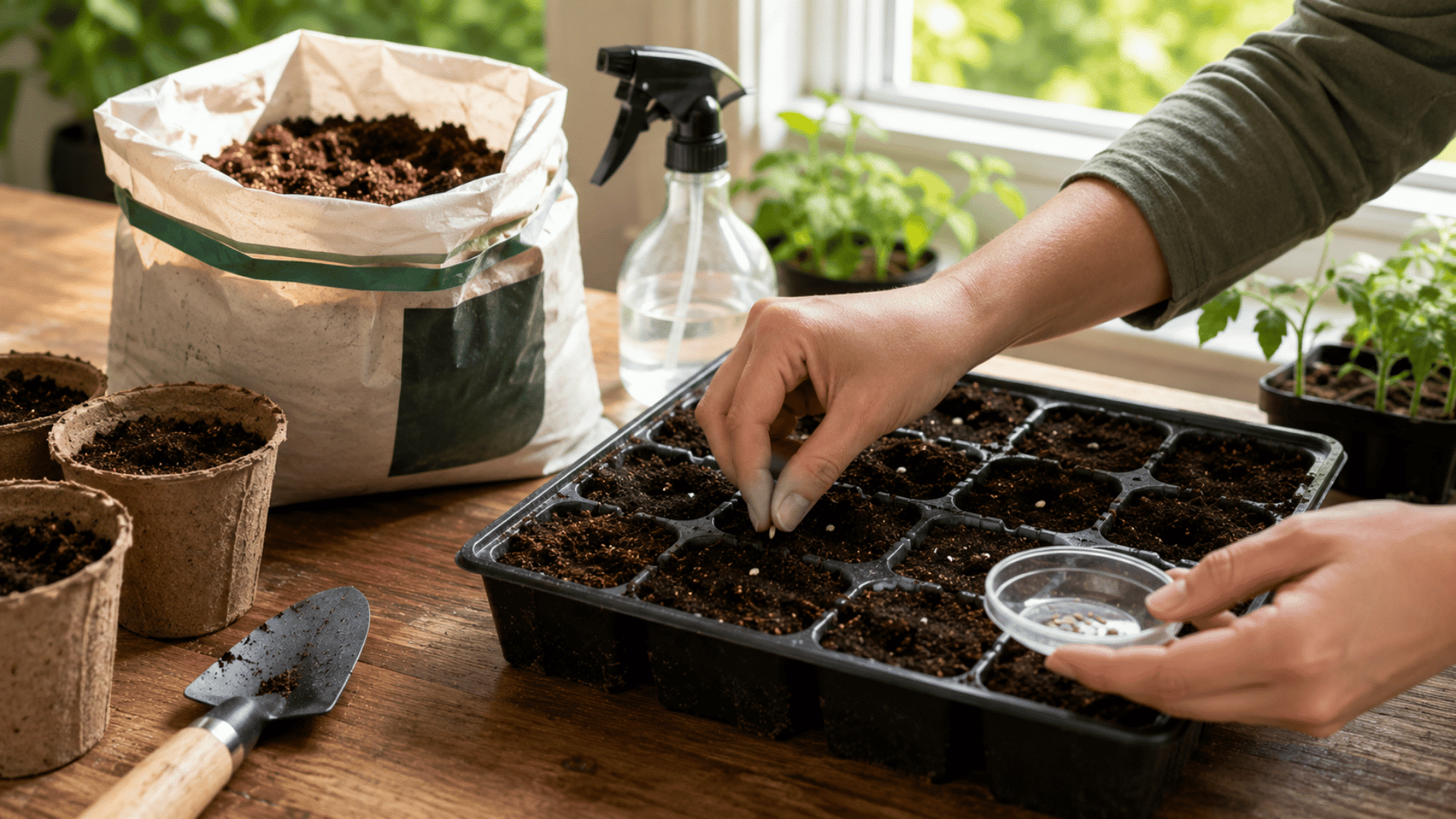
Use a light seed-starting mix instead of heavy garden soil when planting tomato seeds indoors.
Seed-starting mix drains better, helping tiny roots grow more easily. Fill small pots or seed trays with moist soil and plant the seeds about a quarter inch deep.
Avoid packing the soil too tightly because tomato seedlings grow best in loose soil with good airflow around the roots.
2. Proper Temperature and Light
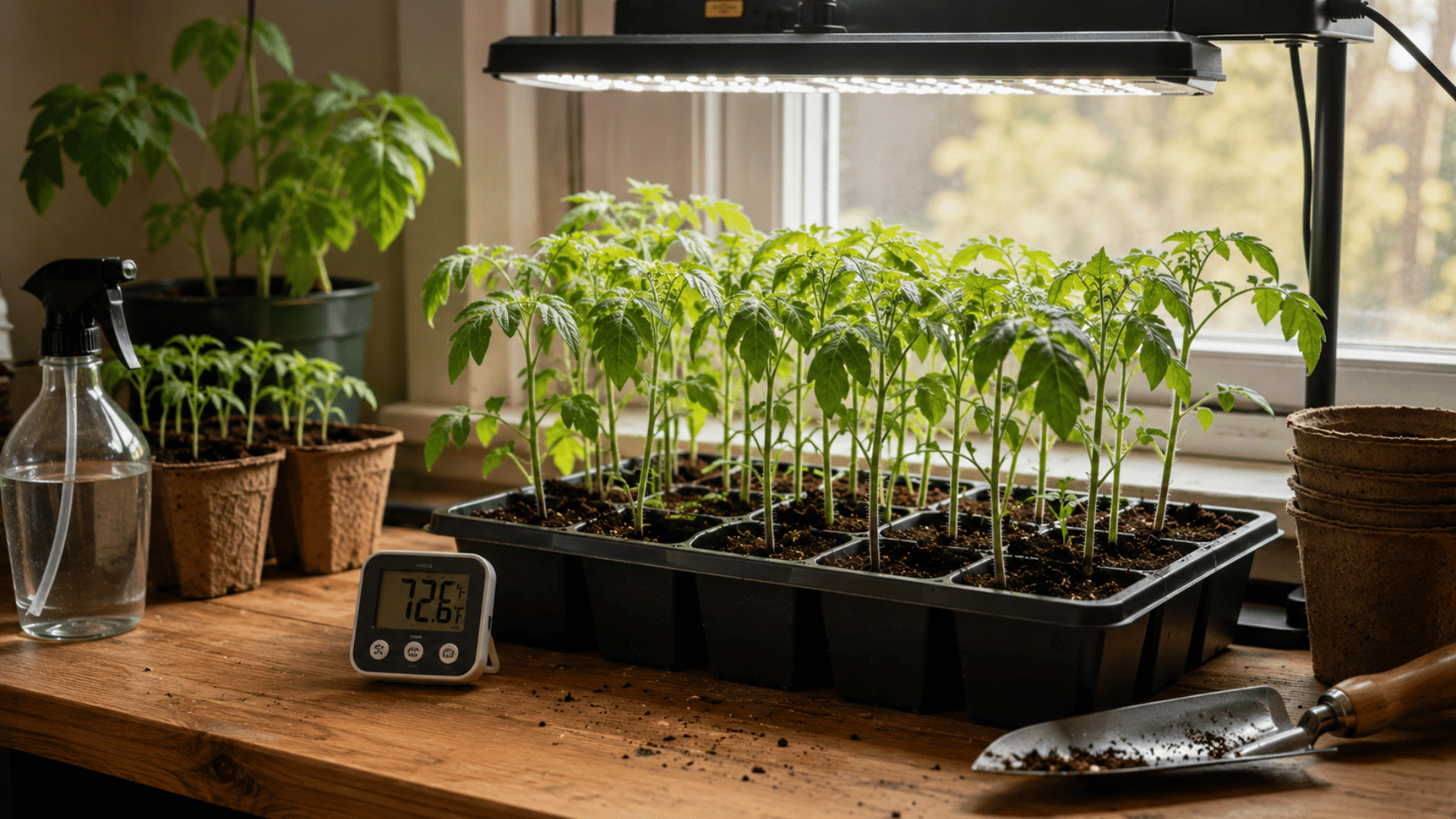
Tomato seeds starting indoors grow best in warm conditions. Try to keep the temperature around 70°F to 80°F for faster seed growth.
After the seeds sprout, place the seedlings near a sunny window or under grow lights.
Tomato seedlings usually need around 12 to 16 hours of light daily. If they do not get enough light, the stems may become weak and thin.
3. Watering Tomato Seedlings
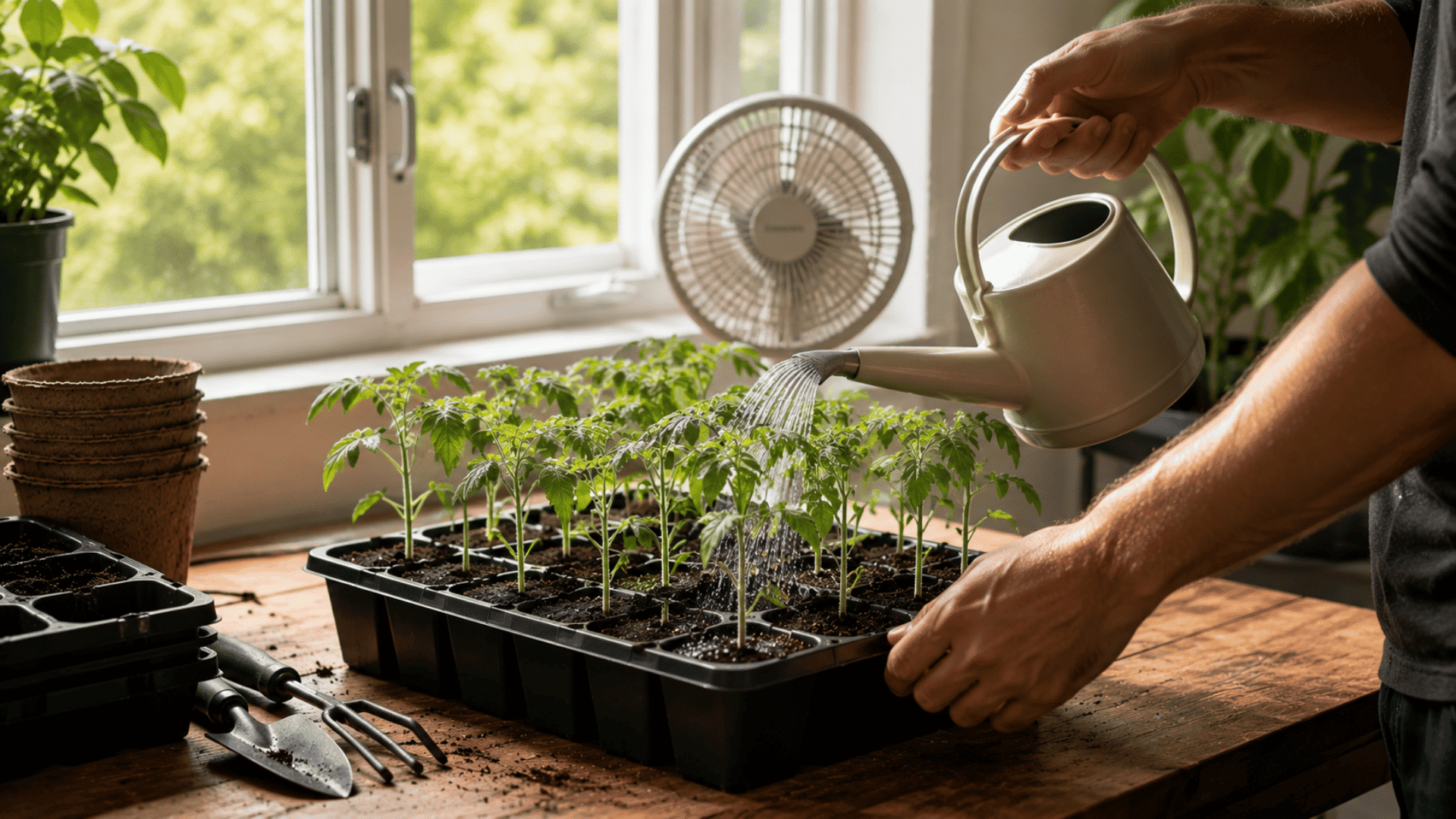
Keep the soil lightly moist but not soaking wet. Too much water can cause mold or weak roots, while dry soil may stop seedlings from growing properly.
A spray bottle or a gentle watering can works well for small seedlings. Water the soil, not the leaves. Good airflow around tomato seeds indoors also helps reduce the risk of disease.
4. When to Transplant Seedlings Outdoors
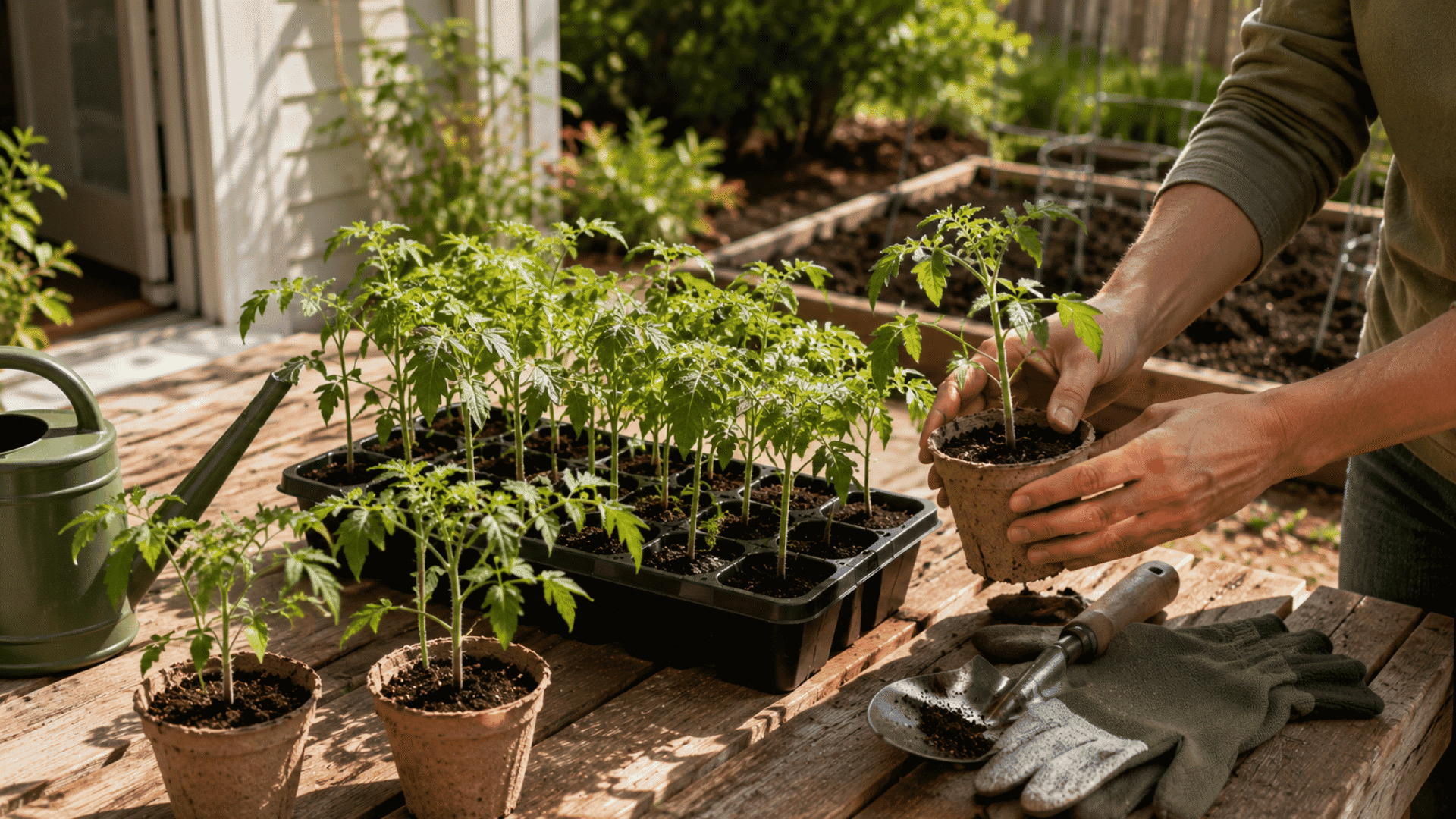
Move your tomato seedlings outdoors after the last frost when the weather stays warm at night.
Before planting them in the garden, gradually acclimate them to outdoor conditions by leaving them outside for a few hours each day over about a week.
This helps prevent shock and gives the young tomato plants a smoother move into the garden.
Can You Save Seeds From Store-Bought Tomatoes?
Yes, you can save seeds from store-bought tomatoes, but the results may vary depending on the type of tomato.
Organic and heirloom tomatoes are usually the best choices because their seeds often grow plants that look and taste similar to the original tomato.
Farmers’ market tomatoes can also work well for seed saving. Genetically modified tomatoes are less common in home gardening, but hybrid tomatoes are very common in stores.
If you want more reliable results, heirloom tomatoes are usually the safest option for saving seeds.
At the End
Saving tomato seeds at home is a simple gardening habit that can help you grow healthy tomatoes year after year.
From picking ripe tomatoes and fermenting the seeds to drying and properly storing them, each small step helps prepare strong seeds for the next planting season.
Many gardeners enjoy saving seeds from heirloom tomatoes because they often grow reliable plants with great flavor. Even if you are new to gardening, this process becomes easier with practice.
Start with just a few tomatoes this season, and you may soon have your own collection of seeds ready for next year’s garden.
Try saving your favorite tomato seeds this year and enjoy growing them again next season.
Frequently Asked Questions
How Long do Tomato Seeds Last?
Properly stored tomato seeds can last 4 to 6 years.
Can I Freeze Tomato Seeds?
Yes, fully dried tomato seeds can be frozen in airtight containers to help extend storage life.
Why are My Tomato Seeds Not Germinating?
Poor germination is often caused by old seeds, cold temperatures, overwatering, or insufficient light.
Jordan Mathews, who has a degree in horticulture from Texas A&M University, has been a guiding force in plant health and sustainable gardening for over 16 years. His career began with a role at a renowned botanical garden, where he deepened his understanding of plant physiology and eco-friendly cultivation methods. Jordan joined our website as a freelancer in 2020, becoming a go-to expert for readers seeking advice on nurturing diverse plant species apart from offering insights grounded in scientific knowledge and practical experience. Beyond his professional achievements, Jordan is a keen nature photographer, capturing the beauty of flora in its immensely diversified forms.