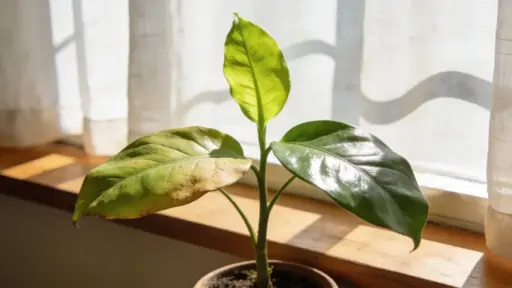
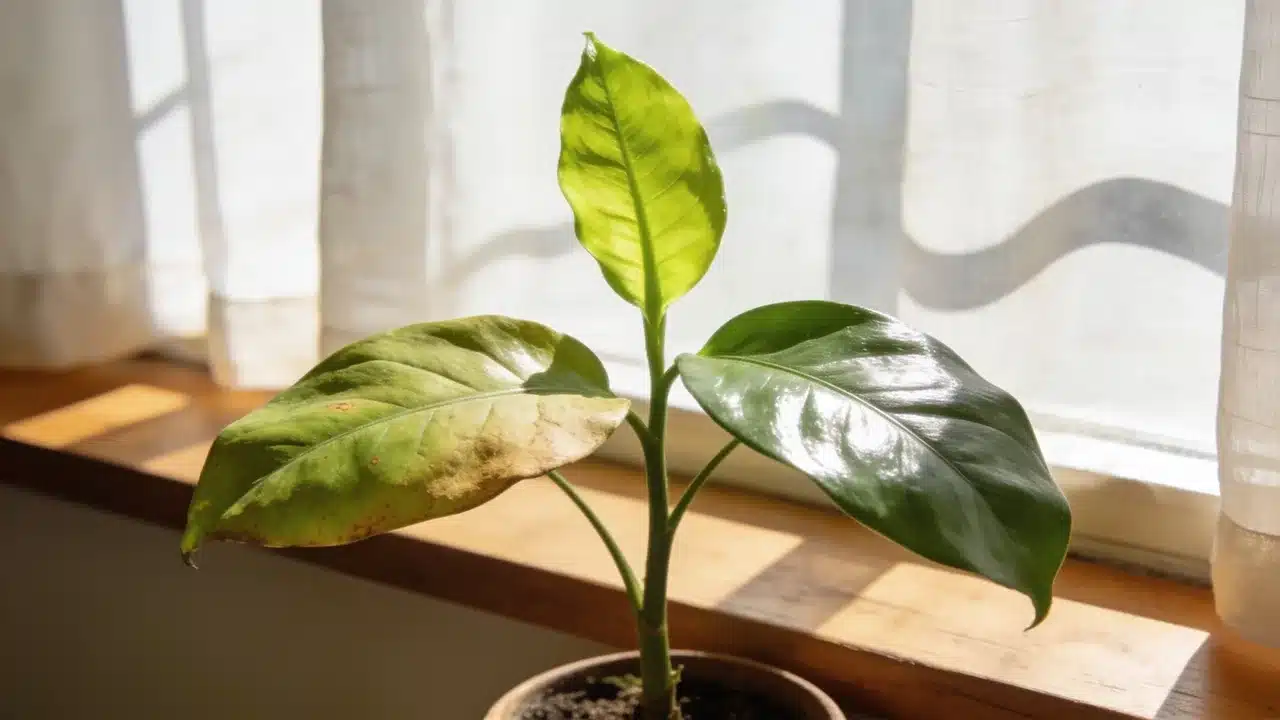

Yellow leaves on plants can make you feel like something went wrong overnight. I still remember checking a peace lily one morning and finding three yellow leaves after I had “helped” it with extra water.
That poor plant was not being dramatic. It was giving me a clue.
If you are seeing the same thing, start by checking the soil, light, roots, and leaf pattern before you cut anything. A yellow leaf can mean too much water, too little water, weak soil, missing nutrients, pests, disease, or plain old aging.
You can spot the signs, fix what is stressing your plant, and keep yellow leaves from coming back. Your plant may not need a big rescue. It may just need better watering, light, or better timing of care.
What do Yellow Leaves on Plants Usually Mean?
Yellow leaves on plants usually mean the plant is under stress. The stress may come from overwatering, weak roots, poor soil, nutrient deficiencies, low light, harsh sun, pests, disease, or natural aging.
The main thing is not to guess too fast.
A single yellow leaf near the bottom of the plant is often normal, especially if the plant is still growing new leaves. But if several leaves turn yellow at once, or the yellowing spreads quickly, the plant is asking for help.
The best clue is the pattern. Lower yellow leaves may point to watering or nitrogen issues. New yellow leaves may point to iron deficiency, pH issues, or root trouble.
Yellow spots, sticky residue, or webbing may mean pests or disease. Before you cut leaves or add fertilizer, read what the plant is showing you.
Main Causes of Yellow Leaves on Plants
Yellow leaves on plants can have many causes, so it helps to look at the whole plant before you act. The soil, roots, light, leaf pattern, and care routine all matter.
A yellow leaf is not always bad news, but it should make you pause and check what the plant needs.
1. Overwatering and Wet Soil
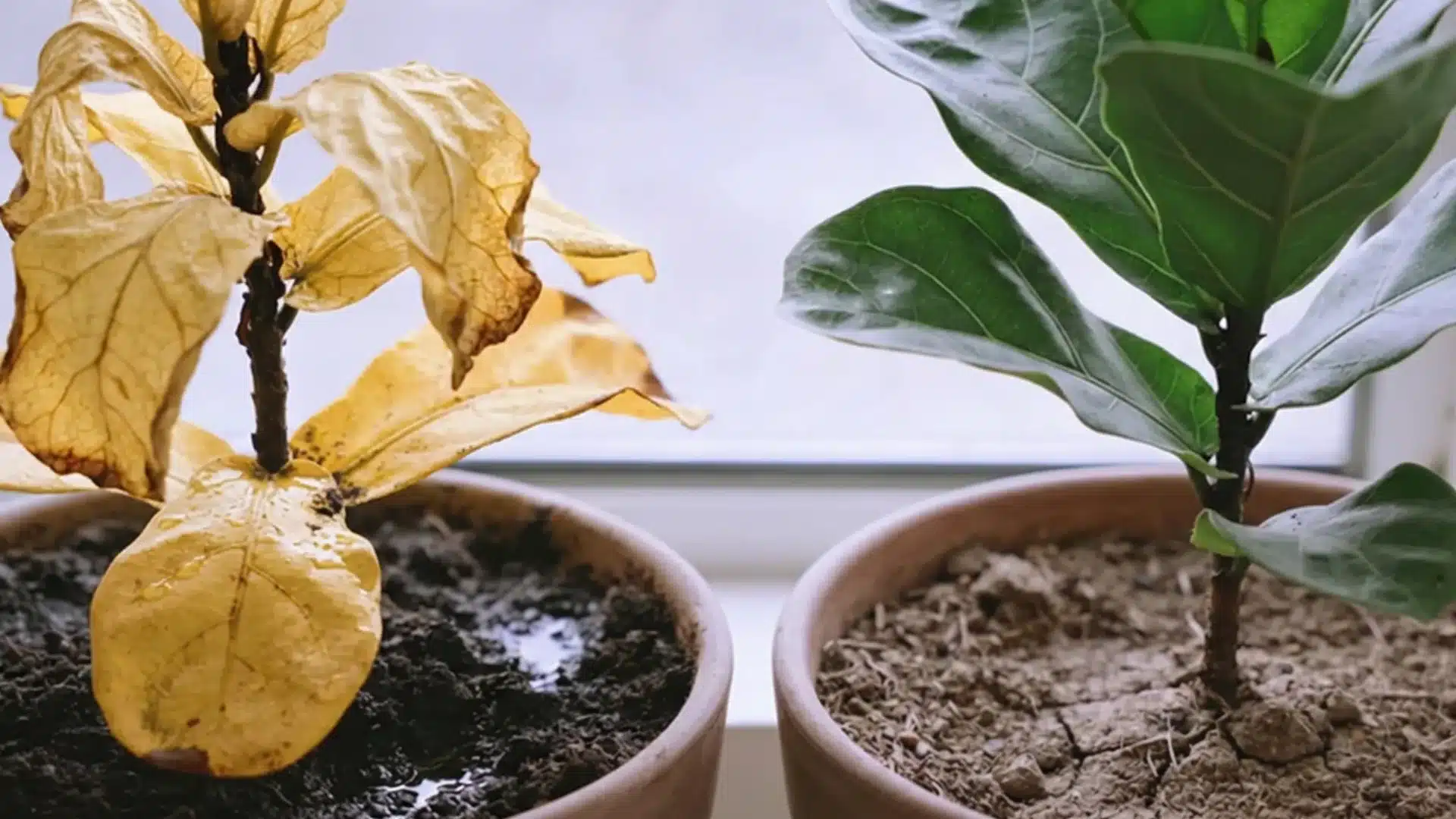
Overwatering is one of the most common reasons plants turn yellow. When soil stays wet for too long, the roots cannot get enough air. Once the roots weaken, they stop moving water and nutrients through the plant the right way.
This is why the leaves may turn yellow even though the soil still feels wet.
Overwatering often causes yellow leaves on plants to appear first on the lower leaves. The leaves may look soft, limp, or slightly mushy instead of dry and crisp.
The pot may feel heavy, the soil may smell sour, and the stems may feel weak. If this happens, stop watering for a while, check the drainage holes, empty the saucer, and inspect the roots if the plant keeps getting worse.
2. Underwatering and Dry Soil
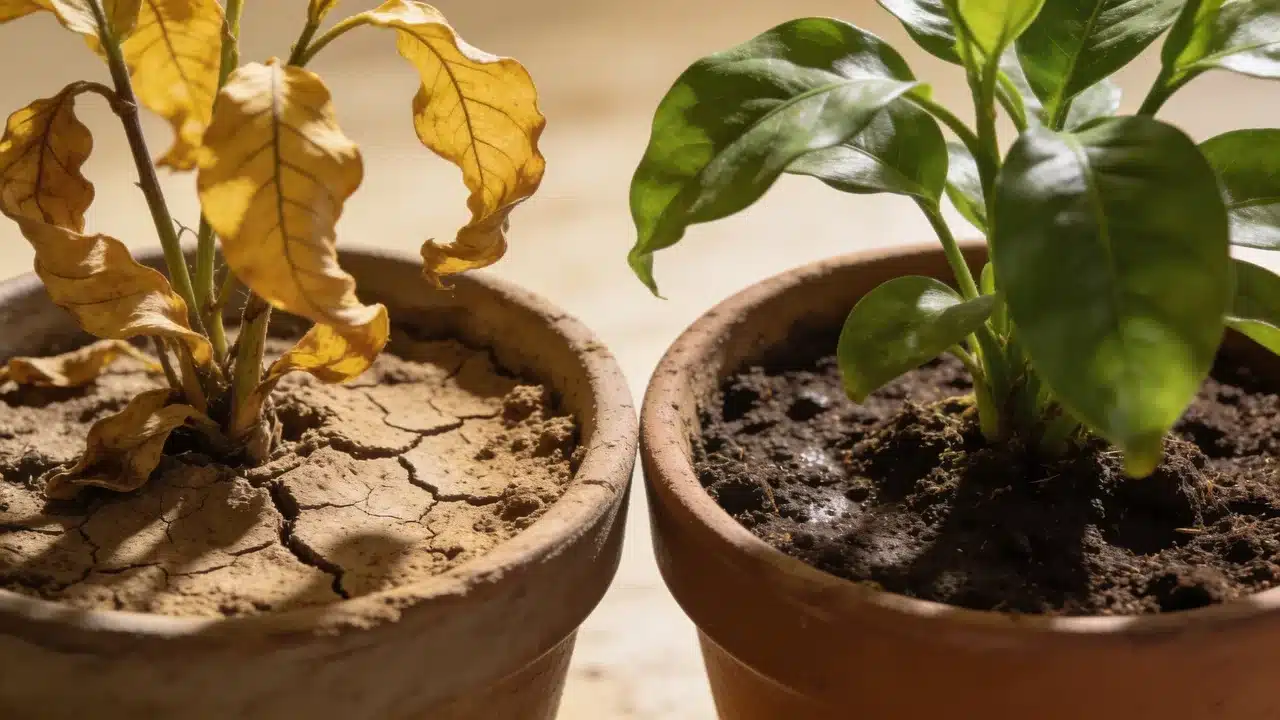
Too little water can also cause yellow leaves. When the soil stays dry for too long, the roots cannot send enough moisture to the leaves.
The plant may begin saving energy by dropping older leaves, and the leaf tips may turn brown or crisp before the whole leaf yellows.
You may notice the pot feels very light, the soil pulls away from the edge, or water runs straight through without soaking in. In this case, water the plant slowly and evenly until the soil is moist all the way through.
Do not flood it suddenly after a long dry spell. A steady soak is better than a rushed rescue.
3. Poor Drainage
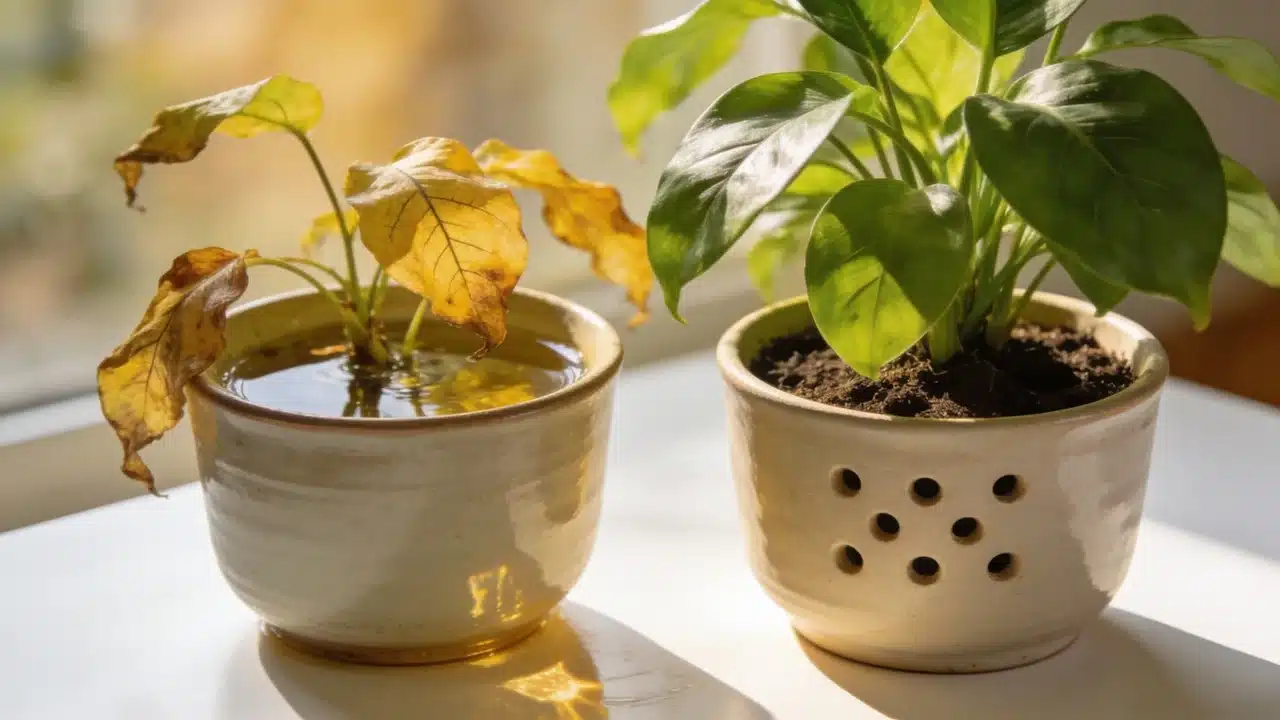
Sometimes the plant is not yellow because you watered too often. The real problem may be the pot or soil. A pot with no drainage holes, a saucer full of standing water, or heavy compacted soil can keep the roots wet for too long.
Poor drainage causes the soil to retain more water than the plant can use. Over time, roots lose oxygen and begin to fail.
To fix this, move the plant into a pot with drainage holes, use a lighter potting mix, and always empty extra water from the saucer after watering.
4. Root Rot or Damaged Roots
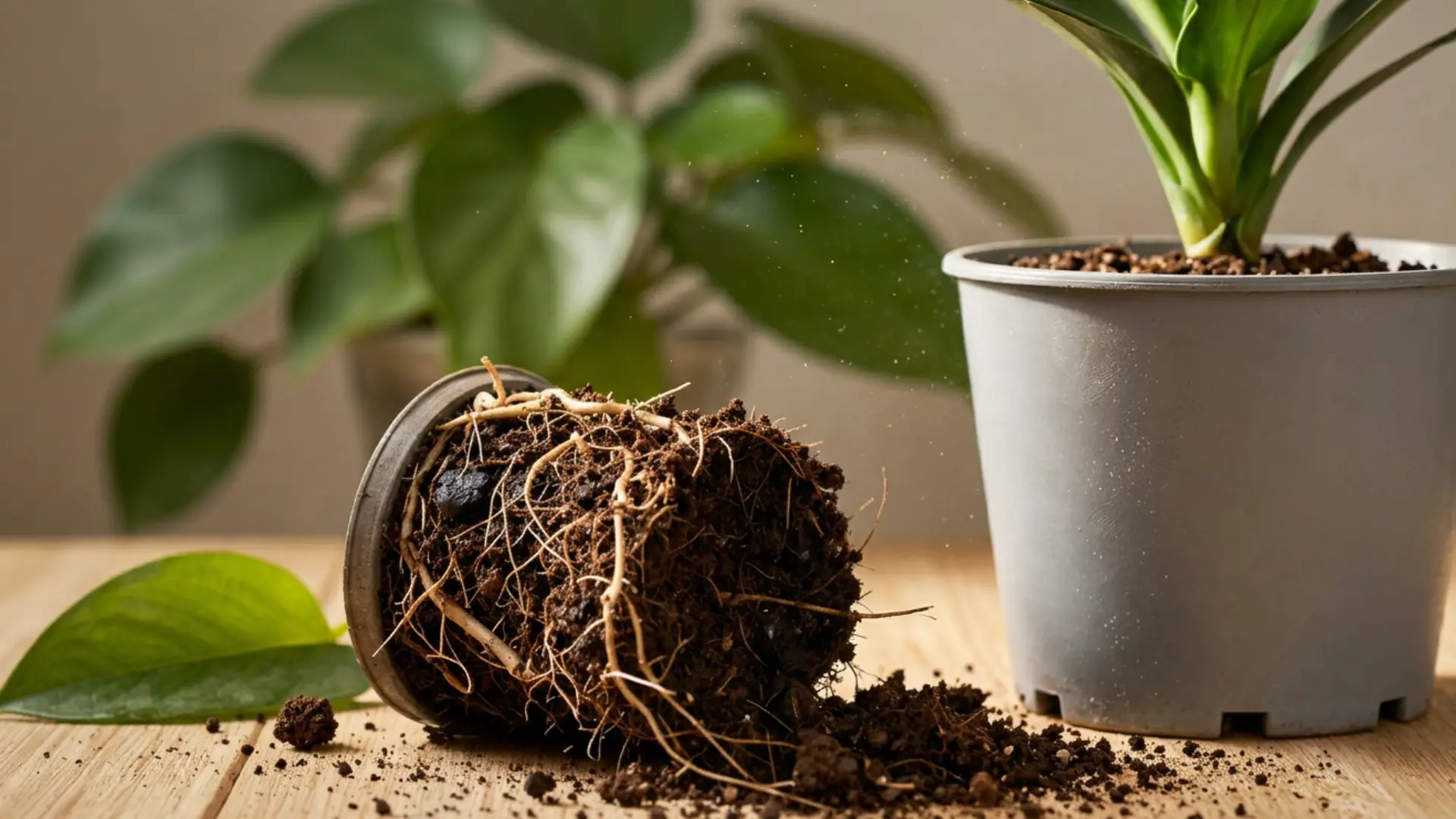
Root rot is a serious cause of yellow leaves because the damage starts below the soil. The plant may look thirsty above the surface, but the roots are too damaged to take up water properly.
This can happen when soil stays wet, drainage is poor, or the roots have been stressed for too long.
Healthy roots are firm and light in color. Rotten roots are usually brown, black, soft, slimy, or smelly. If you see rotten roots, trim them with clean snips and repot the plant in fresh soil.
Do not fertilize right away. Give the plant time to settle before adding anything extra.
5. Nutrient Deficiency
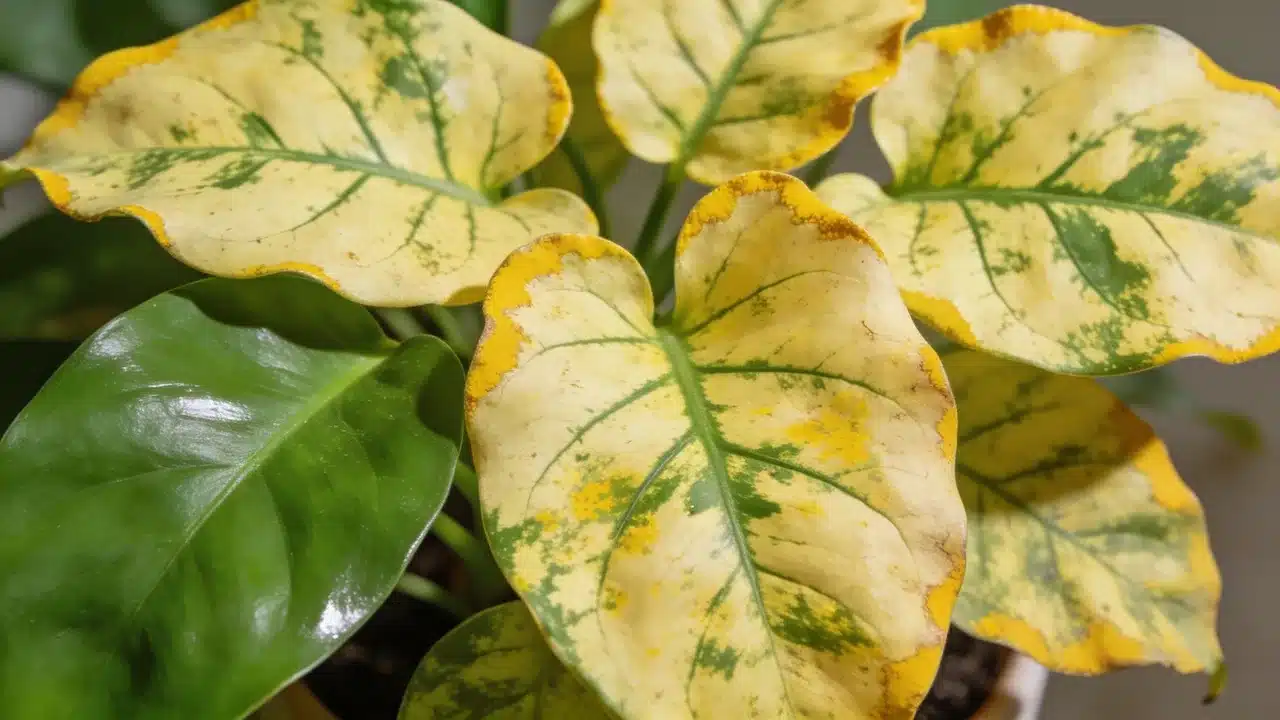
If watering, roots, and drainage look fine, yellow leaves may point to a nutrient problem. Plants need nutrients to grow strong leaves. When something is missing, the yellowing pattern can help you find the clue.
Nitrogen deficiency often starts on older lower leaves and causes even yellowing. Potassium issues may show as yellow edges that later turn brown.
Magnesium problems can cause yellowing between green veins on older leaves. Iron problems often show up on newer leaves, where the leaf turns yellow but the veins stay green.
Fertilizer can help, but only if the roots are healthy and the soil is not soggy.
6. Too Much Fertilizer
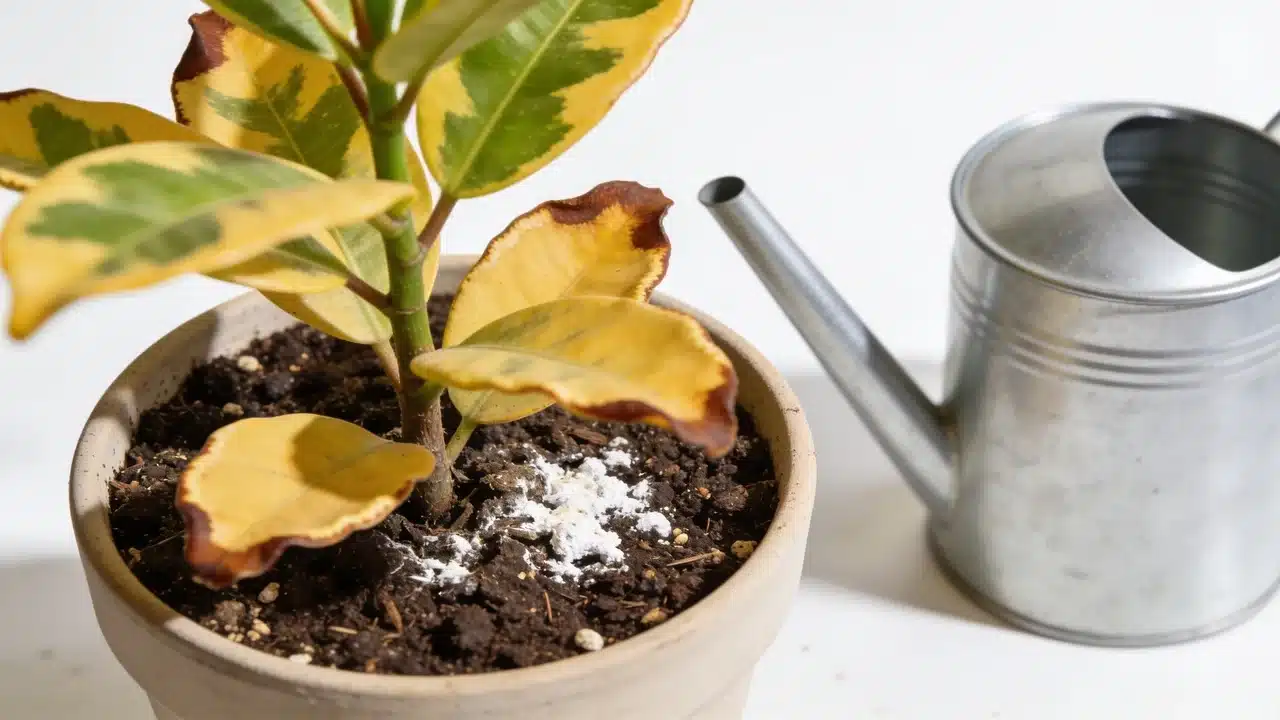
Too much fertilizer can harm roots and cause yellow leaves, brown tips, or burned edges. This often happens slowly as salts build up in the soil. You may also see a white crust on the soil surface or around the drainage holes.
If you think fertilizer burn is the issue, pause feeding and water the plant with plain water if the pot drains well. Let the extra salts wash out through the bottom.
After that, wait until the plant shows steady growth before feeding again, and use a weaker dose next time.
7. Low Light
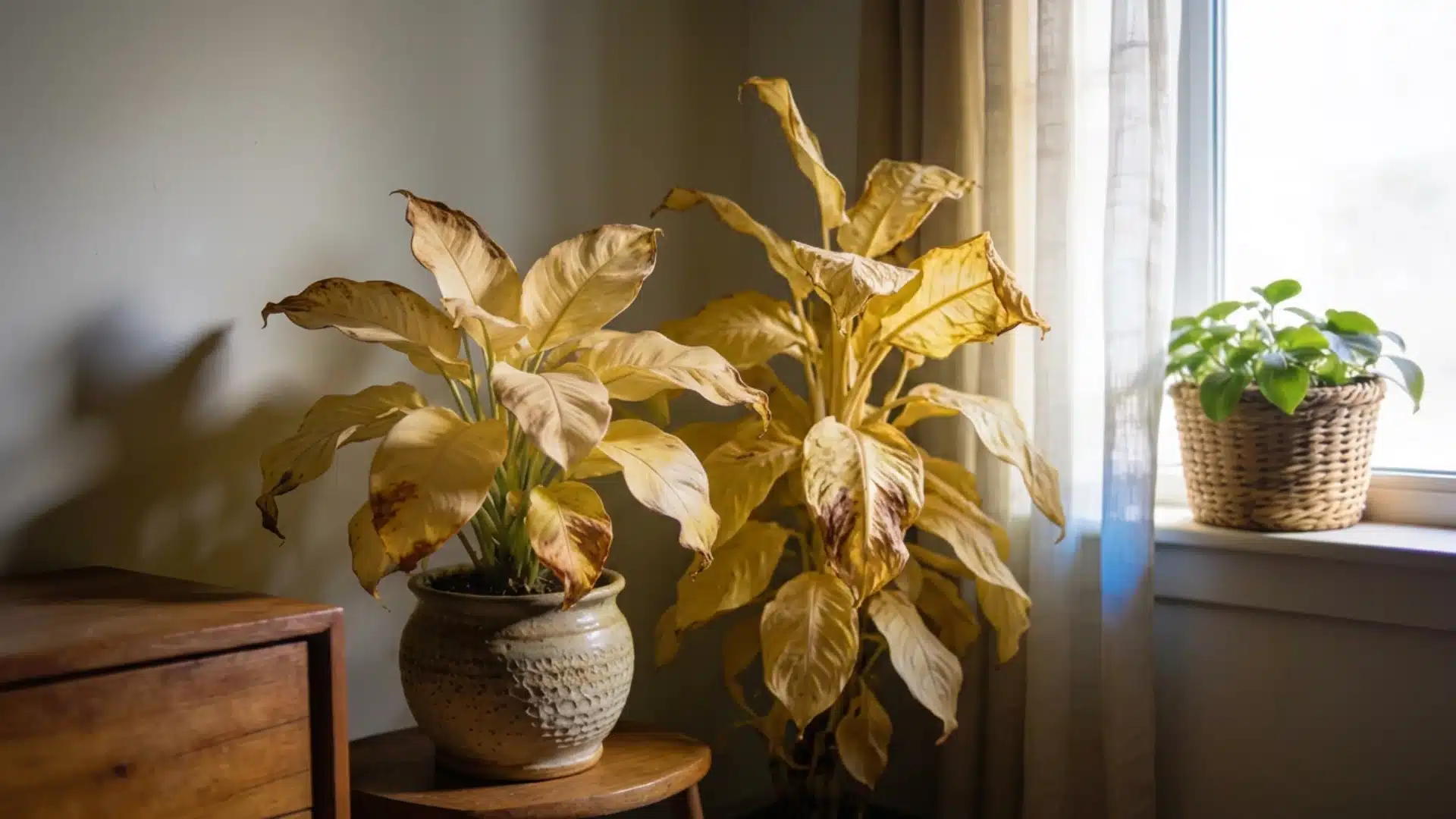
Low light can also lead to yellow leaves. When a plant does not get enough light, it cannot make food well. Growth slows down, the leaves may turn pale or yellow, and the soil may stay wet longer than usual.
This can create a second problem because slow-drying soil may lead to symptoms of overwatering. If the plant prefers bright indirect light, move it closer to a window, but avoid harsh direct sun right away.
Give it time to adjust after moving it.
8. Too Much Sun or Heat
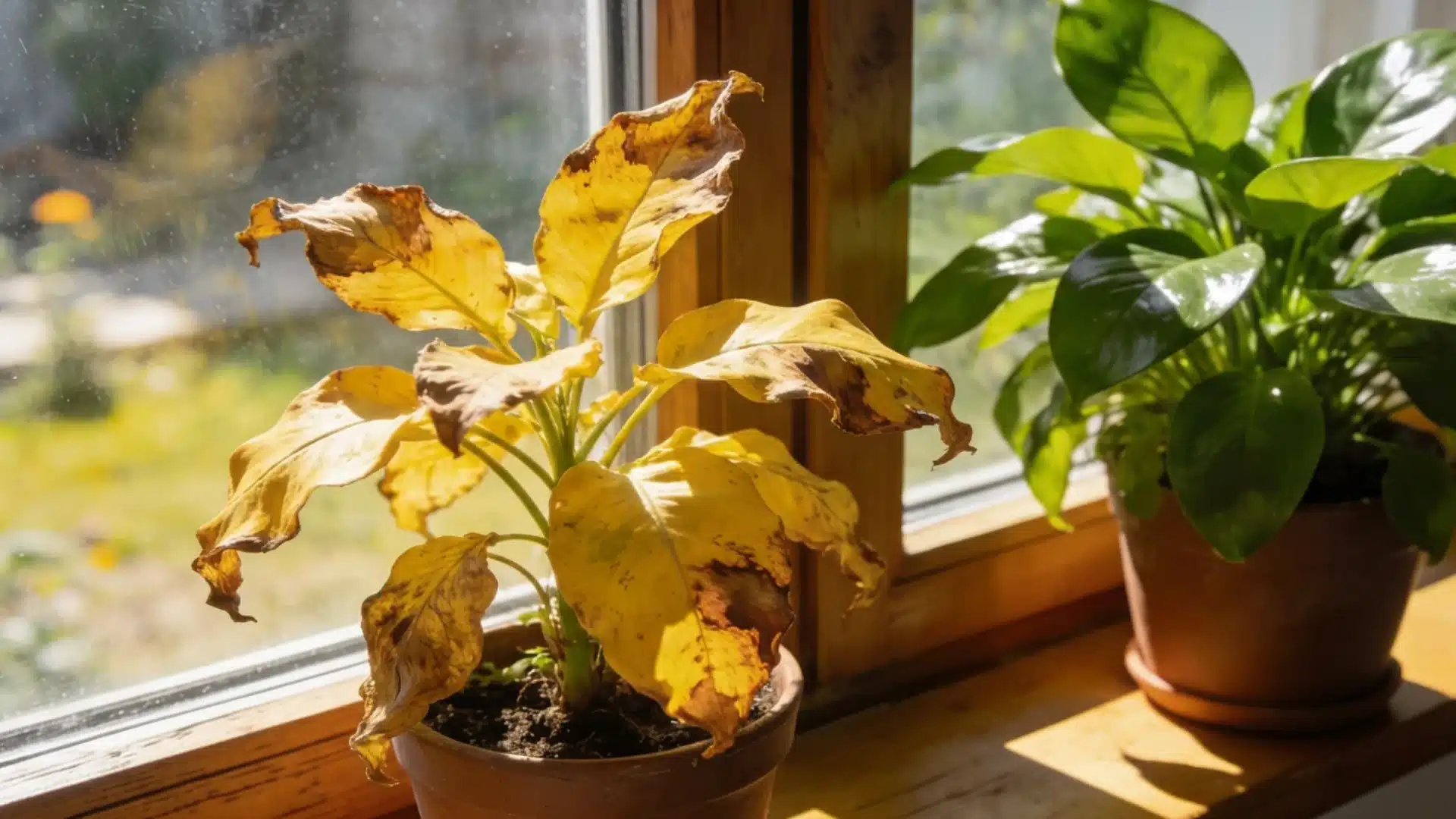
Strong sun can burn leaves, especially on plants that prefer softer light. The leaves may look faded, yellow, dry, or scorched. Brown, crispy patches may appear after the yellowing starts.
This often happens when an indoor plant is moved outside too quickly or placed in a hot window. Move the plant away from harsh afternoon sun and give it bright but softer light.
If the plant needs direct sun, increase the light slowly over several days.
11. Pests
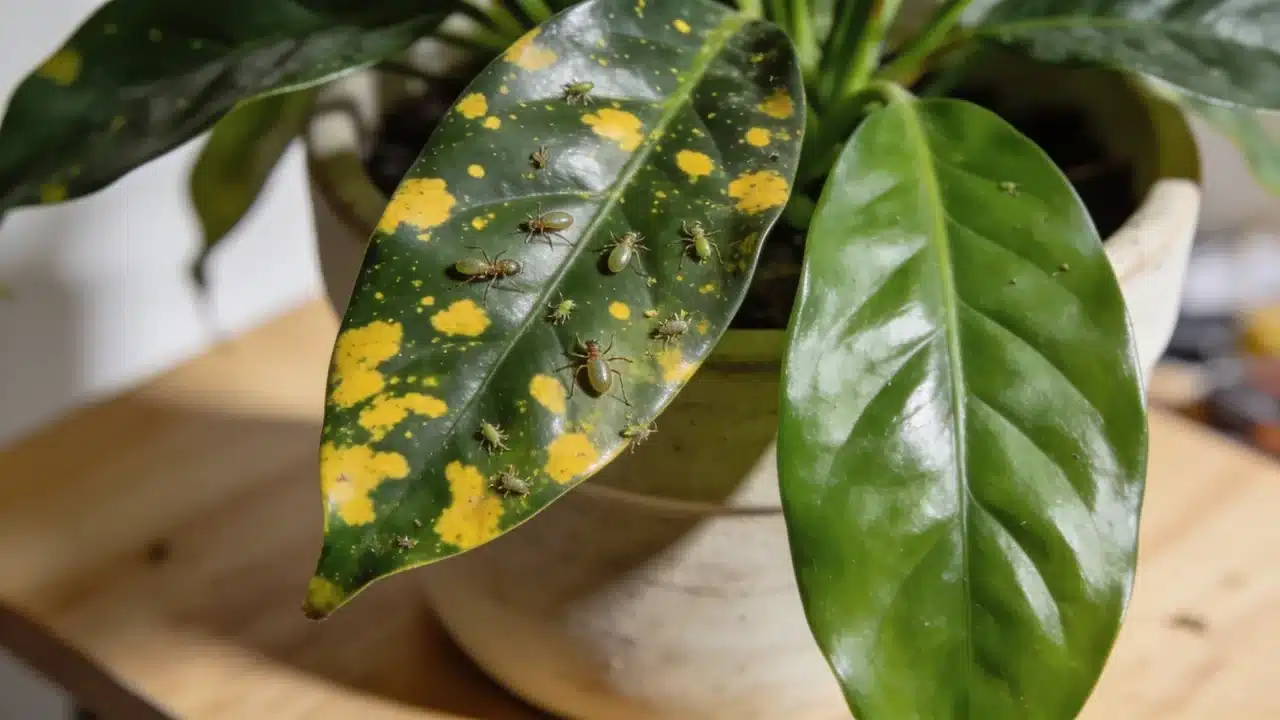
Pests can cause leaves to turn yellow by feeding on the plant’s sap. The yellowing may appear speckled, patchy, or faint rather than smooth and even. The plant may also stop growing well.
Check under the leaves, along the stems, and near new growth. Spider mites may leave fine webbing. Aphids can appear in clusters. Mealybugs look like small white cottony spots.
Thrips may leave streaks, tiny black dots, or damaged new leaves. If pests are present, isolate the plant and treat it based on the pest you find.
12. Disease or Leaf Spot
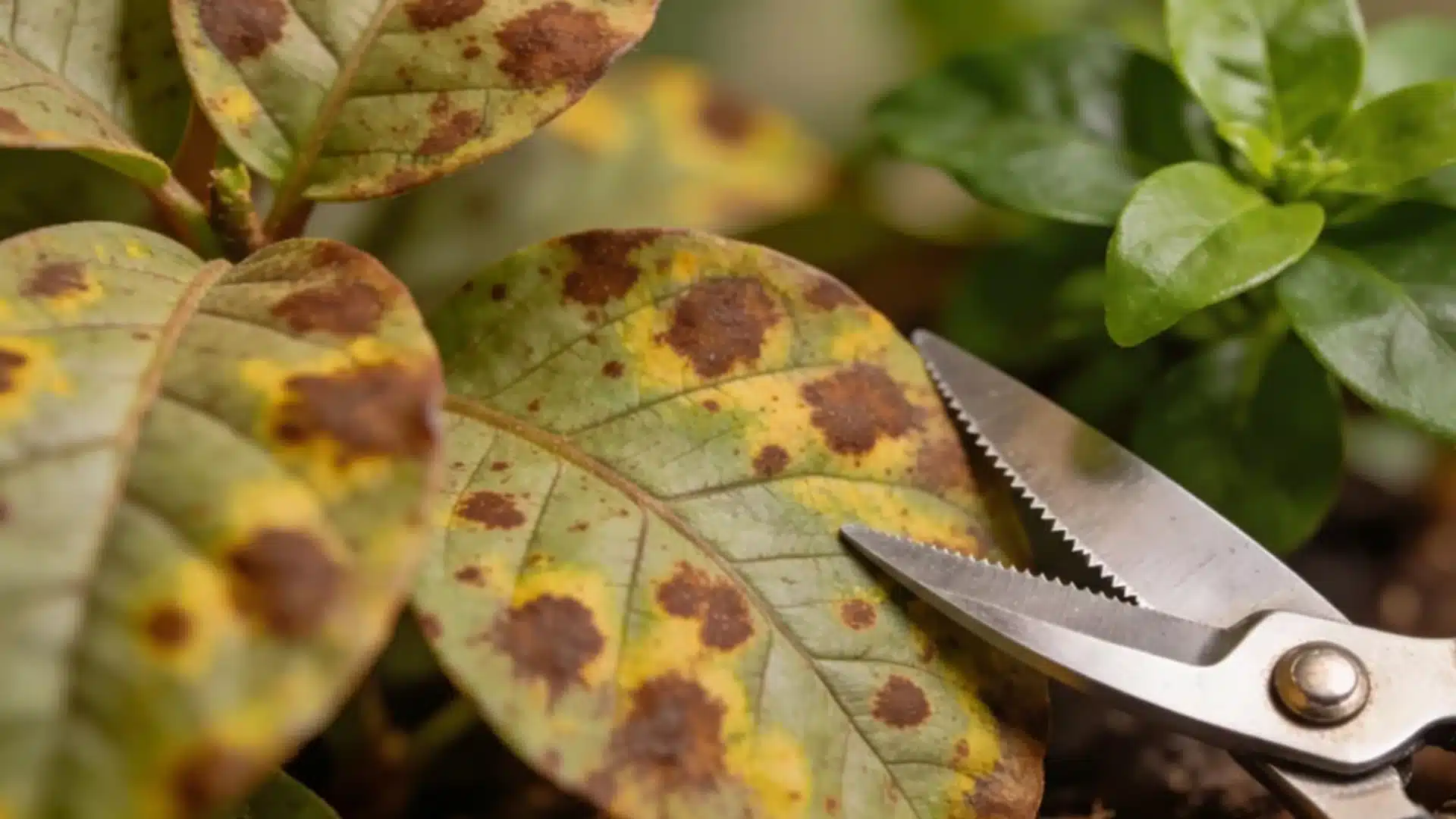
Disease can cause yellow leaves with brown spots, mushy patches, or yellow rings around damaged areas. This kind of yellowing should be addressed more quickly than normal aging because it can spread.
Remove badly infected leaves with clean snips, improve airflow, and avoid keeping the leaves wet. If the problem continues to spread, the plant may need appropriate fungal or bacterial treatment.
Keep it away from other plants until the issue is under control.
13. Natural Leaf Aging
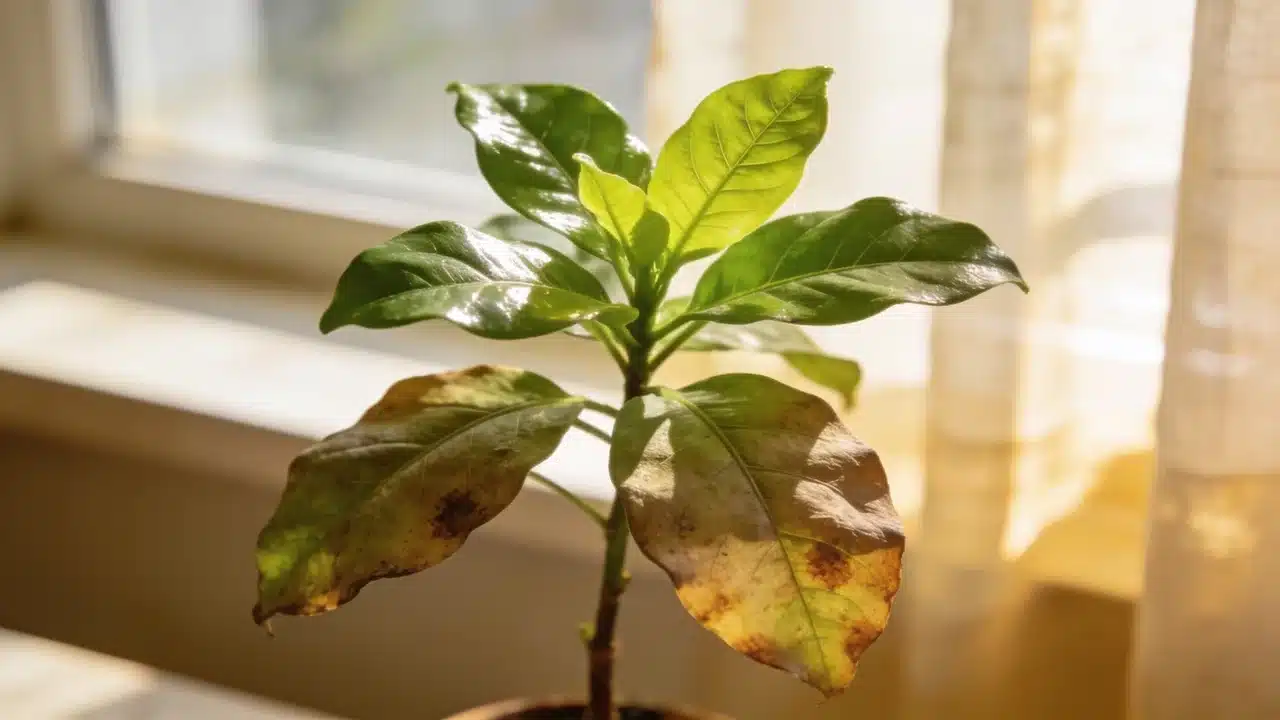
Not every yellow leaf means something is wrong. Plants naturally drop older leaves as they grow. This often happens with one or two lower leaves, while the rest of the plant looks healthy.
If the plant has fresh new growth, firm stems, normal soil moisture, and no pests, the yellowing may be part of its normal cycle. Let the leaf finish fading, then remove it once it is fully yellow or dry.
The key is to watch the whole plant, not just one leaf.
Should You Cut Off Yellow Leaves?
You do not always need to cut off yellow leaves right away. If the leaf is still partly green, the plant may still be pulling energy from it.
It is better to wait if your plant is growing a new leaf, looking stressed, or if you have not yet found the main cause. Cutting too soon can add more stress, especially when the plant is already weak.
You can cut the leaf once it is fully yellow, brown, dry, mushy, infected, or covered with pests. Use clean snips so you do not spread disease.
Try not to remove too many leaves at once, because the plant still needs enough healthy leaves to recover and grow new ones.
How to Fix Yellow Leaves Based on the Cause
Once you know the likely cause, fixing yellow leaves becomes much easier. Do not change everything at once. Start with the problem that matches your plant’s signs, then give it time to respond.
Old yellow leaves may not turn green again, so watch for fresh, healthy growth instead.
| Cause | First Fix |
| Overwatering | Stop watering, check drainage, and inspect roots |
| Underwatering | Water deeply and evenly |
| Poor drainage | Use a pot with holes and better soil |
| Root rot | Trim bad roots and repot |
| Nutrient deficiency | Feed during active growth |
| Fertilizer burn | Pause feeding and flush the soil |
| Low light | Move to brighter indirect light |
| Too much sun | Move away from the harsh, direct sun |
| Pests | Isolate and treat |
| Disease | Remove infected leaves and improve airflow |
Use this table as a quick guide, not a final diagnosis. The best fix is the one that matches the soil, roots, leaves, and plant location.
After you make one change to your care, wait a few days before making another. This helps you see what actually worked.
What Plant Owners Say in Reddit Discussions
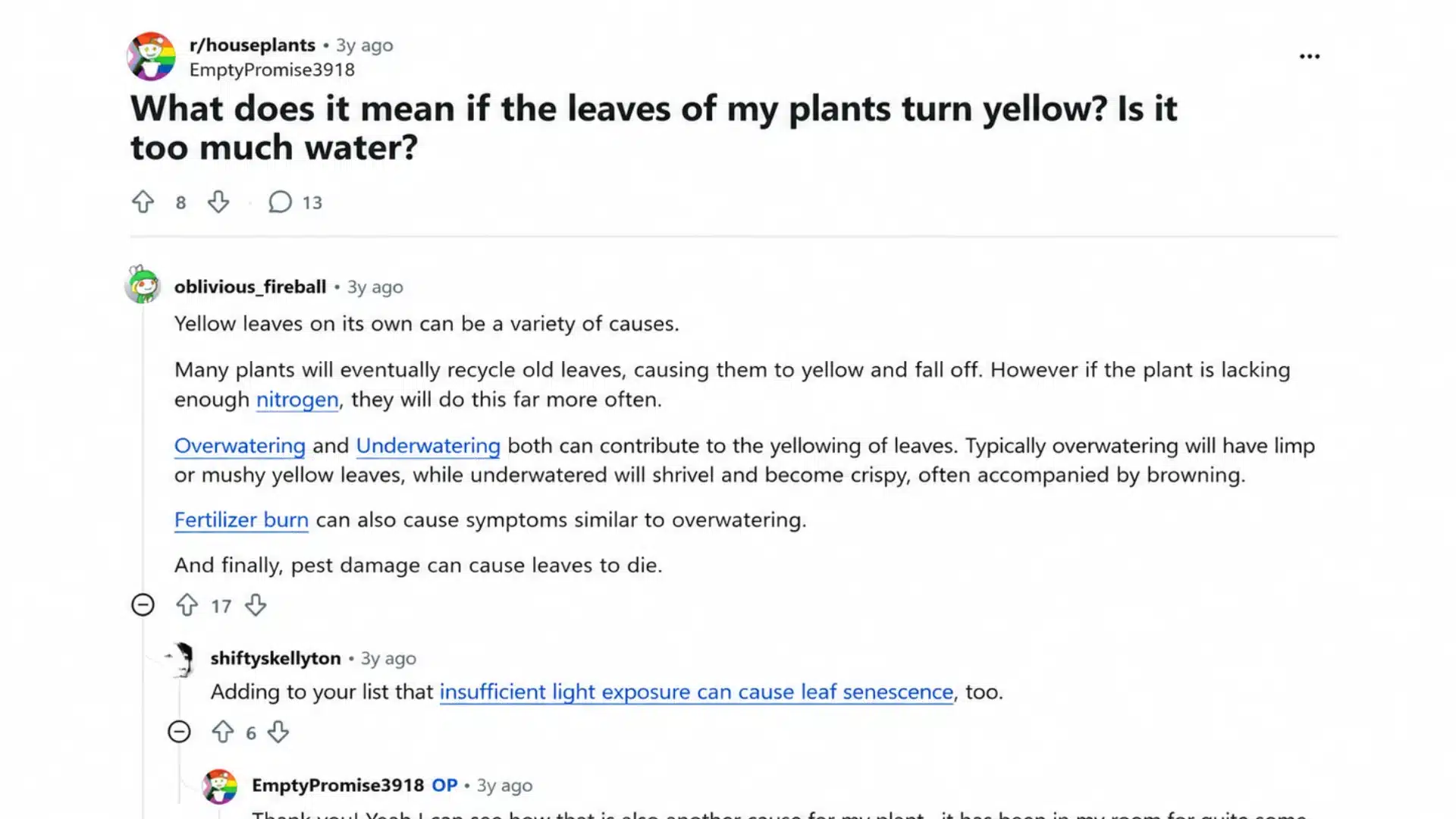
Reddit discussions show that plant owners often blame yellow leaves on overwatering first, but the real cause can be wider than that.
Users mentioned old leaf age, low nitrogen levels, overwatering, underwatering, fertilizer burn, pest damage, and low light as possible causes of yellow leaves.
The most useful takeaway is to check the leaf texture. Overwatered yellow leaves often look limp, soft, or mushy. Underwatered yellow leaves usually look shriveled, crispy, or brown at the edges.
That small detail can stop you from making the wrong fix. The thread also shows that two problems can happen at once. The plant owner later said the plant may have been overwatered and kept in a room with low sun exposure.
That is common indoors because a plant in low light uses water more slowly. The soil stays wet longer, and yellow leaves can follow.
Reddit comments can help you spot common mistakes, but your plant’s actual signs should guide the fix.
How to Prevent Yellow Leaves from Coming Back
Yellow leaves are easier to prevent when your plant care stays steady. Once you know what caused the problem, small habits can help stop it from happening again.
- Check the soil before watering so you do not water too early or too late.
- Use pots with drainage holes so extra water can escape.
- Empty saucers after watering so roots do not sit in standing water.
- Use the right soil mix for your plant’s moisture needs.
- Feed the plant only during active growth, not when it is stressed.
- Move plants slowly when changing their light exposure.
- Check leaves every week for pests, spots, or sticky residue.
- Repot the plant when roots crowd the pot or grow out of the holes.
- Avoid watering on a fixed schedule without checking the soil first.
- Make one care change at a time so you can see what actually works.
These simple checks can help your plant stay healthier for longer. If yellow leaves still come back, look again at the soil, roots, light, and leaf pattern before adding fertilizer or cutting leaves.
Conclusion
Yellow leaves can look scary, but they are often useful clues. I treat them like tiny plant notes, except the plant has terrible handwriting. Once you check watering, roots, soil, light, nutrients, pests, and age, the problem usually feels less confusing.
The biggest mistake is fixing everything at once. That can stress the plant more. Start with the simplest check, give the plant time, and watch the next new leaves. If they come in green and steady, you are on the right path.
If your case of yellow leaves on plants looks unusual, share the symptoms in the comments. Tell me the plant name, watering routine, and where the yellowing starts.
Frequently Asked Questions
Can Yellow Leaves Turn Green Again?
Usually no. Once a leaf turns fully yellow, it rarely turns green again because chlorophyll is lost. Focus on fixing the cause and monitoring new growth. If new leaves look green, firm, and healthy, your plant is likely recovering.
Why are My Plant Leaves Yellow After Repotting?
Plant leaves may turn yellow after repotting due to root disturbance, especially when moved to a new pot, soil, or location. Maintain consistent care, avoid fertilizer briefly, and allow the plant to adjust.
Can Tap Water Cause Yellow Leaves?
Yes, tap water can affect houseplants, especially sensitive ones. Hard water, chlorine, fluoride, or mineral buildup may impact soil over time. If yellowing persists, flush with plain or filtered water for a few weeks.
Why are Only the Bottom Leaves Turning Yellow?
Bottom leaves turn yellow as they age, which is normal if the plant looks healthy. However, if many lower leaves turn yellow simultaneously, check for overwatering, low light, or nitrogen deficiency.
Do Yellow Leaves Mean My Plant Needs More Sun?
Not always. Low light can cause pale or yellow leaves, but too much direct sun can also burn leaves and cause yellow patches. Check where the plant sits, how the leaves feel, and whether the soil stays too wet before moving it.
Can Yellow Leaves Spread to Other Plants?
Yellow leaves are a symptom, not a disease, and don’t spread. Pests, fungus, or bacteria can move to nearby plants. If you see webbing, sticky residue, brown spots, mushy patches, or insects, isolate and treat the plant quickly.

Jordan Mathews, who has a degree in horticulture from Texas A&M University, has been a guiding force in plant health and sustainable gardening for over 16 years. His career began with a role at a renowned botanical garden, where he deepened his understanding of plant physiology and eco-friendly cultivation methods. Jordan joined our website as a freelancer in 2020, becoming a go-to expert for readers seeking advice on nurturing diverse plant species apart from offering insights grounded in scientific knowledge and practical experience. Beyond his professional achievements, Jordan is a keen nature photographer, capturing the beauty of flora in its immensely diversified forms.