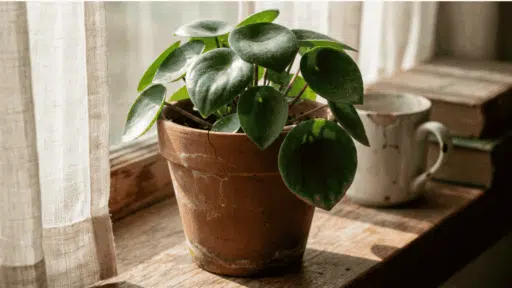
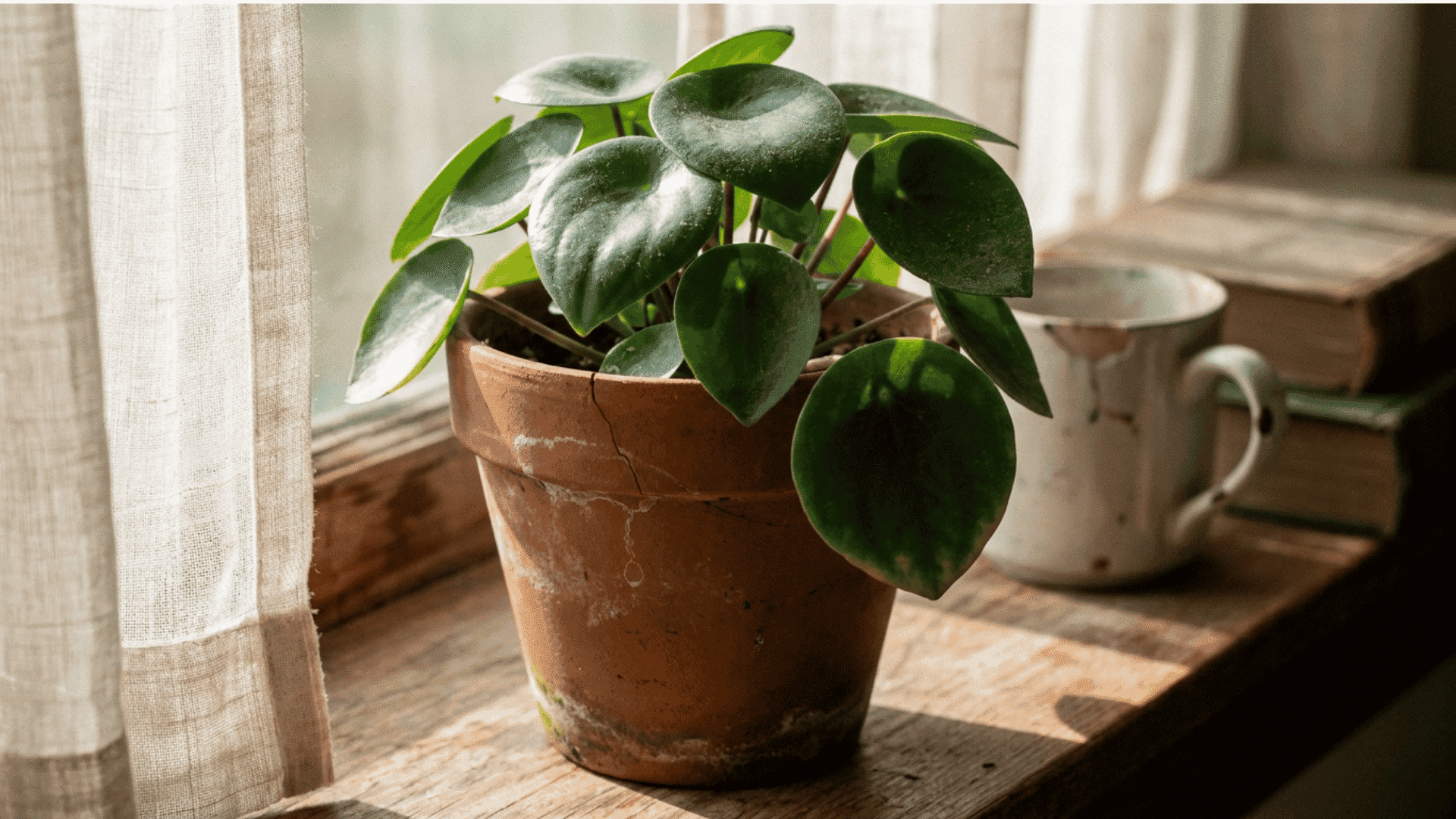

Peperomias might be the easiest houseplant you ever fall in love with. They’re small, a little quirky, and don’t ask for much, which makes them a great pick if you’ve killed a plant or two before.
Maybe you just brought one home. Maybe you’ve had it for months, and you’re still not sure you’re doing things right. Either way, I’ve got you.
This guide walks through solid peperomia plant care from the ground up: light, water, soil, and feeding, plus how to repot, prune, and grow new plants from cuttings.
If your leaves are drooping or turning yellow, I’ll help you figure out why. And if you’re growing a Peperomia Raindrop, stick around; that one gets its own section too.
Peperomia Care at a Glance
Short on time? Here’s the quick version. Bookmark this table and come back to it whenever you need a fast answer.
| Care Factor | What Your Peperomia Needs |
|---|---|
| Light | Bright, indirect light |
| Water | Top inch dry, every 7 to 12 days |
| Soil | Loose, well-draining, with perlite or bark |
| Temperature | 65 to 80°F |
| Humidity | Average home humidity |
| Fertilizer | Monthly in spring and summer |
| Toxicity | Safe for pets and kids |
| Growth Rate | Slow to moderate |
This chart covers the basics of peperomia plant care; scroll down for full details.
How to Care for Peperomia
Five things drive peperomia plant care: light, water, soil, temperature, and food. The plant handles itself really well if you get these important things done right.
1. Light
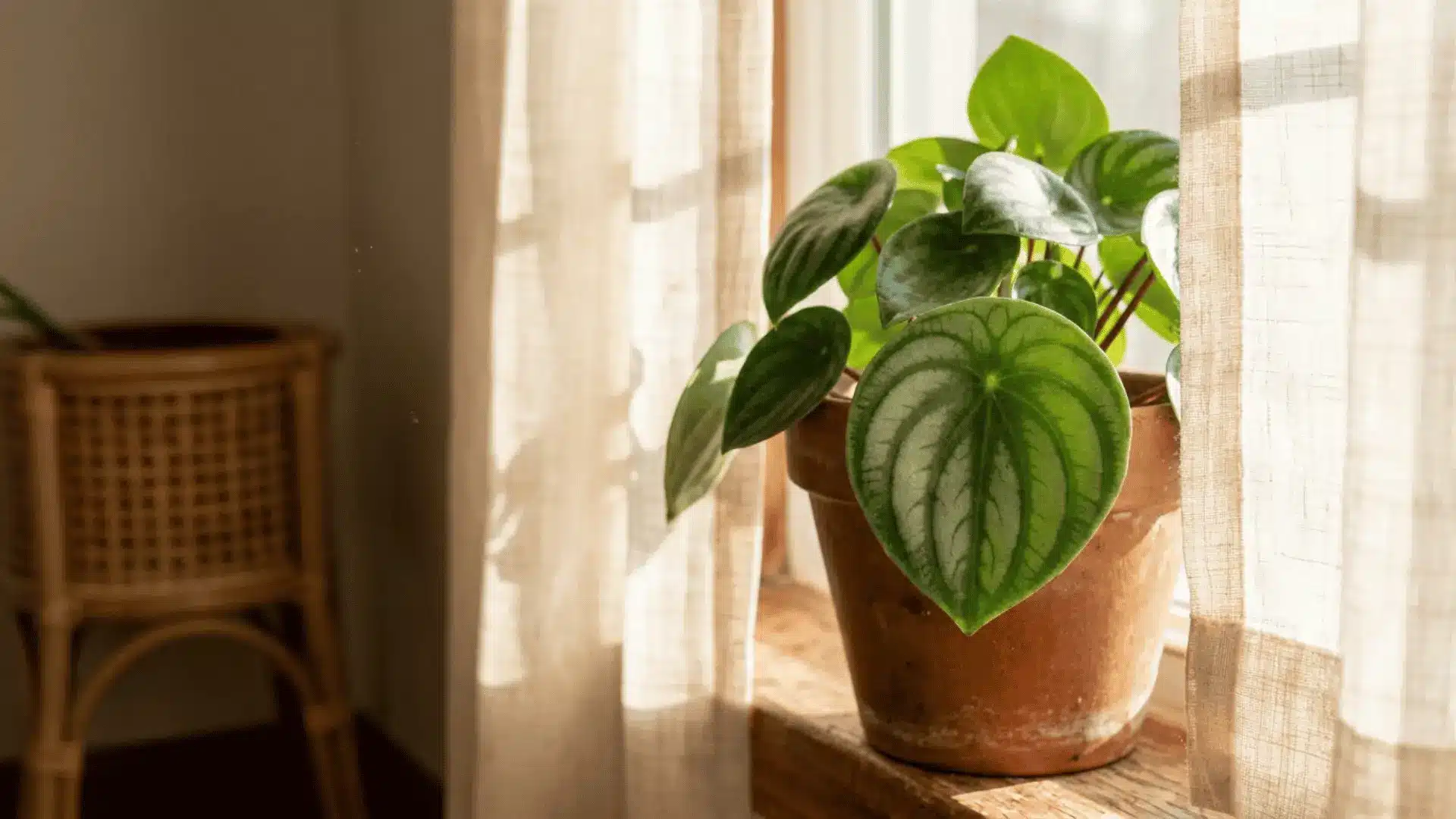
Peperomias like bright, indirect light, close to a window but out of the direct beam of the sun. An east or west-facing window usually works well.
A little morning sun is fine, but strong afternoon sun can scorch the leaves. If your plant leans hard toward the window or the stems look thin and stretched, that’s a sign it wants more light, not less.
2. Watering
Many species grow as epiphytes in the wild, tucked into tree bark and leaf litter rather than rooted in soil, so their roots are adapted for rapid drainage rather than constant moisture.
The leaves store water the way a small succulent does, which is why the plant can go a week or more without a drink and barely notice.
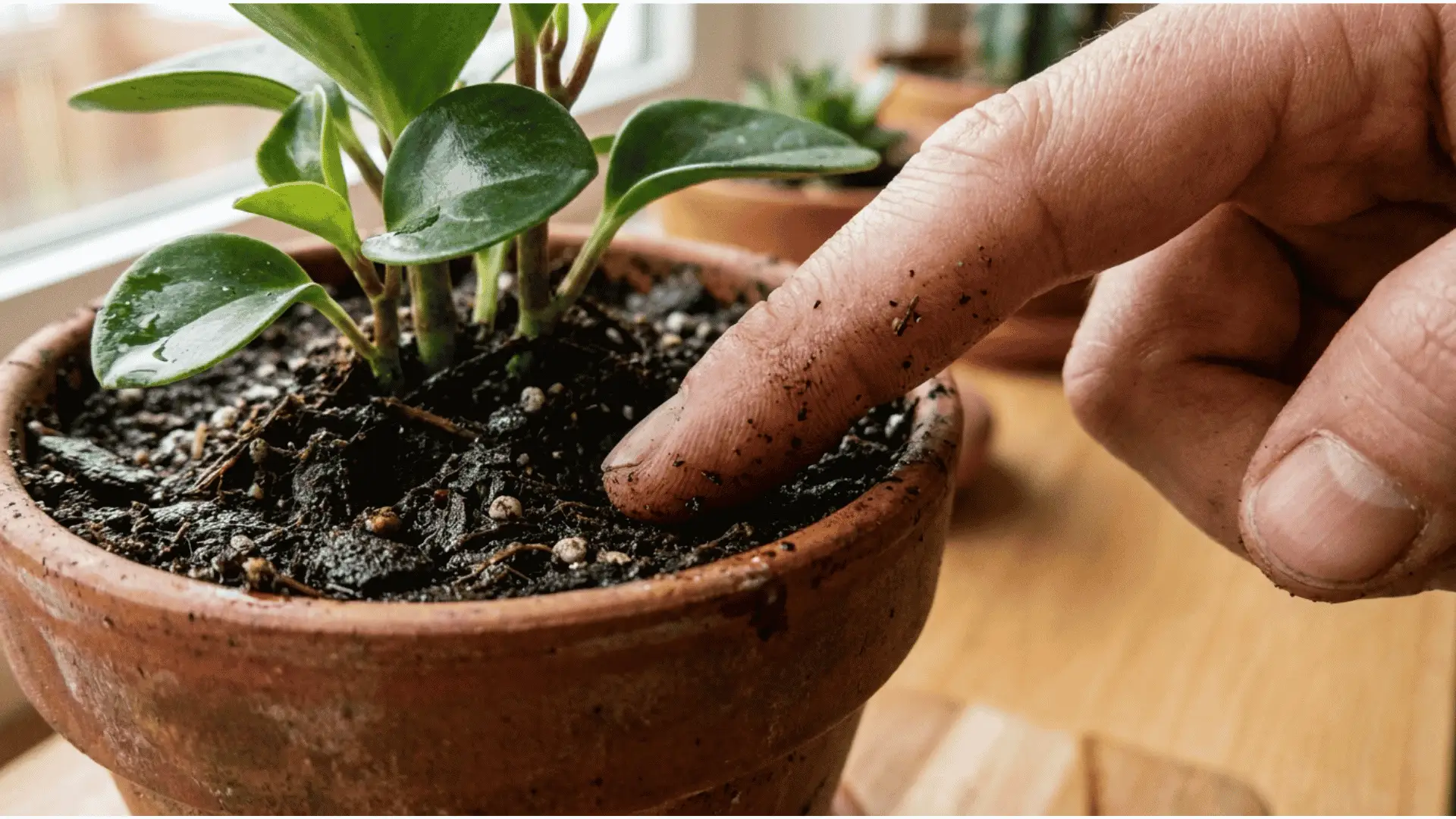
Check the soil by pushing a finger about an inch in. Dry; water it. Still damp, wait.
That usually works out to every 7 to 12 days in spring and summer, longer in winter. Soak the pot fully, let it drain, and don’t leave it sitting in a saucer afterward.
3. Soil
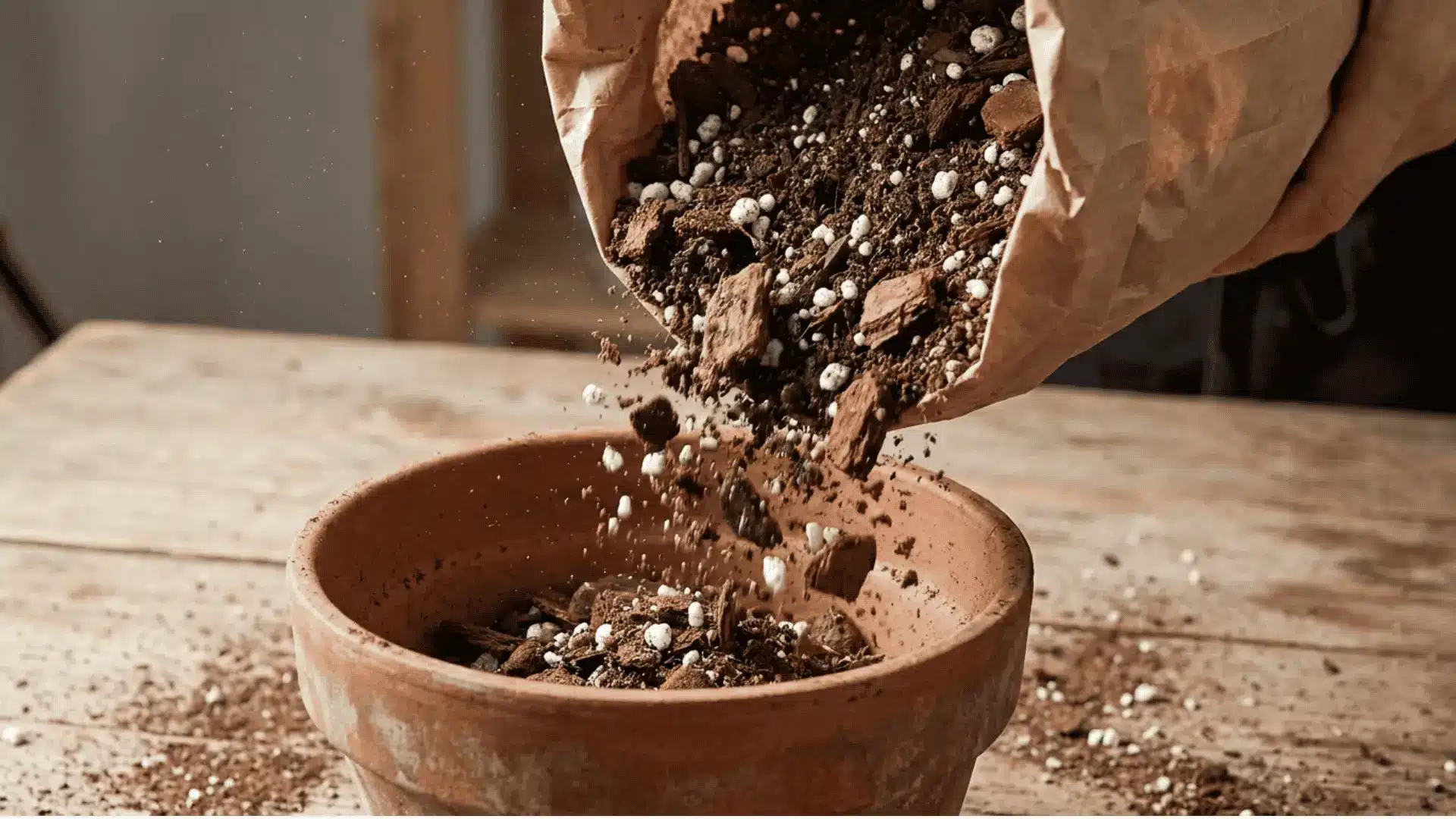
Peperomias want soil that drains fast. Regular potting soil alone holds too much water and can suffocate the roots. Mix in perlite, orchid bark, or coarse sand to loosen things up; one part potting mix to one part perlite works well.
Always use a pot with a drainage hole. This one choice does more to prevent root rot than almost anything else on this list.
4. Temperature and Humidity
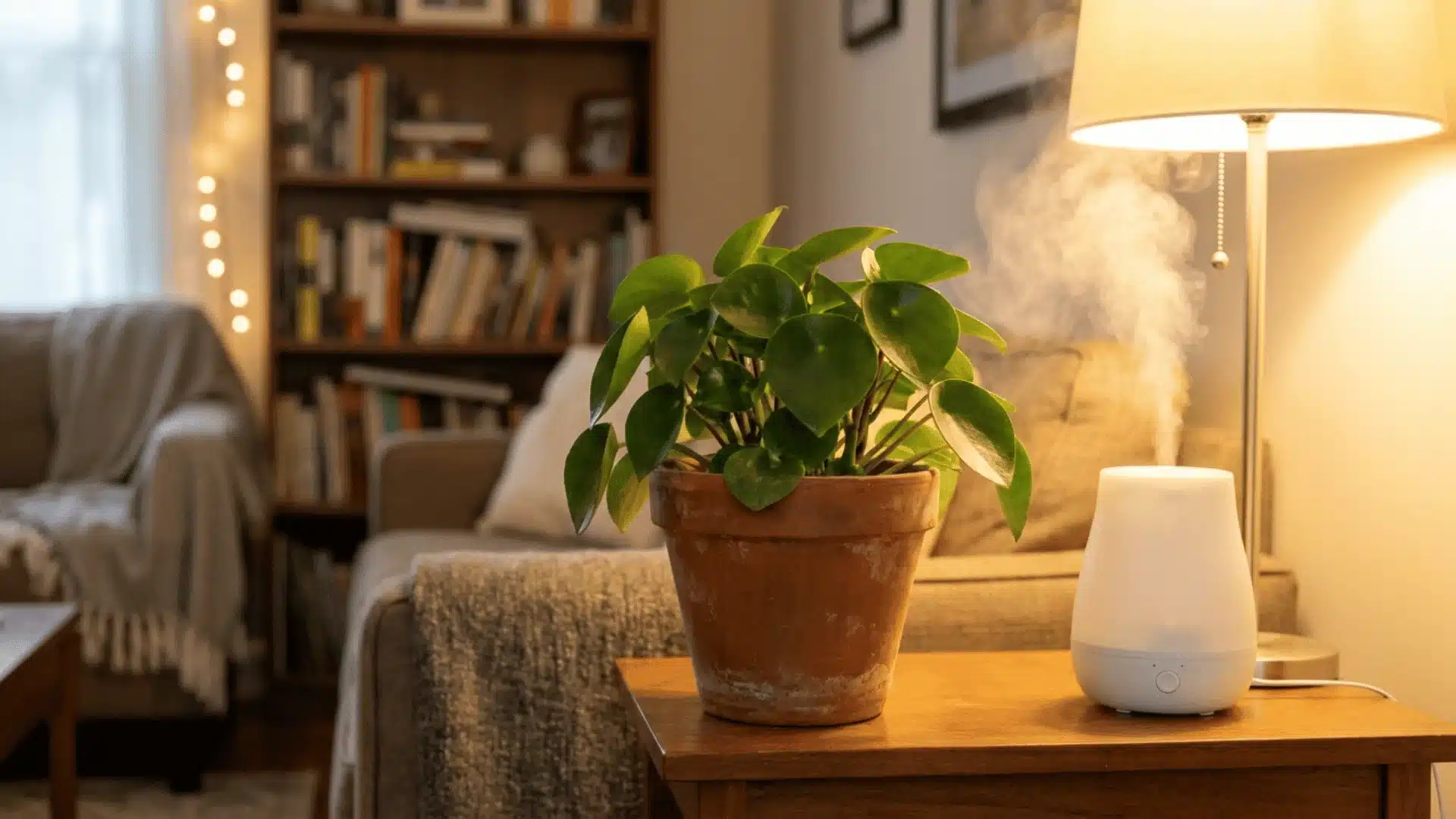
Peperomias are relaxed about temperature, staying happy anywhere between 65 and 80°F, which covers most homes without any extra effort.
Keep them away from cold drafts, heating vents, and air conditioners, since sudden swings stress the plant more than a slightly warm or cool room ever would.
Average household humidity is usually enough, though a pebble tray or small humidifier helps if your home runs dry.
5. Feeding
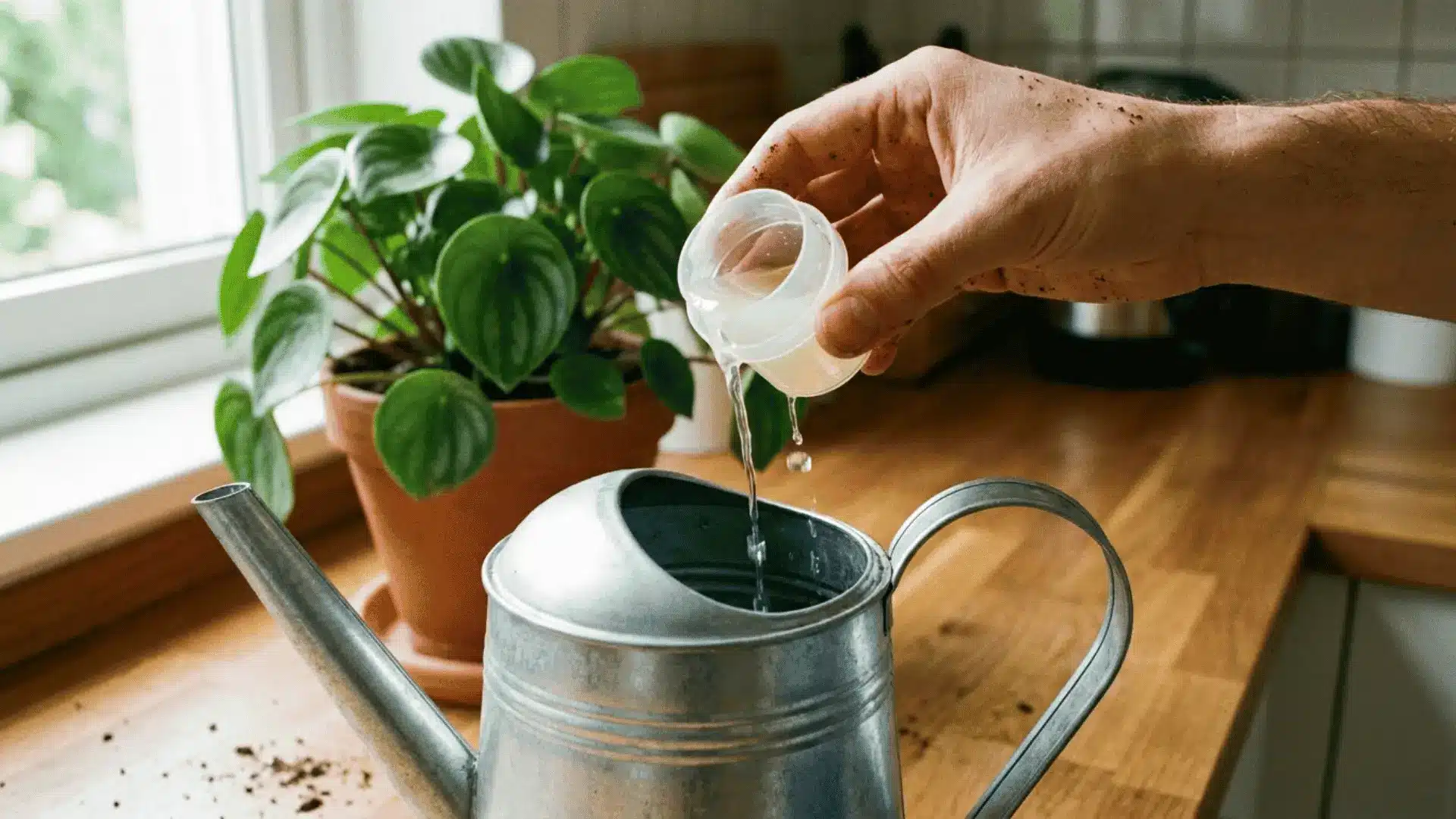
Feed once a month during spring and summer with a general houseplant fertilizer at half the strength on the bottle. Skip fall and winter entirely, since a resting plant can’t use the extra nutrients anyway.
Overdo it, and you’ll usually see a white crust forming on top of the soil or crispy, browned tips, both signs to flush the soil with plain water and hold off feeding for a month.
Want to see this in action? The quick video walkthrough from Dr. James S. Mastaler below covers light, water, soil, and feeding.
Seasonal Care: Adjusting Through the Year
Your peperomia doesn’t grow the same way all year, and its care shouldn’t stay the same either.
- Spring and Summer (Growing Season): Your peperomia is most active now, often pushing out new leaves and reaching toward the light.
It uses more water and more nutrients during this stretch. Stick to the watering routine above, checking the soil every few days rather than on a fixed schedule.
This is also the window for monthly feeding and for repotting or propagating if the pot feels crowded. - Fall and Winter (Dormant Season): Once days get shorter and cooler, growth slows way down, and that’s normal, not a problem. Cut back on watering, since the soil stays damp longer when the plant isn’t using much of it.
Skip fertilizer completely. Watch for drafts too, a peperomia near a cold window or an air vent can get shocked even if the room itself feels comfortable.
Repotting Peperomia: When and How
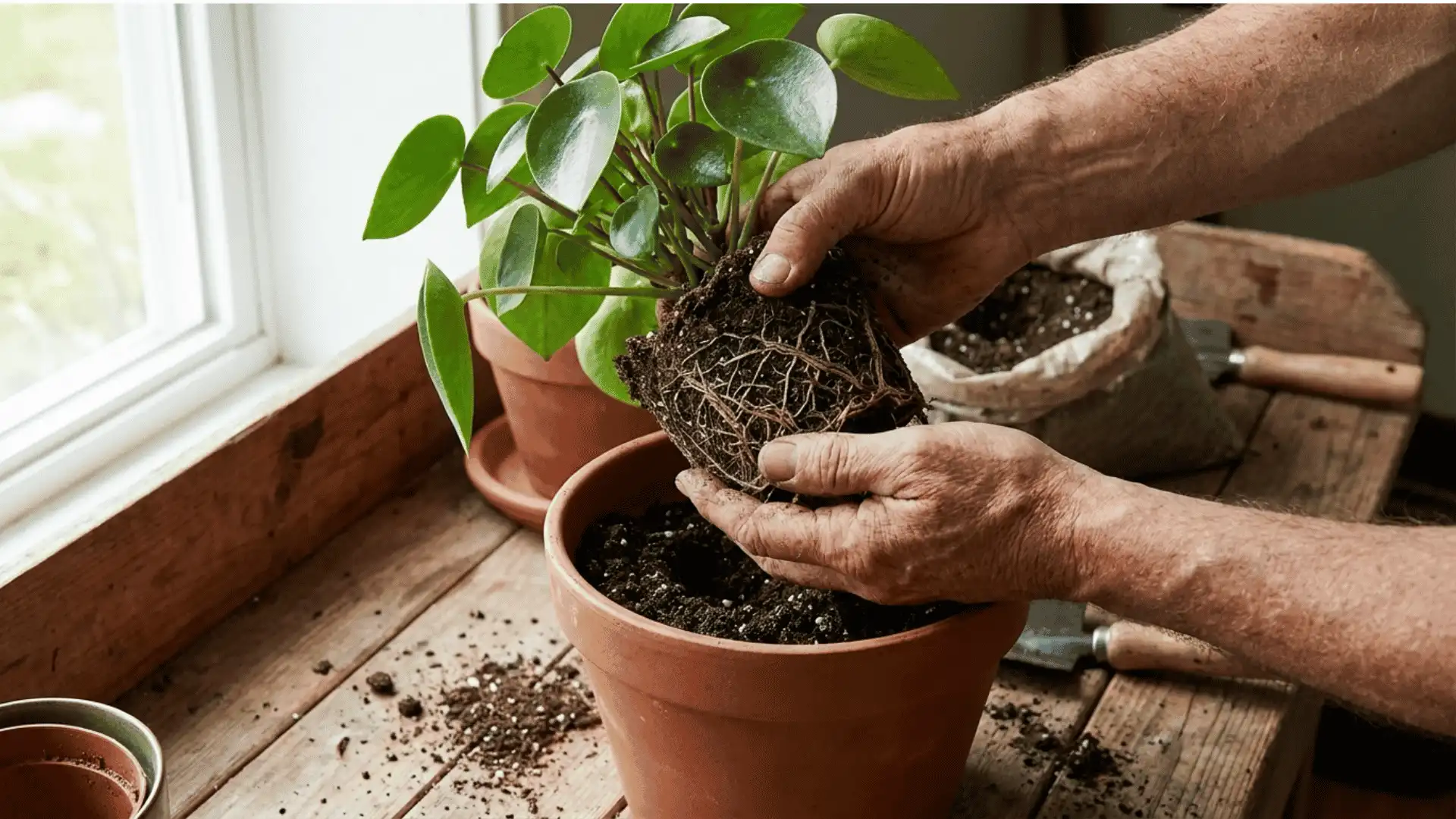
Peperomias don’t need repotting often. They prefer being a little snug in their pot, but every couple of years they’ll need a fresh start.
Watch for roots circling the bottom or poking out of the drainage hole, water running straight through without soaking in, growth that has stalled even in spring or summer, or a plant that visibly outgrows its pot.
None of these are showing up yet? Leave it alone. Repotting on a schedule rather than by need tends to stress the plant more than it helps.
Repot in spring or summer, while the plant is actively growing and can recover fast. Go up just one pot size, a 4-inch to a 6-inch, a 6-inch to an 8-inch, not further.
Jumping several sizes at once leaves too much soil holding water the roots can’t reach, which is one of the more common paths to root rot.
Use the same well-draining mix as before, gently loosen the root ball, and water lightly once it’s settled.
Pruning Peperomia for Fuller, Bushier Growth
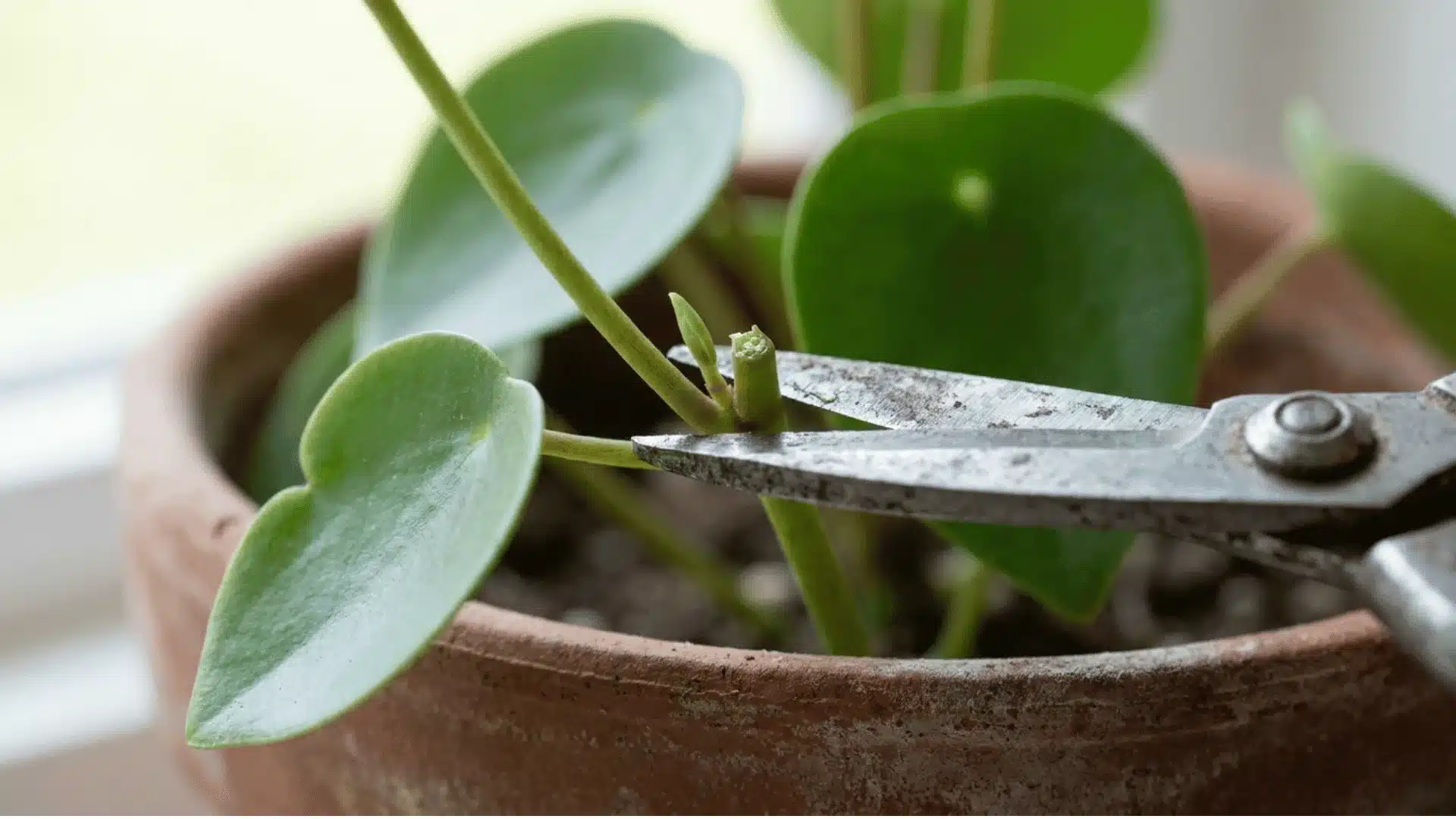
Pruning sounds intimidating, but peperomia handles a trim well. A little cutting now can mean a fuller, healthier plant later. A few good reasons to reach for the scissors.
- Leggy stems: if your plant stretched toward light and looks thin, pruning helps it fill back in.
- Uneven growth: trimming longer stems encourages new growth to fill gaps.
Size control keeps an outgrown plant compact. A fresh start, cutting back older growth, makes room for newer, healthier leaves to take over.
To prune the plant, use clean, sharp scissors so the cut heals quickly and reduces the risk of infection. Find a leaf node, the small bump where a leaf grows out, and cut just above it.
Trim the longest or leggiest stems first rather than the whole plant at once. Peperomias can handle a fairly hard prune if the plant has gotten really out of shape.
How to Propagate Peperomia (Stem & Leaf Cuttings)
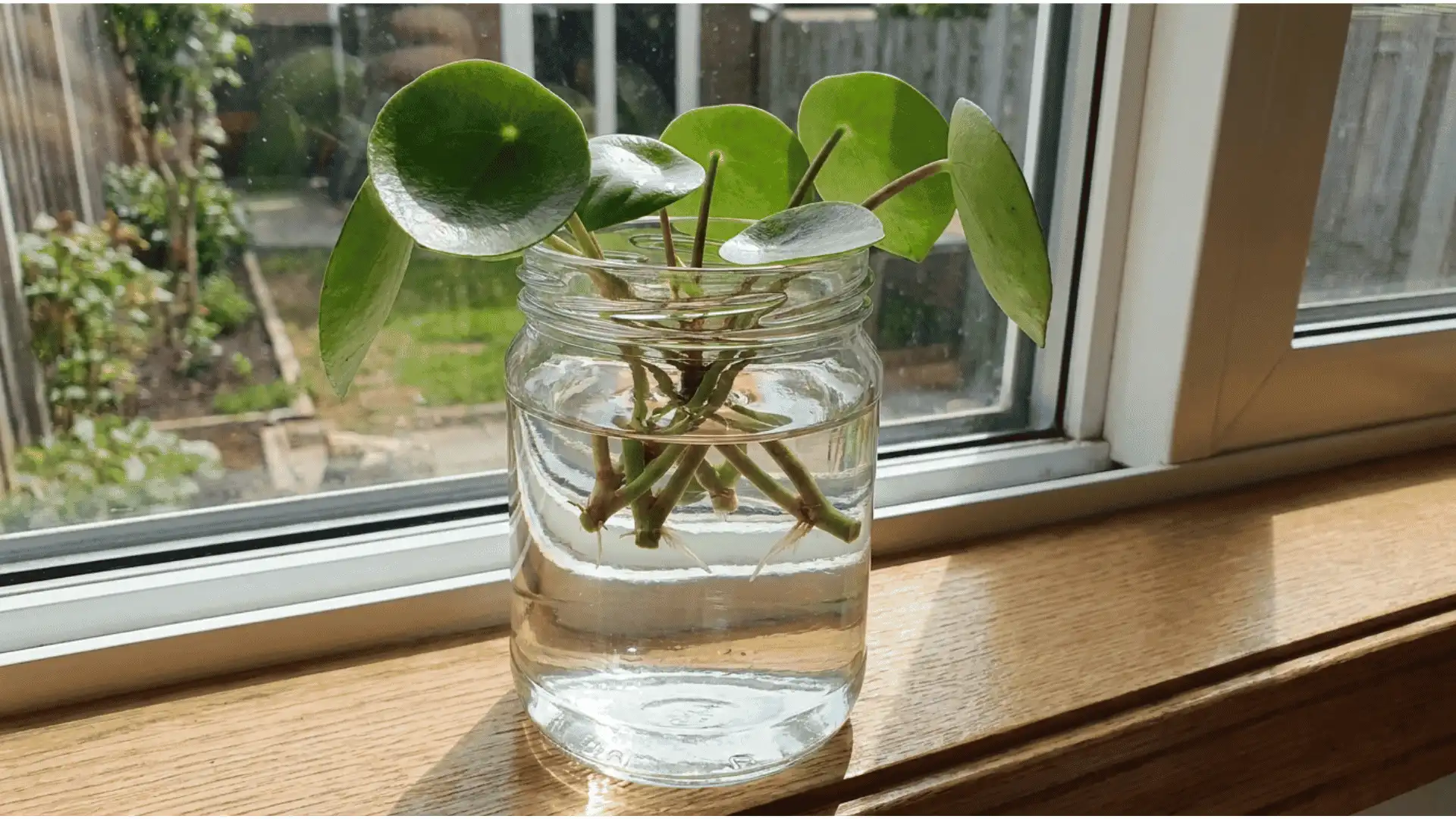
Once you have cuttings from pruning, you’re already halfway to growing new plants for free.
- Stem Cuttings: This is the easiest method and a great place to start. Snip a healthy stem with two or three leaves, cutting just below a leaf node.
Remove the bottom leaf so you have a bare bit of stem, then place it in water or moist soil. Roots usually show up within a few weeks in water. Once they’re an inch long, move the cuttings into the soil. - Leaf Cuttings: Some peperomia varieties, especially thicker-leaved types, can grow a whole new plant from just one leaf.
Cut a healthy leaf at the base, let the cut end dry for an hour, then plant the cut edge into moist, well-draining soil. Keep it lightly moist and wait for new growth.
Which Peperomia Type Do You Have? Why Leaf Thickness Matters
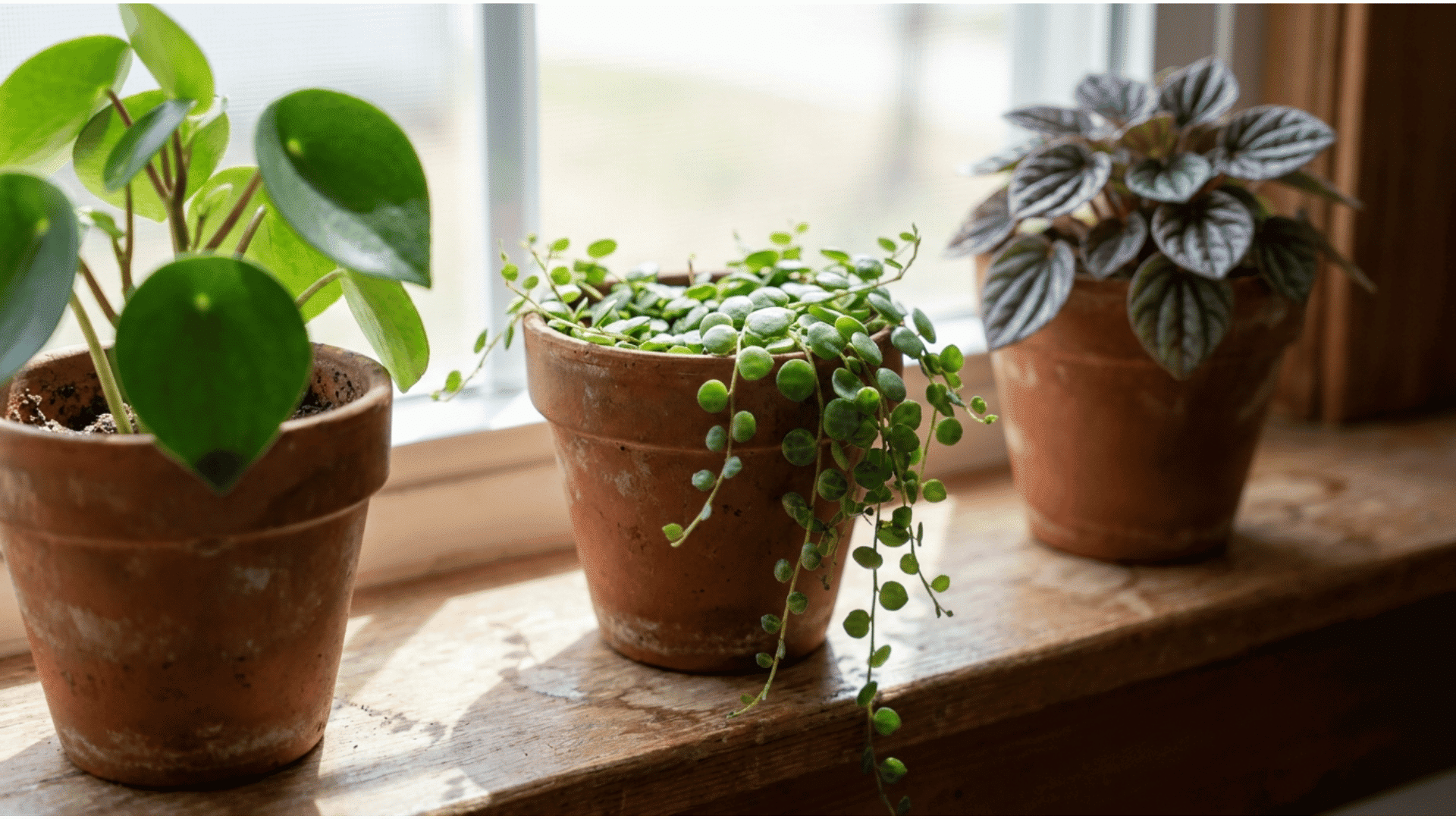
Not every peperomia handles a missed watering the same way, and the leaf itself tells you why. Thick, glossy types like Raindrop, Watermelon, and the Baby Rubber Plant retain more water and can go longer between waterings, more like a succulent than a typical houseplant.
Thinner, more textured types like Ripple Peperomia dry out faster and are worth checking on a bit more often, though still far less fussy than most tropical foliage.
Not sure which type you have? Press a leaf gently between two fingers. Firm and a little rubbery means it’s a water-storer that can handle some neglect.
Thin and soft means it dries out faster and appreciates more frequent soil checks.
Peperomia Raindrop: Identification & What Makes it Different
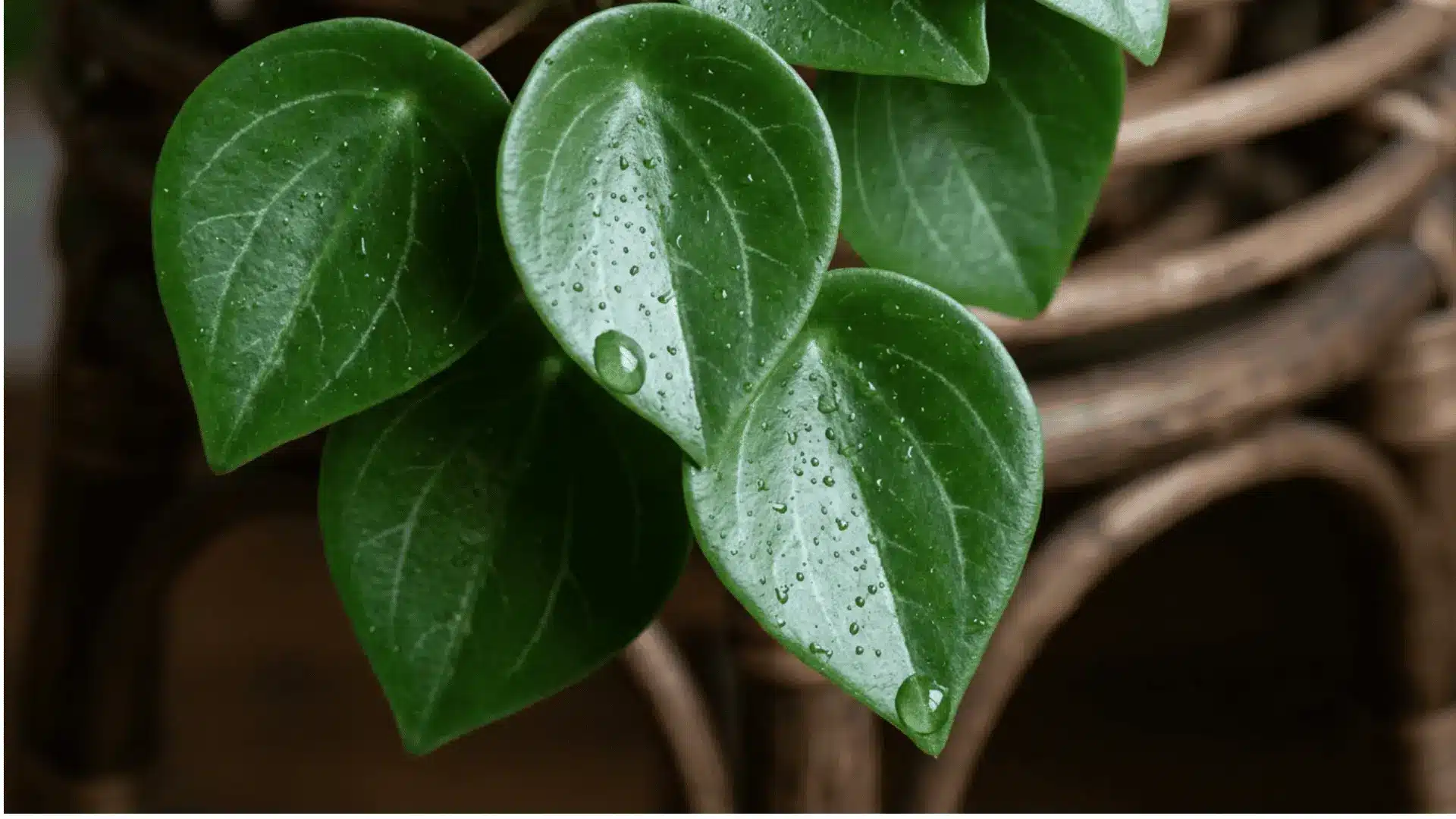
Its scientific name is Peperomia polybotrya, also called Coin Leaf Peperomia.
The leaves are thick, glossy, and shaped almost exactly like a raindrop or a fat little heart, growing upright on sturdy stems to about 12 inches tall.
People often mix it up with the Chinese Money Plant, but the giveaway is the leaf tip: the Raindrop’s leaf comes to a small point, while the Chinese Money Plant’s leaf is perfectly round with no point.
The two plants aren’t even in the same family.
Peperomia Pests & Diseases
Pests aren’t common with good peperomia plant care, but they show up now and then, especially on a stressed plant.
| Pest or Disease | How to Spot It | How to Fix It |
|---|---|---|
| Mealybugs | White cottony clumps | Rubbing alcohol, then neem oil |
| Spider mites | Fine webbing, speckles | Wipe leaves, raise humidity |
| Scale | Brown bumps on stems | Scrape off, apply neem oil |
| Fungus gnats | Tiny bugs near the soil | Let the soil dry out more |
| Root rot | Mushy roots, sour smell | Trim roots, repot in dry soil |
Wipe leaves often, avoid overwatering, and isolate new plants for a week just in case.
Common Peperomia Problems and How to Fix Them
Even with solid peperomia care, plants sometimes hit a rough patch. Here’s a quick list to spot the issue and fix it fast.
- Drooping, wet soil (Overwatering): Let the soil dry out fully
- Drooping, dry soil (Underwatering): Soak well, and it perks up soon
- Yellow leaves (Too much water): Cut back watering, check roots
- Leggy stems (Not enough light): Move to brighter light, prune
- Curling leaves (Acidic soil, overwatering): Use well-draining soil, ease up on water
- Brown crispy tips (Too much sun, fertilizer): Check light, flush soil, skip feeding
- Root rot (Prolonged overwatering): Trim roots, repot in dry soil
If you’re ever unsure which problem you have, start by checking the soil. Most peperomia issues trace back to water.
Wrapping Up
By now you know most of what it takes to keep a peperomia happy. Bright, indirect light. Soil that drains fast. Water only when the top inch feels dry.
Get those three right, and the rest, feeding, repotting, and pruning, tends to fall into place on its own.
If your leaves ever droop, yellow, or curl, don’t panic. Check the soil first, since that’s behind most peperomia problems. And if you’re growing a Raindrop, treat it the same way, just with a bit more patience between waterings.
Peperomias are forgiving plants. A missed watering or two won’t ruin things, so give yourself some grace as you learn its rhythm.
Got a peperomia question I didn’t cover? Drop it in the comments; I’d love to help you figure it out.
Frequently Asked Questions
Is Peperomia Safe for Pets?
Yes, peperomia is non-toxic to cats and dogs. It’s a solid choice if you share your home with curious pets who like to chew on leaves.
Can Peperomia Grow in Low Light?
It can survive in low light, but it won’t thrive there. Expect slower growth and thinner stems. For the best results, stick with bright, indirect light.
Does Peperomia Flower?
Yes, though the blooms aren’t showy. They look like thin, upright spikes people often call mouse tails. They’re a small bonus, not the main feature.
Can I Grow Different Peperomia Varieties in the Same Pot?
You can, as long as they share similar light and water needs. Most varieties do, so mixing them usually works well and fills out the pot.

Jordan Mathews, who has a degree in horticulture from Texas A&M University, has been a guiding force in plant health and sustainable gardening for over 16 years. His career began with a role at a renowned botanical garden, where he deepened his understanding of plant physiology and eco-friendly cultivation methods. Jordan joined our website as a freelancer in 2020, becoming a go-to expert for readers seeking advice on nurturing diverse plant species apart from offering insights grounded in scientific knowledge and practical experience. Beyond his professional achievements, Jordan is a keen nature photographer, capturing the beauty of flora in its immensely diversified forms.