
Lately, composite decks has become more popular with homeowners. It is a perfect substitute for the typical wood decks. Properly installed composite decking is durable and will last for 25 to 30 years, or thereabouts. Composite decks are far less maintenance-intensive than genuine wood decks. This is because they normally do not split, chip, or warp.
So, you may be asking, can composite decks warp? The answer is yes. Low-quality composite decks and decks that are not installed according to the installation instructions might distort. Now, let’s discuss the primary reasons composite decks tend to warp. We’ll also cover how to prevent composite deck warping.
1. Reasons for Warping Composite Decking
Composite decking is made from a blend of wood and recyclable polymers. Due to the qualities of these production materials, composite decking is more durable and stronger. It feels like wood and resists mold and water.
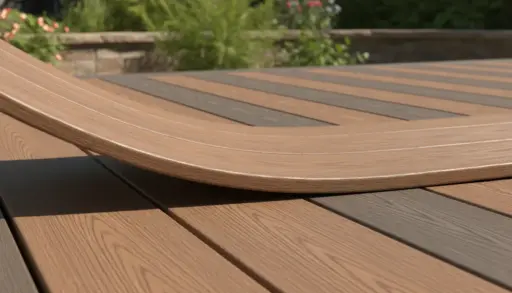
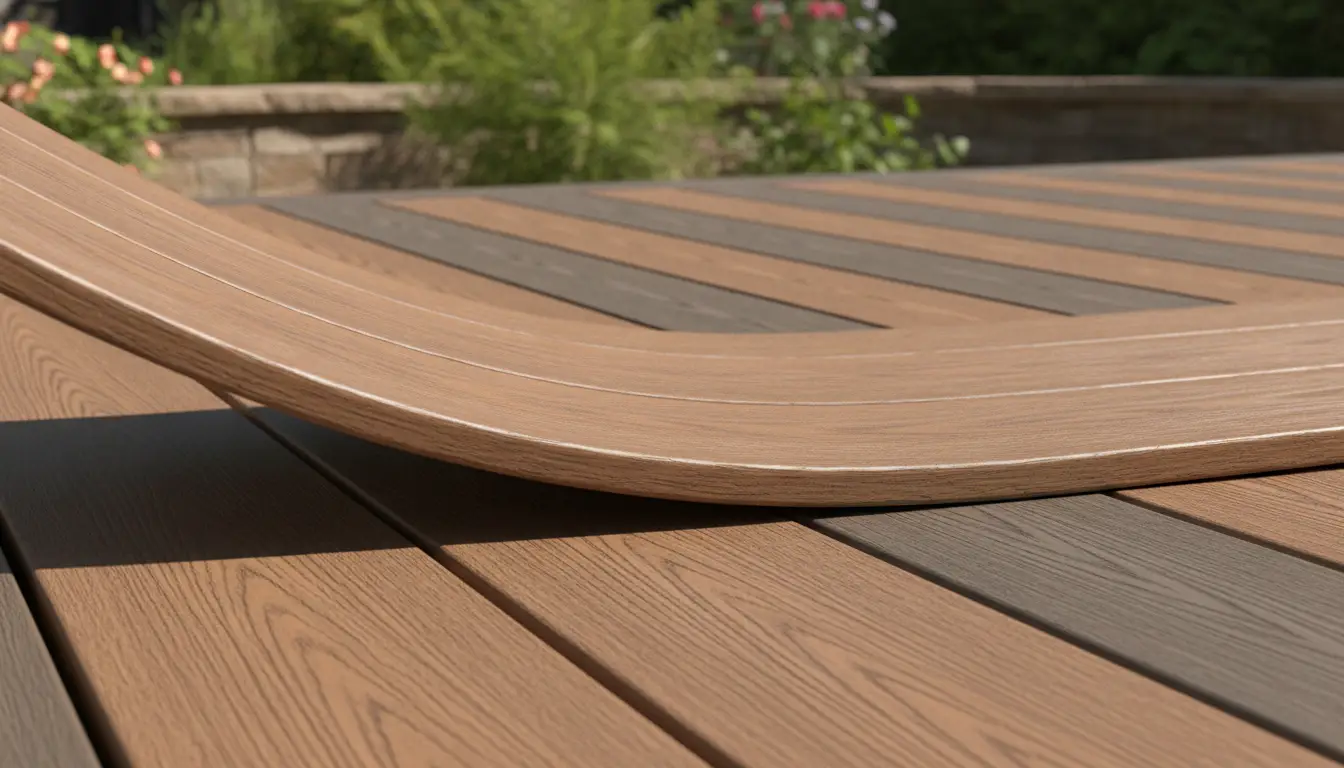
Composite decking is not usually supposed to bend, although it does in rare instances, as demonstrated below.
1.1 Inaccurate Spacing
The space between composite decking boards is a key part of the construction process for several reasons.
If the composite deck planks are closely lined up next to each other, then they will drain badly. Each composite deck should include drainage holes to allow water to escape from under the deck. This is because too much water build-up can harm the structure beneath the deck and so compromise the deck’s stability.
Mold can thrive in poorly drained places. This is one of the reasons why composite decks discolour and become slippery. Air circulation via the spaces between the boards helps dry the deck surface.
The composite deck boards need to be correctly separated from each other. The deck gaps are correctly spaced to allow for expansion and contraction from temperature variations. If you install composite decking without leaving the proper spaces between boards, it can distort. This is because the composite decks are pushed together by thermal expansion.
1.2 Fastening Composite Decking Firmly in Position
Many individuals over-tighten the screws while installing composite decking. But they don’t know the disadvantages of it.
Many think this to be a fast, straightforward, and economical way to lay a deck. However, temperature variations might make it hard to secure composite decking with screws. That is because they, too have a tendency to expand and contract.
When you are fixing your composite deck, tightening screws too much can lead to a few complications. The composite decking boards can expand with heat and put too much pressure on the screws. The screws might be loosened and the deck warped by too much pressure.
2. How to Avoid Bending Composite Decking
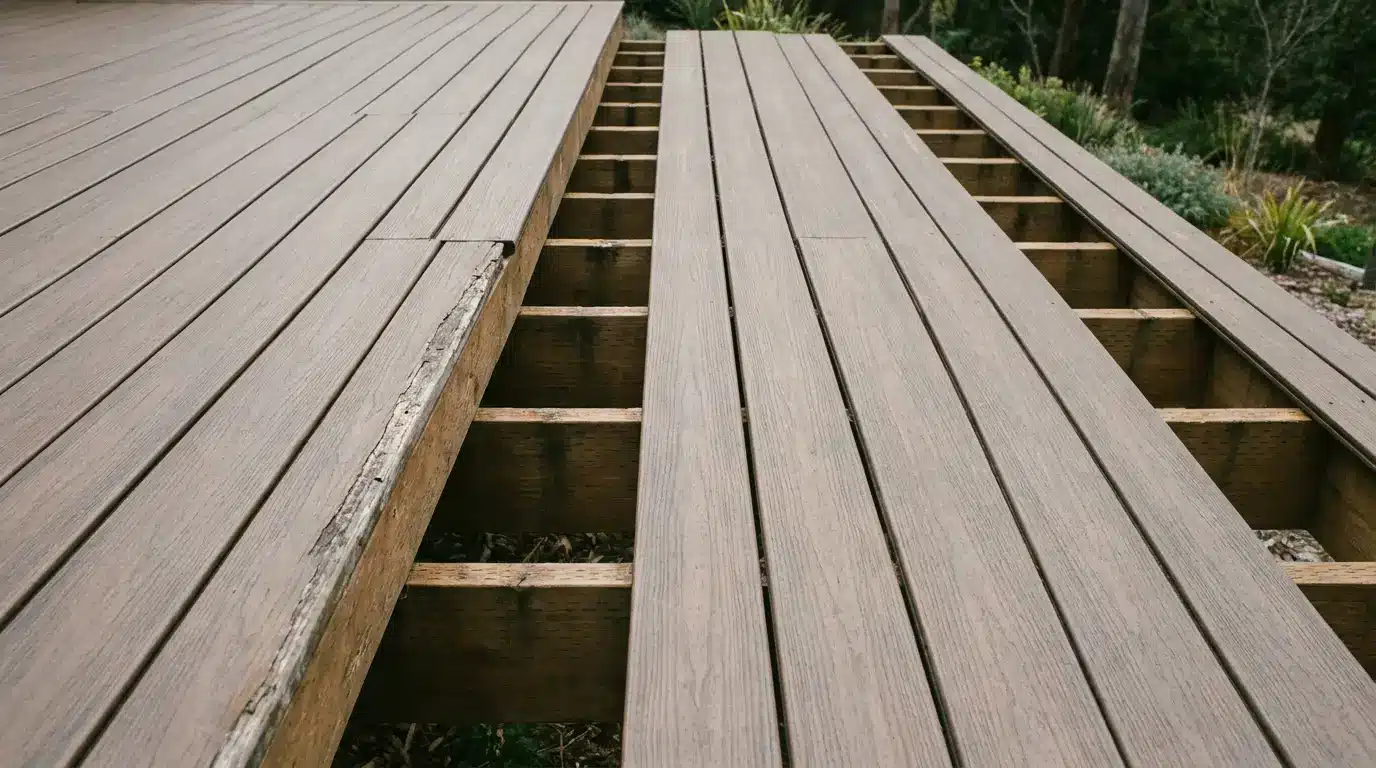
There are a lot of techniques and tricks to keep composite decks from bending. Now let’s hear from the experts.
Here are the easiest ways to stop composite decking boards from warping.
2.1 Set Apart the Gap Space
Good deck gaps improve air circulation and drainage. It also avoids warping due to the thermal expansion of composite wood flooring.
Some composite decking makers suggest that you wait a week or so before beginning the deck installation process with these decks. This compensates for the local humidity and temperature of the composite decking. This minimizes thermal expansion and contraction concerns.
For deck installation operations, please follow the installation instructions provided by the manufacturer of the composite deck. 12. Pay attention to the installation instructions. Often, they need 8 mm space between composite decking boards.
2.2 Employing Covered Fasteners
Easy installation of a composite deck with hidden fasteners. There is no need to worry about the complications that can emerge with the use of screws. You can install composite decking the right way and not have to worry about it warping with hidden fasteners.
Hidden fasteners can be used on composite decks to create sufficient deck clearance. Many composite decking producers also offer comparable fastening systems. The fasteners are to ensure that the composite deck is properly installed. Instead, they will give support so that the deck can go up and down.
T-clamps also have spacers to help hold the composite decking firmly in place. They also provide boards with the capacity to expand, and to keep up optimum drainage and air circulation.
2.3 Restoring Composite Decking That Has Warped
Depending on how much it is warping, you may need to replace the deck. If the composite deck warps beyond repair, you may want to call in an expert to fix the problem. Sometimes a deck may need to be rebuilt if it cannot be fixed. That’s why composite decking needs to be built appropriately.
The damaged portions must be found by first looking closely at the full composite decking. Make sure you measure the space with the depth of the trim board included. Take the damaged deck planks from the deck. The new composite decking boards are then fitted.
You may also clamp a straight board to a crooked board to hold together the decking planks you already have. You can also pull sagging composite decking boards out and place them flat on a firm surface so the head of the board is hitting the ground. The deck boards might align again.
Summarize
Composite decking can still warp, but it is not as common as wood decking. The best method to remedy the problem is to prevent composite decking boards from warping, which is not difficult to achieve. Following the installation directions your provider provides you should help you address this problem.
To meet the terms and conditions of the guarantee, you should only utilize components and accessories that came with the composite decking. If you use other tools and procedures and the composite decking warps, you may not be able to claim the warranty.
A well-installed composite deck is far less prone to developing difficulties. Composite decking must be given adequate space to thermally expand and compress, or warping may occur.

Robert Thompson, a proud alum of the University of Oregon with a degree in Landscape Architecture, has been a leading figure in outdoor space enhancement for over 17 years. He started his career with a landscape design firm, gaining invaluable experience creating functional and attractive outdoor living areas. Robert joined our website in 2018, where he quickly became known for his innovative yet practical advice on outdoor renovations. He has been the chief editor of our deck and patio section ever since then, helping readers transform their outdoor spaces into personal retreats. When not drafting designs or writing, Robert is an avid kayaker, often drawing inspiration from nature for his creative projects.