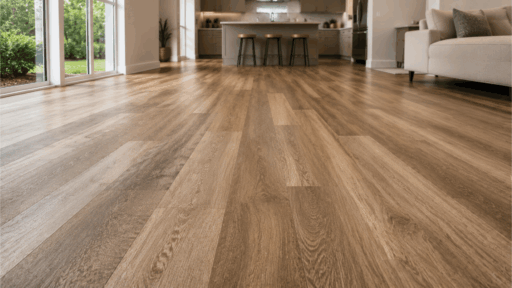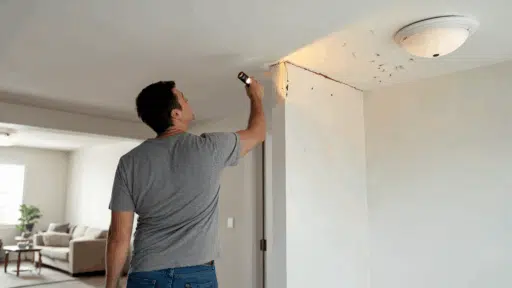

Asbestos flooring was widely used in homes, schools, offices, and commercial buildings throughout much of the twentieth century.
Manufacturers added asbestos to flooring products because it provided strength, durability, and resistance to heat and wear. As a result, many older properties may still contain asbestos-containing flooring materials.
While intact flooring generally presents a lower risk, damaged or disturbed materials can release airborne asbestos fibers during renovation, maintenance, or removal activities.
In this guide, I’ll explain what asbestos flooring is, how it was used in older buildings, whether linoleum contains asbestos, where asbestos may be found within flooring systems, the potential health risks, and the safest options for testing, management, and removal.
Understanding these topics can help you make informed decisions and reduce potential exposure risks.
What is Asbestos Flooring?
Asbestos flooring refers to flooring products that contain asbestos fibers or are installed with asbestos-containing components.
These materials were commonly used in residential, commercial, and institutional buildings because asbestos improved durability, fire resistance, and overall performance.
Asbestos may be found in floor tiles, sheet vinyl flooring, backing materials, underlayment products, adhesives, and black mastic used during installation.
Many of these products were installed before the 1980s and may still be present in older properties today.
Although asbestos-containing flooring materials are not always hazardous when left undisturbed, identifying their presence is important before undertaking renovation, repair, or demolition work.
Does Linoleum Contain Asbestos?
Traditional linoleum is made from natural materials such as linseed oil, cork dust, wood flour, and jute backing and generally does not contain asbestos.
However, many older flooring products that resemble linoleum are actually vinyl sheet flooring or asbestos floor tiles.
In some installations, asbestos may also be present in flooring adhesives, black mastic, backing materials, or underlayment rather than in the visible flooring surface itself.
Because these materials can be difficult to distinguish visually, homeowners often mistake asbestos-containing flooring for traditional linoleum.
Professional asbestos flooring testing is the most reliable way to determine whether asbestos is present and whether any special precautions are needed before renovation work begins.
Understanding the Difference Between Linoleum and Vinyl Flooring
To determine whether older flooring may contain asbestos, it is important to understand the difference between linoleum and vinyl flooring.
Although they often look alike, their composition and asbestos risk can differ significantly.
| Feature | Linoleum Flooring | Vinyl Flooring |
| Material Composition | Made from natural materials such as linseed oil, cork dust, and jute backing | Made from synthetic materials, primarily PVC |
| Asbestos Risk | Traditional linoleum generally does not contain asbestos | Some older vinyl flooring products may contain asbestos |
| Potential Asbestos Locations | Backing materials, underlayment, or adhesives | Flooring material, backing layers, or adhesives |
| Identification | Can be difficult to distinguish visually from vinyl flooring | Often mistaken for linoleum in older properties |
Visual inspection alone cannot confirm whether flooring contains asbestos. Professional testing is the most reliable way to identify asbestos-containing materials.
Where Asbestos May be Found in Linoleum Flooring Systems
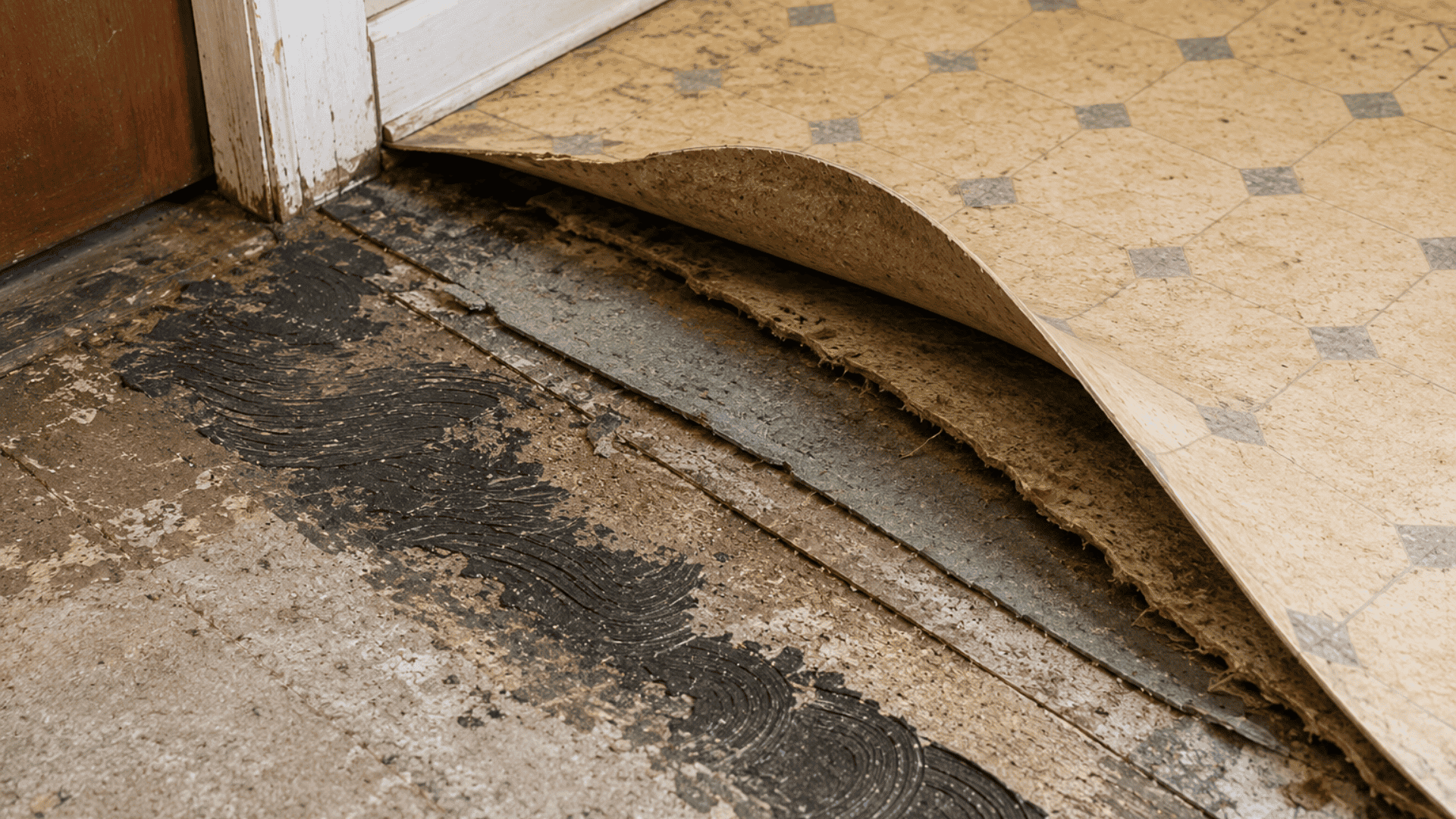
Before removing or renovating older linoleum flooring, it is important to understand that asbestos may not be present in the visible surface.
In many cases, asbestos-containing flooring materials are located beneath or around the flooring, making a professional asbestos inspection essential before any work begins.
- Backing Materials: Older flooring backing layers may contain asbestos to improve durability and wear resistance.
- Underlayment Products: Some underlayment materials installed beneath linoleum flooring were manufactured with asbestos fibers.
- Installation Adhesives: Flooring adhesives used to secure materials to the subfloor may contain asbestos, particularly in older buildings.
- Black Mastics: Certain black mastic asbestos products commonly used in flooring installations were formulated with asbestos.
- Asbestos Floor Tiles and Vinyl Flooring: Older asbestos floor tiles and asbestos vinyl flooring may contain asbestos within the flooring material itself.
- Hidden Components: Asbestos is often concealed beneath the flooring surface, making visual identification difficult without testing.
How to Identify Asbestos Flooring
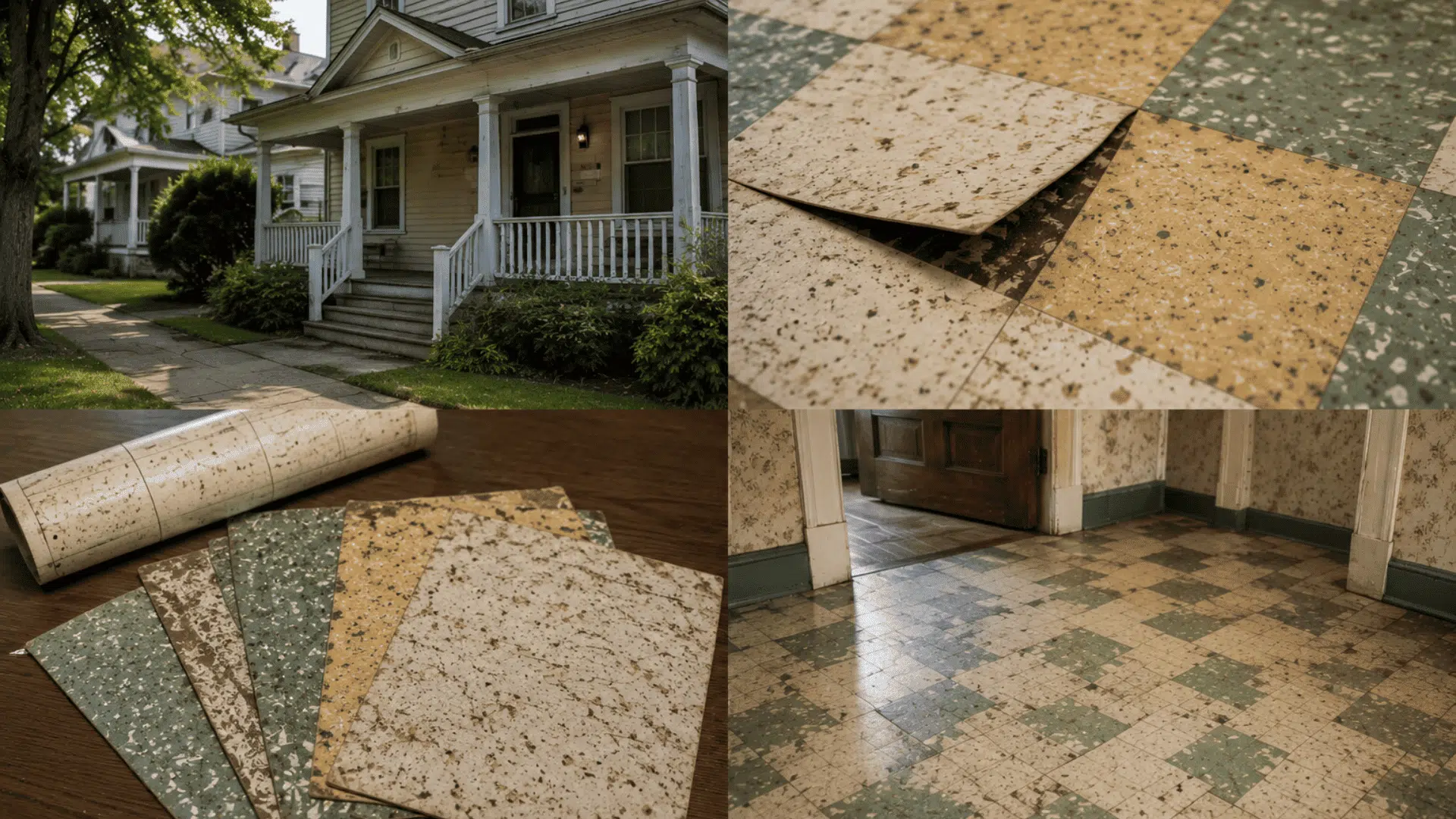
Identifying asbestos flooring is not always straightforward because many older flooring materials resemble modern products.
While visual inspection can provide clues, it cannot confirm whether asbestos-containing flooring materials are present. The following signs may indicate the need for further evaluation:
- Age of the Property: Buildings constructed or renovated before the 1980s are more likely to contain asbestos flooring.
- Common Tile Sizes and Patterns: Older 9×9 asbestos floor tiles, 12-inch tiles, and certain asbestos vinyl flooring products are often associated with asbestos-containing materials.
- Original Flooring Materials: Flooring that has remained in place for several decades may warrant additional assessment.
- Manufacturer Labels and Records: Installation records, product labels, and renovation documents may provide useful information about asbestos content.
- Renovation History: Limited or unknown renovation history can increase uncertainty about the presence of asbestos-containing materials.
Health Conditions Linked to Asbestos Exposure
Health effects associated with long-term asbestos exposure often develop after repeated contact with airborne fibers.
Individuals at the highest risk include DIY renovators, contractors, demolition crews, maintenance workers, and flooring installers who may disturb asbestos-containing materials during renovation work.
The severity of these asbestos-related diseases can vary depending on exposure levels and duration.
- Asbestosis: A chronic lung disease that causes scarring of lung tissue.
- Lung Cancer: Prolonged asbestos exposure can increase the risk of lung cancer.
- Mesothelioma: A rare cancer strongly linked to asbestos exposure.
Who is Most at Risk?
Individuals who work around older buildings and construction materials face the highest risk of occupational asbestos exposure.
DIY renovators may unknowingly disturb asbestos-containing flooring during home improvement projects without proper testing.
Contractors, maintenance workers, demolition crews, and asbestos removal professionals are also at increased risk because they frequently handle aging building materials.
Flooring installers and removal specialists may encounter asbestos in older floor tiles, backing materials, adhesives, or black mastic during renovation work.
Common Activities that Increase Asbestos Exposure
Before carrying out renovation, maintenance, or demolition work, it is important to understand which activities are most likely to disturb asbestos-containing flooring materials and release airborne fibers.
| Risk Factor | Why it Matters |
| Cracked or Damaged Flooring | Damaged materials are more likely to release asbestos fibers into the surrounding environment. |
| Sanding or Scraping | These activities can break apart flooring materials and release fibers into the air. |
| Drilling or Cutting | Penetrating asbestos-containing flooring may disturb hidden asbestos fibers. |
| Floor Removal Projects | Removing old flooring can create significant fiber release if proper precautions are not taken. |
| Renovation and Demolition Work | Large-scale projects often disturb asbestos-containing materials beneath the floor surface. |
What Research Says About Asbestos Flooring
Research has improved understanding of the health risks associated with asbestos flooring and the importance of proper asbestos management.
Oberta and Fischer (1999) found that occupational asbestos exposure during asbestos floor tile work remained below OSHA limits when recommended control measures, cleanup procedures, and asbestos safety practices were followed.
Their findings highlighted the effectiveness of approved work methods in reducing asbestos exposure risks.
However, Singh and Frank (2023) reported that asbestos-containing materials can still pose significant health risks when damaged or disturbed.
The review found that airborne asbestos fibers released from deteriorating materials have been linked to serious asbestos-related diseases, including asbestosis, lung cancer, and mesothelioma.
The authors also emphasized the need for careful asbestos management in schools, workplaces, and public buildings.
What to Do if You Suspect Asbestos Flooring
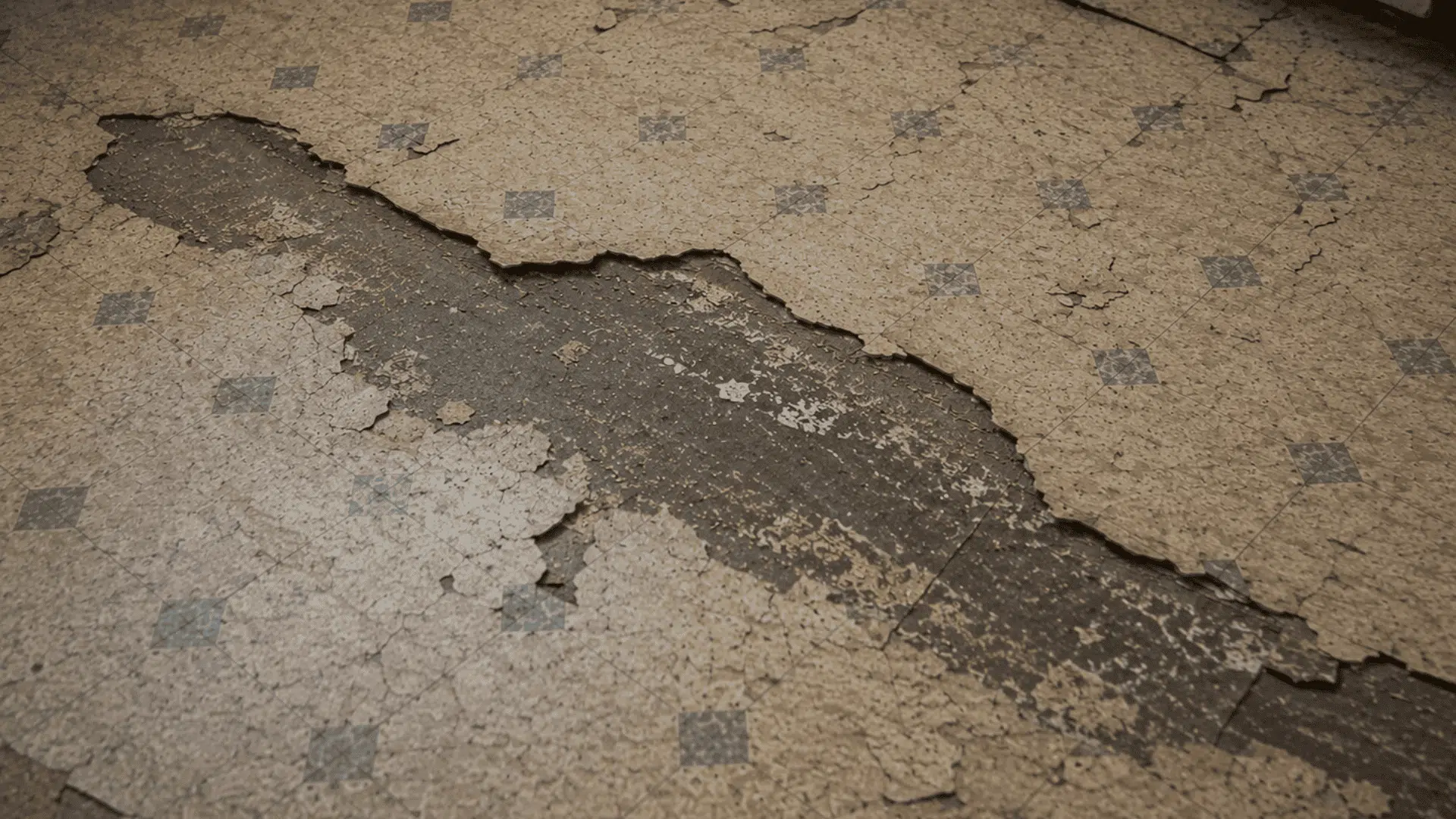
If you suspect that your flooring contains asbestos, avoid disturbing the material until its composition has been confirmed through professional testing. Once asbestos-containing flooring is confirmed, proper management becomes essential.
Because asbestos fibers can be released when flooring materials are disturbed, removal should only be performed by trained professionals following approved safety procedures.
Before work begins, testing and site assessments are typically conducted to determine the safest course of action.
Professional Removal Process
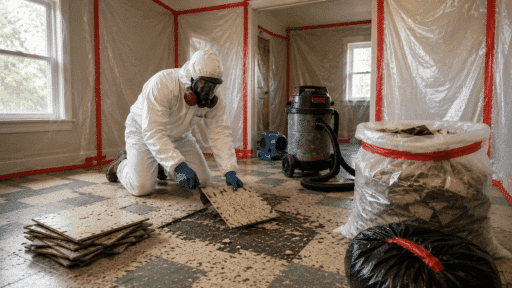
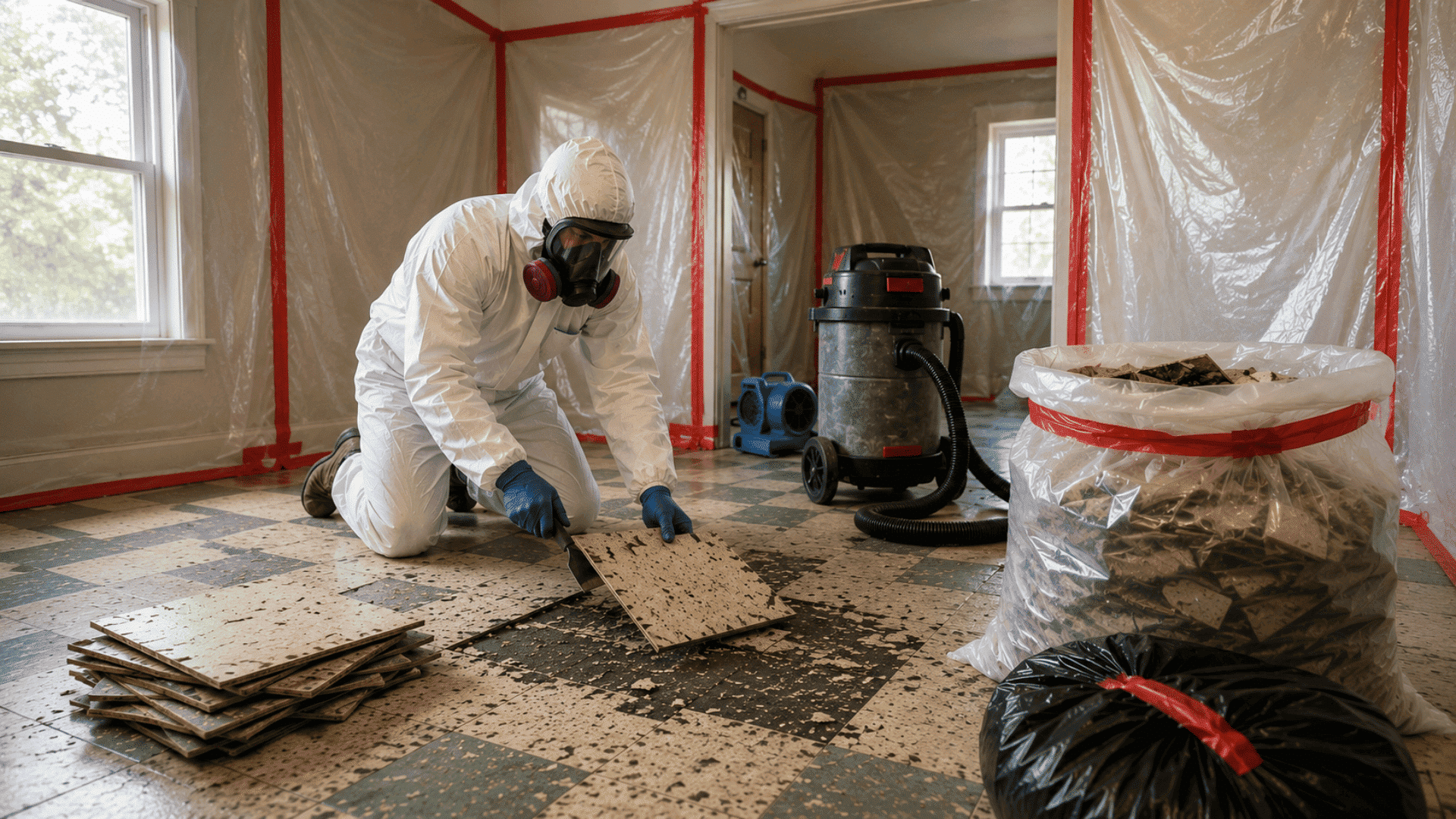
The removal process usually starts with confirming the presence of asbestos and preparing the work area. Containment measures are used to help prevent fibers from spreading to other parts of the property.
Trained personnel then remove the flooring using specialized methods designed to minimize fiber release. Once the work is completed, the area is cleaned, inspected, and evaluated before normal occupancy resumes.
Disposal Requirements
Asbestos-containing flooring cannot be disposed of with regular household or construction waste.
Regulations typically require the material to be sealed, labeled, transported, and disposed of at approved hazardous waste facilities.
Proper disposal procedures help protect public health, reduce environmental contamination, and ensure compliance with local requirements.
At the End
Asbestos flooring remains a concern in many older homes and commercial properties, particularly when asbestos-containing flooring materials become damaged or disturbed during renovation projects.
While intact flooring generally presents a lower risk, activities such as cutting, sanding, drilling, or asbestos flooring removal can release airborne asbestos fibers into the environment.
Identifying potential asbestos hazards, arranging professional asbestos flooring testing, and following approved safety procedures are essential steps in reducing asbestos exposure risks.
Before beginning any renovation, demolition, or flooring replacement project, property owners should seek professional guidance to ensure asbestos-containing materials are properly managed, removed, and disposed of in accordance with applicable regulations and safety standards.
Frequently Asked Questions
Can Asbestos Flooring affect Property Value?
Yes. The presence of asbestos-containing materials may affect buyer interest, property transactions, or renovation plans, depending on local requirements and material condition.
Is Asbestos Flooring Covered by Home Insurance?
Coverage varies by insurer and policy. Some policies exclude asbestos-related costs, while others may offer limited coverage under specific circumstances.
Can Asbestos Flooring be Encapsulated Instead of Removed?
In some cases, intact asbestos flooring can be encapsulated to prevent disturbance. A qualified professional should determine whether encapsulation is appropriate.
Are Commercial Buildings More Likely to Have Asbestos Flooring?
Commercial and institutional buildings constructed before the 1980s were more likely to use asbestos-containing flooring because of its durability and fire resistance.
Do all Black Flooring Adhesives Contain Asbestos?
No. Some older black mastics contained asbestos, but many do not. Laboratory testing is required to determine whether asbestos is present.

Tommy Hardy, an alumnus of the Georgia Institute of Technology with a degree in Mechanical Engineering, has been a go-to figure in residential upkeep and innovation for over 18 years. His career commenced in a leading home appliance manufacturing company, where he mastered the intricacies of household systems. Joining our platform in 2020, Tommy quickly became a reader favorite for his practical and easy-to-follow guides. He took the helm of our DIY section in 2019, consistently delivering content that empowers homeowners. Beyond his professional pursuits, Tommy is a passionate gardener and enjoys woodworking, skills enhancing his hands-on approach to home care.