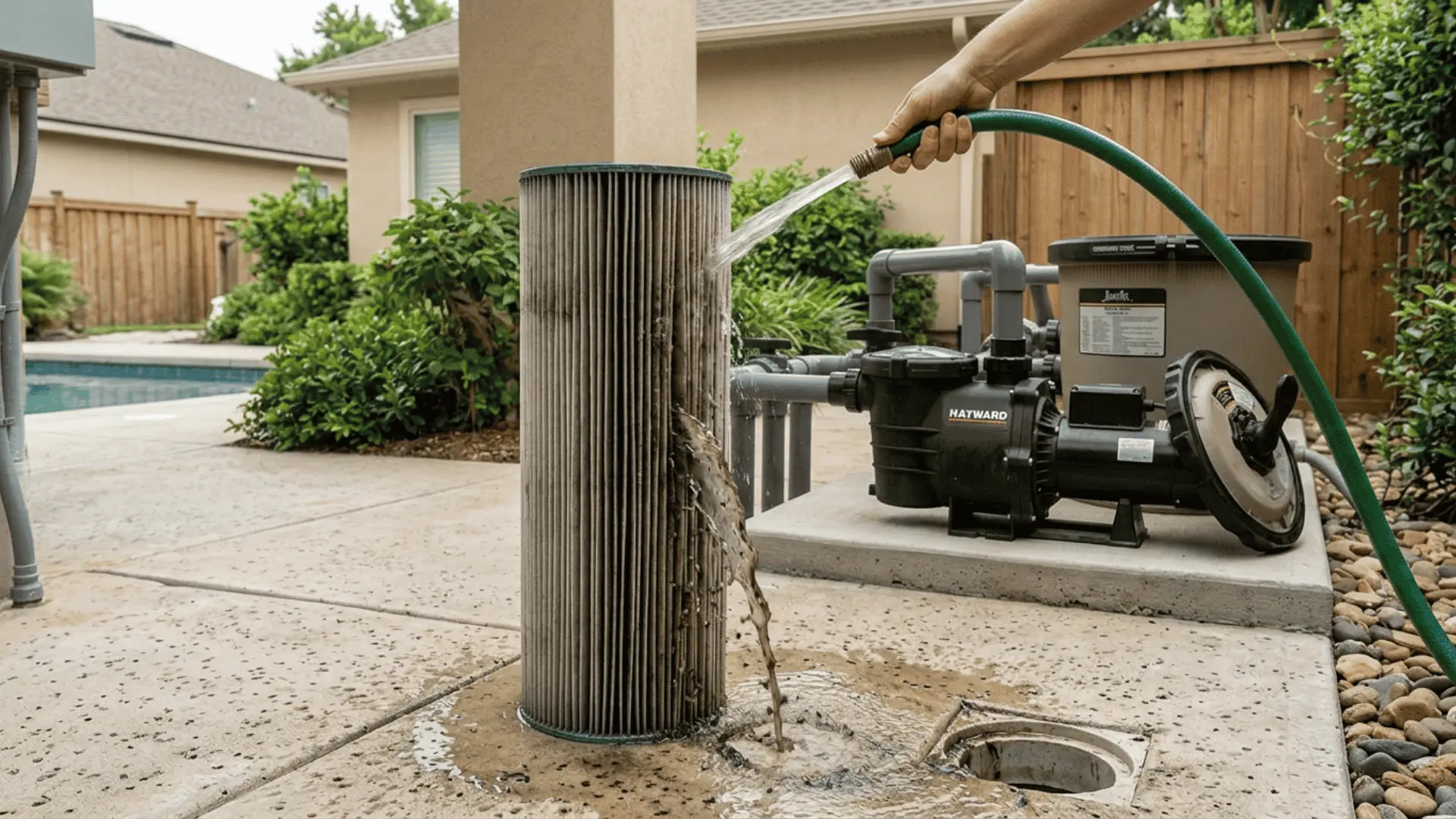

A dirty cartridge can reduce water flow and make a pool pump work harder than it needs to. The good news is that most filters are simple to clean with basic tools.
I reviewed manufacturer instructions and common advice shared by pool owners to explain how to clean pool filter parts safely.
The main steps are turning off the pump, releasing pressure, removing the cartridge, and rinsing each pleat.
This guide explains how to hose down the filter, when to use a cleaning product, and which tools may damage the material. It also covers cleaning frequency, common mistakes, and signs that the cartridge needs replacement.
Filter tanks and locking systems can differ by model. Keep the equipment manual nearby and stop if the lid, clamp, pressure gauge, or seal appears damaged.
This article focuses on cartridge pool filters. Sand and DE filters use different cleaning methods. By the end, the cleaning process should feel clear, safe, and manageable.
What is the Best Way to Clean a Pool Filter Cartridge?
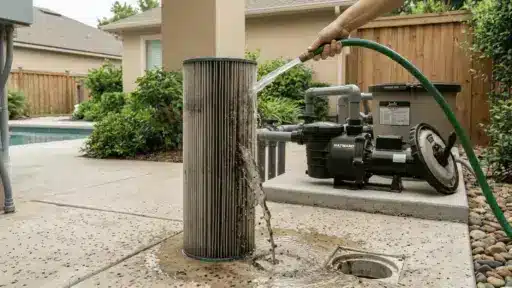
Most pool owners recommend removing the cartridge and rinsing it slowly with a garden hose. Place it upright, begin at the top, and work downward while rotating it section by section.
Aim the water between every pleat so trapped dirt, hair, pollen, and insects can wash out instead of moving deeper into the material. Use moderate pressure and keep the nozzle a short distance away.
A pressure washer is not suitable because its strong spray can tear the fabric, stretch the folds, or damage the support bands. Plain water is enough for most routine cleaning.
Use a cartridge-safe cleaner only when sunscreen, body oils, grease, or stubborn residue remains after a full rinse. Follow the product label for dilution and soaking time, then rinse again until no cleaner or foam remains.
This method protects the cartridge while restoring water flow.
What do You Need to Clean a Pool Filter Cartridge?
A regular cleaning job needs only a few simple supplies. Using the right tools helps remove dirt without tearing or stretching the filter material.
- Garden hose
- Adjustable nozzle
- Work gloves
- Safety glasses
- Plastic soaking container
- Cartridge-safe cleaner
- Soft cloth
- Approved O-ring lubricant
A routine garden-hose rinse may take about 20 to 30 minutes, depending on the cartridge size and buildup. Allow extra time when oily residue requires soaking in a cartridge-safe cleaner.
How to Clean a Cartridge Pool Filter
Complete each step in order to protect the cartridge and avoid opening a pressurized tank. The equipment manual should guide any model-specific work.
Step 1: Turn Off the Pool Pump
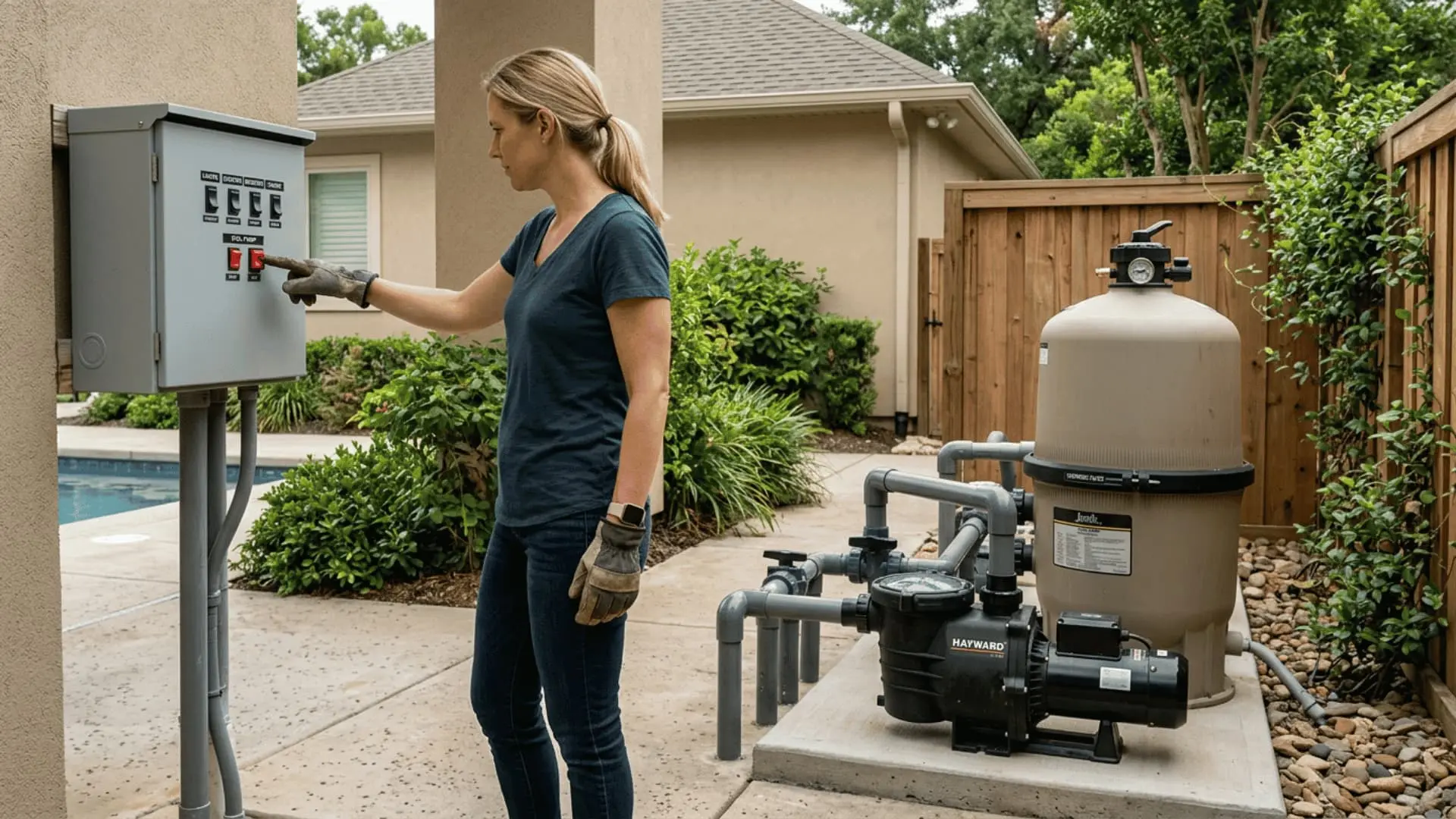
Switch off the pump before touching the filter housing. Disable any timer or automatic control that could restart the system during cleaning.
Some systems also require certain valves to be closed. Check the filter or pump manual before changing their positions.
Do not work near damaged wiring or wet electrical controls. A pool technician should handle the job when the correct power shutoff is unclear.
Step 2: Release the Filter Pressure
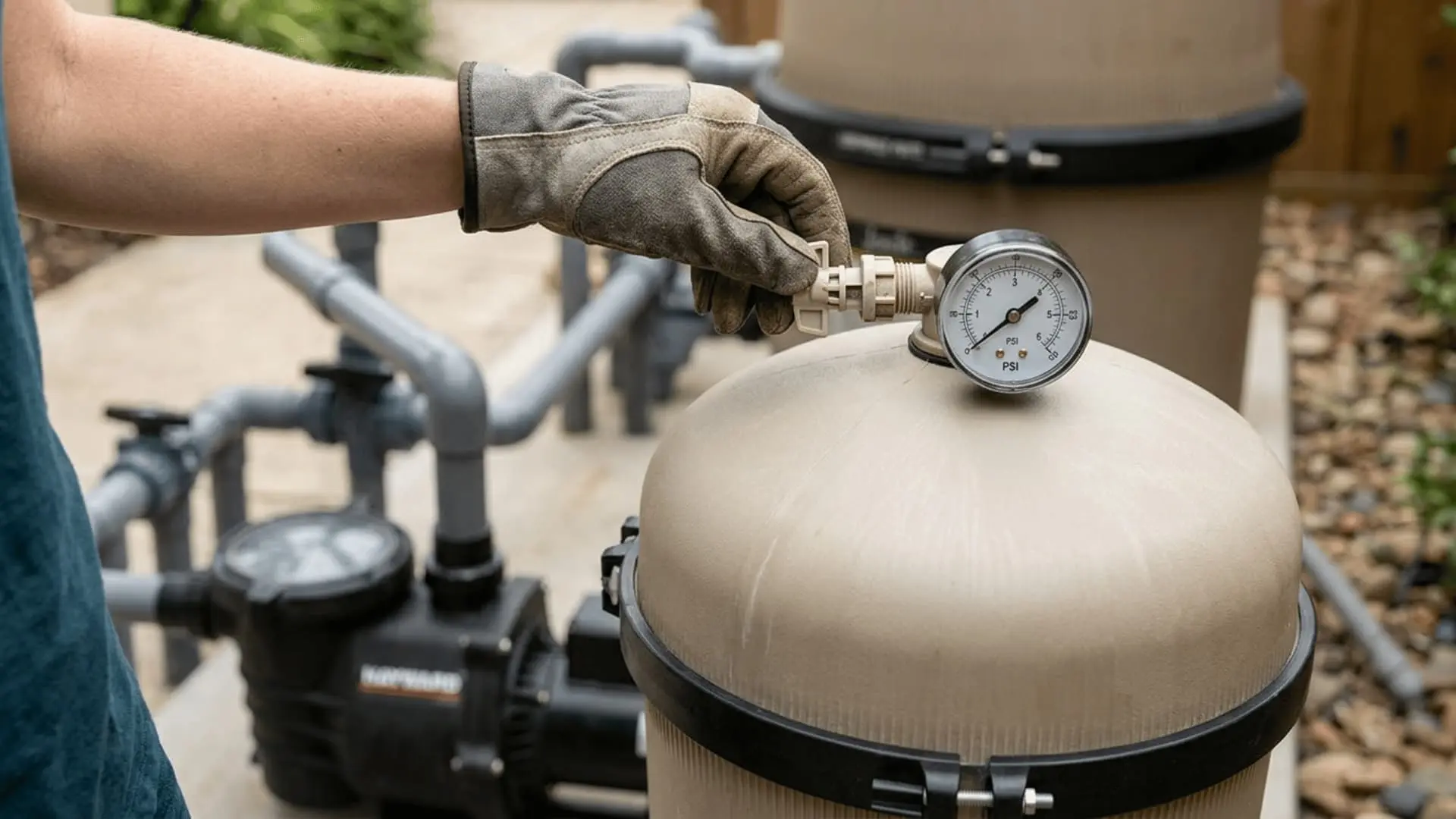
Open the manual air-relief valve at the top of the tank. Stand away from the lid while trapped air and water escape.
Wait until the pressure gauge reads zero before loosening the clamp or locking ring. A gauge that stays above zero may be faulty or may show trapped pressure.
Do not continue until the tank is fully depressurized. Pressurized air can force the lid upward with serious force.
Step 3: Remove the Filter Lid
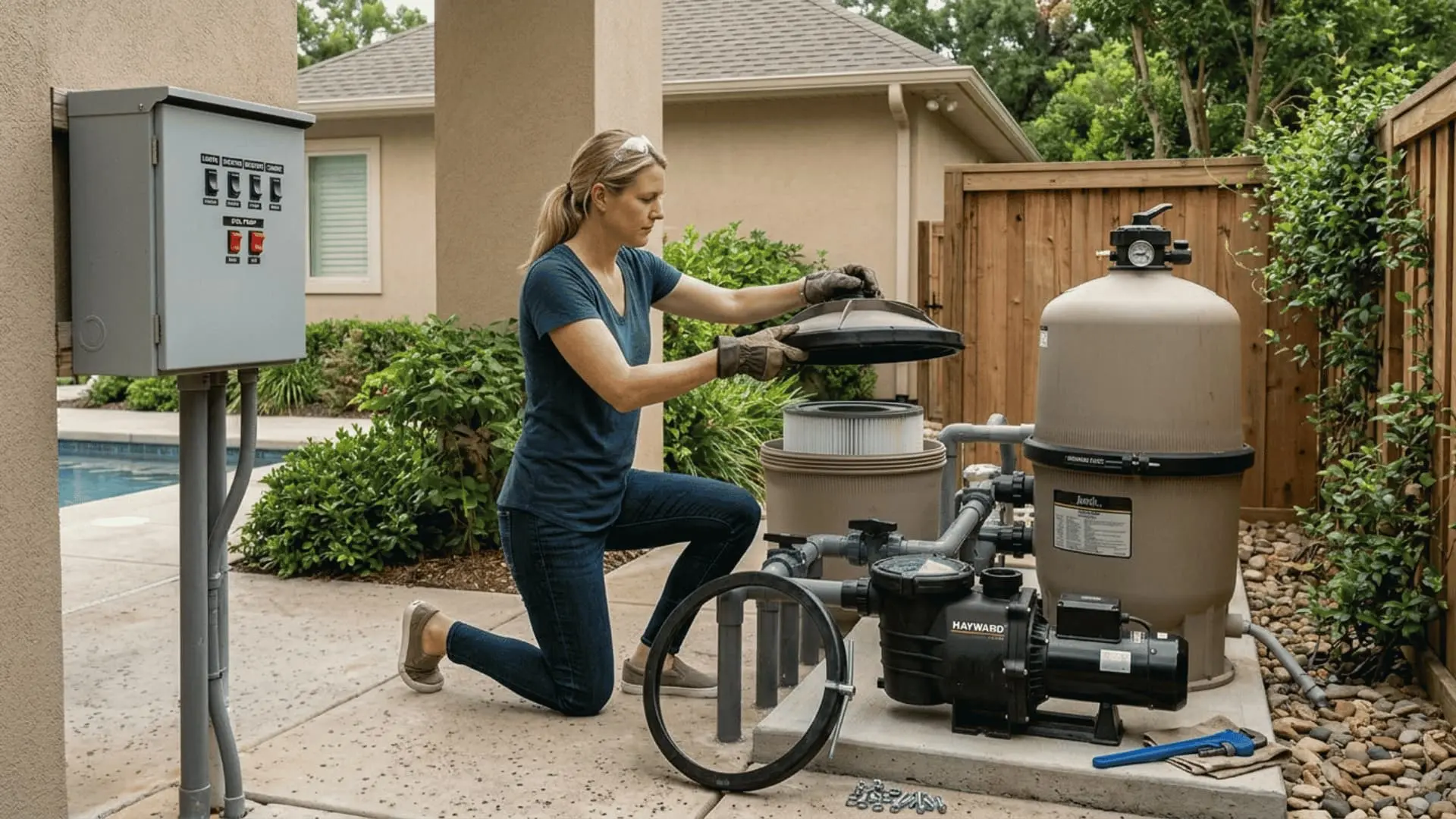
Follow the manufacturer’s method for removing the clamp, ring, or retaining parts. Not all filter tanks use the same locking design.
Keep nuts, springs, and washers in a clean container so they return in the correct order.
Lift the lid slowly after confirming zero pressure. Do not use sharp metal tools to force open a stuck lid, as they may damage the tank or seal.
Step 4: Lift Out the Cartridge
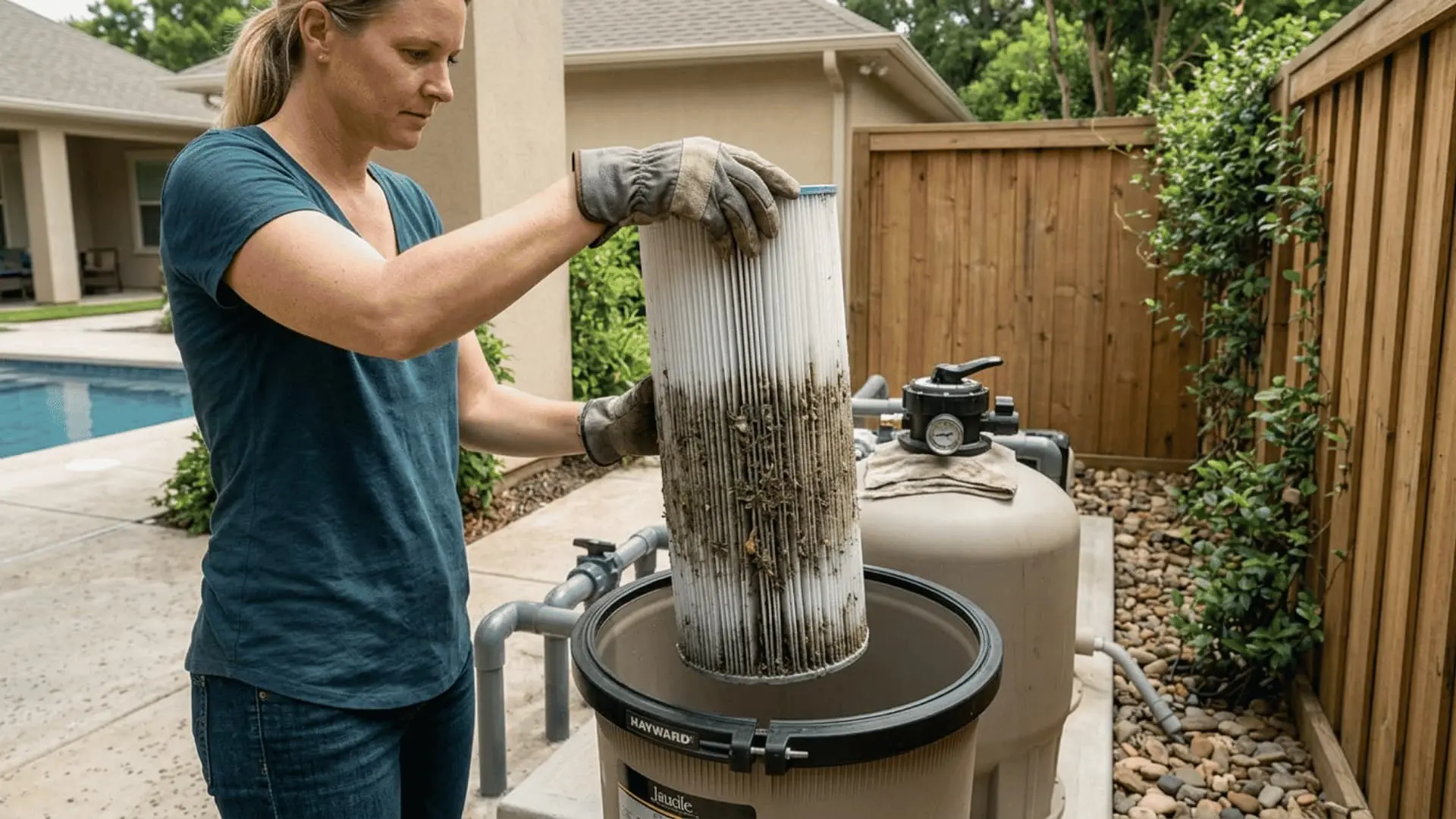
Remove the cartridge by lifting it straight upward when space allows. Pulling it sideways may bend the pleats or crack an end cap.
Filters with several cartridges may use a manifold or center pipe. Note the position of each part before removal.
A quick phone photo can help during reassembly. Place the cartridge on a clean surface away from gravel, sharp tools, and dirty standing water.
Step 5: Rinse Between Every Pleat
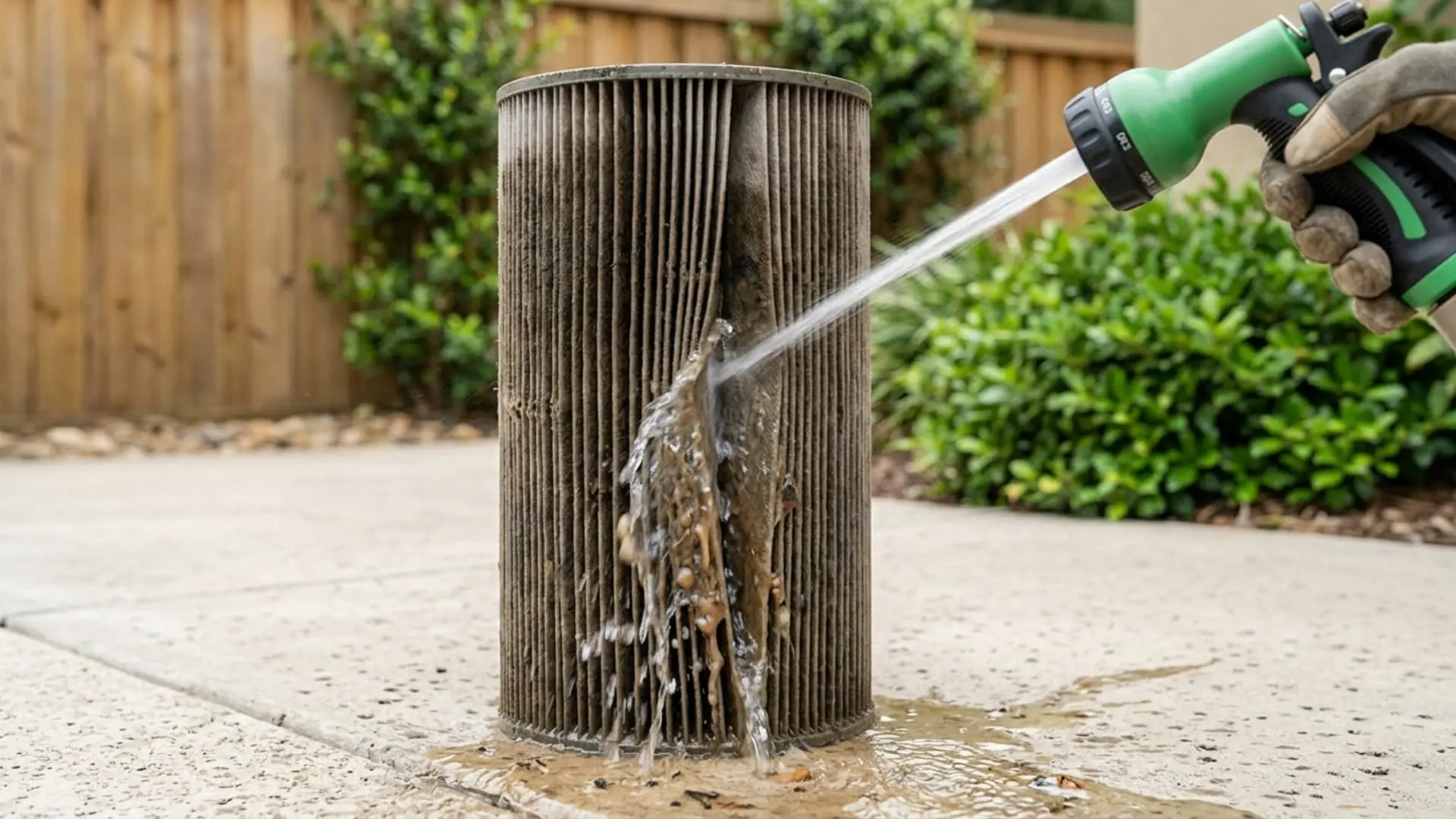
Stand the cartridge upright and rinse from the top toward the bottom. Rotate it slowly until every section has been cleaned.
Aim the hose stream between the pleats instead of spraying only the outer surface. This helps flush trapped debris outward.
Use moderate pressure and keep the nozzle a short distance from the fabric. Gently separate tight folds with a gloved hand, but do not stretch or pull them out of shape.
Step 6: Soak Stubborn Buildup
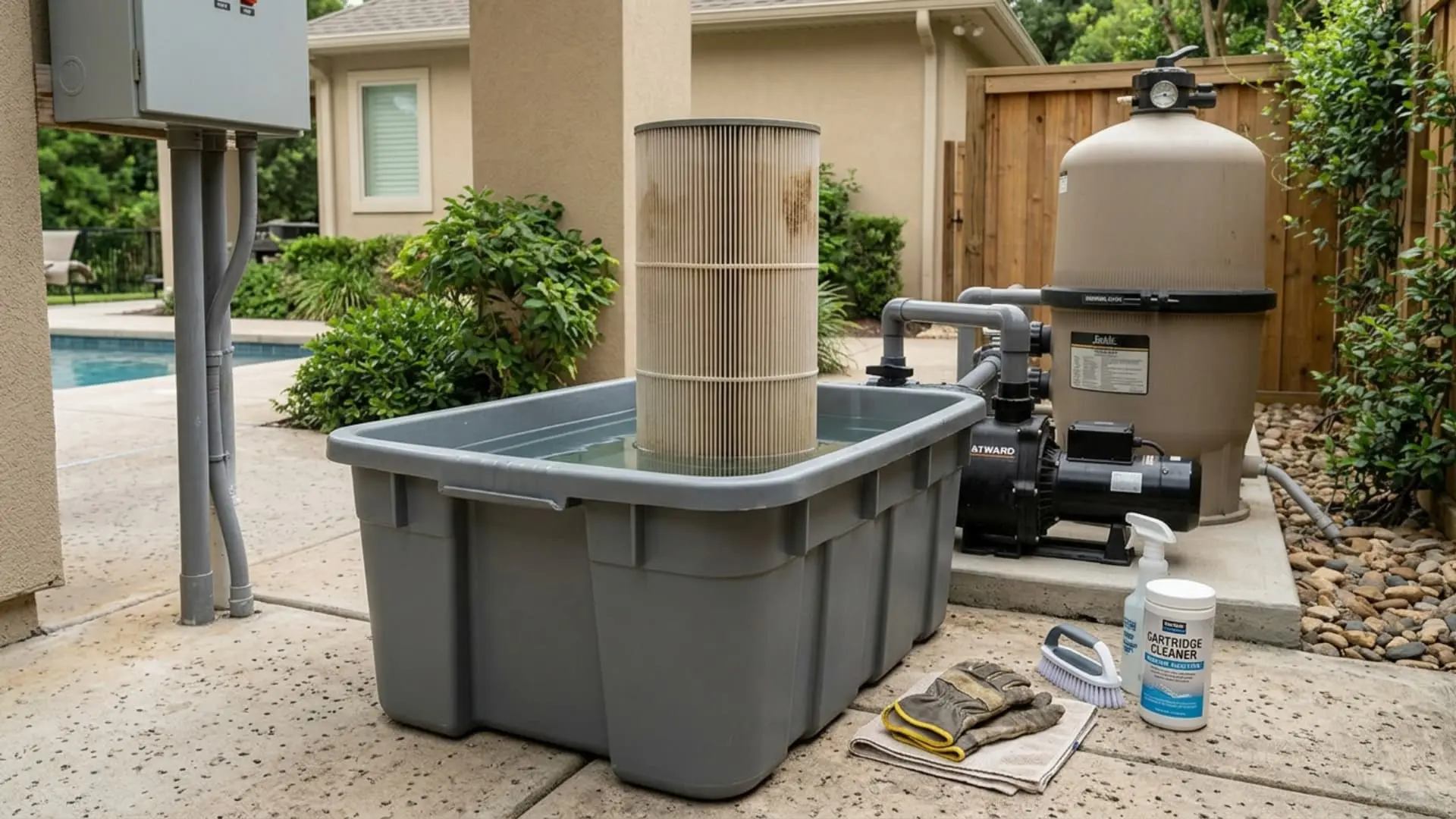
A soak is needed only when rinsing leaves behind sunscreen, body oils, or greasy residue. Always remove loose dirt first.
Place the cartridge in a plastic container with a cleaner labeled for pool filter cartridges. Follow the product directions for dilution and soaking time.
Do not combine several cleaners or guess the concentration. Strong mixtures may damage the filter material and create a chemical reaction.
Step 7: Rinse and Check the Cartridge
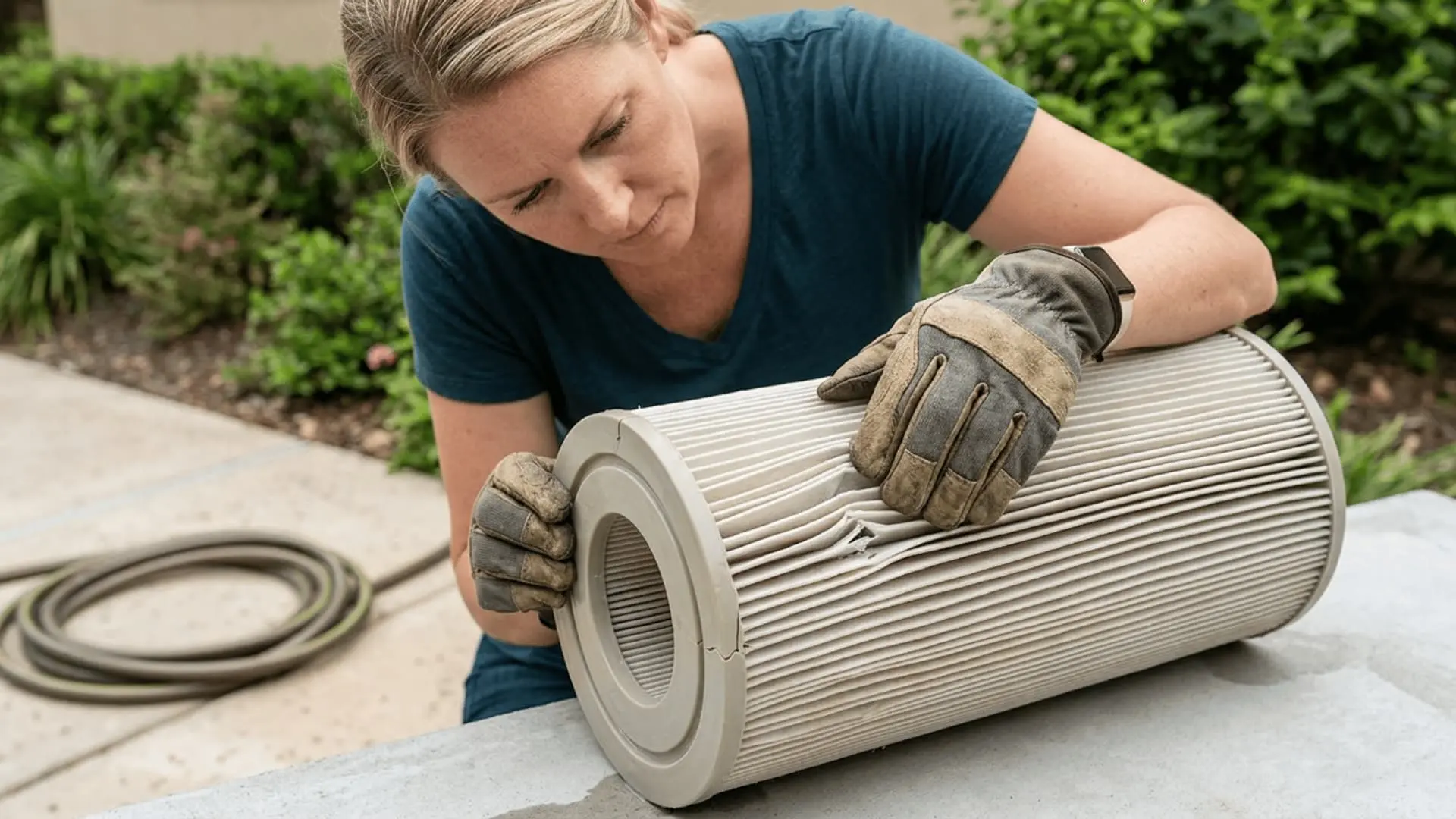
Rinse the cartridge again after soaking until no cleaner or foam remains. Check the outer pleats, inner opening, and lower end cap.
Look for torn fabric, cracked plastic, broken support bands, or badly flattened folds. These problems cannot be corrected through further washing.
Some staining may remain after the filter is clean. Color alone does not always mean the cartridge has failed, but structural damage means replacement is needed.
Step 8: Reinstall and Restart the Filter
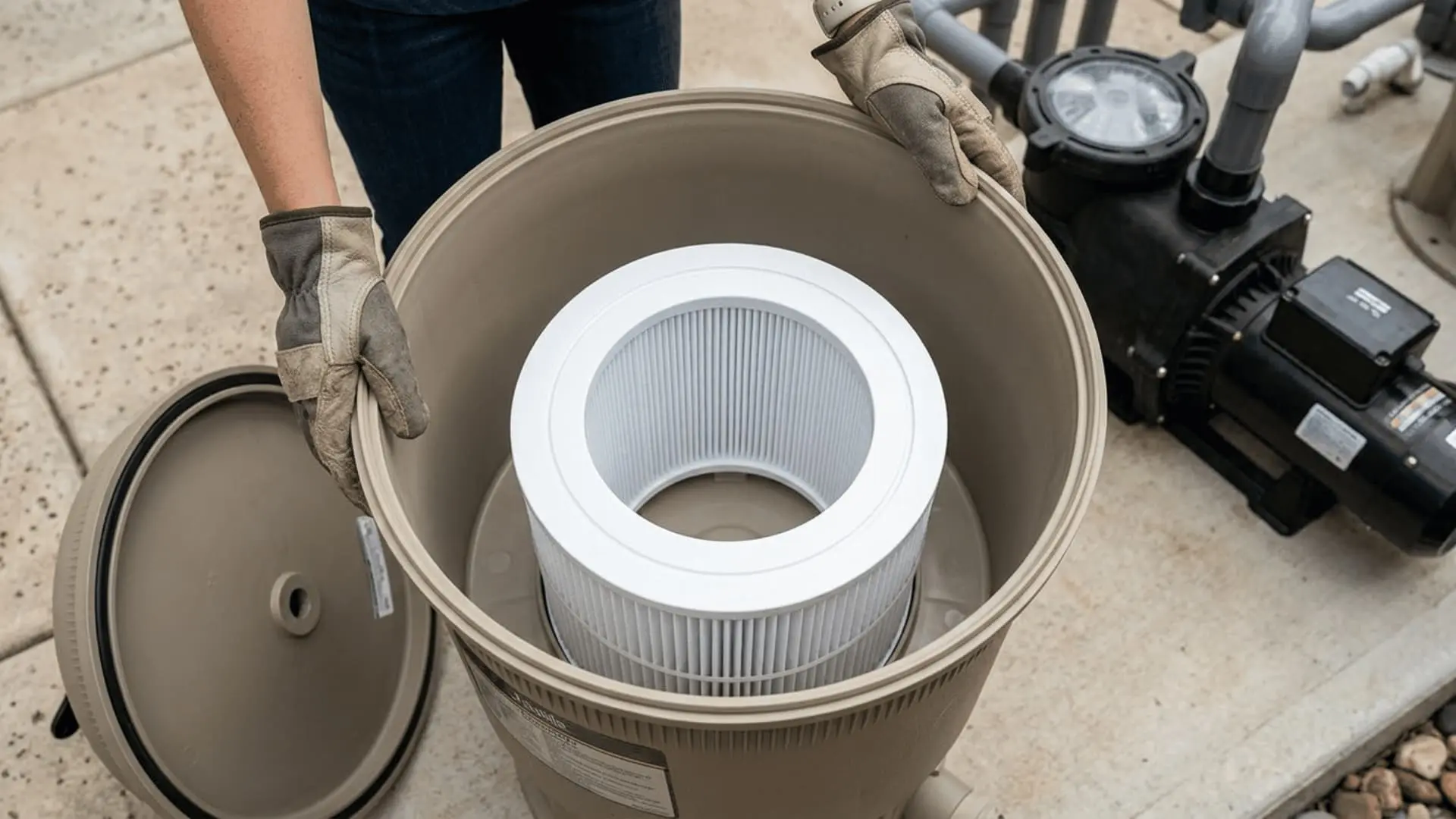
Remove loose dirt from the empty tank and clean the sealing groove with a soft cloth. Inspect the O-ring for cracks, grit, stretching, or flat areas.
Return the cartridge to its correct position and secure the lid according to the manual. Reopen any valves closed earlier.
Open the air-relief valve before restarting the pump. Close it once a steady stream of water appears, then check the tank and plumbing for leaks.
What Products Can Clean a Pool Filter Cartridge?
Plain water works for most regular cleaning. Products are only needed when a certain type of buildup remains after the cartridge has been fully rinsed.
| Cleaning Option | Best Use | Main Limit |
|---|---|---|
| Garden hose | Leaves, dirt, hair, pollen, and insects | May not remove oily films |
| Cartridge cleaner | Sunscreen, lotion, and body oils | Must match the filter material |
| Approved degreaser | Heavy greasy buildup | Requires complete rinsing |
| Scale remover | Confirmed mineral deposits | Use only after oils are removed |
Which Cleaning Option Should You Use?
Match the cleaning method to the buildup instead of applying a strong product to every dirty cartridge.
- Loose Dirt, Leaves, Hair, and Pollen: Rinse with a garden hose.
- Sunscreen, Lotion, and Body Oils: Use a cartridge-safe cleaner.
- Heavy Greasy Film: Apply an approved non-foaming degreaser.
- Mineral Scale: Use an approved scale remover after removing oily residue.
- Torn, Separated, or Flattened Pleats: Replace the cartridge instead of cleaning it again.
Always check the cartridge label and equipment manual before using a chemical product. Choose a non-foaming product labeled specifically for pool filter cartridges.
Confirm that it is suitable for polyester filter material before soaking the cartridge. The safest option is a cleaner approved by the filter or cartridge manufacturer.
Follow the label for mixing, soaking time, protective equipment, rinsing, and disposal.
Never mix separate cleaning products in the same container.
Can You Use Dish Soap, Bleach, or Acid?
Household products are not always suitable for cartridge material. Their use depends on the filter instructions and the type of buildup present.
Dish soap: Regular dish soap can leave foam inside the pleats, which may enter the pool after the filter restarts. A non-foaming cartridge cleaner is safer for oily buildup. Dish soap also does not remove mineral scale, so rinse with plain water first and choose a product made for the remaining residue.
Bleach: Bleach is not needed for normal dust, leaves, or soil. Use it only when the cartridge manufacturer allows it. Never mix bleach with acid, ammonia, or another cleaner because dangerous fumes may form. Algae on the cartridge also means the pool water needs attention.
Acid cleaner: Acid should only be used for confirmed mineral scale. It does not remove sunscreen, grease, or body oils. Oily residue must be cleaned first because acid may set it deeper into the material. Follow all manufacturer safety directions or contact a pool professional when the buildup is unclear.
How Often Should You Clean a Pool Filter Cartridge?
Many pool owners inspect or rinse cartridge filters every few weeks during active use. However, pressure rise and water flow are better cleaning signals than a fixed schedule.
Record the pressure after installing or washing a clean cartridge. This gives you a useful starting point for future checks.
Clean or inspect the filter sooner when you notice:
- Pressure rising above the clean starting level
- Weak flow from the pool return jets
- Heavy swimming or frequent pool use
- Storm debris, pollen, or nearby yard work
- Algae growth or poor water conditions
- Dirt returning soon after the last cleaning
Check the equipment manual for the allowed pressure increase because the exact limit varies by model.
Use the clean pressure and water flow as your main guide. A calendar can help with routine inspections, but it should not be the only reason for cleaning.
What do Pool Owners Commonly Recommend?
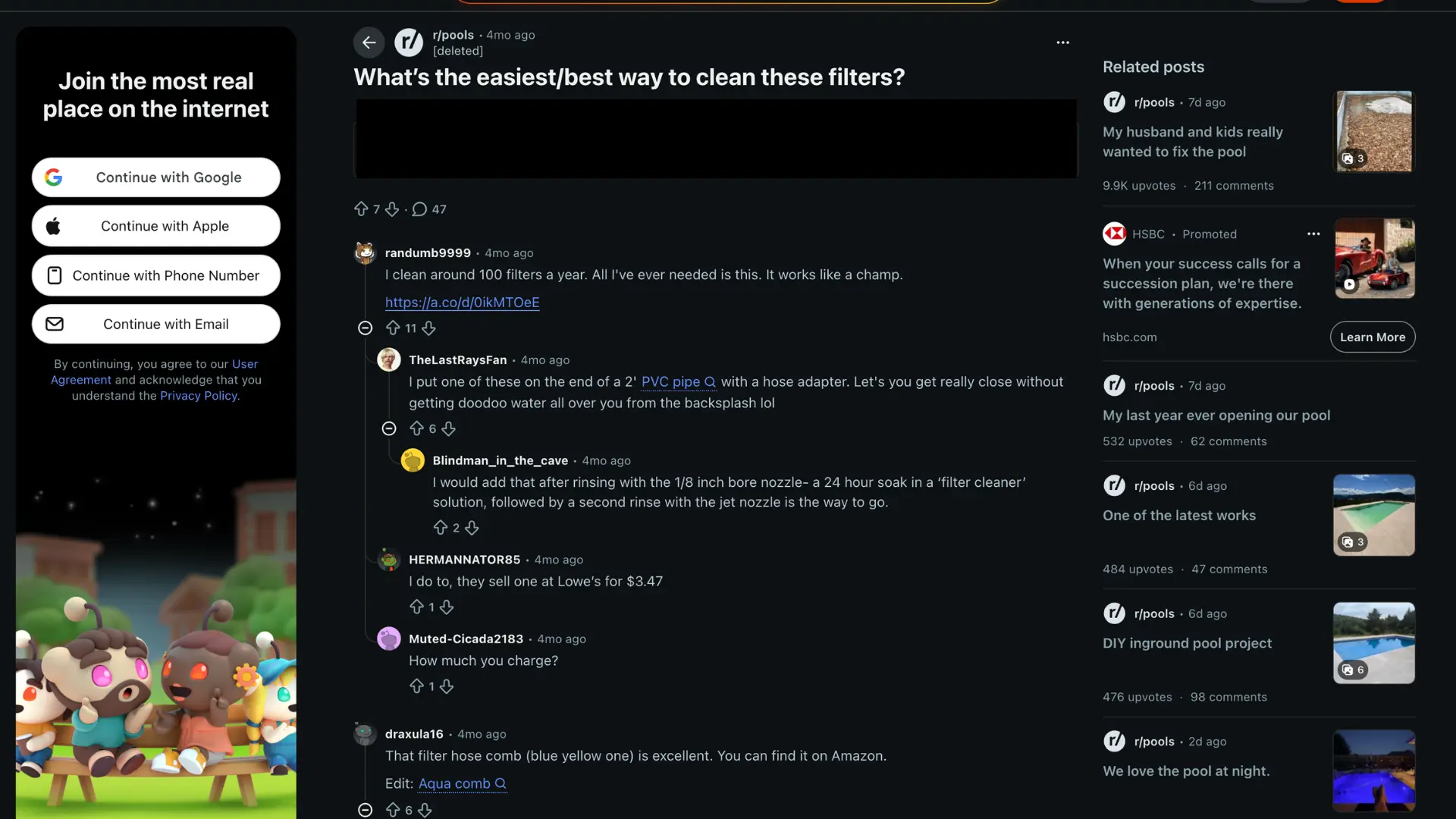
Pool owners in Reddit discussions often recommend cleaning cartridge filters with a garden hose and a focused nozzle. Most suggest working slowly and rinsing each pleat separately instead of spraying only the outer surface.
A full rinse may take 20 minutes or longer, especially when dirt is packed deep between the folds.
Several owners also warn against using a pressure washer because the strong spray can damage the filter material. One commenter summed it up simply: “Simply hose it down.”
For cartridges with sunscreen, body oils, or greasy buildup, some owners recommend soaking the filter in a cartridge-safe cleaner before rinsing it again.
The main advice is consistent: use moderate hose pressure, clean between every pleat, allow enough time, and use a soaking product only when plain water does not remove the remaining residue.
Common Pool Filter Cleaning Mistakes
Avoiding these errors can protect the cartridge and reduce safety risks around the pressurized tank.
| Mistake | Better Method |
|---|---|
| Opening the tank before releasing pressure | Turn off the pump and wait for a zero reading |
| Spraying only the outer pleats | Direct water between each fold |
| Using a pressure washer | Use moderate garden hose pressure |
| Using cleaner after every rinse | Start with plain water |
| Applying acid to an oily filter | Remove grease before treating scale |
| Mixing cleaning products | Use one approved product at a time |
| Reusing torn filter material | Replace the damaged cartridge |
| Ignoring the O-ring | Clean and inspect the seal |
| Guessing how the clamp fits | Follow the product manual |
| Restarting with trapped air | Open the relief valve during startup |
When Should a Pool Filter Cartridge be Replaced?
Replace the cartridge when its fabric or support parts are damaged. Washing cannot repair tears, broken bands, cracked end caps, or a damaged center core.
Badly flattened or separated pleats reduce the filter area and may restrict water flow. Replacement may also be needed when pressure rises again soon after a proper wash.
Dirt returning through the pool jets can point to torn material or incorrect installation. Check the cartridge position and internal fittings first.
A clean cartridge should still be replaced when its structure is weak or damaged.
Final Verdict
A pool filter cartridge is easier to maintain when cleaning is based on pressure, flow, and the type of buildup present. Plain water is enough for most routine dirt.
Always turn off the pump and release tank pressure before removing the lid. Take time to rinse between the pleats instead of spraying only the outside.
Use a cartridge-safe cleaner only when oils or scale remain after rinsing. Check every part for wear before putting the filter back into service.
The equipment manual should guide all model-specific steps. Contact a pool technician when the clamp, tank, gauge, wiring, or seal looks damaged.
Record the clean pressure after restarting the system. This reading can make future maintenance easier and more accurate.
Share your own cartridge-cleaning results or useful tips in the comments below.
Frequently Asked Questions
What if the Filter Pressure Stays High After Cleaning?
High pressure after cleaning may point to trapped debris, a damaged cartridge, closed valves, blocked plumbing, incorrect installation, or a faulty pressure gauge.
Can a Cartridge Filter be Cleaned without Removing It?
No. Removing the cartridge makes it possible to clean the inner surface, lower end cap, and deep spaces between the pleats.
Can Vinegar Clean a Pool Filter Cartridge?
Vinegar may help with light mineral residue, but it will not remove heavy oils or all scale. Check the manufacturer’s instructions before using it.
Do Cartridge Pool Filters Need Backwashing?
No. Most cartridge filters are removed from the housing and rinsed with a garden hose instead of being cleaned through backwashing.

With a Master’s in Architecture from the University of California, Berkeley, Mitchell Green has spent over two decades dedicated to the study and practical application of home fixture design. His career started in an architectural firm, providing him a strong foundation in the structural and aesthetic aspects of home interiors. Mitchell brought his comprehensive knowledge to our platform, where he has been an influential voice in our home fixtures and fittings section. Since 2018, he has been guiding our readers through the intricacies of selecting and installing fixtures, combining technical know-how with design flair. In his spare time, Mitchell is a keen photographer, capturing architectural details and design elements, an interest that complements his professional focus.