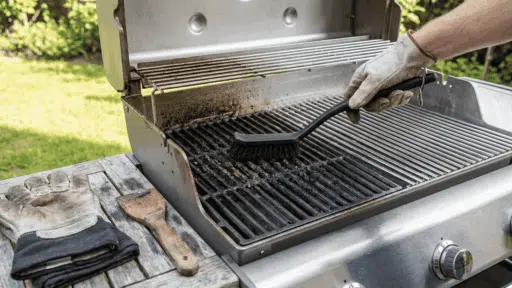
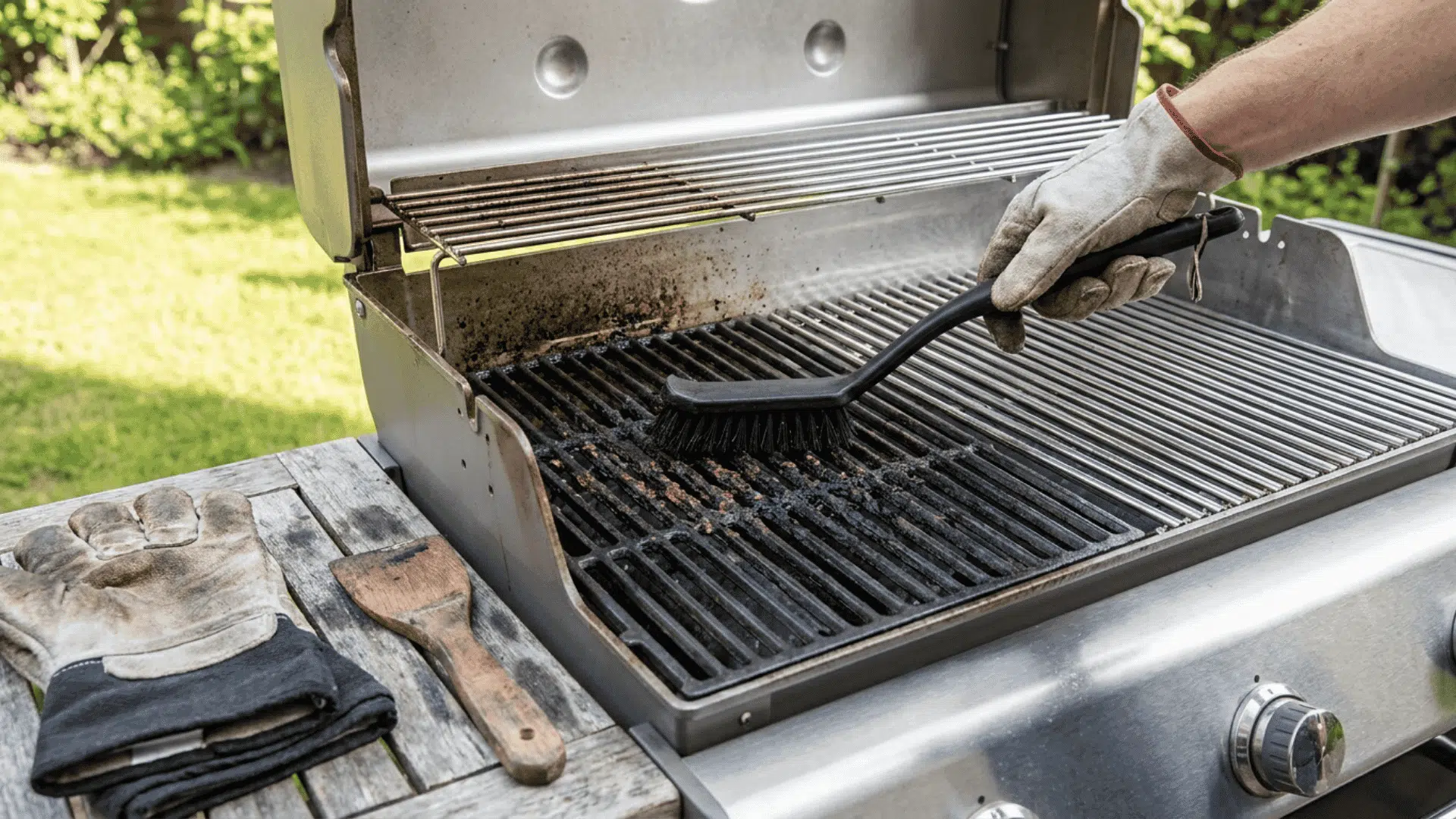

Grease drips down, sauce bakes onto the bars, and small pieces of burned food fuse to the metal, sometimes after a single cookout.
If you are working out how to clean grill grates, the first thing to settle is which method applies to your grill.
That depends on the grate material, whether the buildup is fresh or already carbonized, what the manufacturer allows, and whether rust or a chipped coating is involved.
I clean mine while they are still warm, since waiting turns two minutes of work into twenty. A brush that is fine on stainless steel will strip porcelain right off, so matching the tool to the grate matters as much as the timing.
Keep reading till the very end to understand and implement the cleaning process.
Cleaning Grill Grates Explained in 20 Seconds!
Remove all food before cleaning, then leave the grates warm enough to loosen residue without creating a burn risk.
The following routine removes fresh grease before it hardens into a thicker layer.
- Scrape away loose food and grease with a grate-safe brush or scraper.
- Wipe the surface with a damp cloth or paper towel held in tongs.
- Check for stubborn food, damaged coating, or loose brush bristles.
- Let the grates dry before closing the lid or covering the grill.
Cleaning timing varies by grill. Check your manual before choosing either approach.
Tools You Will Require to Clean Grill Grates
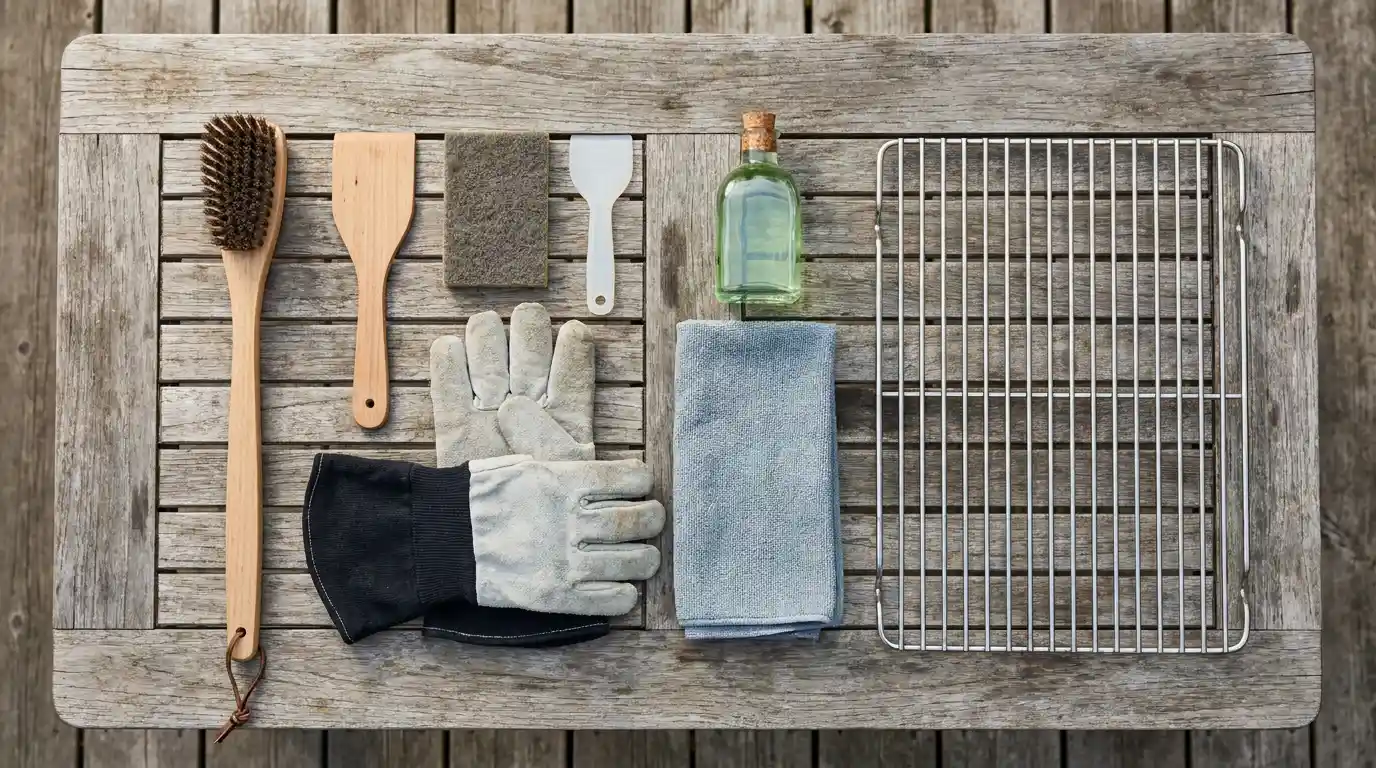
Choose tools based on the grate material, cleaning temperature, and amount of buildup. Check the grill manual before using metal tools, abrasive pads, or cleaners.
| Tool | Best Used For | Suitable Surfaces | Precaution |
|---|---|---|---|
| Long-handled nylon brush | Fresh food residue | Most grate types | Stay within its heat rating |
| Wooden grill scraper | Routine scraping | Most grate types | Allow the edge to form around the bars |
| Non-abrasive scrub pad | Loosened, soaked residue | Porcelain and stainless steel | Avoid heavy pressure |
| Plastic scraper | Thick, cooled grease | Cool removable grates | Never place it on a hot surface |
| Metal brush | Manufacturer-approved cleaning | Some stainless steel grates | Follow the grill manual |
| Microfiber cloth or paper towels | Wipe away grease and cleaner | Cool surfaces | Hold towels with tongs near warmth |
| Bucket or sink | Soaking removable grates | Washable removable grates | Confirm the material can be soaked |
| Heat-resistant gloves | Handling warm parts | All grate types | Do not handle dangerously hot grates |
| Mild dish soap | General deep cleaning | Manufacturer-approved surfaces | Rinse away all soap |
| Approved grill cleaner | Stubborn grease | Listed compatible surfaces | Follow label directions |
From a grill owner to another! Store tools for coated and uncoated grates separately. This reduces the chance of accidentally using an aggressive stainless steel brush on porcelain enamel. |
Before every use, examine any bristled brush for bent, loose, or missing pieces.
Health Canada advises checking the grill and cooked food for detached wire bristles and replacing a damaged brush.
How to Deep Clean Grill Grates With Heavy Buildup?
Routine brushing may not be enough. A deep clean is especially useful after foods such as ribs or glazed chicken leave hardened barbecue sauce across the bars, and it’s how you clean grill grates that routine brushing can’t fix on its own.
Move through the three steps below to crack the entire process in a matter of minutes.
Step 1: Remove and Soak the Grates
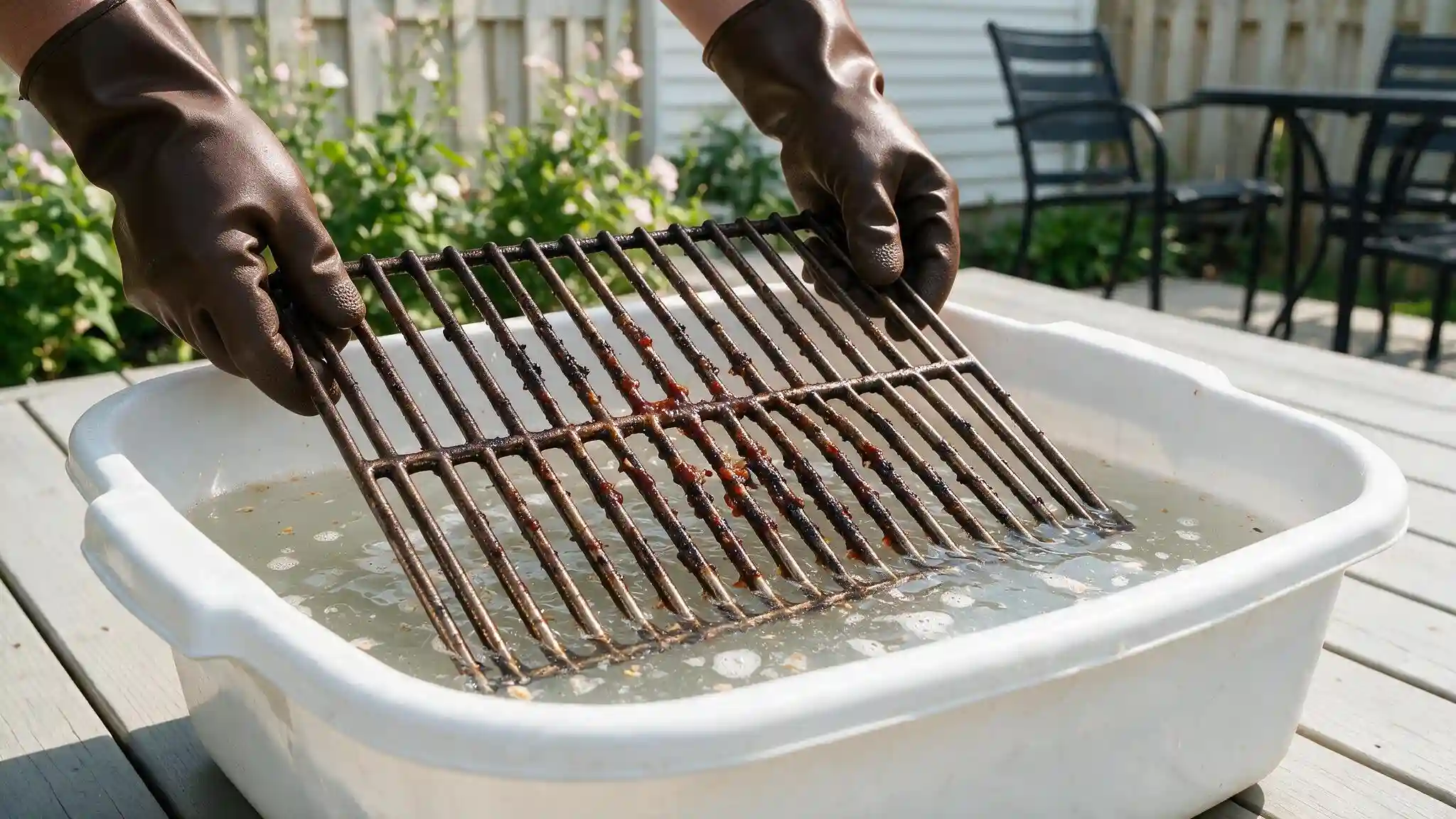
Place fully cooled, removable grates in a large sink, utility tub, or shallow container. When the manufacturer permits soaking, cover them with warm water and add a small amount of mild dish soap.
Let the buildup soften, checking progress rather than following one fixed soaking time. Never move hot grates directly into cool water.
A rapid temperature change can chip porcelain finishes on some grills.
One more thing: When oversized grates do not fit in a sink, some owners use a clean, shallow utility container. Confirm that soaking is permitted before using this method.
Step 2: Scrub Away Burned-On Grease
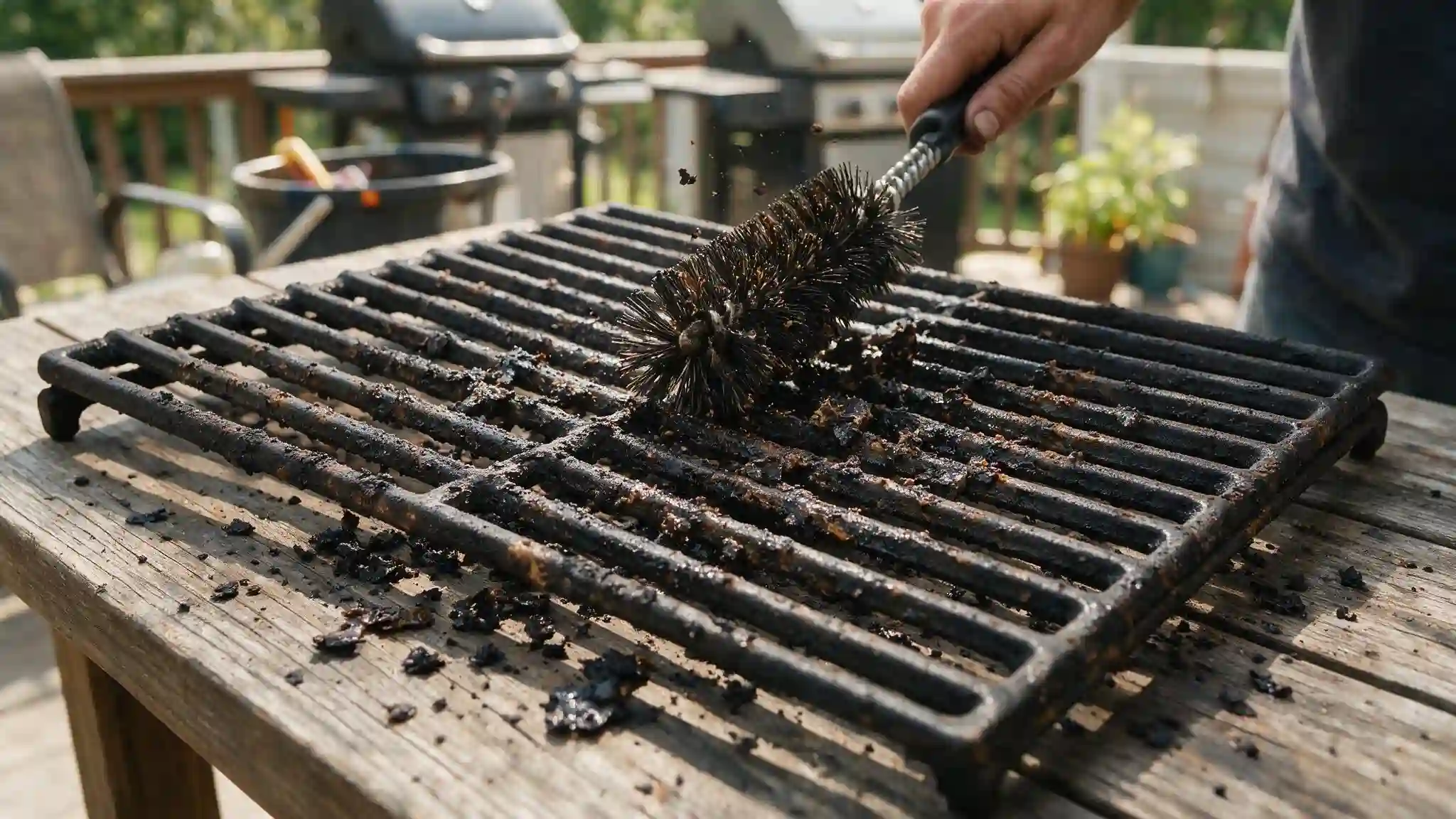
Work along each grate bar, then turn the grate over to clean the underside. Choose a nylon brush, soft abrasive pad, wooden, or plastic scraper that suits the surface.
Use moderate, controlled pressure instead of knives, chisels, or a sharp spatula edge. Sharp-edged tools can damage porcelain enamel, leaving the metal beneath more vulnerable to corrosion.
Step 3: Rinse, Dry, and Reinstall the Grates
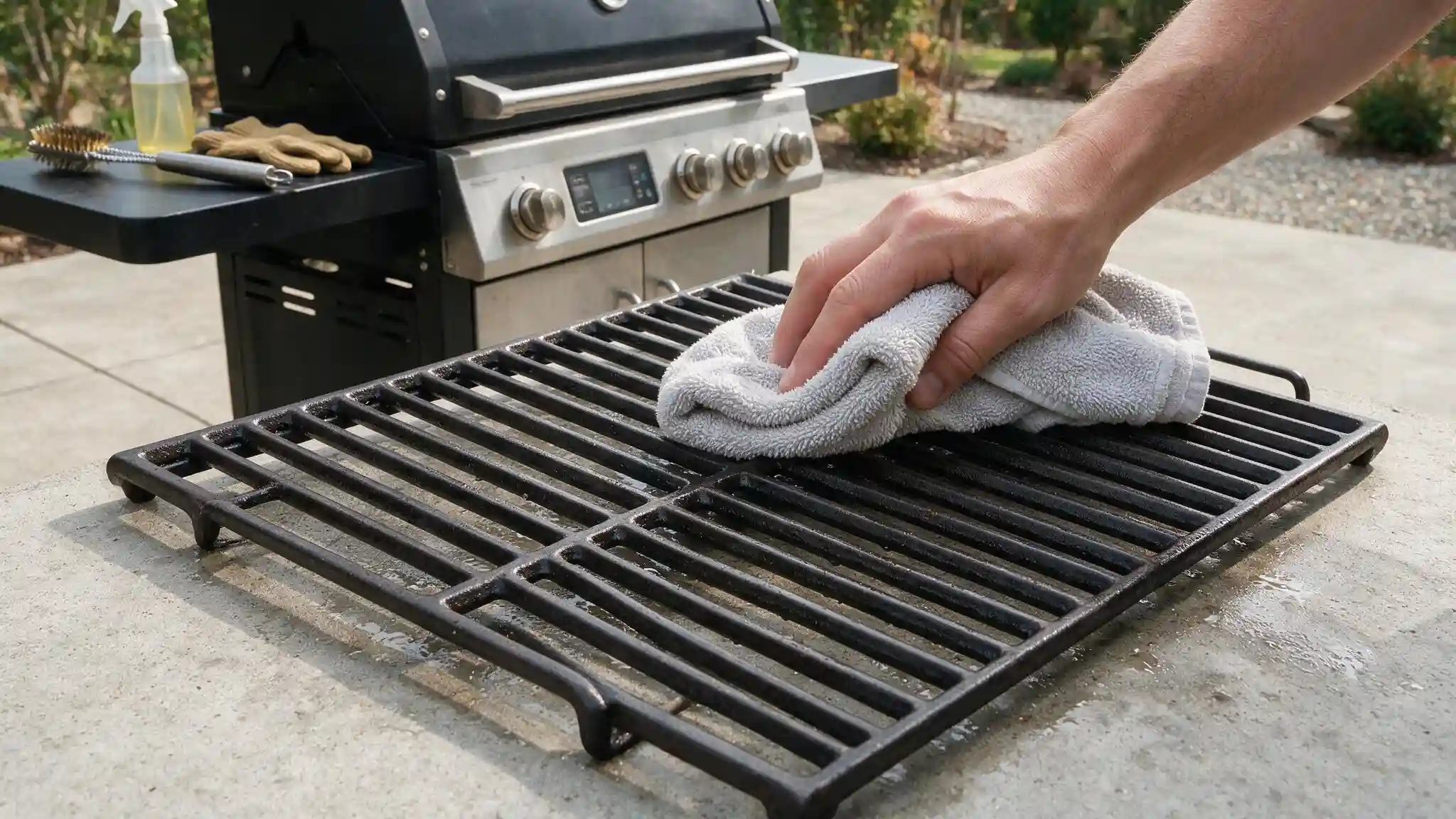
Rinse until the cleaning solution and loosened grease are completely gone. Wipe the grates with a clean, dry cloth, paying extra attention to joints, corners, and chipped areas where moisture can collect.
Do not leave porcelain-enameled cast iron grates to air-dry, because trapped moisture may encourage corrosion.
Reinstall the grates only after every surface is dry, then check that each piece sits securely.
| Grill Owner Tip: Inspect the grates in bright daylight before reinstalling them. Grease, chipped enamel, rust, and loose brush bristles are easier to spot outside the grill. |
Which Grill Grate Cleaning Solution Should You Use?
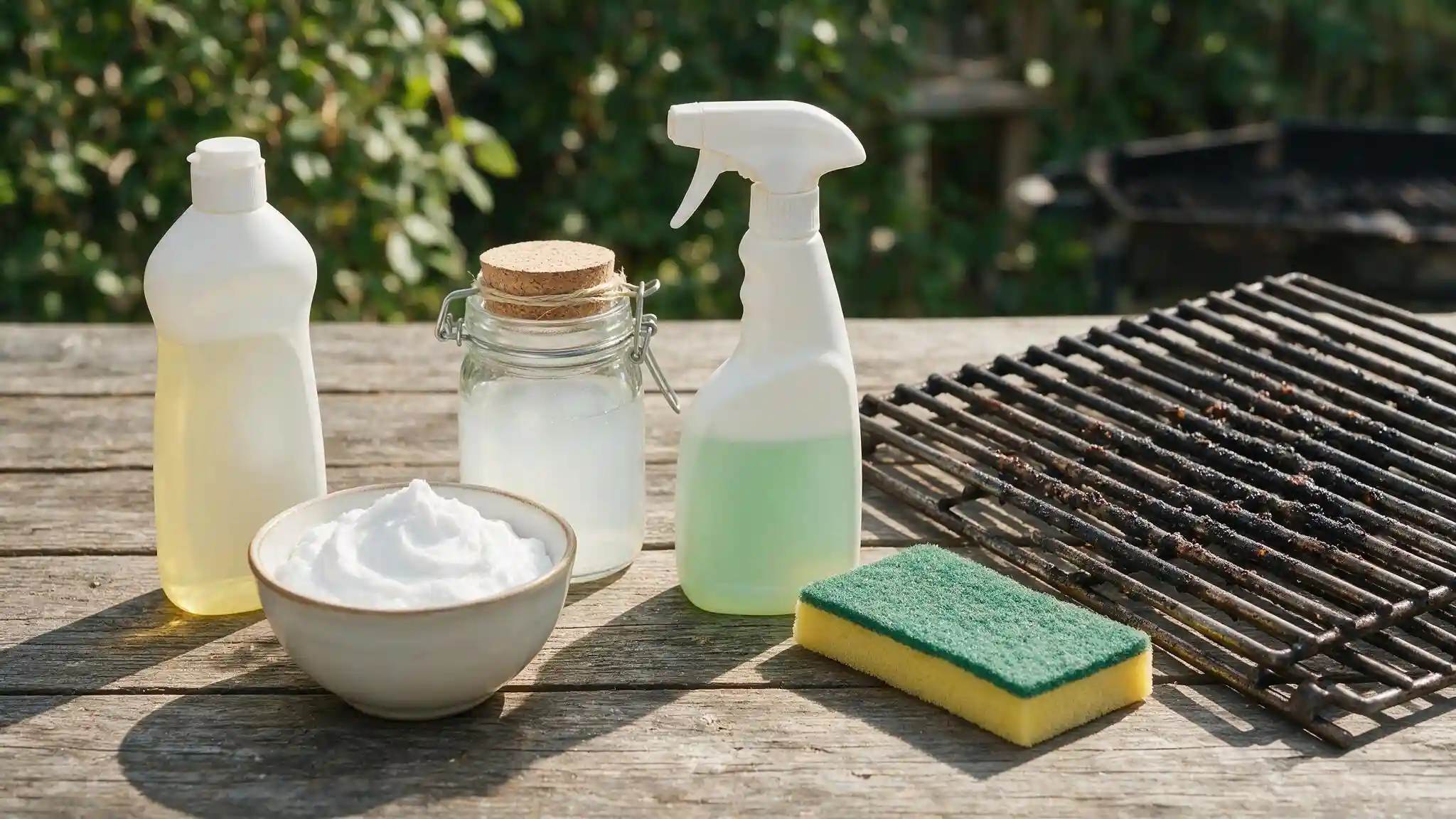
Choose a cleaning solution based on the residue and grate material, starting with the mildest suitable option. Confirm products are safe for cooking surfaces, and never mix cleaners.
For ordinary grease, use mild dish soap and warm water. Scrub both sides, rinse thoroughly, and dry immediately. Weber allows mild dishwashing liquid on some porcelain-enameled grates but advises against citrus formulas.
For stubborn spots, mix three parts baking soda with one part water. Leave for ten to fifteen minutes, then scrub, rinse, and dry.
It’s one of several homemade cleaning solutions worth keeping on hand for jobs like this.
Use vinegar separately only when permitted, and never with bleach or commercial cleaners. For remaining carbon, use a grate-specific cleaner according to its label.
Product-Specific Grill Grate Cleaning Instructions
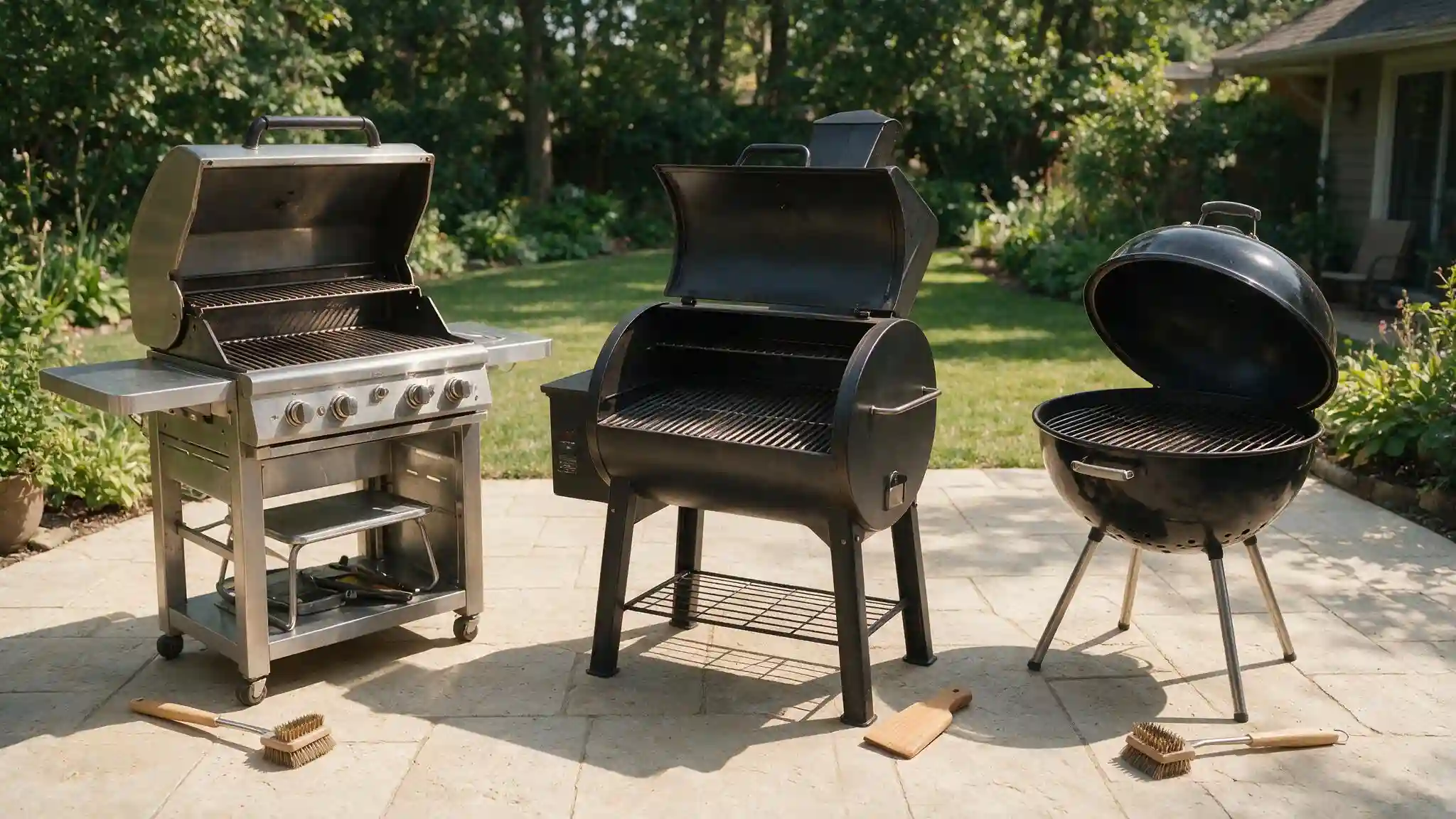
Cleaning methods should match the grate material. Check the grill manual before soaking, heating, or applying any cleaner.
Refer to the table to understand product-specific instructions.
| Grate Material | Best Cleaning Approach | Avoid |
|---|---|---|
| Stainless Steel | Brush warm grates. Use mild dish soap for heavy grease. Rinse and dry well. | Harsh cleaners |
| Cast Iron | Scrub gently, dry immediately, and oil lightly when needed. | Long soaking |
| Porcelain Coated | Use a nylon brush, wooden scraper, or soft pad. Dry fully. | Sharp metal tools |
| Porcelain Enameled Cast Iron | Clean gently and keep the enamel intact. Check for chips or rust. | Scraping through enamel |
What Grill Owners on Reddit Recommend

Reddit discussions show that experienced grill owners rarely use one cleaning method for every situation, adjusting their routine to the residue and the grate’s condition.
Some scrape immediately after cooking, while others preheat the grill before the next cook and knock off the dried, carbonized residue instead.
Most do not aim for a shiny, unused look, since the goal is removing loose food, sticky grease, flaking coating, and rust, not a showroom finish.
Bristle-free tools come up often too!
Last but not the least, onion, potato, steam, and high-heat burn-off methods get mentioned regularly, though they are personal techniques rather than universal instructions.
Two Grill Owner Tricks Worth Trying:
- Onion trick: Rub half an onion over hot grates to loosen grime with its natural acids and moisture.
- Foil steam trick: Cover stubborn residue with foil while preheating. Trapped heat and steam soften buildup before brushing.
Common Grill Grate Cleaning Problems and Fixes
Cleaning results can vary depending on the food cooked, grate material, surface condition, grill temperature, and how long residue has remained.
- The Grates Remain Sticky: Grease or cleaner residue may remain. Rinse again, check underneath, dry fully, and repeat a mild cleaning method.
- The Grates Are Too Large for the Sink: Clean in sections, use a utility tub, or scrub outdoors on a protected surface. Keep wastewater away from plants and drains.
- Grease Returns During Cooking: Residue may remain underneath or around support bars. Inspect and wipe these areas before reinstalling the grates.
- Rust Appears After Washing: Moisture may have remained on exposed metal. Remove light rust, dry immediately, and replace grates with severe damage.
Grill owner ‘checks’ worth noting! Identify if the residue is grease, burned food, or sauce. Confirm the grate material, inspect both sides, and check if soaking or commercial cleaners are permitted.
Final Thoughts on Cleaning Grill Grates
The safest approach is to clean fresh residue after cooking, then wait until the grill has cooled before removing the grates.
Match the brush, scraper, and cleaning solution to the grate material, and start with mild methods before using stronger approved products. Dry every surface completely, and follow the care instructions for the exact grill brand and model.
Regular inspection matters just as much as grease removal because it can reveal loose brush bristles, chipped coatings, and early rust before these problems become worse.
Replace grates that are deeply rusted, badly chipped, or no longer sit securely.
If this blog helped you clean your grill grates safely, read our waffle maker cleaning blog next!
Frequently Asked Questions
Can You Clean Grill Grates Without a Grill Brush?
Yes. Depending on the grate material, use a wooden scraper, nylon brush, plastic scraper, non-abrasive pad, or cloth held with tongs.
Why do My Grill Grates Turn Black Again So Quickly?
Grease may remain underneath the bars or around the supports. It can soften during cooking and spread back across the cleaned surface.
What is the Easiest Way to Clean Oversized Grill Grates?
Clean them in sections or use a clean utility container when soaking is allowed. Never soak cast iron or coated grates without checking instructions.
Should Grill Grates Look Completely New After Cleaning?
Not always. Permanent discoloration may remain even after grease and loose carbon are removed. Focus on cleanliness, smoothness, safety, and the condition of the coating.
How do You Prevent Cast-Iron Grates from Rusting After Cleaning?
Limit soaking, dry them immediately, and apply a light protective coating only when the grill manufacturer recommends it.

With a Master’s in Architecture from the University of California, Berkeley, Mitchell Green has spent over two decades dedicated to the study and practical application of home fixture design. His career started in an architectural firm, providing him a strong foundation in the structural and aesthetic aspects of home interiors. Mitchell brought his comprehensive knowledge to our platform, where he has been an influential voice in our home fixtures and fittings section. Since 2018, he has been guiding our readers through the intricacies of selecting and installing fixtures, combining technical know-how with design flair. In his spare time, Mitchell is a keen photographer, capturing architectural details and design elements, an interest that complements his professional focus.