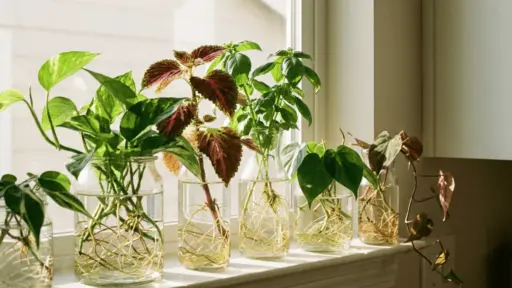
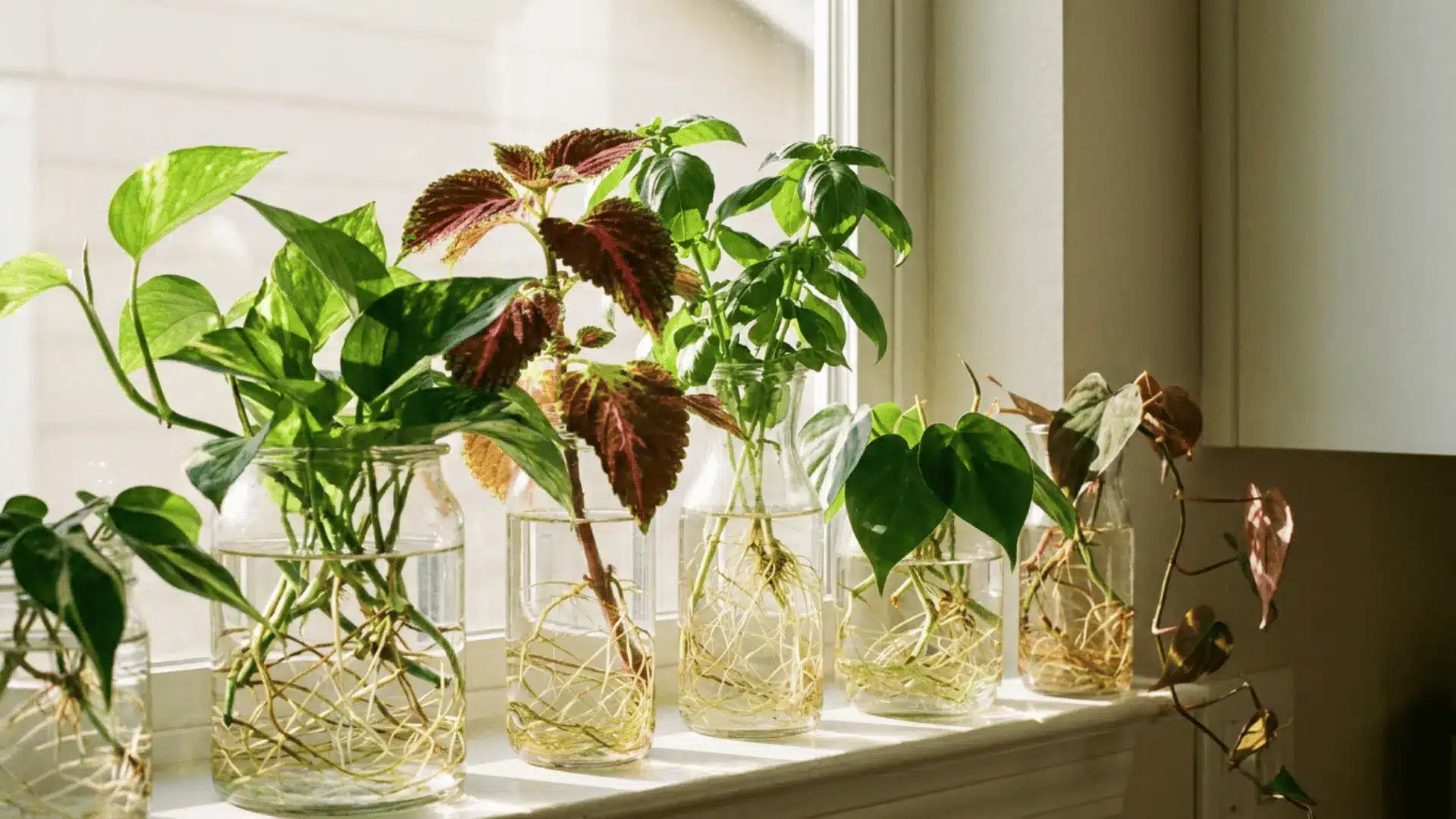

Growing plants in water can make indoor gardening feel simpler and less messy. It also lets you watch new roots develop through a clear container.
I often suggest starting with easy plants that grow in water, such as pothos, philodendron, mint, or Tradescantia. These plants usually root without complicated equipment.
However, water propagation and permanent water growth are not the same. Some plants can remain in water for years. Others need potting mix after rooting.
This guide covers houseplants and herbs that can root or grow without soil. It also explains cutting placement, light, water quality, containers, nutrients, and common problems.
I prefer starting with one healthy cutting rather than filling several jars at once. This makes changes easier to track.
Clean tools, healthy nodes, and suitable light usually provide the strongest start. Regular root checks can then prevent rot, algae, and weak growth.
Can Plants Really Grow in Water Without Soil?
Yes, many plants can form roots and continue growing without soil. However, they still need light, oxygen, nutrients, water, and physical support.
A fresh cutting uses stored energy while developing its first roots. Plain water may support this early stage without added fertilizer.
Plants do not need soil itself, but they still need the resources that soil normally provides. Long-term water culture must supply nutrients after the plant begins producing new leaves. Roots also need enough space and access to oxygen.
Some plants adapt quickly because their stems naturally form roots near nodes. Woody plants and thick-stemmed plants often take longer.
I find that healthy plant tissue matters more than container style. A clean jar cannot save a cutting that already has rot or pest damage.
Penn State Extension also recommends clean tools and suitable light, moisture, humidity, and temperature during houseplant propagation.
Plants that Grow in Water Without Soil
The plants below can root or grow in water. Some suit long-term displays, while others are mainly useful for propagation.
1. Pothos
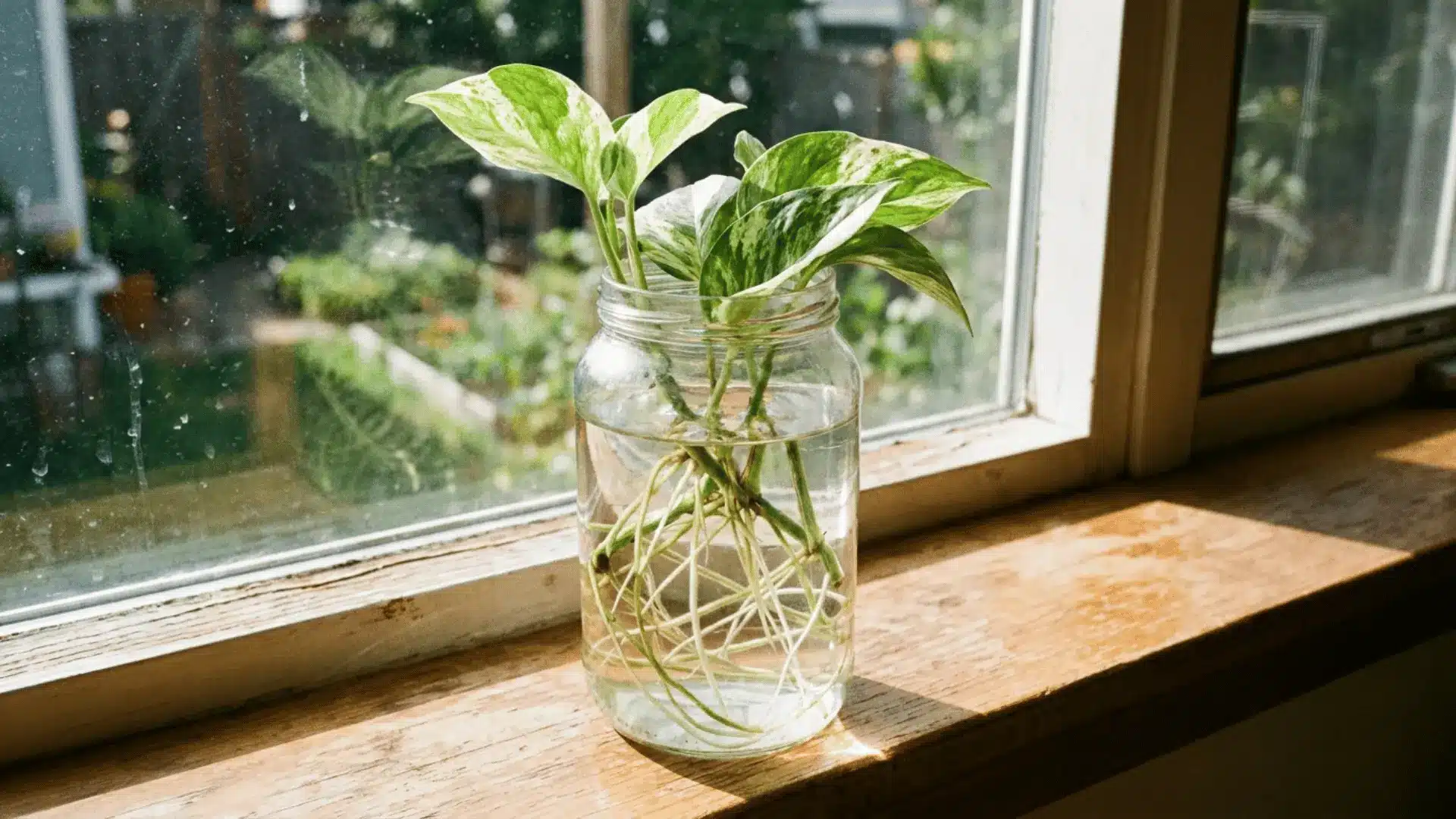
Pothos is one of the easiest plants to start in water. Its raised stem nodes usually produce roots without much difficulty. Cut below a healthy node and remove the lowest leaf.
Keep the remaining leaves above the water. I often recommend pothos first because its nodes are easy to identify. It also tolerates a wider range of indoor light levels.
- Best use: Long-term water growth
- Light: Low to bright indirect light
- Plant part: Vine cutting with one node
- Rooting speed: Fast
- Care point: Trim roots when they fill the container
2. Heartleaf Philodendron
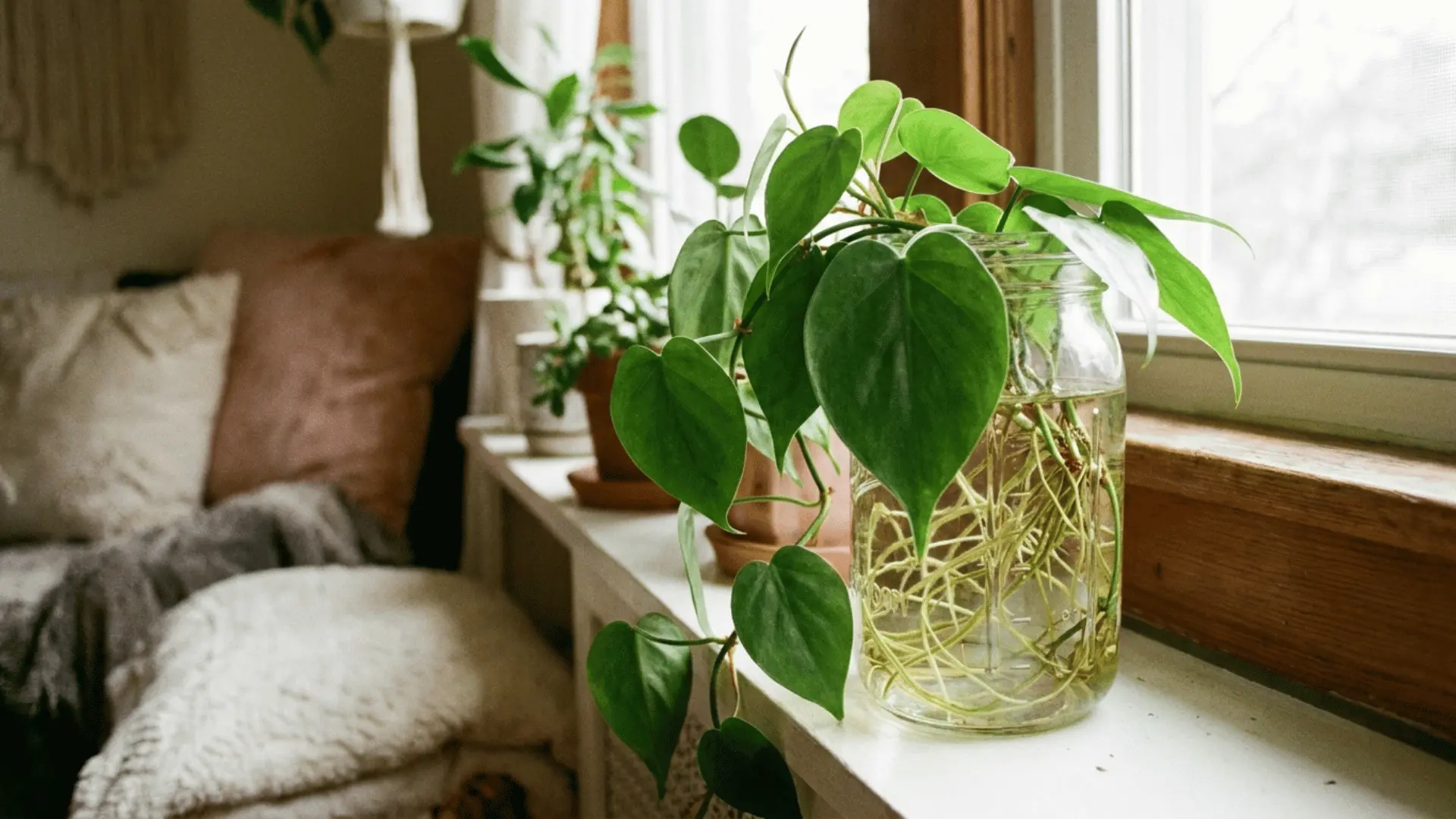
Heartleaf philodendron has trailing stems with clear nodes. These nodes can produce roots when placed in clean water. Choose a cutting with two or three leaves.
Remove the bottom leaf before submerging the exposed node. The plant can remain in water for a long period. Limited light or nutrients may cause smaller leaves.
- Best use: Trailing water display
- Light: Medium to bright indirect light
- Plant part: Stem cutting with a node
- Rooting speed: Fast
- Care point: Pinch long vines to support branching
3. Philodendron Brasil
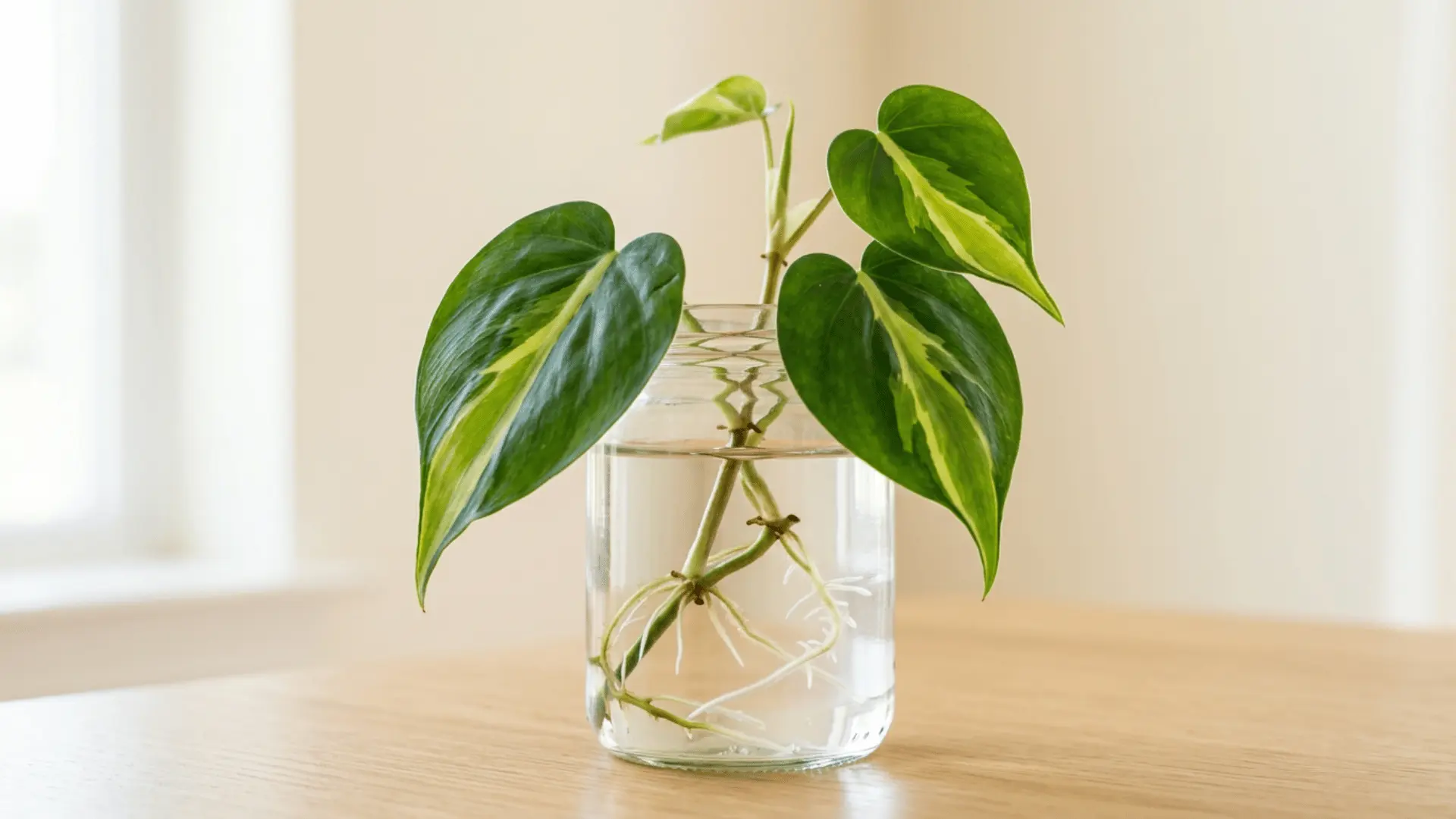
Philodendron Brasil has green leaves with yellow or lime markings. It roots through its nodes like other trailing philodendrons.
Bright indirect light helps preserve its leaf pattern. Very low light may cause new leaves to appear mostly green. Several cuttings can share one jar. However, crowded roots may become difficult to clean and inspect.
- Best use: Variegated trailing display
- Light: Bright indirect light
- Plant part: Stem with one or two nodes
- Rooting speed: Fast
- Care point: Use a wide jar for several cuttings
4. Monstera Deliciosa
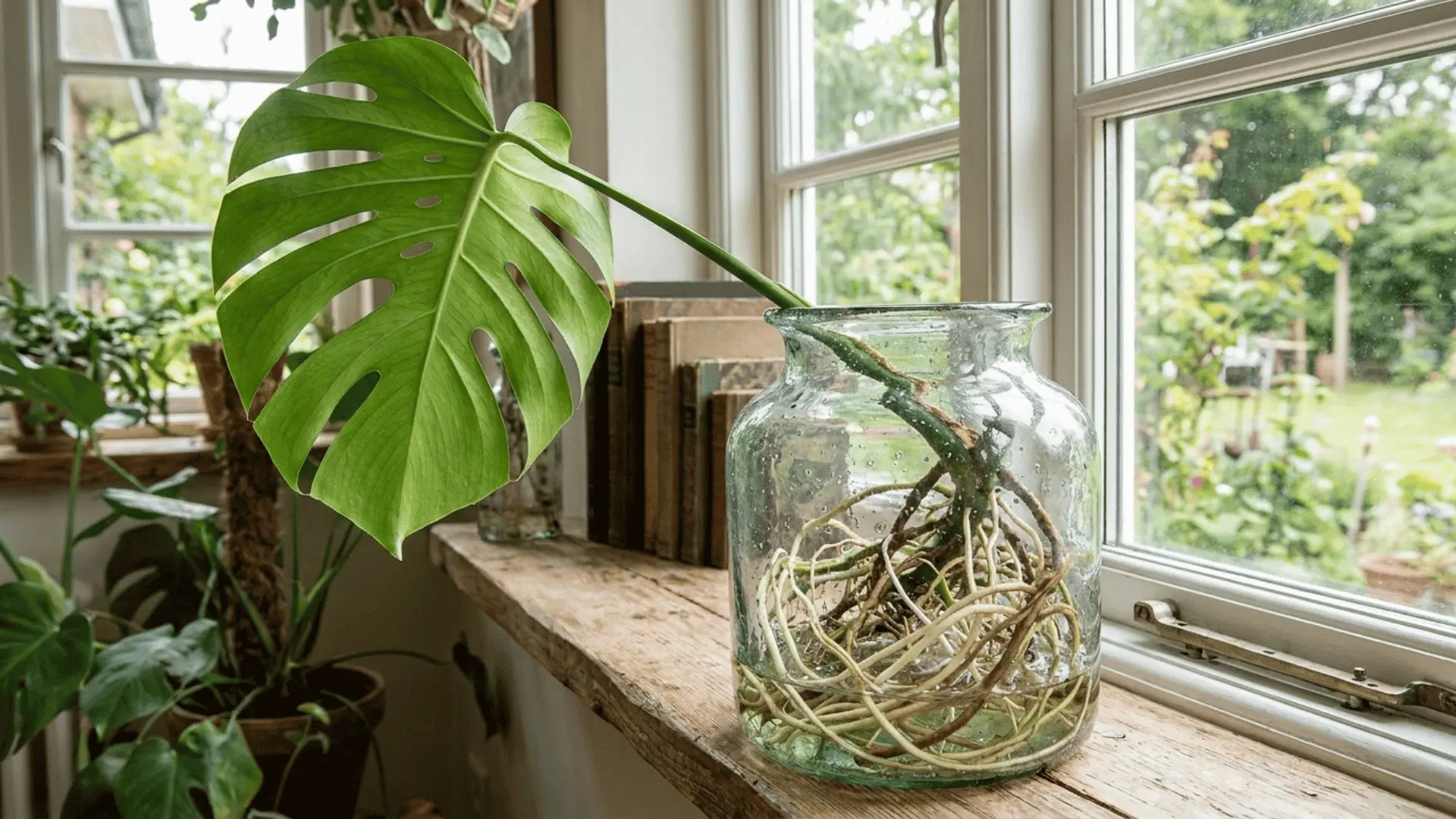
Monstera deliciosa needs a node to produce a complete new plant. A detached leaf cannot create a new growing stem. Use a heavy vase because large leaves can tip a lightweight jar.
An aerial root may also sit underwater. Monstera may remain in water, but it needs more space and support than pothos. New growth may also develop slowly.
- Best use: Large foliage display
- Light: Medium to bright indirect light
- Plant part: Stem cutting with a node
- Rooting speed: Moderate or slow
- Care point: Add support as the cutting becomes heavier
5. Monstera Adansonii
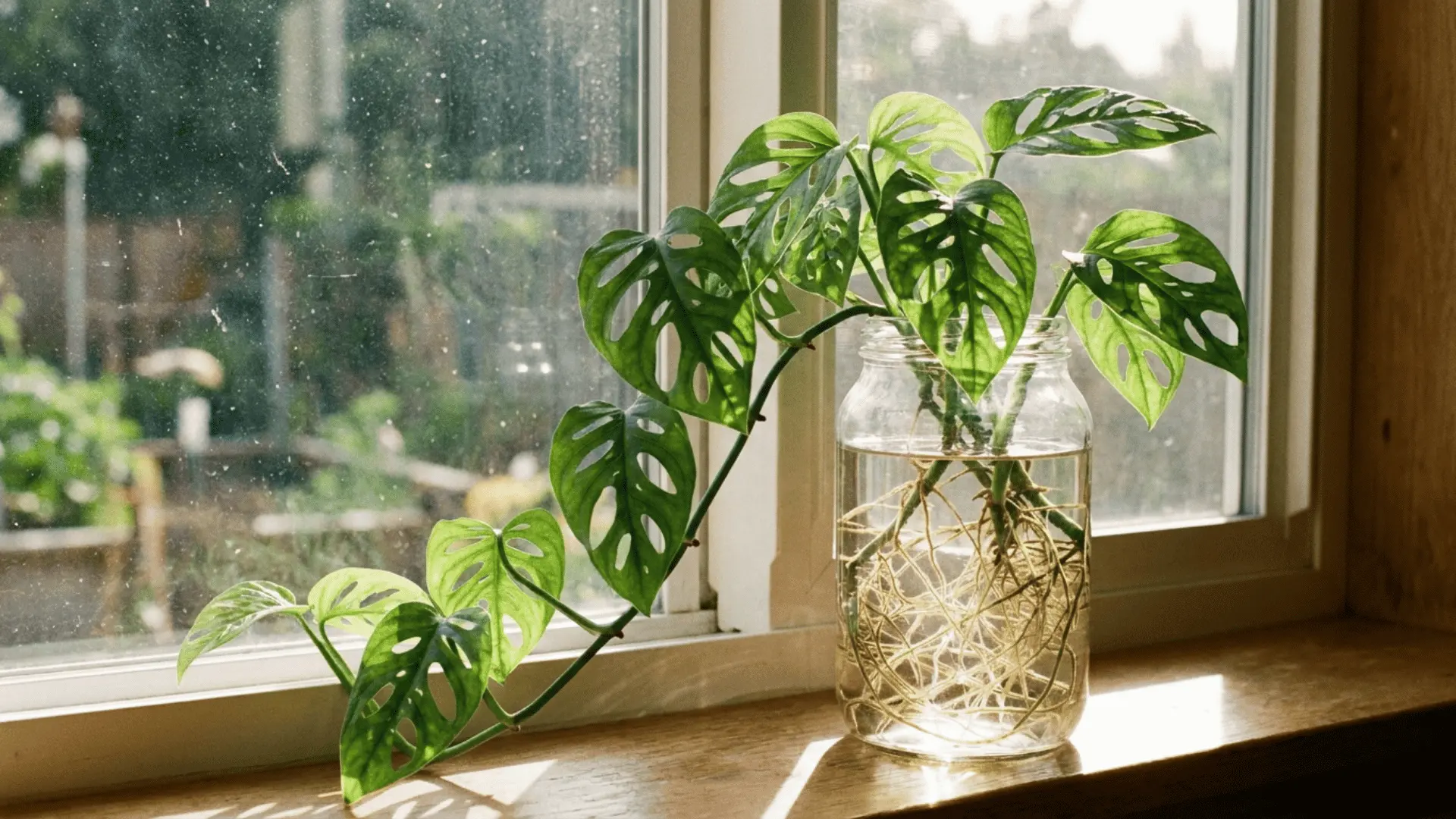
Monstera adansonii has smaller leaves with natural openings. Its vines fit into jars more easily than large Monstera deliciosa cuttings. Take a cutting with at least one healthy node.
Keep every leaf above the surface. The vine can trail from a shelf or climb a small support. For long-term growth, it needs enough light and nutrients.
- Best use: Climbing or trailing display
- Light: Bright indirect light
- Plant part: Vine cutting with one node
- Rooting speed: Moderate
- Care point: Add support when the vine starts climbing
6. Arrowhead Plant
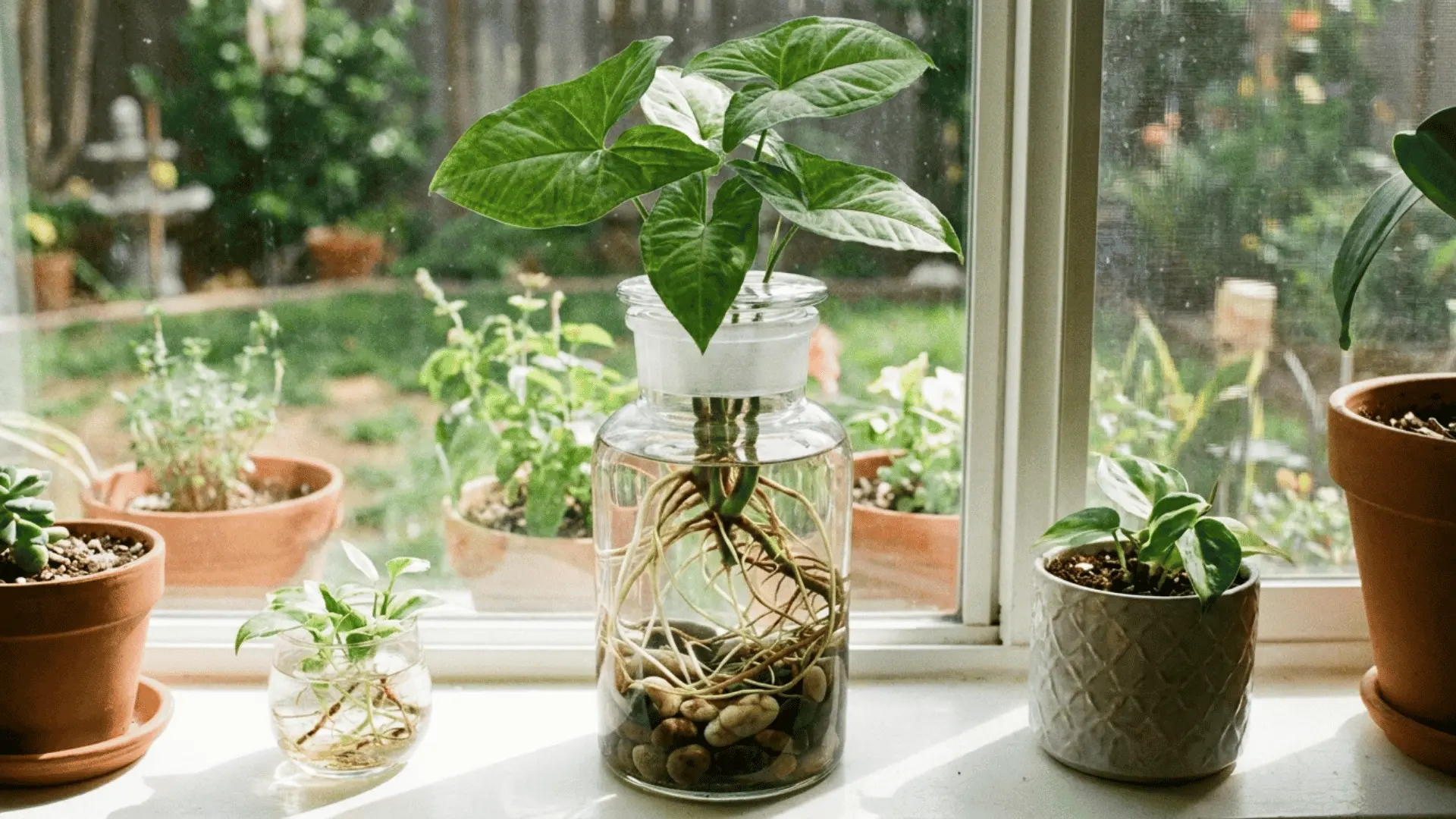
Arrowhead plant, also called Syngonium, forms roots from its stem nodes. Young plants usually have simple arrow-shaped leaves. Take a cutting with a growing tip and one visible node.
A tall container can help support longer stems. I usually trim stretched Syngonium stems above a healthy node. This keeps the plant fuller and creates another usable cutting.
- Best use: Long-term water culture
- Light: Medium to bright indirect light
- Plant part: Stem cutting with one node
- Rooting speed: Fast
- Care point: Prune weak or stretched stems
7. Tradescantia Zebrina
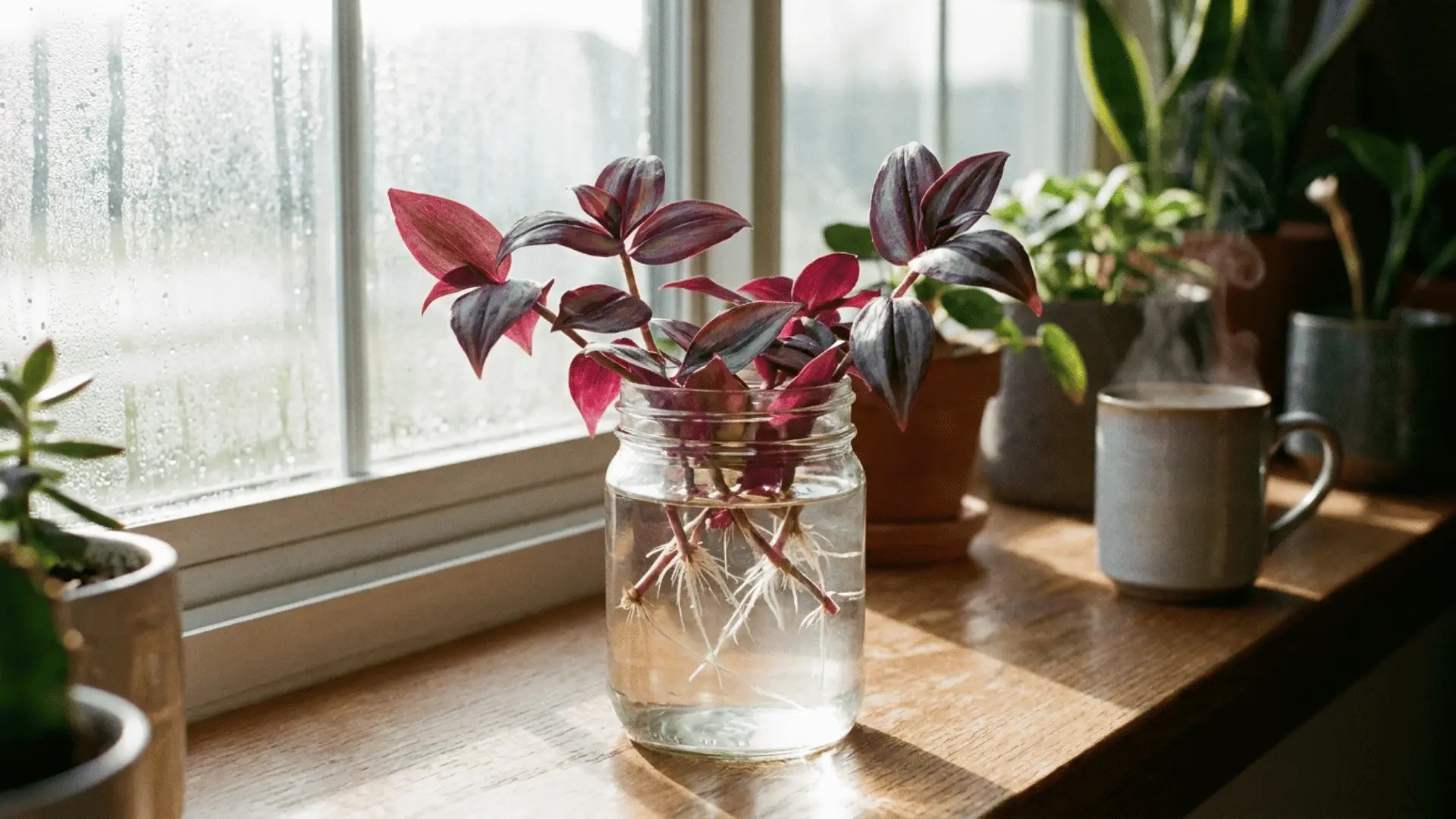
Tradescantia zebrina has purple leaves marked with silver stripes. Short stem sections usually develop roots very quickly. Place several cuttings together for a fuller display.
Bright indirect light helps maintain stronger color. Older stems may lose leaves near the base. Replace thin sections with fresh tip cuttings when needed.
- Best use: Fast trailing display
- Light: Bright indirect light
- Plant part: Short stem with a node
- Rooting speed: Very fast
- Care point: Remove fallen leaves from the water
8. Tradescantia Fluminensis
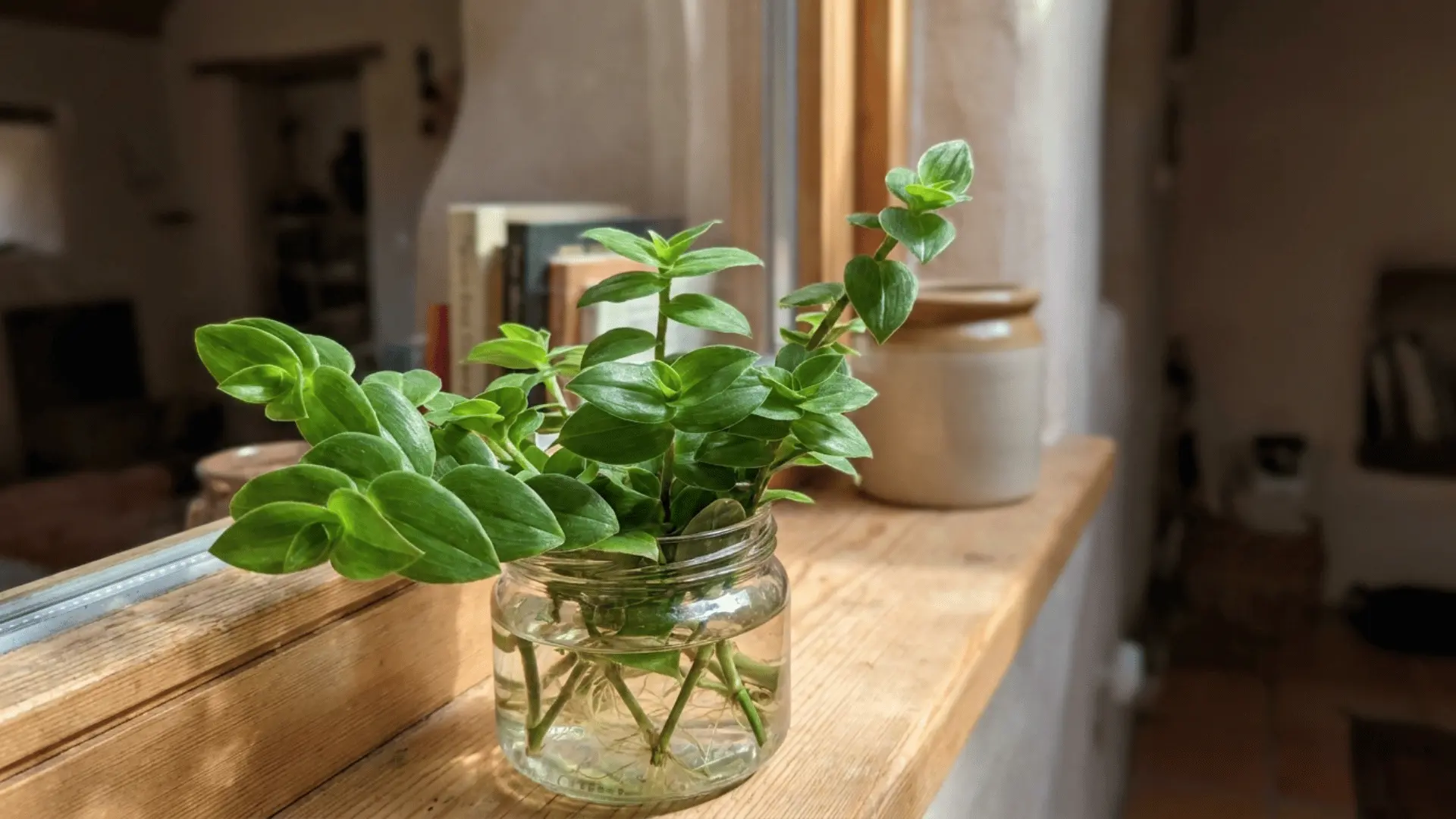
Tradescantia fluminensis has soft green or variegated stems. Even a short piece can root when it includes a healthy node. Bright, filtered light reduces weak, stretched growth.
Regular trimming also keeps the plant compact. This plant may spread outdoors in warm regions. Place unwanted pieces in household waste instead of gardens or waterways.
- Best use: Quick indoor propagation
- Light: Bright indirect light
- Plant part: Stem section with a node
- Rooting speed: Very fast
- Care point: Dispose of unwanted cuttings responsibly
9. Coleus
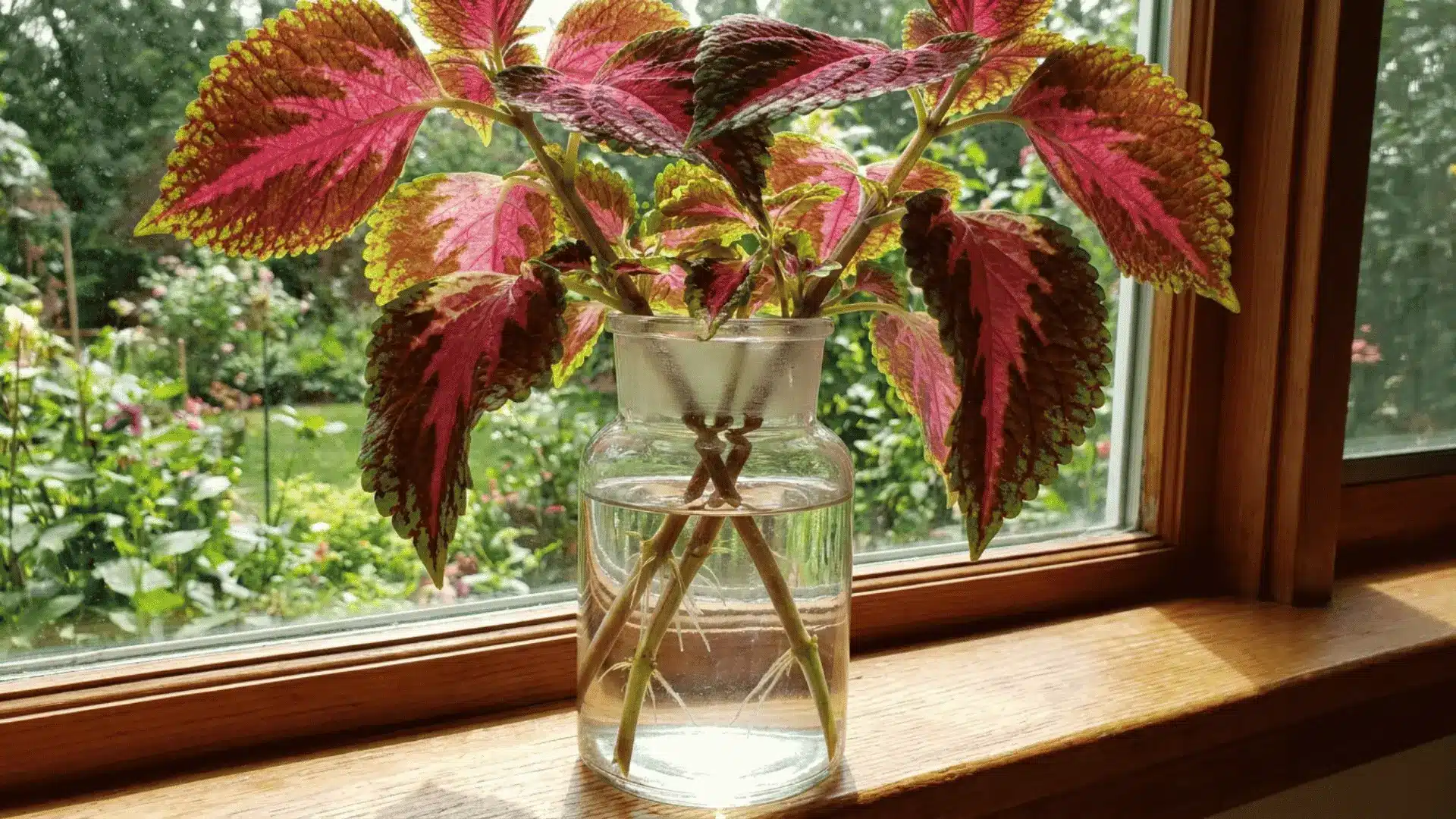
Coleus produces colorful leaves in shades of green, red, pink, yellow, orange, and purple. Its soft stems usually root easily. Cut below a node and remove the lowest leaves.
Pinch the top after roots form. Coleus can remain in water for several months. It often grows more strongly in potting mix or a managed hydroponic setup.
- Best use: Colorful seasonal display
- Light: Bright indirect light
- Plant part: Soft stem with a node
- Rooting speed: Fast
- Care point: Remove flower spikes to support leaf growth
10. Spider Plant
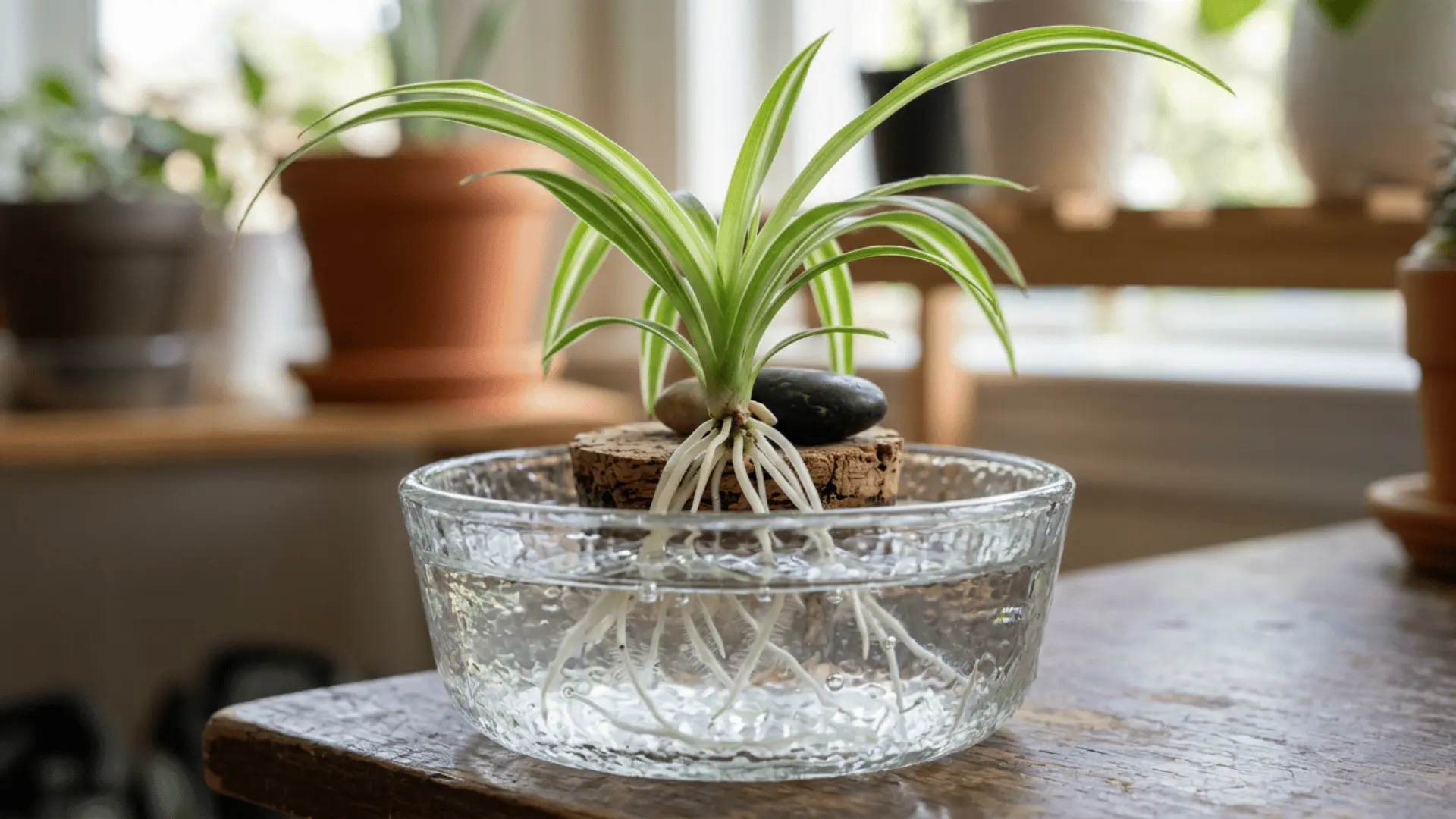
Spider plants produce small plantlets on long hanging stems. These plantlets often show tiny root bumps before touching water. Rest only the plantlet base in shallow water.
Keep the leaves dry and above the container. I prefer rooting a plantlet instead of washing soil from a mature spider plant. Young roots usually adapt more easily.
- Best use: Rooting young plantlets
- Light: Bright indirect light
- Plant part: Plantlet with root bumps
- Rooting speed: Fast
- Care point: Submerge only the small base
11. Lucky Bamboo
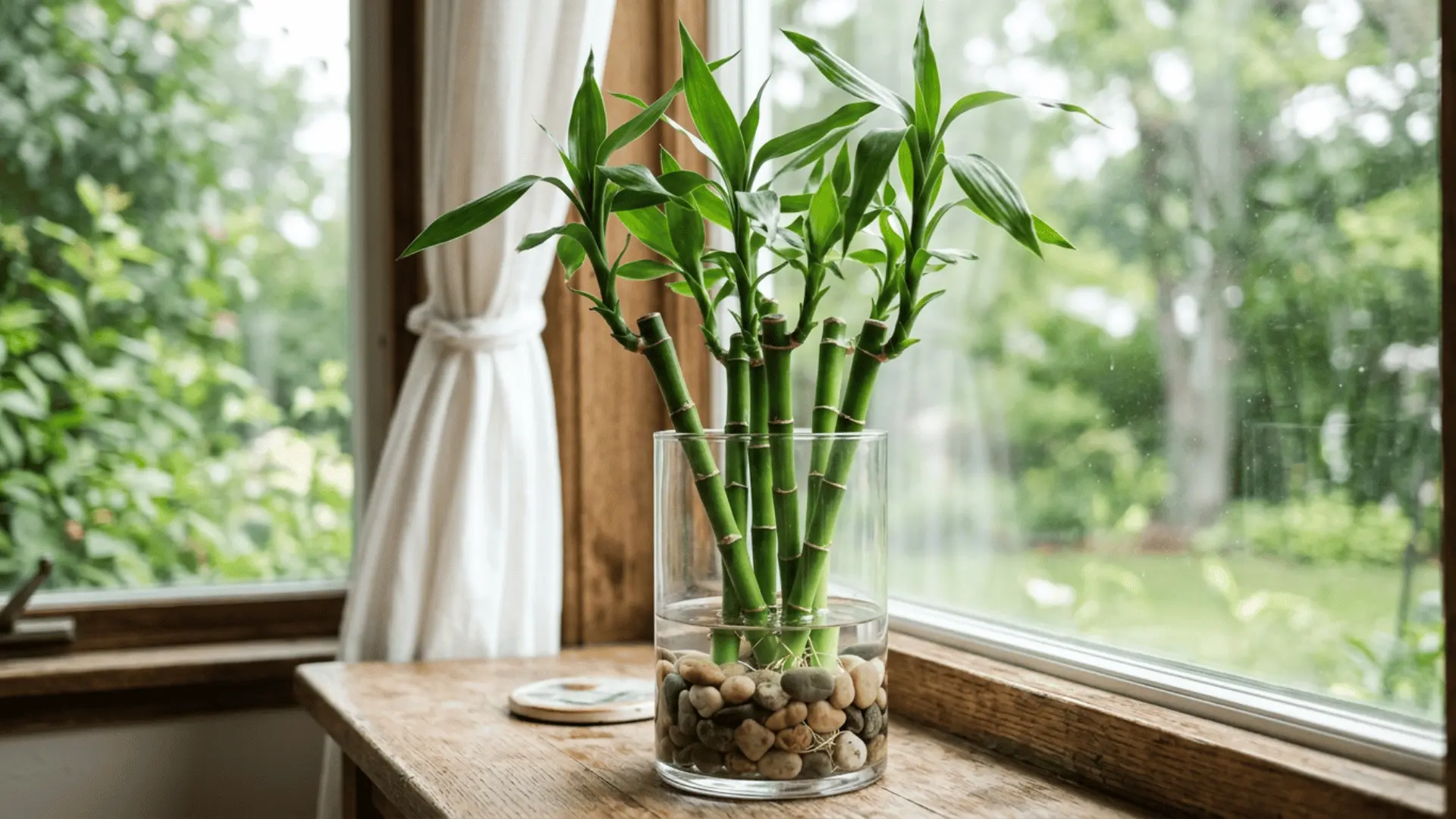
Lucky bamboo is a Dracaena species rather than true bamboo. It is commonly grown with its roots in water and pebbles. Cover the roots and a small section of the lower stem.
Do not submerge most of the cane. Strong direct sun may scorch the leaves and heat the water. Lucky bamboo can remain in water for years.
- Best use: Permanent water display
- Light: Low to medium indirect light
- Plant part: Rooted cane
- Rooting speed: Moderate
- Care point: Wash supporting pebbles when slime appears
12. Chinese Evergreen
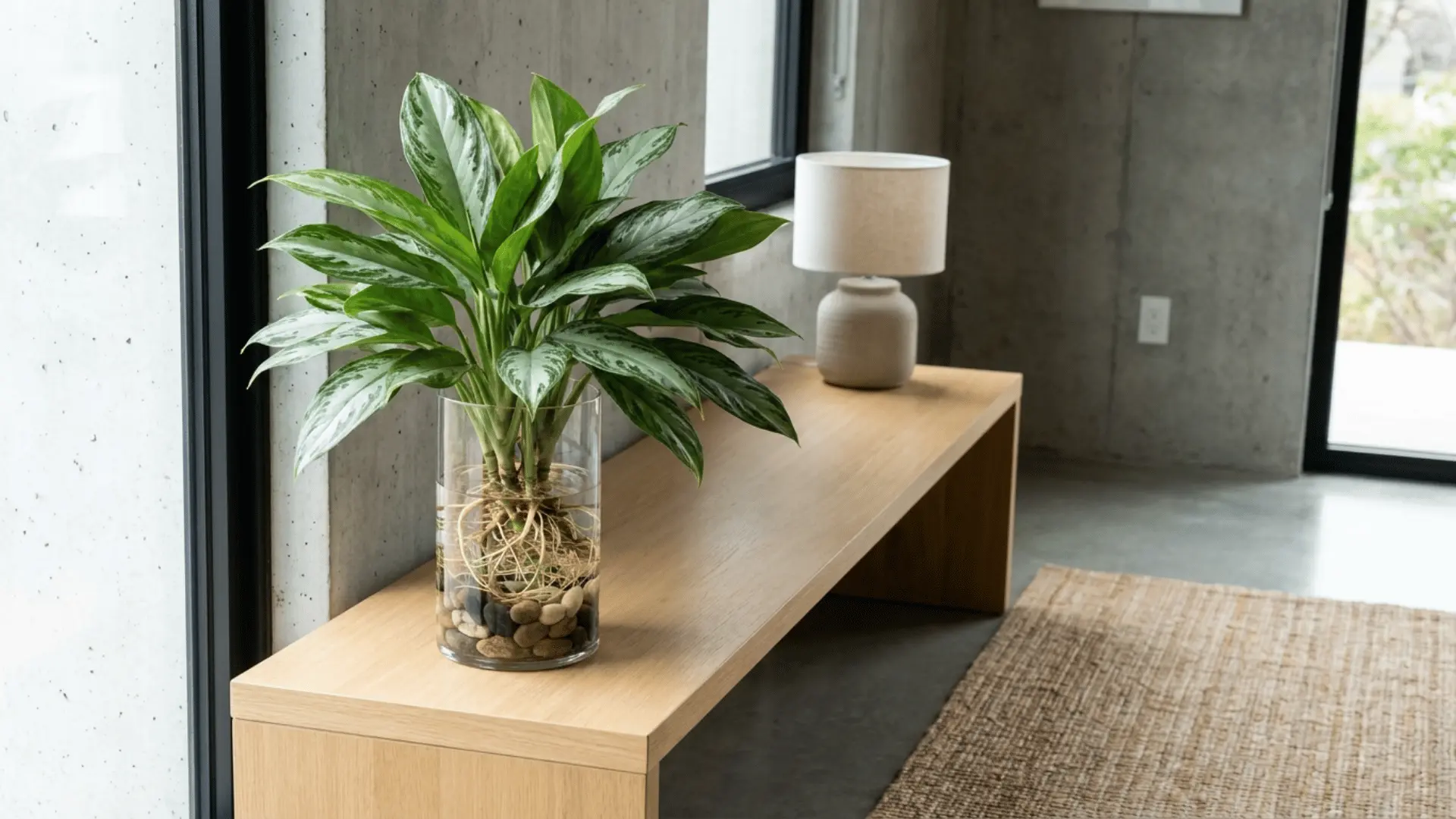
Chinese evergreen can adapt to water after its soil is removed. Start with a healthy plant and undamaged roots. Rinse the roots gently and remove soft sections.
Keep the crown and stems above the surface. Some older leaves may yellow during the change. Firm new roots show that the plant is adjusting.
- Best use: Long-term water culture
- Light: Low to medium indirect light
- Plant part: Established plant with cleaned roots
- Rooting speed: Slow adjustment
- Care point: Check hidden roots for decay
13. Peace Lily
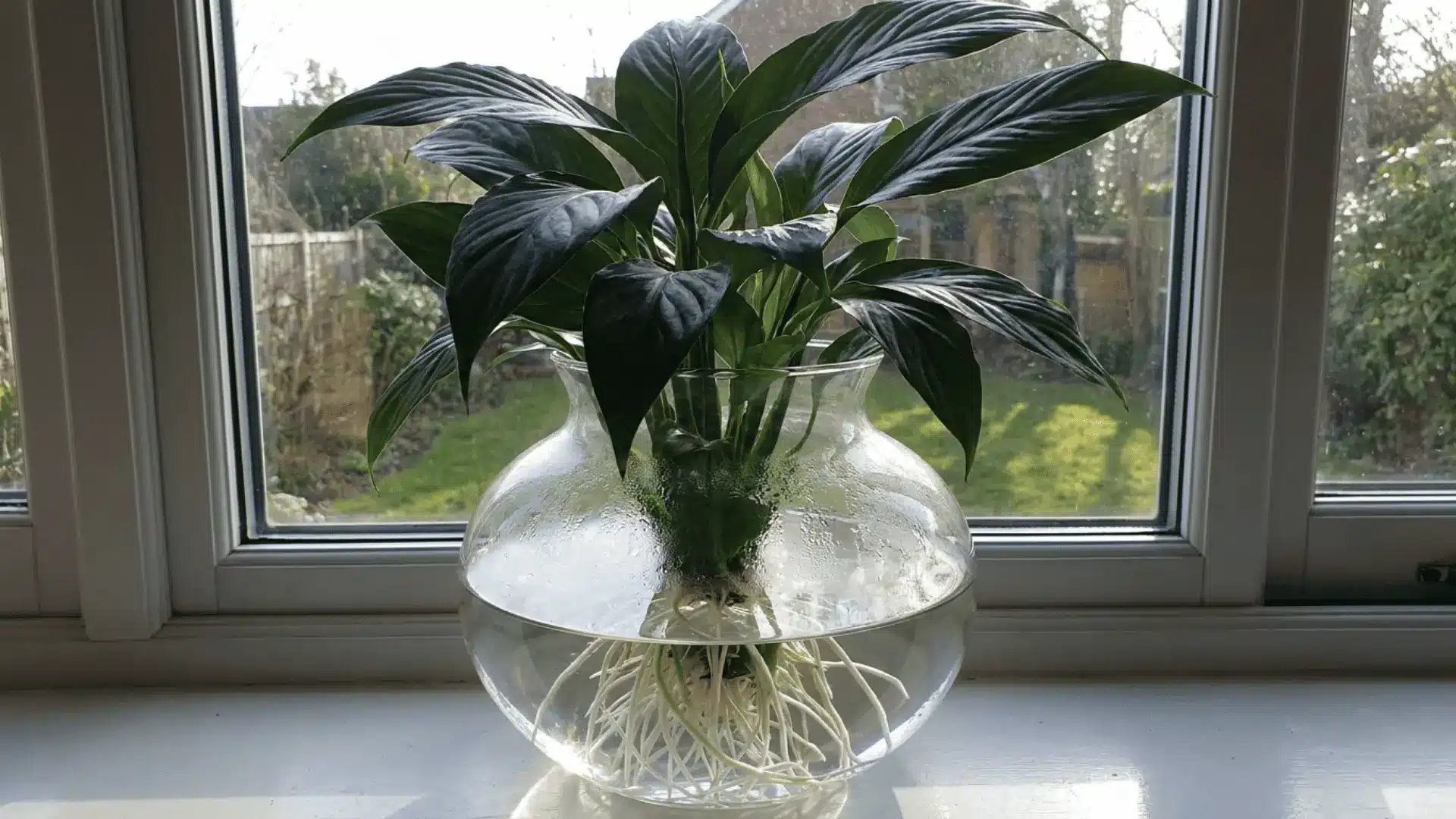
Peace lily can grow with cleaned roots placed in water. Its crown must remain above the surface. Use clean stones or a narrow support to hold the plant upright.
Medium indirect light supports steady foliage growth. Flowering may decrease when light or nutrients remain limited. Smaller divisions often adjust better than large mature plants.
- Best use: Rooted foliage display
- Light: Medium indirect light
- Plant part: Division with healthy roots
- Rooting speed: Moderate adjustment
- Care point: Never submerge the crown
14. Dracaena Marginata
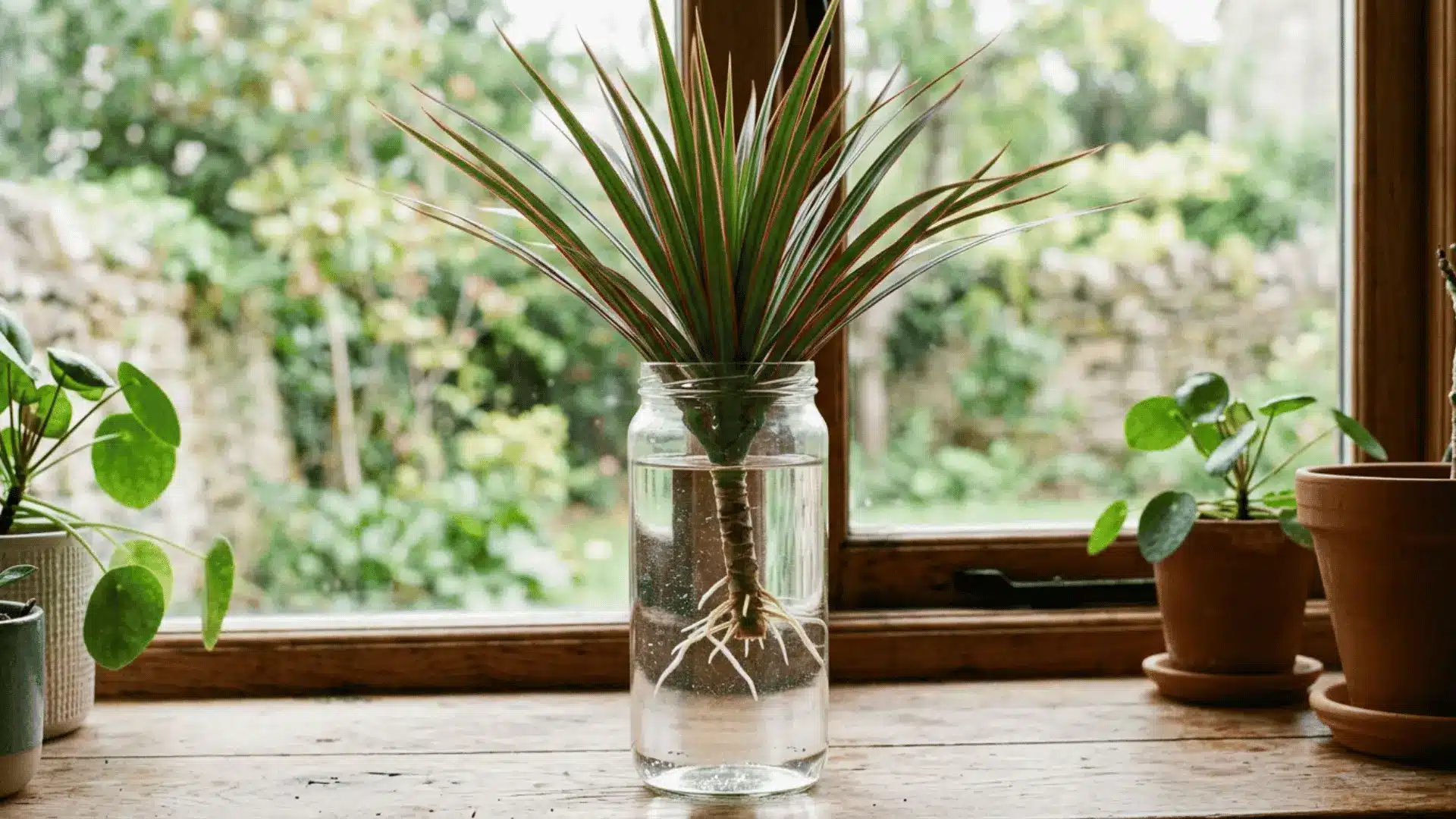
Dracaena marginata can root from a leafy top or a bare cane section. Each piece needs firm and healthy stem tissue. Place only the lower stem in water. Keep the leafy crown dry.
The cutting may become top-heavy as roots develop. A heavy vase reduces spills and stem damage.
- Best use: Tall indoor display
- Light: Bright filtered light
- Plant part: Top cutting or cane section
- Rooting speed: Moderate
- Care point: Rotate the container for even growth
15. Corn Plant
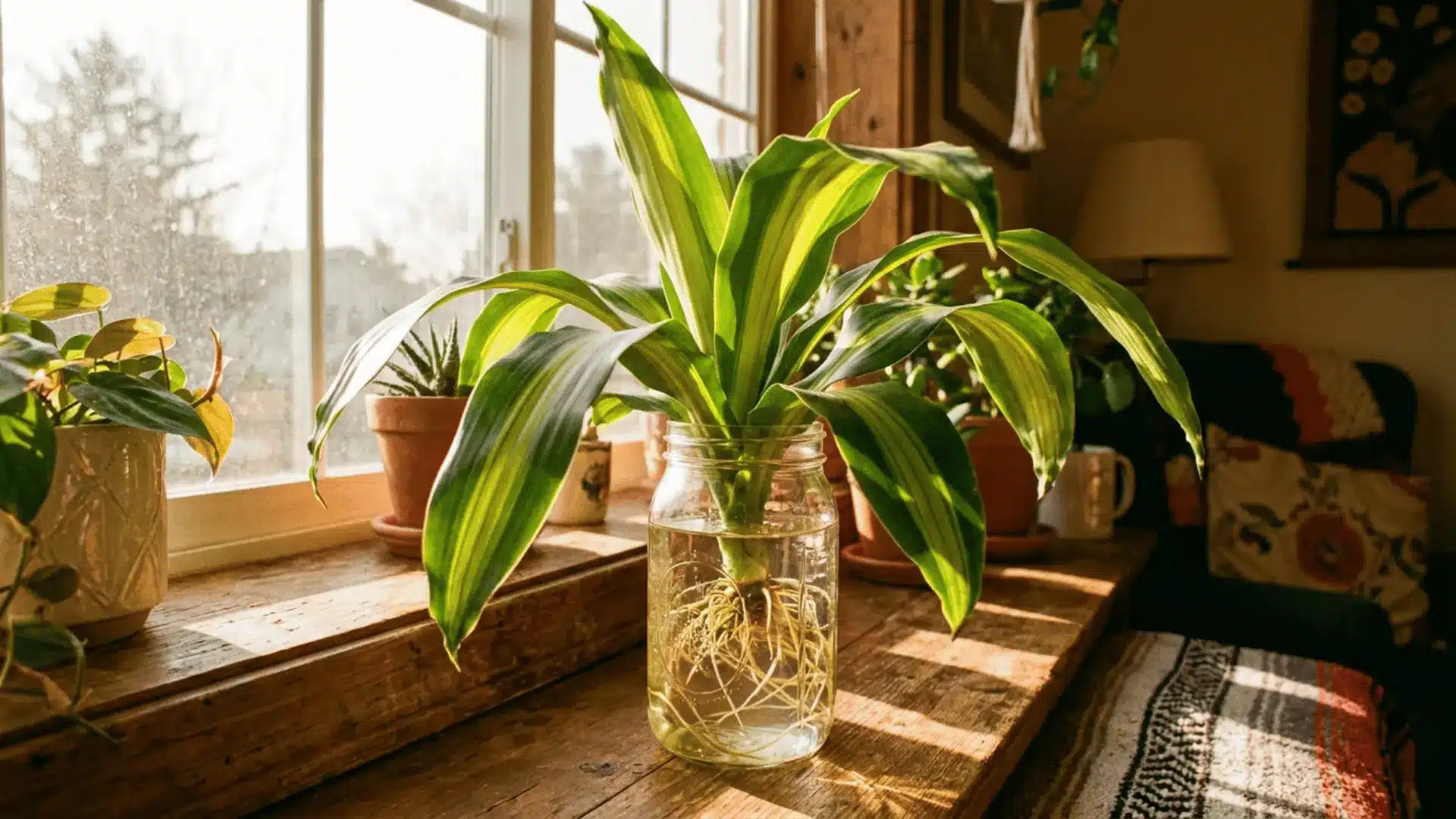
Corn plant can root from a leafy top cutting or a thick cane section. Mark the original growing direction before cutting. Place the lower end in water.
A reversed cane section may struggle to grow correctly. Roots may appear slowly. Brown leaf tips can develop when minerals or fertilizer salts build up.
- Best use: Cane propagation
- Light: Medium indirect light
- Plant part: Top cutting or upright cane
- Rooting speed: Moderate or slow
- Care point: Keep the cane facing its original direction
16. Dieffenbachia
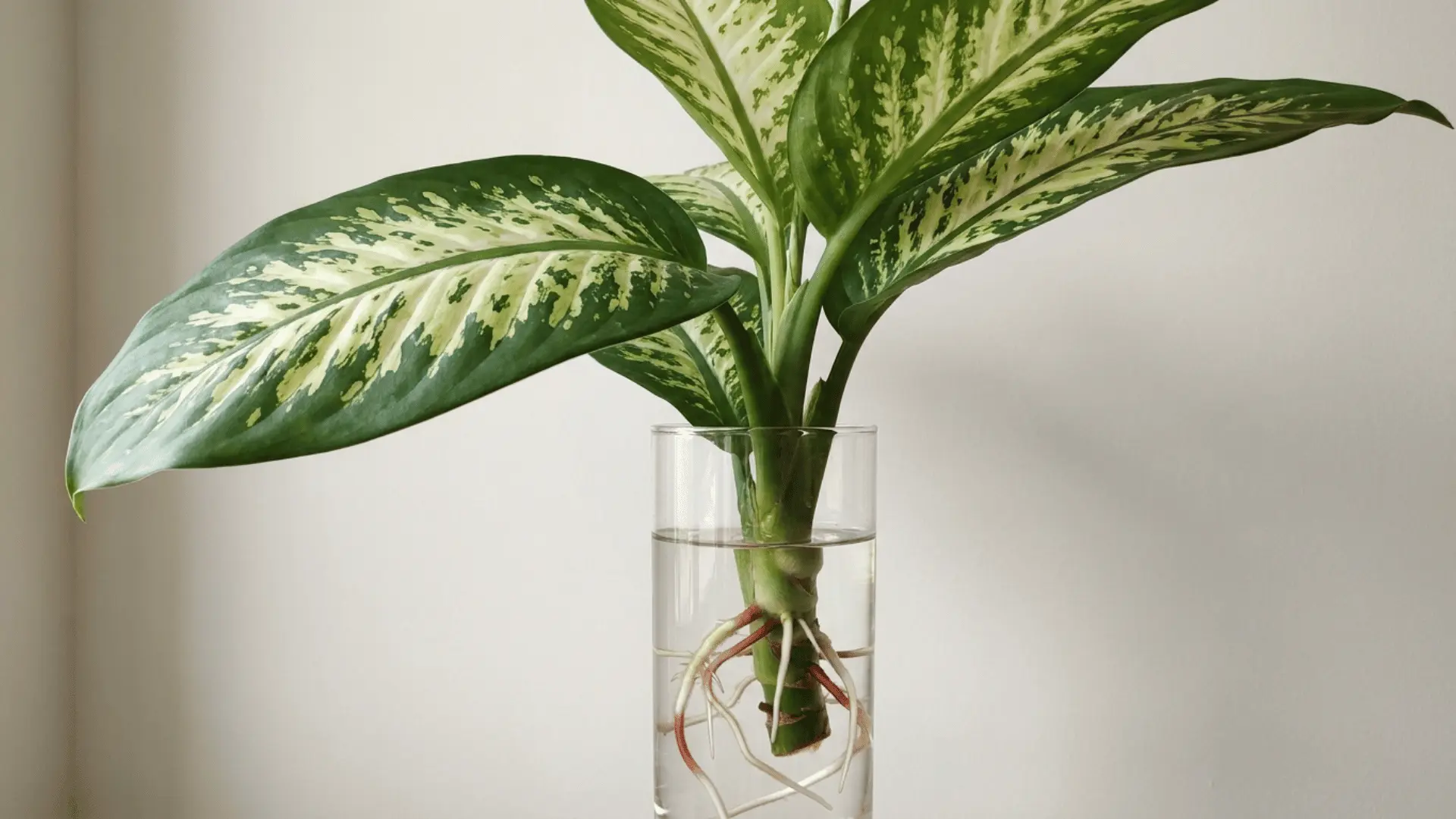
Dieffenbachia can grow roots from top cuttings or cane sections. Every piece needs at least one healthy node. Wear gloves because the sap may irritate skin. Keep the plant away from children and chewing pets.
Warmth and medium indirect light support rooting. Remove any section that becomes black, soft, or foul-smelling.
- Best use: Stem or cane propagation
- Light: Medium indirect light
- Plant part: Stem section with one node
- Rooting speed: Moderate
- Care point: Clean cutting tools after use
17. Umbrella Plant
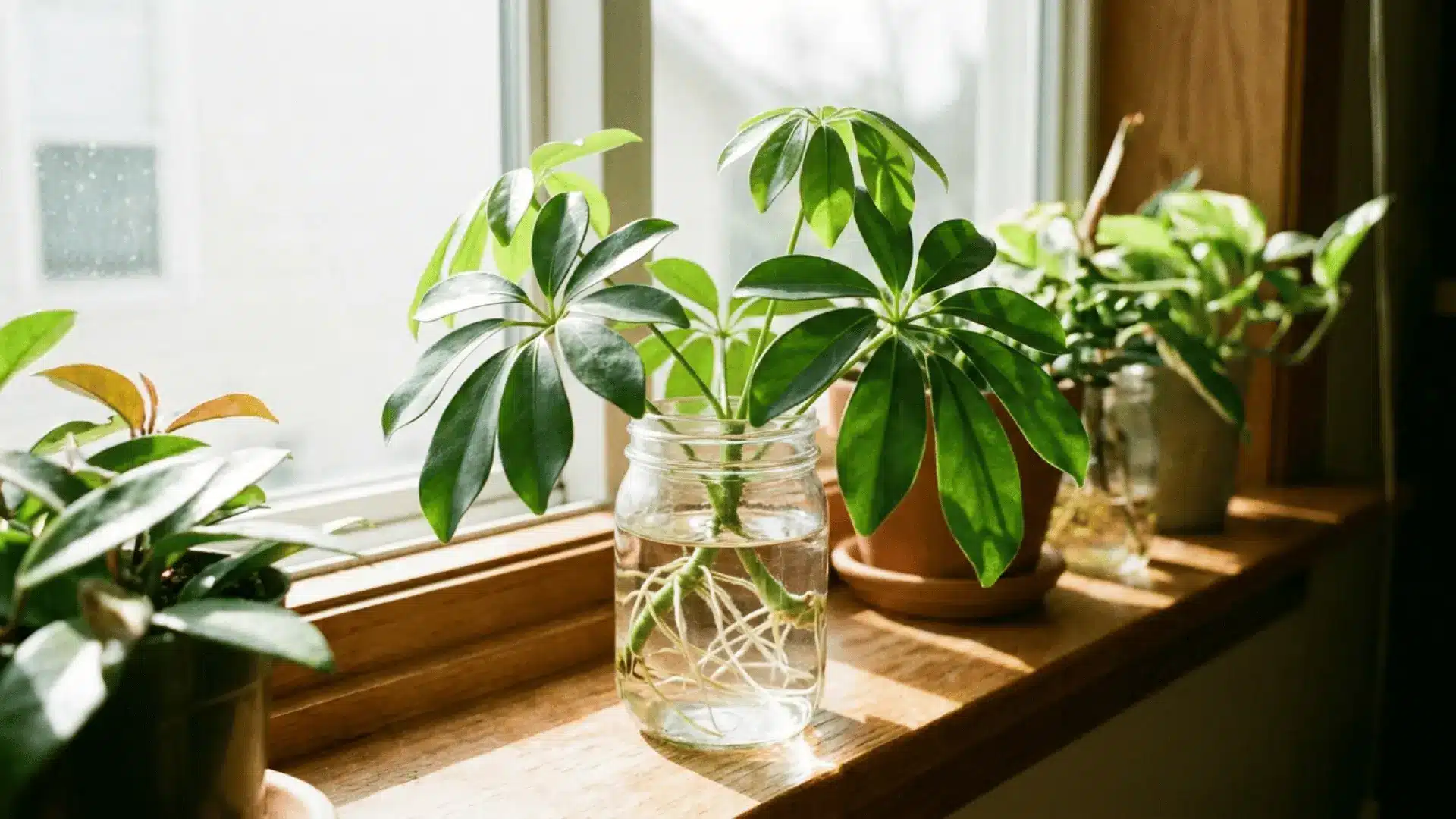
Umbrella plant, or Schefflera, may root from a young stem cutting. Select firm growth without yellow leaves or visible pests.
Remove the lowest leaf and place its node underwater. Warmth and bright indirect light support rooting. Schefflera usually roots more slowly than soft trailing plants. It often grows better after moving into potting mix.
- Best use: Temporary propagation
- Light: Bright indirect light
- Plant part: Young stem with a node
- Rooting speed: Slow
- Care point: Avoid moving the cutting often
18. English Ivy
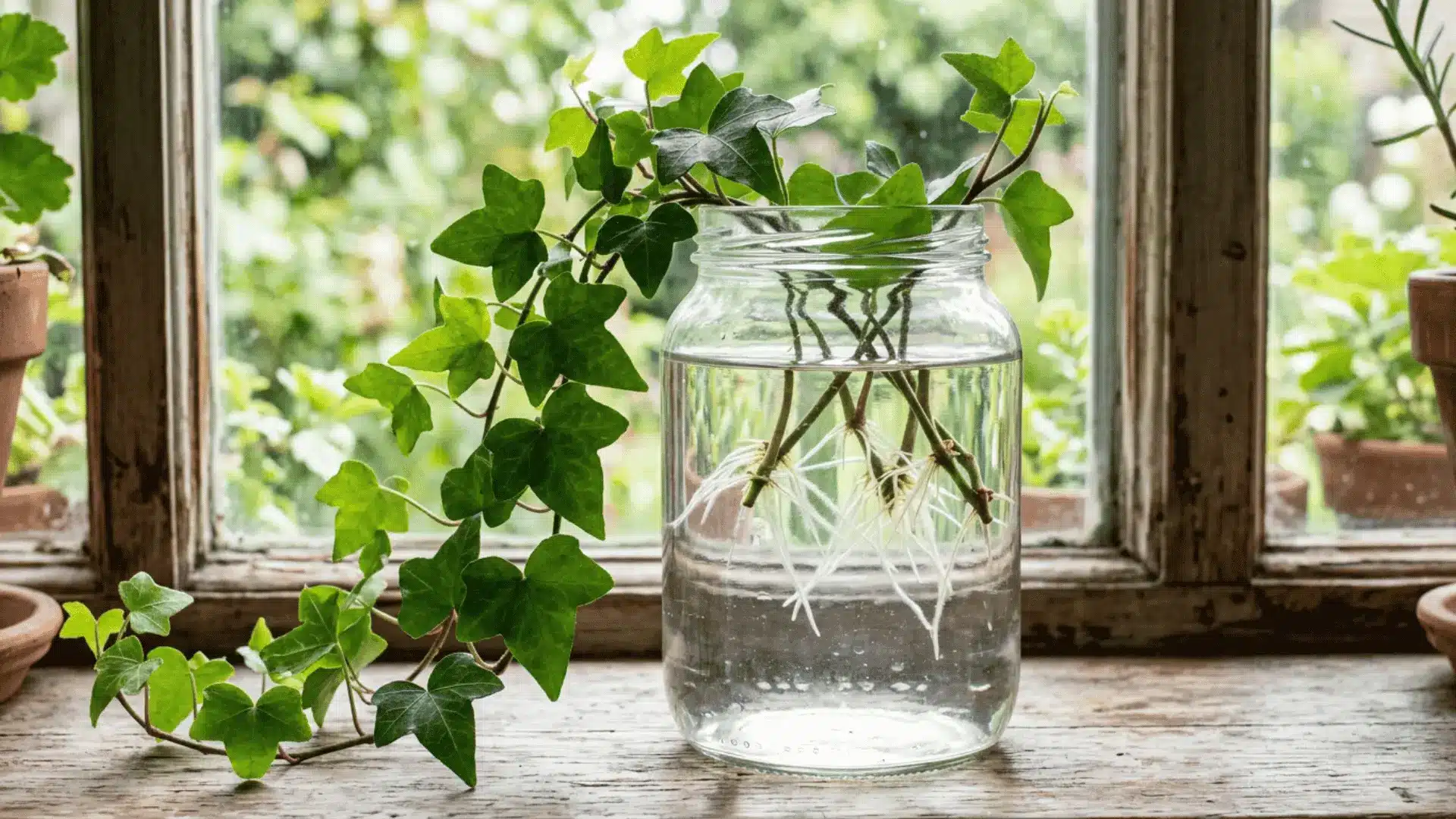
English ivy roots from vine sections containing several healthy nodes. Remove the lowest leaves before placing the nodes underwater.
Bright indirect light supports shorter and stronger growth. Check the leaf undersides for mites. English ivy can stay in water for some time. It often performs better after transfer into an airy growing medium.
- Best use: Vine propagation
- Light: Bright indirect light
- Plant part: Vine cutting with several nodes
- Rooting speed: Moderate
- Care point: Keep outdoor cuttings away from natural areas
19. Swedish Ivy
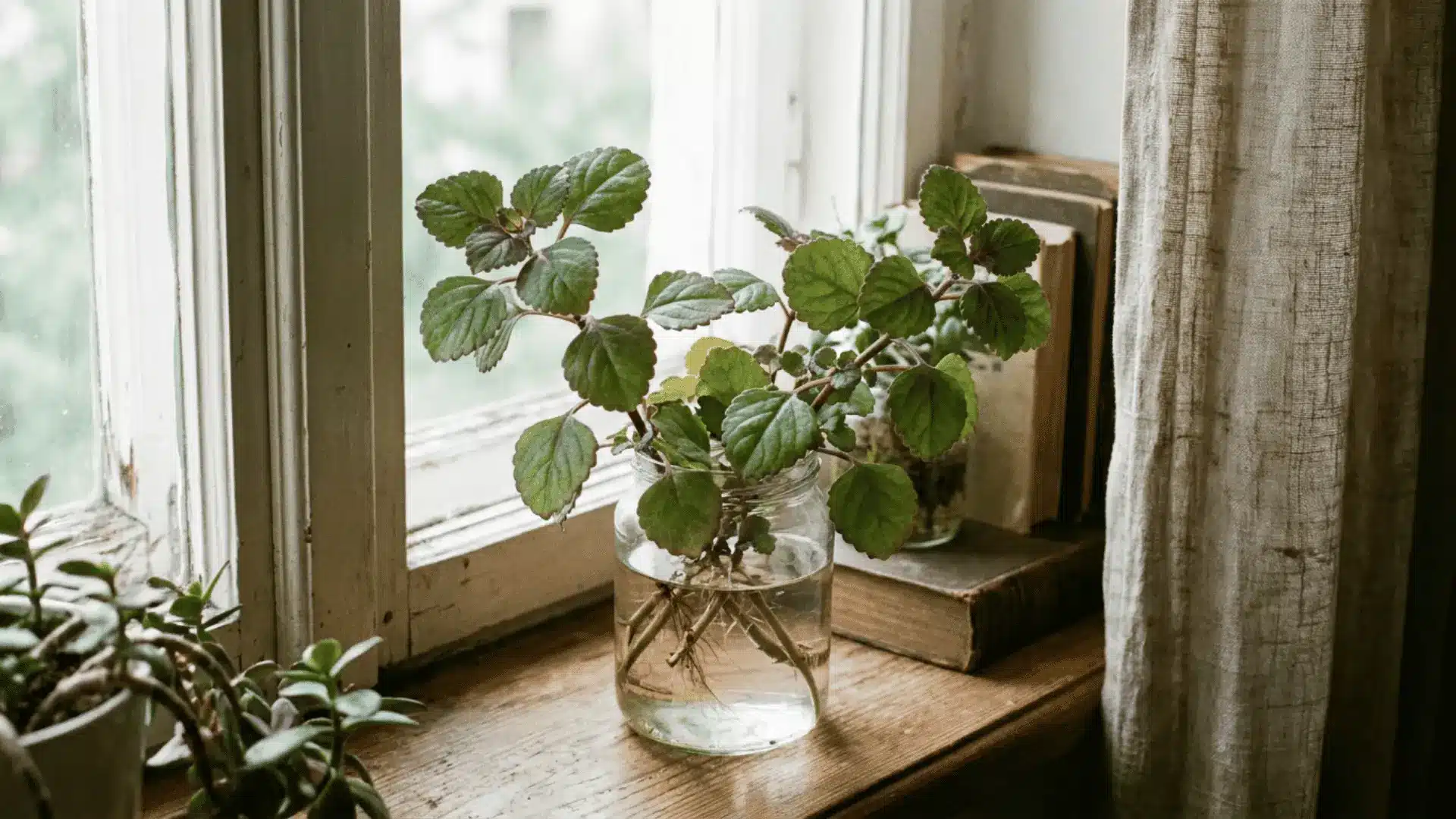
Swedish ivy has soft stems that root easily. Take fresh growth from a healthy trailing section. Several cuttings can share one container. This creates a fuller display faster than one long cutting.
Pinch the growing tips to support branching. Replace older stems after they become bare near the base.
- Best use: Full trailing arrangement
- Light: Bright indirect light
- Plant part: Fresh tip cutting
- Rooting speed: Fast
- Care point: Group several cuttings together
20. Wax Begonia
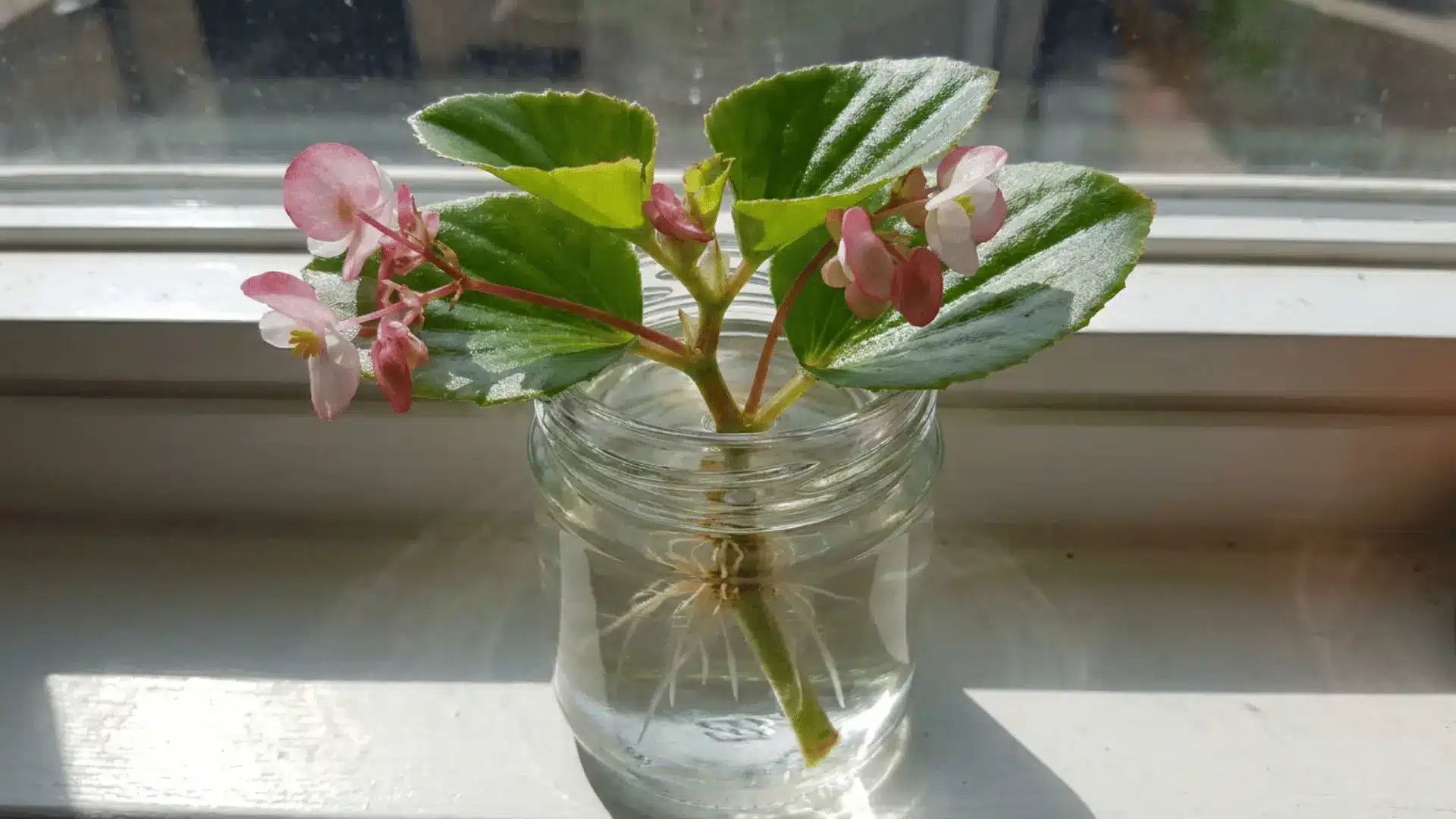
Wax begonia can root from a healthy stem cutting. Choose a non-flowering section with firm leaves. Remove flowers and lower leaves before placing the node underwater. Keep the submerged stem section short.
Wax begonia is usually better for temporary propagation. Move it into moist potting mix after firm roots develop.
- Best use: Temporary water rooting
- Light: Bright indirect light
- Plant part: Non-flowering stem cutting
- Rooting speed: Moderate
- Care point: Remove flowers before propagation
21. Rex Begonia
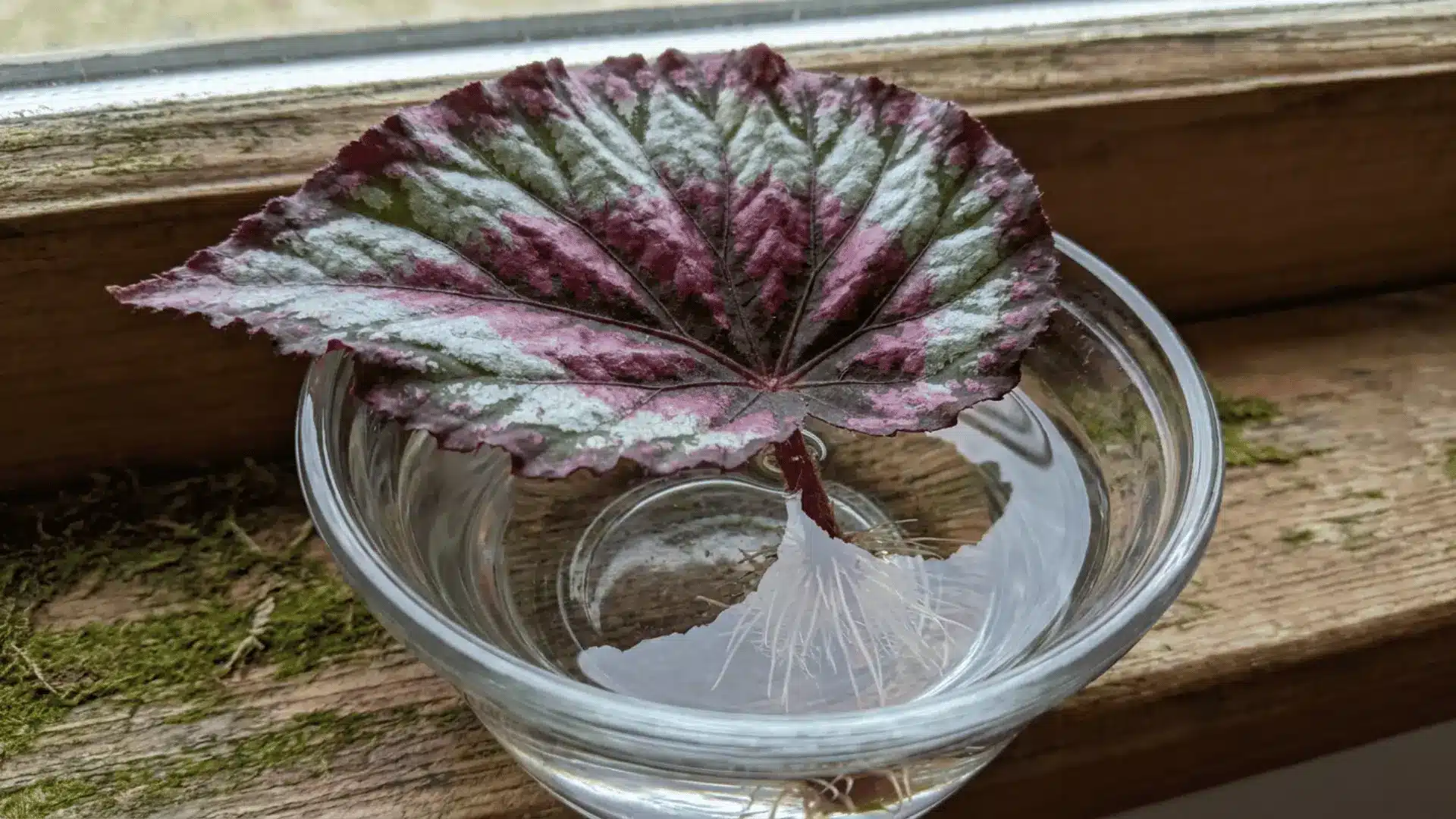
Rex begonia may form roots from a healthy leaf and petiole. Some varieties also provide suitable short stem sections.
Use a narrow jar to hold the petiole. Keep the leaf blade dry. Warmth and filtered light support root development. Rex begonia is usually better suited to propagation than permanent water culture.
- Best use: Leaf propagation
- Light: Bright filtered light
- Plant part: Leaf with a petiole
- Rooting speed: Slow or moderate
- Care point: Keep water away from the leaf surface
22. Polka Dot Plant
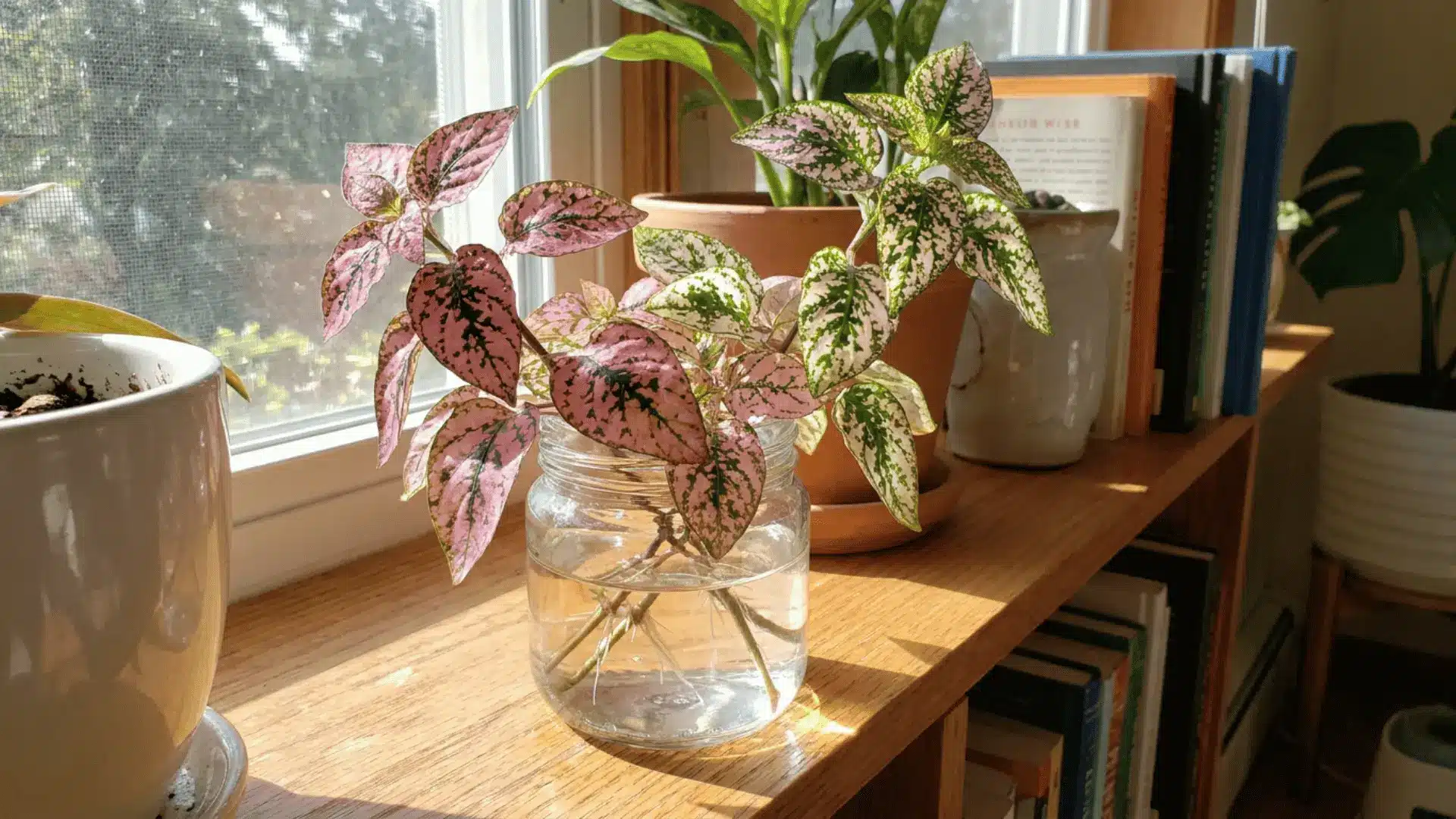
Polka dot plant has soft stems and spotted leaves. Cut below a node and remove the lowest leaf pair. Bright indirect light supports pink, red, or white markings. Pinching the top encourages side branches.
Older stems often become tall and bare. Starting new tip cuttings usually gives a better result.
- Best use: Colorful short-term display
- Light: Bright indirect light
- Plant part: Soft stem with a node
- Rooting speed: Fast
- Care point: Replace stretched stems regularly
23. Nerve Plant
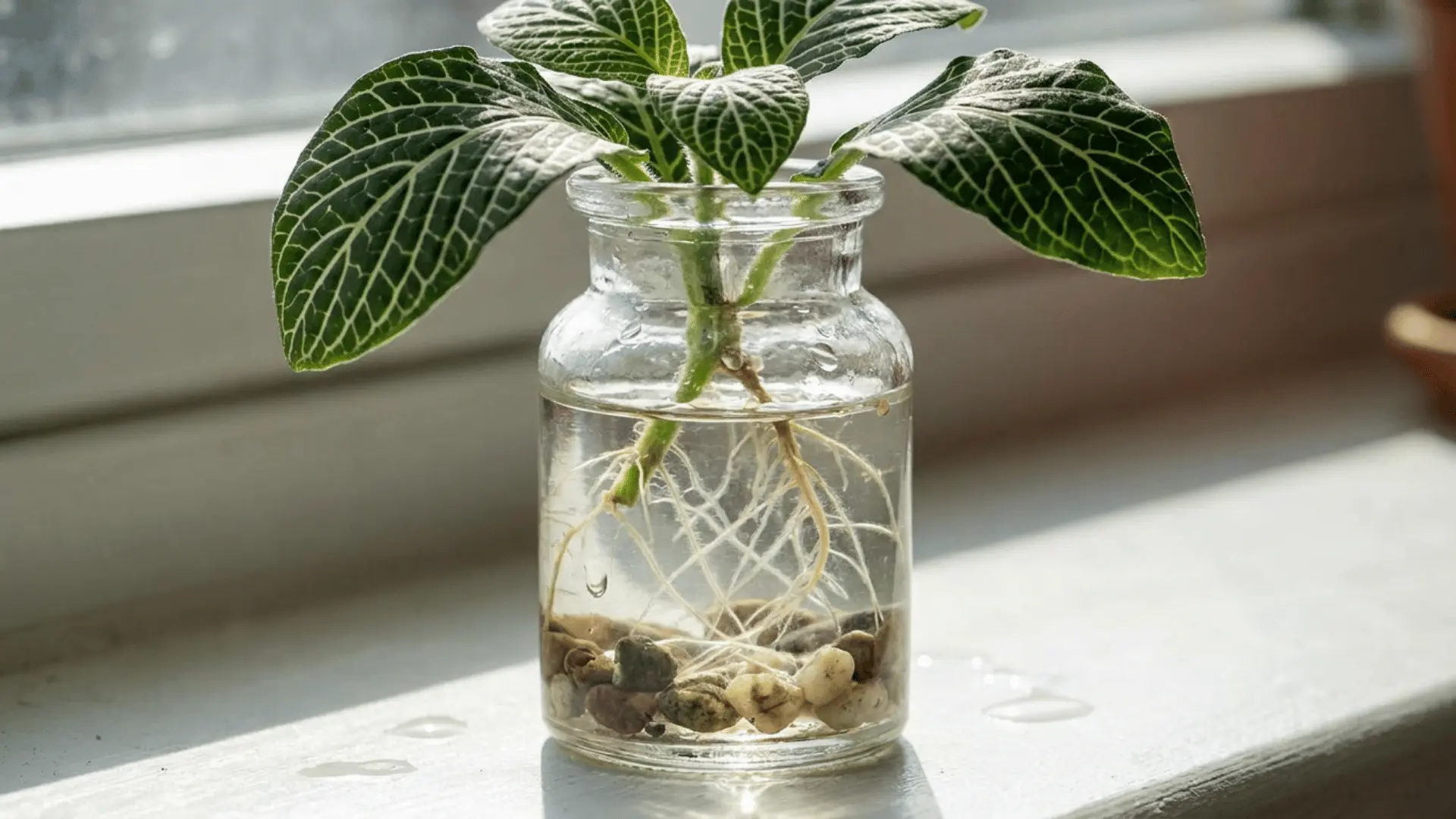
Nerve plant, also called Fittonia, can root from short stem cuttings. Select a section with several healthy leaves. Place the cutting in water soon after trimming. Its thin leaves may wilt quickly when left dry.
Warmth and filtered light support rooting. Too much submerged stem may soften and decay.
- Best use: Temporary propagation
- Light: Bright filtered light
- Plant part: Short stem with one node
- Rooting speed: Moderate
- Care point: Protect the cutting from cold air
24. Aluminum Plant
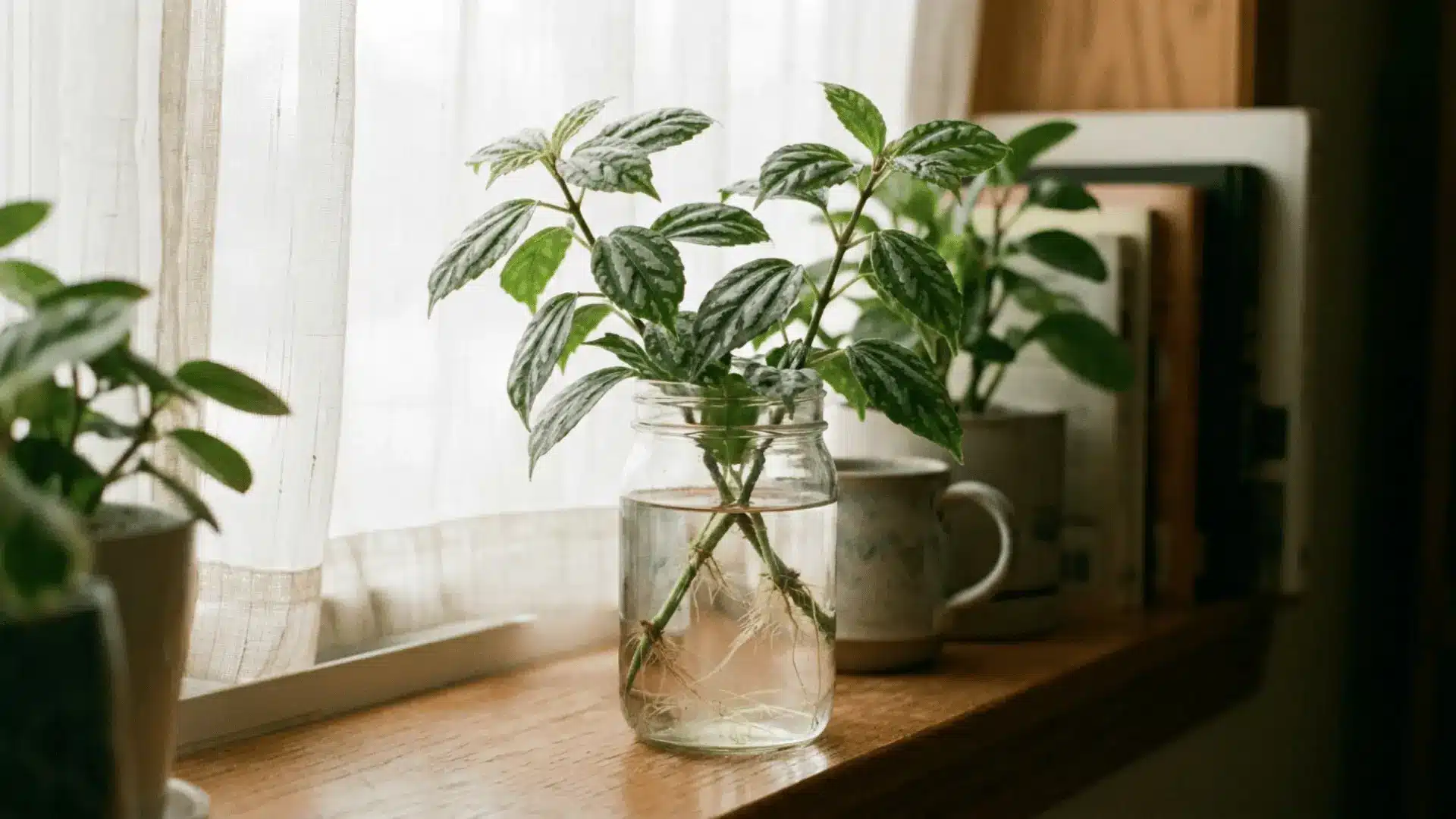
Aluminum plant has green leaves marked with silver patches. Its soft stem tips usually root under warm indoor conditions.
Cut beneath a node and remove the bottom leaves. Bright indirect light helps preserve the markings. Pinch new growth after rooting. Established plants may perform better after moving into an airy growing medium.
- Best use: Foliage propagation
- Light: Bright indirect light
- Plant part: Soft tip cutting
- Rooting speed: Fast
- Care point: Pinch stems after roots develop
25. Baby Rubber Plant
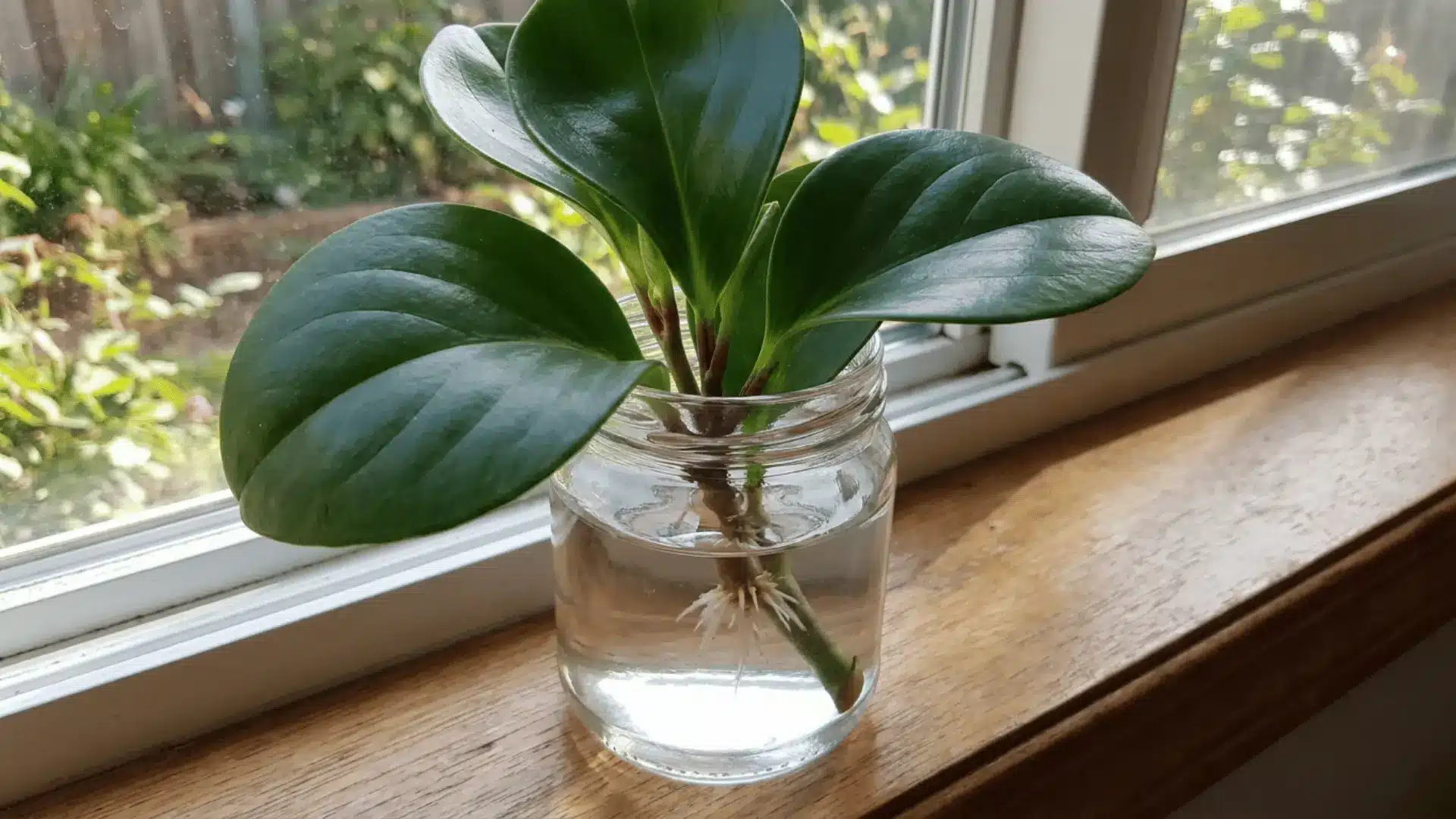
Baby rubber plant has thick leaves and fleshy stems. It can root from a stem containing at least one healthy node. Keep every leaf above water. Submerging too much stem can increase the chance of decay.
Warmth and bright indirect light support rooting. Remove dark, soft, or translucent tissue quickly.
- Best use: Short-term water rooting
- Light: Bright indirect light
- Plant part: Stem cutting with one node
- Rooting speed: Moderate
- Care point: Keep the water level shallow
26. African Violet
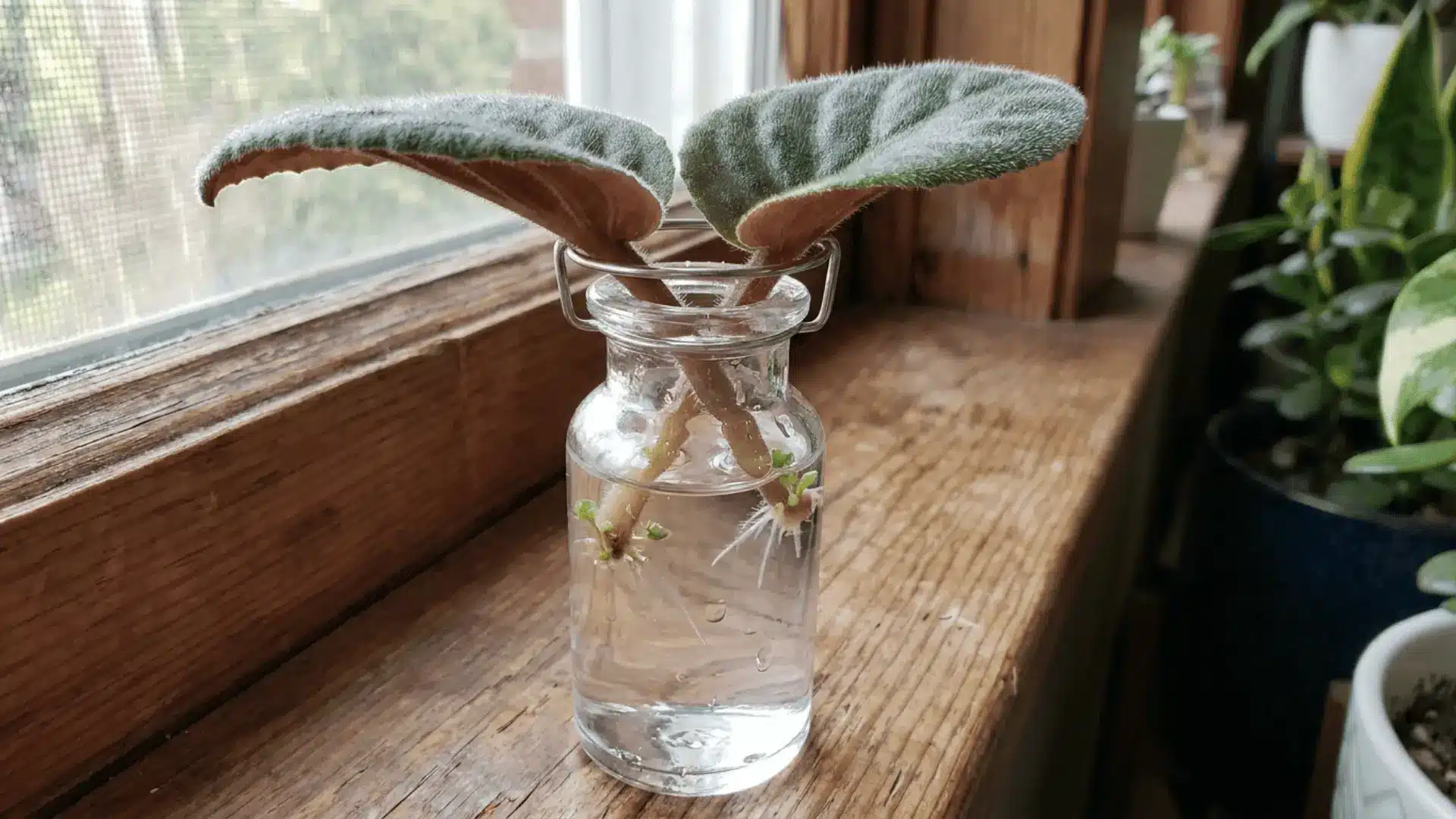
African violet can grow from one healthy leaf and petiole. Choose a leaf from the middle area of the parent plant.
Place only the end of the petiole in water. Keep the fuzzy leaf dry. Small plantlets may take time to appear. Transfer them after they develop their own roots and leaves.
- Best use: Leaf propagation
- Light: Bright indirect light
- Plant part: Healthy leaf with petiole
- Rooting speed: Slow
- Care point: Use a narrow container for support
27. Prayer Plant
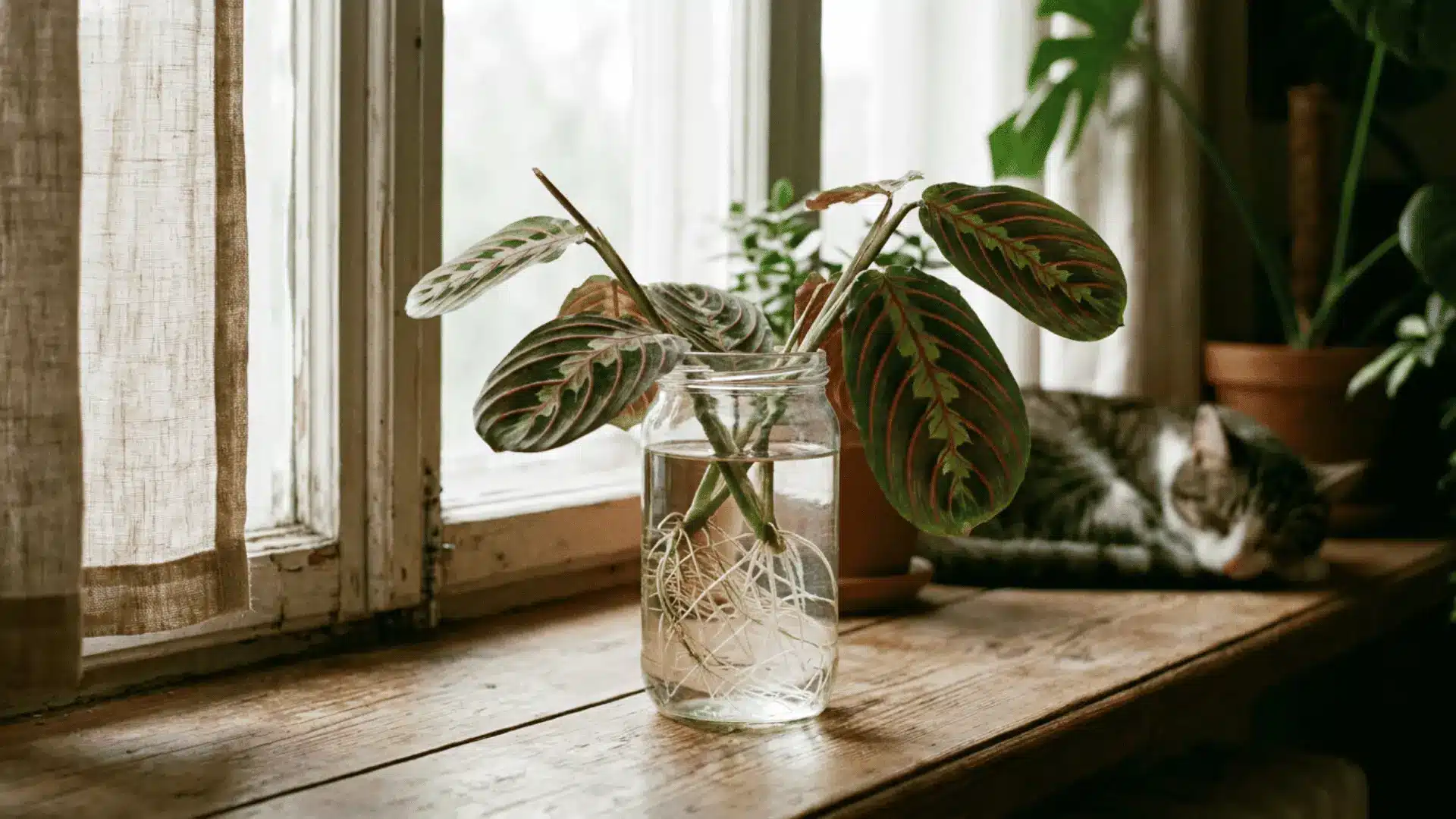
Prayer plant cuttings need a stem node before producing roots. A single detached leaf cannot form a complete plant. Place the node underwater and keep the leaves dry.
Warmth and steady indirect light support rooting. Filtered water may help when mineral marks appear repeatedly. Keep the container away from cold windows and vents.
- Best use: Node propagation
- Light: Medium to bright indirect light
- Plant part: Stem cutting with a node
- Rooting speed: Moderate
- Care point: Maintain stable room conditions
28. Rubber Plant
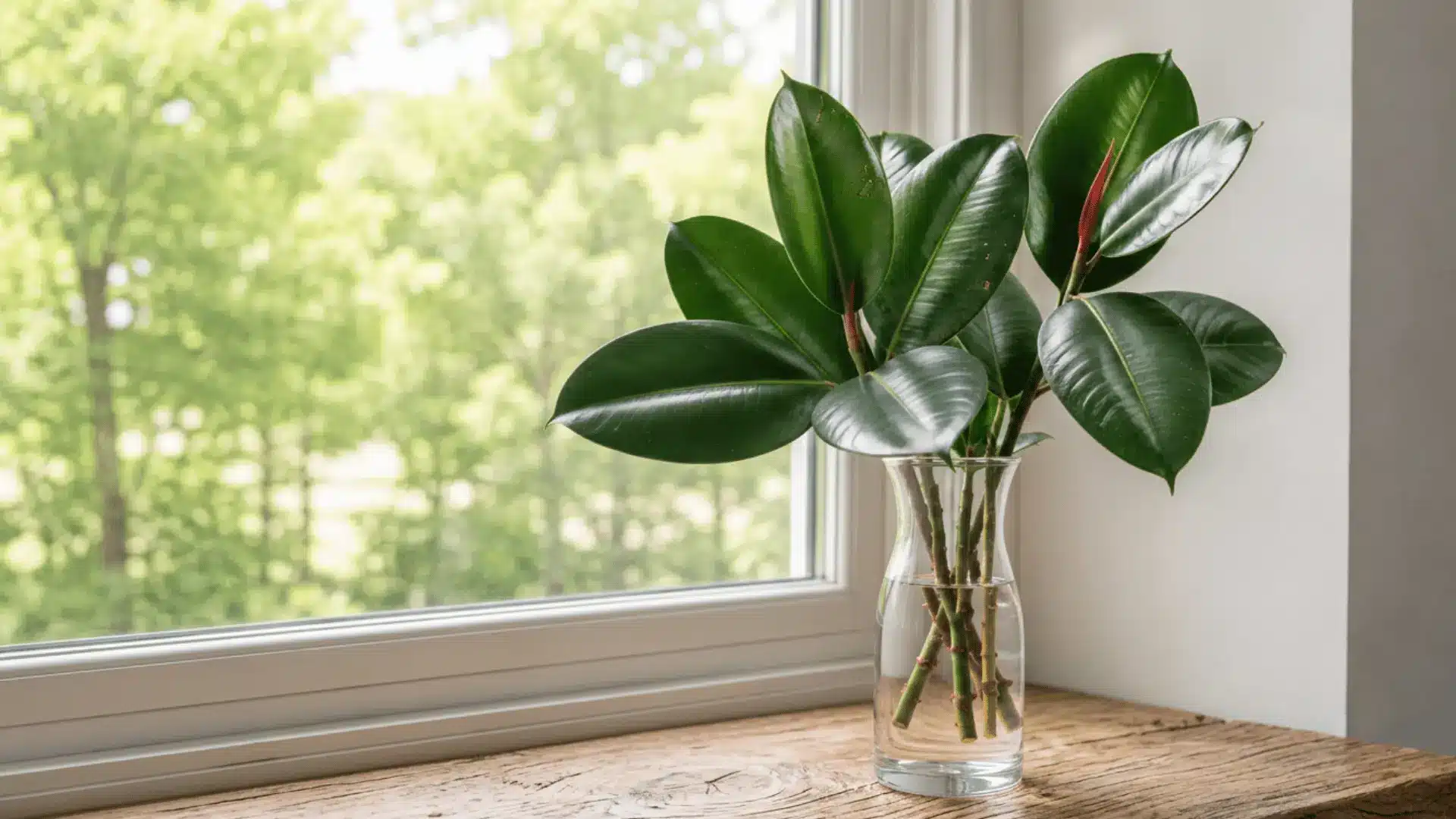
Rubber plant needs a stem cutting with a node. A single leaf may root without producing a complete new stem. Wear gloves because the white sap may irritate skin. Place the bare node underwater.
Rooting can take several weeks. Use a stable container because the large leaf may tip a narrow jar.
- Best use: Temporary stem propagation
- Light: Bright indirect light
- Plant part: Stem cutting with one node
- Rooting speed: Slow
- Care point: Clean sticky sap from tools
29. Fiddle Leaf Fig
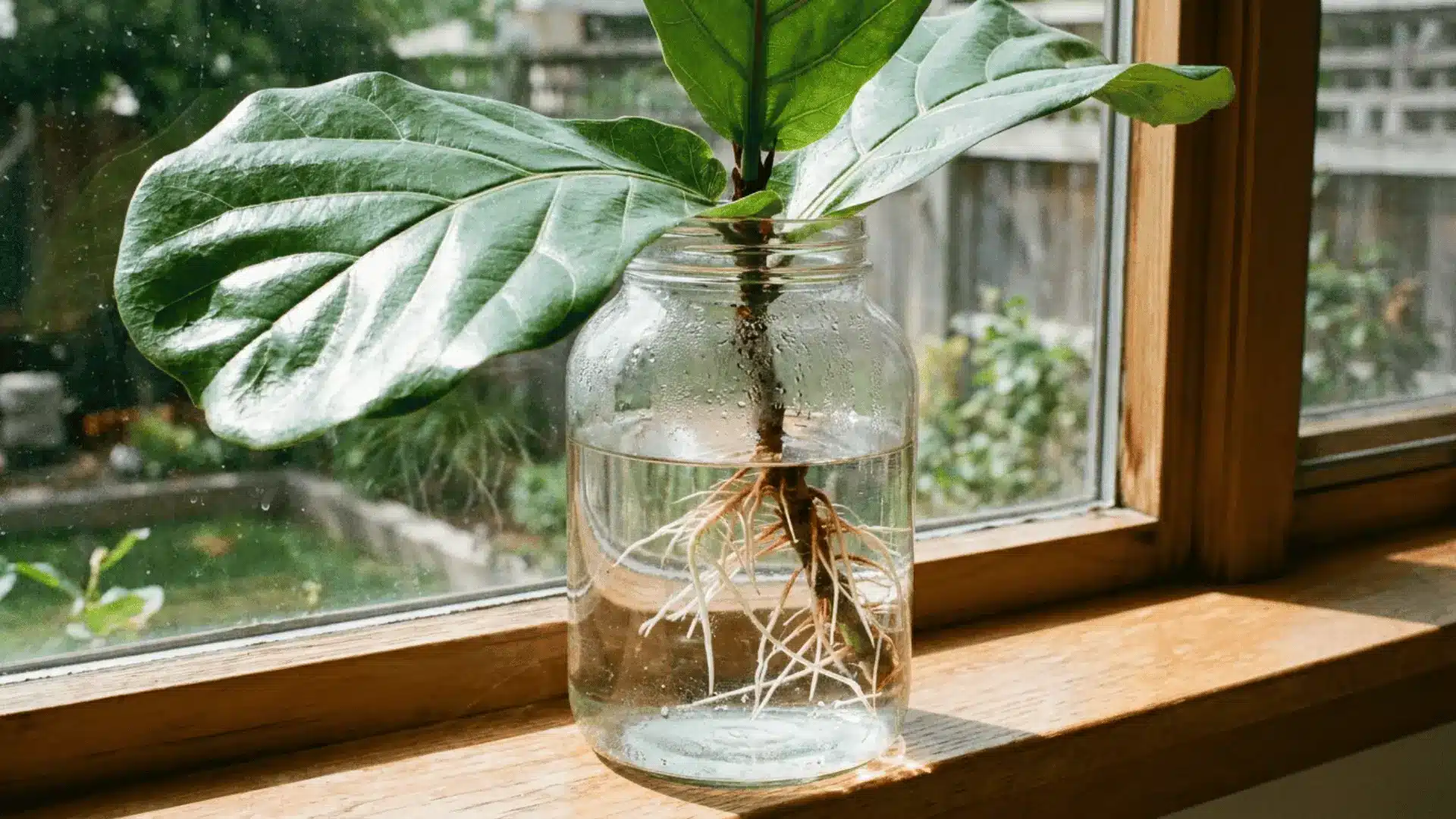
Fiddle leaf fig also needs a stem node for complete propagation. A detached leaf cannot produce a branching plant.
Choose healthy growth and remove the lowest leaf. Place the cutting in a heavy container. Root growth may take several weeks or longer. Keep the jar away from hot windows and dry vents.
- Best use: Temporary water rooting
- Light: Bright indirect light
- Plant part: Stem cutting with one node
- Rooting speed: Slow
- Care point: Keep the large leaves dry
30. Croton
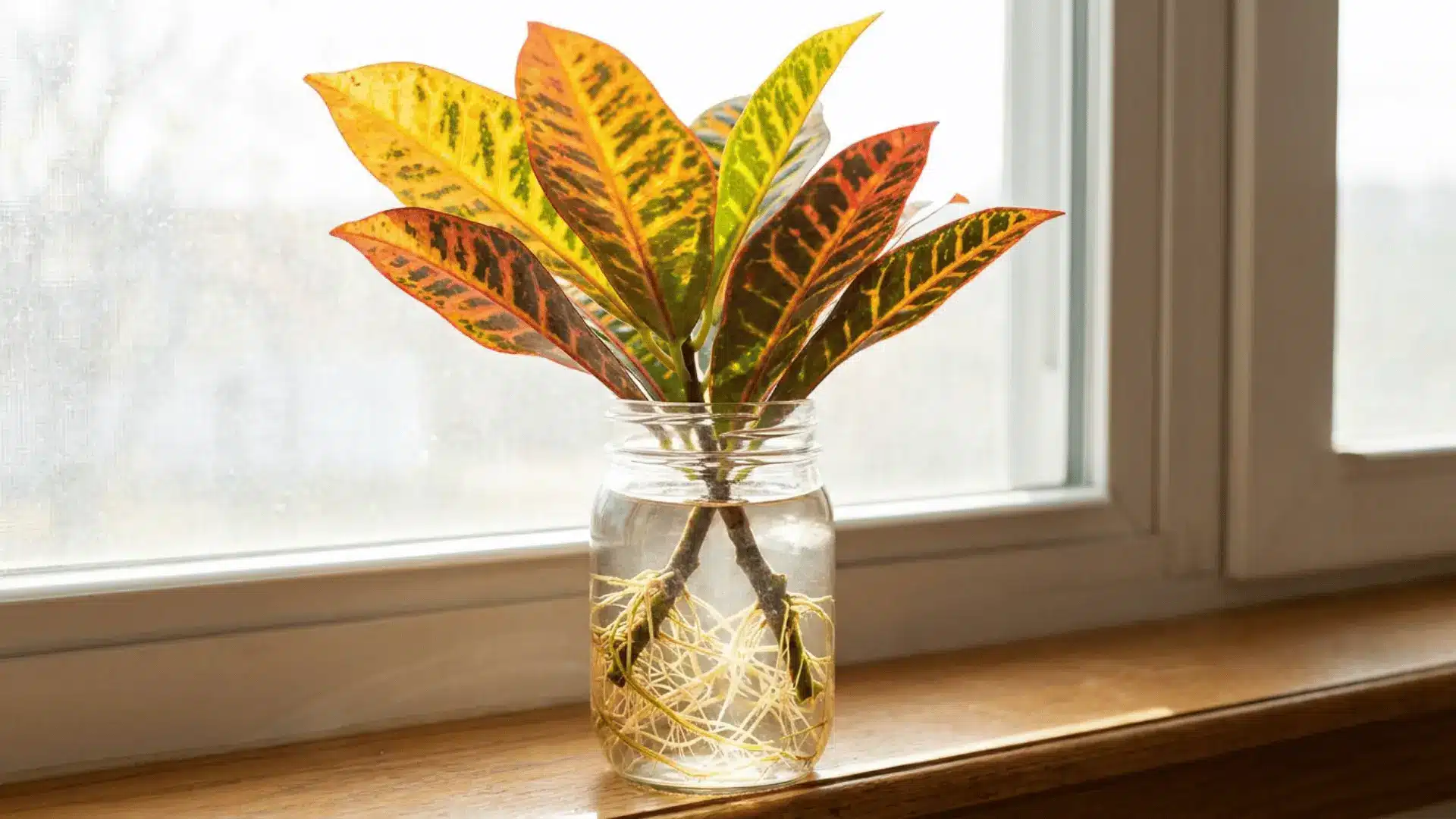
Croton may root from a young and healthy stem tip. Fresh green growth usually works better than thick woody growth.
Remove the lowest leaves before placing the stem in water. Bright indirect light helps preserve its color. Some leaves may drop while the cutting adjusts. Croton often performs better after moving into potting mix.
- Best use: Temporary propagation
- Light: Bright indirect light
- Plant part: Young stem tip
- Rooting speed: Slow
- Care point: Maintain warm and stable conditions
31. Mint
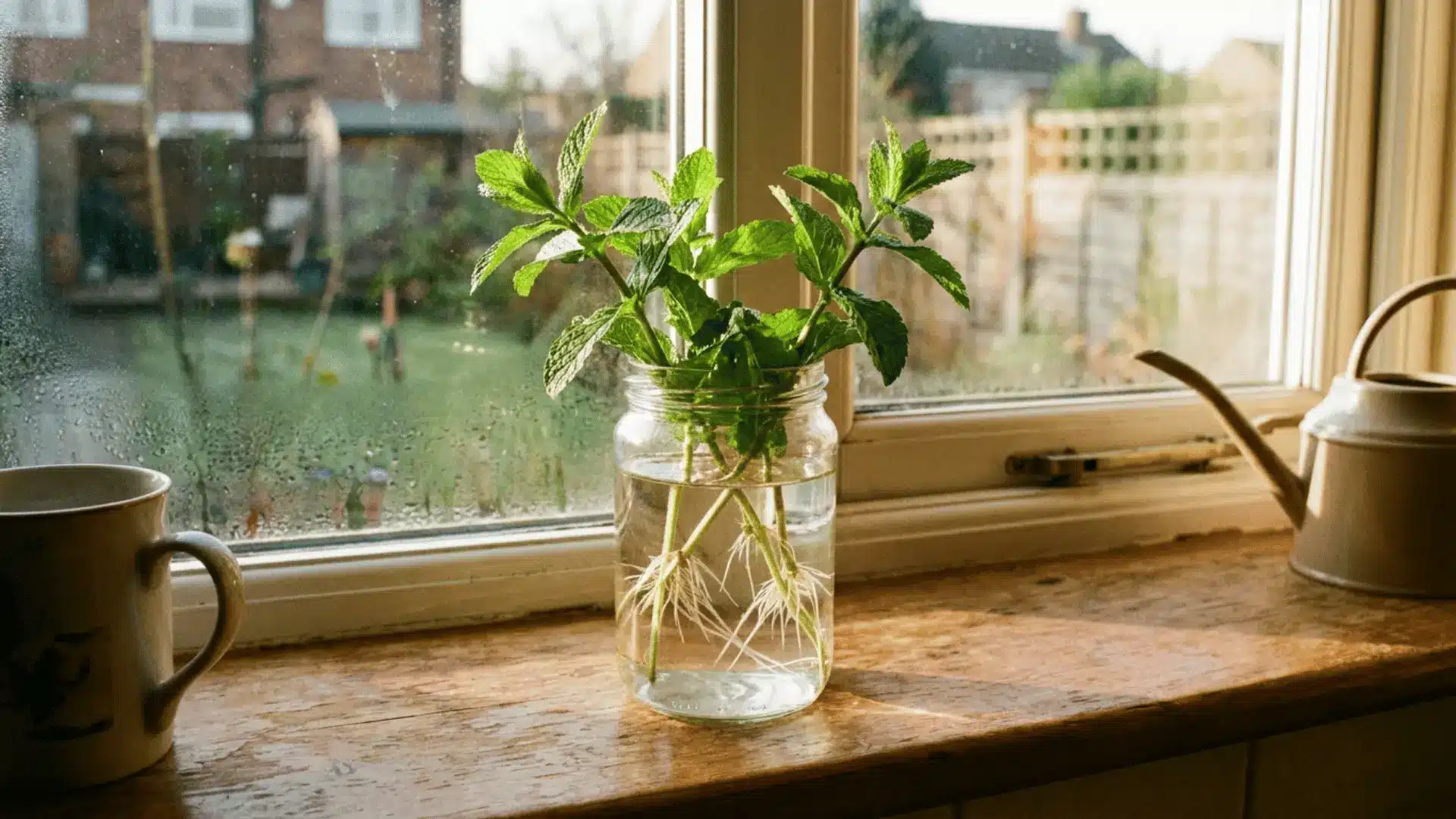
Mint is one of the easiest herbs to root in water. Take a fresh stem before it starts flowering. Cut below a node and remove the bottom leaves. Keep one or two bare nodes underwater.
I usually pinch the tip after roots appear. This encourages branching and provides more fresh leaves.
- Best use: Herb propagation
- Light: Bright light
- Plant part: Non-flowering stem with nodes
- Rooting speed: Fast
- Care point: Move crowded roots into a larger container
32. Basil
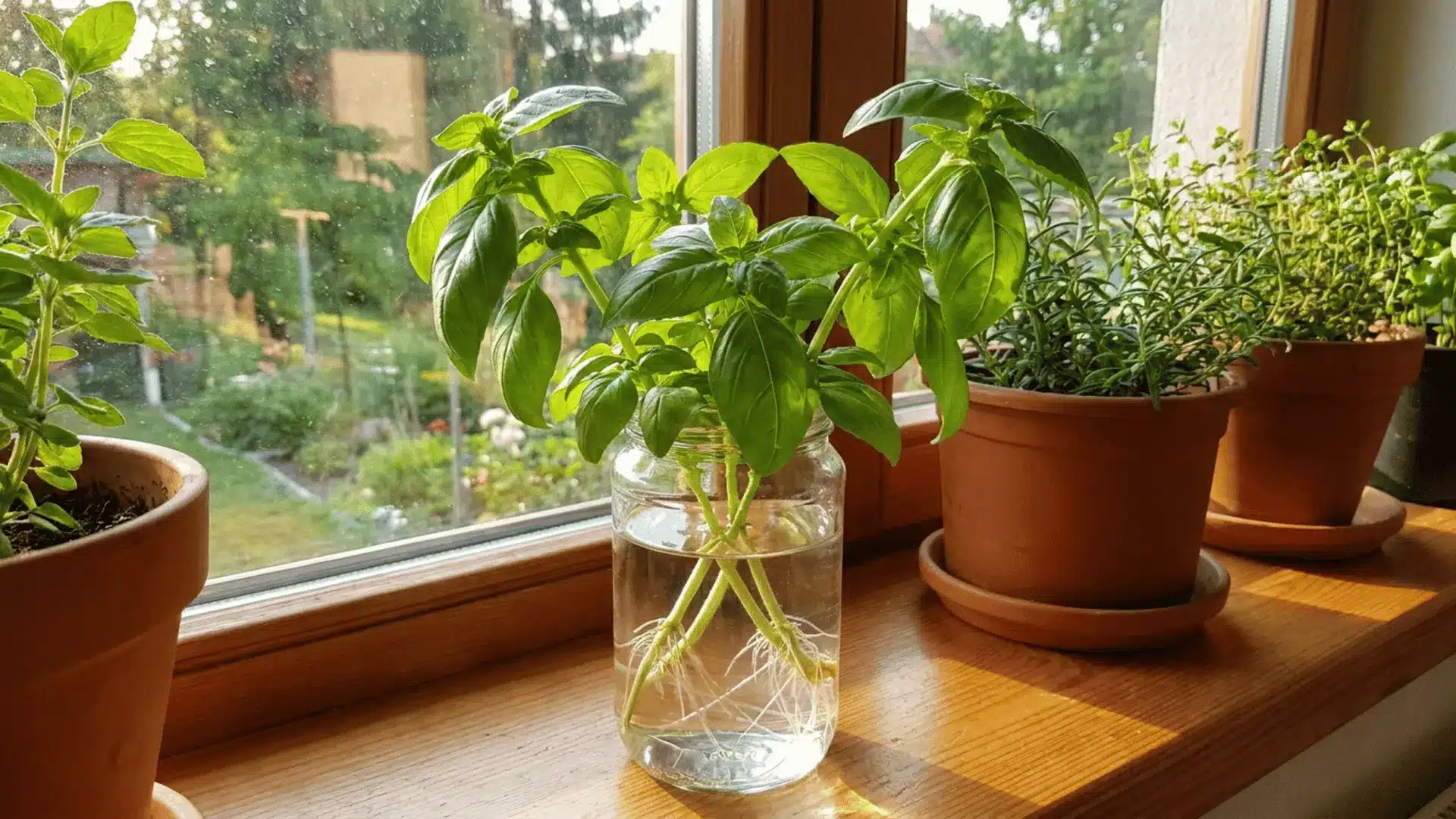
Basil roots from soft stems that have not started flowering. Cut below a node and remove every submerged leaf. Place the jar in a warm and bright location.
Basil needs stronger light than most foliage houseplants.
Plain water may support rooting, but not a lasting harvest. Long-term growth needs nutrients and enough root space.
- Best use: Kitchen herb propagation
- Light: Strong indirect light
- Plant part: Soft non-flowering stem
- Rooting speed: Fast
- Care point: Pinch flower buds before they open
33. Oregano
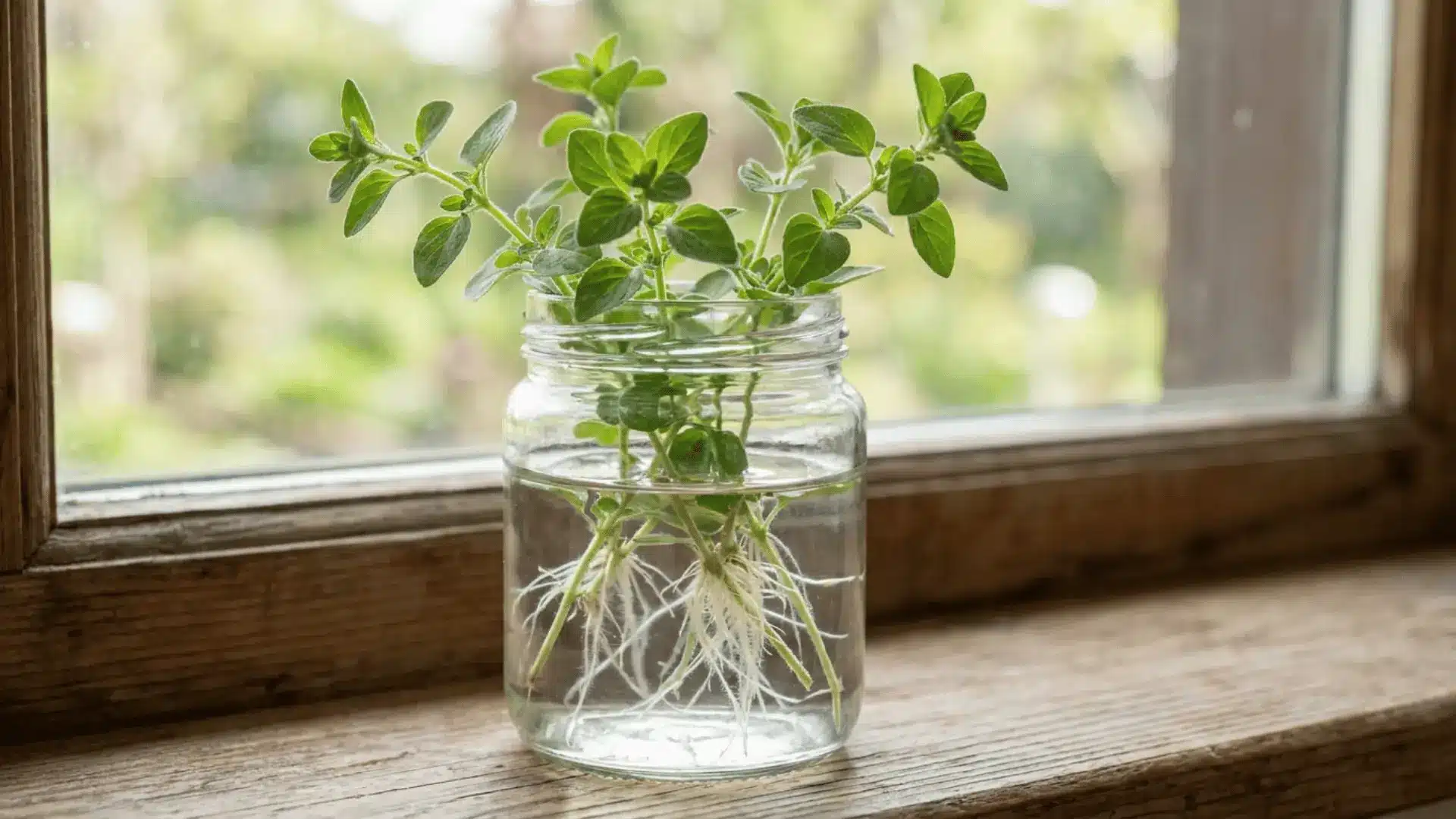
Oregano can root from soft green stem tips. Avoid thick woody pieces because they usually root more slowly. Remove the lower leaves and place one bare node underwater. Strong indirect light helps maintain compact growth.
Oregano normally performs better in a well-drained growing medium after rooting.
- Best use: Herb propagation
- Light: Strong indirect light
- Plant part: Fresh green stem tip
- Rooting speed: Moderate
- Care point: Avoid using old woody stems
34. Lemon Balm
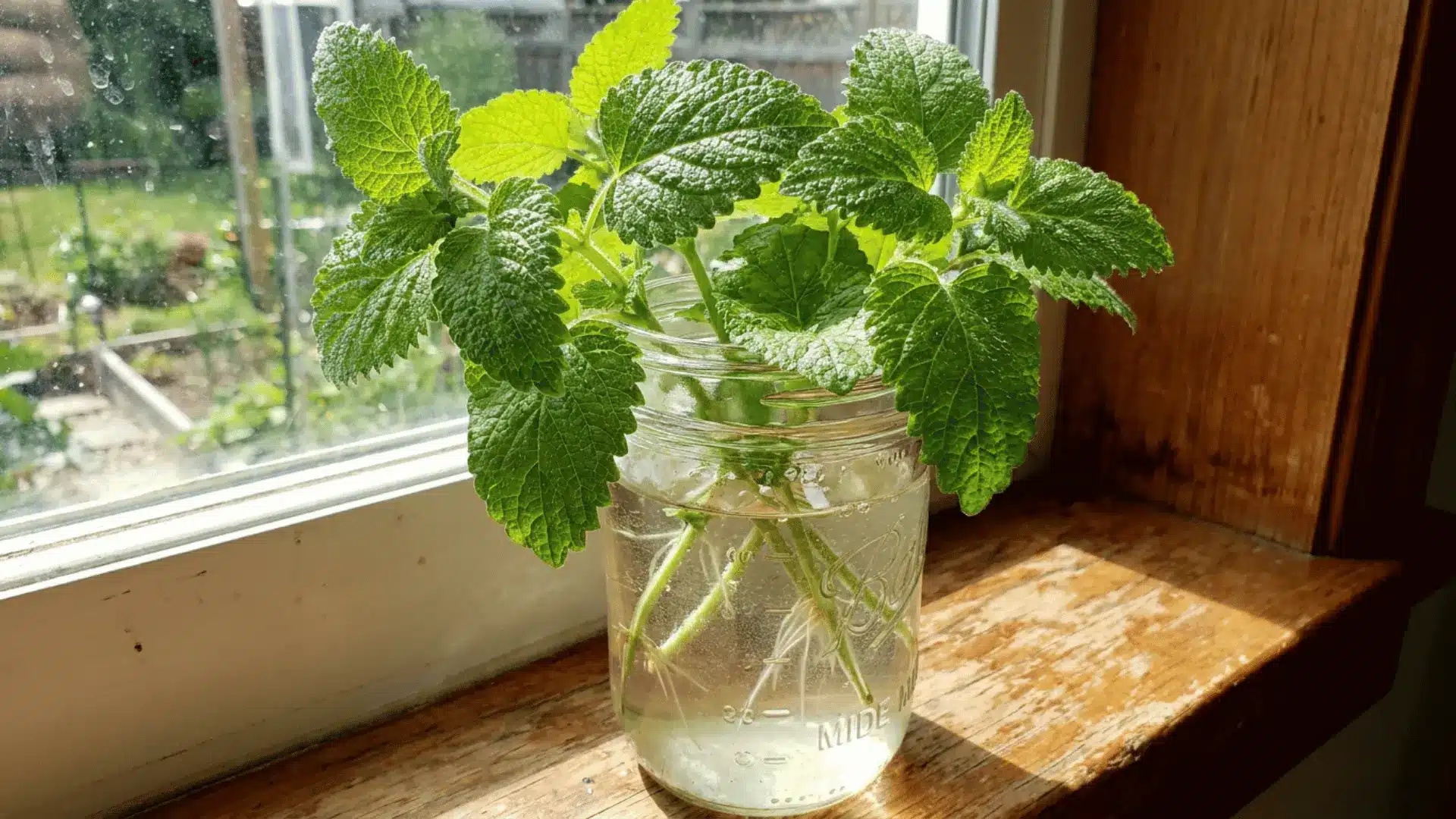
Lemon balm belongs to the mint family and roots from young stems. Choose fresh growth without flowers or damaged leaves. Remove the bottom leaves and place one node underwater.
Bright indirect light supports compact growth. The roots may fill a small jar quickly. Remove fallen leaves before they start breaking down.
- Best use: Herb propagation
- Light: Bright indirect light
- Plant part: Young non-flowering stem
- Rooting speed: Fast
- Care point: Trim tips to support branching
35. Sweet Potato Vine
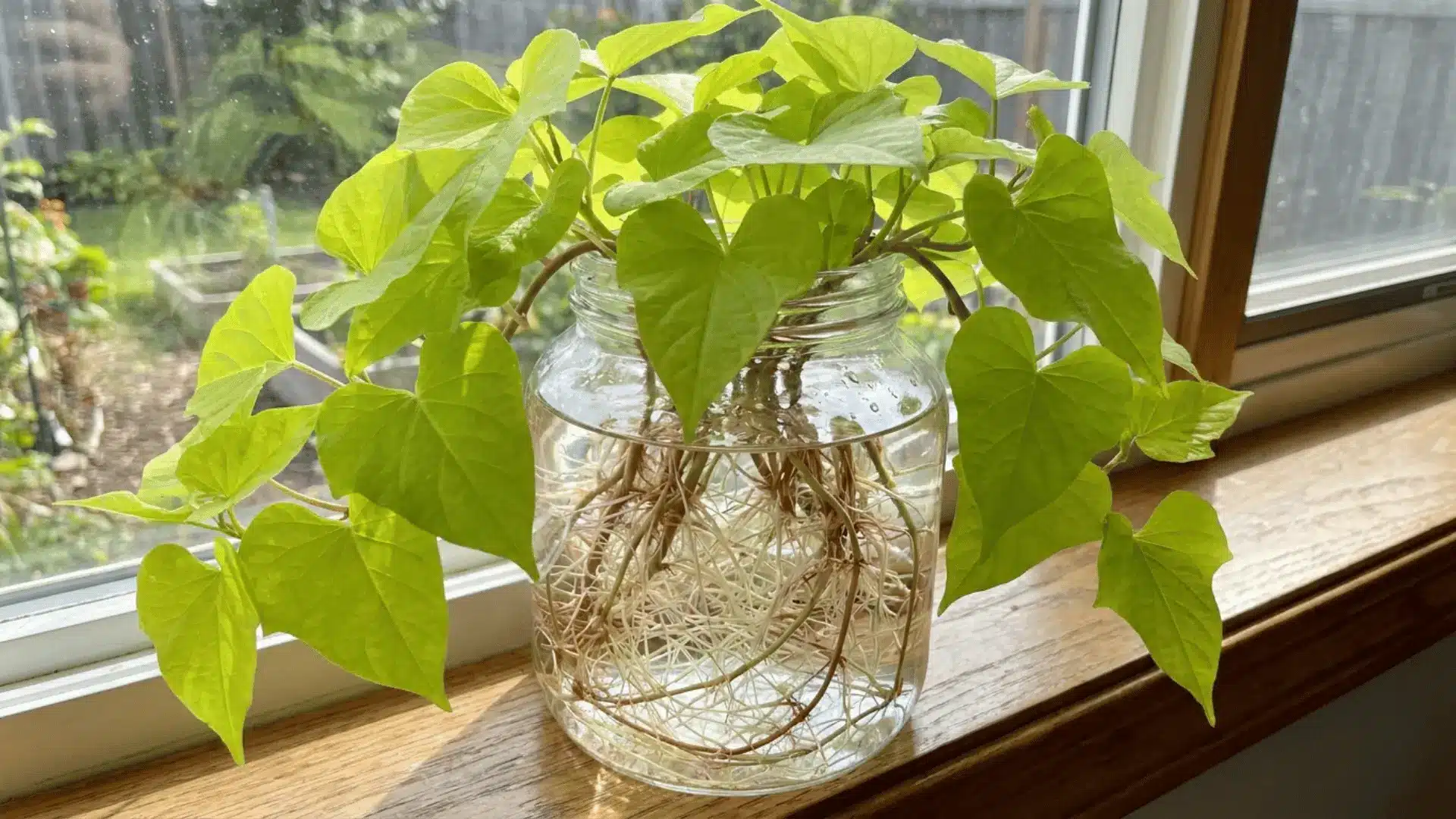
Sweet potato vine can grow from a stem cutting or shoots produced by a tuber. A cutting needs one healthy node. Keep the leaves above water and provide bright light.
Roots and vines may grow quickly in warm conditions. Use a roomy container and trim long stems. Plain water may not support strong growth permanently.
- Best use: Fast decorative display
- Light: Bright light
- Plant part: Vine cutting with one node
- Rooting speed: Fast
- Care point: Give the roots enough container space
Which Plants Can Stay in Water Long Term?
Pothos, philodendron, Syngonium, lucky bamboo, Tradescantia, Chinese evergreen, peace lily, and some Dracaena types may stay in water long term.
These plants usually adapt more easily than herbs, woody stems, or plants with thick moisture-storing tissue.
A plant that roots in water is not automatically suited to permanent water culture.
Long-term plants still need light, oxygen, root space, support, and carefully measured nutrients. Plain water cannot supply every mineral forever.
Growth may slow during cooler or darker months. I reduce feeding when a plant stops producing regular new leaves.
A plant may survive in water while producing smaller leaves or weaker stems. Moving it into potting mix may provide better long-term growth.
Best Water and Containers to Use
The container should cover the roots while keeping leaves, crowns, and most stems dry.
- Tap or filtered water: Use room-temperature water. Filtered water may help sensitive plants.
- Rainwater: Use only clean water collected away from chemicals and debris.
- Clear jars: Make roots, algae, and cloudy water easier to spot.
- Opaque containers: Help limit algae by blocking light.
- Narrow bottles: Support single cuttings but may trap large roots.
- Wide jars: Provide more space and are easier to clean.
- Heavy vases: Support large cuttings without tipping.
- Clean pebbles: Hold rooted plants upright.
- Water level: Cover the roots without soaking leaves or crowns.
I prefer simple containers because they make root checks and cleaning easier.
Common Problems With Water-Grown Plants
Regular checks help catch problems early. Change one care factor at a time.
| Problem | Likely Cause | Fix |
|---|---|---|
| Yellow leaves | Stress, low light, or overfeeding | Adjust care and remove dead leaves |
| Black or slimy roots | Root decay | Trim damaged roots and clean the jar |
| Cloudy or green water | Debris or algae | Replace water and reduce direct light |
| Brown tips | Minerals or excess fertilizer | Try filtered water and feed less |
| Long stems or small leaves | Low light or weak nutrition | Improve light and review feeding |
| No roots | Missing node or cold conditions | Take a fresh cutting |
| Bad smell | Decaying roots or leaves | Remove damaged tissue |
| Soft stem | Too much stem is submerged | Cut above the damage and restart |
| Slow growth | Low light, cold, or limited space | Check light, warmth, and root room |
I change only one factor at a time to find the real cause.
Final Verdict
Growing plants in water works best when the plant, cutting method, and container suit each other. Start with pothos, philodendron, Tradescantia, or mint.
Choose a firm cutting with a healthy node. Keep its leaves dry and place the jar in suitable indirect light. Check the roots instead of relying on a fixed water-changing schedule.
Cloudiness, soft tissue, or a bad smell needs quick attention.
Remember that some plants use water only for propagation. Herbs, begonias, croton, and woody cuttings may grow better after transfer. Long-term water plants still need oxygen, root space, light, and careful feeding.
Reduce nutrients when seasonal growth slows. Starting with one plant makes it easier to learn what healthy water roots look like and how they respond.
Share your water growing results, problems, or helpful plant care tips in the comments below.
Frequently Asked Questions
How Often Should the Water be Changed?
Replace water when it becomes cloudy, green, slimy, or unpleasant-smelling. Clean water may only need topping up between complete changes.
Do Water-Grown Plants Need Fertilizer?
Fresh cuttings usually do not need immediate feeding. Established plants may need diluted soluble or hydroponic nutrients.
Can Tap Water be Used for Cuttings?
Tap water works for many common plants. Filtered water may help when mineral buildup or brown tips become a repeated problem.
Why is My Cutting Not Growing Roots?
The cutting may lack a node, come from weak tissue, receive poor light, or remain in cold conditions.
Should Every Root Stay Underwater?
Most established roots may stay underwater. Leaves, crowns, petioles, and large stem sections should usually remain above the surface.

With a Master’s in Landscape Architecture from the University of Virginia, Sophia Stephenson has dedicated the last 20 years to creating and maintaining vibrant outdoor spaces. Her professional journey started in landscape design, where she gained a reputation for innovative and sustainable approaches. Sophia became a part of our editorial team as a freelancer in 2019, offering a fresh perspective on outdoor living. Since 2020, she has been the chief for our outdoor design content, blending aesthetic appeal with environmental stewardship. In her leisure time, Sophia is a keen photographer, capturing the beauty of natural landscapes, a hobby that complements her professional expertise.