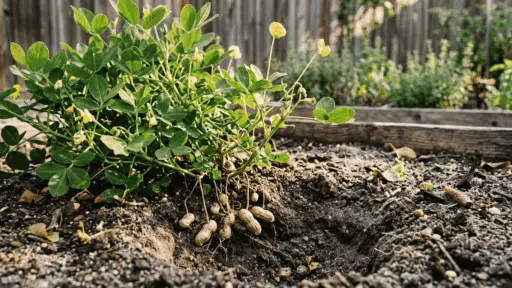
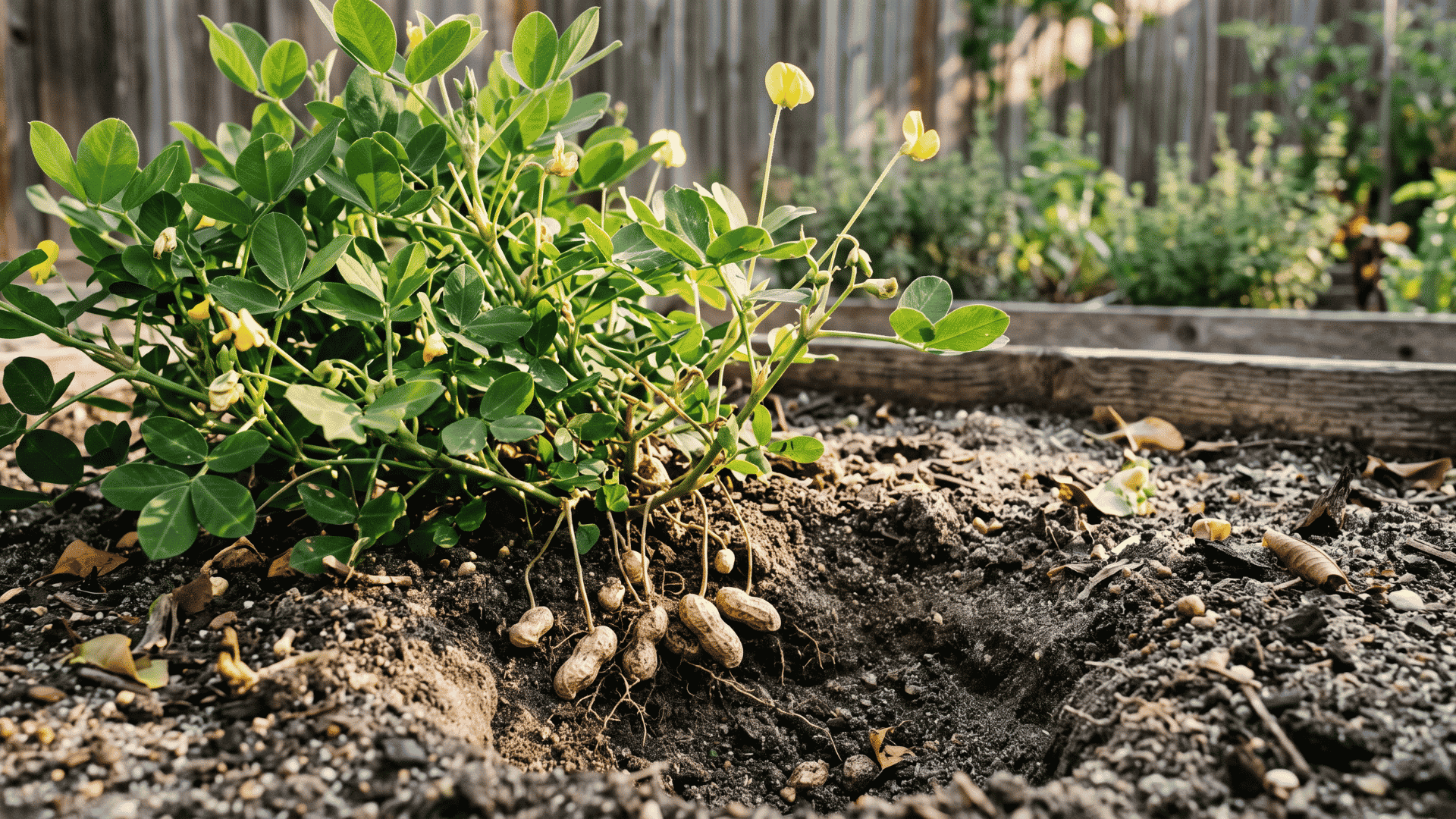

Peanuts grow on leafy plants, but the pods develop underground after the flowers bloom above the soil. If you have ever wondered, “ How do peanuts grow?” the key is understanding what happens after flowering.
Once a yellow flower is pollinated, a thin peg grows downward, enters loose soil, and forms a pod at its tip. The peanuts inside that shell are the plant’s seeds.
Because of this unusual process, peanuts are legumes related to beans and peas, not tree nuts or root vegetables. They usually take 120 to 150 days to mature and need a long, warm growing season.
I find the first yellow flowers especially useful because they signal that underground pod development will soon begin.
The sections ahead explain the peanut life cycle, growing conditions, planting and care steps, common problems, and how to harvest and cure the crop properly.
What Does a Peanut Plant Look Like?
Peanuts grow on low, bushy annual plants rather than trees. Most plants reach about one to two feet tall and spread outward as they mature.
Their oval green leaves and yellow flowers remain above the soil throughout the growing season. The edible peanut develops below ground inside a fibrous shell.
Although peanuts are commonly grouped with almonds, walnuts, and other nuts, they belong to the legume family. They are more closely related to beans and peas.
Peanuts are also not root vegetables. Their pods develop from fertilized flowers, not from enlarged roots. The roots absorb water and nutrients, while separate pegs carry the developing pods into the soil.
How Does the Peanut Plant Life Cycle Work?
Understanding how peanuts grow becomes easier when the life cycle is divided into four main stages. Early development happens above ground as the seed germinates and produces flowers, while later growth shifts below the soil as pegs form the peanut pods.
The plant continues flowering for several weeks, so pods can develop at different times on the same plant. This explains why some peanuts may mature earlier than others even though they are growing from one plant.
1. Germination and Seedling Growth
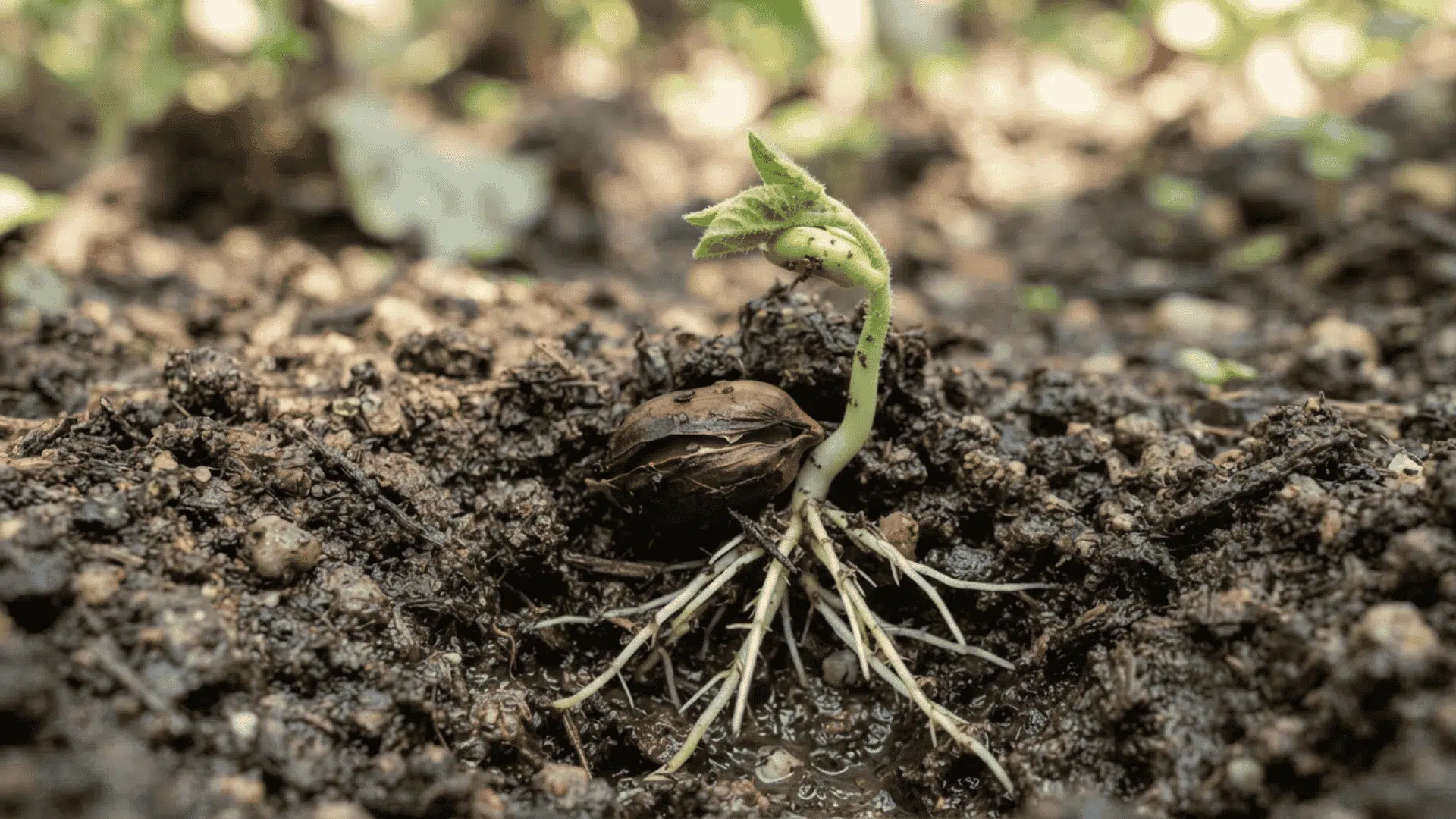
The life cycle begins when a viable peanut seed absorbs moisture from warm soil. The seed develops roots first, followed by a shoot that pushes toward the surface. Under suitable conditions, seedlings usually emerge within about 10 to 15 days.
Once above ground, the young plant develops green stems and oval leaves. Its root system expands while the branches begin spreading outward. This early growth prepares the plant to support later flowering and pod development.
Consistent moisture is useful during establishment, but overly wet soil can slow germination or damage young roots.
2. Flowering and Pollination
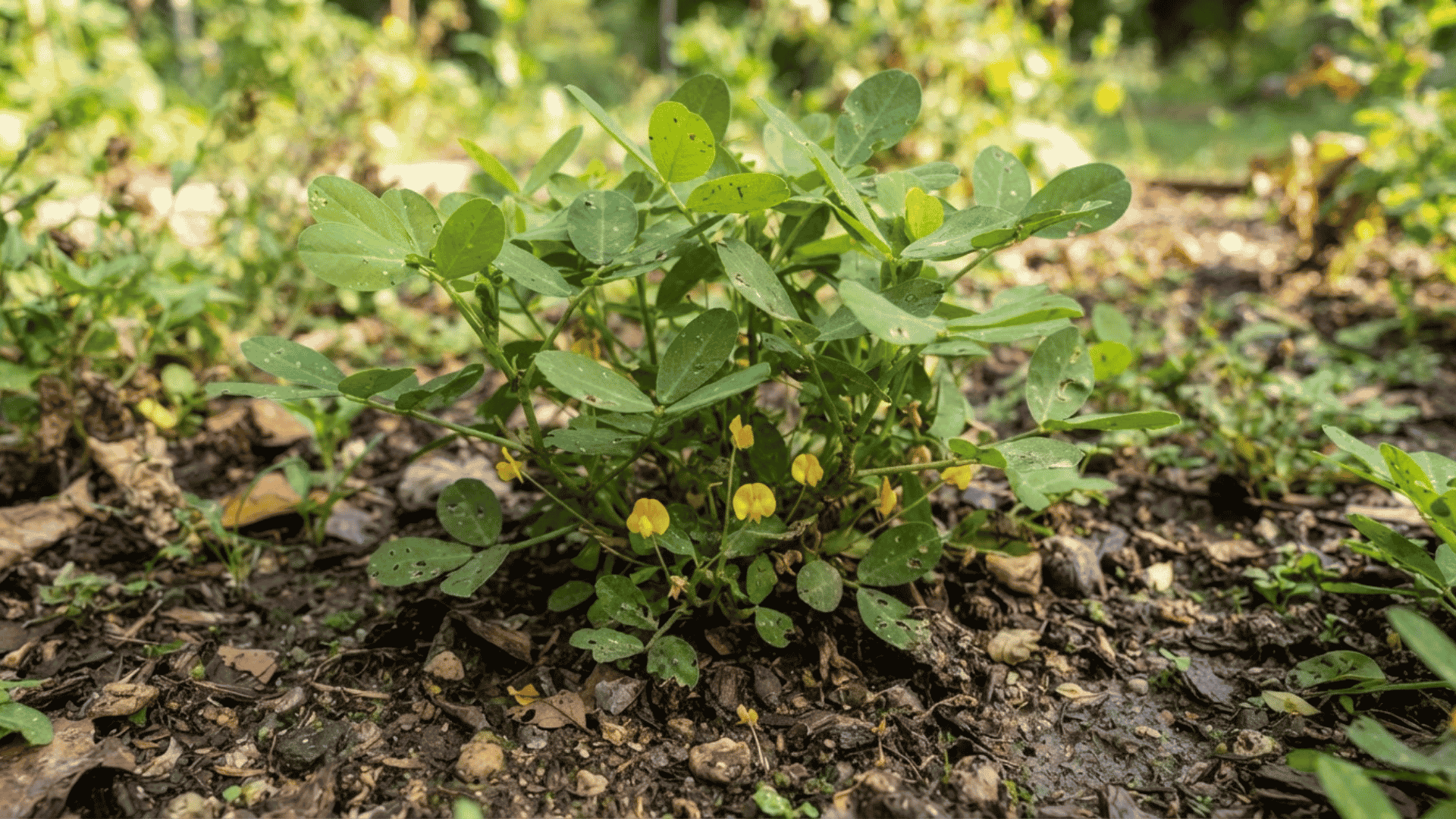
As the plant matures, small yellow flowers begin appearing close to the lower branches. Flowering often starts several weeks after germination and may continue for an extended period.
Peanut flowers usually pollinate themselves. After successful pollination, the petals fade and fall away, but the fertilized part of the flower remains active. It begins developing into a structure that will eventually move toward the soil.
The plant does not produce all its flowers at once. New flowers may continue appearing while earlier ones have already moved into the next growth stage, which is why pods on one plant often develop at different rates.
3. Pegging and Underground Pod Formation
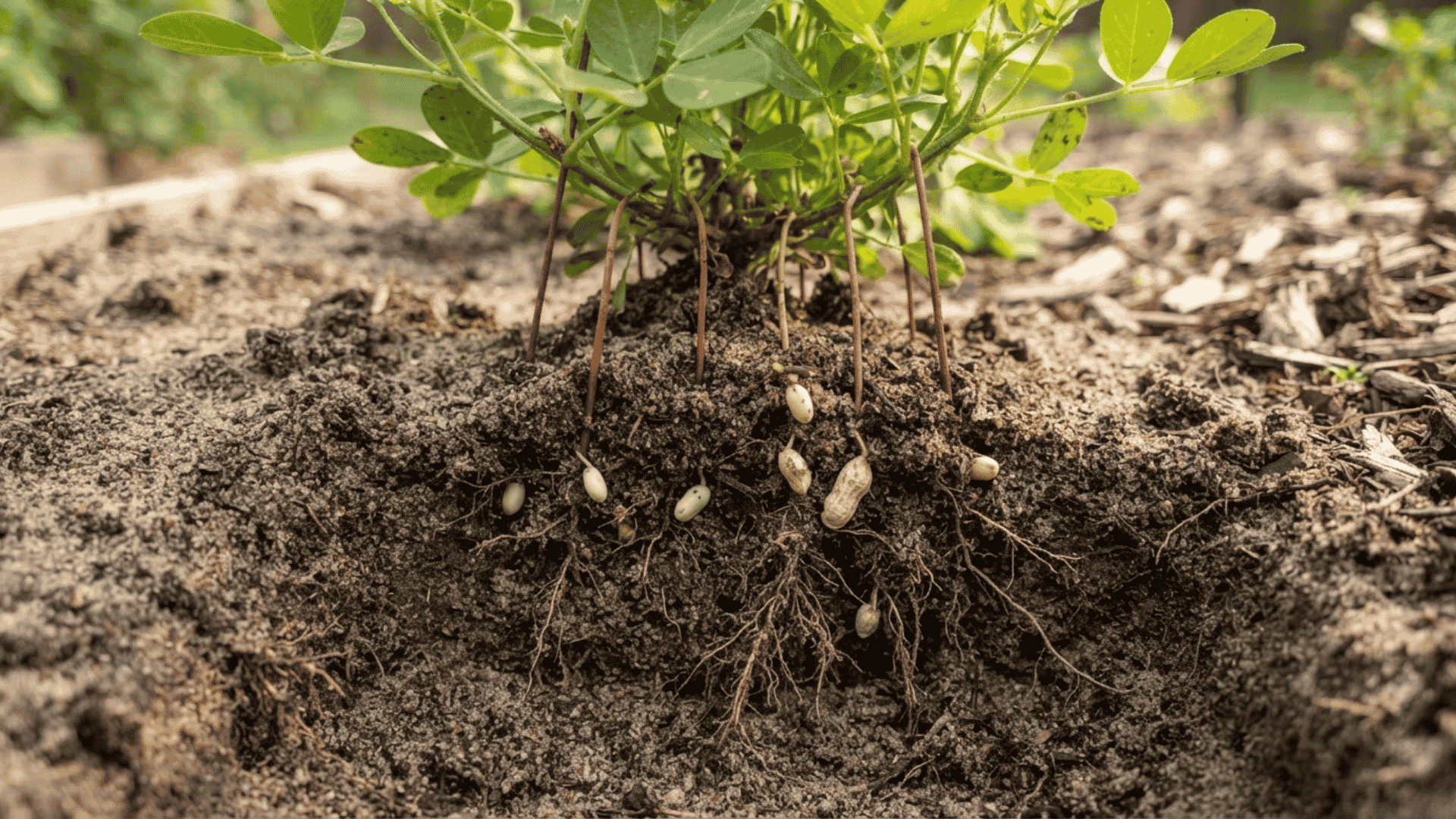
After pollination, a narrow stem-like structure called a peg begins growing downward from the fertilized flower. The developing peanut embryo is carried at its tip.
The peg bends toward the ground and enters the soil. Once beneath the surface, its tip turns and starts enlarging into a peanut pod. The shell gradually forms around the developing seeds while the leafy portion of the plant remains above ground.
This is the stage that makes peanut growth unusual. The flowers are produced in the open air, but the actual pods mature below the soil. Meanwhile, the plant may continue flowering and sending additional pegs into the ground.
4. Pod Maturity and Harvest
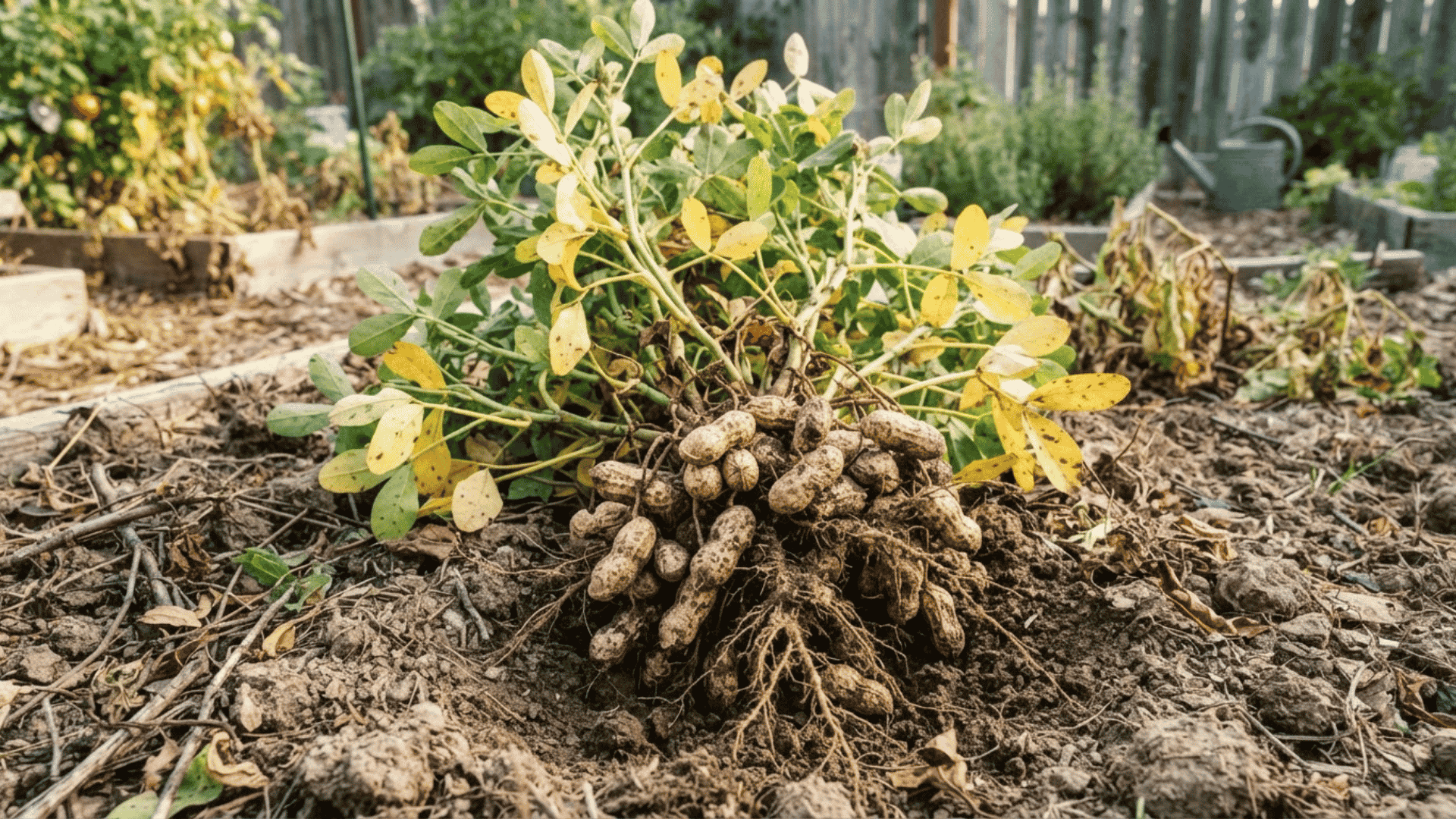
Inside each underground pod, the peanut seeds gradually enlarge and fill the shell. Pod development continues as long as temperatures remain warm and the plant receives enough moisture and sunlight.
Because flowering occurs over several weeks, some pods mature earlier than others. This makes harvest timing important. As the crop approaches maturity, much of the foliage begins turning yellow, but gardeners should also inspect several pods rather than relying on leaf color alone.
Once enough pods have matured, the whole plant is carefully lifted from the soil with the pods still attached. The harvested peanuts are then dried and cured before storage, roasting, or other uses.
How Long Do Peanuts Take to Grow and What Do They Need?
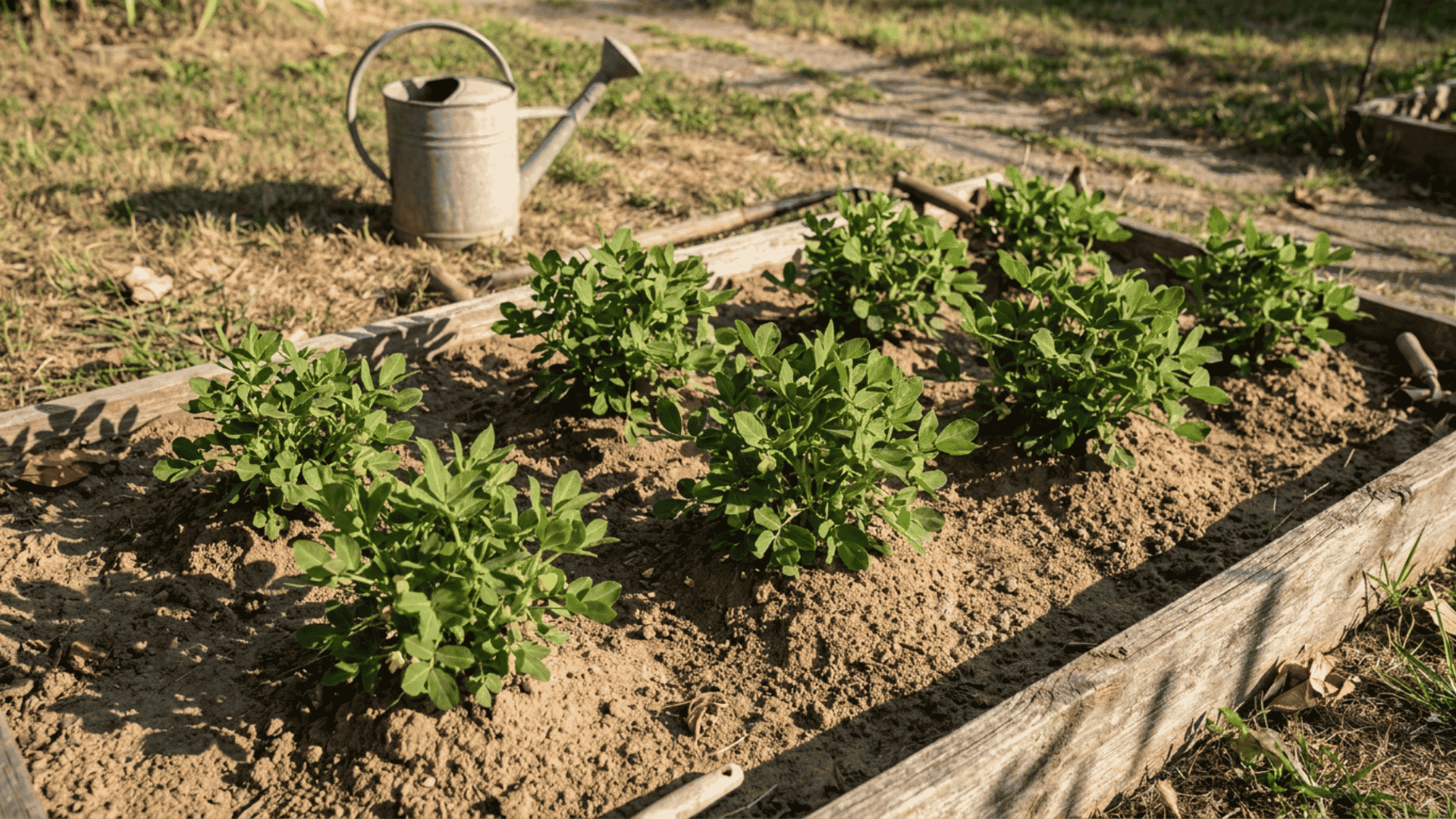
Peanuts need a long, warm growing season and the right soil, moisture, and sunlight to develop properly. Growth speed varies by variety and local conditions, but most home garden peanuts take several months from planting to harvest.
How Long Do Peanuts Take to Grow?
Most peanut varieties take about 120 to 150 days from planting to maturity.
Utah State University Extension notes that peanuts need a minimum frost-free period of about 110 days, although wide varieties require longer to mature fully.
Seeds usually germinate within 10 to 15 days when the soil is warm and evenly moist. Yellow flowers often appear within 30 to 50 days, followed by pegging and underground pod development.
Temperature, variety, sunlight, moisture, and soil conditions can all affect the timeline. Valencia and some Spanish varieties may mature sooner than larger Virginia or runner types.
What Conditions Do Peanuts Need to Grow?
Peanuts grow best when the plant has enough warmth above ground and suitable soil for pod development below it.
- Sunlight: Provide at least six to eight hours of direct sunlight each day.
- Soil: Use loose, sandy, well-draining soil that does not become compacted.
- Temperature: Plant when the soil has warmed to about 65°F or above.
- Moisture: Keep the soil evenly moist without leaving it waterlogged.
- Space: Leave enough open ground for spreading branches and developing pegs.
- Calcium: Mississippi State University notes that adequate calcium near the pods supports proper seed development.
In my experience, preparing the planting area properly at the beginning is easier than correcting compacted soil after flowering starts.
Avoid heavy nitrogen feeding. Peanuts are legumes and can obtain nitrogen with help from suitable soil bacteria.
How to Grow Peanuts at Home
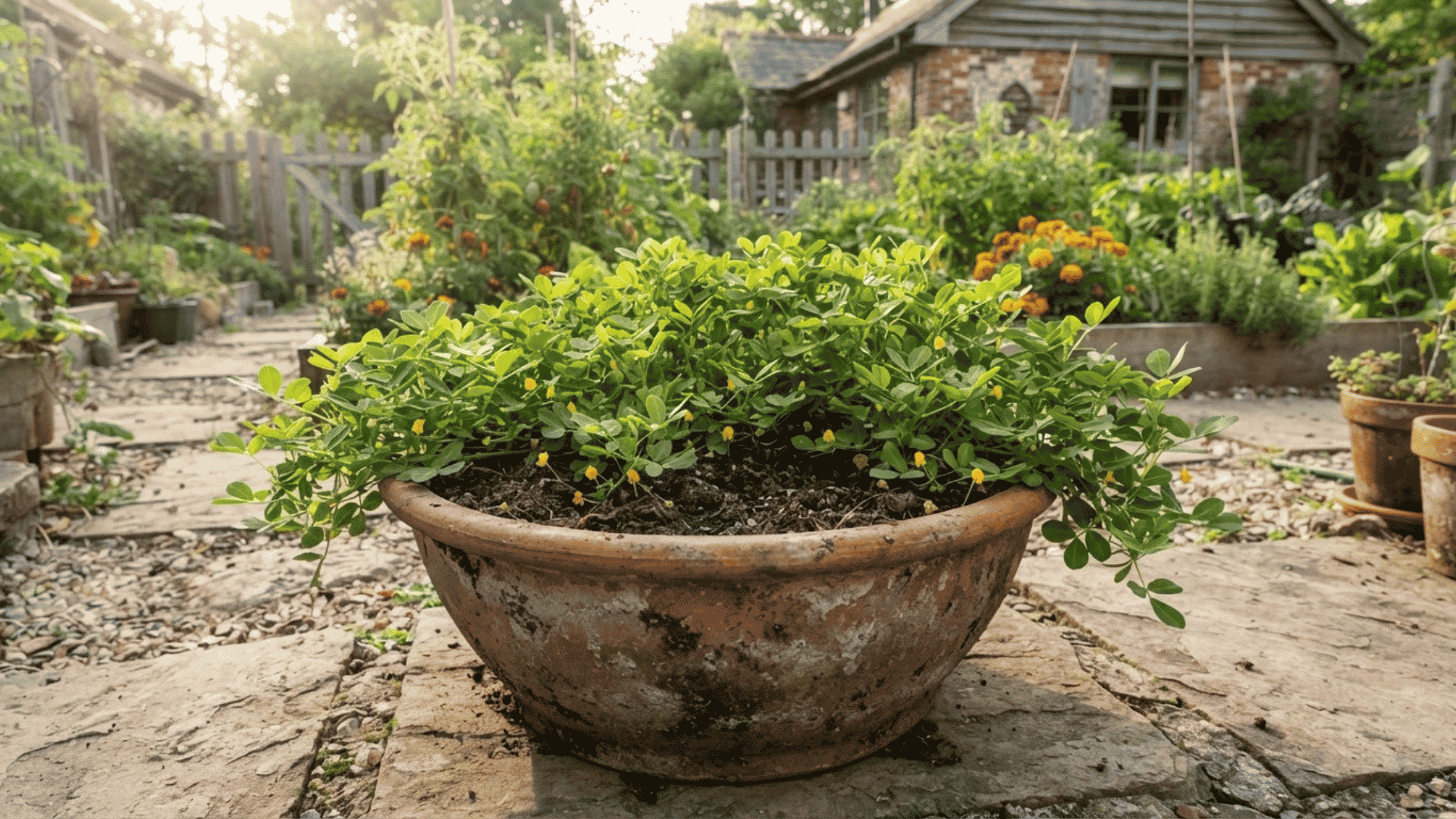
Growing peanuts at home is straightforward when the weather stays warm long enough. You can plant them directly in a garden bed, raised bed, or a wide container, depending on the space available.
1. Tools and Materials Needed
Gather the basic supplies before planting:
- Viable peanut seeds: Use planting seed or raw, unroasted, unsalted peanuts with intact seed coats.
- Garden bed orwide container: For container growing, choose a broad planter, tub, or fabric grow bag at least 12 inches deep.
- Loose growing mix: Use sandy, well-draining garden soil or a light potting mix that does not become compacted.
- Hand trowel: Useful for planting seeds and shallow weed removal.
- Watering can or hose: Gentle watering helps prevent the soil surface from washing away.
- Plant markers: These make newly planted rows easier to identify before seedlings emerge.
For containers, width is especially important because peanut branches spread outward and need exposed soil beneath them. I prefer a wide pot over a narrow, deep one because it leaves more room for flowering branches and developing pegs.
2. Steps to Grow Peanuts
Growing peanuts at home is straightforward when the weather stays warm long enough.
- Choose Viable Seed. Buy peanut seed from a supplier, or use raw, unroasted, unsalted peanuts with intact seed coats.
- Wait for Warm Soil. Plant after frost danger has passed and the soil is at least about 65°F.
- Prepare the Bed. Remove stones, break apart large clumps, and level the planting surface before sowing.
- Plant the Seeds. Place them about 1½ to 2 inches deep.
- Allow Enough Room. Space plants approximately 8 to 12 inches apart.
- Water Gently. Keep the soil moist during germination and early growth.
- Control Weeds Early. Remove competing weeds while the plants are young and before flowering becomes heavy.
Do not remove the thin red or brown seed coat when planting shelled peanuts. Damaging it can reduce germination. I find it easier to mark the planting rows before sowing because the young seedlings can be difficult to spot until they break through the soil.
In larger gardens, peanuts can share row space with upright crops such as corn , but the taller plants should remain far enough away to prevent shade over the flowering and pegging area.
3. Best Peanut Types for Home Growing
According to the University of California, four main peanut types are commonly grown, but they differ in size, growth pattern, and maturity time.
| Peanut Type | Main Feature | Home-Growing Consideration |
|---|---|---|
| Virginia | Produces large peanuts | Needs space and a long warm season |
| Valencia | Often has several seeds per pod | A useful choice for shorter seasons |
| Spanish | Produces smaller peanuts | Often grows more compactly |
| Runner | Commonly used for peanut butter | Usually suited to warm regions and larger plots |
Valencia varieties are often practical for home gardeners because some mature earlier. Virginia peanuts may appeal to gardeners who want larger seeds and have enough summer heat.
Choose the variety according to the number of frost-free days in your area rather than seed size alone. The packet should provide an estimated maturity period and suitable plant spacing.
How Should You Care for Peanuts During Flowering and Pegging?
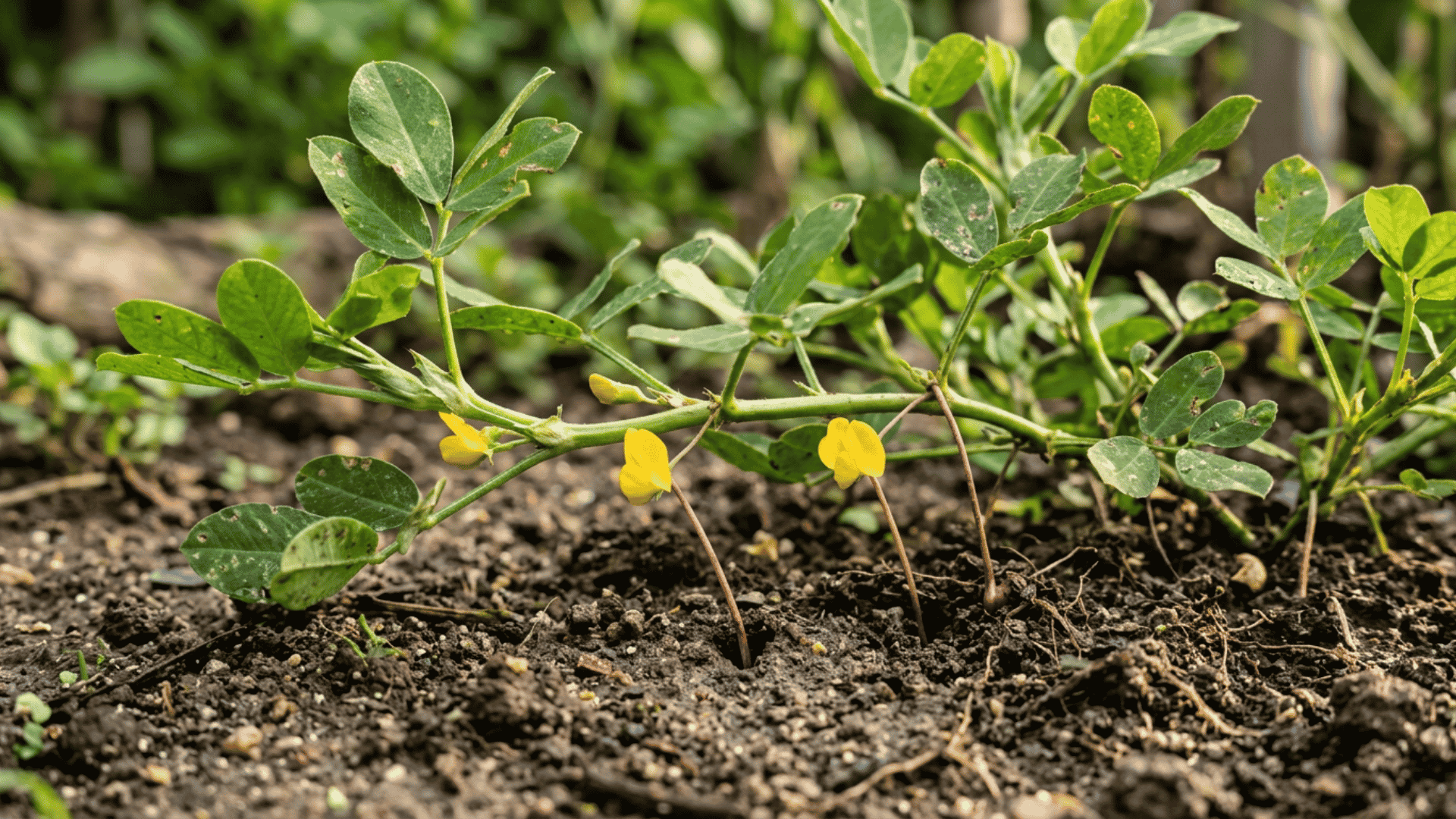
Flowering and pegging need slightly different care because moisture stress, compacted soil, and physical damage can reduce the harvest.
During Flowering
- Keep the soil evenly moist as yellow flowers appear.
- Avoid long dry periods or waterlogged conditions.
- Water slowly at soil level to protect the flowers and foliage.
- Apply a light mulch to reduce surface drying.
During Pegging
- Keep the soil surface loose so pegs can enter it easily.
- Use only shallow tools or remove weeds by hand.
- Avoid burying the plant’s crown, stems, flowers, or foliage.
- Do not dig, step near the plants, or move containers once pegs enter the soil.
I check the soil by hand before watering. If the surface feels dry but the soil below remains slightly moist, heavy watering is usually unnecessary.
How Should You Harvest and Cure Peanuts?
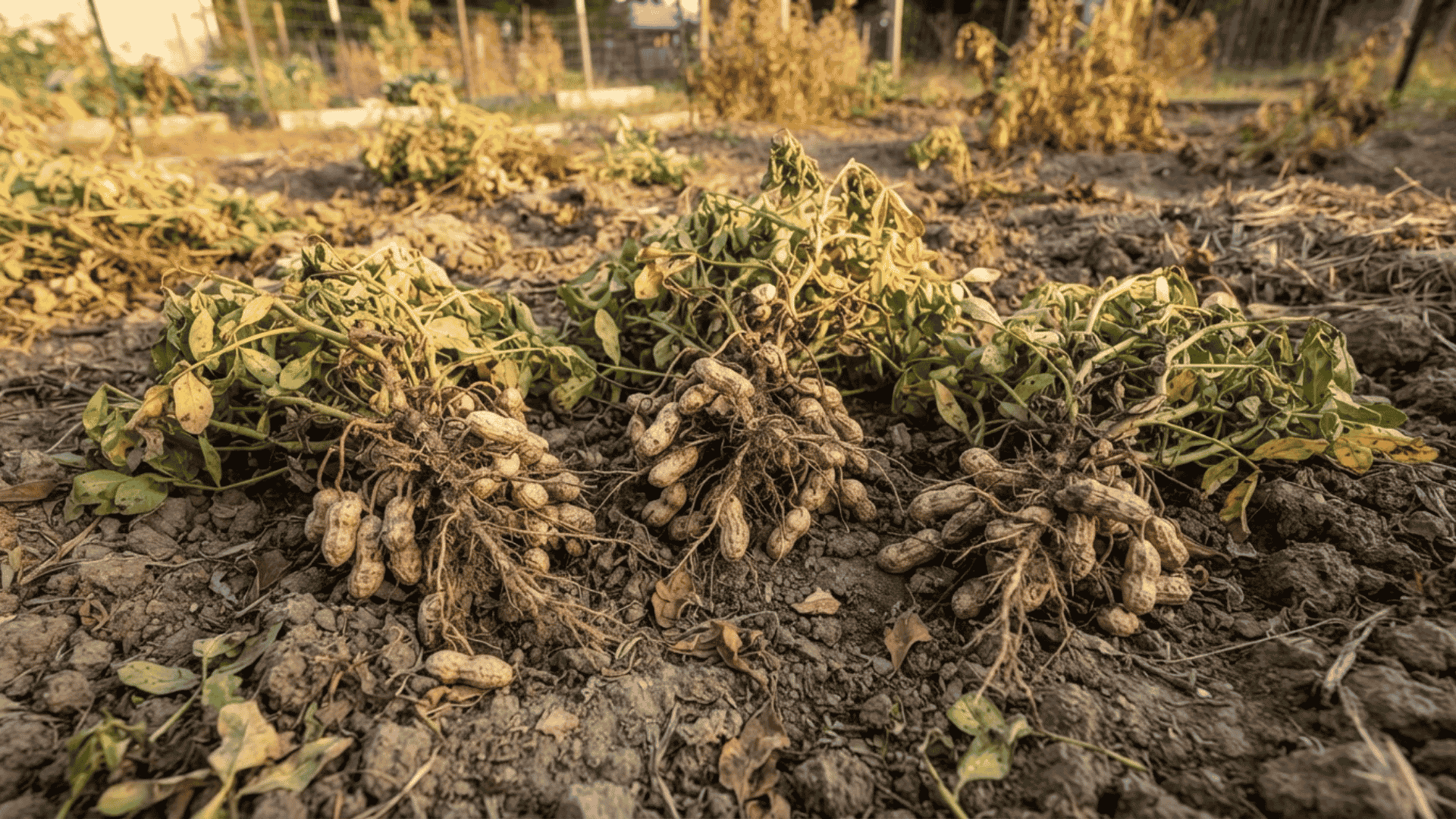
Peanuts need to be lifted at the right stage and dried properly before storage. Harvesting too early leaves the seeds small, while waiting too long may cause mature pods to break away in the soil.
Signs Peanuts Are Ready to Harvest
Peanuts are usually ready near the variety’s expected maturity date, when much of the foliage begins turning yellow. However, leaf color alone is not enough.
Dig up several pods from the edge of the plant and check for:
- Firm shells with a clear veined surface
- Seeds that fill most of the shell
- Colored seed coats rather than pale seeds
- A darker inner surface inside the pod
Some pods may remain immature because peanut plants flower over several weeks. Checking pods from different parts of the plant gives a more reliable harvest signal than judging the foliage alone.
Lifting and Curing Peanut Plants
Choose a dry day when the soil is workable but not muddy. Insert a garden fork several inches from the plant and loosen the ground beneath the pods before lifting the entire plant by its base.
Gently shake off loose soil without damaging the shells. Hang the plants or place them in a warm, dry, well-ventilated area with the pods exposed for one to two weeks.
After the first drying period, remove the pods and spread them in a single layer for further curing.
Properly cured shells should feel firm and dry rather than soft or damp. Store the finished peanuts in a breathable bag in a cool, dry place.
I usually inspect pods from more than one side of the plant, since those closest to the earliest flowers may mature before the later pods.
Common Peanut Growing Problems
Peanut plants can face problems above and below the soil. The most effective fix depends on where the symptoms appear and when they begin, so check the plant, soil, and recent weather before changing its care.
| Problem | Possible Cause | What to Do |
|---|---|---|
| Poor germination | Cold soil, damaged seeds, or excess moisture | Wait for warm soil and plant raw, untreated peanuts. |
| Early yellowing | Saturated soil, root damage, or nutrient issues | Check drainage, roots, and soil fertility. Yellowing near harvest is usually normal. |
| Damaged foliage | Caterpillars or other leaf-feeding insects | Inspect both sides of the leaves and remove visible pests. |
| Dug-up seeds or pods | Squirrels, mice, or other small animals | Protect newly planted seeds and developing pods. |
| Leaf spots, rust, or blight | Fungal or bacterial disease | Improve spacing and airflow, and avoid keeping leaves wet. |
Remove badly affected plant material and use local gardening advice to accurately identify serious pest or disease problems.
Final Thoughts
Understanding how peanuts grow, from the first yellow flower to the buried pod, makes it easier to time watering, weeding, and harvest correctly.
Growing peanuts successfully starts with choosing a variety that can mature within your local season. Plant after the ground has warmed, provide full sun, and maintain steady moisture as the crop develops.
During flowering, careful handling protects the forming pods, while maturity checks help prevent harvesting too early or too late.
Gardeners should also check pod maturity before lifting the whole plant, since yellow leaves alone do not always confirm readiness. After harvest, proper drying and curing are essential for safe storage and better texture.
Peanuts can grow in garden beds, raised beds, or wide containers, provided they receive enough sun, warmth, and space to develop.
Have you grown peanuts before? Share your experience, questions, or harvesting tips in the comments.
Frequently Asked Questions
Can You Plant Raw Peanuts From the Store?
Raw, unsalted, unroasted peanuts may germinate when the seed coat is intact. Seeds sold for planting are usually more reliable and clearly labeled by variety.
How Many Peanuts Grow on One Plant?
The number varies by variety and growing conditions. Healthy plants may produce dozens of pods, but not every flower or peg develops successfully.
Can You Eat Peanuts Immediately After Harvesting?
Freshly harvested peanuts can be boiled, but peanuts intended for roasting or storage should be dried and cured first to reduce moisture.
How Deep Do Peanut Pods Grow?
Most pods develop about one to two inches below the soil surface. Loose ground allows the pegs to enter and turn without obstruction.
Can Peanut Plants Be Transplanted?
Peanuts can be transplanted carefully, but direct sowing is usually safer because root disturbance may slow establishment.

With a Master’s in Landscape Architecture from the University of Virginia, Sophia Stephenson has dedicated the last 20 years to creating and maintaining vibrant outdoor spaces. Her professional journey started in landscape design, where she gained a reputation for innovative and sustainable approaches. Sophia became a part of our editorial team as a freelancer in 2019, offering a fresh perspective on outdoor living. Since 2020, she has been the chief for our outdoor design content, blending aesthetic appeal with environmental stewardship. In her leisure time, Sophia is a keen photographer, capturing the beauty of natural landscapes, a hobby that complements her professional expertise.