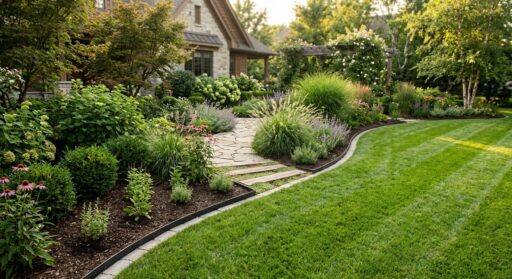
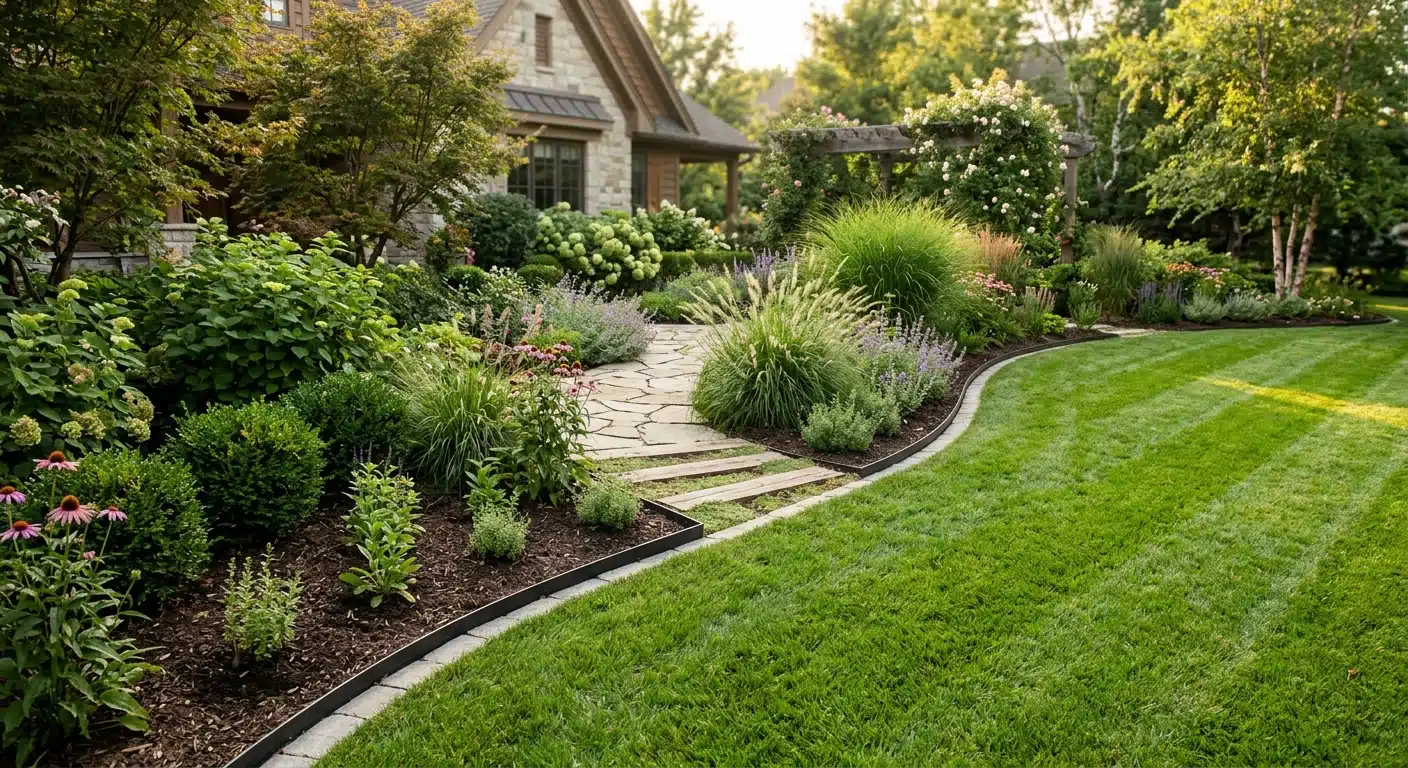

Two gardens can have almost identical plants and look completely different. One reads as considered, professional, like someone actually planned it. The other reads as a collection of things bought over a few weekends, planted wherever there was space. The plants aren’t the reason.
Ask someone what makes a garden look “done” and they’ll usually point at flowers, at colour, at some feature plant doing a lot of visual work. Rarely does anyone mention a clean line of garden edging, the boundary where lawn stops and garden bed starts. A good one is invisible. It’s only the bad ones people actually notice, the fuzzy, creeping, half-collapsed borders that make an otherwise nice garden look neglected.
Why the Boundary Matters More Than the Bed
That line does more work than most people give it credit for. It’s a strange thing, a thin strip most people never consciously register, but it functions as a frame. Take the frame away and even good work looks unfinished, even when the actual planting behind it is identical.
A few things a proper edge does that rarely get credited:
- Keeps grass from creeping into beds and competing with root systems underground
- Frames even a modest planting so it reads as deliberate rather than accidental
- Stops mulch and soil washing onto paths and lawn after heavy rain
- Makes a garden look finished years before the plants themselves have matured
None of that is about what’s actually growing. It’s structural. It just happens to read as aesthetic from a distance, which is exactly why people miss it.
Why Everyone Blames the Wrong Thing
A cluttered-looking garden usually gets redesigned from the plants outward. New species, new colour palette, sometimes a total layout overhaul. Six months later, same clutter. The plants changed. The actual problem didn’t, because nobody touched the boundary that was letting everything blur together in the first place.
Edging doesn’t photograph well on its own, so it rarely gets budgeted properly and rarely gets blamed when a redesign underwhelms. It just quietly does or doesn’t do its job in the background.
Structure First, Then Everything Else
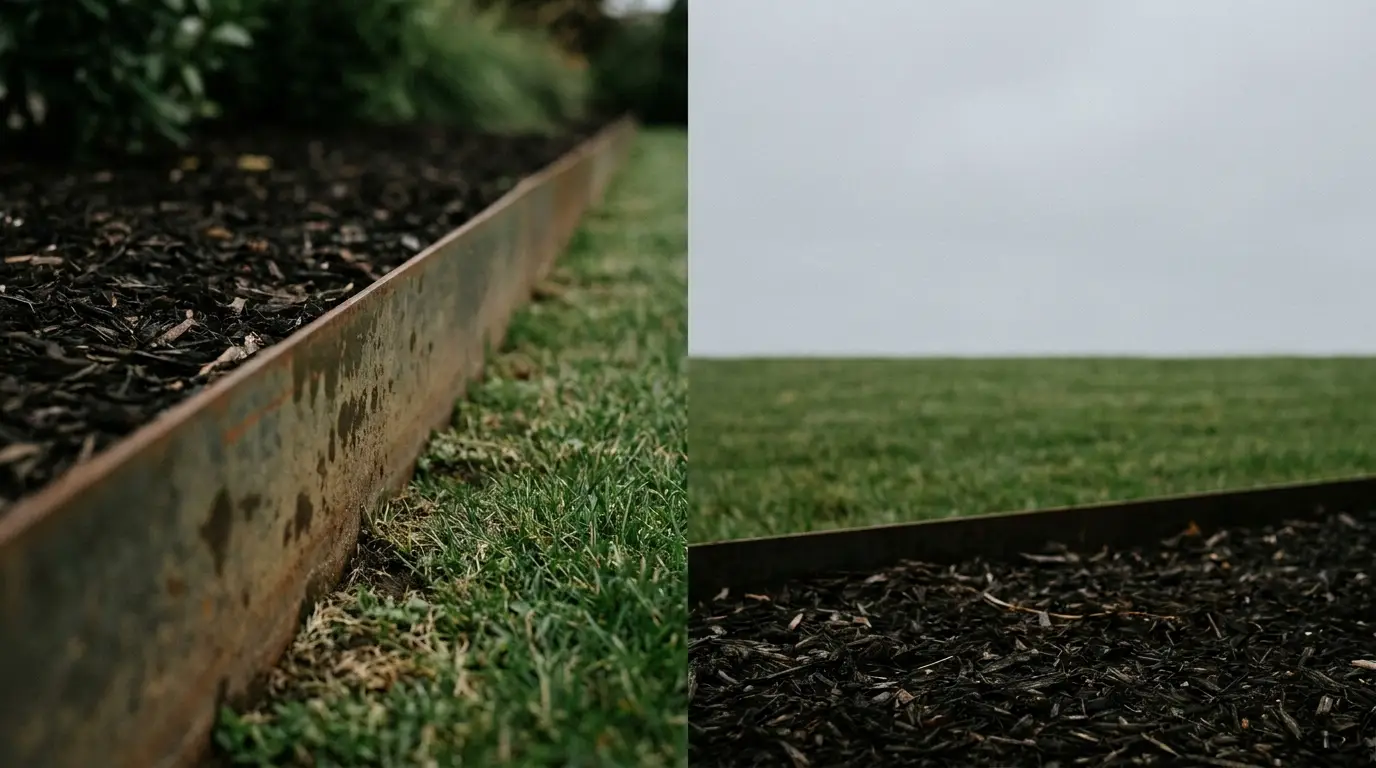
Get the structure right early and a garden ages well. Plants get swapped out over the years, colour schemes shift with the seasons, and none of it throws the space off, even mid-transition when half the bed’s dormant or just went in and isn’t doing much yet. That’s why garden structure matters so much, it’s the foundation everything else gets layered onto. Skip it and even excellent plant choices start looking loose within a season.
There’s also a cost side to this most people don’t think about until later. Redoing plant selection every few years because a garden “isn’t working” gets expensive fast, and it rarely fixes the underlying issue if the structure was never sorted to begin with. A well-defined edge is closer to a one-time investment. It sits there for years, quietly doing its job, while everything planted around it gets to change without the whole space falling apart in the process. Homeowners who skip this step often end up paying for the same fix twice, once in plants, once eventually in the structure they should’ve addressed first.
Worth Getting Right Before Anything Else
Anyone starting a redesign with plant selection is usually solving the wrong problem first. Sort the structure, the borders, the bones of the layout, and the plant choices become far more forgiving. Skip it, and even the best planting ends up looking like it’s fighting the space instead of finishing it.

With a Master’s in Landscape Architecture from the University of Virginia, Sophia Stephenson has dedicated the last 20 years to creating and maintaining vibrant outdoor spaces. Her professional journey started in landscape design, where she gained a reputation for innovative and sustainable approaches. Sophia became a part of our editorial team as a freelancer in 2019, offering a fresh perspective on outdoor living. Since 2020, she has been the chief for our outdoor design content, blending aesthetic appeal with environmental stewardship. In her leisure time, Sophia is a keen photographer, capturing the beauty of natural landscapes, a hobby that complements her professional expertise.