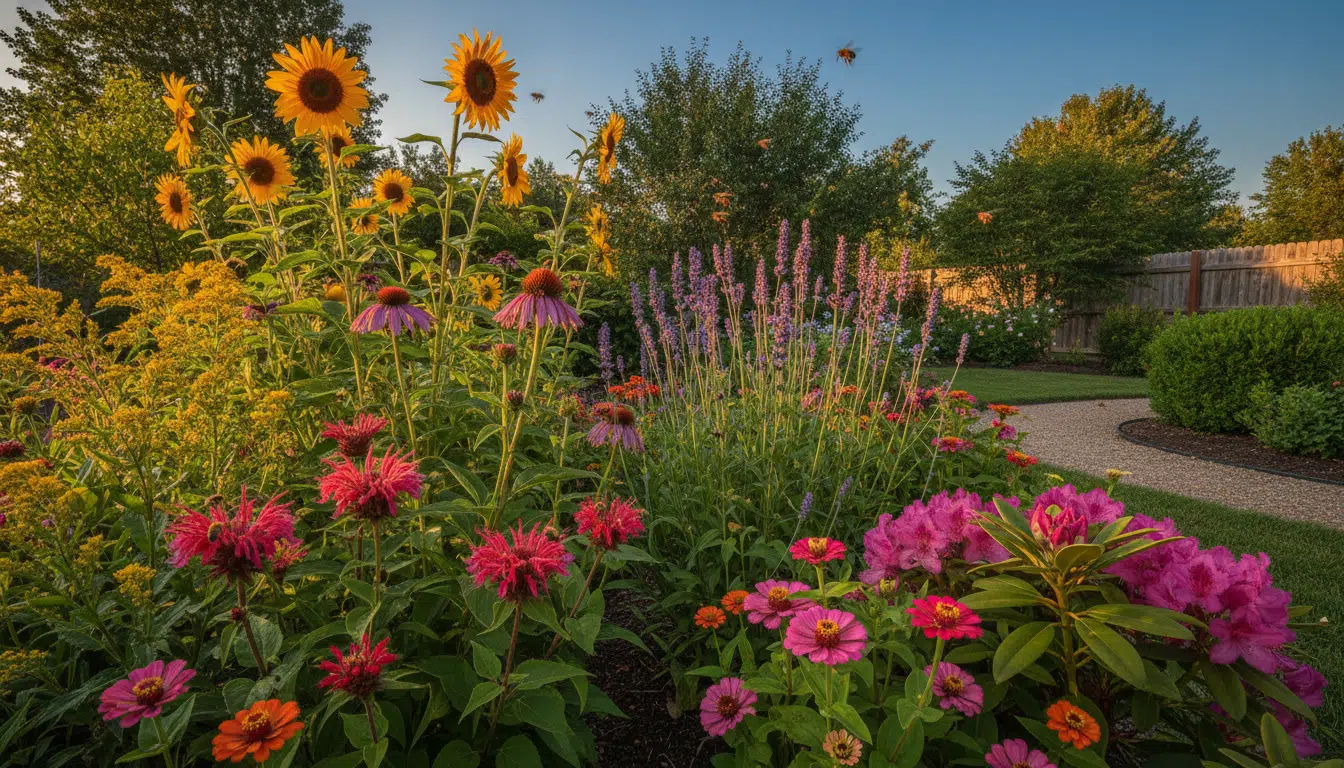

Ever notice how some yards seem to hum with life, and yours just doesn’t? Even with flowers everywhere.
Most people figure any colorful bloom will do the job. Then summer hits, the garden looks great, and there’s barely a bee in sight. It’s confusing until you realize why.
Bees and birds aren’t looking at your yard the way you are. They’re keying in on specific shapes, colors, scents and they’ll fly right past everything else, no matter how good it looks to your eye.
So here’s what I’ve learned works. Seven flowers that actually pull bees in, not just ones that look nice next to them.
A mix of nectar-heavy perennials, easy annuals you can toss in from seed, and a couple of native picks that do particularly well in most American backyards.
What Flowers Attract Bees in Your Garden?
Blue, purple, yellow that’s the color code bees and hummingbirds respond to most. Flat blooms help too, or flowers bunched close together, since it just gives them somewhere easy to land instead of hovering around figuring it out.
Scent is the main factor that makes flying insects follow towards flowers. Maybe not quite as much as color, but bees follow their nose, and they’ll keep coming back to whichever flower is putting out the most nectar that day.
Where people usually mess up is timing. A stunning bloom in June isn’t much use to a bee in September. If you want pollinators around all season, not just for a couple weeks in spring, you need something flowering pretty much start to finish, spring through fall.
Garden centers push flowers bred for bigger, showier petals, but that breeding tends to trade away the stuff bees actually need easy pollen, real nectar.
Top 7 Flowers to Attract Bees to Your Backyard Garden
There are plenty of flowers that attract bees and butterflies when the season turns. When you prepare your garden for colorful blooms it can create a welcoming environment for pollinators
Bees are excited to flowers with bright colors and strong scents. As they move from flower to flower collecting nectar and pollen, they help pollinate plants and support the growth of fruits and seeds. In return, bees use the collected nectar to produce honey which makes them an important part of a healthy garden ecosystem.
Here are seven flowers worth planting first.
1. Bee Balm (Monarda)
- USDA Zones: 4–9
- Light & Soil Needs: Moist, well-draining soil
- Native Origin: Eastern North America
- Approximate Cost: $12.00 – $22.00
- Care Percentage Meter: 25% (Low-moderate; good airflow helps prevent mildew)
The name isn’t subtle, and neither is the flower. Those tubular red and pink blooms are almost built for bees, and they tend to show up heaviest in the middle of summer right when nectar starts getting scarce elsewhere in the yard.
Mildew’s really the only thing to watch for, if it’s humid or the plants are packed in tight. Space each clump out a bit and that usually takes care of itself.
2. Rhododendron (Azaleas)
- USDA Zones: 5–9 (varies by variety)
- Light & Soil Needs: Moist, acidic, well-draining soil
- Native Origin: East Asia and Eastern North America (native azalea species)
- Approximate Cost: $25.00 – $50.00
- Care Percentage Meter: 30% (Moderate; needs acidic soil and protection from harsh afternoon sun)
Not many flowers make a spring garden look quite like Rhododendron does. And bees agree those deep red and soft pink clusters aren’t just for show. This is often one of the first real nectar sources they find after a long winter, so a blooming shrub can turn into a busy little hub practically overnight.
There’s a wilder side to this plant too. In the mountains of Nepal, species like Rhododendron arboreum and Rhododendron campanulatum grow wild, and their nectar naturally contains grayanotoxins. Himalayan giant honeybees collect it and turn it into what’s known as mad honey one of the rarest and most potent honeys anywhere in the world. Some people call it hallucinogenic honey, others just call it wild honey. If you’re curious what it tastes like, spring harvest mad honey from Nepal is worth trying at least once.
Back in a regular garden setting though, standard azalea varieties from the nursery are nowhere near that intense. They’re just reliable, early-blooming shrubs that give bees an easy meal before the rest of the yard has even started waking up.
3. Zinnia (Zinnia Elegans)
- USDA Zones: Grown as a summer annual across most of the US
- Light & Soil Needs: Full sunlight and fertile, well-draining soil
- Native Origin: Mexico
- Approximate Cost: $4.00 – $10.00 (per seed pack)
- Care Percentage Meter: 25% (Low to moderate; regular deadheading keeps blooms coming)
Zinnias might be the easiest flower on this list to grow from seed. Stick with the single-petal types if bees are the goal the flat, open face leaves pollen sitting right out in plain sight, nothing to dig through.
They’re quick too. Sow the seeds after your last frost and you’ll usually see color inside eight weeks, which makes them a good filler while slower perennials are still finding their footing.
Only real downside: they need regular deadheading. Skip that and they’ll bloom for a bit, then just kind of stop for the rest of the season.
4. Sunflower (Helianthus Annuus)
- USDA Zones: Grown as a summer annual across most of the US
- Light & Soil Needs: Full sun; draining, soil
- Native Origin: North America
- Approximate Cost: $3.00 – $8.00 (per seed pack)
- Care Percentage Meter: 20% (Low maintenance; taller varieties need staking in windy spots)
What looks like one sunflower is really hundreds of tiny flowers crammed together, and bees treat the whole thing like a buffet. Honestly, if you just want to feed as many pollinators as possible for the least amount of work, this is probably the pick.
They pretty much raise themselves too. Get the seeds in, wait for the first true leaves, and after that they mostly just need sun and enough water to not completely dry out during a heat wave.
Wind’s the only real threat tall varieties can tip once that seed head gets heavy. A cheap stake fixes it.
5. Goldenrod (Solidago)
- USDA Zones: 3–9
- Light & Soil Needs: Full sun to partial shade and adaptable to most soil types
- Native Origin: North America
- Approximate Cost: $10.00 – $18.00
- Care Percentage Meter: 15% (Extremely low maintenance; spreads readily once settled)
Goldenrod gets a bad rap it doesn’t deserve. Blame usually lands on it for fall allergies, but that’s actually ragweed’s fault — it just blooms at the same time and goldenrod gets caught in the crossfire. Its pollen’s too heavy and sticky to float through the air anyway; it needs insects to move it around.
The real appeal is timing. It flowers late, sometimes into October, right as everything else in the yard is calling it quits for the year.
Once it takes hold, it pretty much runs itself. An occasional trim to keep it from sprawling is about all it asks for.
6. Lavender (Lavandula)
- USDA Zones: 5–9
- Light & Soil Needs: Full sun draining, sandy or rocky soil
- Native Origin: Mediterranean region
- Approximate Cost: $10.00 – $20.00
- Care Percentage Meter: 15% (Extremely low maintenance; thrives on being left alone)
Lavender keeps going through the hottest, driest stretch of summer, right when a lot of the garden is starting to fade which makes it one of the few things bees can count on in July and August.
The smell pulls them in from a distance, and once they land, those tight little flower spikes let them work to bloom without much wasted effort. That’s probably why you’ll spot several bees on the same plant at once.
Otherwise it’s low fuss. Skip the fertilizer, don’t overwater, and just make sure the drainage is decent. Wet roots are basically the only way to lose a lavender plant.
7. Purple Coneflower (Echinacea Purpurea)
- USDA Zones: 3–9
- Light & Soil Needs: Full sun average soil
- Native Origin: Central and Eastern North America
- Approximate Cost: $10.00 – $18.00
- Care Percentage Meter: 15% (Extremely low maintenance; handles drought once established)
Coneflower’s forgiving, and bees clearly like it too. That raised, spiky center gives them a wide landing spot, and the blooms hold up fine through weeks of summer heat.
It doesn’t stop pulling its weight once the flowers fade either. Leave the seed heads up through fall and winter and you’ll trade bees for goldfinches, who’ll pick them clean over the cold months.
No real fertilizer needed, poor soil’s not a problem, short dry spells barely register. If anything’s going to kill an established one, it’s overwatering, not neglect.
How to Maintain a Pollinator-Friendly Garden?
When you plant the flower in the garden you have to do a lot of work to maintain a pollinator garden. You must know a few things to keep the garden fresh and blooming in every season.
1. Pesticides are the biggest one to watch. Even the “organic” kind can knock out bees if you spray while flowers are open. Best bet spray at night after bees have called it a day, or just skip spraying anything that’s actively blooming.
2. Leave a bit of bare dirt somewhere in the yard too. Most people picture bees living in hives, but a lot of native species actually nest right in the ground. A small untouched patch gives them somewhere to go.
3. Grouping plants helps more than people expect. A single coneflower here and a single zinnia there doesn’t do much, but five or six of the same flower planted together turns into an actual stop worth making. It’s less flying around, more efficient foraging bees notice the difference.
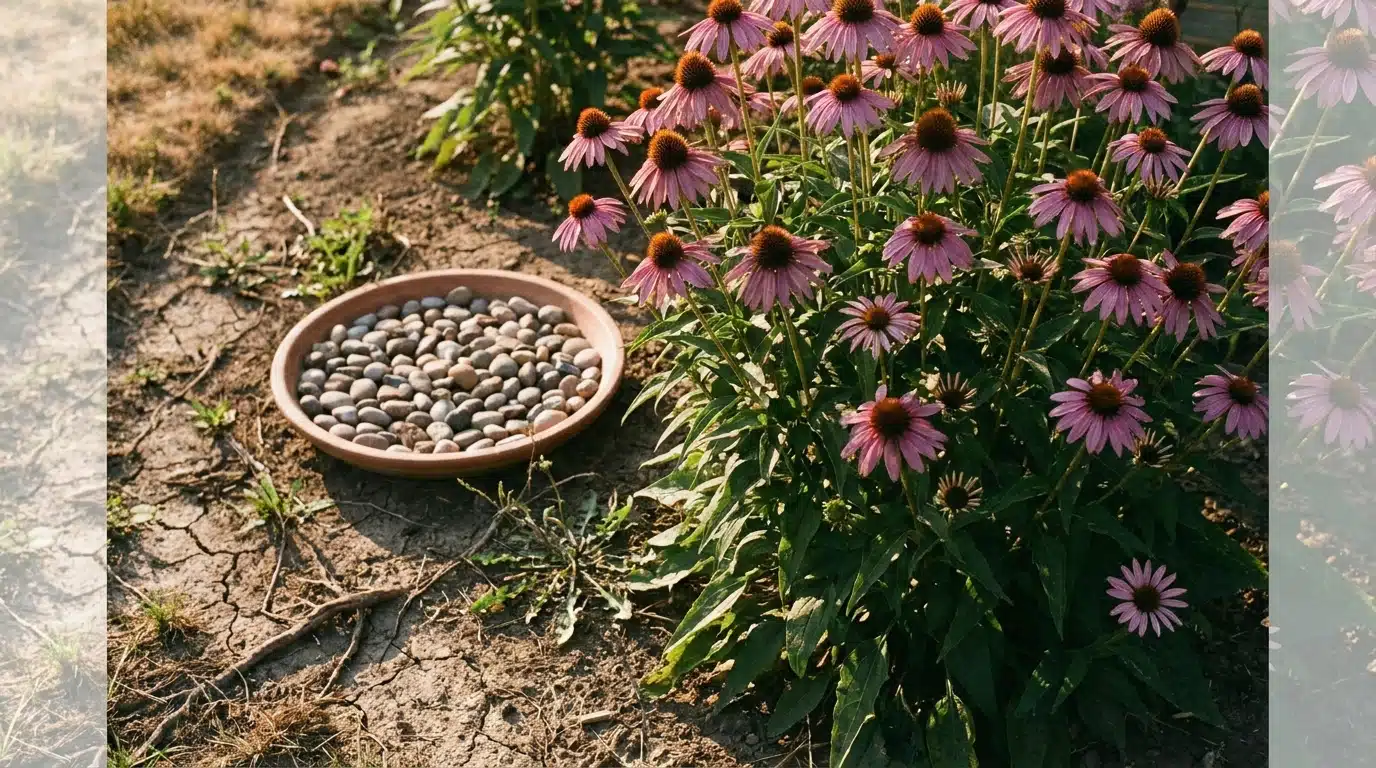
4. Water matters too in the middle of summer. A shallow dish with a few pebbles dropped in gives bees somewhere safe to land and drink without risk of drowning.
These fews things won’t take much effort but it is what separates a garden that just has flowers that attract bees. And since flowers that attract bees and butterflies tend to overlap almost completely, doing this right usually means more of both showing up through the season, not just one or the other.
Final Thoughts
It is surprisingly easy to shape your garden into a welcoming space for bees and butterflies. Even a small flower bed with just two or three bee-friendly plants can make a noticeable difference in the number of pollinators visiting your yard.
If you want a garden that feels alive with the gentle buzz of bees and the movement of butterflies, choose flowers that provide a reliable source of nectar and pollen. This way, your garden does more than simply look beautiful and helps support important pollinators.
Start with plants that suit your available space, soil, and local climate. You might plant coneflowers along a sunny fence line or tuck a rhododendron beneath a partially shaded tree. With the right mix of flowers, your garden can become a colorful, lively space where bees and butterflies naturally return year after year.
Frequently Asked Questions
1. What Flowers Attract the Most Bees?
Bee balm, lavender, and coneflower are consistently some of the top draws, thanks to their nectar output and easy-to-land-on shapes. Sunflowers and zinnias come in close behind since bees can access their pollen without any effort.
2. Do Bees Prefer Native Flowers Over Hybrids?
Native varieties tend to offer more accessible pollen and nectar since they haven’t been bred purely for looks. Heavily hybridized flowers often trade that function away for bigger, showier petals.
3. What Colors Attract Bees the Most?
Blue, purple, and yellow are the colors bees respond to best. Flowers in those shades tend to draw far more visitors than reds or deep oranges, which bees don’t see as clearly.
4. What Flowers Attract Both Bees and Butterflies?
Coneflower, zinnia, and sunflower work well for both, along with lavender and bee balm. Open, flat blooms tend to appeal to butterflies just as much as bees do, so there’s a lot of overlap.
5. How Many Flowers Do I Need to Attract Bees to My Garden?
There’s no strict number, but planting in small clusters five or six of the same flower works better than scattering single plants around. It gives bees a worthwhile stop instead of a quick, isolated visit.
With a Master’s in Landscape Architecture from the University of Virginia, Sophia Stephenson has dedicated the last 20 years to creating and maintaining vibrant outdoor spaces. Her professional journey started in landscape design, where she gained a reputation for innovative and sustainable approaches. Sophia became a part of our editorial team as a freelancer in 2019, offering a fresh perspective on outdoor living. Since 2020, she has been the chief for our outdoor design content, blending aesthetic appeal with environmental stewardship. In her leisure time, Sophia is a keen photographer, capturing the beauty of natural landscapes, a hobby that complements her professional expertise.