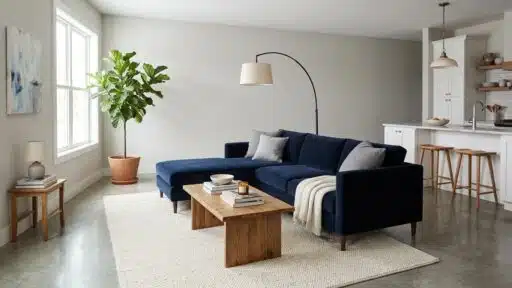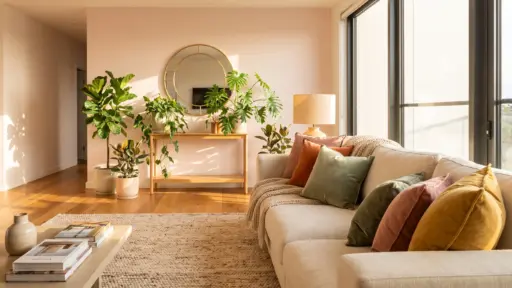
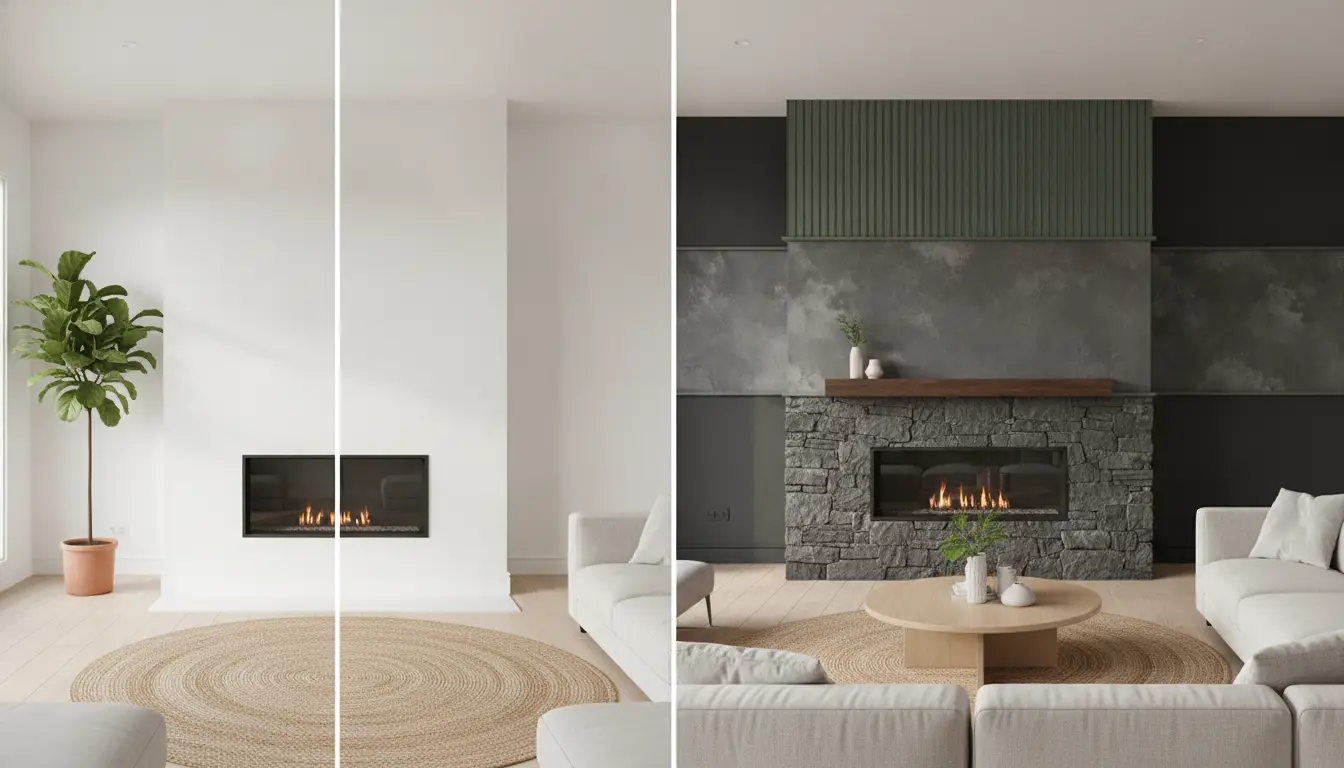

There are so many ways to create an accent wall, and it is still the quickest way to give a room a focal point. Here are 11 different ideas, from a weekend of paint to a full tile install, each with a note on who it is best for.
1. Paint It a Color You’d Never Use on Four Walls
Deep charcoal, forest green, a moody oxblood or an inky navy. These colors are too dark and too saturated for the whole room, which is exactly why they work on one wall. An accent wall is the focal point of your room, so it can carry the darkest and most saturated color in the space. Paint it, step back, and if the rest of the room suddenly looks calmer by comparison, you’ve done it right.
Best for a plain bedroom or a flat, boring living room that needs some depth. Paint the wall your eye hits when you walk in, usually the wall behind the bed or the sofa. A random side wall in dark paint just looks like a mistake.
2. Peel-and-Stick Wallpaper for Renters
Renters can create a focal point using peel-and-stick wallpaper. It is inexpensive, easy to apply, and gives you pattern that paint cannot. There are many designs available, including large floral prints, grasscloth textures and geometric patterns. A roll typically costs between $30 and $50, and most walls need two to three rolls.
The biggest problem with peel-and-stick wallpaper is always the seams. To make sure you have enough to match the pattern, buy one more roll than your calculations tell you to. Smooth the wallpaper from the center of the wall outwards, and use a plastic squeegee to push out any air pockets as you go.
3. Wood Slat Paneling
Pine slats are an affordable alternative to engineered wood panels, and when stained a deep color such as walnut they add warmth and texture to a room. Mount them on a painted backer board with nails or screws, and the whole thing can be removed later if needed. Expect to spend around $150 to $300 in materials, plus a single weekend and a miter saw.
This is great for modern or mid-century rooms, and it works well behind a bed or a TV. Cut a small scrap block and use it as a spacer between each slat. This keeps your spacing consistent and avoids the slightly off, uneven look that comes from eyeballing it.
4. Board and Batten
Board and batten is the trim-based cousin of paneling, and it leans cottage and traditional. A grid of flat, wide trim is fixed to the wall to create a series of rectangular panels, then the whole wall is caulked and painted one color so it reads as architecture rather than decoration. The biggest challenge is the time and patience needed to build the framework. Materials are cheap, typically $60 to $120 for the trim, caulk and paint.
Board and batten is usually used in entryways, dining rooms and bedrooms, and it can make a plain room look as though it has built-in features. Paint the trim and the wall behind it the same shade for the best result. It is not a good option for renters, since it is installed with nails and permanent trim.
5. A Gallery Wall of Thrifted Frames
Not every focal point needs a saw or a paint tray. A gallery wall of mismatched thrifted frames gives you a wall full of personality for under $50 if you shop patiently. The pieces can be anything from paintings and photographs to prints, posters and even fabric swatches that hold meaning for you. Unify the frames with one color of mat board or a coat of spray paint.
Lay the whole arrangement on the floor first and shuffle it until it feels right. Then cut paper templates of each frame, tape them to the wall, and hang the frames starting from the center of the arrangement and working outwards. This one suits collectors, families, and anyone who wants a wall that says something about them.
6. Exposed Brick or a Brick-Effect Finish
Raw brick adds texture and history that no painted wall can match. If you have real brick hiding under old plaster, exposing it is worth the mess. For the rest of us, brick veneer slips or a good brick-effect wallpaper get you most of the way there without the structural drama.
Real exposed brick is perfect for a loft, an industrial kitchen or a fireplace wall. If you expose it, seal it, or it will shed grit onto your floor forever. If you go the veneer route, stagger the seams and vary the mortar color slightly so it does not read as a flat, repeating sheet.
7. Limewash for a Color-Drenched Wall
Limewash is a special paint that gives walls a chalky, cloudy depth that flat paint cannot match, with soft movement that shifts as the light changes through the day. It has been everywhere lately, and for good reason. It is also affordable, at around $40 to $70 per liter depending on the supplier, and it goes on easily with a big brush in loose crosshatch strokes.
This suits anyone chasing a warm, plaster-y, old-world feel. For a real cocooning bedroom, take the same limewash onto the trim and ceiling for a color-drenched look. Test it on a scrap board first, because limewash dries several shades lighter than it goes on and the surprise is real.
8. A Tile or Stone Feature Wall
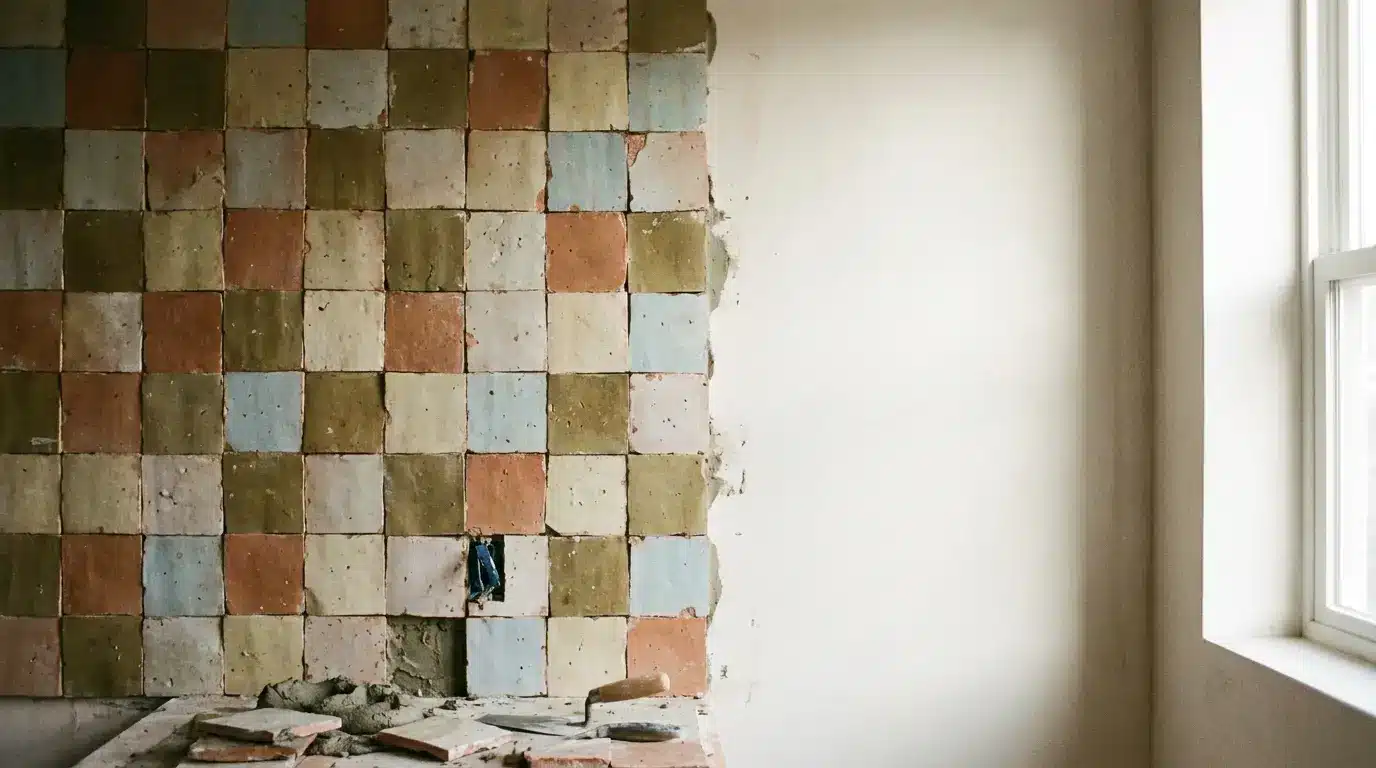
A tile or stone feature wall is the heavy hitter of focal points. A stacked stone panel behind a fireplace, zellige tile in a kitchen, or a slab of natural stone in a bathroom turns a wall into the star of the room. Costs start at around $500 and go up from there once you factor in tile, mortar, wall preparation and installation. In most cases it is best to have a professional set it.
For a kitchen, bathroom or fireplace surround, a tile or stone accent wall is the ultimate permanent feature. It is not cheap, but it adds real weight to a room and will last for decades. Order 10 percent extra for cuts and breakage, always.
9. A Mirrored Wall
A mirrored wall is an old trick for making a small, dark room feel bigger, and it still works. Mirrors bounce light around the room and double the sense of space, and they read as glamorous rather than gimmicky when done with intent. Antiqued or distressed mirror tiles give a softer look than a single flat, clinical sheet.
Mirrored walls are best for a cramped dining room, a long narrow hallway or a snug bedroom. Position the mirrored wall opposite a window so it has plenty of light to reflect. It will also reflect any clutter in the room, so keep it facing a tidy area rather than a messy one.
10. A Neon Sign for Glow and Personality
A custom neon sign adds color and personality that paint alone cannot, and it doubles as art and a light source. Mount one on your feature wall and it glows day and night. It works especially well against a dark or moody wall from idea 1, where the light really pops.
The obvious use for a sign is text, but that does not have to mean plain letters. A simple line-art design, such as an outline of your own dog, a cocktail glass or a pair of hands, reads more like art and less like a bar. You can sketch something yourself and upload your own design to a specialist like Neon Daddy for a free quote, or browse their neon line art range if you would rather pick something ready-made. Prices scale with the size of the sign and the complexity of the design, so a single word or shape is an affordable option for a teen’s room or a studio, while a more detailed custom piece makes a great feature for a home bar. Plan how you will hide the power cord before you hang it, since a trailing cable takes away from the effect fast.
11. Lighting as the Feature
Sometimes the wall is not the point, the light on it is. Wall washers, a row of sconces, or a hidden LED strip grazing a textured surface can turn an ordinary wall into a feature after dark. This pairs perfectly with the slat, brick and limewash ideas above, since raking light across texture makes every ridge and shadow stand out.
Cost varies widely, from a simple plug-in LED strip at around $25 to a few hundred dollars for hardwired sconces or recessed lighting. This works best in a living room or bedroom you use in the evening, when the sun has stopped doing the work for you. Put the lights on a dimmer, always, so you can add or subtract drama as needed.
One last thing: pick one. A room gets a single accent wall, not three competing for attention. Give your chosen wall a real reason to exist and let the other three stay quiet.

Ava Taylor, holding a Bachelor’s degree in Interior Design from the Pratt Institute, has made her mark in creating engaging and functional living spaces for over 14 years. She began her career with a New York-based design studio, where she gained a reputation for her innovative and user-centric designs. Ava joined our team in 2019, bringing a blend of artistic flair and practicality to our home improvement section. Since the she has been the lead contributor to our room transformation series, inspiring readers with her unique approach to maximizing space utility and aesthetic appeal. Beyond her professional work, Ava is a passionate collector of vintage furniture, a hobby that enriches her design perspective.