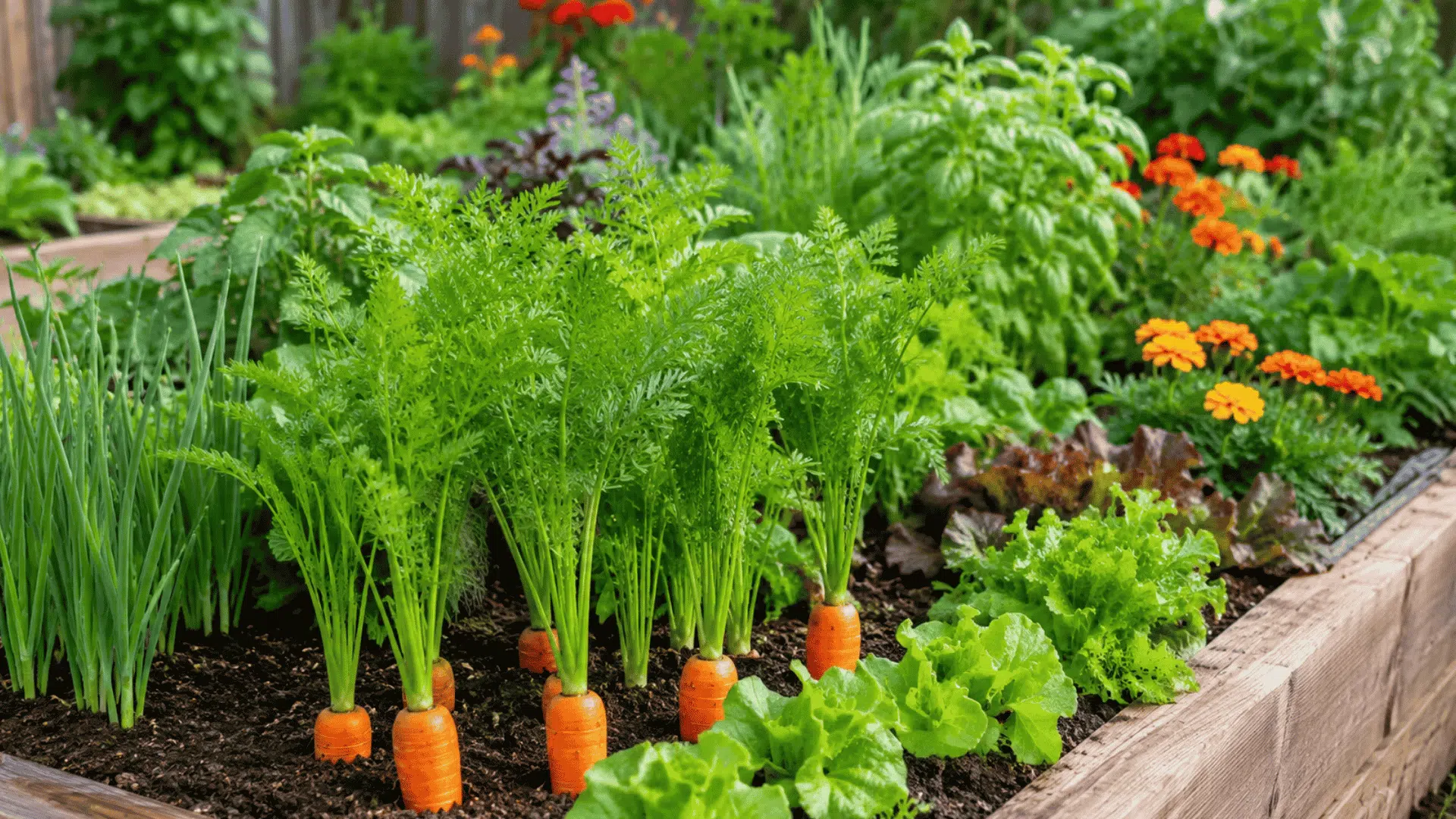

When I plan a carrot bed, I do not just think about spacing the carrots themselves. I also look at which companion plants carrots can share the space with without crowding the roots, blocking sunlight, or creating extra pest problems.
Some of the best options include onions, garlic, leeks, lettuce, spinach, radishes, peas, herbs, and flowers such as marigolds and nasturtiums. At the same time, plants like fennel, potatoes, and some close carrot relatives need more caution.
What I have found most useful is choosing companions based on how they actually grow together, not just following a long “good versus bad” list.
Below, I’ll break down the best carrot companion plants, what to avoid, and why each combination works.
Best Carrot Companion Plants at a Glance
When choosing carrot companion plants, I look for options that use garden space differently rather than compete with developing carrot roots.
The best pairings usually have shallower roots, different growth habits, or scents that may help with pest management.
Use this quick comparison before deciding what to plant around your carrots:
| Companion Plant | Why It Works Well |
|---|---|
| Onions, garlic, leeks, and chives | Strong-smelling foliage and relatively compatible root growth |
| Lettuce and spinach | Shallow roots and low growth that can help cover bare soil |
| Radishes | Germinate quickly and can help mark slow-growing carrot rows |
| Peas and bush beans | Grow differently from carrots and make good use of nearby space |
| Rosemary, sage, thyme, and oregano | Aromatic foliage and added garden diversity |
| Marigolds and nasturtiums | Attract beneficial insects and work well around bed edges |
| Beets and small turnips | Similar cool-season needs when given enough spacing |
| Tomatoes | Can share space if carrots are kept away from heavy roots and shade |
Spacing, sunlight, water needs, and mature plant size still matter just as much as the companion itself.
What Should You Avoid Planting With Carrots?
I do not treat companion planting as a strict list of “good” and “bad” neighbors. With carrots, I pay more attention to root competition, shade, shared pests, and how much space each plant needs as it matures.
A few plants deserve extra caution:
- Fennel: I prefer to keep it separate because it can interfere with nearby plant growth.
- Dill, parsnips, celery, and parsley: These are closely related to carrots, so planting them together can increase the chance of shared pest problems.
- Potatoes: Their underground growth competes for space, and harvesting them can disturb developing carrot roots.
- Large squash and cucumbers: Their spreading vines and leaves may eventually shade young carrot plants.
For me, the main rule is simple: if a neighboring plant crowds the root zone, blocks light, or increases pest pressure, I give it more distance.
Which Plants Grow Best With Carrots?
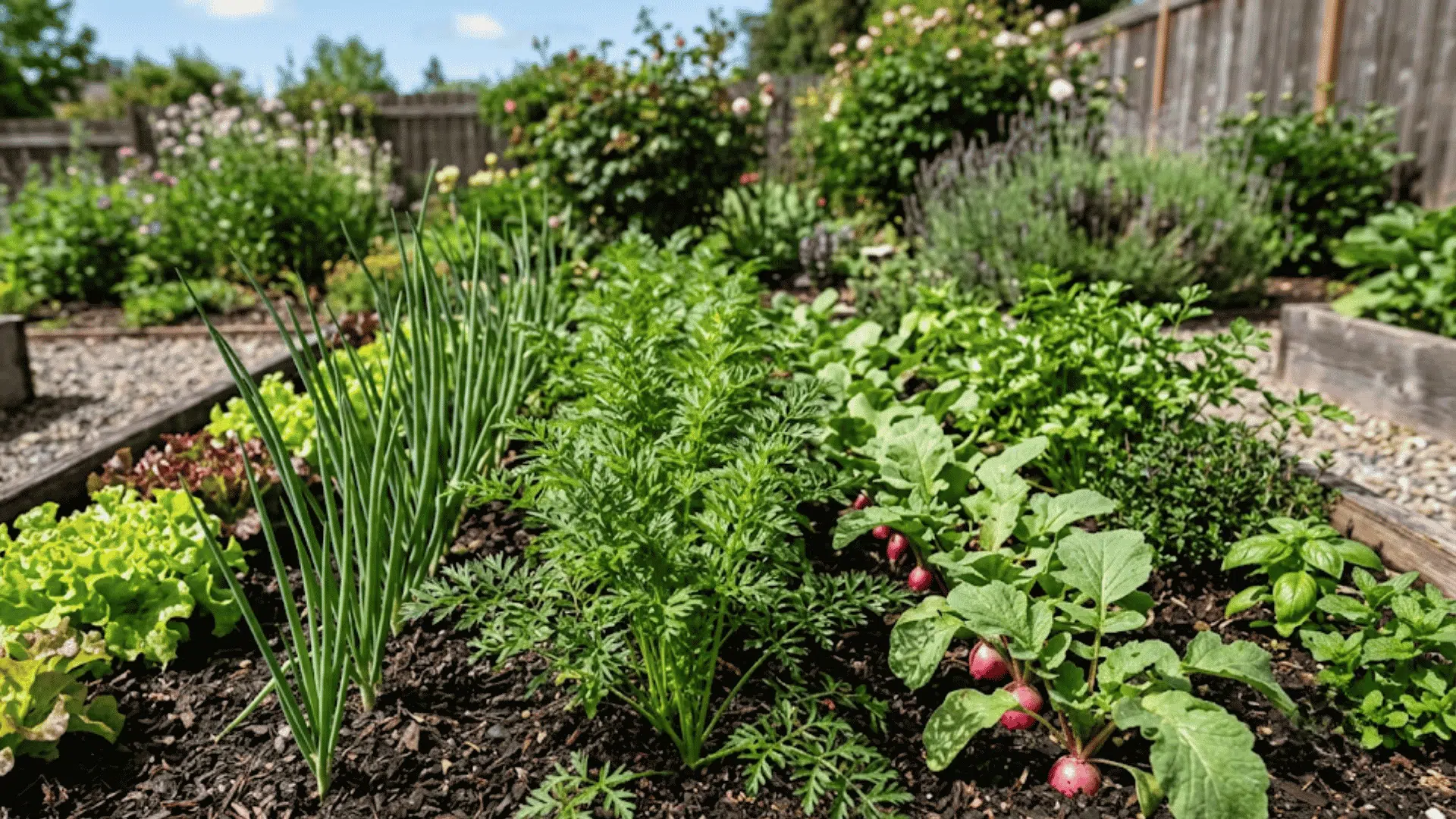
The most useful carrot companion plants are those that differ in root depth, plant height, growth speed, or scent, allowing several crops to share the same bed more comfortably.
Once the plants that may cause crowding or pest issues are out of the way, the best companions are those that use garden space differently from carrots.
Good companion choices work even better when you follow the basics of growing carrots, especially giving their roots loose soil and enough room to develop.
Root depth, plant height, growth speed, and scent all matter.
1. Onions, Garlic, Leeks, and Chives
Alliums are some of the most useful carrot companions because they stay fairly upright and do not create a heavy canopy over young carrot tops. Their strong-smelling foliage may also make carrots harder for some pests to locate.
If you’re planting onions alongside carrots, leave enough room for both crops to develop without crowding each other. Onions, garlic, leeks, and chives work well along the edges of carrot rows or between widely spaced rows.
2. Lettuce and Spinach
Lettuce and spinach pair well with carrots because their roots stay relatively shallow while carrot roots grow deeper into the soil. This reduces direct competition underground.
Their low, leafy growth can also help cover bare soil, hold moisture, and limit some weed growth. The main thing to watch is spacing. If planted too densely, mature leaves can shade young carrot seedlings and slow their early growth.
3. Radishes
Radishes can work well with carrots because they germinate much faster. That makes them useful for marking carrot rows while the slower carrot seedlings are still emerging.
They also mature quickly, so you can often harvest them before carrots need more space. The key is not to sow them too densely, since heavy radish foliage can shade young carrots and create competition near the surface.
4. Peas and Bush Beans
Peas and bush beans can fit well near carrots because their growth habit differs and they use vertical space well without crowding the carrot root zone too much.
Peas are especially useful in cooler weather, which lines up well with carrot growing conditions. Keep taller varieties positioned so they do not cast too much shade over the carrot rows as they climb.
5. Rosemary, Sage, Thyme and Oregano
Aromatic herbs can be useful around carrot beds because their strong scent may help make the area less attractive or harder to navigate for some pests.
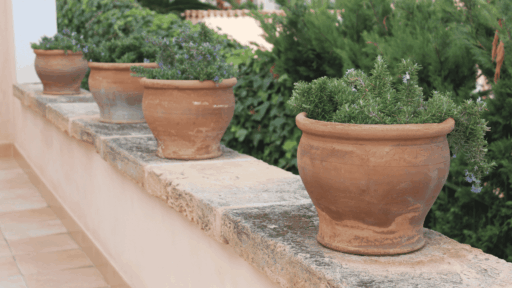
They are usually best placed around the edges of the bed rather than packed between carrot rows. This also makes watering easier, since herbs such as rosemary often prefer drier conditions than carrots.
6. Marigolds and Nasturtiums
Marigolds and nasturtiums can add useful diversity around a carrot bed by attracting pollinators and other beneficial insects.
They work best at bed corners or along the edges, where they can add color without crowding carrot roots. I wouldn’t rely on them as guaranteed pest repellents, but they can still support a more balanced, active garden environment.
The same idea of combining flowers, herbs, and vegetables can also be used when planning companion planting for cucumbers.
7. Beets and Small Turnips
Beets and small turnips can share space with carrots because they prefer similar cool-season conditions and develop differently underground.
They still need enough room, though. Crowding too many root crops together can reduce growth and make harvesting harder. When pulling mature beets or turnips, loosen the soil carefully so you don’t disturb nearby carrot roots.
Which Carrot Companions Need Extra Care?
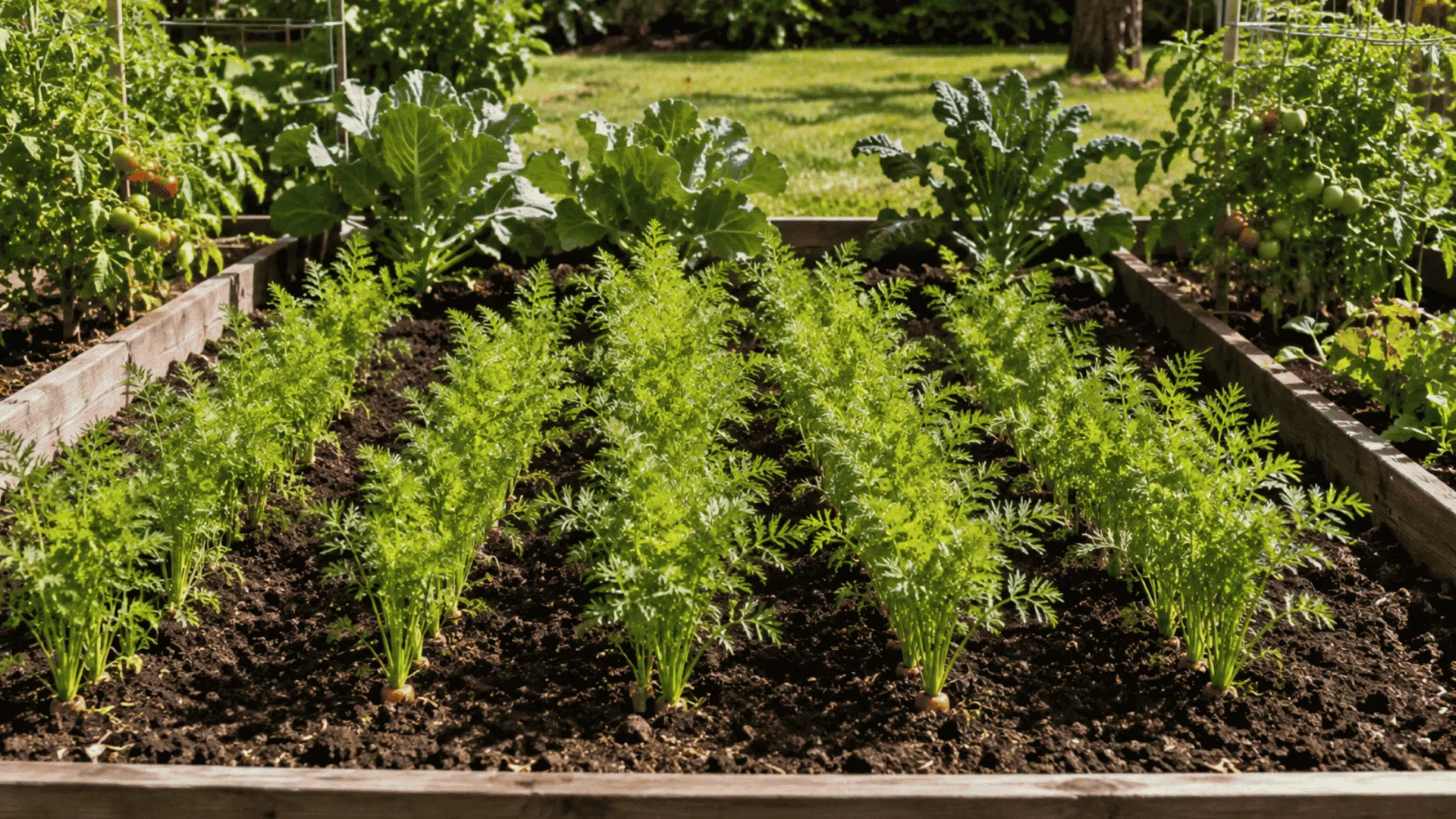
Some plants can grow successfully near carrots, but they need more planning than the easier pairings above. The main issues are usually shade, root competition, and mature plant size rather than the plants being completely incompatible.
- Tomatoes: Give them extra spacing because their roots spread widely and mature plants can shade nearby carrots. In hot weather, some afternoon shade may help, but carrots should still stay far enough from the tomato base to avoid heavy competition for water and nutrients.
- Cabbage, kale, and other large greens: Place them carefully because their broad leaves can block sunlight as they mature. Keep carrots toward the sunnier side of the bed so the larger plants do not grow directly over them.
The goal is not to avoid these pairings completely, but to give each crop enough room to develop.
Why does Companion Planting Help Carrots?
Companion planting can make a carrot bed easier to manage when neighboring plants support rather than compete with the crop.
The University of Minnesota Extension notes that companion planting can help gardeners use space efficiently, support beneficial plant combinations, and sometimes reduce insect pressure.
The main benefits usually come from four areas:
- Pest confusion: Strong-smelling herbs and alliums may make it harder for certain pests to locate carrot plants.
- Better use of soil space: Shallow-rooted crops can grow above the same bed without competing heavily with carrot taproots.
- Moisture and weed control: Low-growing plants can shade bare soil, helping reduce evaporation and limiting some weed growth.
- More garden diversity: Flowers and herbs can attract beneficial insects and create a less uniform environment for pests.
The right carrot companion plants can support better use of space, garden diversity, and pest management, but they still need proper spacing and compatible growing conditions.
What Growing Conditions Should Carrot Companions Share?
A good companion should not only grow well beside carrots but also handle similar soil, moisture, and light conditions. That makes the bed easier to manage and reduces competition between crops.
The University of Maryland Extension recommends sowing short-season radishes with long-season carrots and harvesting the radishes before they begin to crowd the carrots.
| Growing Factor | What Works Best for Carrots |
|---|---|
| Sunlight | Full sun, with at least six hours of direct light |
| Soil | Loose, deep, and well-drained soil that allows roots to grow straight |
| Moisture | Consistent moisture, especially during germination and early growth |
| Root space | Enough open soil around the taproot to prevent crowding |
| Fertility | Moderate feeding without excessive nitrogen |
| Plant height | Low or well-positioned companions that do not create heavy shade |
| Timing | Cool-season crops that can grow during a similar part of the year |
If a companion needs very different watering, soil, or sunlight, I usually keep it farther away rather than forcing both plants into the same spot.
How Should You Arrange Companion Plants Around Carrots?
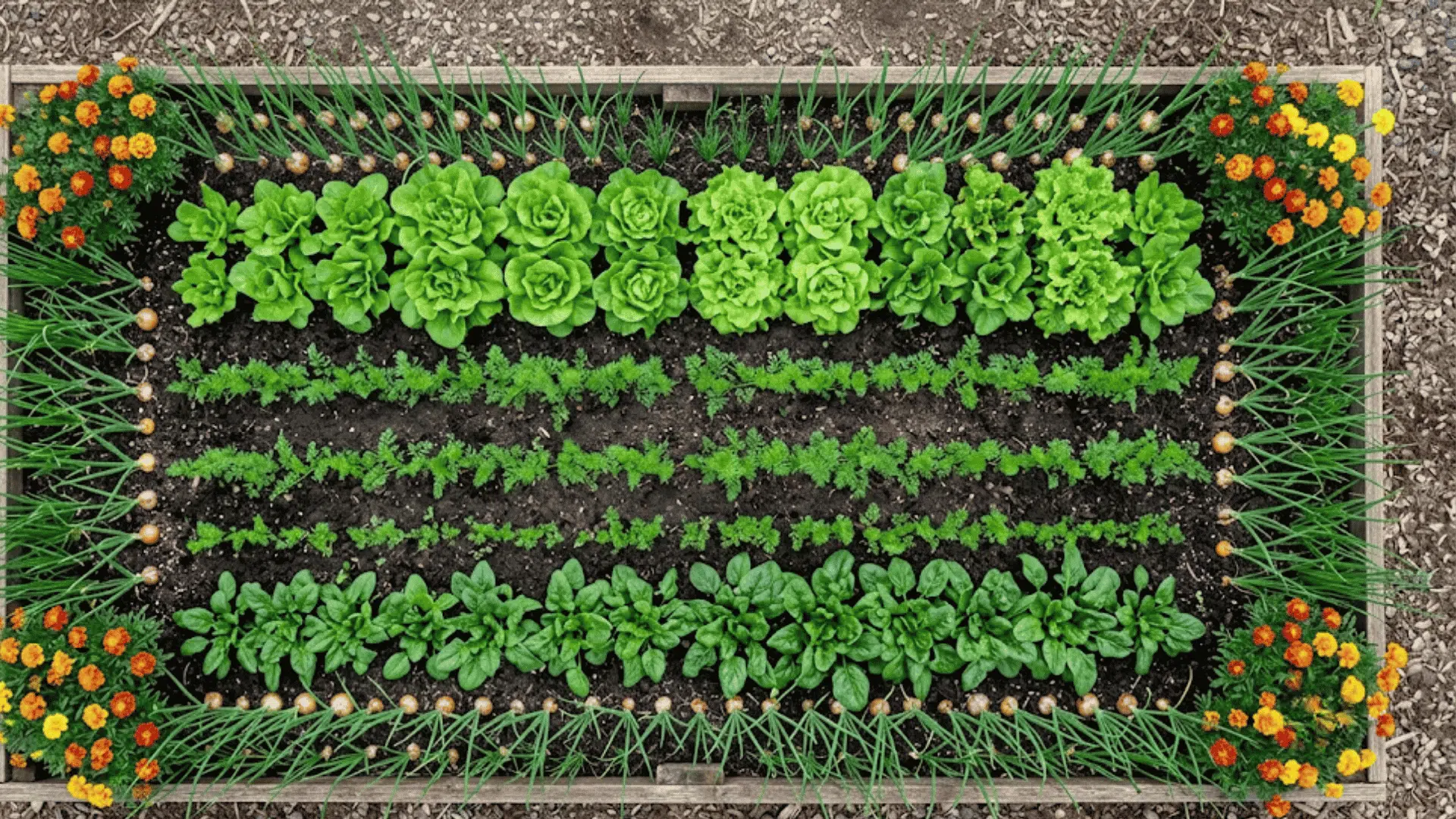
The best layout keeps carrot rows open while placing companion plants where they can help without creating extra competition.
When arranging carrot companion plants, I keep the carrot rows open and place neighboring crops according to their height, root spread, and mature size.
If you want a more structured way to plan spacing, a square foot gardening chart can help you organize carrots and nearby companion plants within a limited bed.
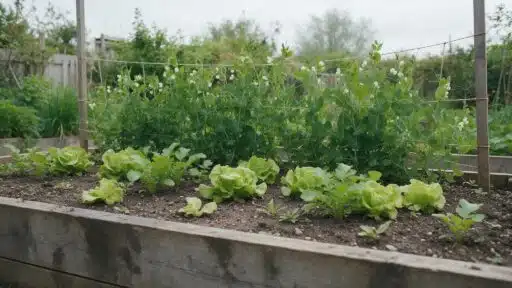
A simple raised-bed setup can look like this:
- Center rows: Keep carrots in the sunniest, loosest part of the bed.
- Between wider rows: Add lettuce, spinach, or a few radishes where space allows.
- Along the edges: Plant onions, garlic, chives, or leeks so they do not crowd the carrot roots.
- At the corners: Use marigolds or nasturtiums to add flowers without taking over the bed.
- Around the perimeter: Keep rosemary, sage, and other woody herbs near the outside, where their different watering needs are easier to manage.
- On the least-shading side: Place peas or taller crops so they do not block sunlight.
I also leave enough open space for thinning, weeding, and harvesting. A companion is only useful if I can still reach the carrots without disturbing their roots.
Common Carrot Companion Planting Mistakes
Even good companion plants can cause problems if the bed is packed too tightly or the plants need very different care.
Watch out for these common mistakes:
- Planting companions so close that carrot roots become crowded
- Letting taller crops block sunlight from young carrot tops
- Pulling radishes or beets roughly and disturbing nearby carrots
- Pairing carrots with plants that need much drier or wetter soil
- Using too much nitrogen, which can encourage leafy growth instead of strong roots
- Expecting one herb or flower to completely prevent pest problems
- Ignoring how large each companion will become later in the season
I find it more useful to think about spacing, timing, and mature plant size than to rely only on whether a plant appears on a companion list.
Final Takeaway
The best carrot companion plants are the ones that share space without crowding the roots or blocking too much light.
Alliums, leafy greens, carefully spaced radishes, peas, herbs, and flowers are usually the easiest combinations to work with.
What matters most is not simply whether a plant appears on a “good companion” list. Spacing, sunlight, watering needs, mature size, and harvest timing all affect how well the pairing works.
If I were starting a new carrot bed, I would begin with just one or two companion groups, such as onions along the edges and lettuce between wider rows, then adjust from there.
Which carrot companion plants have worked best in your garden? Comment below.
Frequently Asked Questions
What is the Best Companion Plant for Carrots?
Onions, garlic, leeks, and chives are strong choices because they grow upright, fit well around carrot rows, and may help confuse some common carrot pests.
Can Carrots and Onions Grow Together?
Yes. Their growth habits are compatible, and onions do not create heavy shade over carrots. They also work well along the edges of carrot rows.
Can Carrots and Tomatoes Be Planted Together?
Yes, but give them enough space. Tomato roots spread widely, and mature plants can shade carrots, so keep carrot rows away from the tomato base.
Can Carrots and Radishes Grow Together?
Yes. Radishes germinate quickly and can help mark carrot rows, but they should be harvested before they begin crowding slower-growing carrots.
What Should Not Be Planted Next to Carrots?
Fennel, potatoes, parsnips, dill, and some other carrot-family plants need extra care because of shared pests, underground competition, or possible growth interference.

Jordan Mathews, who has a degree in horticulture from Texas A&M University, has been a guiding force in plant health and sustainable gardening for over 16 years. His career began with a role at a renowned botanical garden, where he deepened his understanding of plant physiology and eco-friendly cultivation methods. Jordan joined our website as a freelancer in 2020, becoming a go-to expert for readers seeking advice on nurturing diverse plant species apart from offering insights grounded in scientific knowledge and practical experience. Beyond his professional achievements, Jordan is a keen nature photographer, capturing the beauty of flora in its immensely diversified forms.