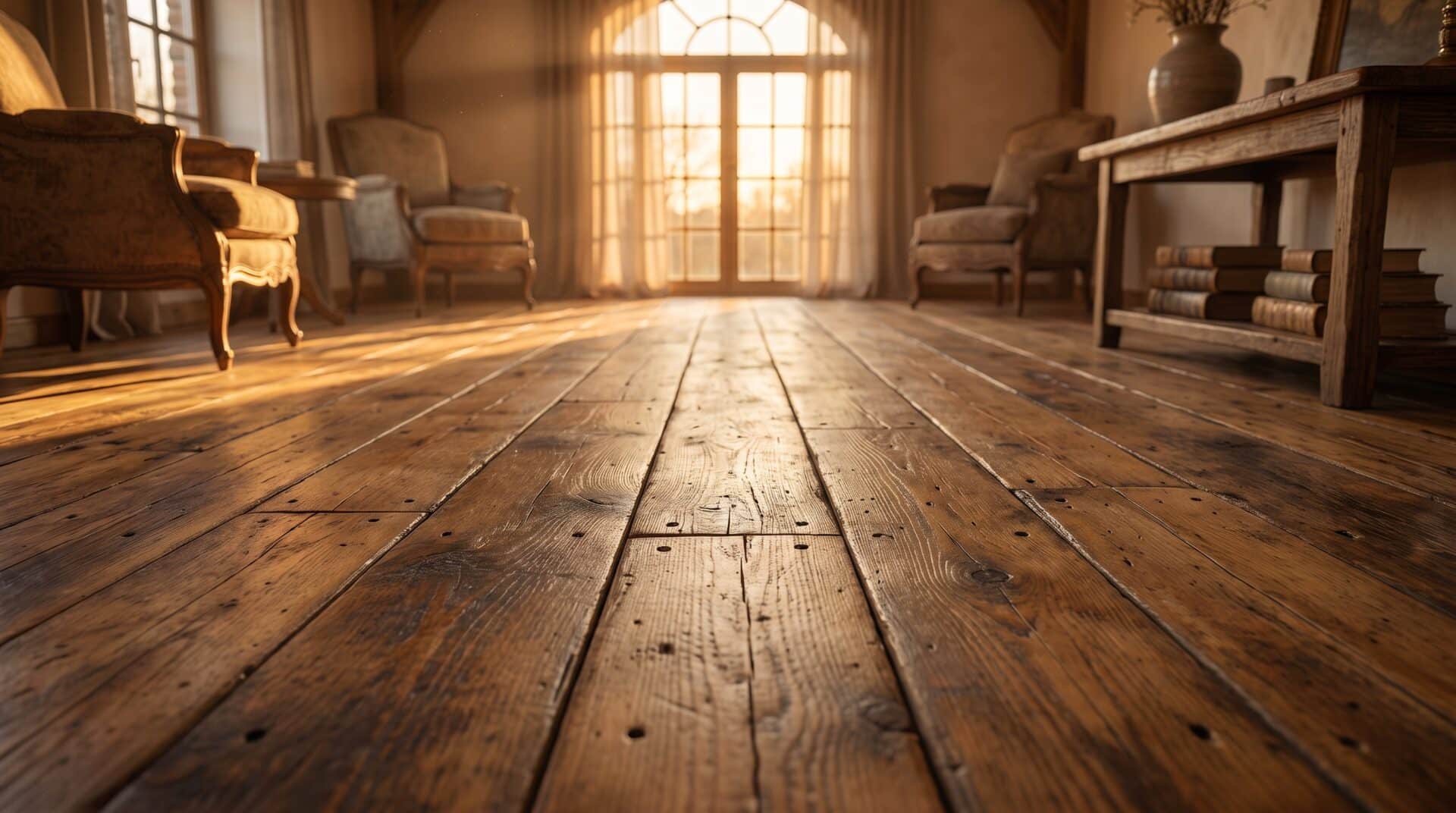

Walk into a room with genuinely old wood underfoot and you notice it before you can explain why. The surface has a depth that new material rarely achieves, a texture built up over decades of use rather than manufactured in a single pass. That difference is at the heart of why so many homeowners and designers now look beyond conventional flooring options and consider wood with a history of its own.
The Appeal of Material With a Past
New timber, however well finished, starts its life the moment it leaves the mill. Reclaimed wood arrives with decades already behind it. It has absorbed moisture through humid summers, dried out during cold winters, and settled into a stability that only time can produce.
This aging process changes the wood at a structural level, making it denser and less prone to warping than freshly cut boards. For anyone renovating a period property or simply wanting a floor with genuine character, that difference matters more than it might first appear.
There is also an environmental argument that has grown harder to ignore. Sourcing wood from old barns, factories, or demolished buildings means fewer trees need to be felled to meet demand.
The material already exists, and giving it a second purpose extends its usefulness well beyond what its original builders likely imagined. In a period where sustainable sourcing is scrutinized more closely than ever, this circular use of timber offers a straightforward way to reduce environmental impact without compromising on quality.
What Sets Reclaimed Oak Apart
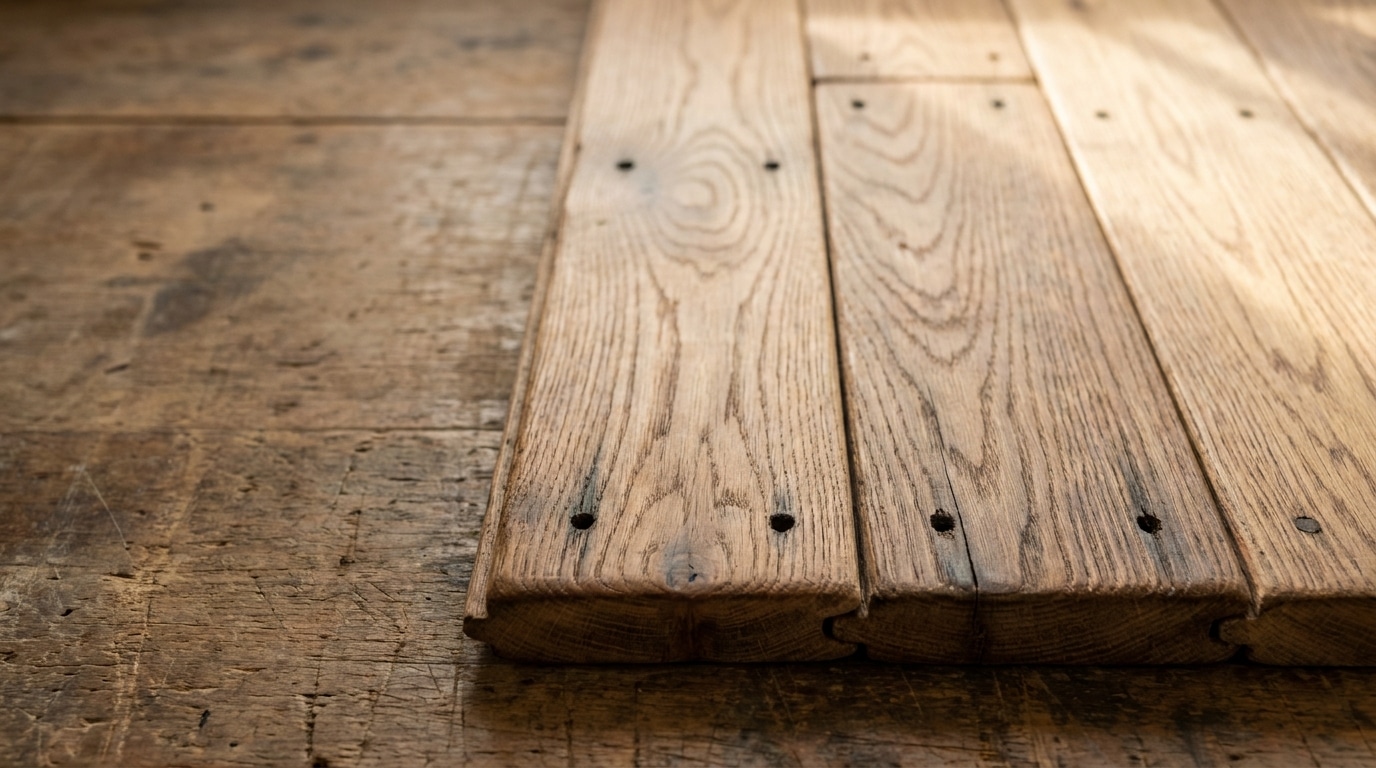
Oak has long been prized for its strength and its ability to age gracefully, which is part of why so much of the reclaimed timber available today is oak. Boards salvaged from old European buildings often carry a patina that cannot be replicated through staining or artificial distressing. Each plank shows its own pattern of grain, nail holes, and subtle colour variation, features that give a floor a sense of individuality rather than uniformity.
Reclaimed oak floorboards in particular have become a popular choice for those wanting the warmth of a traditional interior without sacrificing durability. Because oak is naturally hard-wearing, boards that have already survived a century or more of use tend to hold up exceptionally well under continued foot traffic. This makes them suitable not just for period-style homes but also for contemporary interiors where designers want to introduce texture and contrast against otherwise clean, modern lines.
Practical Considerations Before Choosing Reclaimed Flooring
- Check the source and documentation of the wood to confirm it has been properly treated and is free from pests or structural damage.
- Consider the finish you want, since reclaimed boards can be sanded lightly to reveal detail or left more rustic for a weathered look.
- Factor in installation time, as reclaimed wood sometimes requires more careful handling than uniform new boards.
- Think about how the flooring will interact with existing woodwork, furniture, or architectural details in the space.
Choosing a Supplier That Understands the Material
Working with reclaimed timber requires a different kind of expertise than sourcing standard flooring. Suppliers need to understand how to assess the condition of old wood, how to prepare it safely, and how to guide buyers toward boards that suit their specific project.
Companies such as Historisch Hout specialize in exactly this kind of knowledge, helping customers navigate the practical and aesthetic decisions that come with using reclaimed material. Their experience reflects a broader shift in how people think about flooring, not just as a functional surface but as a meaningful part of a building’s character.
Choosing reclaimed wood is ultimately a decision about what a space should feel like over time. It rewards patience and an appreciation for imperfection, offering floors that age further rather than simply wear out. For those drawn to interiors with a sense of history, that quality is difficult to replace with anything newly made.

Ava Taylor, holding a Bachelor’s degree in Interior Design from the Pratt Institute, has made her mark in creating engaging and functional living spaces for over 14 years. She began her career with a New York-based design studio, where she gained a reputation for her innovative and user-centric designs. Ava joined our team in 2019, bringing a blend of artistic flair and practicality to our home improvement section. Since the she has been the lead contributor to our room transformation series, inspiring readers with her unique approach to maximizing space utility and aesthetic appeal. Beyond her professional work, Ava is a passionate collector of vintage furniture, a hobby that enriches her design perspective.