
A sunny room can look great in the morning and feel miserable by late afternoon. Once direct sunlight comes through the glass, it warms floors, furniture, and bedding, and that heat can linger after the sun moves away. Blackout shades can help by limiting how much solar energy reaches the room.
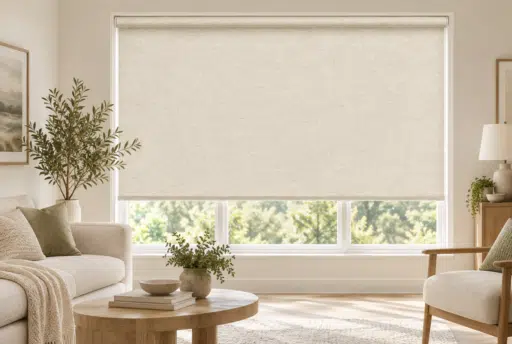
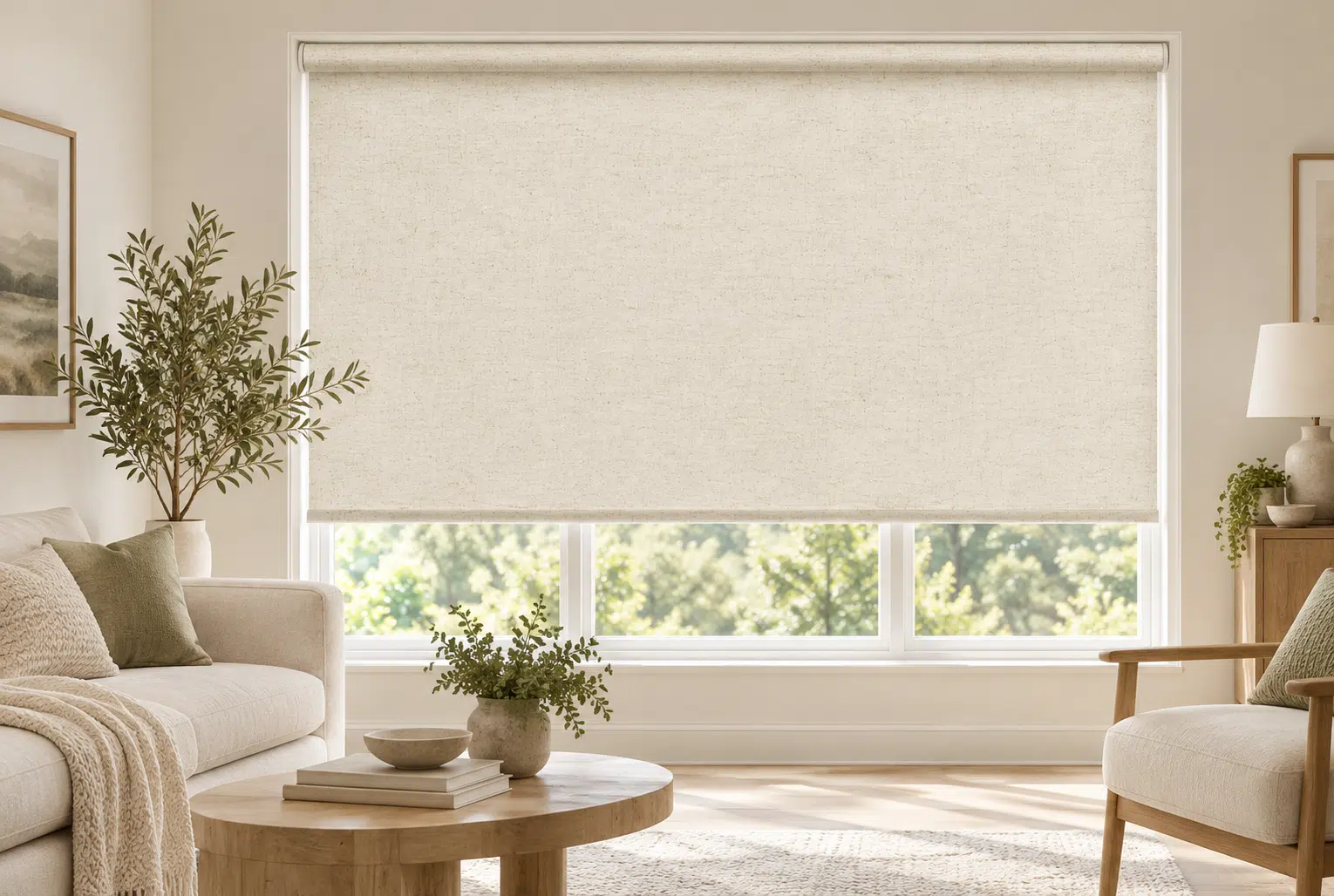
For bedrooms, nurseries, media rooms, and west-facing living spaces, blackout roller shades are useful when you want strong light control without bulky drapery. In hard-to-reach rooms or spaces that need frequent adjustment, motorized shades make it easier to close the window covering before peak afternoon sun and reopen it later.
How Blackout Shades Reduce Summer Heat
Blackout shades do not cool a room the way an air conditioner does. Their job is simpler: reduce a major source of daytime heat gain. Sunlight that reaches a sofa, wood floor, or bed is absorbed and later released as heat. An opaque shade blocks much of that direct light at the window, so fewer interior surfaces are left baking in the sun.
The difference is easiest to notice on windows with strong exposure. South-facing windows may collect sun for long stretches, while west-facing windows often create late-day heat. A well-fitted blackout shade also cuts glare, making screen-heavy rooms more comfortable.
The Rooms That Benefit Most
Bedrooms are an obvious fit because summer comfort is not only about temperature. Early sunrise, long evenings, and afternoon heat can interfere with sleep. A blackout shade can darken the room for a daytime nap while also reducing direct sun before bedtime. That makes it practical for light sleepers, young children, and people who work overnight shifts.
Home offices have a different problem. Direct sun across a monitor creates glare and heat at the same time. Closing the shade during the strongest sun hours gives you a more usable workspace, then lets daylight return after the window moves into shade.
Media rooms and street-facing bedrooms gain another benefit: privacy. One window treatment can manage harsh light, outside visibility, and summer heat without layering several bulky coverings.
Who Gets the Most Value From Them
Blackout shades make the biggest difference for people whose rooms have a predictable heat problem. Think of an upstairs bedroom that gets hot every afternoon, an apartment with large glass doors, or a nursery near a sunny window. In these spaces, controlling the window is often easier than lowering the thermostat for the whole home.
They can also work well for renters and homeowners who want a less disruptive upgrade. You are not replacing windows or changing the HVAC system; you are adding solar control where the heat is entering. For homes that already use air conditioning, reducing direct sun can help keep a problem room more comfortable during the hottest hours.
Fit and Timing Matter as Much as Fabric
A blackout label alone does not guarantee strong summer performance. Gaps around the sides can allow strips of sunlight into the room, and a shade closed after the space is already hot cannot undo heat that has already built up.
The better routine is preventive. Close shades before direct sun reaches the window, especially on west-facing windows in the afternoon. Choose a fit that covers the glass closely, and pay attention to the outward-facing side of the material. Lighter or reflective backings can help limit solar heat absorption.
The U.S. Department of Energy recommends using interior shades and blinds to reduce unwanted solar heat gain. The practical point is simple: coverage, material, and timing matter more than the word “blackout” alone.
Motorization Helps When the Sun Moves
The hardest part of summer shade control is remembering to use it at the right time. A room may be comfortable in the morning and overheated by midafternoon because the sun has shifted across the house.
Motorized operation is useful for tall windows, wide window groups, busy households, and anyone who wants consistent daily control. Instead of leaving shades closed all day, you can lower them when direct sun begins and raise them once the window falls into shade.
That approach works especially well in living rooms and home offices where daylight still matters. You get stronger sun protection during the hottest part of the day without making the room feel permanently closed off.

With a Master in Architectural Studies from University of Pennysylvania, Marwa Haydar has pioneered living spaces since 2005. Her expertise, initially honed in a prestigious architectural firm, is evident in her approach to creating environments. Marwa became part of our team in 2019 and has since been a driving force in our home improvement section, known for her practical yet stylish solutions. She’s been spearheading our design workshops since then, infusing her passion for teaching into her work. In her leisure time, Marwa enjoys exploring historic architecture and is an enthusiastic pottery hobbyist, further enriching her understanding of form and texture.