

Art carries more than visual appeal; it records memory, identity, and taste. A suitable frame protects paper, pigment, fabric, or object from dust, light, handling, and accidental damage. It also controls scale, color, spacing, and visual emphasis within a room.
Professional framing services pair those protective decisions with precise craftsmanship, helping each piece stay stable and look intentional. The right process begins with the artwork’s needs, not a preset style. The sections below explain how that process works.
A frame does more than hold an artwork against a wall. Its glazing, backing, and hardware create a physical barrier against common household risks.
UV-filtering glazing reduces exposure to damaging light, while an acid-free mat keeps the surface away from the glazing. Professional framing services help homeowners choose the right frame that will suit their interiors.
Why Protection Starts With Materials

A frame protects art only when its materials suit the object inside. Paper prints need stable support, moisture-resistant backing, and glazing that limits ultraviolet exposure. Textiles need enough depth to avoid compression, while three-dimensional objects require a shadow box or specialized mount. This assessment prevents pressure, friction, and contact damage.
Material choice also affects appearance over time. Acid-free mats reduce the risk of discoloration near the artwork. Archival backing supports the sheet without introducing unstable chemicals.
Clean glazing reduces glare and helps viewers see fine detail under changing room light. These choices protect the object while keeping presentation controlled.
How Custom Sizing Improves Display
Standard sizes rarely match every photograph, print, or painting. A frame that fits poorly leaves borders, compresses the image, or forces cropping.
Custom measurements preserve the intended proportions and establish a consistent sight line around the work. A professional measures the visible image, backing, and mounting allowance before selecting dimensions.
Mat width changes how viewers read scale. A narrow border keeps attention close to a small image, while a wider border gives a large work more breathing room.
The opening must align with the image, and the frame should suit the wall area rather than crowd nearby pieces. Using the right width helps you create a gallery wall that draws attention and makes the space look more put together.
Why Mounting Technique Matters
Mounting determines whether art stays flat and secure. Conservation-minded methods use hinges, corners, or other supports that hold the piece without unnecessary adhesive contact. A trained framer also checks the paper’s condition before attaching anything. That step prevents a weak or brittle surface from bearing avoidable stress.
Heavy frames need suitable hardware and secure wall attachment. Wire, D-rings, cleats, or other systems must match the frame’s weight and the wall construction. Correct placement keeps the frame level and reduces movement caused by doors, footsteps, or accidental contact.
How Design Choices Shape the Room
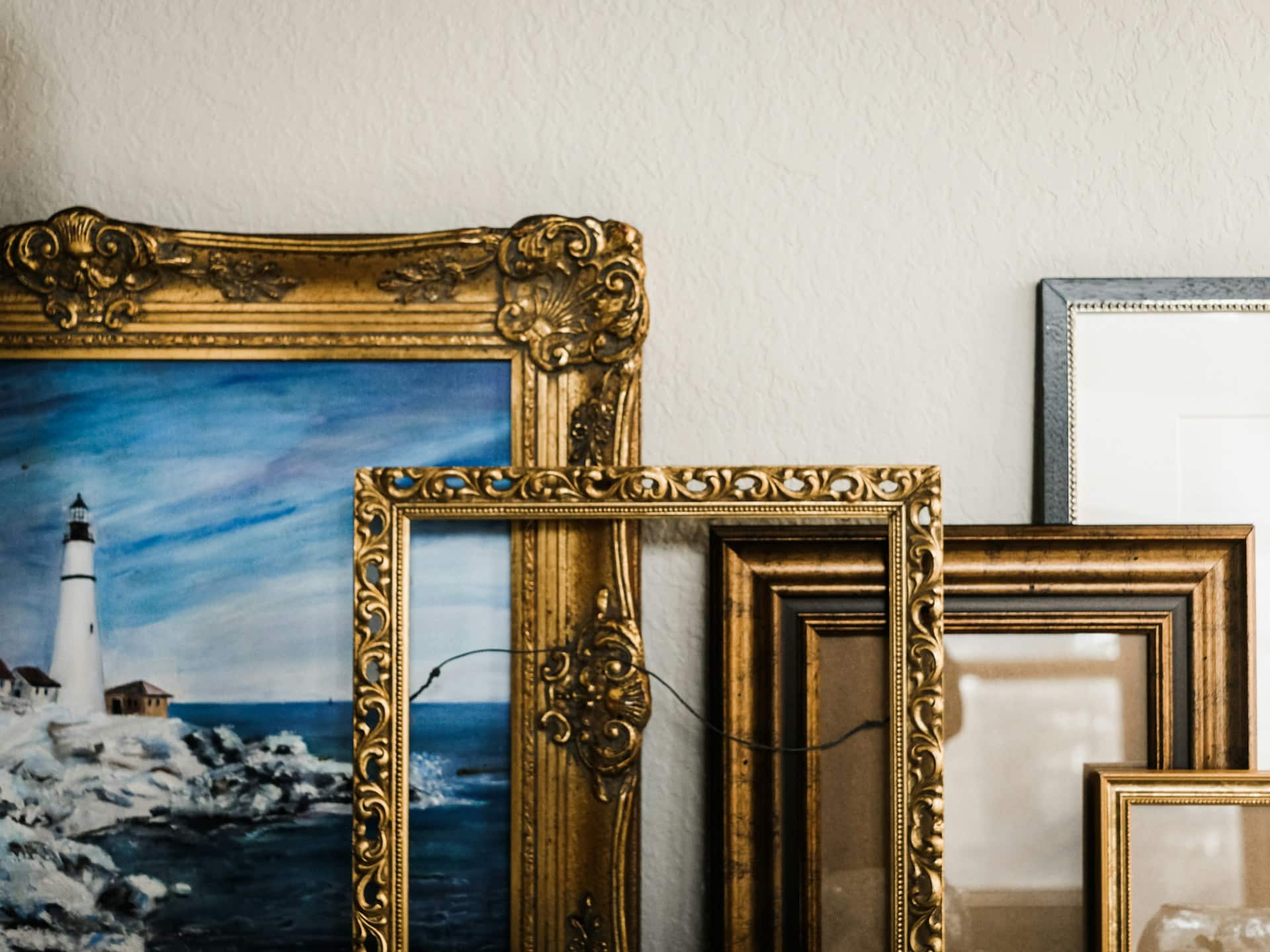
Protection does not require a plain presentation. Frame profile, color, finish, and mat tone influence how art relates to furniture, walls, and nearby objects. A restrained profile keeps attention on detailed work, while a deeper profile gives a bold piece more visual weight.
Start with the artwork’s palette and scale, then consider the room’s lighting and architecture. A warm wood finish can connect with nearby furniture, while a dark profile can define a light print. Consistent spacing helps several works read as one arrangement without making every frame identical.
What a Professional Process Includes
An effective process starts with inspection. The framer checks dimensions, condition, surface, and intended display location. That information guides choices about glazing, mat depth, backing, and hardware. Clear measurements also reduce assembly and installation errors.
Design advice becomes useful when it explains trade-offs. A customer should know why a certain mat width, frame depth, or glazing type suits the piece. In-store consultations let people compare finishes in person; mail-in services support remote projects with clear instructions.
Choosing the Right Service
Start by identifying the artwork’s material, size, condition, and location. Ask whether the service handles photographs, prints, textiles, or objects, and check how it receives the piece. A clear process reduces packing mistakes and makes responsibility easier to track.
Review the material information, measurement steps, pricing details, and installation guidance before ordering. A service should explain what the customer supplies and what the framer completes. This clarity helps match the project with its budget and practical needs.
Conclusion
Good framing protects an artwork through material selection, correct spacing, stable mounting, and suitable glazing. It also controls how viewers encounter the piece in a room.
Before ordering, identify the object’s material and condition, measure the available wall space, and review the service’s handling process. Then choose a frame that supports preservation and presentation.
For valuable or fragile work, request a professional for advice before mounting it yourself. This step protects the investment with less risk and produces a cleaner display at home.

Ava Taylor, holding a Bachelor’s degree in Interior Design from the Pratt Institute, has made her mark in creating engaging and functional living spaces for over 14 years. She began her career with a New York-based design studio, where she gained a reputation for her innovative and user-centric designs. Ava joined our team in 2019, bringing a blend of artistic flair and practicality to our home improvement section. Since the she has been the lead contributor to our room transformation series, inspiring readers with her unique approach to maximizing space utility and aesthetic appeal. Beyond her professional work, Ava is a passionate collector of vintage furniture, a hobby that enriches her design perspective.