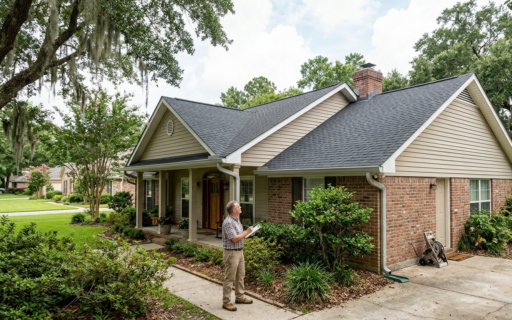
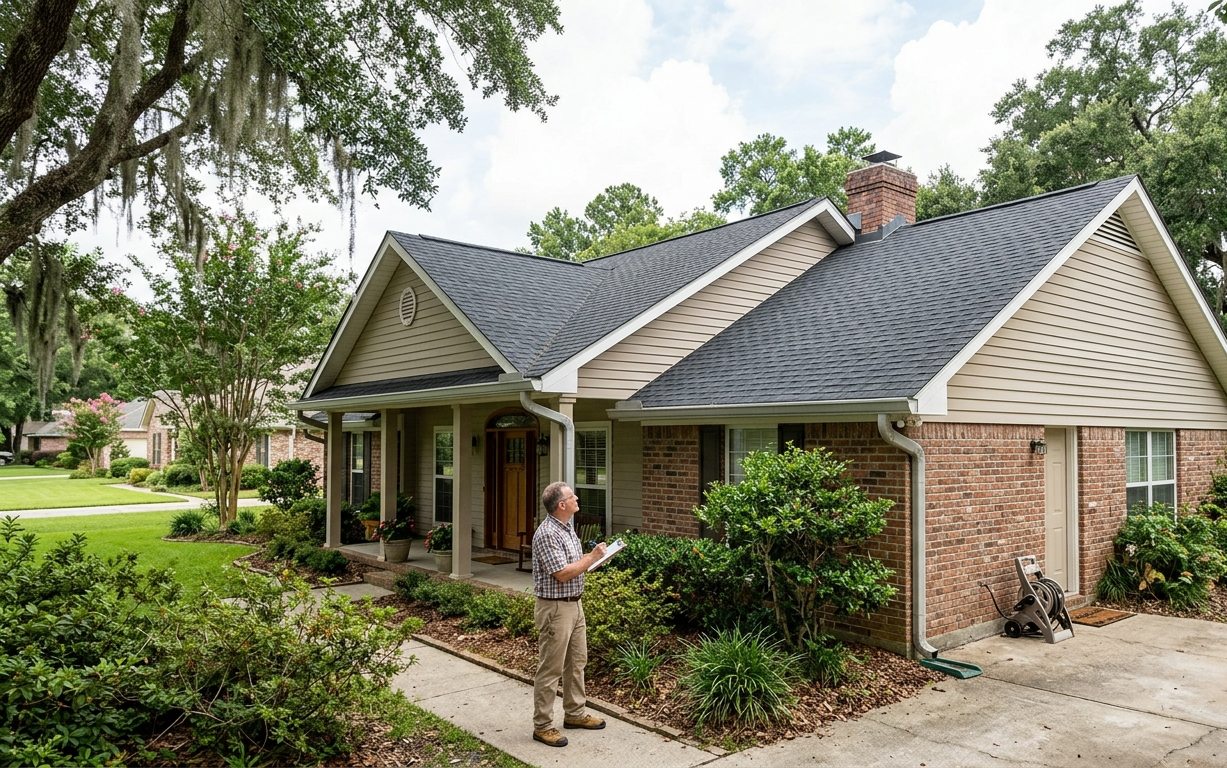

The Gulf Coast does not really give you four seasons. It gives you a long hot wet one, a short cool wet one, and a few weeks in between where working outside is pleasant. NOAA’s 1991 to 2020 normals put annual precipitation at Baton Rouge Ryan Airport at 61.94 inches, spread through the year rather than concentrated in a wet season. Exterior maintenance here works better when you map it to that reality instead of to a generic calendar written for somewhere with a real winter.
Here is how I would split the year.
February and March: the Working Window
This is the best stretch of the year to be on a ladder. Temperatures are reasonable, the oaks have dropped what they are going to drop, and you are still months out from hurricane season.
Start with the gutters, and do it properly rather than scooping the visible debris. Run a hose into the highest point and watch where the water goes. Slow drainage means a clog in the downspout or a section that has lost its pitch. While you are up there, look at the gutter spikes or hangers. Ones that have backed out half an inch are the reason a section will fold under the weight of a heavy rain in June.
Walk the perimeter and look at the soil grade against your slab. South Louisiana clay shrinks in dry spells and heaves when it rehydrates, and over a few years it can pull away from the foundation and form a channel that directs roof runoff straight down against the house. A few wheelbarrows of soil to reestablish a slope away from the wall is cheap insurance.
Prune back anything touching the roof. Branches abrade shingle granules every time the wind moves them, and a limb resting on a slope holds a wet leaf mat underneath it permanently.
April and May: Termite Season and the Last Quiet Weeks
Formosan subterranean termites swarm across south Louisiana in the evenings from roughly late April into May, and the LSU AgCenter publishes swarm guidance and identification material for homeowners each spring. Swarmers head for lit windows. Seeing a swarm near your house is not proof of infestation, but discarded wings on a windowsill or a porch light fixture is worth a call to a pest professional. Termites reach fascia and soffit wood through any point where it stays damp, which is usually under a leaking gutter joint.
This is also the point to get a roof inspection scheduled if you want one before storm season, because availability tightens sharply once the first named system enters the Gulf. Any competent roofing contractor baton rouge homeowners hire should be willing to photograph the flashing at every penetration and hand you the images, not just tell you the roof looks fine from the driveway.
June Through November: Storm Season Posture
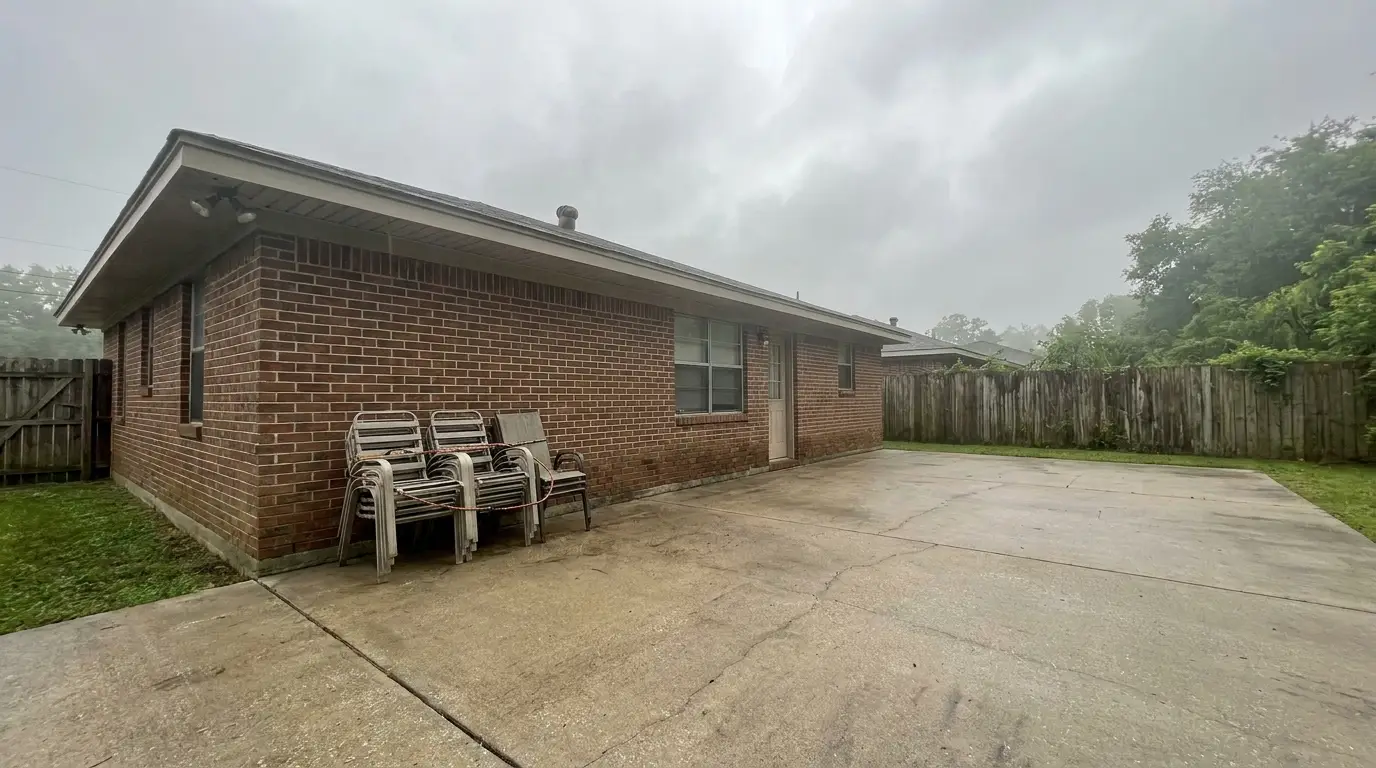
During hurricane season the work shifts from maintenance to readiness. Keep the yard clear of anything that becomes a projectile. Patio furniture, empty pots, the grill cover, a loose section of lattice.
Photograph your roof and the four elevations of the house now, while everything is intact, and put the images somewhere that is not your phone. Insurance adjusters work faster when you can show them a dated before image. Do the same for the interior ceilings.
One thing that changed recently and is worth knowing before you need it: Act 144 of Louisiana’s 2025 regular session, effective August 1, 2025, prohibits contractors from advertising or soliciting as insurance claims specialists or providing claim and policy interpretation services to homeowners. If a company knocks on your door after a storm offering to handle your claim, that offer is now outside what they are permitted to do. Your roofer estimates and performs the repair. A licensed public adjuster or an attorney handles the claim.
After any significant wind event, do a ground-level inspection with binoculars before anyone climbs anything. You are looking for lifted shingle tabs, exposed nail heads, displaced ridge cap, and granules collected at the bottom of downspouts. Missing granules in the gutter after a hailstorm is one of the more reliable indicators that the mat underneath has been bruised.
December and January: the Cold-Snap Checks
Our cold is short but it arrives fast. A forty degree overnight drop after a humid week is when attic condensation shows up. The morning after the first hard front, go look at the underside of the roof deck with a flashlight.
This is also a reasonable time to deal with the algae streaking that built up over the summer. A low-pressure wash with a manufacturer-approved cleaner works. A pressure washer does not, and will strip granules faster than fifteen years of weather. If the streaks bother you enough to be planning a future replacement, algae-resistant shingles with copper granules are worth specifying then.
The One Thing People Skip
Attic access. Half the homeowners I talk to have not been in their attic in years, usually because the pull-down stair is awkward or the insulation makes it unpleasant. Twenty minutes up there twice a year catches leaks while they are still a stain on a rafter instead of a collapsed section of ceiling drywall. Take a flashlight, take your time, and look at the wood rather than the insulation.
Sources
- NOAA / NCEI 1991 to 2020 climate normals, Baton Rouge Ryan Airport: https://www.weather.gov/lix/newnormals
- Act 144 (HB 121), 2025 Regular Session, résumé digest, Louisiana State Legislature: https://legis.la.gov/LEGIS/ViewDocument.aspx?d=1427858
- LSU AgCenter, Formosan subterranean termite resources: https://www.lsuagcenter.com

Tommy Hardy, an alumnus of the Georgia Institute of Technology with a degree in Mechanical Engineering, has been a go-to figure in residential upkeep and innovation for over 18 years. His career commenced in a leading home appliance manufacturing company, where he mastered the intricacies of household systems. Joining our platform in 2020, Tommy quickly became a reader favorite for his practical and easy-to-follow guides. He took the helm of our DIY section in 2019, consistently delivering content that empowers homeowners. Beyond his professional pursuits, Tommy is a passionate gardener and enjoys woodworking, skills enhancing his hands-on approach to home care.