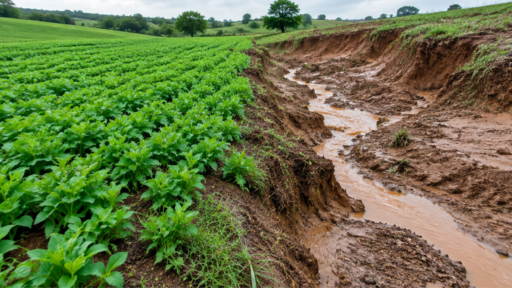
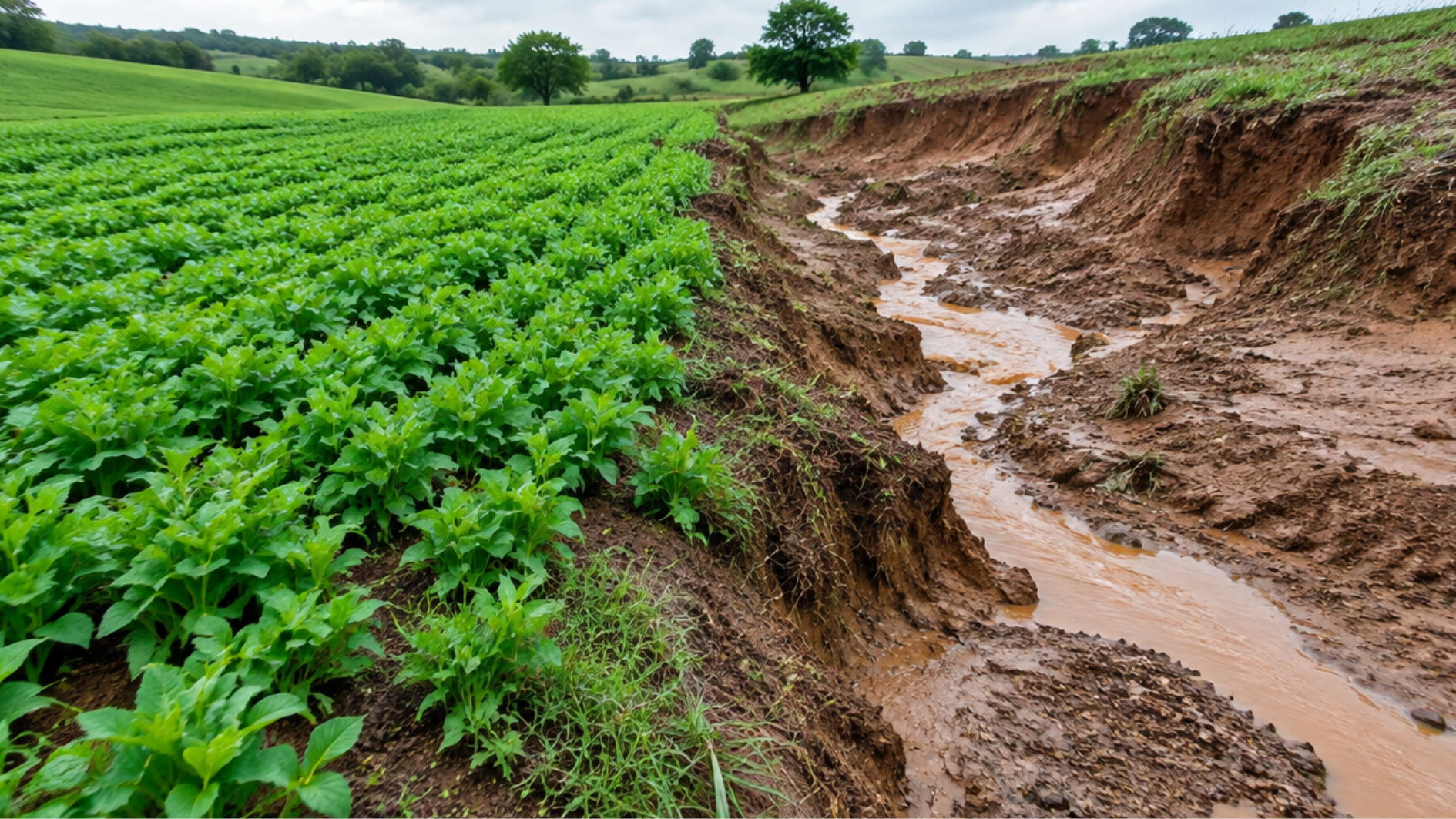

The types of erosion can be easy to miss at first.
A little soil washed to the bottom of a slope or a patch of dust blowing across dry ground may not seem serious, but both can point to a larger problem developing over time.
Erosion changes depending on how soil is moved, where it happens, and what conditions are present. Some forms leave obvious channels, while others slowly thin the surface without much warning.
Weather, land use, vegetation, and drainage can all influence how quickly those changes become noticeable.
What are the Main Types of Erosion?
The main types of soil erosion are water erosion and wind erosion.
Water erosion is commonly divided into splash, sheet, rill, and gully forms based on how rainfall and runoff move soil.
Streambank and shoreline erosion occur where flowing water, waves, or changing water levels wear away exposed edges.
These categories describe both the force moving the soil and the pattern it leaves behind.
Some erosion happens naturally, while disturbed or poorly protected land can lose soil much faster.
The USDA Natural Resources Conservation Service identifies sheet and rill, gully, wind, and bank erosion as separate soil resource concerns.
Causes of Soil Erosion
Soil erosion worsens when moving water or wind exposes soil without enough protection.
- Heavy rainfall: Strong or prolonged rain can loosen soil particles and create enough runoff to carry them downslope.
- Bare soil: Ground without plants, mulch, or residue receives the full force of rain and wind.
- Steep slopes: Water usually moves faster downhill, increasing its ability to detach and transport soil.
- Soil compaction: Hard ground absorbs less water, leaving more rainfall to move across the surface as runoff.
- Vegetation removal: Clearing grasses, shrubs, or crops removes roots and surface cover that help hold soil.
- Land disturbance: Construction, repeated traffic, intensive tillage, and poorly directed drainage can expose or concentrate loose soil.
The USDA guidance on soil risks and hazards identifies rainfall, runoff, slope, wind, and exposed soil as major factors affecting erosion.
Water Erosion: Splash, Sheet, Rill, and Gully
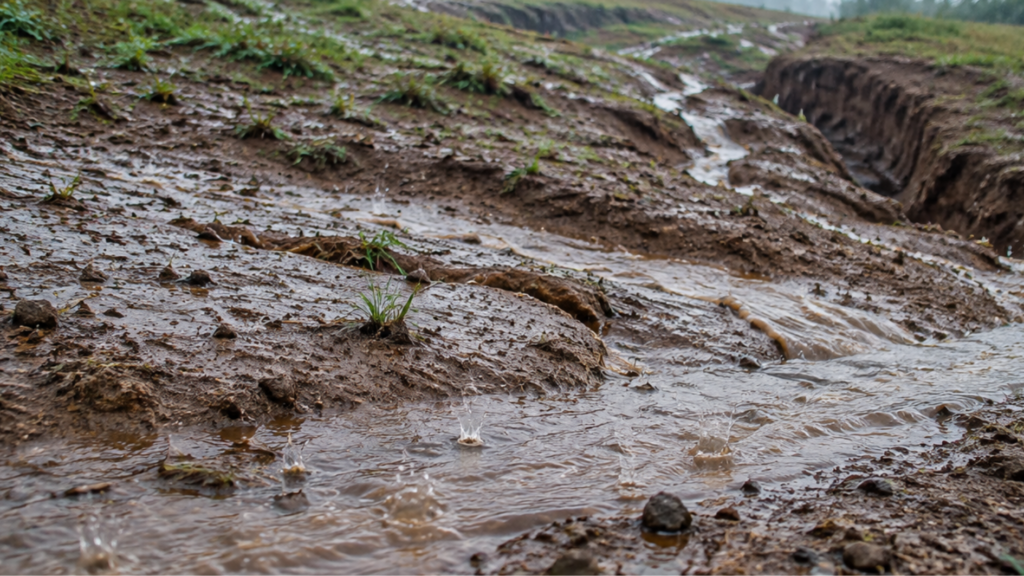
Water erosion begins when rainfall, melting snow, irrigation, or runoff loosens soil and carries it elsewhere. The visible pattern changes depending on how concentrated the water becomes.
Raindrops may first scatter exposed soil particles, while shallow runoff removes a thin layer across the surface.
As water collects into narrower paths, small rills or larger gullies can develop. Looking at these patterns makes it easier to judge how advanced the erosion is.
Splash Erosion
Splash erosion begins when raindrops strike exposed soil and knock loose particles from the surface. It usually leaves no clear channel.
Mud splashed onto nearby plants, small soil particles scattered around bare ground, or surface crusting after rain can provide clues.
Sheet Erosion
Sheet erosion removes a thin layer of soil across a broad area rather than cutting obvious channels. It can be difficult to spot at first.
Dark topsoil may slowly thin, lighter subsoil may become visible, or fine sediment may collect at the bottom of a slope. Repeated losses can gradually reduce the depth and quality of productive surface soil.
Rill Erosion
Rill erosion forms when runoff gathers into narrow paths and cuts small grooves into the ground.
These channels commonly appear on slopes, bare garden beds, cropland, construction sites, or disturbed soil after rainfall.
They may be shallow enough to smooth over, but filling them alone rarely solves the problem if water continues following the same route during later storms.
Gully Erosion
Gully erosion develops when concentrated runoff cuts channels that are deeper and wider than rills. Gullies can grow after repeated storms as their sides collapse or the channel extends uphill.
They may interfere with farming, mowing, roads, or drainage. Small gullies require runoff control and stabilization, while large or rapidly expanding ones may need professionally planned drainage measures.
University of Delaware Extension identifies splash, sheet, rill, gully, and bank erosion among the common forms of water-driven soil loss.
Wind Erosion Signs and How to Protect Your Soil
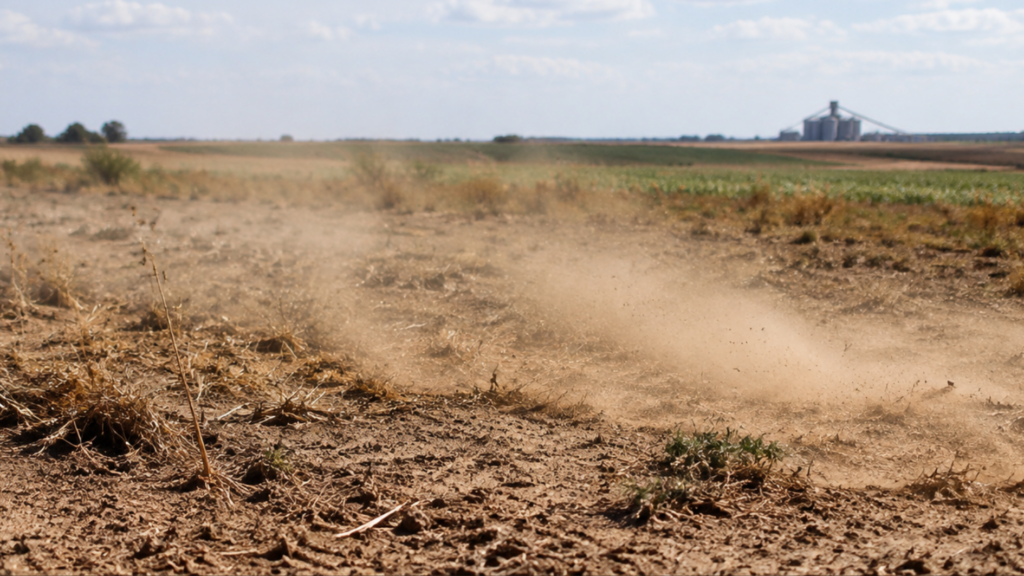
Wind erosion occurs when strong air movement lifts or rolls loose soil particles across exposed ground. It is more likely when soil is dry, bare, and poorly protected by vegetation or crop residue.
Fine particles may travel as dust, while heavier particles move shorter distances across the surface.
Common signs include blowing dust, soil collecting near fences, exposed plant roots, and patches where fine topsoil has disappeared.
Keeping soil covered with vegetation, crop residue, or mulch can reduce exposure, while windbreaks help slow air movement across open land.
Streambank and Shoreline Erosion
Streambank and shoreline erosion occurs where water repeatedly removes soil from the edge of a stream, river, lake, bay, or other water body.
Common signs include exposed roots, undercut banks, collapsing soil, widening channels, or a shoreline slowly moving inland.
Heavy runoff, waves, vegetation loss, livestock access, altered drainage, and changing water levels can increase the damage. Treatment depends on what is causing the bank to fail.
Soil Erosion Effects on Land and Water Quality
Soil erosion affects both the place where soil is lost and the areas where sediment eventually settles.
- Topsoil loss: Erosion removes productive surface soil that supports much of a plant’s root growth.
- Nutrient loss: Soil carried away can take organic matter and plant nutrients with it.
- Reduced soil quality: Repeated erosion can leave thinner, less productive ground with poorer structure.
- Reduced plant growth: Loss of fertile topsoil, nutrients, and rooting depth can make it harder for crops and other plants to grow well.
- Sediment buildup: Eroded material can collect in drainage channels, ponds, streams, lakes, or reservoirs.
- Water-quality problems: Soil entering waterways can carry nutrients and other materials beyond the original site.
Identifying and Preventing Soil Erosion
A quick look at the soil after rain or windy weather can often narrow down the erosion type. The main clue is the pattern left behind, not the amount of soil that appears to be missing.
Erosion type | Visible sign | What it indicates | How to prevent it |
|---|---|---|---|
Splash | Mud splashed around bare soil | Direct raindrop impact on exposed soil | Add mulch or plant cover |
Sheet | Gradual thinning across a slope | Uniform surface soil loss without channels | Keep soil covered and slow runoff |
Rill | Small grooves after rainfall | Runoff beginning to form shallow flow paths | Slow or redirect surface water |
Gully | Deep channels that keep growing | Concentrated runoff cutting into the soil | Stabilize concentrated drainage |
Wind | Blowing dust or drifting soil | Loose, dry soil being carried by air | Use ground cover and windbreaks |
Bank | Exposed roots along water edges | Ongoing soil loss beside streams or shorelines | Add vegetation or site-specific stabilization |
Where is Soil Erosion Most Likely to Occur?
Soil erosion is more common in places where the ground is exposed, sloped, or regularly disturbed.
Bare construction sites, farm fields between crops, overgrazed land, steep garden slopes, roadside embankments, and areas near streams are often more vulnerable.
Areas where water drains from roofs, driveways, or compacted ground can also erode if runoff becomes concentrated. Dry, open fields may face greater wind erosion when little vegetation covers the soil.
Watching these locations after heavy rain or strong winds can help reveal early signs before shallow soil loss develops into deeper channels or unstable banks
Final Thoughts
The types of erosion tell a useful story about how soil moves. A thin wash of soil across a slope needs a different response from a deep gully, blowing dust, or a collapsing streambank.
Rainfall, runoff, wind, exposed ground, slope, and land disturbance can all influence how quickly the damage develops. Looking at the visible pattern first makes it easier to trace the likely cause.
From there, soil cover, vegetation, runoff control, wind protection, or more specialized stabilization can address the actual problem instead of simply covering up the signs left behind.
Frequently Asked Questions
What is the Difference Between Erosion and Weathering?
Weathering breaks rock and other material into smaller pieces without moving it from its original location. Erosion occurs once water, wind, ice, or gravity carries loosened material somewhere else.
Is Deposition Part of Erosion?
Deposition is closely connected to erosion but describes a different stage. Erosion moves sediment away, while deposition happens when that material settles in a new location after water, wind, or ice loses enough energy to carry it.
Does Ice Cause Erosion Too?
Yes. Glaciers can scrape, pull, and transport rock and sediment as they move. This is an important form of geological erosion, though it is usually discussed separately from soil erosion in farms, gardens, construction areas, and managed landscapes

With a Master’s in Landscape Architecture from the University of Virginia, Sophia Stephenson has dedicated the last 20 years to creating and maintaining vibrant outdoor spaces. Her professional journey started in landscape design, where she gained a reputation for innovative and sustainable approaches. Sophia became a part of our editorial team as a freelancer in 2019, offering a fresh perspective on outdoor living. Since 2020, she has been the chief for our outdoor design content, blending aesthetic appeal with environmental stewardship. In her leisure time, Sophia is a keen photographer, capturing the beauty of natural landscapes, a hobby that complements her professional expertise.