
Finding a crack in a basement wall does not automatically mean the foundation is failing. Some cracks form as concrete cures or as a home settles slightly, while others can signal more significant wall movement.
The pattern matters. A thin, stable vertical crack is usually less concerning than a horizontal crack, visible bowing, displacement, or a crack that continues to widen.
Chapter 3 of the American Concrete Institute’s guidance on cracking in concrete explains that drying shrinkage can cause cracking when concrete contraction is restrained.
Look at the crack’s direction, width, movement, moisture, and whether it changes over time rather than judging it by appearance alone.
This article explains what different basement wall cracks can mean, how to check one yourself, and when professional help makes sense.
Why Do Basement Walls Crack?
Basement walls can crack for several reasons, from normal concrete shrinkage to pressure or movement around the foundation.
The likely cause becomes easier to narrow down when you compare the crack with conditions around the home.
Possible Cause | Common Clues |
|---|---|
Concrete shrinkage | Fine vertical hairline cracks |
Minor settlement | Small stable vertical or diagonal cracks |
Uneven settlement | Diagonal or stair-step cracking |
Saturated soil pressure | Horizontal cracks or wall bowing |
Poor drainage | Dampness or recurring seepage |
Freeze and thaw cycles | Seasonal movement or pressure |
Expansive soil | Cracking that changes with soil moisture |
Water around the foundation deserves particular attention. The U.S. Department of Energy recommends using grading, gutters, downspouts, and drainage measures to move water away from the foundation and reduce soil saturation.
If recurring groundwater or basement seepage is part of the problem, it may also help to understand how an interior drain tile system collects water and directs it away before pressure builds around the basement.
That does not mean every wet crack is structural. It means you should consider moisture conditions around the foundation alongside the crack itself.
Different Basement Wall Cracks & Their Meaning
Crack patterns can look different. Have a look!
1. Hairline and Vertical Cracks
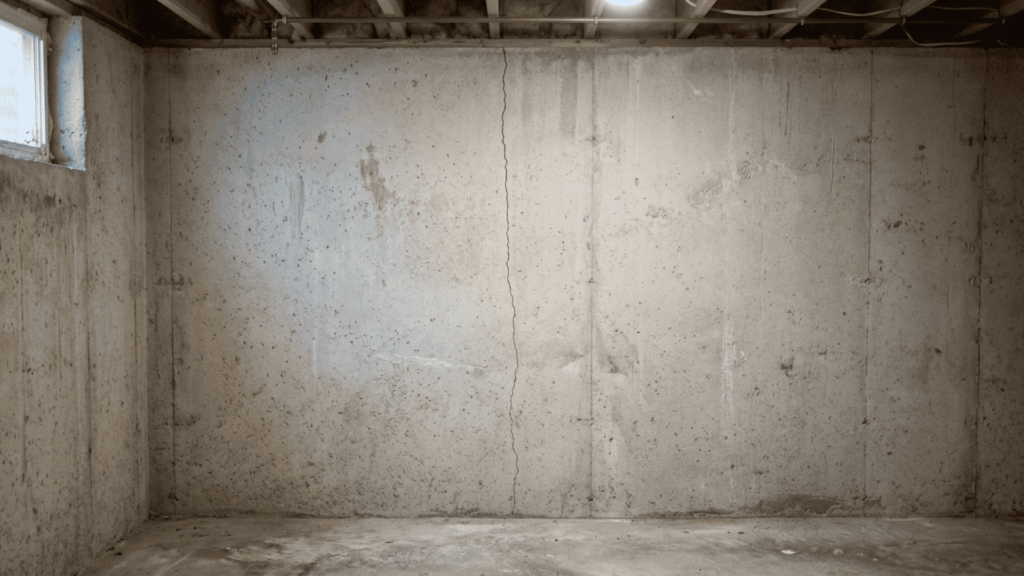
Fine vertical cracks are common in poured concrete foundation walls. They can form as concrete loses moisture and shrinks during curing. The ACI explains that drying shrinkage can contribute to concrete cracking when that movement is restrained.
A thin vertical crack is generally less concerning when it:
- Stays the same size
- Has no visible displacement
- Is not paired with wall bowing
- Remains dry
Pay closer attention if it becomes wider, starts leaking, or one side shifts out of line with the other.
2. Horizontal Cracks
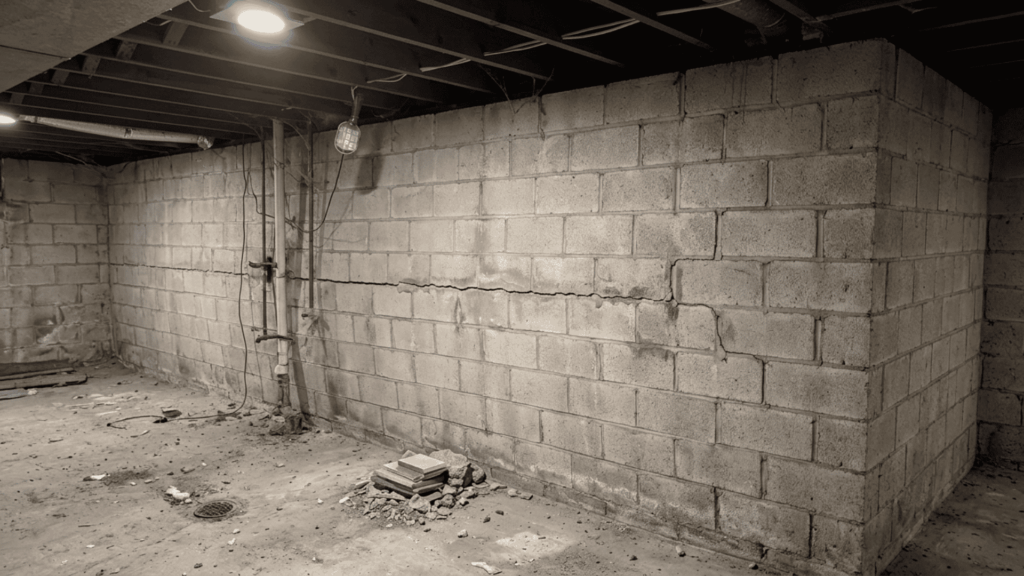
A horizontal crack deserves more attention because it can indicate pressure acting against the wall from outside.
Saturated soil, expansive soil, and freezing conditions can increase lateral forces on foundation walls. When the wall cannot resist those forces, it may begin to crack and bow inward. Structural engineers identify horizontal cracking with inward bowing as a concerning pattern.
Do not simply fill a horizontal crack and assume the problem is solved. First, determine whether the wall itself has moved.
3. Stair-Step Cracks
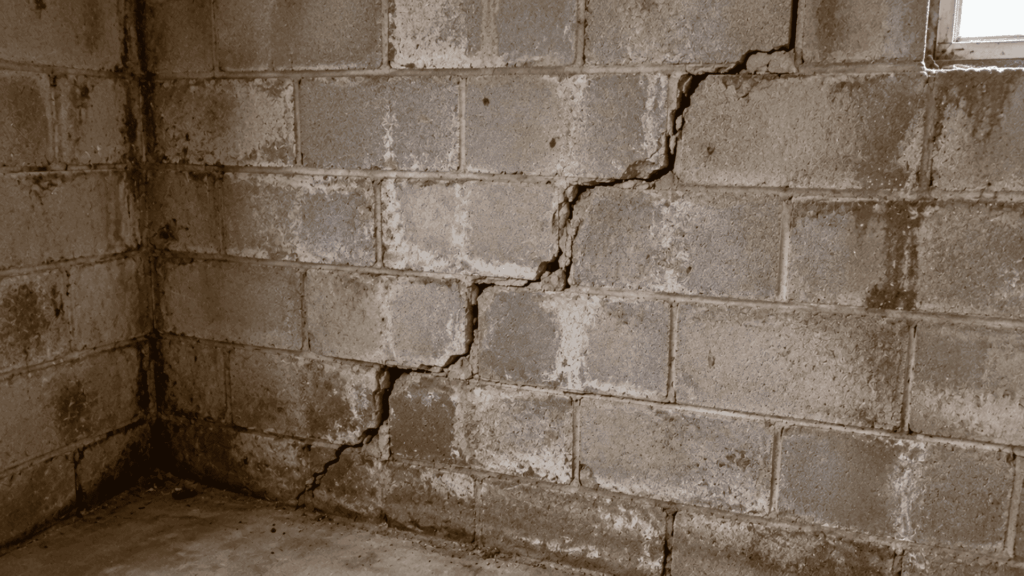
Stair-step cracks usually appear in concrete block or brick walls because the crack follows the mortar joints.
They can occur when one section of the foundation settles differently from another. A narrow crack that has remained unchanged for years may be less concerning than one that is widening or shifting.
Check whether the blocks on each side still sit flush. If one side projects farther into the basement, the wall has experienced displacement and deserves professional evaluation.
4. Diagonal Cracks
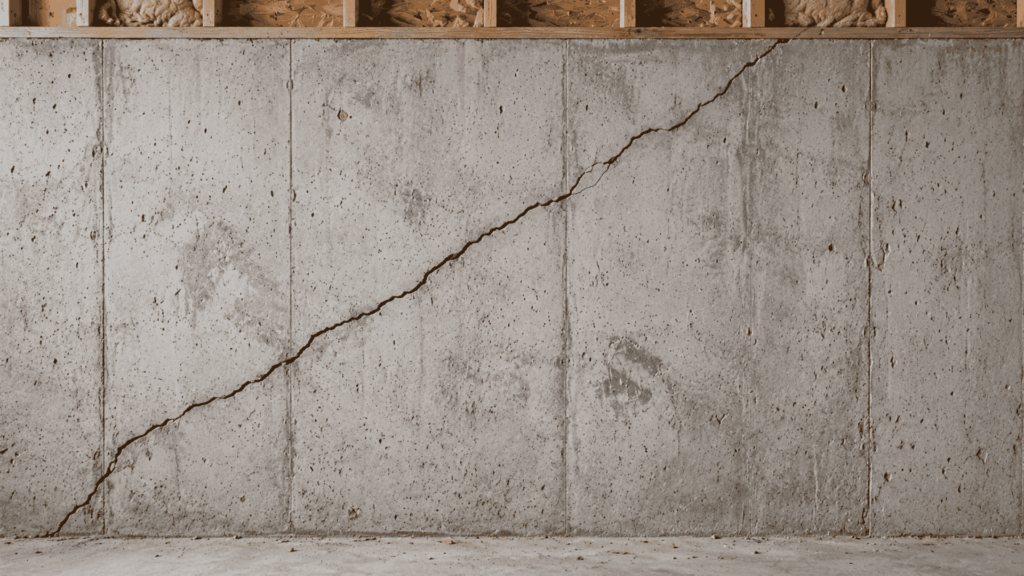
Diagonal cracks can also develop when different parts of a foundation move by different amounts.
Look carefully at the shape. A crack that becomes noticeably wider toward one end may deserve closer investigation, particularly when you also notice uneven floors, wall movement, or problems around nearby windows and doors.
In a block foundation, similar movement may appear as a stair-step pattern instead of a clean diagonal line.
How Do You Know If a Basement Wall Crack is Serious?
A basement wall crack becomes more concerning when it is paired with bowing, displacement, continued widening, or other signs of movement. Cracks that stay thin and unchanged are usually less concerning than those that keep shifting over time.
Use the table below to compare the crack pattern, what it may mean, and its general level of concern:
Signs | Meaning | Concern Level |
|---|---|---|
Thin stable vertical crack | Shrinkage or minor movement | Lower |
Horizontal crack | Lateral pressure against the wall | Higher |
Stair-step crack | Masonry or foundation movement | Moderate to high |
Crack with displacement | Sections of the wall have shifted | Higher |
Crack with inward bowing | Structural wall movement | High |
Crack getting wider | Movement may still be active | Higher |
Water through the crack | Drainage or waterproofing problem | Moderate to high |
Several crack patterns together | More complex movement | Higher |
Warning Signs That Need More Attention!
Check the area around the crack for other signs that the foundation may be moving:
- New sticking doors or windows
- Uneven or changing floors nearby
- Gaps forming around trim, frames, or wall joints
- Sudden changes after heavy rain or seasonal soil movement
- New cracks appearing in nearby walls or floors
These surrounding changes can help show whether the problem extends beyond one visible basement wall crack.
Can You Check a Basement Wall Crack Yourself? If Yes, How..
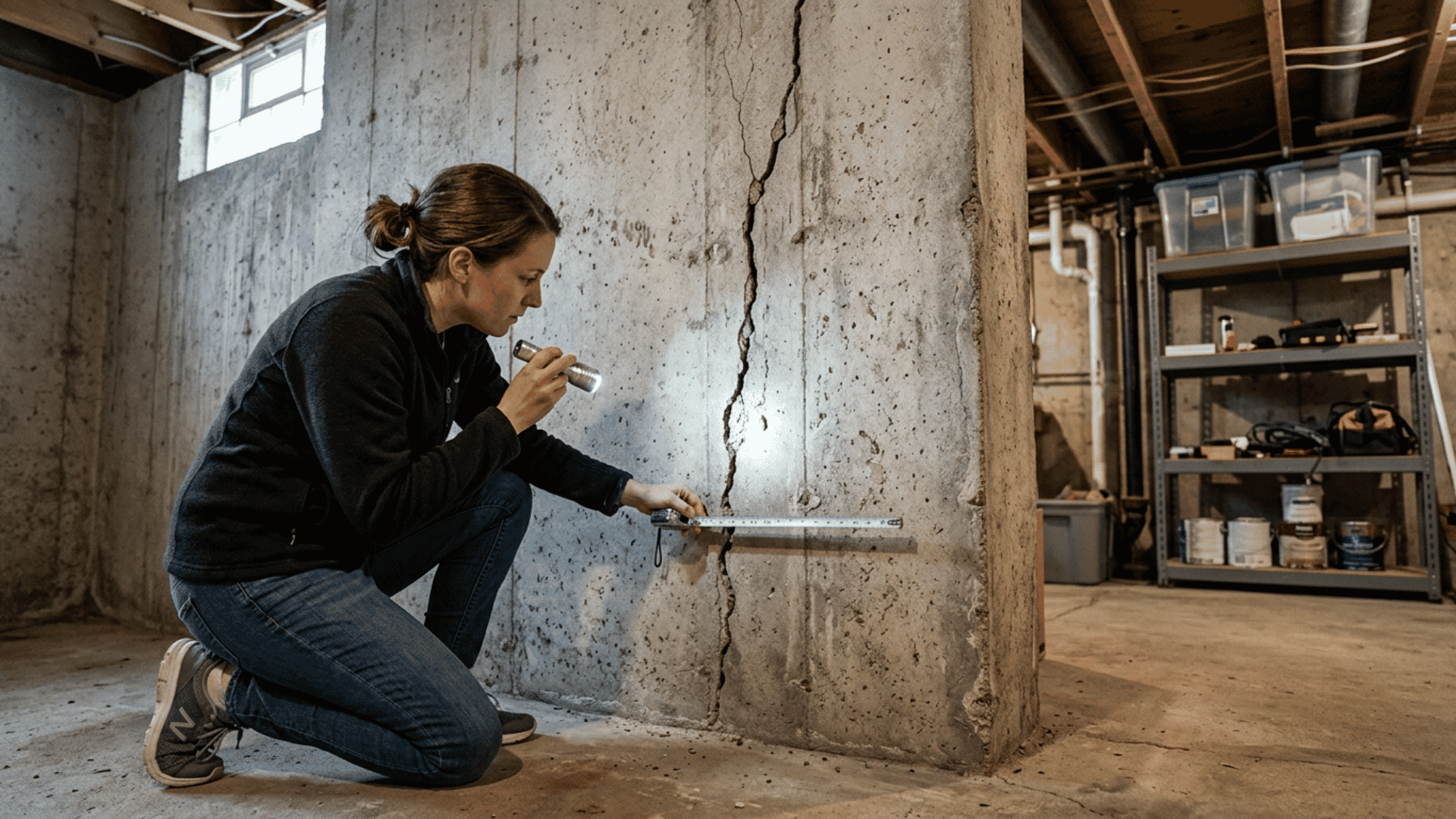
Yes. Collect useful details that make the crack easier to assess. If the concern level is higher, seek professional assistance.
- Identify the wall material: Check whether the foundation is poured concrete, concrete block, or brick.
- Check the crack direction: Note whether it is vertical, horizontal, diagonal, or stair-step.
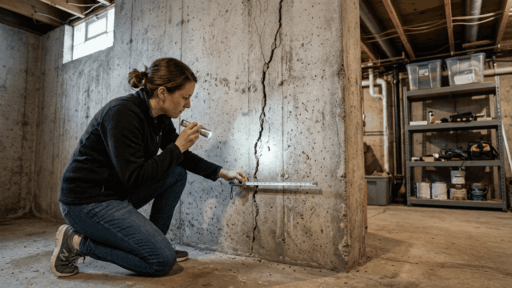
- Measure the widest point: Use a ruler or crack gauge and record the measurement.
- Check for displacement: See whether one side of the crack sits farther forward than the other.
- Look for bowing: Stand near one end of the wall and look along its surface for bulging or inward movement.
- Check for moisture: Look for dampness, staining, white mineral deposits, or active seepage.
- Photograph and date it: Take photos from roughly the same angle so you can more easily compare changes over time.
- Inspect nearby areas: Look for additional cracks, uneven floors, or doors and windows that have recently become harder to operate.
Important! Monitoring is appropriate only when there are no obvious signs of significant structural movement. Visible bowing, displacement, or rapid change should not simply be watched indefinitely.
When Should You Seek Professional Help for a Basement Wall Crack?
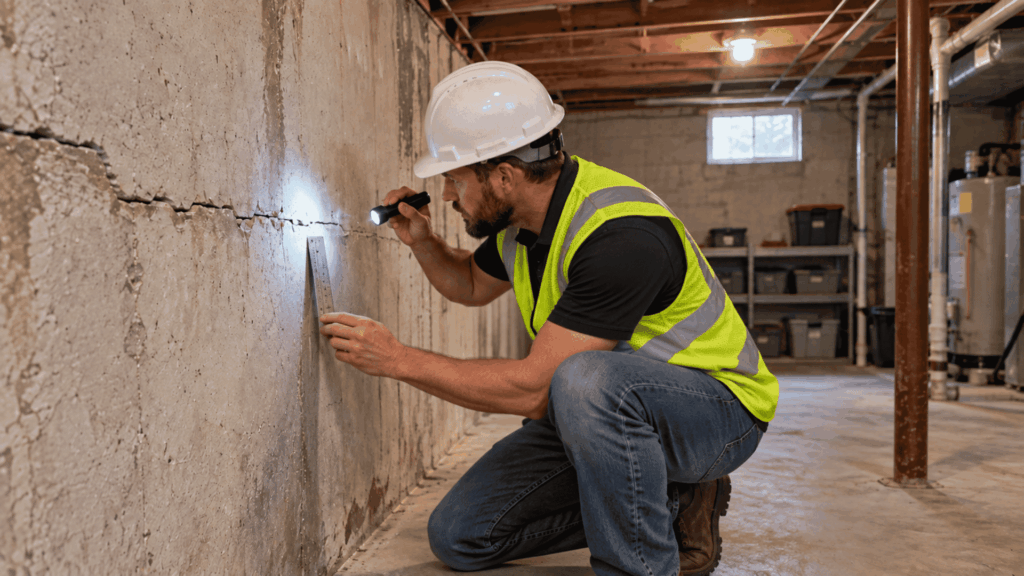
Some basement wall cracks can be monitored, but others should be checked by a professional rather than simply patched.
Horizontal cracks, especially with inward bowing, widening stair-step or diagonal cracks, visible wall movement, bulging, or one side of the crack sitting forward of the other can point to structural stress.
You should also seek help if the crack keeps growing between checks, several crack patterns appear on the same wall, nearby doors or windows begin sticking, new floor movement appears, or water enters alongside cracking or shifting.
- A structural engineer can assess whether the movement affects stability.
- A foundation contractor can handle stabilization or repair, while a waterproofing professional is better suited when the wall is stable but letting water in.
I’ve seen suspicious cracks get sealed before the cause was understood. In some cases, the surface patch only hid the problem while movement or water pressure continued behind it.
For moisture-related problems, the difference between temporary basement fixes and long-term solutions is also worth understanding before choosing a repair.
Final Thoughts
A crack in a basement wall should be judged by more than its size. Direction is a useful first clue, but movement, displacement, wall bowing, moisture, and changes over time give you a clearer picture.
A fine vertical crack that stays unchanged may need little more than monitoring. A horizontal crack, shifting masonry, or a bowed wall deserves much closer attention.
The first step is to document the crack, inspect the surrounding wall, and monitor for changes before deciding how to repair it. For clues beyond your control, have a professional evaluate the cause before deciding how to repair the crack.
Spot a basement wall crack that looks unusual? Comment below and tell us what you are seeing.
Frequently Asked Questions
Can a Basement Wall Crack Get Worse Over Time?
Yes. Cracks may widen or shift if settlement, soil pressure, drainage problems, or other foundation movement continues.
Does Water Leaking Through a Basement Wall Crack Mean Structural Damage?
Not always. A stable crack can leak, but water combined with widening, bowing, displacement, or other wall movement may signal structural damage.
Why Does My Basement Wall Crack Look Worse After Heavy Rain?
Heavy rain can saturate soil around the foundation, increasing moisture and lateral pressure while making existing cracks and seepage easier to notice.

Tommy Hardy, an alumnus of the Georgia Institute of Technology with a degree in Mechanical Engineering, has been a go-to figure in residential upkeep and innovation for over 18 years. His career commenced in a leading home appliance manufacturing company, where he mastered the intricacies of household systems. Joining our platform in 2020, Tommy quickly became a reader favorite for his practical and easy-to-follow guides. He took the helm of our DIY section in 2019, consistently delivering content that empowers homeowners. Beyond his professional pursuits, Tommy is a passionate gardener and enjoys woodworking, skills enhancing his hands-on approach to home care.