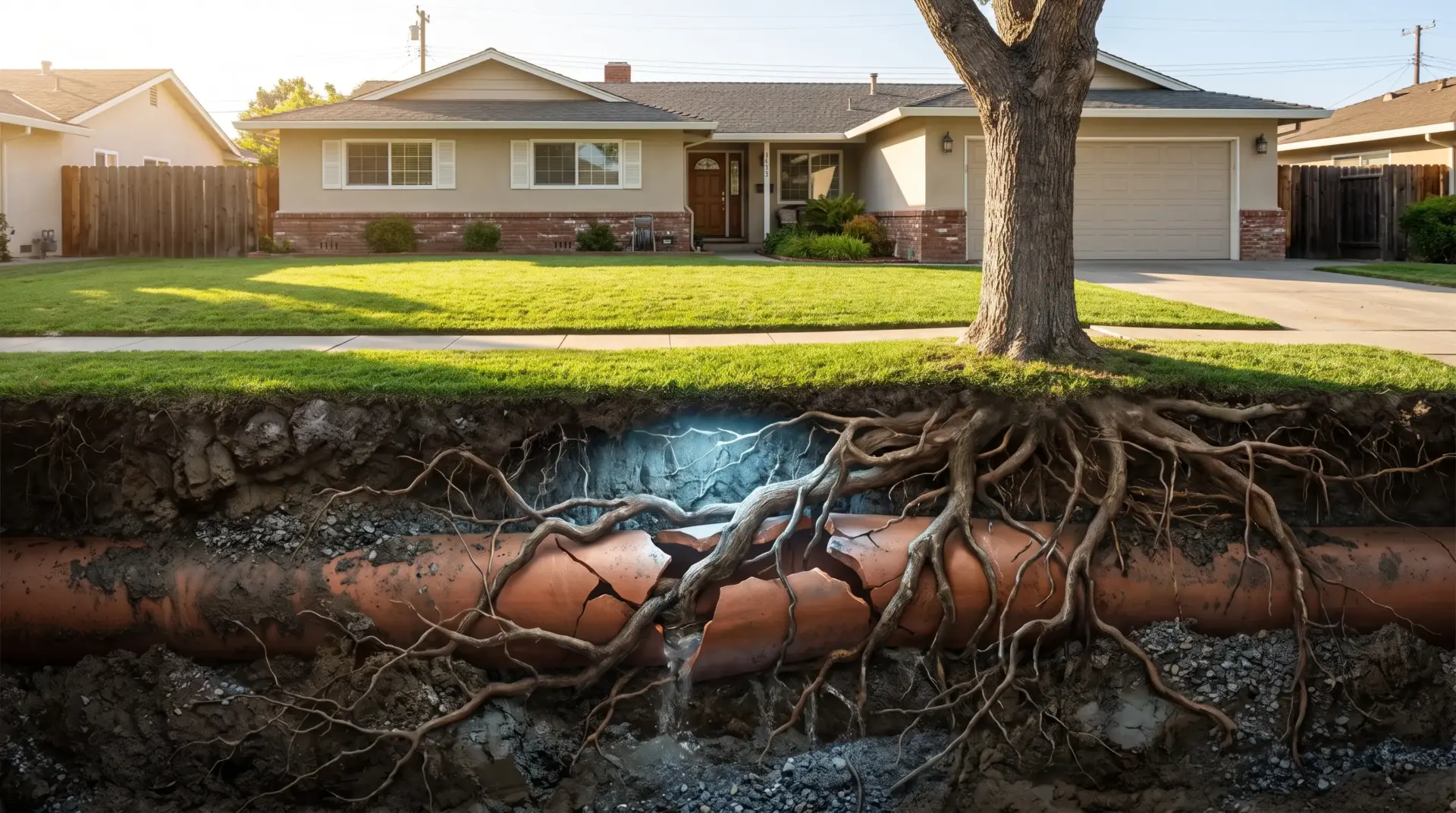

Sewer line replacement is one of the most significant home maintenance decisions a San Jose homeowner will ever face. Beneath your yard and foundation runs a network of pipes that silently manages every drop of wastewater your household produces around the clock. When those pipes begin to fail, the consequences range from minor inconveniences like slow drains to serious structural damage that can affect your foundation, yard, and overall property value. Knowing how to read the warning signs your home sends before a small problem becomes a major crisis is the single most important thing you can do to protect your investment.
San Jose presents a uniquely challenging environment for residential sewer lines. The city’s combination of aging pre-1980 housing stock, clay-heavy, expansive soils, mature tree root systems, and periodic seismic activity creates conditions that accelerate pipe deterioration more than in many other California cities. Neighborhoods across Willow Glen, Almaden Valley, Berryessa, and Cambrian Park are home to thousands of properties still relying on original clay, Orangeburg, or cast-iron pipes that have long exceeded their design lifespan. Understanding what your home is telling you is the first step toward making a timely, cost-effective sewer line replacement in San Jose decision that protects your property for the long term.
Here are the 10 warning signs that tell you it may be time for sewer line replacement:
- Slow drains throughout multiple fixtures simultaneously
- Frequent or recurring drain backups that keep returning
- Persistent sewage odors inside or outside your home
- Unusually lush or green patches appearing in your yard
- Sinkholes or ground depressions forming in your yard
- Cracks developing in your home’s foundation or walls
- Gurgling or bubbling sounds coming from drains and toilets
- Rodent or insect infestations linked to broken pipe entry points
- Your home was built before 1980 with original pipe materials
- Unexplained spikes in your monthly water bill
Warning Sign 1: Slow Drains Throughout Your Home
A single slow drain is almost always a localized clog caused by hair, soap buildup, or grease accumulation near the fixture itself. However, when your kitchen sink, bathroom tub, shower, and laundry drain are all running sluggishly at the same time, that pattern points directly to a problem deep within your main sewer line rather than any individual fixture or drain opening.
Multiple slow drains occurring simultaneously indicate that debris, grease, or mineral deposits have accumulated on the walls of your pipe over the years of daily use. This buildup gradually narrows the pipe’s interior passage, making it harder for water to flow freely toward the municipal connection. The restriction grows steadily over time, and if left unaddressed, a partial blockage will eventually become a complete one.
When a full blockage occurs, sewage has nowhere to go but backward into your living spaces through the lowest fixtures in your home. Scheduling a professional video camera inspection at the first sign of widespread slow drainage provides a clear, accurate diagnosis and helps you determine whether the issue requires a simple clearing or a more substantial repair or replacement.
Warning Sign 2: Frequent or Recurring Drain Backups
A properly cleared drain blockage should stay cleared after professional service is completed. If you find yourself calling a plumber every few weeks for the exact same recurring backup, particularly in your lowest fixtures like ground-floor toilets or basement floor drains, the pipe structure itself is likely compromised in a way that basic snaking cannot resolve.
Recurring backups are a reliable indicator of a partial pipe collapse, a bellied pipe section that has physically sunk and now permanently holds standing water and debris, or severe root intrusion that regrows quickly after being cut. Running a snake through the line provides temporary relief by pushing the obstruction aside, but it does nothing to address the underlying structural failure that continues to create the problem.
The pattern of recurrence is the key diagnostic clue here. Backups that return within days or weeks of being cleared, especially after heavy rainfall or periods of high household water use, clearly indicate that the pipe itself needs evaluation rather than another temporary clearing. A licensed contractor with camera inspection equipment can pinpoint the exact location of the structural failure and recommend the appropriate permanent solution.
Warning Sign 3: Persistent Sewage Odors Inside or Outside Your Home
A properly functioning sewer system operates as a completely sealed system from your fixtures to the municipal main. You should never detect the smell of sewage inside your home, near your foundation, or lingering in your yard under any normal operating conditions. When those odors appear persistently, something physical has broken the seal somewhere along your sewer line.
Sewer gas contains hydrogen sulfide and methane, both of which are unpleasant and potentially hazardous in enclosed or confined spaces. Common causes of odor intrusion include cracked pipe sections, failed pipe joints, or sewer line sections that have shifted due to soil movement. In San Jose specifically, seasonal soil expansion and contraction, combined with periodic seismic activity, create conditions that can fracture aging pipes and open previously sealed joints.
Sewage odors are never a minor inconvenience to be temporarily masked or ignored until a more convenient time. They represent a legitimate health and safety concern that demands immediate professional evaluation. A licensed plumber can use camera inspection technology to identify exactly where the breach is occurring and determine whether a targeted repair or a more complete line replacement is the appropriate course of action for your property.
Warning Sign 4: Unusually Lush or Green Patches in Your Yard
A patch of lawn that is inexplicably greener, thicker, and more vibrant than everything surrounding it — with no connection to your irrigation system or recent planting — is often visible evidence of an underground sewer leak occurring directly beneath that section of your yard. This is one of the most distinctive and visually recognizable warning signs of a failing sewer line.
Sewage functions as a highly effective natural fertilizer because it is rich in nitrogen, phosphorus, and organic matter. When a cracked or separated sewer line releases wastewater into the surrounding soil, those nutrients feed the grass and plant roots directly above the break point. The result is a clearly vibrant patch that stands out against the surrounding lawn and often remains green even during San Jose’s dry summer months when the surrounding grass browns out naturally.
The location of this green patch relative to your property is an important diagnostic clue. If the unusually lush area follows the approximate path of your sewer line running from your home toward the street or alley connection, that correlation strongly suggests an underground leak rather than any other explanation. A professional soil moisture test, combined with a camera inspection, can quickly confirm the source and precise location of the leak.
Warning Sign 5: Sinkholes or Ground Depressions in Your Yard
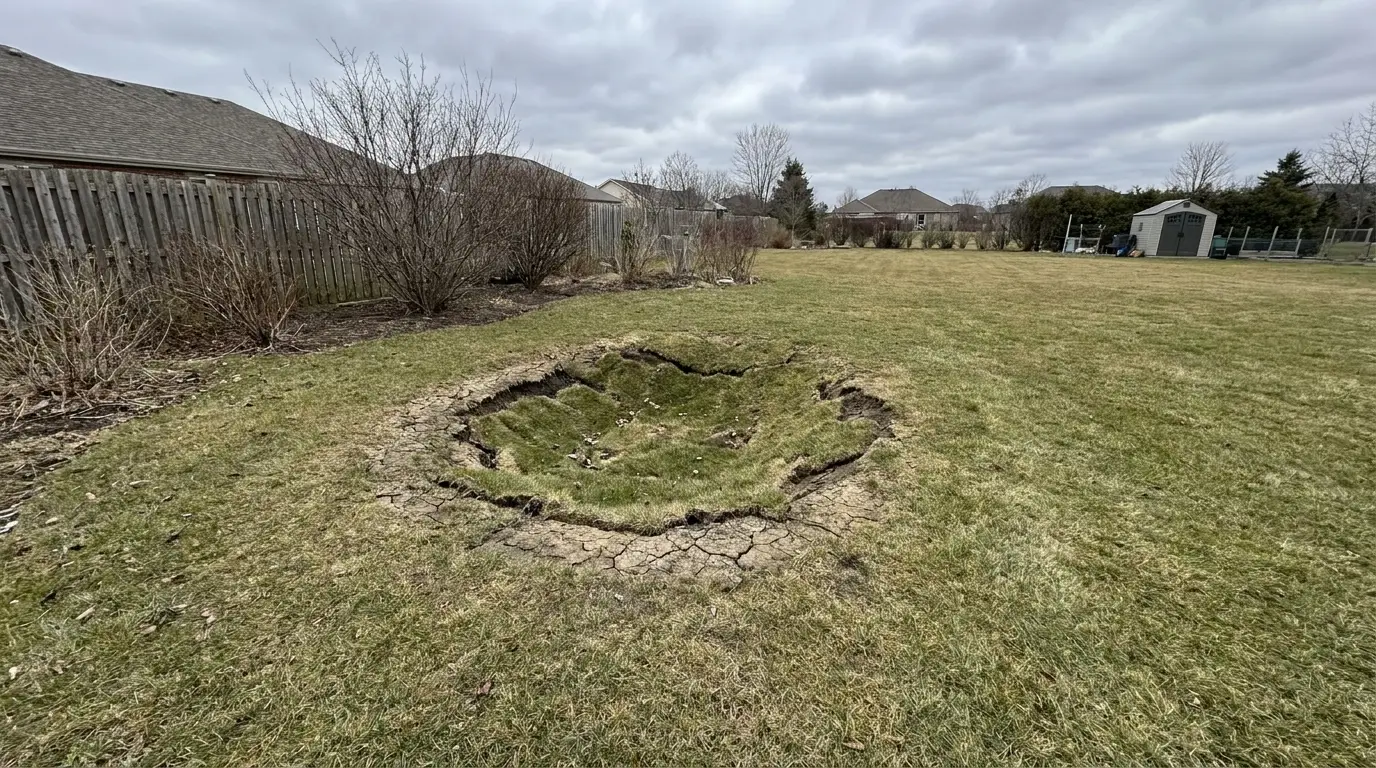
Soft spots, ground depressions, or developing sinkholes along the path where your sewer line runs beneath your yard are among the most urgent physical warning signs that a seriously damaged pipe lies beneath the surface. This symptom rarely appears suddenly and typically develops over weeks or months due to progressive soil erosion beneath the ground surface.
When a leaking or broken sewer line saturates the surrounding soil with escaping wastewater over an extended period, that soil loses its structural cohesion and begins to shift, compress, and erode. The ground above gradually loses its support and begins to sink visibly. What begins as a subtle dip or soft spot in the lawn can progress into a significant depression that poses a physical hazard to anyone walking across it.
In more advanced cases, soil erosion from a leaking sewer line can extend beneath nearby concrete surfaces, including driveways, walkways, and patio slabs, and threaten the stability of your home’s foundation footings. Ground depressions appearing anywhere along your sewer line path should be evaluated by a licensed sewer contractor on the same day they are discovered. Waiting even a short time allows erosion to expand and the scope of repair to become significantly more expensive.
Warning Sign 6: Cracks in Your Foundation or Walls
The connection between sewer line failures and foundation damage surprises many homeowners, but the relationship is straightforward and well-documented in residential plumbing. When a sewer line leaks underground in close proximity to your home’s foundation, the escaping water slowly saturates and erodes the soil that provides structural support beneath and around the concrete. As that supporting soil shifts or washes away, the foundation loses its stable base and begins to settle unevenly, crack, and move.
In San Jose, expansive clay soils already expand and contract significantly with seasonal moisture changes. An underground sewer leak dramatically amplifies this natural movement by introducing a continuous and concentrated source of moisture into the soil profile. The result is accelerated soil instability that stresses the foundation far beyond what normal seasonal conditions would produce on their own.
New cracks appearing in your walls, floors, or foundation that coincide with any of the other plumbing symptoms described in this article should prompt immediate professional investigation of both your foundation and your sewer line together. Repairing the sewer leak stabilizes the moisture source, allows the soil to recover, and prevents further deterioration of the foundation. Addressing only the visible foundation cracks without resolving the cause of the sewer line will result in repeated and worsening structural movement.
Warning Sign 7: Gurgling or Bubbling Sounds From Drains
Gurgling, bubbling, or sucking sounds coming from your toilet when you run the bathroom sink, or noise emerging from floor drains when you flush a toilet, are audible signals that your sewer system is struggling to move air and water properly through the main line. These sounds are your plumbing system communicating a pressure imbalance that deserves professional attention rather than being ignored as background noise.
The sounds are produced when a blockage or a physically damaged section of pipe creates an imbalance in air pressure within the drainage system. Air that should flow freely through your plumbing vent stack to equalize pressure instead becomes trapped by the obstruction. That trapped air forces its way through the water in nearby drain traps, producing the characteristic bubbling and gurgling sounds audible at multiple fixture locations simultaneously.
Occasional gurgling from a single fixture after heavy use may be minor and isolated. Consistent gurgling across multiple fixtures whenever water is used anywhere in the home is a reliable indicator of a systemic main sewer line problem rather than a simple localized clog. A professional camera inspection will reveal whether the cause is a blockage, a damaged pipe section, or a compromised vent stack, all of which require targeted repair or replacement.
Warning Sign 8: Rodent or Insect Infestations
Persistent rodent or insect infestations that resist repeated professional pest control treatments are often linked to damaged sewer infrastructure that pest management alone cannot resolve. Rats, mice, cockroaches, and drain flies can enter a home through cracks, fractures, and open joints in sewer pipes. Rats, in particular, are adept swimmers and agile navigators of underground pipe systems, able to squeeze through surprisingly small fractures to reach the interior plumbing of your home.
The presence of these pests near bathroom drains, kitchen sink cabinets, or basement areas is a meaningful diagnostic clue when it occurs alongside other plumbing symptoms. Cracked sewer pipes provide exactly the dark, moist, nutrient-rich environment that cockroaches, drain flies, and rodents seek out. Once they establish access through a pipe breach, they will continue to return regardless of how thorough or frequent the surface-level pest treatment is.
Combining a professional pest inspection with a licensed sewer camera inspection is the most effective approach to this type of problem. The pest control treatment addresses the existing infestation, while the sewer inspection identifies whether a broken pipe is serving as the entry and breeding point that makes re-infestation inevitable. Repairing the sewer breach eliminates the access point permanently and dramatically improves the long-term effectiveness of pest management efforts.
Warning Sign 9: Your Home Was Built Before 1980
Homes constructed before 1980 in San Jose carry a significant sewer line risk factor based on pipe material alone, even when no active symptoms are currently visible. The vast majority of pre-1980 residential properties were built using clay tile, Orangeburg pipe, or cast-iron sewer lines. All three of these materials have finite design lifespans, and many properties across Silicon Valley are operating with sewer lines that have already exceeded those limits by a decade or more.
Clay pipes are naturally brittle and highly vulnerable to cracking under soil pressure and root intrusion. Orangeburg pipe, a tar-and-paper composite material used extensively from the 1940s through the 1970s, absorbs moisture and progressively collapses from the inside outward over time. Cast-iron pipes corrode internally, developing pinhole leaks and joint failures that worsen steadily with each passing season. None of these failure modes announces itself with sudden, dramatic symptoms in the early stages.
Scheduling a professional video camera inspection of your sewer line is a proactive investment that makes strong financial sense for any pre-1980 home, whether or not symptoms are currently present. This is particularly true if you are purchasing a home and want to understand the condition of the sewer infrastructure before closing, preparing to sell and want to avoid surprises during buyer inspections, or have simply never had the line professionally evaluated since purchasing the property.
Warning Sign 10: Unexplained Spikes in Your Monthly Water Bill
A sudden and unexplained increase in your monthly water or utility bill that cannot be attributed to a change in household usage habits deserves serious investigation rather than a passive wait to see what next month’s bill shows. While a running toilet or a dripping faucet is the more commonly known culprit behind rising water costs, underground sewer line failures involving pressurized water lines running in close proximity to the sewer infrastructure can contribute to persistent, significant increases in consumption.
Rising water bills that appear alongside other symptoms from this list — slow drains, sewage odors, or yard irregularities create a pattern that points toward an underground leak somewhere in your plumbing system. Water escaping into the soil beneath your property represents continuous waste and continuous cost, accumulating silently month after month until the source is professionally identified and repaired or replaced.
San Jose Water utility accounts allow customers to monitor daily water consumption online through their account portal, making it straightforward to compare week-over-week usage data and identify unusual patterns early. Catching a spike early and promptly calling a licensed plumber keeps the scope of the investigation narrow and the repair options broad. Allowing an unexplained billing increase to continue for multiple billing cycles typically means the underlying problem has worsened, and the resulting repair will be more extensive and more expensive.
Conclusion
The ten warning signs covered throughout this article represent the most reliable indicators that your San Jose home’s sewer line requires professional evaluation and possible replacement. From slow drains and recurring backups to sewage odors, lush patches in your yard, sinkholes, foundation cracks, gurgling sounds, pest infestations, aging pipe materials, and rising water bills, each symptom carries meaningful diagnostic information that a licensed sewer professional can use to accurately assess the condition of your underground infrastructure. Recognizing these signs early and responding with a professional camera inspection consistently leads to better outcomes, lower total repair costs, and a wider range of available solutions, including cost-saving trenchless methods that preserve your landscaping and hardscape.
Whether your situation ultimately calls for trenchless pipe lining, pipe bursting, or traditional excavation and replacement, the path forward always begins with an accurate professional diagnosis from a licensed contractor who understands San Jose’s specific soil conditions, building codes, and housing history. San Jose homeowners have trusted locally rooted companies like CPI Service for decades precisely because local experience with Silicon Valley’s soil conditions, pipe materials, and municipal requirements makes a measurable difference in the quality and durability of the repair. Acting on the warning signs your home sends rather than waiting for a full emergency is the most effective and financially sound approach any homeowner can take to protect their property, their family’s health, and the long-term integrity of their plumbing system.

Tommy Hardy, an alumnus of the Georgia Institute of Technology with a degree in Mechanical Engineering, has been a go-to figure in residential upkeep and innovation for over 18 years. His career commenced in a leading home appliance manufacturing company, where he mastered the intricacies of household systems. Joining our platform in 2020, Tommy quickly became a reader favorite for his practical and easy-to-follow guides. He took the helm of our DIY section in 2019, consistently delivering content that empowers homeowners. Beyond his professional pursuits, Tommy is a passionate gardener and enjoys woodworking, skills enhancing his hands-on approach to home care.