


Every home eventually reaches a tipping point where cupboards overflow, the garage becomes unusable, and drawers turn into a graveyard of things nobody quite wants to throw out.
A proper declutter is one of the most satisfying DIY projects you can tackle, but it also creates far more waste than most people expect. Booking skip bin hire before you start means you are never left standing over a mountain of junk with nowhere for it to go.
Whether you are clearing out a single room or tackling the whole house room by room, having a plan for where the waste ends up makes the difference between a satisfying project and an overwhelming one.
Tackle One Space at a Time
Trying to declutter the entire house in one weekend usually ends in half-finished piles scattered across every room. Working through one space at a time, the garage, then the spare room, then the linen cupboard, keeps the project manageable and means you can actually see progress as each area gets cleared. It also makes it easier to judge how much waste you are generating as you go, rather than guessing at the end.
Sort Into Keep, Donate, and Bin
Before anything goes near the skip, sort items into clear categories. Anything still useful can go to donation, anything with resale value can be sold separately, and only genuine rubbish should end up in the bin.
This step is easy to skip when you are tired and just want the mess gone, but it saves both money and guilt later, since paying to dump something that could have gone to charity is wasted money and wasted usefulness.
Match Your Bin Size to the Real Scope
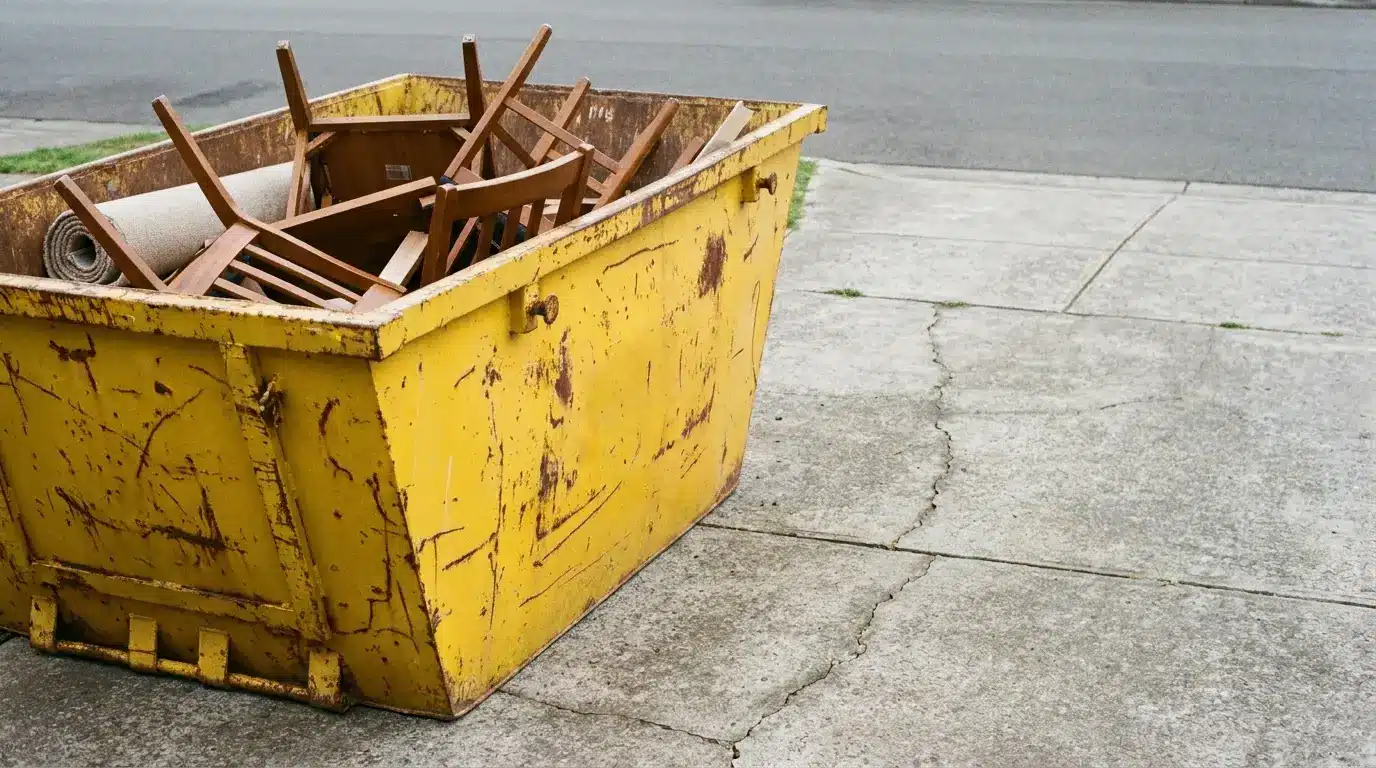
A single wardrobe clear-out needs a very different bin size from a full garage and shed clean-out. Underestimating the volume means ordering a second bin partway through, while overestimating means paying for space that never gets used. Walk through the areas you plan to clear and get a realistic sense of the volume before booking, rather than guessing based on how the space looks when it is still full.
Deal With Awkward Items Early
Old mattresses, broken furniture, garden waste, and electronics often need different handling than general household rubbish. Figuring out which waste type your bin needs to accept and whether any items require separate disposal saves a lot of frustration on collection day.
If your declutter includes anything unusual, like old paint tins or broken appliances, it is worth checking this before the bin even arrives.
Use the Bin as Motivation, Not an Afterthought
One underrated benefit of booking a skip bin before you start is that having it sitting in the driveway creates real momentum. It turns decluttering from a vague someday project into something with a deadline, since the bin will only be there for a set period.
Many people find they clear far more than planned simply because the bin is right there waiting to be filled.
Think About What Comes After
A good declutter often opens up space for a fresh project, whether that is finally organising the garage properly, turning a cluttered spare room into a home office, or simply enjoying a tidier home.
Clearing the waste is really just step one. Once the skip is gone, it is worth taking a moment to plan how you want the newly freed-up space to actually function, so the clutter does not simply creep back in over time.
The Takeaway
Decluttering is one of the simplest DIY projects to start, but one of the easiest to underestimate once the waste starts piling up. Sorting properly, sizing your bin to the real job, and using the process as a chance to reset how a space is used turn a chore into a genuinely worthwhile project.

Stephanie Grace, a graduate with a degree in Fine Arts from the Savannah College of Art and Design, has been inspiring DIY enthusiasts with her creative and practical guidance for over 14 years. Her career in design and crafting began in a small artisan workshop, where she developed a passion for transforming everyday materials into beautiful and functional items. Stephanie joined our website in 2018, rapidly gaining popularity for her easy-to-follow DIY tutorials and innovative project ideas. Since then, she has been the creative mind behind our DIY section, helping readers bring their artistic visions to life. Outside her professional pursuits, Stephanie enjoys pottery and urban gardening, hobbies that showcase her love for hands-on creativity and nature.