
Property managers overseeing busy commercial kitchens often face the sudden chaos of a grease trap failure. The moment a restaurant’s kitchen floor backs up with foul-smelling water, or dish stations grind to a halt, the risk to daily operations and health code compliance becomes immediate.
Managers need to act fast, but not every plumbing contractor has the capacity to handle these emergencies with the required expertise and urgency.
The right solution means more than just clearing a clog—it requires a partner who understands the unique plumbing demands of commercial facilities, the regulations governing grease waste, and the critical need to keep kitchens operational.
That’s why those responsible for complex properties turn to specialists who can respond quickly with commercial grease trap cleaning and repair when disaster strikes.
Common Causes of Commercial Grease Trap Overflows in Restaurants
Grease trap overflows don’t happen by chance—they usually result from a combination of neglected maintenance and the heavy, continuous use common in restaurant kitchens. One frequent cause is improper disposal of fats, oils, and grease (FOG) down kitchen drains.
Over time, these substances solidify inside the trap, reducing its holding capacity and leading to blockages. Another source of trouble is the buildup of food particles that bypass sink strainers and settle within the trap, forming dense sludge that restricts flow.
Inadequate cleaning schedules compound these risks, as traps designed for high-volume operations can quickly fill and fail if not serviced regularly.
Understanding the grease trap cleaning frequency recommended for commercial kitchens helps property managers set realistic maintenance intervals and avoid costly interruptions.
Rapid Response Times from RotoRooter During Plumbing Emergencies
When a grease trap fails, minutes matter. Delays in addressing a backup can force a kitchen shutdown, trigger health code violations, and even lead to property damage. Commercial property managers increasingly rely on providers with proven emergency response protocols.
Reliable companies staff their teams for round-the-clock coverage, so a call for help after hours or during peak dining periods doesn’t go unanswered. Having a direct line to professionals who understand the urgency—rather than leaving a message for standard business hours—can make all the difference.
The ability to dispatch skilled technicians without delay is a core reason why managers trust Roto-Rooter Plumbing Company for urgent grease trap repairs. This provider’s approach gives managers a clear escalation path and consistent support during the most high-stress situations.
Specialized Equipment Used by Commercial Plumbers for Grease Blockages
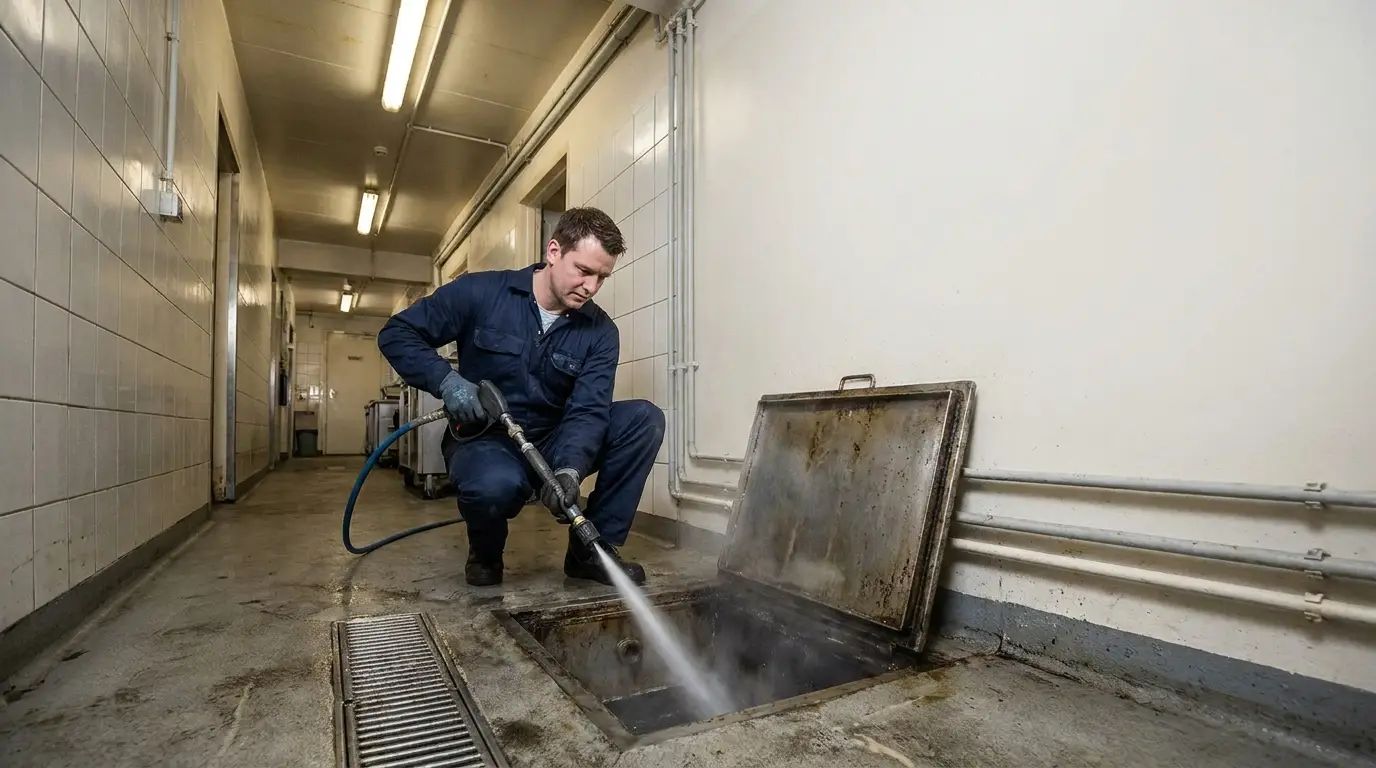
Addressing grease trap emergencies requires more than a plunger or conventional drain snake. Professional plumbers use specialized tools designed for the thick, sticky blockages that occur in commercial kitchens.
High-pressure water jetting equipment can break apart tough grease deposits and flush them from the system, restoring flow without damaging pipes. Vacuum trucks equipped for commercial grease trap cleaning Roto-Rooter services can extract large volumes of waste and transport it for proper disposal, preventing contamination of drainage lines.
Technicians may also deploy video inspection cameras to pinpoint blockages or structural issues inside the trap or connecting pipes, ensuring thorough cleaning and reducing the risk of repeat incidents.
Reviewing the types of equipment used in commercial plumbing emergencies helps property managers evaluate whether their service providers are equipped for the job.
Minimizing Business Downtime Through Professional Grease Trap Maintenance
Unplanned shutdowns due to grease trap failures can cost restaurants both revenue and reputation. Property managers who schedule regular professional maintenance catch warning signs before they become emergencies.
During scheduled commercial grease trap cleaning Roto-Rooter technicians can identify issues like slow drainage, foul odors, or early signs of overflow. They also document service dates and provide maintenance logs, giving property managers the records needed for regulatory compliance.
Proactive maintenance extends the lifespan of grease traps, reduces the likelihood of disruptive failures, and helps keep kitchens operating smoothly.
Investing in skilled, preventative care is often the best way to protect both tenants and property assets from the fallout of neglected grease management systems.
Conclusion
Property managers seeking reliable solutions for grease trap emergencies should prioritize vendors with proven emergency response, the right equipment, and a strong record of preventative maintenance.
Confirming a provider’s availability and experience with commercial systems is the best way to reduce risk and keep business moving, even when the unexpected occurs.

Tommy Hardy, an alumnus of the Georgia Institute of Technology with a degree in Mechanical Engineering, has been a go-to figure in residential upkeep and innovation for over 18 years. His career commenced in a leading home appliance manufacturing company, where he mastered the intricacies of household systems. Joining our platform in 2020, Tommy quickly became a reader favorite for his practical and easy-to-follow guides. He took the helm of our DIY section in 2019, consistently delivering content that empowers homeowners. Beyond his professional pursuits, Tommy is a passionate gardener and enjoys woodworking, skills enhancing his hands-on approach to home care.