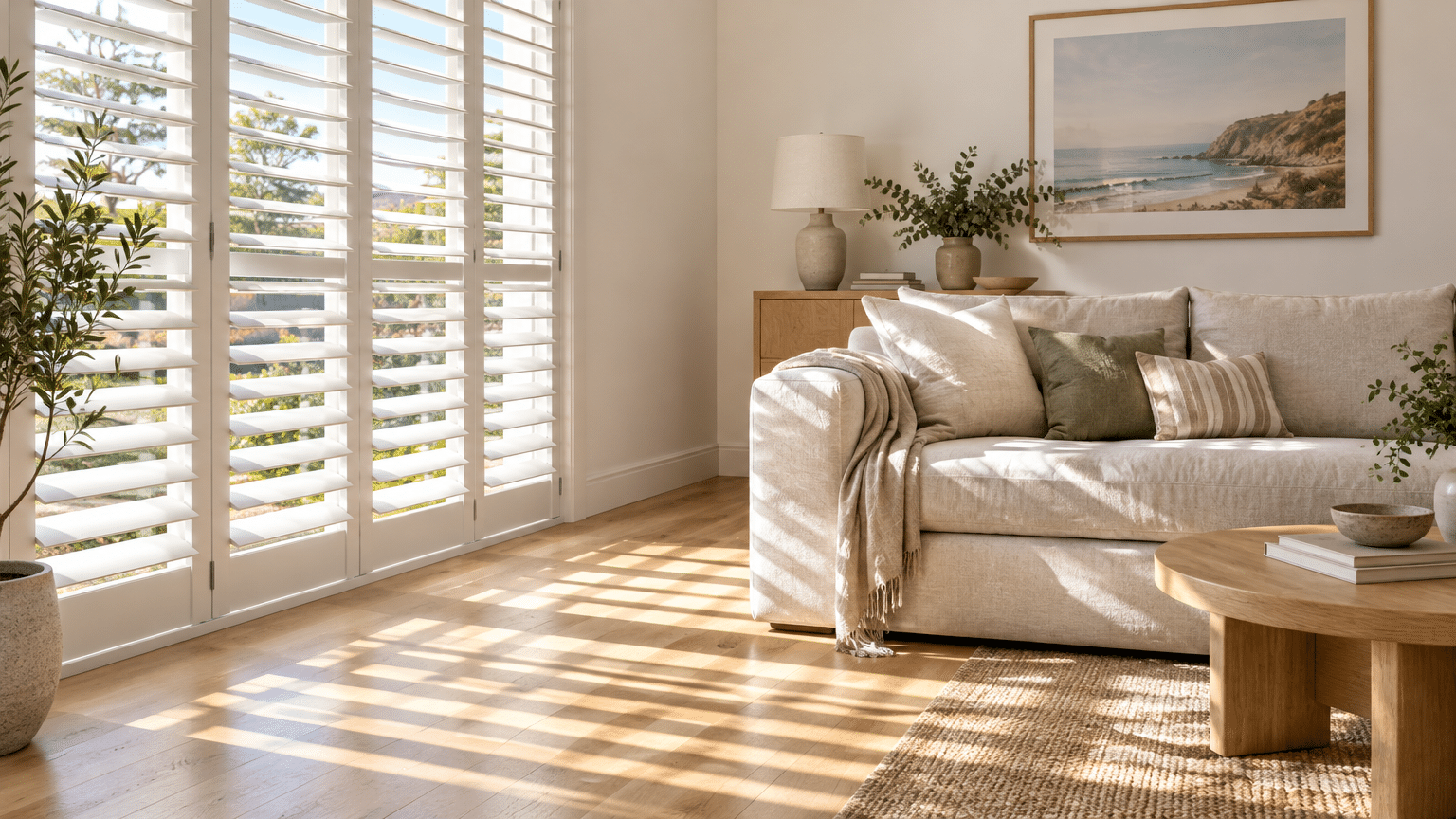

Choosing the right window shutters can make a noticeable difference to how comfortable, private and functional your home feels. Strong afternoon sunlight, limited privacy and changing weather conditions can affect how you use your living spaces, particularly when windows face busy streets or neighbouring properties.
Shutters provide a practical way to manage these conditions while complementing the appearance of your home. Depending on their design, they can help control natural light, improve privacy, support thermal comfort and provide additional protection for suitable outdoor openings.
However, not all shutters offer the same features. Plantation shutters, roller shutters and exterior aluminium shutters serve different purposes, while materials such as timber, PVC and aluminium have different durability and maintenance requirements.
For Australian homeowners, selecting suitable shutters also means accounting for local climate conditions, window dimensions, installation requirements and everyday use.
This guide explores the main types of shutters available in Australia, their benefits, materials, costs and practical considerations to help you choose suitable window coverings for your property.
What Are Window Shutters and How Do They Work?
Window shutters are coverings made from solid panels, adjustable louvres or interlocking slats. They are installed over or around windows and other suitable openings to control sunlight, privacy, ventilation or weather exposure.
Unlike fabric blinds and curtains, shutters typically use a more rigid construction. Their operation varies depending on the style, with some opening on hinges, others sliding along tracks and certain systems rolling into an overhead housing.
For homeowners comparing shutters Australia options, the main decision is whether the shutters will be used indoors, outdoors or as part of a specialised window protection system.
A living room may benefit from adjustable plantation shutters, while an exposed window may require an exterior product specifically designed for environmental conditions.
How Do Adjustable Shutters Work?
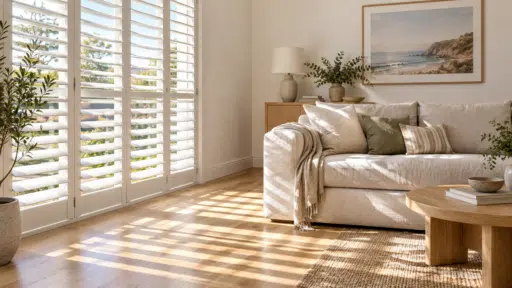
Plantation shutters typically feature horizontal louvres fitted within a surrounding frame.
The louvres rotate to change the amount of light and air passing through the opening.
For example, partially tilted louvres can reduce direct sunlight while allowing some daylight into the room. Closing them increases privacy, although small gaps may remain depending on the shutter design.
Other shutter systems, such as roller shutters, operate differently. These use connected slats that move vertically to cover or expose the window.
Where Can Shutters Be Installed?
Shutters can suit a variety of residential and selected commercial applications, including:
- Living room and bedroom windows.
- Kitchens and bathrooms.
- Sliding doors and large glass openings.
- Patios and covered outdoor entertaining areas.
- Balconies and verandahs.
- Selected external windows requiring additional shading or protection.
The installation location determines which materials, hardware and operating systems are appropriate.
For example, an indoor timber shutter may not withstand the same environmental exposure as an exterior-rated aluminium system.
What Are the Main Benefits of Installing Shutters?
Window shutters offer several practical advantages beyond decorative appearance.
Depending on their construction, they can help homeowners manage natural light, maintain privacy and improve the usability of indoor and outdoor spaces.
However, performance depends on the shutter material, design, fit and installation quality.
1. Better Control Over Natural Light
Adjustable plantation shutters allow homeowners to change the direction and amount of sunlight entering a room.
This can be useful for windows exposed to strong morning or afternoon sunlight.
For example, a west-facing living room may experience uncomfortable glare later in the day. Tilting the louvres can help reduce direct sunlight without necessarily blocking all natural light.
The effectiveness depends on the louvre angle, size and window orientation.
2. Improved Privacy
Shutters can limit direct views into a home while allowing occupants to adjust the amount of daylight entering.
This is particularly useful for ground-floor windows, street-facing rooms and properties located close to neighbouring homes.
Unlike some lightweight window coverings, plantation shutters provide adjustable privacy through their solid frames and louvres.
However, privacy changes according to the viewing angle and blade position.
3. Support for Indoor Temperature Control
Shutters can influence the amount of solar heat entering a room and the movement of air near windows.
External shutters may reduce direct solar exposure before sunlight passes through the glazing.
Internal shutters can also influence heat transfer, although their effectiveness depends on the material, fit and window construction.
They should not automatically be treated as a substitute for appropriate glazing or insulation.
4. Durable Window Coverings
Shutters made from suitable materials can provide long-term functionality when properly installed and maintained.
Aluminium, PVC and timber each offer different characteristics.
For example, aluminium generally resists moisture-related warping, while appropriately finished timber provides a natural appearance.
Durability depends on product quality, environmental exposure and maintenance.
5. Flexible Interior Design
Shutters are available in different colours, materials and panel configurations.
White plantation shutters can complement contemporary interiors, while timber finishes may suit traditional or natural design styles.
Exterior shutters can also be selected to coordinate with surrounding windows, doors and architectural features.
6. Practical Operation
Shutters can provide convenient access to light and privacy controls.
Depending on the design, panels may be hinged, sliding, folding or motorised.
The operating system should suit the opening dimensions and how frequently the covering will be adjusted.
Main Types of Shutters Available in Australia
Different shutter styles are designed for different purposes.
Some provide adjustable privacy and daylight control, while others focus on external shading, security-related functions or weather protection.
Understanding these differences helps homeowners choose the right system for each opening.
Plantation Shutters
Plantation shutters are among the most recognisable indoor shutter styles.
They feature adjustable horizontal louvres within a solid surrounding frame.
Plantation shutters can be manufactured from timber, PVC, composite materials or aluminium, depending on the application.
They are commonly installed in bedrooms, living areas, kitchens and selected bathrooms.
Their main advantages include adjustable light control, privacy and a structured architectural appearance.
Roller Shutters
Roller shutters consist of connected slats that move vertically along side guides.
When raised, the slats generally retract into a housing positioned above the opening.
Depending on their construction and rating, roller shutters may provide shading, room darkening and additional weather or security-related benefits.
They are commonly installed externally.
However, not every roller shutter is designed or certified to provide the same level of security or storm protection.
Exterior Aluminium Shutters
Exterior aluminium shutters are designed for suitable outdoor applications.
They may feature adjustable or fixed louvres and can be installed around patios, balconies and other exposed openings.
Aluminium is often selected because of its dimensional stability and suitability for outdoor manufacturing.
However, coating quality, hardware and structural fixings must match the intended environment.
Sliding Shutters
Sliding shutters move horizontally along a track.
They can be useful for large openings where hinged panels would obstruct movement or require excessive clearance.
Sliding configurations may suit wide windows, glass doors and outdoor entertaining areas.
The opening must provide sufficient space for tracks and stacked panels.
Bi-Fold Shutters
Bi-fold shutters consist of connected panels that fold together when opened.
They may suit wider openings where occupants want to expose a substantial portion of the window or doorway.
The design requires appropriate hinges, guides and structural support.
Regular inspection of moving components can help maintain smooth operation.
Fixed Louvre Shutters
Fixed louvre shutters use blades positioned at a set angle.
They can provide permanent screening, partial shading and airflow in suitable locations.
However, unlike adjustable plantation shutters, fixed louvres cannot be repositioned throughout the day.
They may suit areas where consistent screening is preferred.
Shutter Materials: Timber vs PVC vs Aluminium
Material selection influences appearance, durability, maintenance and suitability for different rooms.
No single shutter material is best for every property.
For example, timber may be attractive in a dry living room, while aluminium or suitable moisture-resistant materials may be more appropriate for certain exposed locations.
Timber Shutters
Timber shutters provide a natural appearance and can complement traditional and contemporary interiors.
Different timber species and finishes offer varying colours and textures.
However, timber may be affected by moisture, humidity and temperature changes.
Protective coatings and suitable maintenance are important for preserving appearance and dimensional stability.
PVC Shutters
PVC shutters are manufactured from a synthetic material that does not absorb moisture like timber.
They are commonly selected for suitable indoor applications, including some kitchens and bathrooms.
However, performance varies between products.
Heat exposure, panel dimensions and construction quality can influence whether PVC shutters remain stable over time.
Aluminium Shutters
Aluminium shutters are commonly used for external applications and selected interior designs.
They offer good resistance to moisture-related swelling and can be manufactured with powder-coated finishes.
However, aluminium systems still require suitable maintenance.
Coastal exposure, damaged coatings and unsuitable metal hardware can contribute to deterioration.
Composite Shutters
Composite shutters combine manufactured materials to provide particular performance characteristics.
Their construction varies between suppliers.
Some products are designed to offer moisture resistance and dimensional stability, while others prioritise appearance or affordability.
Always review the manufacturer’s specifications before selecting composite shutters for humid or exposed areas.
Shutter Material Comparison
Feature | Timber | PVC | Aluminium | Composite |
Appearance | Natural timber finish | Smooth manufactured finish | Modern painted finish | Varies by product |
Moisture resistance | Depends on finish and exposure | Generally good | Generally good | Product-dependent |
| Outdoor suitability | Depends on specific product | Not all products suitable | Exterior-rated systems available | Product-dependent |
| Maintenance | May require coating care | Routine cleaning | Cleaning and hardware inspections | Varies by construction |
| Weight | Depends on species and design | Depends on construction | Relatively lightweight | Varies |
| Common applications | Living rooms and bedrooms | Selected interior rooms | Exterior and selected interior spaces | Various indoor applications |
The best material should be selected according to where the shutters will be installed and how they will be used.
How to Choose Shutters Australia Options for Different Rooms
Different rooms have different requirements for privacy, sunlight and maintenance.
A shutter that suits a bedroom may not be appropriate for a bathroom or outdoor entertaining area.
Choosing window coverings according to room use helps create a more practical result.
Living Room Shutters
Living rooms often require a balance between daylight, privacy and visual appearance.
Plantation shutters can provide adjustable light control while maintaining a consistent window finish.
For large living room windows, consider the number of panels and how they will open.
Panel configuration should allow access to windows without obstructing nearby furniture.
Bedroom Shutters
Bedrooms generally require greater privacy and light reduction.
Plantation shutters can limit incoming light when their louvres are closed.
However, small gaps may remain around the frame and between components.
For stronger room darkening, appropriately specified roller shutters or additional window coverings may be worth exploring.
Kitchen Shutters
Kitchen shutters should be easy to clean and suitable for the surrounding environment.
PVC, aluminium and other approved materials may be practical where moisture and cleaning requirements are important.
Avoid installing unsuitable shutters near cooking appliances, open flames or excessive heat.
The covering should not interfere with ventilation or safe appliance operation.
Bathroom Shutters
Bathrooms often experience condensation and humidity.
Moisture-resistant shutter materials may be preferable to untreated timber.
Privacy is another important requirement.
Choose a panel and louvre arrangement that provides suitable screening while remaining easy to clean.
Patio and Outdoor Shutters
Outdoor shutters must be designed for exposure to weather conditions.
Aluminium systems may suit covered patios and alfresco spaces when properly specified.
However, the installation must account for wind loads, rain exposure, corrosion resistance and structural fixing requirements.
Indoor shutters should not automatically be used outside.
Plantation Shutters vs Roller Shutters: Which Is Better?
Plantation shutters and roller shutters are designed for different applications.
Plantation shutters generally prioritise adjustable privacy, daylight control and interior appearance.
Roller shutters typically provide more continuous coverage over an opening when lowered.
The better choice depends on the homeowner’s main goal.
Feature | Plantation Shutters | Roller Shutters |
Common installation | Mostly internal, with exterior-rated options available | Commonly external |
Light control | Adjustable through louvres | Controlled by raising or lowering |
Privacy | Adjustable | Generally high when fully closed |
Room darkening | Depends on gaps and design | Can provide strong light reduction |
| Ventilation | Adjustable through louvres | Depends on slat design and position |
| Security function | Not generally a security barrier | Depends on product design and rating |
| Operation | Hinged, sliding or other panel systems | Manual or motorised rolling system |
| Appearance | Decorative, visible shutter panels | Slatted covering with an overhead housing |
Plantation shutters may suit homeowners wanting a decorative window treatment that allows frequent light adjustment.
Roller shutters may be more appropriate where stronger room darkening or additional external protection is required.
Do Shutters Help Keep Australian Homes Cooler?
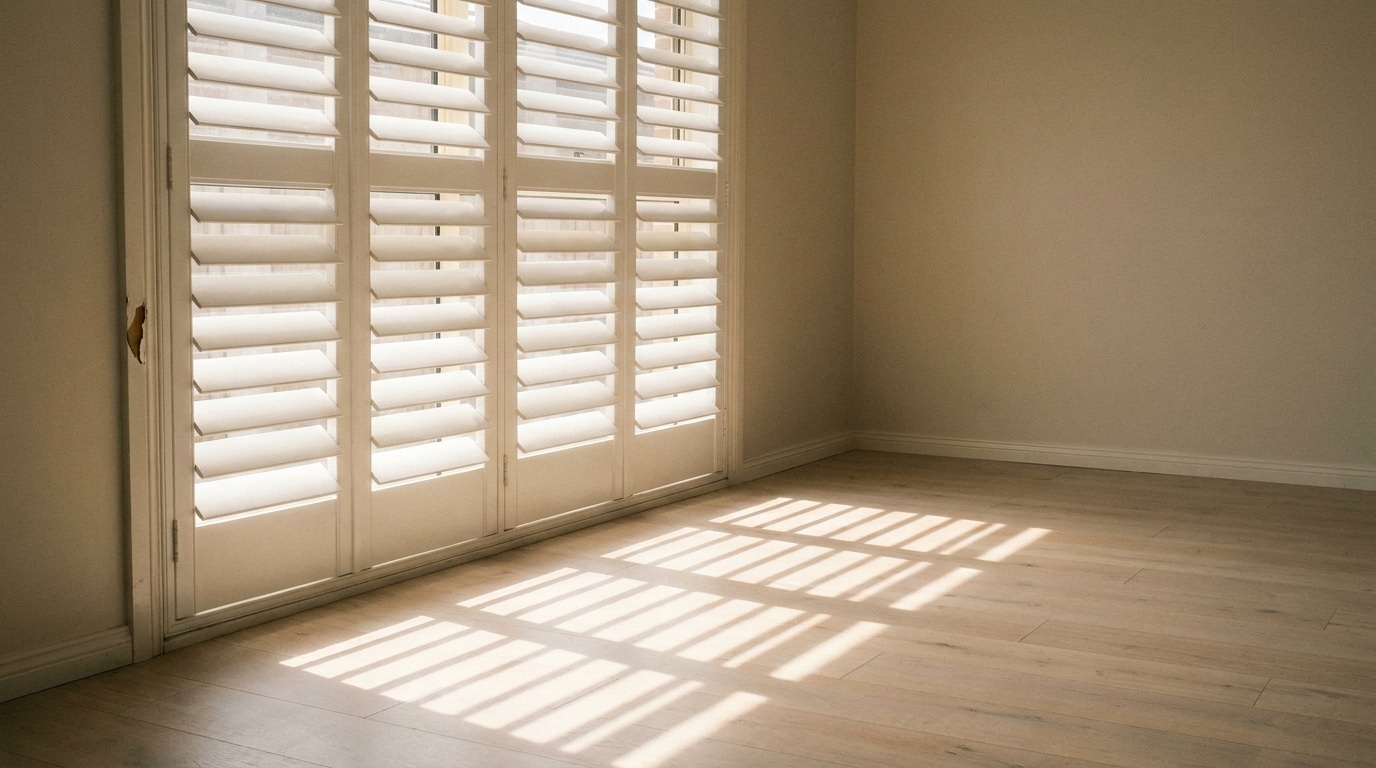
Shutters can help manage indoor comfort by controlling direct sunlight through windows.
Their effectiveness depends on whether they are installed internally or externally, the material used and how closely the system fits the opening.
External Shutters and Solar Heat
External shutters can intercept sunlight before it passes through the window.
This may help reduce solar heat gain during hot weather.
For example, an appropriately positioned exterior shutter may reduce direct afternoon sunlight reaching a west-facing window.
However, performance depends on the shutter design, window construction and surrounding conditions.
Internal Plantation Shutters
Internal plantation shutters can help manage glare and direct sunlight.
Closing the louvres changes how light enters the room.
They may also influence heat transfer around the window, although results vary according to the frame, material and installation.
Winter Comfort
Window coverings may help reduce some heat loss during cooler conditions.
However, shutters alone do not replace suitable insulation or energy-efficient glazing.
A whole-home approach to thermal comfort should account for windows, shading, ventilation and building insulation.
Are Shutters Suitable for Coastal Australian Homes?
Coastal environments can expose external shutters to salt-laden air, humidity and strong winds.
These conditions may increase maintenance requirements and affect certain materials or hardware.
Choosing a suitable product is especially important for properties close to the ocean.
Corrosion Resistance
Aluminium shutters may be suitable for coastal applications when the coating, construction and fixings are appropriate for the exposure conditions.
Stainless steel or other corrosion-resistant hardware may be specified depending on the system.
However, not all metal components offer the same level of corrosion resistance.
Cleaning Requirements
Salt deposits can accumulate on exterior shutter surfaces and moving components.
Regular cleaning can help remove deposits and preserve protective finishes.
Follow the manufacturer’s maintenance recommendations.
Wind Exposure
Exterior shutters must be suitable for the site’s wind conditions.
Large panels can experience substantial loads during strong winds.
The framework, hinges, tracks and fixings should be designed for the intended installation.
Do not assume that standard decorative shutters provide storm protection.
How Much Do Shutters Cost in Australia?
Shutter prices vary according to material, dimensions, operating system and installation requirements.
A small indoor plantation shutter installation may involve different costs from large sliding exterior shutters or motorised roller shutters.
Without specific product and installation details, a single average price may not provide a useful budget estimate.
Material Selection
Timber, PVC, composite and aluminium shutters have different manufacturing and finishing requirements.
Specialised coatings and hardware can influence the final price.
The selected material should suit the intended environment rather than being chosen solely on initial cost.
Window Dimensions
Larger windows generally require more materials.
Wide openings may also need additional panels, tracks or stronger supporting components.
Custom shapes can increase fabrication complexity.
Shutter Configuration
Hinged, sliding, bi-fold and roller systems use different operating components.
More complex configurations may have additional hardware and installation requirements.
Motorisation
Some roller shutters and other specialised systems are available with powered controls.
Motorisation may increase the price and introduce electrical installation requirements.
Confirm whether the controls, wiring and installation are included in the quotation.
Installation Conditions
Restricted access, elevated windows and unusual mounting surfaces may affect installation costs.
Exterior shutters may also require structural fixing or additional support.
A professional site assessment can help identify these requirements.
What Should a Shutter Quote Include?
Before accepting a quotation, confirm:
- Shutter type and material.
- Window measurements.
- Panel and louvre configuration.
- Finish and colour.
- Operating mechanism.
- Installation and fixing methods.
- Motorisation, where applicable.
- Applicable safety requirements.
- Warranty conditions.
- Additional charges or exclusions.
A detailed written quote makes it easier to compare products with similar specifications.
Professional Shutter Installation: What to Expect
Correct installation is necessary for smooth operation, suitable alignment and long-term performance.
Shutters should be measured and fitted according to the window dimensions and the manufacturer’s specifications.
Measuring the Windows
Accurate measurements are required to determine the appropriate shutter dimensions.
Installers may need to check window width, height, recess depth and whether the opening is square.
Handles, locks and other fixtures can also affect panel movement.
Choosing the Mounting Method
Plantation shutters may be installed within or outside a window recess, depending on the product and available space.
Exterior shutters require suitable structural fixings.
The mounting arrangement should support the shutter’s weight and intended movement.
Installing Frames and Panels
The frame must be positioned and secured according to the approved installation method.
Panels should open and close smoothly without binding.
Louvres should rotate correctly and remain aligned.
Testing the Completed Installation
After installation, check that all panels and operating mechanisms function properly.
Inspect visible gaps, alignment and any areas where moving parts could interfere with nearby fixtures.
For motorised systems, confirm that the controls operate as intended.
Shutter Safety and Building Requirements in Australia
Shutter installations must satisfy relevant safety and building requirements.
The applicable rules depend on the shutter type, installation location and whether the work affects the building’s exterior or structural components.
External Shutter Installations
Exterior shutters need appropriate structural fixings and support.
Wind exposure can place significant forces on large panels.
A qualified professional may need to confirm the suitability of the supporting structure.
Bushfire-Prone Areas
Properties in designated bushfire-prone areas may have additional construction requirements.
Certain specifically designed and compliant bushfire shutters can form part of a building’s bushfire protection measures.
However, ordinary plantation shutters or roller shutters should not be assumed to meet Bushfire Attack Level requirements.
Product suitability and compliance with applicable building standards must be confirmed for the particular property.
Strata Properties
Apartment owners may require approval before installing shutters that change the building’s external appearance.
Owners corporation rules can affect permitted colours, materials and installation methods.
Check the relevant requirements before purchasing custom exterior shutters.
Safe Access and Operation
Shutters must not interfere with required exits or create unsafe obstructions.
Operating mechanisms should be easy to use and properly maintained.
Motorised equipment should follow the manufacturer’s safety and operating instructions.
How to Maintain Window Shutters
Regular cleaning and inspections help preserve the appearance and operation of shutters.
The appropriate care depends on the material and installation environment.
Cleaning Plantation Shutters
Dust can accumulate on horizontal louvres.
Use a soft cloth, suitable duster or gentle vacuum attachment where recommended.
Avoid forcing the blades or using excessive water on moisture-sensitive materials.
Maintaining Timber Shutters
Timber shutters should be kept clean and protected from prolonged moisture exposure.
Inspect finishes for signs of peeling, cracking or deterioration.
Refinishing may be necessary depending on the coating and environmental conditions.
Cleaning Aluminium Shutters
Aluminium shutters can generally be cleaned using suitable non-abrasive methods.
Remove dust, dirt and salt deposits according to the manufacturer’s instructions.
Avoid harsh chemicals that may damage protective coatings.
Inspecting Moving Components
Hinges, tracks, rollers and other operating parts should be checked for wear or misalignment.
Difficulty opening a shutter may indicate a damaged component or obstruction.
Do not force the mechanism.
Arrange professional inspection when necessary.
Common Mistakes to Avoid When Choosing Shutters
Selecting shutters without reviewing the practical needs of each window can lead to disappointing results.
A product that looks suitable in a showroom may behave differently once installed in a sun-exposed room or outdoor environment.
Choosing the Wrong Material
Timber, PVC and aluminium have different environmental limitations.
A material suited to a dry living room may not perform well in an exposed outdoor area.
Match the shutter specification to the location.
Ignoring Louvre Size
Louvre size affects appearance, light control and visibility.
Wider blades may provide a more open view when tilted, while narrower blades create a different visual finish.
The correct size also depends on window dimensions and panel construction.
Overlooking Window Access
Hinged shutters require enough room to open.
Sliding and folding systems need suitable tracks and stacking space.
Check nearby furniture and fixtures before selecting a configuration.
Assuming Every Shutter Provides Security
Ordinary plantation shutters are designed primarily for shading and privacy.
They should not automatically be treated as security barriers.
Where security is the main goal, select a product specifically designed and rated for that purpose.
Choosing Based Only on Price
A lower quotation may exclude installation work, specialised hardware or appropriate finishes.
Compare complete product specifications and installation inclusions rather than price alone.
How to Choose the Right Shutters for Your Home
A clear selection process can help homeowners choose shutters that suit their property and budget.
Start with the intended function, then compare materials and operating systems.
Step 1: Identify Your Priorities
Determine whether privacy, light control, shading, appearance or additional external protection is most important.
Different shutter styles provide different functions.
Step 2: Review the Installation Location
Check whether the shutters will be installed indoors or outdoors.
Consider sunlight, humidity, rain and wind exposure.
Step 3: Compare Materials
Review timber, PVC, aluminium and composite options according to the intended environment.
Ask about cleaning requirements, durability and product limitations.
Step 4: Select the Shutter Style
Choose between plantation shutters, roller shutters, sliding systems or other suitable configurations.
Confirm that the design allows convenient access and operation.
Step 5: Arrange Professional Measurement
Accurate measurements help ensure the shutters fit and operate correctly.
For large or unusual openings, professional measurement may reduce installation problems.
Step 6: Review the Quotation
Check materials, dimensions, operating components, installation responsibilities and warranties.
Confirm any additional structural or electrical requirements before proceeding.
Choosing the Right Shutters for Long-Term Comfort
Shutters can improve privacy, manage sunlight and complement the appearance of Australian homes.
However, different shutter types offer different benefits. Plantation shutters provide adjustable light control, roller shutters can offer stronger external coverage, and exterior aluminium shutters may suit selected patios and exposed openings.
Material quality, installation location, operating mechanisms and maintenance requirements all affect the final result.
Before purchasing shutters in Australia, identify the main needs of each room, compare suitable materials and arrange accurate measurements.
Request a detailed quote that includes the shutter specifications, installation method and applicable warranties. This will help you choose window coverings that suit your home’s design, everyday use and environmental conditions.
Frequently Asked Questions About Shutters in Australia
1. What Type of Shutters Is Best for Australian Homes?
The best shutters for Australian homes depend on the installation location, climate and intended function. Plantation shutters are commonly selected for adjustable privacy and light control, while roller shutters may suit external shading and room darkening. Aluminium shutters can be useful for suitable outdoor applications, while timber and PVC products are often used indoors. Homeowners should compare material specifications, maintenance requirements and operating systems before choosing. A professional assessment can help determine which option suits each window.
2. Are Plantation Shutters Worth Installing in Australia?
Plantation shutters can be worthwhile for homeowners seeking adjustable daylight control, privacy and a structured window finish. Their louvres allow occupants to change the amount of light entering a room without fully opening the panels. However, the overall value depends on material quality, installation and how frequently the shutters are used. They do not necessarily provide complete room darkening or security protection. Comparing plantation shutters with other window coverings can help determine whether they suit the household’s needs.
3. Do Shutters Help Keep Australian Homes Cooler in Summer?
Shutters can help manage indoor comfort by reducing direct sunlight entering through windows. External shutters may be particularly useful because they can block some solar radiation before it reaches the glazing. Internal plantation shutters can also reduce glare and direct light, although thermal results depend on their design and fit. Shutters should not be treated as a complete replacement for suitable insulation or efficient glazing. The overall benefit depends on window orientation, surrounding shade and building conditions.
4. How Much Do Shutters Cost in Australia?
Shutter costs in Australia vary according to material, window dimensions, shutter type, operating mechanism and installation requirements. A small indoor plantation shutter may involve different costs from a large external aluminium or motorised roller shutter system. Custom shapes, specialised finishes and difficult installation access can also affect pricing. To obtain a reliable estimate, request a measured quotation that identifies materials, operating components, installation and warranty inclusions. Comparing similar product specifications provides a more useful basis than selecting the lowest advertised price.
5. How Long Do Window Shutters Last in Australia?
The service life of window shutters depends on material quality, environmental exposure, installation and maintenance. Timber may require periodic coating maintenance, while aluminium and PVC products have different cleaning and durability characteristics. Moving parts such as hinges, tracks and motors may also require attention over time. Coastal conditions and strong sunlight can affect certain finishes and components. Rather than relying on a fixed lifespan estimate, homeowners should review the manufacturer’s warranty, product specifications and recommended maintenance schedule.

With a Master’s in Architecture from the University of California, Berkeley, Mitchell Green has spent over two decades dedicated to the study and practical application of home fixture design. His career started in an architectural firm, providing him a strong foundation in the structural and aesthetic aspects of home interiors. Mitchell brought his comprehensive knowledge to our platform, where he has been an influential voice in our home fixtures and fittings section. Since 2018, he has been guiding our readers through the intricacies of selecting and installing fixtures, combining technical know-how with design flair. In his spare time, Mitchell is a keen photographer, capturing architectural details and design elements, an interest that complements his professional focus.