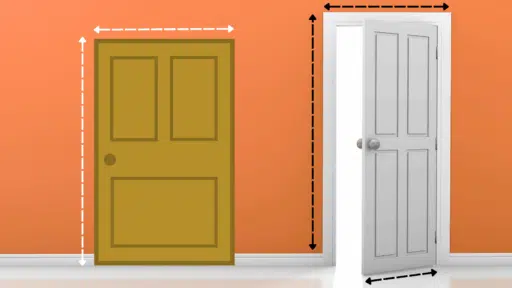
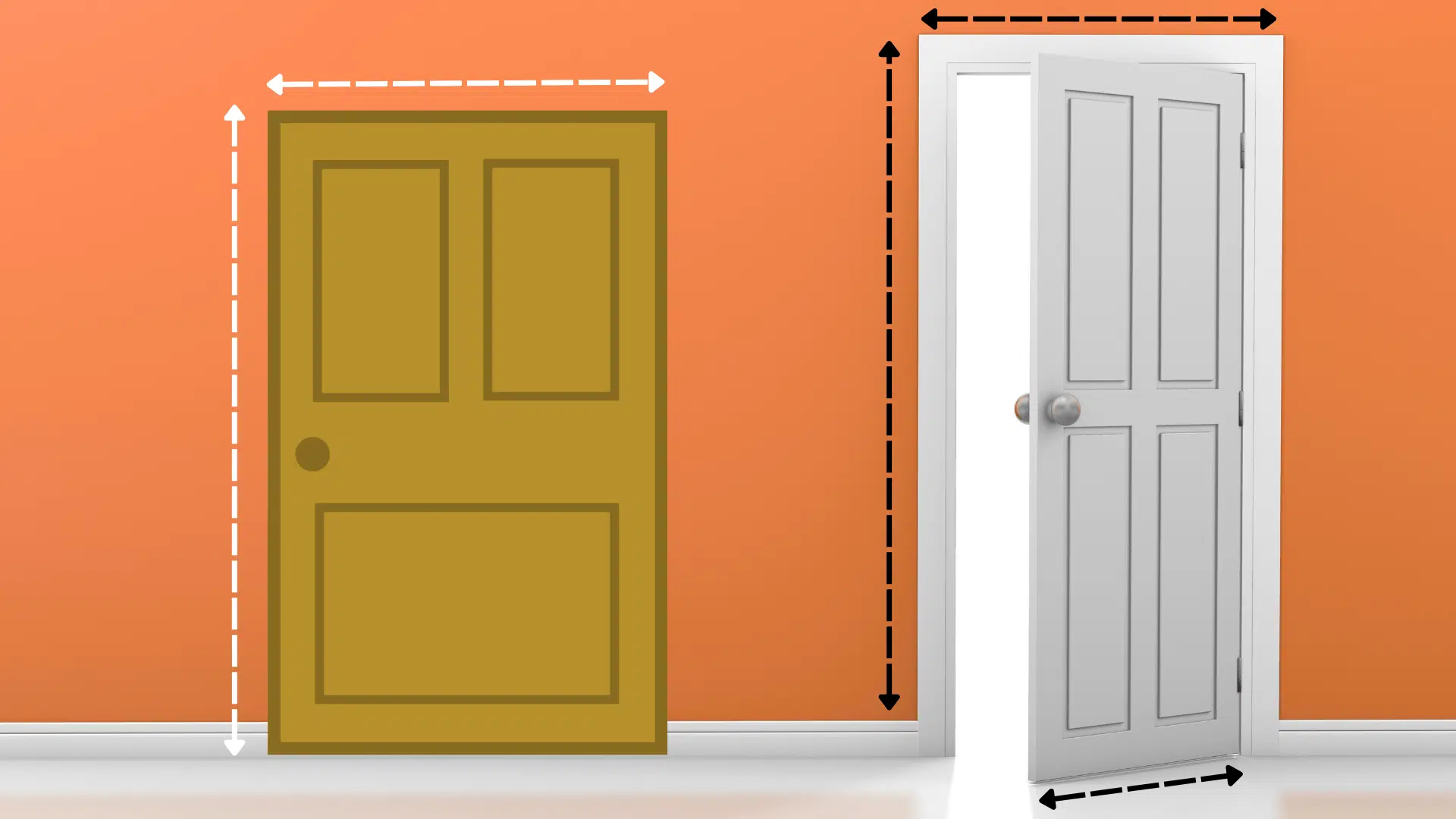

Doors are part of everyday spaces, yet their size often goes unnoticed until a replacement or renovation is needed.
One detail that matters more than expected is the Average Door Height, as it affects comfort, movement, and overall layout.
A door that feels too short or unusually tall can change how a space functions and looks.
While most buildings follow standard measurements, not every door is the same across homes, offices, or older structures.
Knowing the usual height, along with where variations appear, helps make better decisions during planning or installation.
The sections ahead break down common standards, practical differences, and useful details tied to door height.
What Is the Average Door Height?
The average door height used in most residential buildings is 80 inches, which equals 6 feet 8 inches.
This size allows comfortable movement for most people and works well with standard ceiling heights.
It is commonly used for interior and exterior doors in modern homes.
In many commercial buildings, door height is often taller, usually around 84 inches, to meet accessibility needs and higher traffic use.
These measurements help ensure uniform sizing, easier replacements, and smoother installation across different construction projects.
Standard Door Height by Door Type
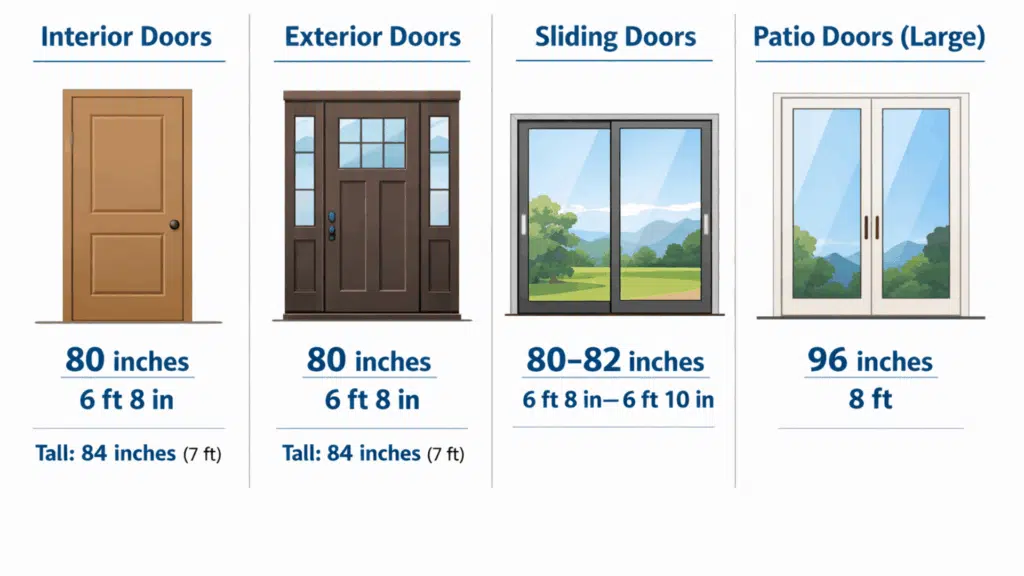
Door height is not the same for every opening in a building. It often depends on where the door is placed and how the space is used.
Below are the common door height measurements based on door type, along with practical details that explain why these sizes are commonly used:
Interior Doors
Interior doors in most homes usually have a height of 80 inches, which is equal to 6 feet 8 inches.
This measurement works well with standard ceiling heights and allows smooth movement between rooms without making spaces feel closed in.
Interior doors for bedrooms, bathrooms, and closets generally follow this size for consistency.
In newer homes with higher ceilings, interior doors may measure 84 inches, offering a slightly taller appearance while still fitting common framing practices.
Exterior Doors
Exterior doors are commonly 80 inches tall, similar to interior doors, but they are often thicker and framed differently for durability.
In many modern houses, exterior doors measuring 84 inches are also widely used, especially for front entrances.
These taller doors provide better clearance, support weather sealing, and align well with upgraded entry designs.
Sliding and Patio Doors
Sliding and patio doors usually have taller dimensions compared to standard hinged doors.
Common heights include 80 inches, 82 inches, and 96 inches, depending on the design and ceiling height.
These doors are built taller to allow more natural light and easier outdoor access.
The added height supports large glass panels and maintains balance. Measurements may vary with track systems and frame design during installation.
For easier understanding, the table above shows the most commonly used door heights by door type, helping compare standard measurements at a glance and choose the right size for different spaces:
| Door Type | Common Door Height (Inches) | Height in Feet & Inches |
|---|---|---|
| Interior Doors | 80 inches | 6 ft 8 in |
| Interior Doors (tall) | 84 inches | 7 ft |
| Exterior Doors | 80 inches | 6 ft 8 in |
| Exterior Doors (tall) | 84 inches | 7 ft |
| Sliding Doors | 80–82 inches | 6 ft 8 in–6 ft 10 in |
| Patio Doors (large) | 96 inches | 8 ft |
When Door Height Is Different From the Standard
Door height is not always fixed at the standard size in every building.
Older homes often have shorter doors due to past construction practices and lower ceiling heights.
Custom-built houses may use taller doors to match design preferences or higher ceilings.
Areas such as basements, attics, and utility rooms sometimes have reduced door height because of structural limits like beams or ductwork.
In contrast, luxury homes and modern apartments may install taller doors for a more open feel.
These variations are usually planned to suit space, structure, and functional needs.
How to Measure Door Height Correctly?
Measuring door height the right way helps ensure a proper fit and avoids adjustment issues later.
Whether replacing an existing door or planning a new installation, taking accurate measurements allows the door to open and close smoothly while maintaining correct clearance.
- Measure the door slab from the top edge to the bottom edge without including hinges or hardware.
- For framed openings, measure from the finished floor up to the lower edge of the header.
- Take measurements at more than one point to check for floor unevenness or frame shifts.
- Include the height of flooring, mats, or thresholds if they will be added later.
Tip: Always record measurements in inches and double-check them before purchasing or ordering a door to prevent fitting errors.
Conclusion
Understanding the Average Door Height makes planning, replacing, or upgrading doors far easier than relying on guesswork.
From standard interior and exterior sizes to taller options used in modern buildings, door height plays a quiet but important role in comfort and layout.
Knowing when and why door heights vary helps avoid fitting issues, especially in older homes or custom spaces.
Accurate measurement also prevents unnecessary adjustments during installation.
Together, these details create a clear picture of how door height choices affect everyday use.
If you have dealt with unusual door sizes or recently replaced a door, share your experience or favorite setup in the comments below.

Holding a Master’s in Construction Management from Purdue University, William Ray has dedicated more than two decades to studying and applying construction principles. His professional journey includes a tenure with a prominent construction firm, where he specialized in project management and building technologies. William brought his knowledge to our team, providing in-depth insights into practical construction techniques. As the leader of our beginner’s guide to building since 2019, he has a knack for breaking down intricate processes into easily digestible content. When not involved in writing or onsite consultations, William enjoys woodworking and volunteering in community building projects, which aligns with his passion for hands-on construction and community service.