Building a custom home on Cape Cod is less about the house and more about the site. Flood zones, wetland setbacks and town zoning decide what you can build long before the design does, and discovering those limits late is where budgets and timelines fall apart. A homeowner who understands the process and hires a builder who works inside these rules daily, avoids the expensive surprises. Here is how the process actually runs on Cape Cod.
Steps to Build a Custom Home on Cape Cod
The order of operations matters more here than almost anywhere. Work through it like this:
- Check the flood zone before you fall for a lot. A parcel in an AE or VE zone changes the foundation and the budget, so look the address up on the FEMA flood map first.
- Confirm the true buildable area. Wetland buffers, setbacks and lot coverage limits shrink where a home can actually sit, often well inside the lot lines.
- Plan the septic early. Many Cape towns now require advanced septic systems in nitrogen-sensitive areas, which is a real line item, not an afterthought.
- Budget for permitting time. Conservation Commission review, zoning and health sign-offs run in parallel and add months before a shovel moves.
- Hire a builder who does this daily. Coastal custom home construction in the area rewards local experience over the lowest bid.
What Flood Zones Mean for a Cape Cod Build
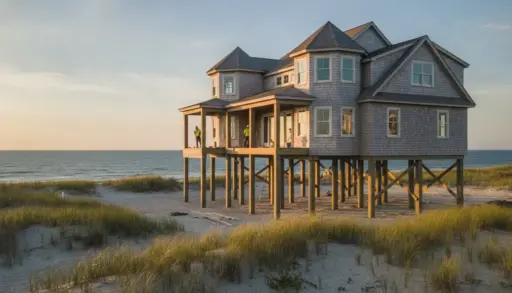
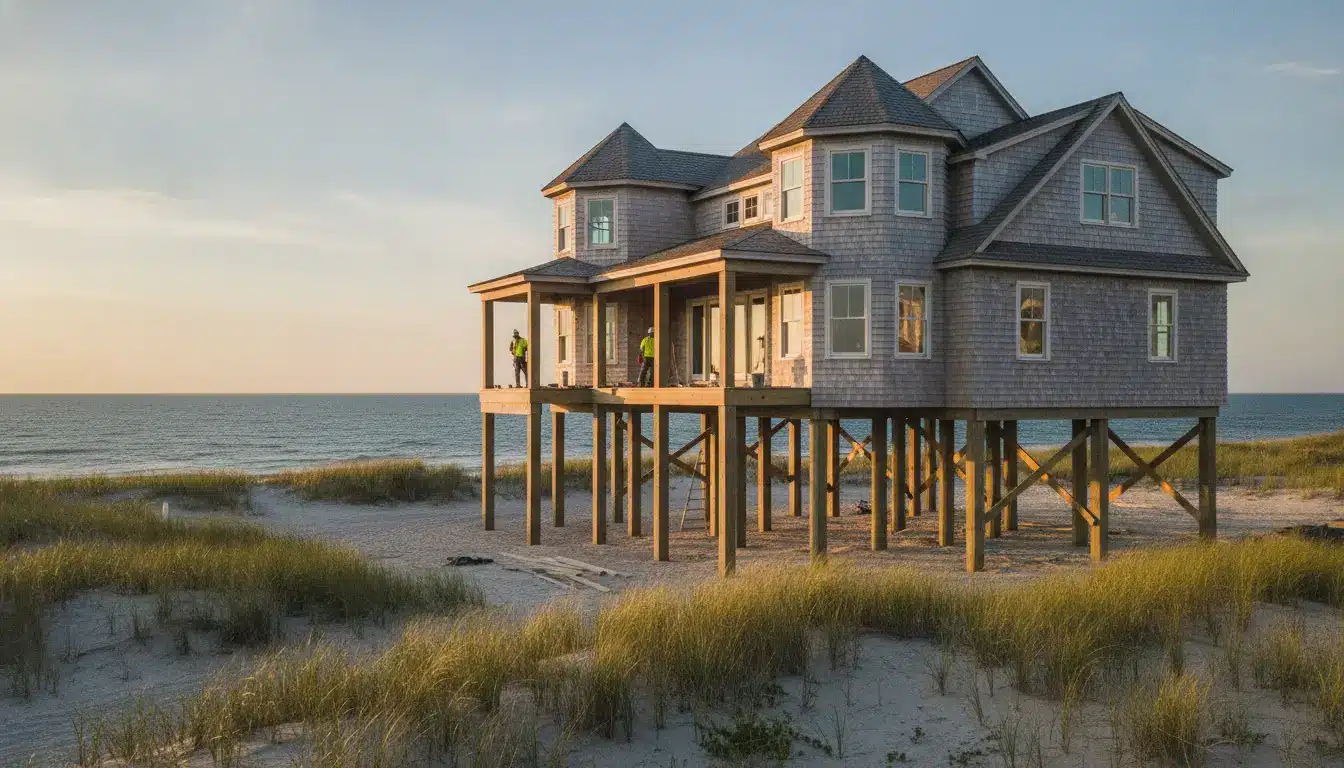
Flood zone is the single biggest driver of a coastal build. Any home in an A, AE or V zone has to be built to flood-resistant standards, which usually means raising the living space above the base flood elevation and designing the foundation so water can pass through without damage.
A velocity zone, where waves are a factor, generally demands engineered pile foundations and breakaway walls below the flood line. The zone line can even cross a single parcel, so where the house sits on the lot can move the foundation budget substantially. None of this stops a good build, but every piece of it is expensive to find out about late.
The 50 Percent Rule Every Cape Cod Owner Should Know
The rule that catches people out is FEMA’s Substantial Improvement standard, the 50 percent rule. If the cost of a renovation or home addition on a home in a flood zone equals or exceeds half the structure’s market value, the entire existing house must be brought up to current flood code, not just the new part.
That can mean lifting the whole home above the floodplain before the work even begins. It changes the math on a big addition completely, and it is exactly the kind of thing a Cape builder flags on day one rather than mid-project.
How Long a Cape Cod Build Takes
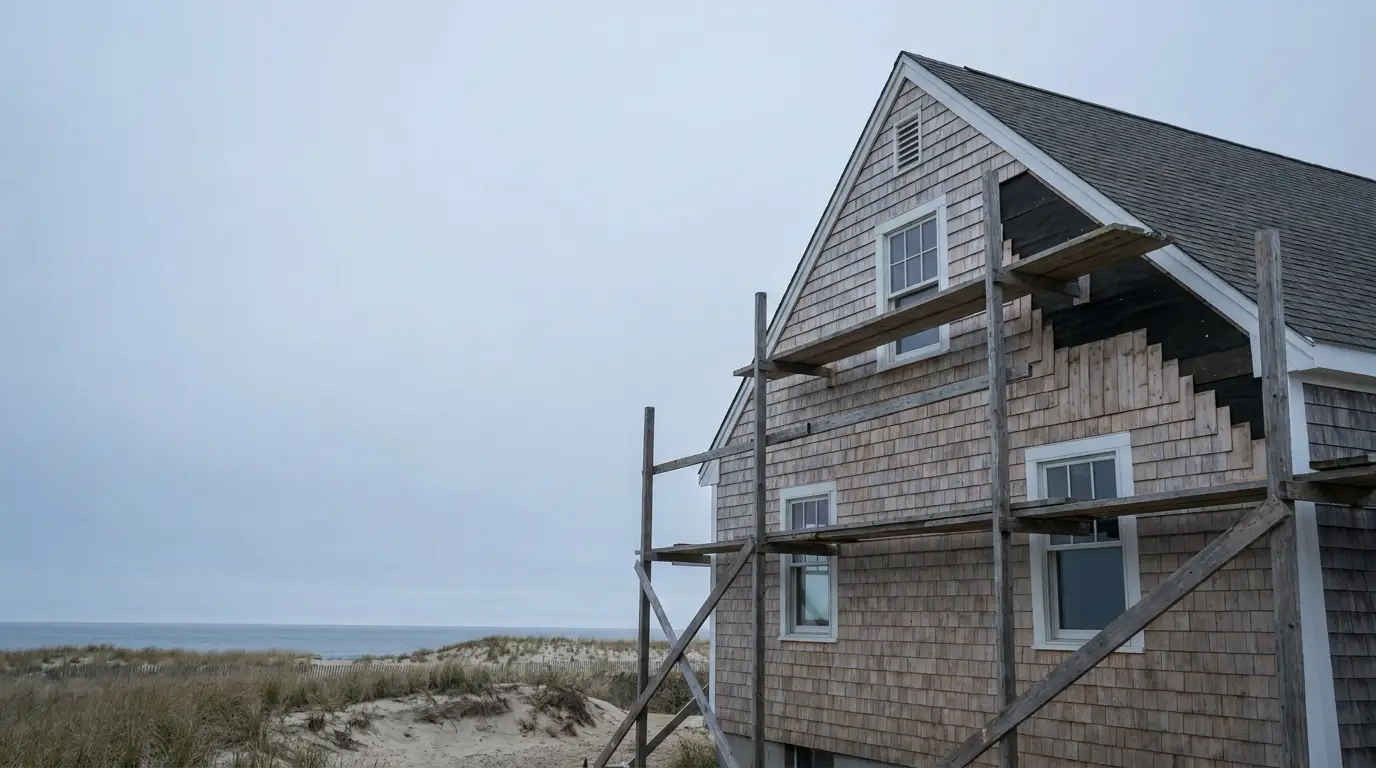
Timelines run long here, and permitting is usually why. Once permits are approved, construction on a custom home typically runs 6 to 12 months, sometimes longer for a large or complex build. The permitting phase ahead of that can add many months of its own, especially near wetlands or the water, where Conservation Commission hearings and site reviews take time.
Building in the area also means designing for salt air, high wind and the occasional coastal storm, so cedar shingles, stainless fasteners and impact-rated windows are common choices. A realistic schedule and a 15 to 20 percent contingency keep a project calm when the site throws a surprise.
Cape Cod Home Builders to Consider
Compare a couple of experienced local builders before you commit. Established Cape Cod options include P. Jacobs Custom Carpentry & Remodeling, REEF Builders and Cape Associates.
P. Jacobs Custom Carpentry & Remodeling
370 Upper County Rd, Bay 1, Dennis Port, MA 02660
Phone: (774) 353-6852
Website: pjacobscapecodbuilder.com
Instagram: p.jacobsbuilding
Custom home construction, additions and remodeling across Cape Cod and Southeastern Massachusetts
Cape Cod Home Building FAQs
How Long Does It Take to Build a House on Cape Cod?
Construction usually runs 6 to 12 months after permits are approved. Permitting itself can add several more months, especially near wetlands or the coast.
What Is the 50 Percent Rule on Cape Cod?
If work on a flood-zone home costs half or more of its market value, the whole structure must meet current flood code. That can require lifting the entire home.
Do I Need a Conservation Permit to Build Near Wetlands?
Usually yes. Work within 100 feet of a wetland, pond or coastal bank triggers Conservation Commission review under the Massachusetts Wetlands Protection Act.
Start Your Cape Cod Home the Right Way
Cape Cod rewards homeowners who plan for the site first and hire a builder who knows the local rules cold. Check the flood zone, confirm the buildable area, and budget honestly for permitting. To talk through a custom home or addition on Cape Cod, call P. Jacobs Custom Carpentry & Remodeling at (774) 353-6852.

Licensed broker Logan Patel holds an MBA in Urban Economics from UCLA and has steered buyers and investors through market swings for a decade. He joined us in 2024 to demystify listings, financing, and neighborhood data with clear, chart-backed advice. When he isn’t scanning comps, Logan coaches youth basketball and scouts mid-century districts for hidden architectural gems on weekend walks.