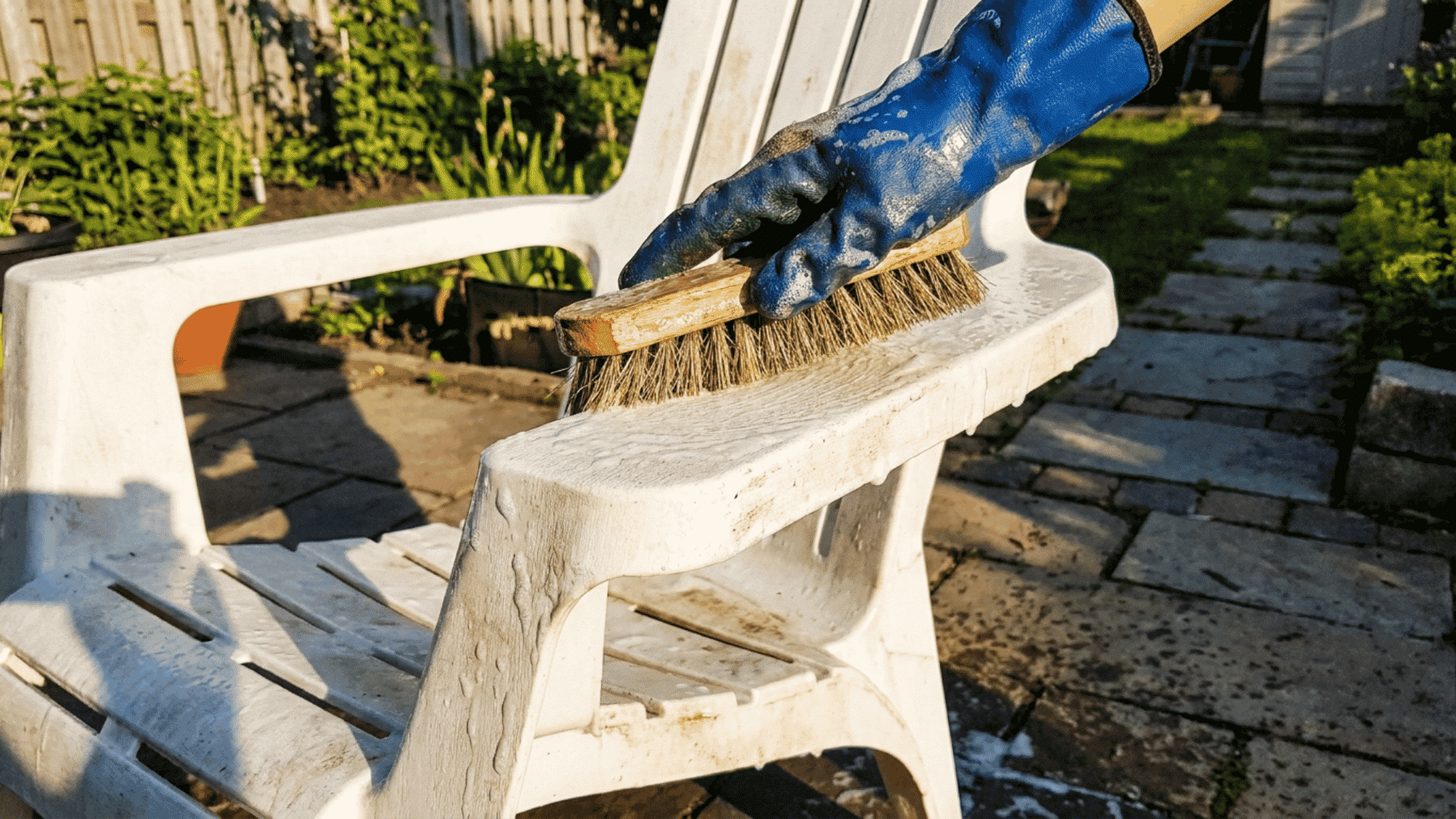

My patio chairs went through a rough patch last summer. Pollen, bird droppings, and a green fuzzy situation on the cushions that I’d rather not describe in too much detail.
For a while, I just hosed everything down and called it a day, which turned out mostly just to turn dirt into mud and smear it around. Not exactly the fix I was hoping for.
In this guide, I’m handing over everything I picked up along the way. You’ll get the supplies worth keeping around, a step-by-step cleaning routine that actually works, and material-specific tips for plastic, metal, wood, wicker, and fabric.
I’m also covering how to tackle mold, rust, and other stubborn stains, how often you really need to clean, and the small habits that keep furniture looking decent for years.
Tools and Cleaning Supplies You’ll Need
Before I get into the actual cleaning steps, let’s talk supplies. Nothing kills the momentum of a good cleaning session like realizing halfway through that you’re missing something, or worse, that you scrubbed your favorite chair with the wrong product.
Here’s everything I keep on hand, starting with the basics.
- Soft-bristle brush
- Microfiber cloth
- Garden hose with spray nozzle
- Vacuum with a brush attachment
- Mild dish soap and warm water
- White vinegar
- Dedicated outdoor furniture cleaner
- Bleach and ammonia
- Rubber gloves
- Safety glasses
Safety measure: Combining bleach and ammonia releases toxic chloramine gas, and bleach with vinegar releases chlorine gas, both of which are dangerous in an enclosed patio or garage. Use one cleaner at a time, rinse fully between products, and work in open air with gloves on.
How to Clean Outdoor Furniture (Step-by-Step)
I watched enough product-testing teams demo this to notice they all follow the same core order: brush, wash, rinse, dry. That part isn’t the secret.
What actually changes the outcome is the handful of small decisions in between, the ones that decide whether your furniture looks refreshed or streaky and dull once it dries.
Step 1: Brush Off Dirt and Debris
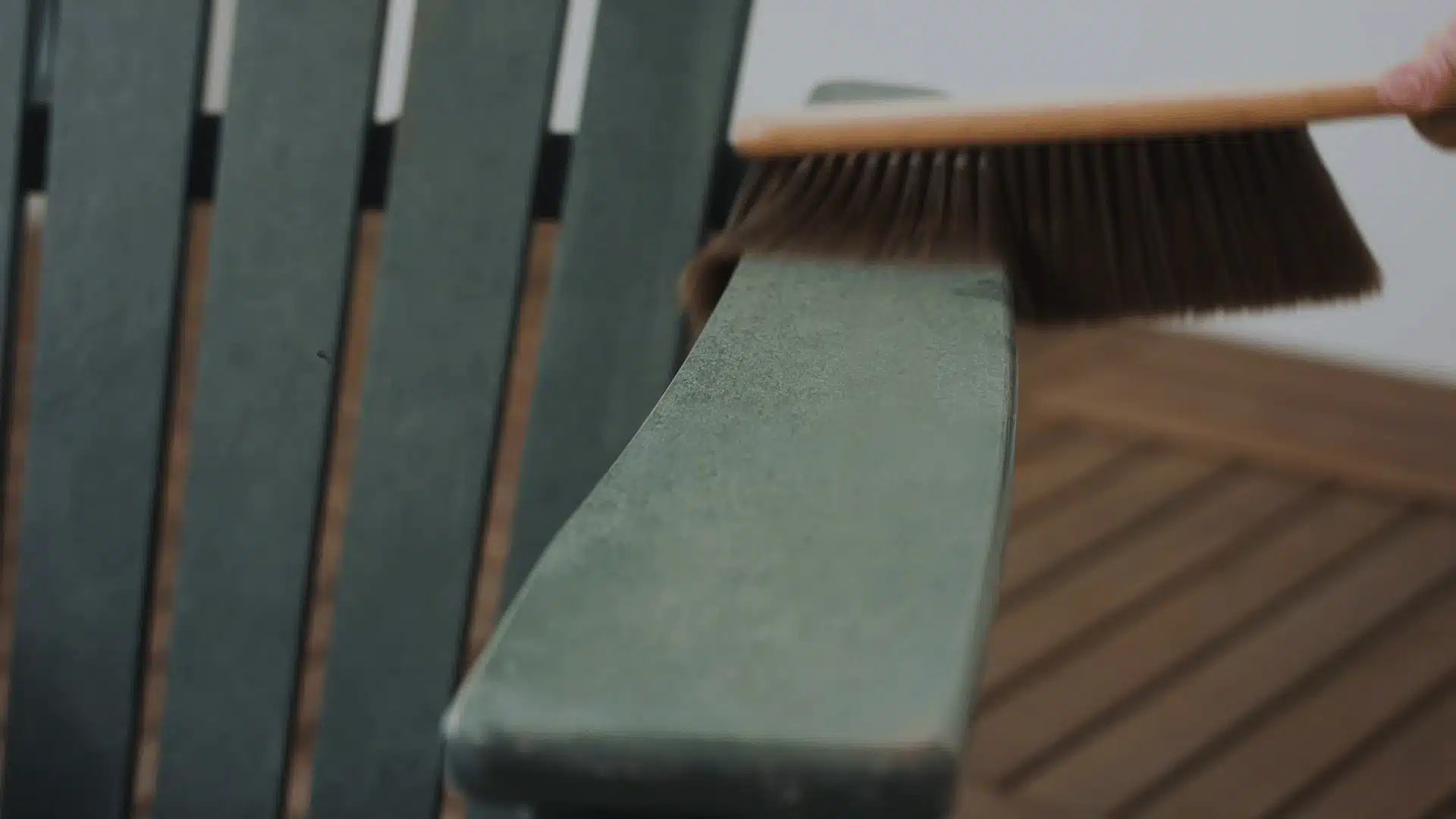
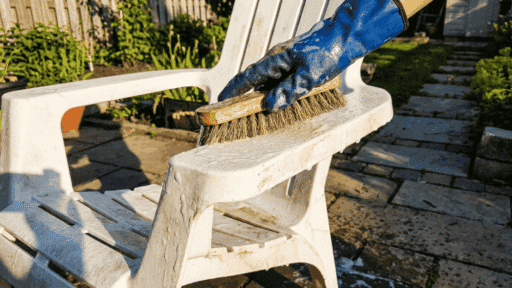
Before any water touches the furniture, brush away leaves, dust, pollen, and other loose debris. Common culprits like bird droppings, muddy paw prints, and pollen buildup are reasons to brush first.
Doing this step before washing keeps dirt from turning into a paste once it gets wet, which makes the wash step faster and the result cleaner.
I brush on a dry, still day too, since wind just blows dust back onto furniture I already cleaned.
Step 2: Wash With Mild Soap and a Soft Cloth
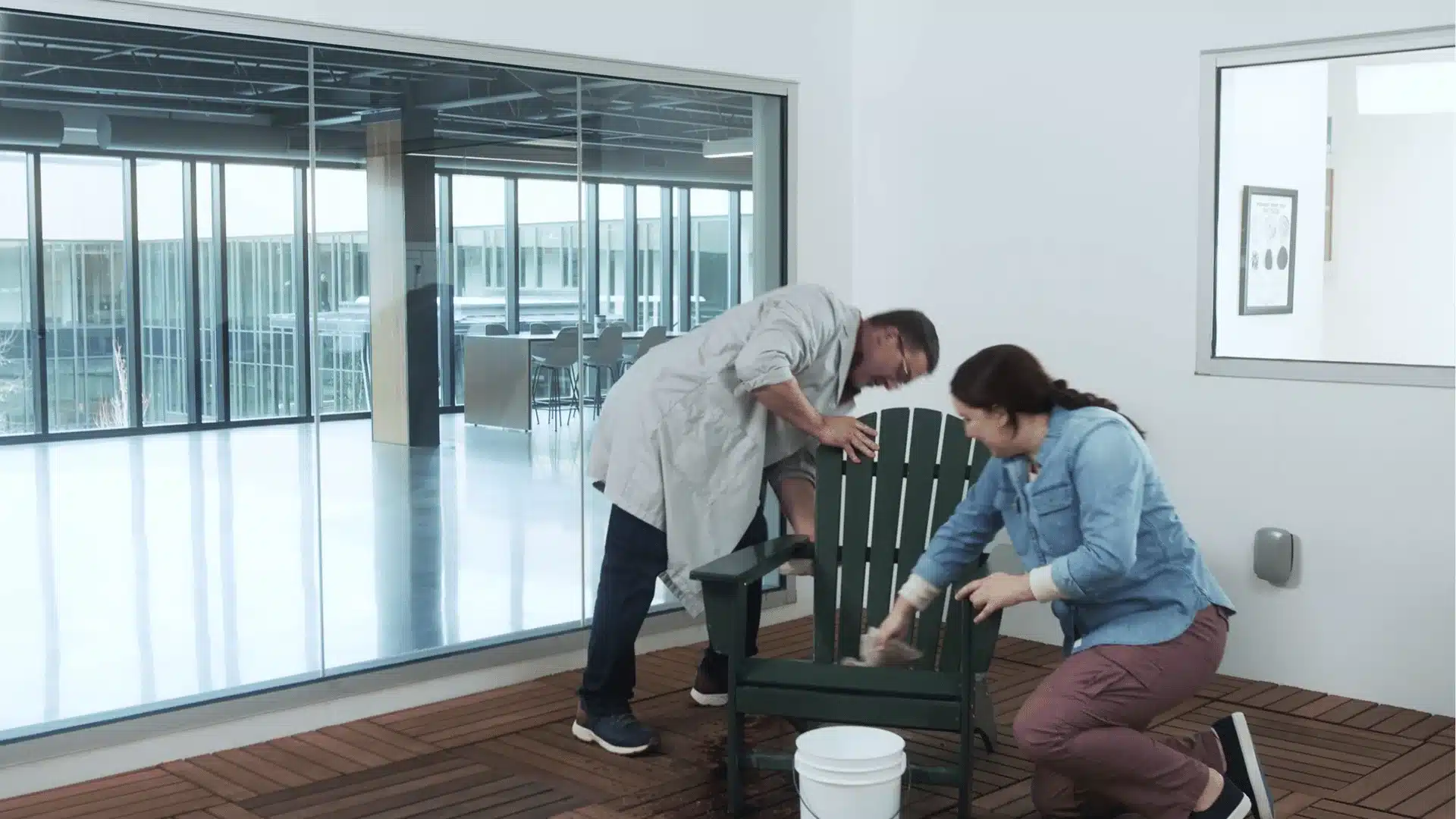
Mix mild dish soap with warm water in a bucket, then wipe it onto the furniture with a soft cloth. A soft-bristled brush works well on stuck-on grime and tight corners.
Check the manufacturer’s care instructions first, since materials like wood, wicker, plastic, and metal each respond differently to cleaning products.
What works fine on metal can strip a wood finish or fade colored resin, so this check saves you from a mistake you cannot undo.
Step 3: Rinse With Low Water Pressure
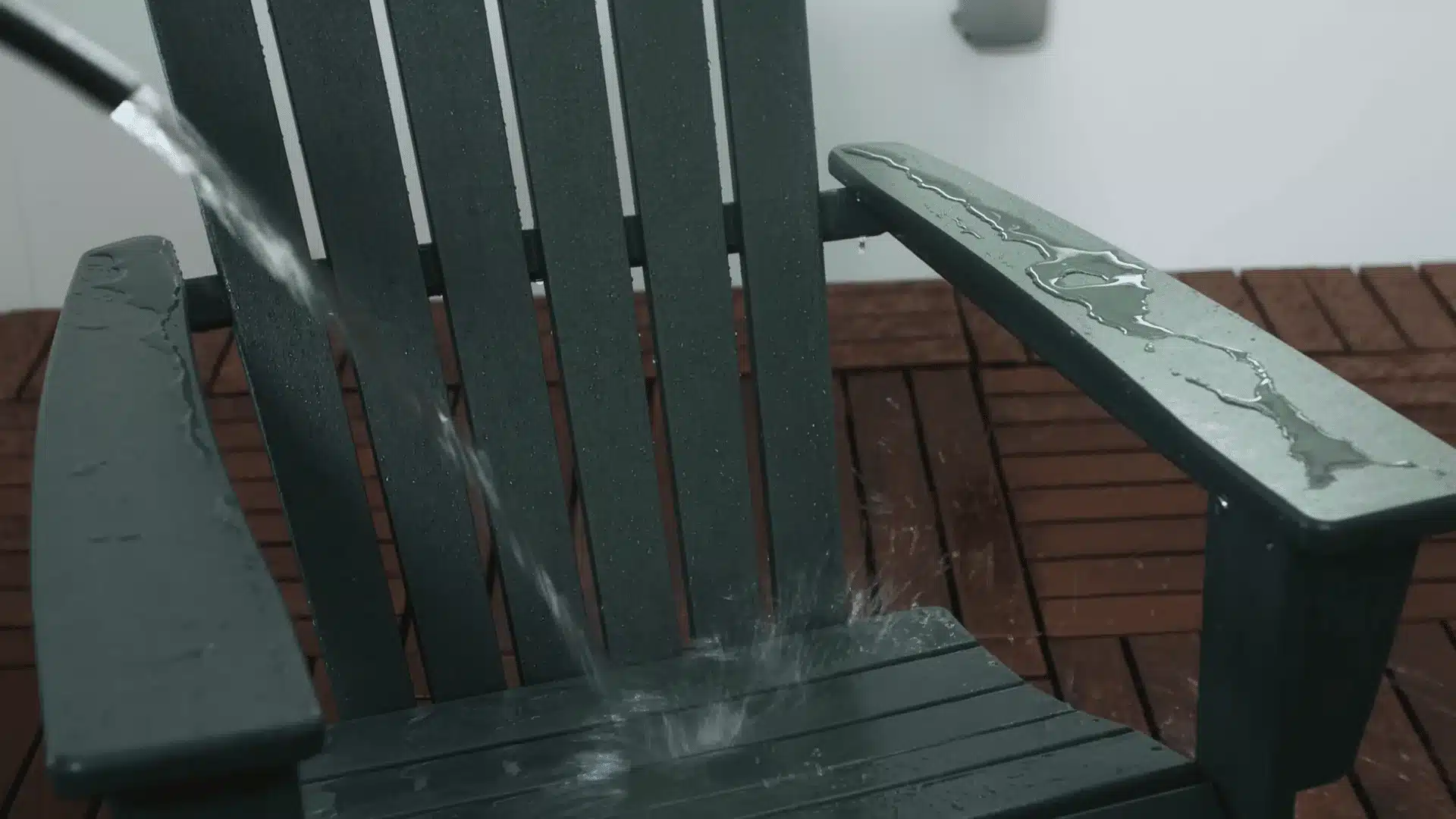
Rinse the furniture with a garden hose set to low pressure unless the manufacturer says it can handle higher pressure.
Skip the power washer unless directed otherwise, as excessive force can strip finishes or loosen joints over time.
A full rinse also clears out any leftover soap before it dries into a dull film, and a second light pass catches suds hiding around seams and screws.
Step 6: Air-Dry Completely (and Multitask)

Let the furniture air-dry completely before you use it or put a cover on it.
This waiting time is the perfect chance to clean cushions and pillows separately, so you are not stuck doing a second cleaning session later in the week.
Fully drying also reduces the risk of mold or mildew forming underneath, especially if the piece sits directly on a damp patio or deck.
Here’s the full process, including a quick video walkthrough from L.L.Bean that covers the details most guides skip.
How to Clean Different Types of Outdoor Furniture
One cleaning method doesn’t work for every material. What’s safe on resin can wreck a wood finish, and a brush that’s fine on metal can pull apart wicker in a single season.
1. Plastic and Resin Outdoor Furniture
Plastic and resin can handle more moisture and scrubbing than most outdoor materials. Regular washing also prevents dirt and stains from becoming harder to remove.
Hose down loose dust first, then wash with mild soap and warm water using a soft sponge. Stubborn spots get five to ten minutes soaking in the soapy mix before scrubbing.
| Cleaning Detail | Recommendation |
|---|---|
| Main Cleaner | Mild soap and warm water |
| Cleaning Tool | Soft sponge |
| Stain Treatment | ⅓ cup bleach mixed with ⅔ cup water |
| Avoid | Bleach on colored resin |
| Drying Method | Air-dry in sunlight |
On white or light resin, a diluted bleach mix (⅓ cup bleach to ⅔ cup water) tackles stains soap won’t touch (skip this on colored resin since it fades the color). Rinse well and let everything air-dry in the sun.
2. Metal Outdoor Furniture
Metal furniture needs fast drying because moisture can collect around joints and hardware. Checking for small rust spots during cleaning can also stop corrosion from spreading.
For water spots or light rust, equal parts white vinegar and water work as a pre-rinse before a final rinse.
| Cleaning Detail | Recommendation |
|---|---|
| Main Cleaner | Mild soap and water |
| Cleaning Tool | Soft cloth |
| Water Spot Treatment | Equal parts vinegar and water |
| Rust Treatment | Rust remover or fine sandpaper |
| Protective Finish | Thin coat of car wax |
| Avoid | Hard brushes on painted metal |
Deeper rust gets a rust remover or fine sandpaper, then a touch-up with matching paint. Once dry, a thin coat of car wax protects against sun and rain.
3. Wooden Outdoor Furniture
Wood can lose its finish when it is soaked, scrubbed aggressively, or cleaned with harsh chemicals. Gentle cleaning helps preserve both the grain and the protective coating.
Sweep loose dirt and leaves away before adding water, then wash with mild soap and a soft cloth, moving with the grain rather than against it. A full rinse keeps soap from drying into a dull film, and let the piece air-dry completely in the sun.
| Cleaning Detail | Recommendation |
|---|---|
| Main Cleaner | Mild soap and warm water |
| Cleaning Tool | Soft cloth |
| Cleaning Direction | Follow the wood grain |
| Weathered Wood Treatment | Wood cleaner or brightener |
| Protective Finish | Wood oil or outdoor sealant |
| Avoid | Harsh scrubbing and strong chemicals |
Graying wood gets a wood cleaner or brightener to restore its natural tone before I reseal it with an oil or sealant suited to that wood type.
4. Wicker and Rattan Outdoor Furniture
Wicker has narrow gaps where dust and crumbs collect, while natural rattan may bend or warp when heavily soaked. Cleaning in small sections gives you better control over moisture.
I rinse lightly with a damp cloth rather than a hose, since natural rattan can warp when soaked, then dry the piece standing upright in the sun so air reaches every part and mildew doesn’t take hold.
| Cleaning Detail | Recommendation |
|---|---|
| Main Cleaner | Mild soap and warm water |
| Cleaning Tools | Soft sponge and toothbrush |
| Loose Dirt Removal | Soft brush or vacuum |
| Rinsing Method | Clean damp cloth |
| Drying Position | Upright in a ventilated area |
| Avoid | Soaking natural rattan |
5. Outdoor Cushions and Fabric
Outdoor fabrics collect body oils, food spills, sunscreen, pollen, and moisture. Quick stain treatment and complete drying help prevent marks, odors, and mildew.
Mild soap and water with a soft brush handle ground-in dirt. Grease stains, like sunscreen, come out with cornstarch pressed onto the spot to draw out the oil, while wine stains respond to a splash of white vinegar in the soapy water.
| Cleaning Detail | Recommendation |
|---|---|
| Main Cleaner | Mild soap and warm water |
| Cleaning Tool | Soft fabric brush |
| Grease Treatment | Cornstarch |
| Wine Stain Treatment | White vinegar in soapy water |
| Drying Method | Stand cushions on edge |
| Avoid | Rubbing stains or wringing cushions |
I rinse well, squeeze out the excess water rather than wring, and air-dry the cushions standing on edge, rotating them partway through.
6. Removing Common Outdoor Furniture Stains and Buildup: Regular washing handles most dirt, but some stains need a different approach entirely.
| Stain or Buildup | What I Use | How to Remove It | Extra Tip |
|---|---|---|---|
| Mold and Mildew | Dish soap, bleach (or vinegar for fabric), soft brush | Brush off dry spots, apply the mix, let sit 10 to 15 minutes in the sun, scrub, rinse | Use vinegar and water on colored fabric, so color doesn’t fade |
| Bird Droppings, Tree Sap | Soapy water, rubbing alcohol, soft cloth | Soften the spot, let it sit, wipe with light pressure instead of scraping | Rubbing alcohol breaks down tree sap fast |
| Rust and Hard Water Stains | Baking soda paste, rust remover, vinegar, and water | Scrub light rust with baking soda, use rust remover on deeper spots, and wipe water marks with vinegar | Dry fully right after, so new spots don’t form |
| Pollen, Dust, Grime | Microfiber cloth, hose, mild soap, and water | Wipe dry first, rinse, wash if grime has built up | Repeat weekly during high pollen season |
How to Care for Outdoor Furniture All Year Round
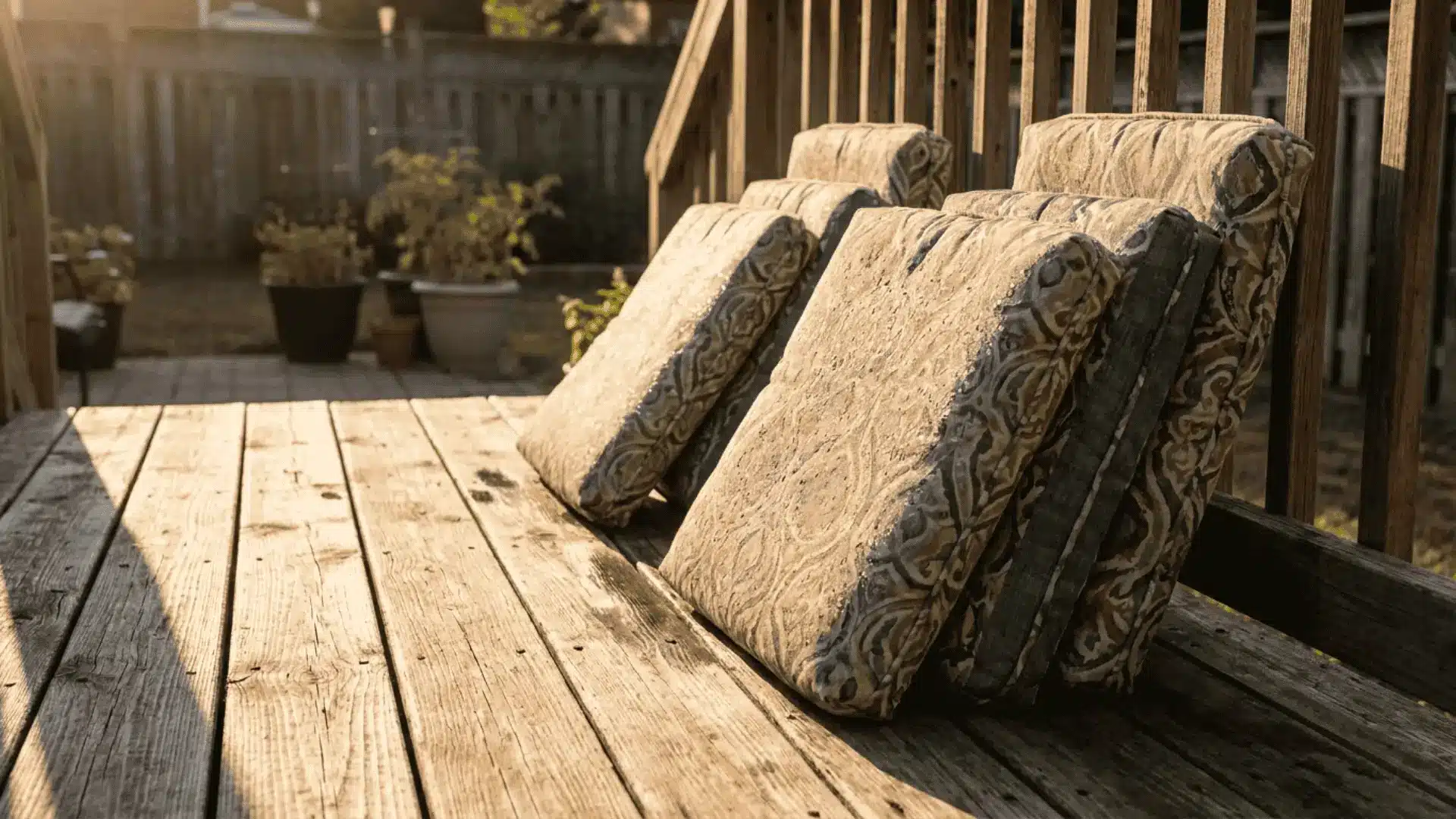
Cleaning gets furniture looking good again, but care is what keeps it that way between washes.
- Protect Furniture from Sun, Rain, and Snow: Sun does almost as much damage as rain, fading fabric and drying out wood faster than most people expect. Place furniture in shade during peak afternoon hours, move what you can indoors before storms roll in, and rotate pieces occasionally so one side isn’t taking all the damage while the other stays untouched.
- Use Covers the Right Way: A cover on wet furniture traps moisture and can cause more mold than leaving the piece entirely uncovered, so only cover furniture once it’s fully dry. Stick with breathable, water-resistant covers secured with straps so wind doesn’t strip them off overnight.
- Simple Habits That Help Furniture Last Longer: Keep cushions off the ground so they don’t pull up moisture from beneath, and check screws and hinges every few months so any loose ones get tightened before they turn into a bigger repair.
Outdoor Furniture Cleaning Mistakes to Avoid
Most damage comes from cleaning furniture the wrong way, not weather alone.
- Using the Wrong Cleaning Products: I learned this after using bleach on a colored cushion and watching it fade in one wash. Now I stick to mild soap and water, and only use something stronger once I know it’s safe for that material.
- Scrubbing or Pressure Washing Too Aggressively: Wicker weave can loosen, wood grain can roughen, and metal coatings can scratch under too much pressure. I keep the pressure washer on a low setting or skip it on anything woven or painted.
- Putting Furniture Away Before It’s Dry: Storing or covering damp furniture traps moisture, which can turn into mildew within days. I check every surface, including joints and seams, before putting anything away.
- Skipping Regular Maintenance: Skipping maintenance lets dirt build up in layers, making each session longer than it needs to be. A weekly wipe and monthly deep clean beat waiting for stains to set in.
Final Thoughts
I’ve cleaned enough patio sets by now to know that small habits matter more than big scrub sessions. A weekly wipe, a monthly wash, and the right cleaner for each material keep my furniture looking good without much extra work.
Rust, mold, and stains are easy to handle once you know the cause, and most of it comes down to drying things fully and storing them right. I still mess up sometimes, but I catch problems early now instead of dealing with a ruined chair every spring.
Try one tip from this guide on your next cleaning day, and let me know how it works for your setup in the comments.
Frequently Asked Questions
How to Remove Stains from Outdoor Cushions?
Treat fresh stains with mild soap and water, then let cushions sit in direct sun. Sunlight fades most stains and acts like a mild bleach over time.
How to Clean Outdoor Furniture Without A Pressure Washer?
Use a hose, mild soap, warm water, and a soft brush. This works fine on fabric, wicker, and wood, where a pressure washer risks tearing fibers or stripping finishes.
Can Outdoor Furniture Be Left Out in the Rain?
Metal, resin, and treated wood handle occasional rain fine. Bring cushions and fabric inside, since repeated soaking leads to mold and fading.
How Long does Outdoor Furniture Typically Last?
With regular cleaning and proper storage, most outdoor furniture lasts 5 to 15 years, depending on the material. Metal and resin tend to outlast wood and fabric without upkeep.

Tommy Hardy, an alumnus of the Georgia Institute of Technology with a degree in Mechanical Engineering, has been a go-to figure in residential upkeep and innovation for over 18 years. His career commenced in a leading home appliance manufacturing company, where he mastered the intricacies of household systems. Joining our platform in 2020, Tommy quickly became a reader favorite for his practical and easy-to-follow guides. He took the helm of our DIY section in 2019, consistently delivering content that empowers homeowners. Beyond his professional pursuits, Tommy is a passionate gardener and enjoys woodworking, skills enhancing his hands-on approach to home care.