
Sticker residue on plastic is frustrating. That sticky, gooey patch left behind after peeling off a label, it collects dirt, looks messy, and just won’t budge, no matter how hard someone scrubs.
Knowing how to get sticker residue off plastic doesn’t require expensive products or professional help. There are simple, effective methods that actually work.
From household items like rubbing alcohol and cooking oil to store-bought solutions, this guide covers what works best and why. It also explains what to avoid to keep the plastic surface scratch-free.
Why Sticker Residue Sticks to Plastic?
Not all sticky messes are created equal. The gluey layer left behind isn’t just “stuff that didn’t come off,” it’s a pressure-sensitive adhesive that bonds to surfaces at a molecular level.
On plastic, this becomes a particular problem because plastic surfaces are slightly porous and can grip adhesive more stubbornly than smooth materials like glass.
Time makes everything worse. Fresh sticker residue is relatively easy to remove.
Leave it on for a few weeks or expose it to heat, as a car dashboard in summer, and the adhesive hardens, seeps deeper into the surface texture, and becomes significantly more resistant.
The type of plastic also matters. Hard, smooth plastics like ABS or polycarbonate handle most removal methods well.
Softer plastics like polyethylene or PVC are more prone to scratching and can be damaged by harsh solvents. Always identify your surface before going aggressive.
Tools and Materials Required

Before jumping into the removal process, having the right supplies on hand makes the whole job quicker and easier.
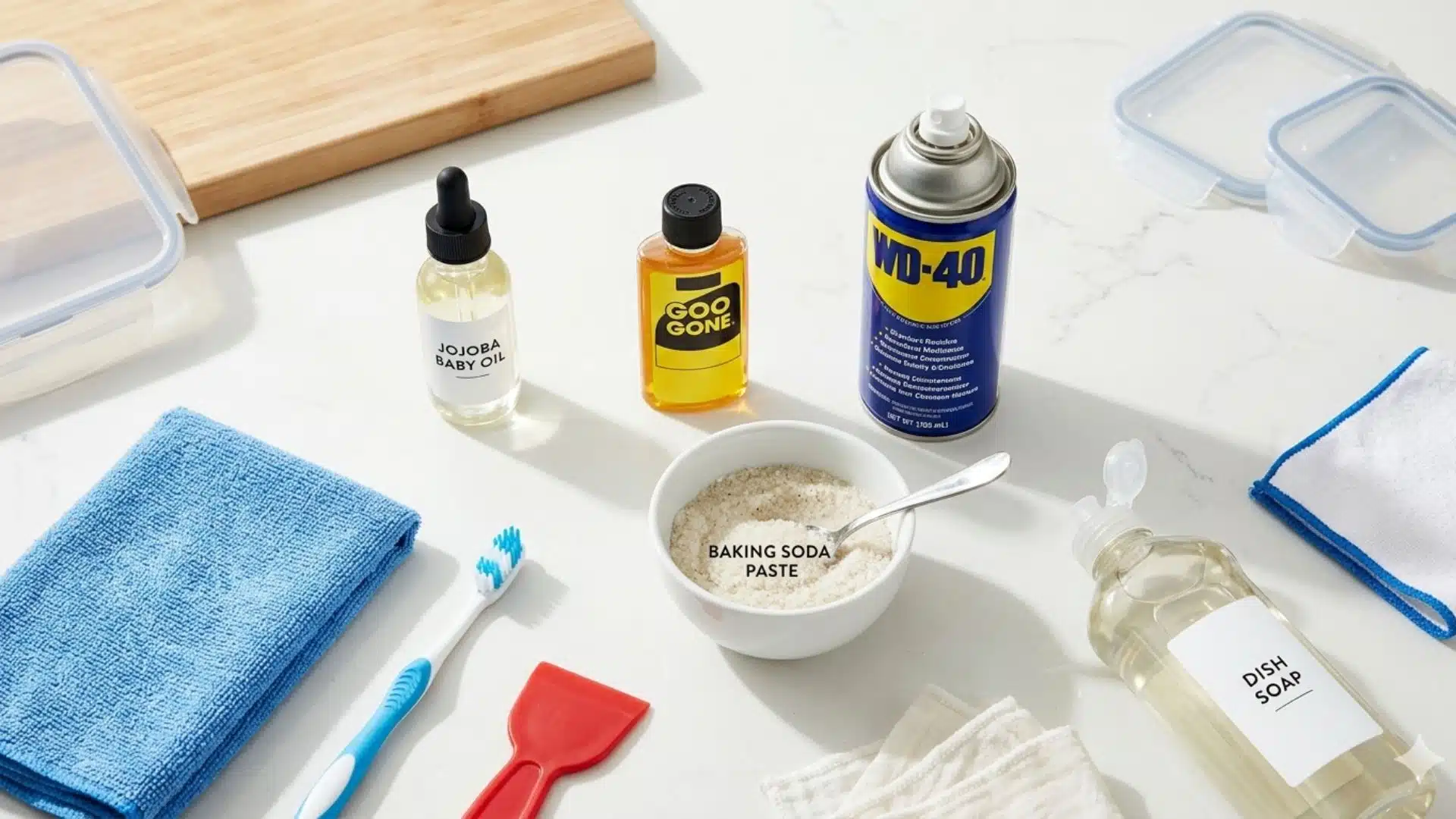
Household items:
- Rubbing alcohol (isopropyl, 70% or higher)
- Cooking oil, baby oil, or coconut oil
- Dish soap and warm water
- Baking soda
- White vinegar
Commercial products:
- Goo Gone is the best all-rounder for stubborn adhesives
- WD-40 is effective but leaves an oily residue
- Un-Du adhesive remover is gentle and great for electronics
Tools:
- Microfiber cloth or soft cotton rag
- Plastic scraper or old credit card
- Soft-bristled toothbrush
- Hair dryer (for heat loosening)
Pro Tip: Never use steel wool, abrasive sponges, or metal scrapers on plastic. They will scratch guaranteed.
Methods to Remove Sticker Residue from Plastic
There are several ways to tackle sticker residue on plastic; some use everyday household items, while others rely on store-bought products that get the job done fast.
Method 1: Rubbing Alcohol (Isopropyl)

- Apply a small amount of rubbing alcohol to a microfiber cloth avoid pouring it directly onto the surface.
- Rub the residue in gentle circular motions.
- Let it sit for 30 seconds if the residue is stubborn.
- Wipe clean and dry with a fresh cloth.
Pro Tip: 70% isopropyl is safer for plastics than 99%. Higher concentrations can cause slight discoloration on soft or colored plastics.
Method 2: Cooking Oil or Baby Oil

- Apply a few drops of cooking oil, coconut oil, or baby oil directly onto the residue.
- Let it soak for 5–10 minutes; this loosens the adhesive bond.
- Rub with a soft cloth until the residue lifts.
- Wash the surface with dish soap and warm water to remove the oil.
Pro Tip: Completely safe for food-contact plastics and surfaces around children. No chemicals, no fumes.
Method 3: Dish Soap and Warm Water

- Mix a few drops of dish soap into a bowl of warm water.
- Soak a cloth or sponge and press it onto the residue for 2–3 minutes.
- Rub gently until the residue loosens.
- Rinse with clean water and dry thoroughly.
This is the mildest method available. It won’t tackle old or hardened residue, but it’s the right starting point for anything fragile or valuable.
Method 4: Baking Soda Paste

- Mix 2 parts baking soda with 1 part cooking oil to form a thick paste.
- Apply directly to the residue and leave for 5 minutes.
- Scrub gently with a soft toothbrush in circular motions.
- Rinse clean with warm water and dry.
Pro Tip: The baking soda acts as a mild abrasive while the oil softens the adhesive. Stick to smooth, hard surfaces; only avoid textured or soft plastics.
Method 5: Commercial Adhesive Removers (Goo Gone / WD-40)

- Apply Goo Gone or WD-40 to the residue and let it soak for 2–5 minutes.
- Use a plastic scraper or an old credit card to lift the bulk of the residue.
- Wipe away with a cloth.
- Clean the area thoroughly with dish soap to remove any product residue.
WD-40 is very effective, but leaves behind an oily layer that always attracts dust. Always follow up with soapy water. Goo Gone is the cleaner, more targeted option for most jobs.
Method 6: The Heat Method (Hair Dryer)

- Hold a hair dryer 3–5 inches from the residue and apply heat for 30–60 seconds.
- Keep the dryer moving, don’t hold it in one spot, or you risk warping the plastic.
- While the area is still warm, use a plastic scraper or your finger to rub the softened adhesive away.
- Clean up any leftover residue with rubbing alcohol or soapy water.
Pro Tip: Don’t exceed 30 seconds on thin or soft plastics. Heat warps them quickly. This method is best on thick, hard plastic car bumpers, storage bins, and appliances.
Methods of Removing Sticker Residue from Specific Plastic Items
Different plastic items require slightly different removal methods to avoid damage and get the best results, since surfaces can vary in durability, texture, and sensitivity to heat or chemicals.
| Item/Surface | Recommended Method | Key Tip |
|---|---|---|
| Car plastic | Apply heat to loosen residue | Avoid overheating to prevent damage |
| Car surfaces | Gently scrape before cleaning | Use a soft tool to avoid scratches |
| Electronics | Cotton swab with minimal alcohol | Keep moisture extremely low |
| Kids’ items | Non-toxic methods like oil or soap | Prioritize safety over strong chemicals |
| Textured toys | Soft brush for detailed cleaning | Reach into grooves and small crevices |
Where People Go Wrong with Adhesive Removal?
People cause more damage trying to remove sticker residue than the sticker itself ever did. Here’s what to avoid:
- Metal scrapers or knives: they scratch plastic irreversibly, and no polish will fix it.
- Acetone or nail polish remover on soft plastics: it melts, clouds, and permanently discolors them.
- Dry scrubbing with an abrasive pad: It creates fine surface scratches that dull the finish permanently.
- Skipping the patch test: always test the product on a small, hidden area first, such as colored plastic.
- Too much rubbing alcohol on colored plastic: heavy use can lift or fade the pigment over time.
- Mixing multiple products: layering chemicals can cause unexpected discoloration or surface damage.
It’s a Wrap
Knowing how to get sticker residue off plastic doesn’t require a chemistry degree or a trip to the hardware store. Most of the time, rubbing alcohol, cooking oil, or warm soapy water is all you need.
The key is matching the method to the plastic type. Start gently, be patient, and avoid the common mistakes that turn a small sticky mess into a permanent one.
Tried one of these methods? Got a trick we didn’t cover? Drop it in the comments. Sticker residue is one of those everyday problems everyone has, and nobody talks about enough.

Tommy Hardy, an alumnus of the Georgia Institute of Technology with a degree in Mechanical Engineering, has been a go-to figure in residential upkeep and innovation for over 18 years. His career commenced in a leading home appliance manufacturing company, where he mastered the intricacies of household systems. Joining our platform in 2020, Tommy quickly became a reader favorite for his practical and easy-to-follow guides. He took the helm of our DIY section in 2019, consistently delivering content that empowers homeowners. Beyond his professional pursuits, Tommy is a passionate gardener and enjoys woodworking, skills enhancing his hands-on approach to home care.