
A renovation changes how your house looks, and it also leaves a layer of fine dust on nearly everything you own. Sanding, demolition and drywall work release particles that travel through doorways, vents and even closed cabinets.
Most of that spread is preventable. A little planning before the first swing of the hammer keeps the mess where it belongs and saves hours of cleanup later.
Here are the steps that make the biggest difference.
Seal Off the Work Area
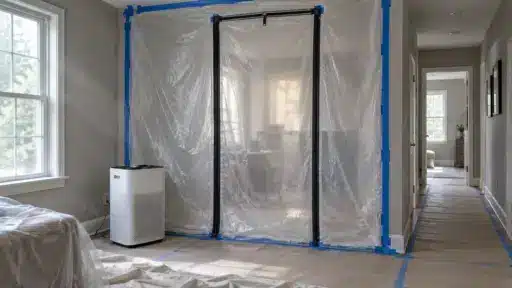
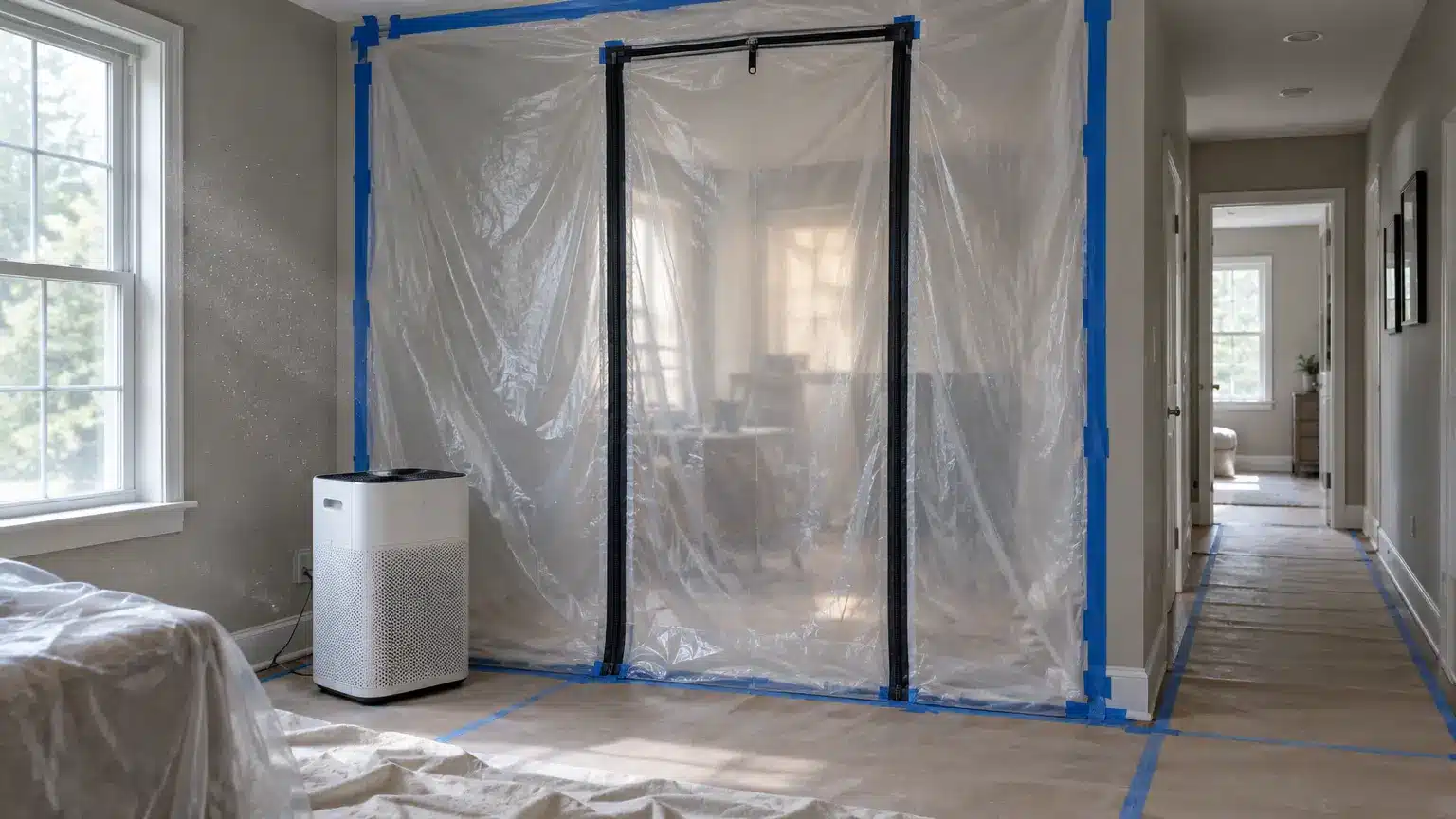
Start by separating the work zone from the rest of the home. Heavy plastic sheeting taped to the ceiling, walls and floor stops most dust at the door. A zippered door panel lets you move in and out without taking the barrier down each time.
Next, cover every supply and return vent in the work area with plastic and painter’s tape. If dust gets into your HVAC system, it travels to every room and clogs the filter fast. Turn off the system, or at least the zone serving the work area, during dusty jobs.
Protect Floors and Furniture
Lay rosin paper or heavy-duty floor protection along the path from the work area to the outside door. Move furniture out of the room when you can, and cover anything that has to stay with plastic or old sheets.
Tape floor covers down at the edges so they don’t shift under foot traffic. A sticky mat just outside the barrier keeps shoes from carrying dust through the rest of the house.
Cut Dust at the Source
The best way to manage dust is to make less of it. Match your method to the job:
- Sanding: Use a sander with a vacuum port connected to a shop vacuum instead of sweeping up afterward.
- Drywall: Score and snap boards rather than sawing them, and use a damp sponge for finishing when you can.
- Demolition: Mist surfaces lightly with water before breaking them apart so particles stay down.
- Tile and masonry: Use a wet saw or a saw with dust collection.
If your home was built before 1978, test for lead paint before sanding or demolition. Suspected asbestos-containing materials should be tested before anyone disturbs them. Those jobs belong to certified professionals.
Clean the Air While You Work
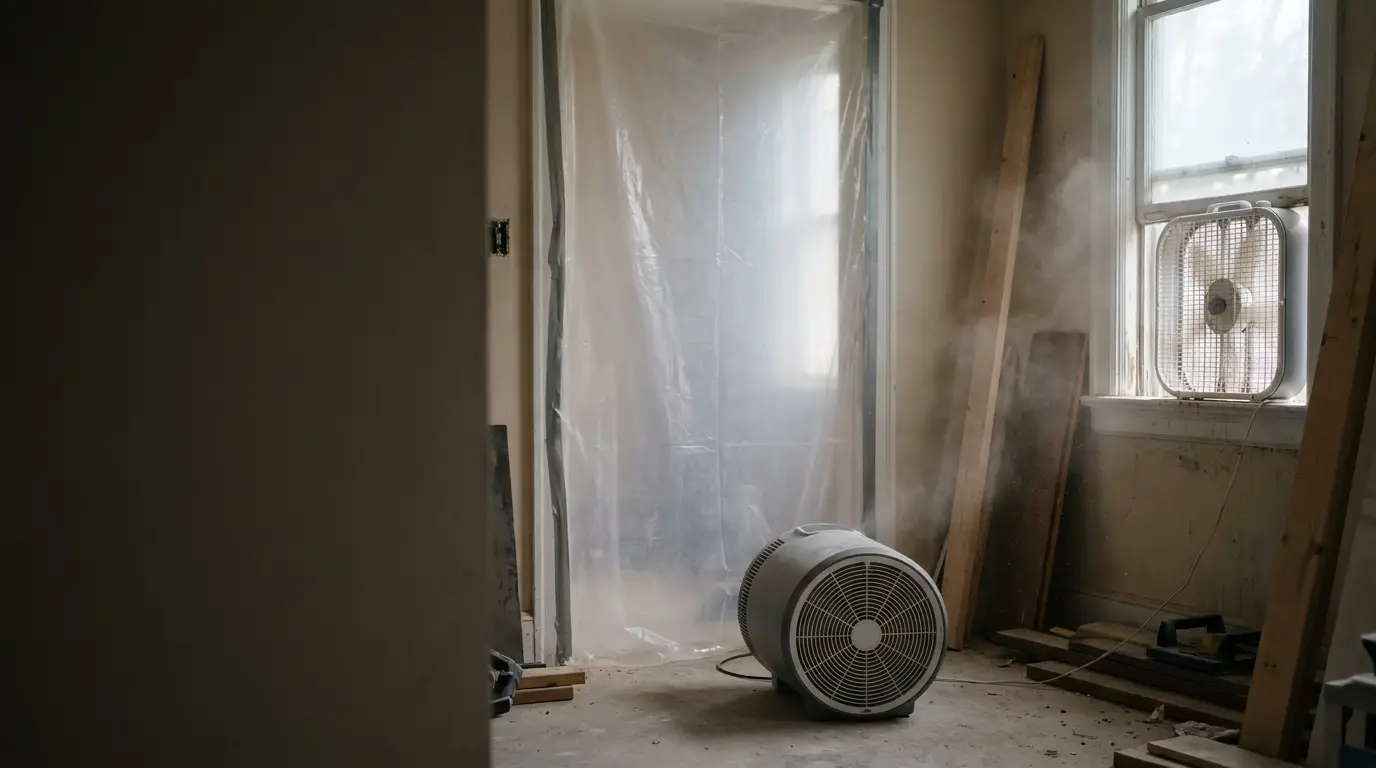
Dust that stays airborne eventually settles somewhere you didn’t cover. Running a portable air purifier with HEPA air filters in the work zone helps capture the fine dust that sanding and demolition send into the air. Place the unit inside the work area or just outside the barrier, and let it run during the job and for several hours afterward.
Pick a unit sized for the room, and replace the filter on the manufacturer’s schedule, since a loaded filter moves less air. For extra control, set a box fan in a window facing outward. It pulls air out of the work zone and helps keep dust from leaking past the barrier.
Clean Up Every Day
Waiting until the project ends turns cleanup into a weekend-long chore. A short routine at the end of each work day keeps dust from spreading and settling:
- Vacuum floors and surfaces with a vacuum rated for fine dust. Sweeping only lifts particles back into the air.
- Wipe horizontal surfaces with damp microfiber cloths.
- Fold plastic coverings inward and bag them before taking them out.
- Empty or clean the vacuum and check the purifier filter after heavy-dust days.
Finish Before You Move Back In
Once the work is done, give the whole area a final top-to-bottom cleaning. Wipe walls, trim, vents and light fixtures first, then finish with the floors. Replace the filter in your HVAC system before you turn it back on, and keep the purifier running a few more days while the last of the dust settles.
With a sealed work area, good dust control at the source and a steady cleanup routine, a renovation can stay a manageable project instead of a house-wide mess.

Holding a Master’s in Architecture from the University of Texas at Austin, Emily Rodriguez has dedicated more than two decades to the art and science of building renovation. Starting her journey in historic preservation, she developed a profound respect for blending old with new in building design. Emily became a vital part of our team in 2019, renowned for her insightful and innovative renovation tips. She has been leading our DIY home improvement series since ever since, where she shares her wealth of knowledge in turning outdated spaces into modern havens. When not engaged in writing or consulting, Emily is a passionate advocate for heritage conservation and enjoys exploring vintage architecture, a hobby that complements her professional expertise.