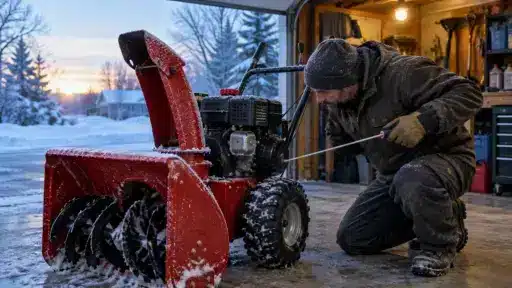
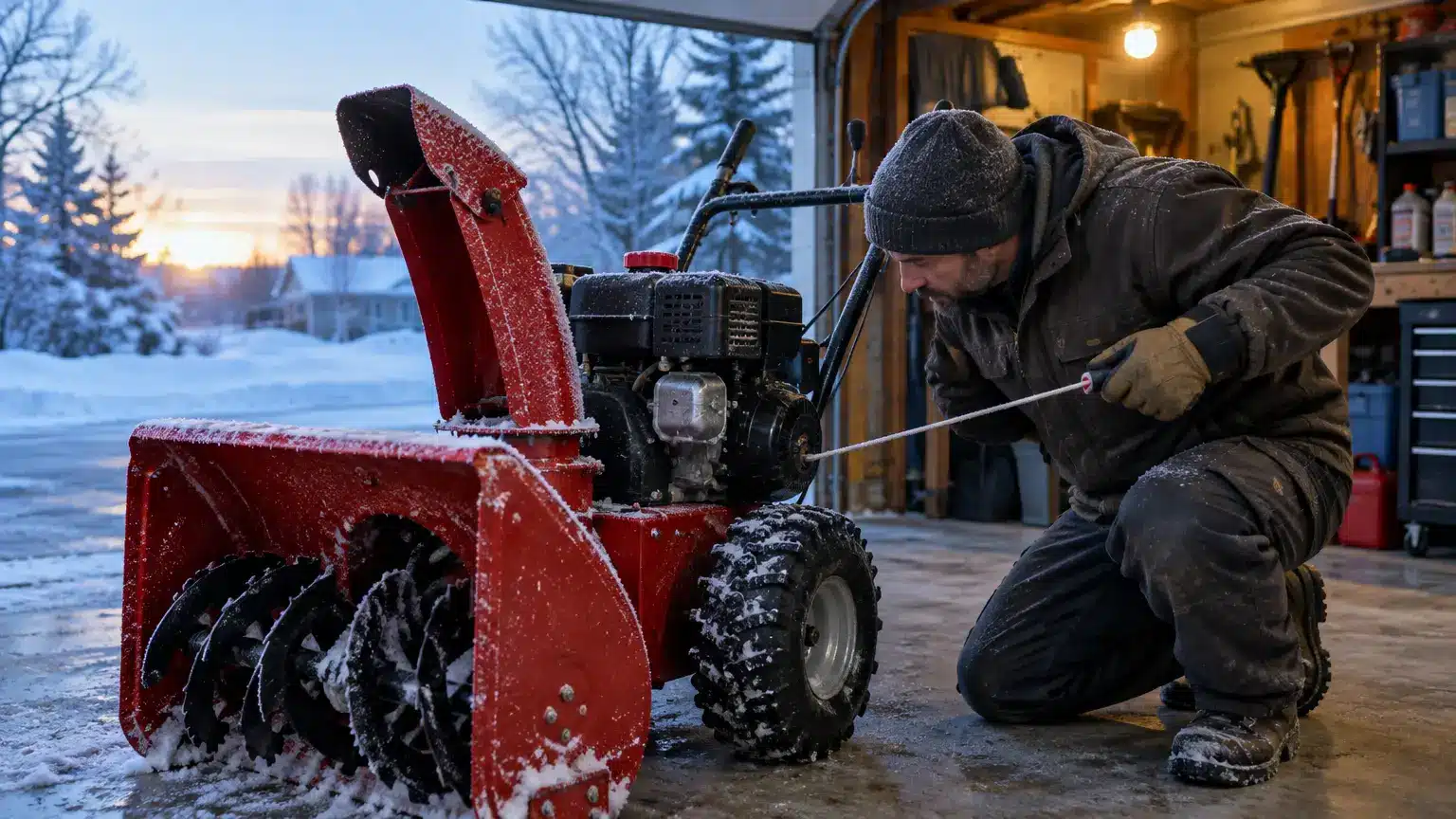

Snow blower won’t start issues can be frustrating, especially when you need to clear snow in winter. It is because old fuel, a dirty spark plug, a clogged carburetor, or starter problems may prevent the machine from running after months of storage. Fortunately, simple checks can help find many of these issues. This guide covers common causes, easy fixes, and signs that worn parts may need replacement.
1. Old or Stale Fuel
Gasoline can break down after sitting in a snow blower for months, especially without a fuel stabilizer. Old fuel may leave deposits in the carburetor and fuel lines, blocking fuel flow and making the engine hard to start or run unevenly.
How to fix it:
- Step 1: Check the fuel. Look for old, discolored, or stale gasoline in the tank.
- Step 2: Drain the old fuel. Remove stale gasoline as instructed by the manufacturer and dispose of it safely.
- Step 3: Add fresh fuel. Refill the tank with gasoline that meets the manufacturer’s requirements.
- Step 4: Test the engine. Follow the recommended starting steps and check if the machine runs smoothly.
Tip: Avoid leaving untreated fuel in the tank during long storage. Use a fuel stabilizer if recommended by the manufacturer.
2. Dirty or Damaged Spark Plug
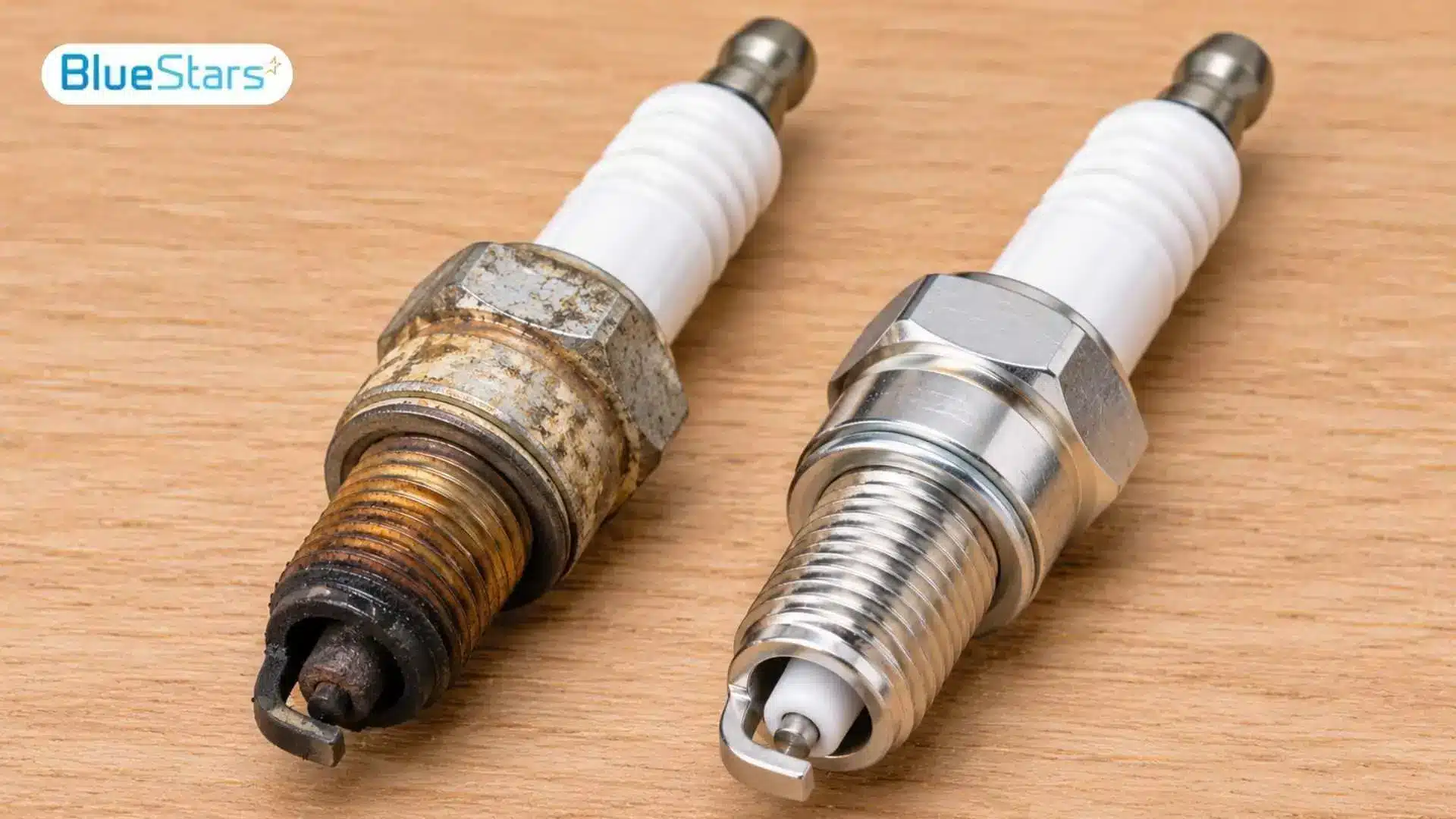
The spark plug creates the spark that ignites the fuel-air mixture. If it is dirty, rusty, or damaged, the engine may not get enough spark to start. Common signs include hard starting, misfires, or repeated attempts without ignition.
How to fix it:
- Step 1: Turn off the machine and let it cool. Disconnect the spark plug wire before inspection.
- Step 2: Remove and check the spark plug. Look for carbon buildup, rust, cracks, or wear.
- Step 3: Clean or replace it. Clean light deposits if the plug is in good condition. Replace it if badly worn or damaged.
- Step 4: Reconnect the wire. Secure the connection and try starting the engine again.
3. Clogged Carburetor or Fuel System
The carburetor mixes fuel and air for the engine. Old fuel can leave sticky deposits inside the carburetor and fuel lines, while dirt and debris can block fuel flow. As a result, the snow blower may fail to start or start briefly before stopping.
How to fix it:
- Step 1: Check the fuel system. Inspect the tank and fuel lines for dirt, debris, or blockages.
- Step 2: Check the fuel. Make sure the tank contains fresh gasoline that meets the manufacturer’s requirements.
- Step 3: Clean the carburetor. Follow the manufacturer’s instructions to remove fuel deposits. Ask a technician for help if disassembly is needed.
- Step 4: Test the engine. Try starting the machine again. If the issue remains, have a technician inspect the fuel system.
4. Incorrect Choke or Starting Settings
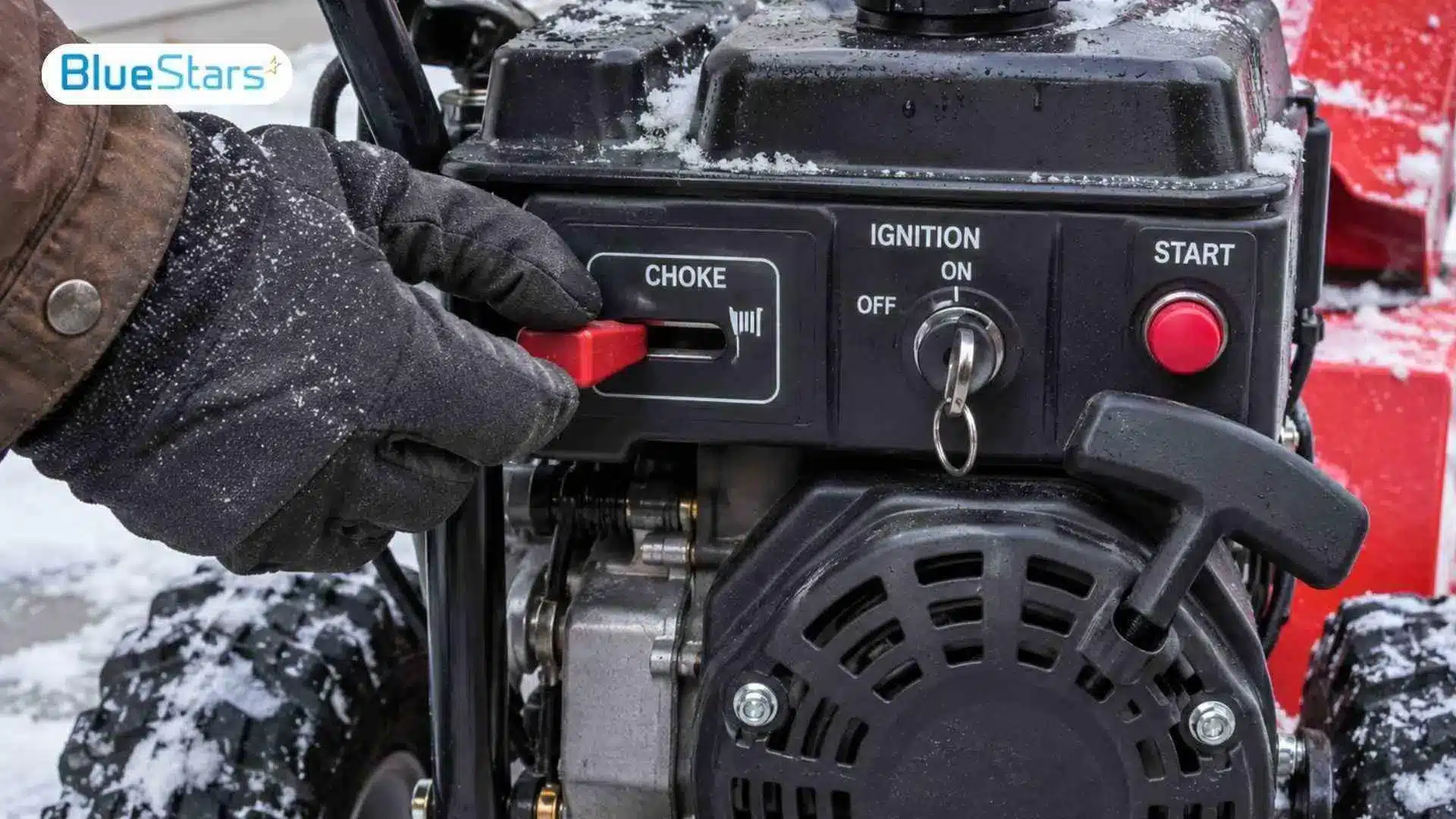
Sometimes, a snow blower won’t start simply because its starting controls are not set correctly. The choke, fuel shutoff valve, ignition switch, or safety key may be in the wrong position. For example, an incorrectly positioned choke can affect the fuel-air mixture needed to start a cold engine.
How to fix it:
- Step 1: Check the ignition switch. Make sure it is in the ON position.
- Step 2: Check the safety key. Make sure it is inserted properly, if your model has one.
- Step 3: Check the fuel valve. Confirm that it is open.
- Step 4: Adjust the choke. Follow the manufacturer’s cold-start instructions.
- Step 5: Try starting again. Use the recommended starting steps and check if the engine runs.
Note: You should check your owner’s manual, as starting controls may vary by model.
5. Battery or Electric Starter Problems
Some snow blowers use a battery or electric starter to turn the engine over. A weak battery, loose wires, or a faulty starter may prevent the engine from cranking. You may hear clicking or notice that the starter does not respond.
How to fix it:
- Step 1: Check the battery. For battery-powered models, make sure it has enough charge.
- Step 2: Inspect the connections. Look for loose, dirty, or rusty battery terminals.
- Step 3: Check the power supply. For electric-start gas models, inspect the power cord, outlet, and connections as instructed by the manufacturer.
- Step 4: Test the starter. Try starting again. If it still fails, have a technician check the electrical system.
If the battery or starter is worn out, replacing the faulty component may be necessary to restore reliable starting performance.
6. When to Replace Snow Blower Parts
If basic troubleshooting does not solve the starting problem, one or more components may be worn or damaged. Replacing faulty parts can help restore proper operation and prevent recurring issues. Here are some common snow blower parts to check:
- Spark plug: Replace it if cracked, worn, or badly corroded.
- Fuel filter: A clogged filter can block fuel flow and affect engine performance.
- Electric starter: A faulty starter may prevent the engine from cranking.
- Battery: A weak or old battery may not provide enough starting power.
- Belts and shear pins: Replace worn or broken parts to maintain proper snow-clearing performance. These do not usually cause engine starting problems.
Tip: You should check your snow blower’s model and original part numbers before buying replacements. Compare the size and compatibility details, as similar-looking parts may not fit every model.
If you’re looking for reliable components to maintain or repair your snow blower, BlueStars Parts offers a range of snow blower parts, including auger drive belts, carburetors, shear pins, and skid shoes. These parts help fix common issues and maintain reliable snow-clearing performance throughout the winter season
A snow blower won’t start for several reasons, including old fuel, a dirty spark plug, a clogged carburetor, incorrect starting settings, or a faulty battery or starter. Regular maintenance and choosing compatible snow blower parts can help keep your machine ready for winter. If any components become worn or damaged, consider BlueStars Parts to find compatible replacement parts and keep your snow blower running reliably.
Contact information:
8 The Green, Ste A, Dover, Delaware 19901-3618, United States
Website: https://bluestarsparts.com/

Tommy Hardy, an alumnus of the Georgia Institute of Technology with a degree in Mechanical Engineering, has been a go-to figure in residential upkeep and innovation for over 18 years. His career commenced in a leading home appliance manufacturing company, where he mastered the intricacies of household systems. Joining our platform in 2020, Tommy quickly became a reader favorite for his practical and easy-to-follow guides. He took the helm of our DIY section in 2019, consistently delivering content that empowers homeowners. Beyond his professional pursuits, Tommy is a passionate gardener and enjoys woodworking, skills enhancing his hands-on approach to home care.