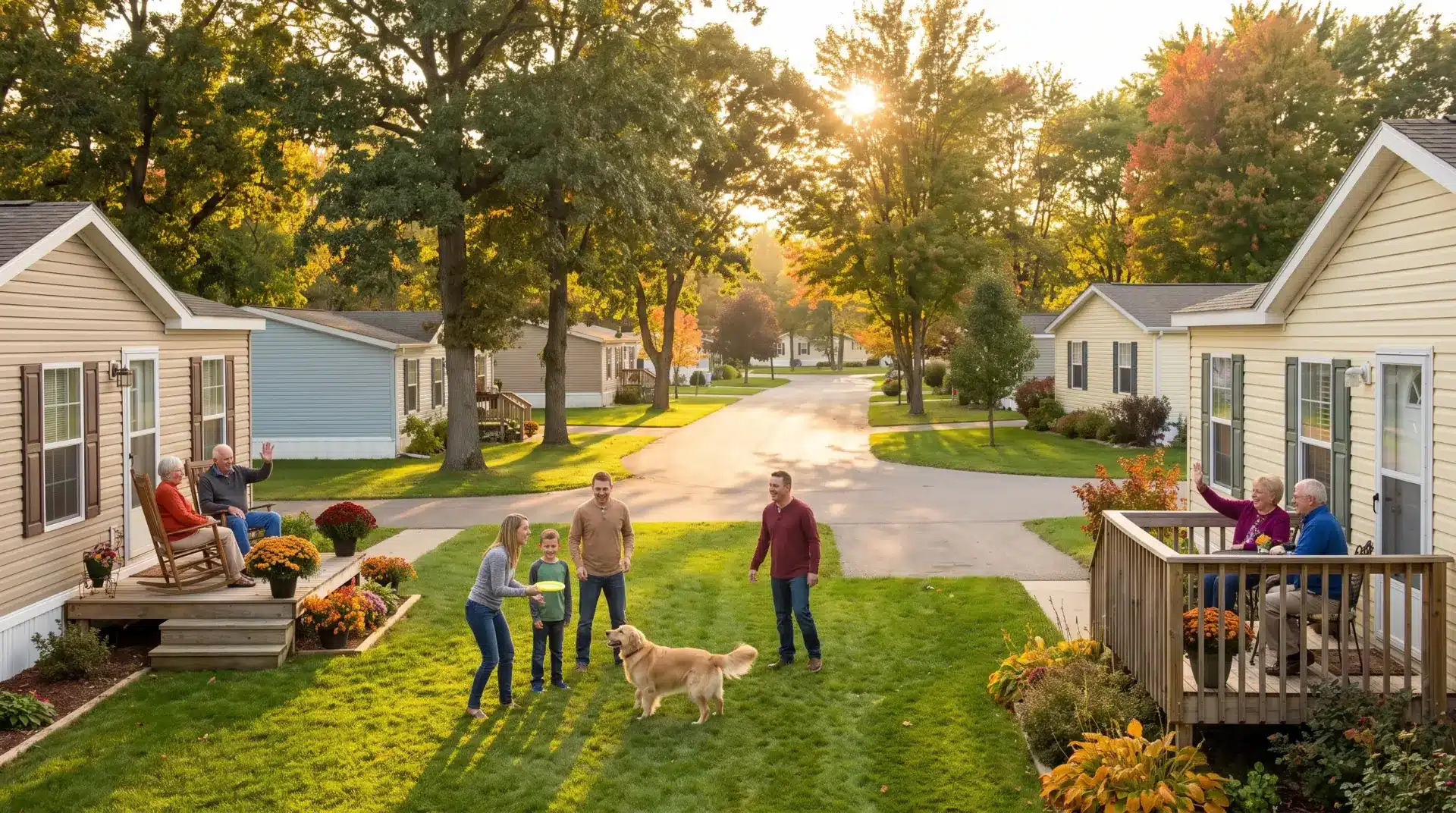
Ask someone who’s never lived in a manufactured home community what they imagine, and you’ll often get a picture that’s a couple of decades out of date. Ask an actual resident of one of Michigan’s established communities, and the answer usually sounds pretty different: a quiet street, neighbors who’ve been there for years, and a lot more space than they had in their last apartment. The gap between perception and reality here is worth closing, especially for anyone in Michigan currently weighing their housing options.
What Residents Consistently Mention First
Talk to enough people living in manufactured home communities across Michigan, and a few themes come up again and again.
Space tops the list almost every time, both indoor square footage and having an actual yard, something a lot of residents say they didn’t expect to value as much as they do once they had it. Many describe moving from apartments where every square foot felt accounted for, to homes where kids and pets finally have room to spread out.
Community stability is the second theme that comes up often. Unlike apartment complexes where turnover can be constant, manufactured home communities frequently have residents who’ve stayed five, ten, or even twenty-plus years. That kind of longevity changes the social fabric of a neighborhood in ways that are hard to manufacture in more transient housing situations.
The Brighton, Michigan Market Specifically
Brighton sits in a part of southeast Michigan that’s attracted steady interest from buyers looking for a balance between small-town feel and reasonable commuting distance to larger job centers.
For families evaluating a manufactured home community in Brighton, MI, the appeal often comes down to getting more home and yard for the money compared to traditional single-family homes in the same general area, without sacrificing access to good schools and local amenities.
Residents in this part of Michigan frequently mention proximity to lakes and outdoor recreation as a genuine quality-of-life factor, something that fits naturally with the region’s broader reputation for lake culture and outdoor living throughout the warmer months.
What People Get Wrong About Construction Quality
One of the most persistent misconceptions about manufactured housing involves construction standards, and it’s worth addressing directly. Since 1976, all manufactured homes built in the United States have been constructed under the federal HUD Code, a comprehensive building standard covering structural design, wind resistance, fire safety, and energy efficiency.
This isn’t a minor technicality; it fundamentally changed how these homes are engineered compared to the older “mobile homes” that shaped a lot of outdated public perception.
According to data tracked through the Census Bureau’s manufactured housing survey, the segment has seen consistent improvements in size, amenities, and construction quality over recent decades, reflecting genuine evolution in how these homes are designed and built, not just marketing language.
Winter Livability Is a Real Michigan-Specific Question
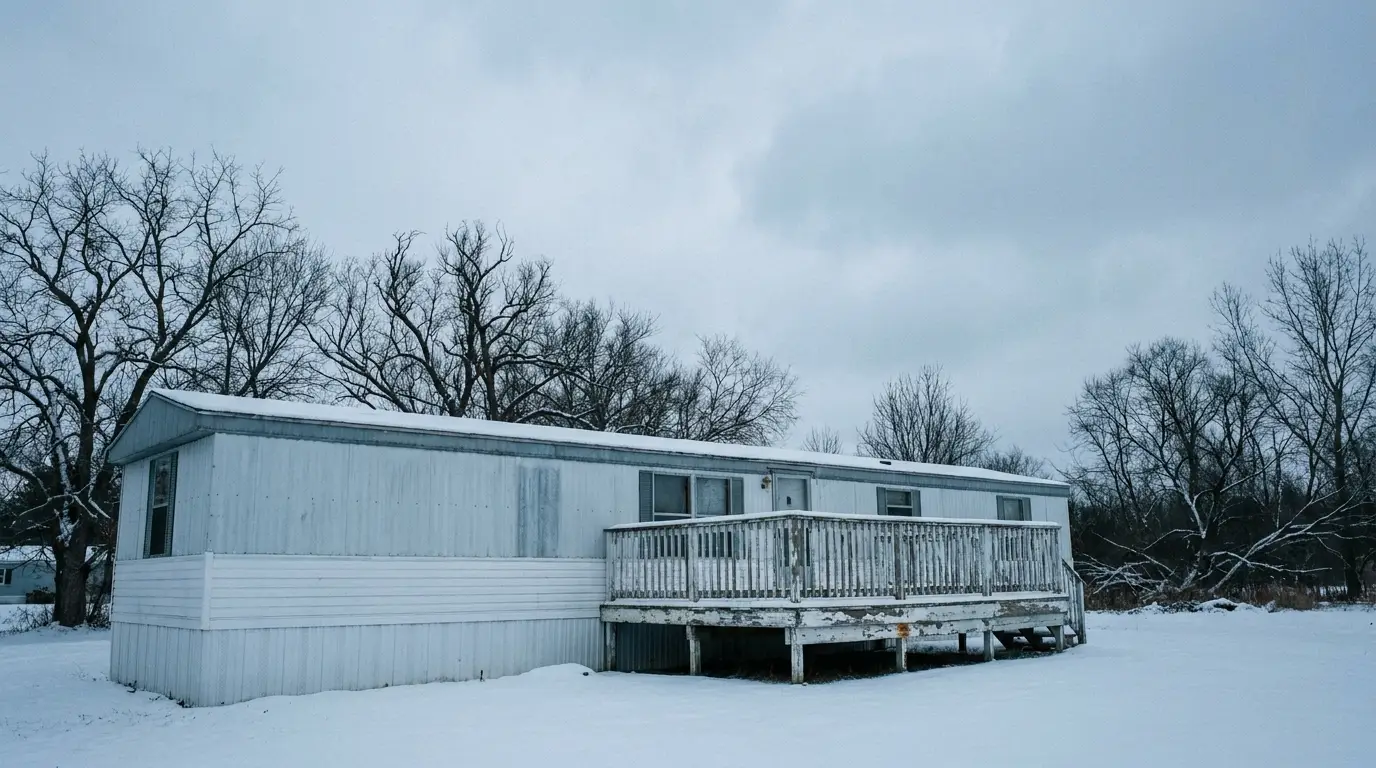
Given Michigan’s winters, this comes up often when people are evaluating manufactured housing here specifically. Modern manufactured homes built to current HUD standards include insulation and heating system requirements designed to perform in a range of climate zones, including colder regions.
That said, residents in Michigan communities often emphasize the importance of proper skirting installation and foundation setup, since these details affect how well a home retains heat and resists moisture issues during freeze-thaw cycles that are common throughout the state.
Anyone evaluating a specific home or community in a cold-weather state should ask directly about insulation ratings and skirting condition, since these details matter more here than they would in a milder climate.
Community Amenities Vary More Than People Expect
Not all manufactured home communities are built the same, and this is where doing your homework really pays off. Some communities include amenities like clubhouses, playgrounds, or organized social events, while others are more basic, offering little beyond the home sites themselves and shared road maintenance.
Visiting in person, and ideally talking to a few current residents about their actual day-to-day experience, tells you far more than a community’s marketing brochure ever will.
Financial Considerations Specific to Michigan Buyers
Financing structures for manufactured homes vary depending on whether you’re purchasing land along with the home or renting a lot within an established community.
The Manufactured Housing Institute publishes industry data showing how financing terms and total cost of ownership can shift significantly based on this land ownership distinction, which is worth understanding clearly before comparing pricing across different community options in Michigan.
Property taxes also work somewhat differently depending on whether the home is classified as real property (when placed on owned land and permanently affixed) versus personal property (in many rented-lot scenarios), and this classification affects your overall tax picture in ways that are worth clarifying with a local tax professional before finalizing a purchase decision.
What to Ask Before Choosing a Community
Beyond touring the physical property, it’s worth asking about the community’s rules regarding home age (some communities have restrictions on how old a home can be to move in or remain), pet policies, guest parking, and how lot rent increases have historically been handled. These practical details affect day-to-day life far more than the initial curb appeal of the community entrance.
If you’re exploring resources more broadly around Michigan housing options and community living, this site’s home page covers a range of related topics worth browsing, and it’s worth returning to that same broader home and living resource as you compare different neighborhoods and community types across the state.
What Residents Wish They’d Known Sooner
A common refrain among longtime residents is that they wish they’d asked more questions about lot fee increases and community management responsiveness before signing on, rather than focusing purely on the home’s condition and price.
A well-maintained home in a poorly managed community can still lead to a frustrating living experience, while a modest home in a well-run, stable community often produces higher long-term satisfaction.
Bringing It All Together
Manufactured home communities across Michigan, including in areas like Brighton, offer a genuinely different value proposition than either traditional apartments or standard single-family homes: more space and often a stronger sense of community, balanced against considerations around land ownership, financing structure, and community management quality that are worth researching thoroughly before making a decision.
For a lot of Michigan families, especially those prioritizing space and long-term neighborhood stability, that trade-off works out very much in their favor.

Licensed broker Logan Patel holds an MBA in Urban Economics from UCLA and has steered buyers and investors through market swings for a decade. He joined us in 2024 to demystify listings, financing, and neighborhood data with clear, chart-backed advice. When he isn’t scanning comps, Logan coaches youth basketball and scouts mid-century districts for hidden architectural gems on weekend walks.