
Homeowners understand the burden of built-up dirt when it comes to the exterior of their house. Luckily, there is a solution that helps clean it all and make their house look brand new. Power washing is a high-capacity technology. Still, it carries risks if one doesn’t approach it properly. Read below to learn the most common power washing mistakes. Some of them can turn a simple cleaning into a costly repair.
Why Power Washing Is Better With Professionals
Many people tend to think that power washing can be done easily. They browse the sites in pursuit of finding a pressure washer. When bought, they see that expectations don’t correspond to reality. The water pressure from such instruments doesn’t even come close to the pressure professionals use. What it comes close to is only wasted time and money.
Today, choosing the right expert becomes a real challenge. A good and reliable company with power washing professionals should know how to approach cleaning. With a quick glance at the house, they can determine the required pressure level to clean the area. They know it all when it comes to chemicals used for different surfaces – stucco, vinyl, or brick. Trying to do everything on your own may simply result in costly repairs afterwards.
The Most Common Mistakes in Power Washing
Let’s cover what challenges and mistakes homeowners come across with power washing. They are the most common ones and may vary depending on one’s expertise. Learn more below.
Using Too Much Water Pressure
While high pressure itself sounds tantalizing, it won’t only deal with grime, mold, and buildup. When used improperly, pressure can easily affect wood siding or make punch holes in mortar joints. If you have vinyl siding, the force can crack it even from a small distance. With professional help, the cleaning starts with tests. An expert first decides on the proper pressure, working on one small section. It helps prolong the lifespan of your exterior materials.
Choosing the Wrong Nozzle Tip
Every nozzle sprays from a different angle and uses an individual force. For instance, when using a zero-degree tip, it produces a narrow, high-capacity stream. It helps clean sealants faster and etch grooves into wood. Wider tips are perfect for larger areas and more spacious tasks. Choosing the wrong one simply puts a person at risk of damaging the point and caulking.
The most common nozzle tips are:
- A pinpoint stream of 0-degree (red). Used for stains on concrete only.
- A narrow spray of 15-degree (yellow). Used for stripping paint or heavy grime.
- A general-purpose tip of 25-degree (green). Used for most siding and decking.
- A wide, gentle spray of 40-degree (white). Used for windows, cars, and delicate trim.
- A low-pressure tip of 65-degree (black). Used for applying soap or cleaning solution.
While the system is easy to understand, professionals will know better which one to choose and where. Some of the stains will benefit from multiple tips.
Holding the Wand Too Close
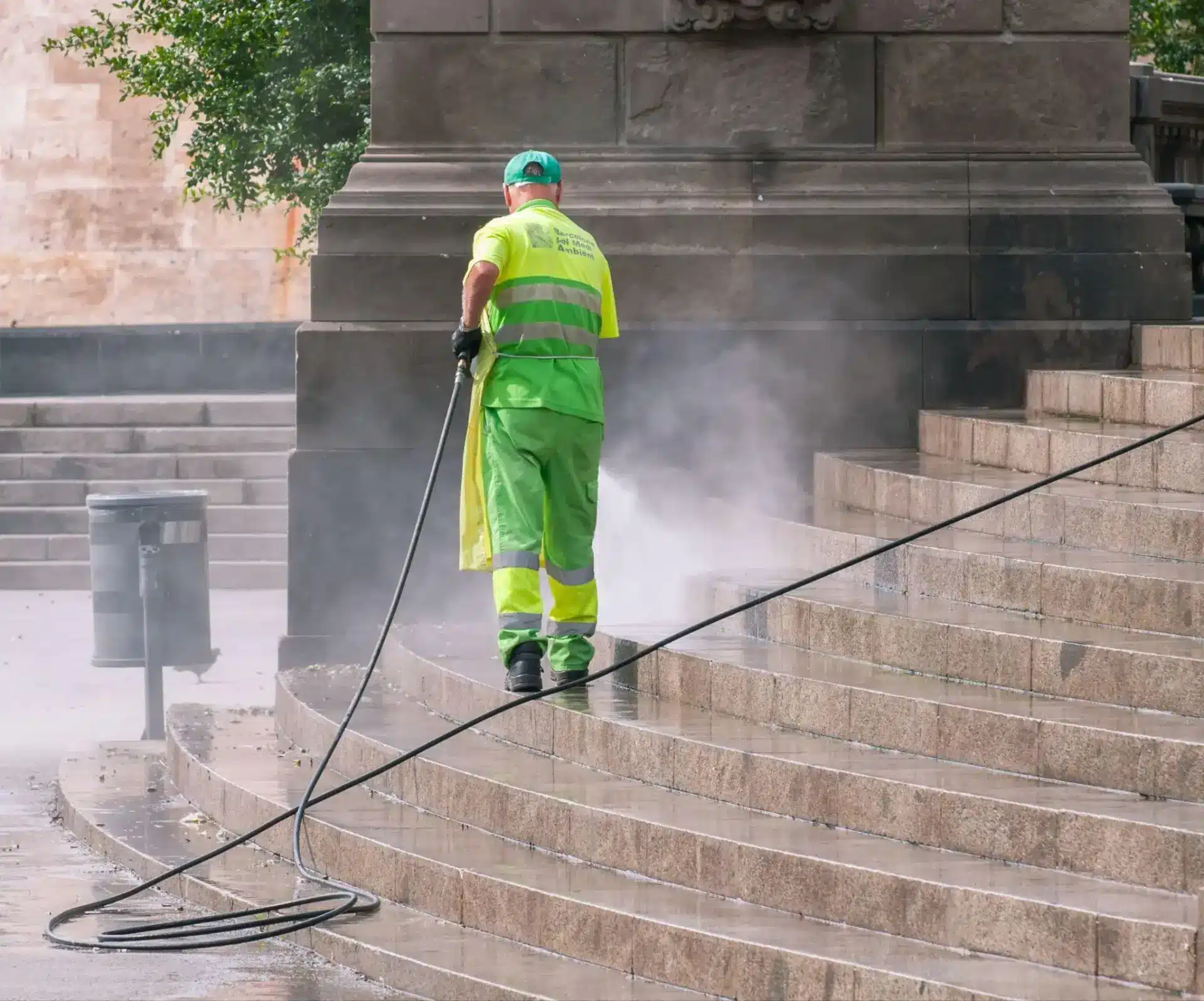
Many possible mistakes in power washing come from a wrongly chosen distance. In simple terms, a person who stays too close to a wall applies too much pressure on a small area. It results in peeled paint or dented aluminum siding. When turning to professionals, they do it by calculating the right distance. They keep the wand at least 12 inches from the targeted area.
Avoiding a Test
Homeowners may occasionally refer to friends’ advice and apply the same pressure and cleaning solution to everything. This is a mistake that costs one repairs. One cannot use the same algorithm when cleaning both an old wooden surface and a vinyl one. You have to see first whether the chosen pressure works on a small area. If it works, you can move to larger zones.
Choosing the Wrong Cleaning Solution
The same as with the nozzle tip, a cleaning soap won’t be a one-size-fits-all solution. Every one works for different surfaces. For instance, you cannot use bleach-based solutions on colorful bricks. Even if the color remains the same after cleaning, it fades over time. Besides, working with chemicals and their mixing isn’t a safe practice for amateurs. Homeowners near Canonsburg, PA can avoid costly trial and error by simply referring to experts.
Cleaning Delicate and Aging Materials
Power washing of new and old homes radically differs. Delicate and aging materials in older homes cannot withstand high-capacity pressure. It can easily damage the irreplaceable woodwork. In this case, homeowners should consider only softwashing. A lower-pressure cleaning with a delicate cleaning solution will help preserve the old house. However, it’s the exact case where turning to local companies like Pro Kleen Industries LLC is a money-saving solution. They will ensure a historic property keeps its exterior.
Compromising on Gutters, Windows, and Landscaping
Even when you think professionals will do everything without your assistance, you should be the one easing them into the task. Focused power washing may occasionally damage the landscape. Some chemicals may affect the garden. In this case, one should ensure to do the following:
- Before the cleaning, ensure you close all windows. You don’t want any streams or chemicals floating in your house.
- If you have a garden, cover the flower/vegetable beds with designated solutions like plastic sheeting.
- Double-check gutter fasteners and tighten any loose brackets.
- If the cleaning zone is near electrical outlets, turn them off.
Besides, always be ready to assist the professionals. They may occasionally double-check with you to see that they did everything as you told them to do. A friendly collaboration is what makes power washing effective.
Final Thoughts
Power washing isn’t a new technology, but it’s prone to many mistakes when homeowners think they know the best of it. To avoid most of the challenges, the useful approach is to turn to professionals. They know how to preserve the exterior of your brand new or old house. Finally, they know how to work with chemicals and decide on the right pressure.

With a Master’s in Architecture from the University of California, Berkeley, Alexander Martin has dedicated the last 18 years to enhancing outdoor living through thoughtful and robust structure design. His career kicked off in urban planning, giving him a unique perspective on integrating structures into diverse environments. In 2019, Alexander brought his expertise to our website, offering insights into creating versatile outdoor spaces. Since then, he has been the lead advisor for our outdoor design projects and is known for his ability to merge functionality with environmental consciousness. Alexander enjoys rock climbing outside of work and participates in community development projects, activities that reflect his passion for the outdoors and sustainable design.