
Polished concrete floors have quietly made their way from warehouses and commercial spaces into some of the most stylish and comfortable homes around.
What was once considered an industrial material is now one of the most sought-after flooring choices for homeowners who want something that looks stunning, lasts for decades, and is surprisingly easy to live with.
If you’ve been curious about whether polished concrete is right for your home, this blog walks you through everything you need to know, from how it’s made to what it actually feels like underfoot.
What are Polished Concrete Floors?
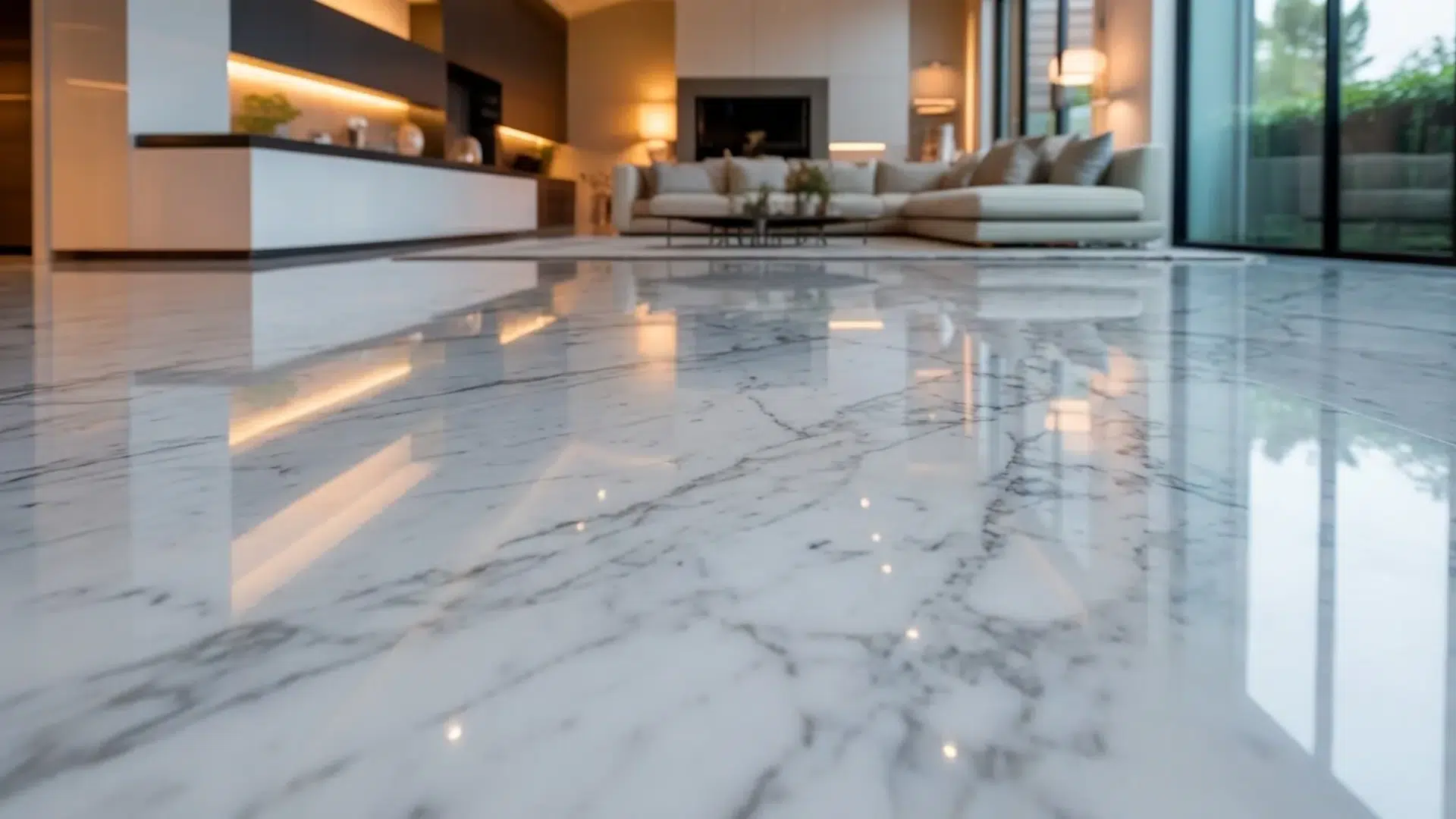
They are a type of flooring finish achieved by mechanically grinding, honing, and polishing a concrete surface using progressively finer diamond-tipped abrasive tools, resulting in a smooth, glossy, and durable floor that resembles the appearance of polished stone or marble.
The process of their making involves multiple passes with industrial grinding machines:
- Grinding: Coarse diamond segments remove surface imperfections, coatings, or old adhesives.
- Honing: Medium-grit diamonds refine the surface and remove scratch marks.
- Polishing: Fine-grit diamonds bring the floor to the desired sheen.
- Densifying: A chemical hardener (usually silicate-based) is applied mid-process to fill pores and harden the surface.
- Sealing/Guarding: A final stain guard or sealer is applied to protect against spills and staining.
The level of gloss is typically rated on a scale: Matte → Satin → Semi-gloss → High-gloss.
Pros and Cons of Residential Polished Concrete Floors
Residential polished floors offer many benefits but also have a few limitations. Understanding both sides helps homeowners decide whether this flooring option suits their needs.
| Pros | Cons |
|---|---|
| Long lifespan and durability – can last for decades with proper care | Hard, rigid surface – may feel uncomfortable for long standing |
| Sleek modern appearance – suits contemporary and minimalist interiors | Cold surfaces in winter – can feel chilly without heating |
| Easy maintenance – no waxing or frequent refinishing needed | Complex installation – requires skilled professionals and tools |
| High resistance to wear – handles scratches, stains, and heavy traffic | Possibility of cracks – may develop over time due to movement |
| Various design options – customizable finishes and colors | Higher noise reflection – can create echo in the space |
Installation Steps for Residential Polished Concrete Floors
Converting a raw concrete slab into a sleek, polished floor is a multi-stage process, and when done right, the results are stunning. Here’s exactly how it’s done, step by step.
Step 1: Prepare the Concrete

Inspect the slab for cracks, chips, and uneven areas. Fill cracks with epoxy filler, grind down high spots, and remove any old coatings or adhesives. A clean, level base is everything.
Step 2: Begin Coarse Grinding

Fit your floor grinder with coarse diamond pads starting at 30 or 40 grit and grind the surface in slow, overlapping passes. This removes imperfections and reveals the fresh concrete beneath.
Step 3: Progress Through the Grits

Move through finer grit pads in sequence: 80, 150, then 400 grit. Vacuum and mop between each change. Skipping grits leaves scratches that no amount of polishing later will correct.
Step 4: Apply a Chemical Hardener

Spray a concrete densifier evenly across the floor, allowing it to penetrate and cure for 1 to 2 hours. This hardens the surface, fills microscopic pores, and sets the foundation for a lasting finish.
Step 5: Polish, Seal, and Buff

Progress through 800- to 3000-grit resin pads to achieve your desired sheen level. Apply a concrete sealer in thin, even coats, then finish with a high-speed burnisher to bring out the full depth and clarity of your polished floor.
Cost of Residential Polished Concrete Floors
The cost of floors depends on factors such as the finish type, floor condition, and level of customization.
While prices can vary, they are often considered a cost-effective flooring option due to their durability and low maintenance. Understanding these costs helps homeowners plan their flooring budget more effectively.
| Type of Finish | Cost Per Square Foot | Description |
|---|---|---|
| Basic Floors. | $3 to $5 | Simple grinding and polishing with minimal surface preparation. Ideal for standard residential floors. |
| Mid-Range Floors. | $5 to $8 | Includes light decorative elements such as staining or basic aggregate exposure. |
| High End Decorative Finish | $8 to $12+ | Custom colors, intricate patterns, and exposed aggregates for premium residential floors. |
Factors that Affect Cost
Several factors influence the overall cost of floors. Understanding these elements can help homeowners estimate project expenses and plan their flooring budget more effectively.
- Floor Condition: Cracks, uneven surfaces, or damage may require repairs before polishing, which can increase the overall project cost.
- Decorative Treatments: Stains, dyes, patterns, and exposed aggregate finishes add extra materials and labor, raising the total price.
- Surface Area: Larger spaces often reduce the cost per square foot, while smaller or complex areas may increase installation expenses.
- Level of Polish: Higher-gloss finishes require more grinding and polishing stages, which can increase labor time and costs.
- Accessibility of the Area: Floors in hard-to-reach spaces or areas with obstacles may require additional preparation and labor, increasing the installation cost.
Are Residential Polished Concrete Floors Right for Your Home?
It can be a great option depending on your home design, climate, and comfort preferences.
Homes that Benefit Most from Polished Concrete
- Modern homes: Add a sleek, contemporary look to interiors.
- Industrial-style interiors: Their raw finish pairs well with exposed brick and wood for a bold industrial look.
- Open floor-plan homes: The seamless surface creates a spacious, visually connected living area.
- Loft-style apartments: Complement urban lofts with high ceilings and exposed structures.
- Minimalist interiors: The smooth finish supports clean, clutter-free design.
Situations Where Other Flooring May Work Better
- Bedrooms that need softer flooring: Carpet or wood flooring offers greater comfort and warmth.
- In cold climates without heating, one can feel cold on the ground.
- Homes needing sound absorption: Carpets reduce noise better than concrete floors.
- Homes with young children: Softer flooring provides safer play surfaces.
- Spaces needing a warm look: Wood or carpet creates a warmer interior feel.
Conclusion
Residential polished concrete floors are more than just a trend; they are a smart, sustainable, and stylish long-term investment in your home.
The durability, low maintenance, and appearance speak for themselves, and the fact that the process uses your existing slab only adds to their appeal.
What truly determines the outcome, however, is the quality of the installation. Skilled professionals, proper surface preparation, and the right equipment are not optional extras.
If polished concrete is on your radar, consult with experienced flooring specialists and get it done right the first time.

Tommy Hardy, an alumnus of the Georgia Institute of Technology with a degree in Mechanical Engineering, has been a go-to figure in residential upkeep and innovation for over 18 years. His career commenced in a leading home appliance manufacturing company, where he mastered the intricacies of household systems. Joining our platform in 2020, Tommy quickly became a reader favorite for his practical and easy-to-follow guides. He took the helm of our DIY section in 2019, consistently delivering content that empowers homeowners. Beyond his professional pursuits, Tommy is a passionate gardener and enjoys woodworking, skills enhancing his hands-on approach to home care.